Exposing the Big Game

Forget Hunters' Feeble Rationalizations and Trust Your Gut Feelings: Making Sport of Killing Is Not Healthy Human Behavior

Exposing the Big Game

Last convicted shark-dragger Benac will get fishing license back in 2022

Last convicted shark-dragger Benac will get fishing license back in 2022

(Beth Clifton collage)

If,  that is,  he does 250 hours of community service & finds an animal shelter that will take him for 125 hours

            TAMPA,  Florida––Holding out for a lighter sentence under a plea bargain offer did not wholly pay off on September 12,  2019 for Robert Lee “Bo” Benac III,  30.

But Benac did avoid a felony cruelty conviction and will get his fishing license back two years sooner than shark-dragging  buddy Michael Wenzel,  even if he will have to perform more than twice as much volunteer community service work meanwhile.

Benac was the last of three Florida men to settle charges originally filed as felony cruelty,  after they shot and dragged a blacktip shark to death behind a speedboat on June 26,  2017 near Egmont Key in Hillsborough County waters.

Mark Wenzel (left) & Bo Benac (right)
(Facebook photo)

Benac pleaded guilty to two misdemeanors

Benac,  of Bradenton,  Florida,  pleaded guilty to misdemeanor charges of aggravated cruelty to animals and violating Florida Fish & Wildlife Conservation Commission fishing rules.

Benac was sentenced to serve 10 days in the Hillsborough County jail ,  the time to be served on weekends,  plus 11 months on probation.  Benac is also to pay a $2,500 fine and perform 250 hours of community service,  half of those hours at an animal shelter.
Benac in addition lost his fishing license for three years.

Benac in March 2019 reportedly refused the same plea deal that fellow shark-dragger Wenzel,  22,  accepted.  Wenzel,  who was videotaped exulting as the men dragged the dying shark, accepted the same jail and probation time,  and the same fine of $2,500,  but was required to perform only 100 hours of community service,  and had his fishing privileges suspended for five years.

Clockwise from top: Michael Wenzel,  Bo Benac,  Spencer Heintz, & Nick Easterling.

Wenzel pleaded to one felony

Wenzel pleaded guilty,  reported Joe Hendricks of the Anna Maria Sun,  “to a third-degree felony count of aggravated cruelty to animals.  A second and similar third-degree animal cruelty charge was dismissed.”

Wenzel,  like Benac,  also pleaded guilty to violating Florida Fish & Wildlife Conservation Commission rules,  Hendricks wrote.

“The misdemeanor charge pertained to the illegal taking of a shark,”  Hendricks explained.  “Video shows Wenzel using a .38 caliber revolver to shoot the shark.  State law prohibits taking a shark by any other means than with a hook and line.”

From left, Michael Wenzel, Bo Benac, and the blacktip shark they dragged.

Charges dropped against third defendant

A third Florida man involved in the shark dragging incident,  Spencer Heintz,  23,  escaped prosecution when Florida assistant state attorney Andrew Hubbard on May 1,  2018 told the court that the state had dropped all charges against him due to a purported lack of evidence.

Heintz had faced two counts of aggravated cruelty to animals.

“Another Florida man on the boat that day,  24-year-old Nicholas Burns Easterling,  did not face charges,  because he provided information and cooperated with the investigation,” said Courthouse News.

The major evidence against the defendants was a widely distributed video that Wenzel posted to social media on July 24,  2017

.

The shelter refused to euthanize her dog. What she did next was ‘despicable,’ cops say

 
Play Video

Duration 2:07
Florida woman caught on video putting dog in truck of car

A Florida woman was arrested after a passerby caught her on video putting her dog into the trunk of a car and driving away. The woman had attempted to get the dog euthanized at a local shelter but was turned away. 

Sarah Ann Perry no longer wanted to keep her dog. So on Wednesday, the Cocoa, Florida, woman brought him to her local shelter.

Things went downhill from there.

According to the Brevard County Sheriff’s Office, after the folks at the facility said they were full, she asked to have the mixed breed pet named Neptune, euthanized. The shelter told her they did not euthanize animals and turned her away.

“She became extremely angry,” said Brevard County Sheriff Wayne Ivey on the agency’s Facebook page.

Ivey then shows video, shot by a concerned citizen in the shelter’s parking lot, of what Perry did next: She jerks Neptune’s leash and shoves him into the trunk of her car.

Investigators soon tracked down Perry at her home, and took her into custody for the “despicable way she treated this poor helpless pet,” the sheriff said. The charge: animal cruelty, a felony.

As for Neptune, the dog was examined and found to be in very poor health and extremely malnourished.

According to a police report, his ribs, lumbar, vertebrae, pelvic bones and other bones were “visible from a distance.”

Neptune is being cared for at the Brevard County animal care center. Perry was released after posting $2,000 bond.

Japan’s decision to resume commercial whaling ‘disappointing’, Boris Johnson tells country’s prime minister at G7

A whale hunt in the Faroe islands
A whale hunt in the Faroe islands CREDIT: ANDRIJA ILIC/AFP/GETTY IMAGES

The Japanese Prime Minister’s decision to resume commercial whaling was described by Boris Johnson as “disappointing” at the G7 meeting.

The Prime Minister took the chance to raise the topic with Shinzo Abe when they met on Bank Holiday Monday.

The Telegraph understands he told Mr Abe that he was very disappointed with their decision to continue the practice, which has been condemned by animal charities for putting whales at risk of extinction.

Carrie Symonds, Boris Johnson’s partner, has campaigned for some time on the issue in her role as head of communications for the conservation NGO Oceana.

Ms Symonds attended an anti-whaling protest outside the Japanese Embassy in January alongside the Prime Minister’s father, Stanley Johnson.

She said at the time that the practice should be consigned to the “dustbin of history”, adding: “It’s cruel beyond belief. We have all seen the pictures of the sea turning red with blood, while a whale dies slowly in agony with a sharp metal implement pushed through its body. How can that be right?”

Carrie Symonds and Stanley Johnson at an anti-whaling protest earlier this year
Carrie Symonds and Stanley Johnson at an anti-whaling protest earlier this year CREDIT: JOHN STILLWELL/PA WIRE

It is understood Ms Symonds will be unable to attend as she will be in the United States for her work at Oceana.

Defra minister Zac Goldsmith is meeting with NGOs to discuss the issue of whaling next week.

He said: “Very pleased to hear that ⁦‪Boris Johnson raised Japan’s awful decision to resume commercial whaling with the Japanese PM today at the G7. Hope they will seriously rethink.”

Japan’s first commercial whale hunt since 1986 commenced in early July, after the country left the International Whaling Commission, which has a ban on commercial hunting.

The ban was put in place after whales were brought to the brink of extinction by hunting in the 19th and 20th century.

The creatures are hunted for their meat, and many coastal communities in Japan argue that it is an important tradition.

Boris Johnson has been pushing biodiversity to the forefront of the agenda at the G7 meeting, and he said: “We cannot sit back as animals and plants are wiped off the face of the planet by mankind’s recklessness. If we do not act now our children and grandchildren will never know a world with the Great Barrier Reef, the Sumatran tiger or the black rhino.”

Japan whaling town Taiji begins dolphin hunting

 KYODO NEWS – 17 hours ago – 15:00 | AllJapan

The hunting season for dolphins using a controversial “drive-hunting” method began Sunday in the whaling town of Taiji in western Japan, without any major protest from animal-rights groups.

While local police officers were on high alert for anti-whaling campaigns, 12 boats left the town’s port around 5 a.m., but all returned without any catch, according to a fisheries cooperative official.

The hunting method, in which fishermen herd dolphins and small whales into a cove before sealing the area with a net, has drawn fierce criticism from animal-rights groups at home and abroad.

As a member of the International Whaling Commission, Japan halted commercial whaling in 1988 but hunted whales for what it called research purposes, a practice criticized internationally as a cover for commercial whaling.

Japan had long sought to lift the moratorium and finally left the IWC on June 30 after the organization last year voted down its proposal to resume commercial whaling of species considered abundant, such as minke whales.

(Dolphin hunt off Taiji pictured in 2010.)
Hunting dolphins and other small cetaceans in waters near Taiji was not subject to controls by the IWC, although critics have said the technique is cruel and it has become the subject of an Oscar-winning documentary.

Ahead of the hunting season’s start, local authorities were anxious that there could be obstruction from international anti-whaling activists, but only about 10 members of a Japanese animal-rights group gathered at the port on Sunday.

The hunting season continues for about six months. An ad hoc police box has been set up near the port and, together with police officers, personnel from the Japan Coast Guard will be deployed around the area.

“Thanks to the security, we can do (hunting) with ease,” said Teruto Seko, head of the fisheries cooperative.

Sep 1, 2019 | KYODO NEWS

Reward offered after 42 wild burros shot, killed in California desert

 – A reward of more than $50,000 is being offered, after dozens of protected wild burros have been found shot and killed in California’s Mojave Desert.

The Bureau of Land Management (BLM) said since May, 42 wild burro carcasses have been found along a 60 mile stretch of Interstate 15 from Halloran Springs, California to Primm, Nevada.

BLM officials said the donkeys had been shot in the neck. Some were killed near watering holes, where they were drinking.

“In many instances, the person or persons appear to be shooting at the burros from a distance,” said BLM spokeswoman Sarah Webster. “The weapon is believed to be a rifle.”

The burros being targeted are from the Clark Mountain Herd Area of the Mojave Desert, which before the shootings, had a population of about 120 burros, according to Webster, who added that these animals were and are in good health.

The BLM is offering a $10,000 reward for information leading to the arrest and conviction of the person or persons responsible for the deaths.

Others have come forward to contribute to the reward fund.

On Monday, the Humane Society said an anonymous donor from its burro protection initiative, the Platero Project, donated $32,500.

The American Wild Horse Campaign, Return to Freedom, and The Cloud Foundation have also joined in the efforts to stop the killings, offering $2,500, $5,000 and $1,000 respectively.

“We’re very glad the BLM is taking this sick crime seriously,” said The Cloud Foundation’s director, Ginger Kathrens. “The burros belong to the American people and are beloved symbols of our nation’s history and pioneer spirit. They deserve to be protected.”

Killing a protected burro is punishable by a $2,000 fine and a year in jail.

The animals are federally protected under the Wild Free-Roaming Horses and Burros Act of 1971. The law designates wild, free-roaming horses and burros as integral parts of the natural system of public lands and aims to protect the animals from capture, branding, harassment and death, according to the BLM.

“America’s public lands belong to all of us,” said Neda DeMayo, president of Return to Freedom, adding, “These cruel and hostile acts against federally protected animals strike at the heart of everyone working so hard for their protection and for humane, non-lethal solutions to management concerns.”

Anyone with information about the killings is urged to call the federal WeTip hotline at 800-782-7463 (800-78CRIME), or visit ​​​​the crime reporting website here.

‘Sickening’: Golden eagle spotted near royal family’s Balmoral estate with illegal trap attached to legs

‘Absolutely clear this incident is a result of criminality’, says RSPB, as focus on raptor persecution increases at start of grouse shooting season

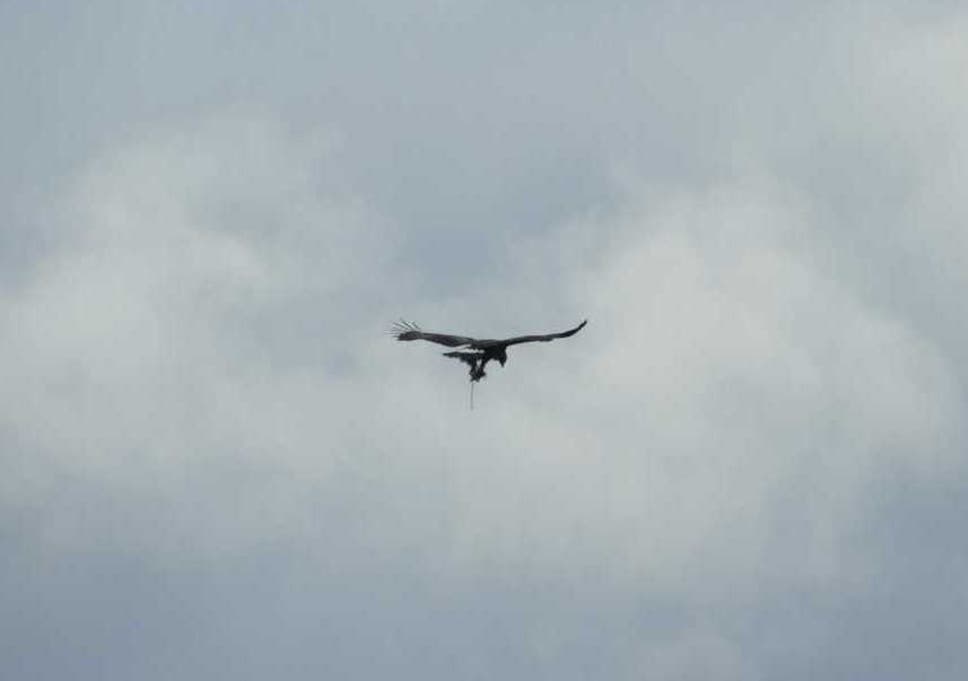
The golden eagle was seen flying over the village of Crathie, which borders the edge of the Balmoral estate in Aberdeenshire

The golden eagle was seen flying over the village of Crathie, which borders the edge of the Balmoral estate in Aberdeenshire ( Police Scotland )

golden eagle has been photographed in Scotland flying with a trap dangling from its legs.

The bird was spotted over the Aberdeenshire village of Craithe, close to the royal family’s Balmoral estate in the Cairngorms National Park.

Police have launched an investigation alongside the Royal Society for the Protection of Birds (RSPB) after the tourist who took the picture reported it.

The photograph shows the bird hovering with the trap clamped around its talons and a chain hanging from it.

The type of traps are regularly seen in the illegal trapping of birds of prey on grouse moors, which cover around 20 per cent of all land in Scotland.

RSPB Scotland’s Head of Investigations Ian Thomson told The Independent: “This picture of a golden eagle with a trap on its leg is sickening.

“There is no way a bird of prey could become caught in a legally set trap and as such it is absolutely clear this incident is a result of criminality.

“There have been a number of incidences where birds of prey have been caught in similar traps resulting in fatalities and we are concerned for the fate of this bird if it is not caught soon so it can receive veterinary treatment. We urge the public to report any sightings to the police.”

Close-up showing the trap dangling from the bird’s talons (Police Scotland)

He added: “This kind of trap is used widely on grouse moors. Just a few years ago there was a case in the same area as this golden eagle has been spotted where a number were deployed illegally to target birds of prey.”

Police Scotland’s Sergeant Kim Wood said: “We would encourage anyone who has information which could help to locate this eagle to contact the police on 101.”

Grouse shooting is under increased focus as the season opened on 12 August and numerous naturalists and conservationists have called for an independent review into the impact of the practice.

A petition to ban driven grouse shooting – in which 500,000 grouse are shot dead a year – has reached 25,000 signatures.

The petition was created by BBC presenter and naturalist Chris Packham who told The Independent last month that in addition to illegal targeting protected species including birds of prey, gamekeepers on grouse estates legally target and kill “hundreds of thousands” of animals a year, including stoats, weasels, foxes and mountain hares in an effort to protect the grouse, which are then shot.

According to The Telegraph, the royal family’s annual summer grouse shoot was cancelled at Balmoral this year due to a shortage of birds, it said was due to “extreme weather and an outbreak of heather beetle,” which it said had impacted amounts of heather available for the grouse to consume.

Surveillance Video Leads Police to Couple Suspected of Burning Dog in West Haven

Court documents state the suspects claimed they were cremating the dog, but police said their investigation suggests otherwise.

https://www.nbcconnecticut.com/news/local/Surveillance-Video-Leads-Police-to-Couple-Suspected-of-Burning-Dog-in-West-Haven-523899981.html

Police made a second arrest Tuesday in a disturbing case involving dead dog was found burned at the Sandy Point Beach Parking lot after the 4th of July.

West Haven Police say 41-year-old Maurice Jackson was arrested Tuesday. He faces charges of open burning, breach of peace, and illegal dumping charges alongside his girlfriend, 34-year-old Latrice Moody. Moody was arrested Monday and is out of jail on $30,000 bond. She also faces an animal cruelty charge.

The couple claims they were cremating Moody’s dog.

In court documents, they say after their lengthy investigation “this type of behavior is not indicative of someone who wanted to cremate a beloved pet, but rather someone who wanted to simply dispose of an animal.”

1 Arrested in West Haven Dog Burning

[HAR] 1 Arrested in West Haven Dog Burning

Police have arrested the owner of a dog found dead and burned in at West Haven beach parking lot last month. They have an arrest warrant for a second person as well.

(Published Monday, Aug. 5, 2019)

NBC Connecticut obtained exclusive surveillance video from the Elm Street Citgo just after midnight on July 5.

According to arrest warrant documents, this is what led West Haven Police to Moody and Jackson.

Court documents describe what’s caught on camera. Police say Jackson is seen buying a gas can and then filling it up before driving away in Moody’s car.

While Moody first said her dog Brooklyn ran away, police said she eventually admitted to wrapping the approximately 8-year-old Yorkshire Terrier in a towel and lighting it on fire with gasoline leaving folks to find the disturbing burn scene when the sun rose.

Police say a post on Moody’s Facebook memorialized her dead dog on July 5.

“Yesterday after having the best 4th of July ever, I came home to find my Brooklyn called home to doggie heaven.”

Police ID Suspects in Death of Dog Set on Fire

[HAR] Police ID Suspects in Death of Dog Set on Fire

On Friday, police said they have identified two suspects in the animal cruelty, arson case and interviewed one of them. That person is cooperating with police.

(Published Friday, July 12, 2019)

“It makes me sick I have a dog, I would never. The people should burn like the dog burns,” said Christine Turcio of North Haven.

Those we spoke to at the West Haven gas station are glad cameras helped catch the suspected couple.

“A dog can’t talk back. I think when a person misuses someone like a dog or baby, I think it should be prosecuted very highly,” said Kelly Moye of New Haven.

As locals continue to memorialize the pooch alongside the shore, police say extensive lab testing showed the dog had extensive kidney, cardio vascular issues and a dislocated leg, leading police to believe Brooklyn was neglected in its life even before it died and was burned.

In court documents, Jackson’s parole officer even recalls visiting their home a month before the burn investigation and seeing animal that looked in pain as it was walking on the “knuckle” of it’s leg. Police say Jackson has an extensive criminal history.

We tried speaking with who we believe was Moody earlier in the day, but she drove away. According to court documents, police say she told them she didn’t know “if Brooklyn was really sick because she never brought the dog to the vet.”

Suspects in Death of Dog Set on Fire Identified: Police

[HAR] Suspects in Death of Dog Set on Fire Identified: Police

West Haven police said they have identified two suspects in the death of a small dog that was set on fire last week.

(Published Friday, July 12, 2019)

Moody is expected in court August 20.

China’s pork prices to hit record level in 2019 due to African swine fever, even as imports surge, report says

  • Rabobank forecasts that prices will surpass the previous record seen in 2016 in the fourth quarter, hitting 30 yuan (US$4.36) per kilogram
  • Official data shows that domestic prices rose 30 per cent in June as production continues to slide after over 1 million pigs were culled

TOP PICKS

Economy

China hits back at Trump criticism of its WTO ‘developing country’ status

29 Jul 2019

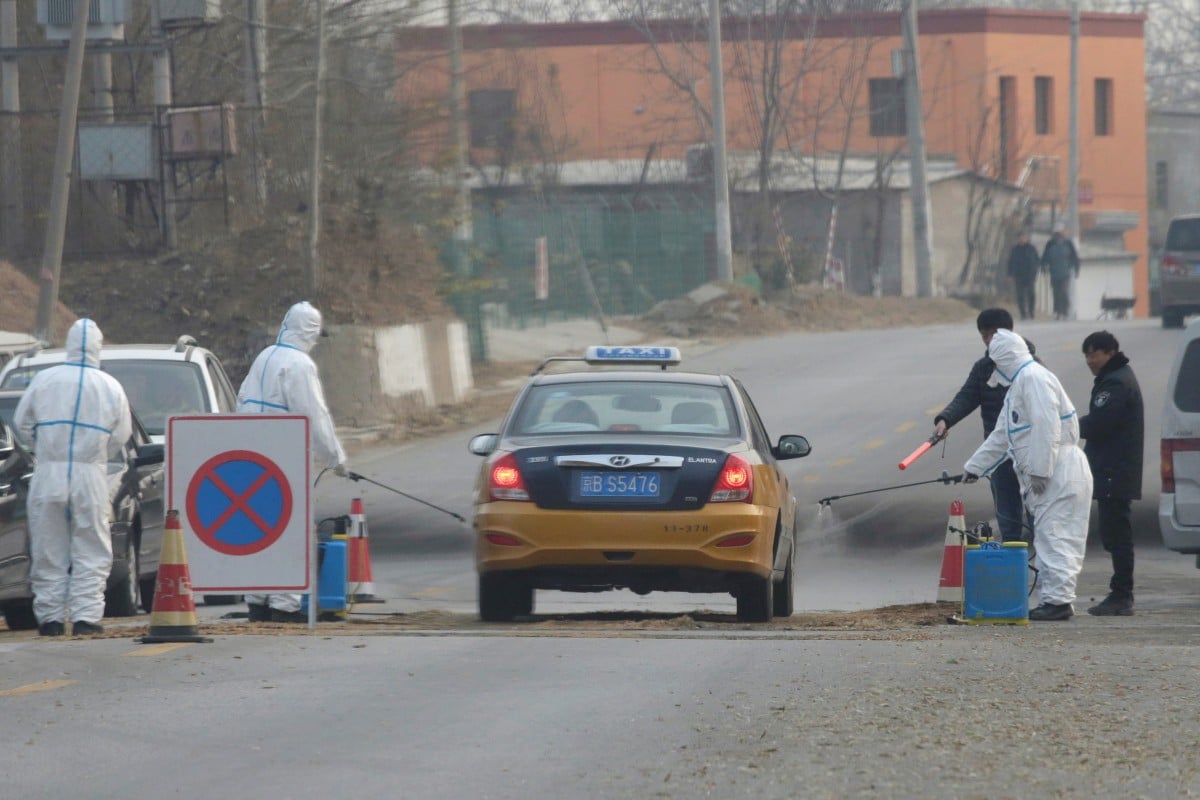
ESince the first African swine fever outbreak in Liaoning province in August 2018, the disease has affected animals across the country, forcing China to cull more than 1.1 million pigs from an estimated herd of 350 million. Photo: Reuters

Since the first African swine fever outbreak in Liaoning province in August 2018, the disease has affected animals across the country, forcing China to cull more than 1.1 million pigs from an estimated herd of 350 million. Photo: Reuters

China’s pork prices will reach a record level by the fourth quarter of 2019 due to the impact of African swine fever on domestic production, even as imports continue to surge, according to a Rabobank report.

Pork prices rose by nearly 30 per cent in June compared with a year earlier, according to the Ministry of Agriculture and Rural Affairs, with the spread of African swine fever showing no sign of abating, causing domestic production to plunge.

“China’s pork and hog prices are likely to break the previous record high in 2016 by the fourth quarter,” said Pan Chenjun, the report’s author and a senior analyst for animal protein at Rabobank.

Prices for other meats, including chicken, are also expected to rise substantially, putting further pressure on the discretionary spending of Chinese consumers.

China’s pork and hog prices are likely to break the previous record high in 2016 by the fourth quarterPan Chenjun

Pan forecasts that the wholesale price for pork will reach 30 yuan (US$4.36) per kilogram, while hogs will reach 22 yuan. Wholesale prices for pork in June stood at 21.59 yuan a kilogram.

Pork prices hit record levels three years ago after farmers held back pigs from slaughter to rebuild herds after widespread culling in 2014 when prices were low.

Rabobank projected that China’s 2019 output will slump by 25 per cent, with an additional 10 to 15 per cent decline in both the nation’s herd and its pork production in 2020.

The Dutch bank, in its third-quarter report on pork, said that there will be “more shipments expected in the second half of 2019”, which will add to China’s already surging pork imports in the first half of the year in an attempt to fill the gap created by the falling domestic production.

Pan said that Chinese pork imports were likely to exceed 3 million tonnes in 2019, more than triple the 1.19 million tonnes last year, according to data from the General Administration of Customs. In June, imports soared 62.8 per cent to 160,467 tonnes, bringing the total for the first half of the year to 818,703 tonnes, according to customs data.

Given that China is the world’s largest pork producer and consumer, the devastating impact of African swine fever on pig herds has taken a toll on global markets for pork and related commodities. Its smaller pig population will mean that China will need to import less soybeans for pig feed, compounding the uncertainties surrounding the commodity already created by the US-China trade war.

Rabobank said many pig producers in exporting countries also remain cautious about expanding their production despite a rising global trade, increasing pressure on supply and prices globally in 2020.

To meet its growing protein supply deficit, China has also bought more chicken meat from abroad, albeit under its own strict import restrictions. Imports of frozen chicken meat soared 107.8 per cent to 71,921 tonnes in June compared with a year ago. Increasing demand is expected to push up chicken prices, where a 50 per cent gain in 2019 “would not be surprising”, said Pan.

China began to import more pork in March when domestic wholesale prices started to rise.

Imports of US pork

– which fell 75 per cent to 1,609 tonnes between July and December 2018 after China retaliated with tariffs in response to US duties on Chinese goods – have rebounded. Since January, imports from the US have more than tripled from 5,788 tonnes to 17,603 tonnes in May.

Since the first African swine fever outbreak in Liaoning province in August 2018, the disease has affected animals across the country, forcing China to cull more than 1.1 million pigs from an estimated herd of 350 million. Photo: AP

US pork imports to China face a 62 per cent tariff, but Bloomberg has cited unnamed sources saying that Beijing has approved duty waivers for some Chinese companies.

Global markets have adjusted to expectations that an agreement to end the trade war is unlikely in the short-term. However, Rabobank thinks the resumption of negotiations between the world’s two largest economies in Shanghai on Tuesday and Wednesday could result in China reviewing its tariffs on US pork imports.

Diseases like African swine fever will continue to negatively affect global animal protein output, according to the Rabobank report. Chinese domestic pork production will take more than five years to recover from the outbreak, due to the challenges of restocking that include a lack of solutions to prevent disease and the need for additional investment to restock herds, it said.

The decline comes at a time when demand for pork and meat from the growing middle class populations in China, India and other emerging economies in Southeast Asia is rising.

Dirk Pfeiffer, a professor of veterinary medicine and life science at City University of Hong Kong, said pig producers eager to capitalise on rising demand for meat and pork by China’s middle class, a result of the “economic success of mainland China”, did not invest properly in infrastructure to protect against disease.

“And how are you going to roll that back now? Pork prices have now gone up, that means many of the people will buy chicken instead. So farmers may increase chicken production, then we may have more bird flu,” Pfeiffer said.

Pork prices have now gone up, that means many of the people will buy chicken instead. So farmers may increase chicken production, then we may have more bird fluDirk Pfeiffer

African swine fever will also put downward pressure on middle-class consumer spending, which Beijing is counting on to help boost growth in an economy that is expanding at its slowest pace in nearly three decades. China’s middle class accounts for around 400 million people, or 28.6 per cent of the 1.4 billion population.

Economists at Capital Economics warned that Chinese consumption growth will be weighed down in the near term by consumer price inflation which is set to reach an eight-year high, due in large part to rising pork prices resulting from African swine fever.

“This will drag down real income growth and likely lead to a further deterioration in consumer sentiment,” they said in a report this month.

China’s consumer price index

rose 2.7 per cent in June compared to a year-earlier, driven by higher food prices in pork and fruits, according to the National Bureau of Statistics.

Since the first African swine fever outbreak in Liaoning province in August 2018, the disease has affected animals across the country, forcing China to cull more than 1.1 million pigs from an estimated herd of 350 million.

Rabobank pointed out that Chinese data showed that sow, or mother pig, inventory had dropped 26.7 per cent and the number of hogs had fallen 25.8 per cent at the end of June compared with a year ago. But it believes that the herd losses in specific regions are much worse, down by 40 to 60 per cent since last August. For 2019, the bank expects the total herd loss to exceed 50 per cent.

“No one in the world knows what to do exactly, because what we have [in China] is 50 per cent of the [world’s] pig population … and it’s on less than half the space of the country,” added Pfeiffer. “That is such an amount of biomass that there is just no quick fix.”

This article appeared in the South China Morning Post print edition as: Pork prices to hit record level in 2019 due to swine fever

New permit means open season for hunting many furry predators

You can soon hunt raccoons, coyotes, and other furry predators on your private land to help protect bird populations.

It will soon be critter season all year long in Arkansas. It may be the worst news in a while for coyotes since the Acme Roadrunner trap arrived in the mail.

The Arkansas Game and Fish Commission voted to relax hunting regulations on certain predator species.

RELATED: UCAPD help save raccoon hilariously stuck in drain grate

“Raccoons, possums, red fox, coyotes — things like that,” said Randy Zellers, the assistant chief of communications for the AGFC. “What it is going to do is give a private landowner to manage on a local level if he feels that predator populations are high and maybe impacting his ground nesting birds in the area.”

Coyotes and possums like quick meals they can get from a quail’s nest. To manage that, you can now set traps or hunt them with a special permit. There doesn’t have to be a set season, and more importantly, no set hours.

“You will be able to harvest bobcat, coyote, skunk, possum, and raccoon day or night,” Zellers said after getting a free predator-control permit. That lets hunters get them when they are out and active.

Officials are not declaring a critter crisis, but the rules needed updating because the days of every kid running around with a Davy Crockett hat are long gone.

“Years ago, people used to trap animals for pelts,” Zellers said. “As that has gone out of style, there’s not as much money involved in trapping animals for pelts.”

Rules are already in place that allow you to shoot predators if they threaten people, pets, or livestock. This new permit means you can do it more efficiently with an eye on wildlife management.

A hunter is also not responsible for having to turn the skin into a coat or a hat if they have the special permit.

Zellers points out that the permit is mainly for people living in the country.

While coyotes and foxes often encroach on suburban or even residential areas in cities, local firearms laws still supersede the special permit regulations.

RELATED: Dad, teens face-off against growling coyote

If you have a raccoon or skunk problem closer to town, the AGFC has standard advice.

“We still recommend the number one thing is remove all the food sources and make sure those animals are not welcome,” Zellers said.

The permits will be available in late August.

The Green New Deal Must Include Regenerative Agriculture and an End to Factory Farming

by

https://www.commondreams.org/views/2019/07/18/green-new-deal-must-include-regenerative-agriculture-and-end-factory-farming

A millennial perspective on why the way we farm and how we consume food must be part of the conversation when it comes to the climate crisis

“A unique opportunity to address climate change can be found in our agriculture sector,” writes Kruger, “an area which must be made sustainable if we’re going to survive.” (Photo: PeopleImages/iStock)

This week, a petition signed by more than 100,000 people was delivered to Congress, outlining issues that should be addressed in Representative Alexandria Ocasio-Cortez (D-NY) and Senator Ed Markey’s (D-MA) Green New Deal. This petition shows overwhelming support for the Green New Deal, and calls for more attention to be brought to how our food system can be reformed to combat climate change. With the food and farming sector being the United States’ largest employer, and the country being one of the highest contributors toward climate change, citizens are calling for action to be taken to protect our world.

As someone in their mid-twenties, I have grown up seeing how climate change is actively impacting me and my community. Here in California, I expect droughts in the summer and extreme wildfires or mudslides in the fall; learning from a young age to always conserve water because the next shortage is just around the corner. Young activists from all across the U.S. have seen similar changes in their home states, and we recognize that our future depends on action being taken to stop the climate crisis before it is too late.

“Disinvestment from factory farms is necessary, not only from a climate standpoint, but from a larger human and environmental health perspective as well.”

A unique opportunity to address climate change can be found in our agriculture sector—an area which must be made sustainable if we’re going to survive. Climate scientists have identified agriculture as one of the largest contributors to climate change. This an opportunity to shift agricultural practices away from the large scale, conventional farms that currently dominate our food system to a regenerative, locally-focused, small-scale system that values the welfare of the land and those who work it. CFS has identified several focus points that should be implemented with the passing of the GND resolution to cut back greenhouse gas emissions and create a healthier, more sustainable food system.

1. Invest in regenerative, local agriculture

The future of agriculture lies in the shifting of practices away from large scale monocultures towards small and medium-sized diversified farms. We must wean away from the mass amounts of toxic chemical pesticides and fertilizers being used, and instead integrate regenerative practices such as cover cropping, the use of compost, and the implementation of hedgerows as alternatives that not only add nutrients into the soil, but provide many other ecosystem services. Among these, regenerative agriculture protects biodiversity, including the native bees and pollinators that are currently being decimated by conventional agriculture. Our “Regenerating Paradise” video series covers many practices currently being practiced in Hawai’i—including several that can be implemented nationwide—to reduce carbon emissions and protect our soils. Implementing these practices can sustain our food production all while sequestering carbon, protecting pollinators, and promoting on-farm biodiversity.

Switching to these regenerative agriculture practices will not be easy, but it will be beneficial. Despite research showing the vast benefits that come from cover cropping and other regenerative practices, farmers have been slow to start implementing them. Government and university grants, technical assistance, and further research should be funded to help promote these practices, transition farms, and aid the continuous education of farmers and farmworkers. This investment will have far-reaching effects on farms—preserving native pollinator habitat, sequestering carbon, and providing climate-smart food to local communities.

2. Cut meat consumption and shut down environmentally-harmful animal factory farms

Disinvestment from factory farms is necessary, not only from a climate standpoint, but from a larger human and environmental health perspective as well. Large scale animal operations pollute the water, lead to a higher risk of disease in humans, and contribute large amounts of methane and other greenhouse gases into the air. Cutting back meat consumption, purchasing meat from local sources, and shifting toward plant-based sources of protein are all ways that individuals can help. More people than ever, especially young people, have recognized the harmful impacts of meat consumption and we are turning toward a flexitarian diet, vegetarianism, and veganism as a way to cut back on our carbon footprint. The government has the opportunity to support this effort on a larger scale by providing financial support and technical assistance to ranchers to help them transition to pasture-based and integrated livestock operations that reduce livestock’s impact on climate change and help sequester carbon in the soil.

CFS’s recently launched EndIndustrialMeat.org, a website that highlights some of the negative impacts that come with factory farming, including the vast amount of carbon released into the air and heavy metals being drained into the ground; serious consequences that disproportionately affect rural populations and disadvantaged communities. The GND’s goal to secure clean air and water, healthy food, and a sustainable environment for all communities mean that shutting down these harmful operations is imperative.

3. Reverse the trend of consolidation within the agriculture sector

For decades now, there has been increasing consolidation of seed, livestock, and other agriculture-related companies. These mega-corporations have purchased vast quantities of land and set the rules for how a farm has to run, undercutting disadvantaged farmers and farmworkers, and wrecking rural communities. GND policies can be used to break up these mega-farms, and empower local communities to take back the food system. Breaking up these predatory mega-farms would not only reinvigorate the economies of rural areas, but it would also give these communities access to the healthy, climate-friendly food necessary to slow the rate of climate change.

The growth of small and medium-sized farms would allow farmers and farmworkers to set fair wages and provide safe and humane conditions for themselves and a future for their children. Doing so would not only allow current farmers to continue their operations, but also would open the door for young farmers to have access to the land, resources, and funds needed to operate for a viable, sustainable farm.

4.  Support young and disadvantaged farmers

Finally, we must utilize the GND to support disadvantaged and young farmers, paving the way for a climate-friendly food future. For a long time, people have been turning away from farming, instead opting for job opportunities found in cities. For the past several years, there has been a renewed interest in working the land in a regenerative, holistic manner. We must support these new farmers, along with the farmworkers who have been subjugated to the abuses of industrial agriculture, to forage a community-focused, regenerative food system.

The principles of equity and justice outlined in the GND must guide our transition away from industrial monocultures, and toward a food system that supports and uplifts disadvantaged groups, providing the economic assistance and infrastructure needed to improve these communities, and ultimately improving our economy as a whole. Likewise, many young and disadvantaged farmers have limited access to the equipment and mentorship needed to run a successful farm enterprise. Having grants and training programs available to take on the huge costs of tractors, land, and resources necessary to start a farm should be central to the Green New Deal.

Young people have paved the way for the Green New Deal and our future depends on immediate action being taken to stop climate change. Not only will this resolution allow for the huge changes needed to prevent climate change, but will allow for new opportunities for farmers. While the challenge ahead of us won’t be easy, there are many things that can be done to mitigate current greenhouse gas emissions that aren’t being implemented. The GND is an opportunity to reform our way of farming to allow for huge cuts to current emissions, all while creating a more equitable food system.