HAUPPAUGE, N.Y. (CBSNewYork) – A Long Island man has been charged with killing his neighbor’s dog. That dog’s owners are now speaking out about the cruel act.
They say the killing was unjustified and the punishment from police doesn’t fit his crime.
“He was a great dog, everyone loved him,” the couple said.
The Hauppauge couple is shattered over the killing of their dog. They say they tried desperately to stop their neighbor from choking the life out of their beloved Rex.
“I was walking Rex from there, that’s when his Shih Tzu attacked.”
On Sunday their pit bull, rescued from a shelter and professionally trained to stay calm, was reportedly on a leash when two other dogs in their apartment complex were unleashed.
Long Island pit bull Rex was killed by a neighbor in an allegedly unprovoked attack. (Credit: CBS2)
A Shih Tzu and a golden doodle each separately instigating a fight with Rex.
“The golden doodle charged on my dog, bit him in the neck… the golden doodle was latched, lock jaw on my dog’s throat.”
The couple tried to separate the dogs, getting injured in the process, that’s when they say the Shih Tsu’s owner – unprovoked – strangled Rex to death.
“Came running out, ‘he is a pit bull he deserves to die,’ went like this to my dog in front of my eyes. Squashed his neck and held his nostril,” Elana Greenfield said.
“He just stayed on top to him, we tried pulling him off and he was squeezing him and there was another dog owner who said ‘bro what are you doing you’re gonna kill the dog, you’re going to kill the dog.’ ‘I don’t care he’s a pit bull,’” Dominic Primerano recalled.
Rex’s owners, Dominic Primerano and Elana Greenfield (Credit: CBS2)
Suffolk police charged neighbor Huynh Toquoc with animal cruelty – a misdemeanor.
The golden doodle owner was also cited for having an unleashed dog. Neither could be reached for comment.
All a slap on the wrist says the anguished couple and others signing a petition to increase charges when a dog is unjustifiably killed.
“Pit bulls are stereotyped… That is so undeserved… He murdered our dog for no reason,” the couple added.
They’re seeking upgraded felony charges of aggravated animal cruelty which applies to cases of animal torture.
Suffolk police told CBS2 the alleged actions fit the misdemeanor charge, but would not elaborate on their reasoning.
The penalty for animal cruelty as a misdemeanor in New York is a $1,000 fine or up to a year in jail.
Killing a dog may be legally justified if it’s deemed dangerous, but not if a dog is protecting itself from an assault by another animal.
Animal sacrifice is a cultural/religious tradition across parts of India/Nepal echoing the ancient world.
A recent demonstration against the Gadhimai “Festival”
This atrocious event takes place every 5 years and has gained notoriety because tens of thousands of animals are brutally slaughtered.
The newly formed Federation of Animal Welfare Nepal (FAWN) was established as a lobbying entity for animal welfare with the purpose to institutionalize animal welfare in Nepal.
FAWN is now working so that this “festival” doesn’t happen again in November 2019
Despite mounting pressure over the years and some misleading information, religious sacrifice of animals has not been outlawed in Nepal. In the last decade, thanks to the tireless work of animal rights activists and organizations, there has been a significant decrease in the number of animals sacrificed but the tradition continues. The next Gadhimai festival planned for this November so now is the time is now for all to come together and present a united voice against the continuity of this outdated and criminal practice.
Help Animals India participation: If you are able to support these FAWN activists we will send your USA tax deductible donation to them! Or donate directly on the website below.
A small dog was found burned to death in the parking lot of Sandy Point Beach.Photo Credit: Google Maps/Street View
The dog was found around 10 a.m., Friday, July 5, when the West Haven Police responded to the area of Beach Street near Third Avenue/Second Avenue for a report of an uncontained fire in the Sandy Point Beach parking lot, said West Haven Police Sgt. Charles Young.
The fire was extinguished and the initial investigation found a small dead dog, possibly a 1-year-old “mini Schnauzer” with cropped ears and a cropped tail, was located at the source of the fire, Young said.
An initial investigation suggests the dog had apparently been set on fire in the Sandy Point Beach parking lot and abandoned there. Initial investigation also suggests an accelerant was used, Young added.
Police released a photo on Tuesday, July 9, of a truck that was in the area at the time that might be able to help with information. The truck’s owner has since been located and police said they have absolutely nothing to do with the crime, but did have some information.
While police search for a suspect, the public is helping speed the process by offering up reward money in hopes someone will know who committed the horrible crime.
Groups offering rewards include the Facebook groupNew Haven: Why Not? , who is offering a $2,000 reward; Desmond’s Army has offered a $500 reward, and the rescue organization Green Fur Kidz has collected about $14,000 in pledges, with a $10,000 pledge from Executive Auto Group.
At this time West Haven Police are asking for anyone who may have seen the fire or any other suspicious activity in the area between 10 p.m., Thursday, July 4 and 10 a.m., July 5 to contact the police department at 203-937-3900, Detective Wolf at 203-937-3934 or mwolf@whpd.com , or Fire Marshall Keith Flood at 203-931-0031.
The department is also asking any area residents missing a small dog to contact the police or animal control.
Click here to sign up for Daily Voice’s free daily emails and news alerts.
Calgary Stampede events, like steer wrestling, don’t put the animals first, says a spokesperson with the Vancouver Humane Society. (Todd Korol/Reuters)
Should the Calgary Stampede ban animal events?
CBC Kids News • Published July 5
Some rodeo events are a form of animal abuse, critic says
An animal activist is calling on veterinarians to stop supporting the Calgary Stampede.
Those who put on cowboy hats and work at the annual rodeo event are “turning a blind eye to animal abuse,” said Peter Fricker, communications director for the Vancouver Humane Society.
In an opinion piece for CBC News, Fricker said some of the activities at the Stampede cause the animals involved distress and discomfort.
Events like calf roping and steer wrestling also put them at risk of getting hurt, he said.
The Calgary Stampede is an event organized each year by a not-for-profit group — and put on with the help of thousands of volunteers — as a way to preserve and celebrate “western heritage, cultures and community spirit,” its website says.
That includes a number of traditional rodeo events.
Some critics say rodeo events like calf roping put the animals at risk of getting hurt. (Jeff McIntosh/The Canadian Press)
What do the vets say?
The Canadian Veterinary Medical Association (CVMA) is against activities that cause suffering to animals that would otherwise be avoidable, president Terri Chotowetz said in an email.
She said her group supports those veterinarians who are working to “safeguard animal welfare” at the Stampede, she said.
It’s not up to the CVMA to set the laws around how animals are used in sport or entertainment, Chotowetz said, but she encourages governments to keep working to improve the rules.
A note on the Calgary Stampede website says event organizers are committed to treating the animals with respect and care. (Adrian Wyld/The Canadian Press)
What does the Stampede say?
The Calgary Stampede has one of the “most comprehensive animal care programs in North America,” said spokesperson Kristina Barnes, when asked to comment.
Organizers are constantly working with veterinarians in order to improve their practices, she said in an email.
They’re also careful to follow provincial and national regulations around the use of animals.
The death of two whales caused by entanglement in octopus traps in recent weeks has caused an uproar among marine conservationists and local residents. A petition doing the rounds, to suspend exploratory fishing for octopus ,has gathered thousands of signatures.
On Friday, Minister of Environment, Forestry and Fisheries, Barbara Creecy announced the decision to temporarily suspend exploratory fishing for octopus with immediate effect.
Creecy’s decision comes after talks with operators in the False Bay Area.
“Our decision is taken following widespread public concern regarding recent whale entanglements in the False Bay area which has resulted in the untimely and cruel death of these magnificent creatures.”
The statement Creecy released explains how the traps came into existence.
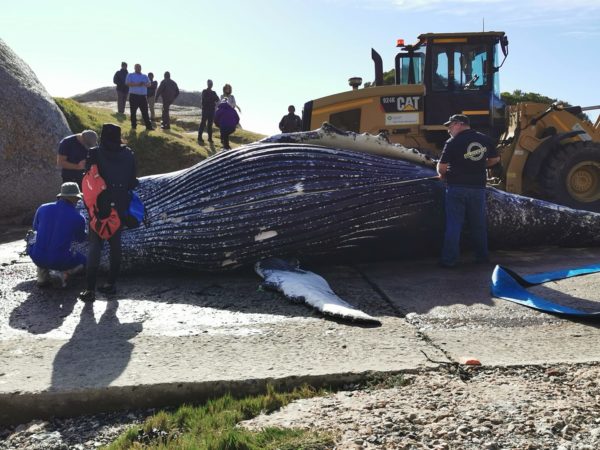
A calf died this week after getting tangled in an octopus trap. Picture: Emma Raisun
“In 2014, the Department established an octopus exploratory fishery that is operating in Saldanha, False Bay and Mossel Bay. This programme aims to gain scientific knowledge regarding octopus harvesting, with a view to enhancing job creation and economic development in coastal areas. Meaningful data has been collected between 2014 and 2018, and will continue until 2021 in order to ensure a solid statistical time series of catch and effort data.
“Once enough data has been collected, it will be analysed and subjected to proper scientific scrutiny and review, after which a recommendation will be made regarding the viability of establishing a new commercial fishery. Such a recommendation will also consider mitigating measures in the operations of octopus fishery,” read the statement.
Throughout the process, the Department has been leading with permit holders to ensure whales do not get caught in the nets.
After today’s meeting, operators will start the process of removing the gear from False Bay, focusing on the areas where the whales were harmed first.
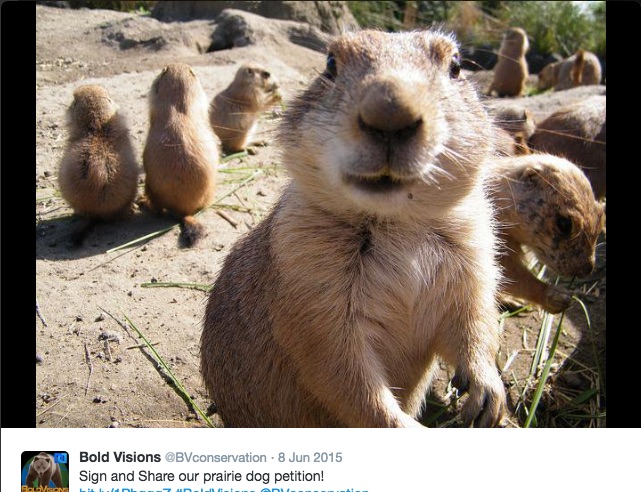
The below comes from an acquaintance on Facebook, and is shared here because the info is valuable and we gotta support our prairie dog friends:
[a prairie dog was caught in a window well of one of these good humans, and got out after being offered a “ladder”]
Thank you so much for being such a compassionate soul and caring about this little dude…
As a prairie dog advocate, I just don’t understand the irrational hatred many people have for this animal. As a declining keystone species, prairie dogs are crucial for the health of our prairie ecosystem and provide food for many animals (hawks, owls, coyotes, badgers, foxes, eagles etc) and shelter (mice, amphibians, snakes, insects). Without the prairie dogs, black-footed ferrets and burrowing owls would go extinct. For millions of years, prairie dogs have aerated, churned and fertilized the soils and made this land what it is.
These humble little creatures really deserve so much respect, but people villainize them and humans continue to do atrocious things to prairie dogs and all the other the animals that are in the burrows (bulldozing them alive, poisoning them with cheap and cruel poisons, using them for target practice).
A seagull eats a starfish on Granville Island in Vancouver with the impunity that comes with the knowledge that all gulls are protected under the Migratory Birds Convention Act. (Jonathan Hayward/The Canadian Press)
282
comments
Angelo Mion learned the hard way that a seagull is more than just a flying rat. At least as far as the law is concerned.
The 82-year-old East Vancouver man found himself before a judge for the first time in his life this week after having pleaded guilty to an offence: destroying the nest of a migratory bird.
And so here he was shuffling at the glacial pace that was as fast as his feet could carry him down the aisle of a fifth floor B.C. provincial courtroom to face judgment.
“I didn’t know that seagulls were protected either. I don’t think most people do,” his lawyer told Judge Patrick Doherty.
“He didn’t know he was doing anything wrong.”
Mion’s tangle with the law grew out of the ornithological obsession of a couple whose high-rise condo allowed them a clear view of the rooftop of a low-rise East Vancouver apartment building Mion built in the early 1980s.
The octogenarian doesn’t live in the building, but he still serves as caretaker. And in the summer of 2016, his neighbours took an interest in the birth and hatching of two fledgling gulls.
These fledgling gulls were hatched in a nest on the roof of the CBC’s downtown Vancouver building. It is an offence to destroy a gull’s nest. (CBC)
Crown prosecutor James Billingsley said gull chicks are flightless for five to six weeks. But once they do take to the skies, their nests still serve as a kind of homing beacon.
“It’s how they orient themselves in cases of extreme weather,” the prosecutor said.
One of the neighbours claimed he saw Mion walk onto the roof one July morning and “chase and kick” at the two baby gulls. The birds’ parents screeched and circled in the skies overhead as the neighbour yelled at Mion to stop.
That night, the other half of the couple saw Mion “sweeping the nest into a bucket.”
They called wildlife officials, who showed up at the door of Mion’s home, “but he refused to open it.”
‘These are these common seagulls, right?’
Fast forward to the summer of 2017 and the high-rise neighbours had their eyes on a new nest of gulls. There were three this time.
Then, in mid-August, one of the neighbours came home to find there were none.
“He saw shovel marks,” Billingsley told the judge.
A B.C. provincial court judge gave 82-year-old Angelo Mion an absolute discharge for destroying a seagull’s nest. (David Horemans/CBC)
A wildlife inspector called on Mion again, this time wanting access to the roof for an inspection. Mion told him there was no need, because he had already removed the nest.
“Mr. Mion stated that he was the only one with access to the roof,” Billingsley told the judge.
“And (the officer) should go and get a helicopter because that was the only way (he) would get access to the roof.”
In a distinguished career behind the bench, Doherty has presided over complex cases involving alleged sexual assault in the RCMP, trespassing on Indigenous land and fraud.
This appeared to be the first time he had been asked to consider the rights of a Glaucous-winged gull.
“These are these common seagulls, right?” he asked Billingsley.
“That’s correct,” Billingsley answered. “All gulls are protected under the Migratory Birds Convention Act.”
The rise and fall of the Glaucous-winged gull
According to a 2015 University of British Columbia study, the number of seagulls in the Strait of Georgia, which separates Vancouver Island from the B.C. mainland, has dropped by 50 per cent in the past three decades. Diet is considered a factor in their decline.
They’re known for eating almost anything — hence the “flying rat” reputation — but they historically relied on a marine diet. Apparently french fries, cookies and other scraps picked off the plates of tourists are not an improvement.
Seagulls are as much a part of the B.C. landscape as the Coastal Mountains. And they’re protected – despite fowl bathroom habits. (Jonathan Hayward/The Canadian Press)
Destroying a gull’s nest carries a penalty ranging from $5,000 to $300,000. Billingsley was looking for a fine of $8,000.
But Mion’s lawyer, Ken Westlake, said an absolute discharge would be more appropriate.
Born in Italy in 1937, Mion came to Canada in 1956 with a Grade 5 education. A mason by trade, he worked until the point his body failed him, raising children and grandchildren.
He has prostate cancer and other health issues. Westlake said the gull’s nest was blocking the drain in the apartment building.
‘Absolutely inconceivable’
Mion wore a crisp light check shirt and brown dress pants as he sank into a chair beside his lawyer.
Westlake said the old man was “adamant” that he didn’t touch the nest until the chicks were gone.
And he disputed any suggestion that the neighbours could have seen his infirm client “kick” at anything.
“He walks with some difficulty,” Westlake told the judge. “What (the neighbour) observed and what he believes have nothing to do with what happened.”
After a break to consider the facts, Doherty decided to give Mion an absolute discharge — meaning he won’t have to pay a fine and hopefully will never have to set foot in a court again.
The judge pointed out that ignorance of the law is no defence. But in some circumstances, it can be a mitigating factor.
“It is absolutely inconceivable that he will be caught doing anything wrong again,” the judge said.
Take these five steps for a smooth airport experience, from TSA. BY MCCLATCHY
The hair curlers in a flier’s carry-on luggage were worth about $100,000 — thanks to the 34 prized finches that were stuffed inside them, federal prosecutors in Brooklyn said.
Francis Gurahoo, a 39-year-old Connecticut man, was arrested at John F. Kennedy International Airport in New York City on Sunday when he was caught trying to smuggle the live birds from Guyana into the United States, according to the U.S. Attorney’s Office for the Eastern District of New York.
The birds compete in singing contests in Queens and Brooklyn, and Gurahoo confessed that he was planning to sell each one at $3,000 a bird, according to prosecutors. He’s set to appear in federal court on Monday afternoon.
In the last few years, JFK customs agents have stopped a number of travelers trying to sneak the seed-eating birds into the U.S. “in various manners without declaring the birds on the required importation forms,” a U.S. Fish and Wildlife Services special agent said in a criminal complaint, which the U.S. Attorney’s Office shared with McClatchy.
About a year ago, two other men were accused of similarly smuggling birds at JFK, in that instance using socks as well as hair curlers, McClatchy reported in April 2018.
The man said he planned to sell each bird for around $3,000, according to federal prosecutors.UNITED STATES FISH AND WILDLIFE SERVICE
The special agent said in the complaint against Gurahoo birds can sell for $5,000 or more, and that “an individual willing to smuggle finches into the United States from Guyana can earn a large profit by selling these birds in the New York area.”
During the singing contests, which are often held in public parks, two birds sing against each other after spectators place bets, and then a judge declares a winner, the special agent said.
“Although certain species of finch are available in the United States, species from Guyana are believed to sing better and are therefore more highly sought after,” the agent wrote.
The agent said that searches of Fish and Wildlife Service databases showed Gurahoo hadn’t applied for or been given a permit to import the birds. He’s accused of violating federal rules that require animal importers to declare wildlife and get permits, as well as federal rules requiring imported commercial birds to be quarantined for a month.
“This requirement exists to prevent the spread of diseases carried by foreign birds, including Newcastle disease — a contagious avian virus than can infect humans and domestic poultry — and bird flu,” the special agent wrote.
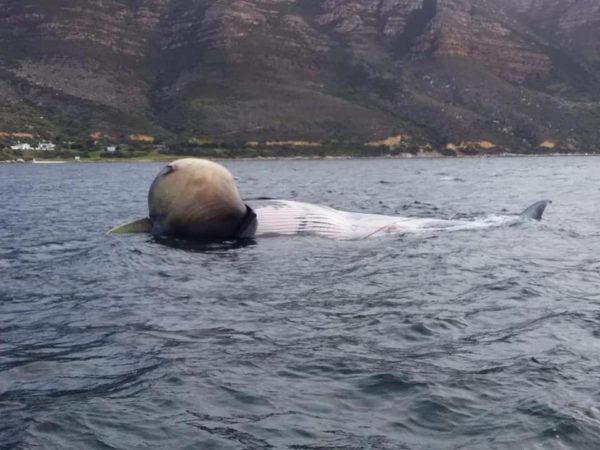
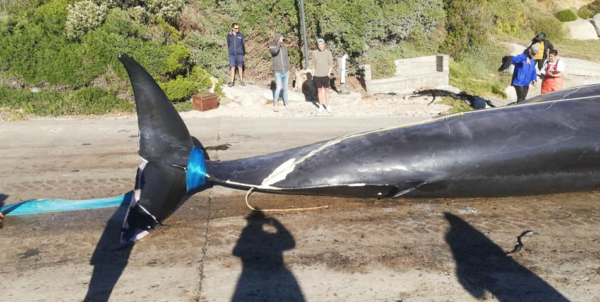
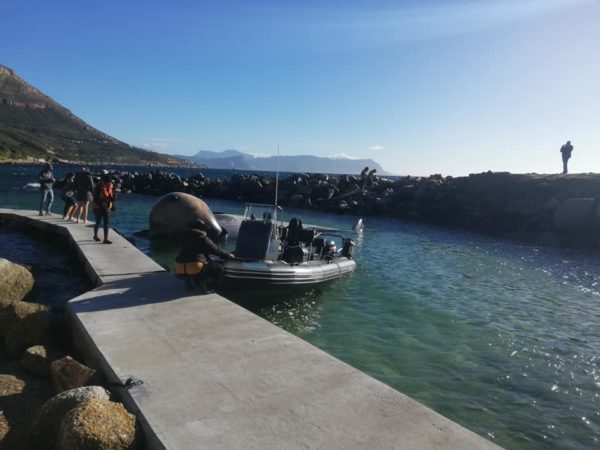
For years the octopus-trapping ropes set up in False Bay have led to a number of marine animals, whales in particular, getting entangled and killed. The recent death of a trapped Bryde’s whale just days after a humpback calf was trapped in the same ropes has pushed the public over the edge.
Members of the community took to social media to share their outrage over the incident and have joined together to see that something is done about these needless and preventable deaths.
An official petition has been created to raise awareness around the harm caused by octopus traps as well as develop safer conditions for marine life.
“We request an immediate moratorium [ban] on all octopus trapping in the False Bay area until such time as stakeholders and concerned citizens are consulted and can agree on a safe operating standard/procedure for the use of traps used in the octopus trapping fishing industry and that the Department uses this period of Moratorium to gather much-needed information on stock levels and the impact of octopus trap fishing on the environment,” the petition reads.
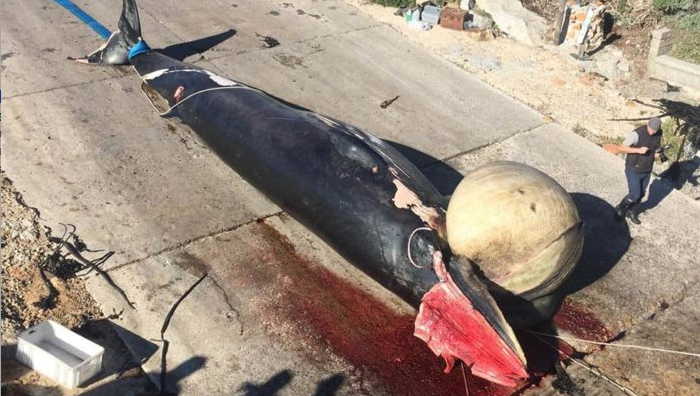
The Bryde’s whale carcass floating on the water’s surface. The whale died after it got caught in octopus-trapping ropes.
For years permits for octopus trapping have been casually issued, and these traps have lead to numerous entanglements and deaths of marine animals.
The community feels the Department of Agriculture, Fisheries and Forestry has approved a number of permits without proper consideration or updated data.
Octopus traps consist of long ropes tied to buoys that float just above the water surface, and are not only a danger to whales but also to dolphins, boats and ships.
The Bryde’s whale carcass was hoisted ashore.
False Bay is home to the South African Navy and octopus traps also often endanger those on board boats in the bay, as the traps no longer include sonar reflectors or lights as they once did.
If a submarine accidentally catches one of the ropes in its propellers, a dire situation could develop.
Recently two whales were caught in the same octopus trap near Millers Point on June 8 and 10, leading to the death of one of them.
The carcass of the Bryde’s whale being towed into the harbour.
The creators of the petition, dubbed “Save our whales: Stop Octopus Trapping in False Bay, Cape Town”, are imploring the Honourable Minister to place an immediate ban on all trapping in the False Bay Area until a safer operating procedure can be put in place. A safer procedure would include compulsory 24-hour monitoring at sea of octopus traps and sufficient visible signalling on the traps’ buoys to avoid endangering any more marine or human life.
The community hopes that the department will also take time to assess the current stock levels and update any information they may need to make educated decision when issuing permits.




 Exposing the Big Game