Exposing the Big Game

Forget Hunters' Feeble Rationalizations and Trust Your Gut Feelings: Making Sport of Killing Is Not Healthy Human Behavior

Exposing the Big Game

More cases reported of dogs caught in traps at Island Lake State Park in Brighton

LINKEDINCOMMENTMORE

More people have come forward about their dogs being caught in traps at Island Lake State Recreation Area in Green Oak Township.

Green Oak Township resident Mark Timney reported an incident to the Michigan Department of Natural Resources involving his female German short hair pointerdog being caught in a trap there on Oct. 25. His dog was not on a leash, he said.

“When I reported it to the DNR hotline, the officer informed me that yet another dog discovered (but was not caught in) the trap earlier that morning. So it appears this is not a one-off incident. That area of the park is used daily by many people who train their dogs off the leash,” Timney said.

Timney also provided a photo of the trap, located about 50 feet outside of the Spring Hill mining operation near McCabe Road, which shows a chain-linked and clamp-like mechanism.

RELATED: 

Dogs caught in traps at Island Lake park in Brighton

“Fortunately, I was able to release her,” Timney said.

He said he came back two days after the incident and the trap was gone.

“I’ve been walking my dog there for years and never encountered a trap,” said Timney, who said he continues to take his dog to the park.

The Green Oak Township Fire Department was called to an incident on Oct. 18 to get a trap open to release a dog caught in it, the department confirmed on Tuesday.

Brighton resident Jamie Tobbe said her dogs got caught in a trap in the park on Oct. 29 and although they were not hurt, were frightened after the incident.

RELATED: Dogs caught in traps at Island Lake state park

Andrew Haapala, unit manager of Island Lake State Recreation Area, could not be reached for comment.

At the time of the incident involving Tobbe’s dogs, Haapala said the traps were put there legally and that trapping is legal on state-owned land.

In order to place a trap on state land, it must be marked with the name of the trapper and a Michigan Department of Natural Resources identification number.

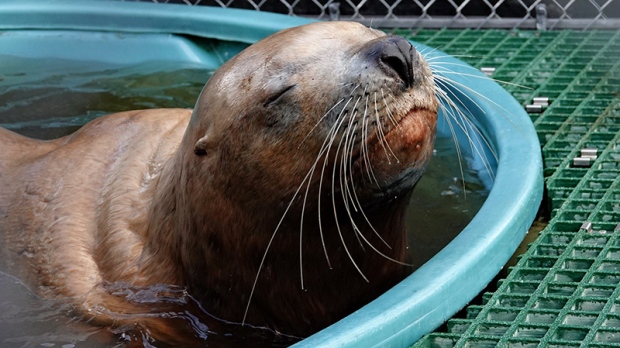
Sea lion that was shot in the head euthanized after health takes downturn

steller sea lion uclueletThe adult male Steller sea lion was found unresponsive but still alive with a bullet on his skull on a rocky shoreline of Ucluelet last Thursday, Oct. 11, 2018. (Marine Mammal Rescue Centre Handout)

130
130
https://vancouverisland.ctvnews.ca/sea-lion-that-was-shot-in-the-head-euthanized-after-health-takes-downturn-1.4151840
CTV Vancouver Island
Published Friday, October 26, 2018 4:53PM PDT 
Last Updated Friday, October 26, 2018 5:16PM PDT

A sea lion rescued in Ucluelet after being shot in the head earlier this month has died at a Vancouver recovery centre, veterinarians say.

The Steller sea lion dubbed “Ukee” was euthanized after spending two weeks in critical care at the Vancouver Aquarium Marine Mammal Rescue Centre.

Head veterinarian Dr. Martin Haulena said the choice to put down the sea lion was difficult, but had to be made.

“He wasn’t responding to treatment, and his condition had taken a significant downturn in the last two days,” Haulena said in a statement. “At this point we had to evaluate his quality of life. Although we are disappointed we couldn’t return him to full health, we are glad we could end his suffering and make his final days more comfortable.”

Ukee was found on a rocky shoreline of Ucluelet with gunshot wounds to his head and was severely emaciated. Experts said the 8 to 10-year-old sea lion also appeared to be blind and unable to forage for any food.

On Oct. 11, a massive team of personnel including staff from the rescue centre, Department of Fisheries and Oceans, Parks Canada and other local volunteers staged an operation to rescue the animal.

At under 350 kilograms, he was far under normal weight for adult Steller sea lions, but was still the biggest animal ever admitted to the rescue centre, staff said.

After Ukee was rescued, Haulena had strong words for whoever may have shot him.

“This is clearly a serious animal welfare issue,” he said at the time. “It is unacceptable to shoot sea lions. Based on his body condition, this individual has been suffering for many weeks.”

Anyone who sees a marine mammal in distress is asked to immediately report it to the rescue centre at 604-258-7325 or the DFO hotline at 1-800-465-4336.

https://www.facebook.com/plugins/post.php?href=https%3A%2F%2Fwww.facebook.com%2Fvanaqua%2Fposts%2F10155586545395800&width=500

Family Wants Answers After Cat Fatally Shot With Arrow

Follow KDKA-TVFacebook | Twitter

PITTSBURGH (KDKA) – A family pet in Brookline is dead after police say someone shot it through the chest with an arrow. The Orr family is now demanding answers and asking police to investigate.

Nathan Orr said he heard his cat, Ollie, meowing very loudly and in pain on Saturday night.

“I thought my cat was fighting with another cat and I looked out of the window and saw he had an arrow through his back and out of his chest,” said Orr. “And unfortunately my kids also witnessed that.”

ollie cat killed Family Wants Answers After Cat Fatally Shot With Arrow

(Photo Courtesy: Orr Family)

Orr said his two sons, ages 6 and 3, are devastated after this tragedy. The family lives on Elmbank Street, a dead-end street lined with single-family homes.

“It’s not a good first brush with a loved one passing on [for the boys],” said Orr. “It was a cat, but it was part of our family. Ollie was a part of our family.”

Orr thinks that someone targeted his cat.

“It looked deliberate,” said Orr. “Due to the fact that it was a target practice arrow leads me to believe it wasn’t a hunting accident.”

There is a wooded area behind Orr’s home, but not one that allows hunting.

ollie cat Family Wants Answers After Cat Fatally Shot With Arrow

(Photo Courtesy: Orr Family)

Orr said he rushed Ollie to an emergency vet in Castle Shannon, but it was too late. The arrow had punctured the cat’s lungs. He said he will now focus on comforting his fiancé, two sons and wait for police to investigate.

“They took it hard, they took it very hard,” said Orr. “Especially when we told my 3-year-old that he had to say goodbye.”

Pittsburgh Police’s Humane Officer Christine Luffey said she plans to knock on every door along Elmbank Street to investigate this incident.

Orr said that Ollie was an indoor cat, but every once in a while he would make a break for the backyard. He said he always stayed in the yard near the bushes. Orr thinks that’s where he was when he was struck with the arrow.

Officer Luffey told KDKA she wants to remind all cat owners to keep their cats inside because they face too many dangers outside: including being hit by vehicles, contracting diseases, being hurt by other animals, and human cruelty.

Anyone with information is asked to contact Pittsburgh Police.

If you’d like to donate to help cover the Orr family’s veterinarian bills, click here https://www.gofundme.com/JusticeForOllie

Comments (2)

Chickens: Their Life and Death in Farming Operations

*By Karen Davis | October 1, 2018 | Comments Welcomed*

The Encyclopaedia Britannica’s Advocacy For Animals is pleased to publish
this
article by United Poultry Concerns President Karen Davis. Please read it,
share
it and, if you are inclined, add an appreciative comment.

Chickens: Their Life and Death in Farming Operations
<http://advocacy.britannica.com/blog/advocacy/2018/10/chickens-their-life-and-death-in-farming-operations/>


United Poultry Concerns is a nonprofit organization that promotes
the compassionate and respectful treatment of domestic fowl.
Don’t just switch from beef to chicken. Go Vegan.
http://www.UPC-online.org/ http://www.twitter.com/upcnews
http://www.facebook.com/UnitedPoultryConcerns

View this article online
<http://upc-online.org/industry/181001_chickens-their_life_and_death_in_farming_operations.html>

Hurricane Florence Highlights the Cruel Reality of Factory Farming

KENNY TORRELLA FOR BUZZFLASH AT TRUTHOUT

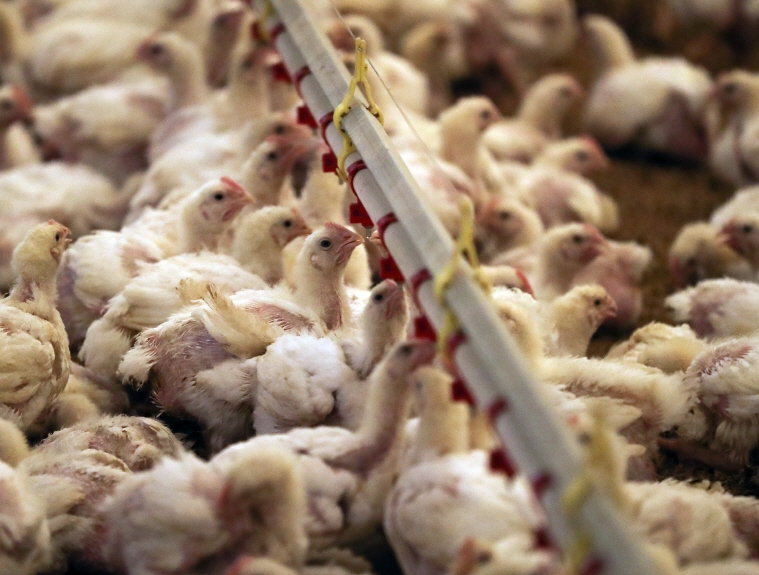
chickenBroiler chickens (chickens raised for meat) are the top agricultural commodity in North Carolina. In 2015, 823 million broiler chickens were raised in the state. (Photo credit: North Carolina Department of Agriculture)

In 1999, Hurricane Floyd tore through North Carolina, killing 74 people and causing $6.5 billion in damage. But it didn’t just destroy towns and claim human lives; it also claimed the lives of millions of farm animals. The images are impossible to forget: lifeless pigs floating in flood water, thousands of dead chickens inside a factory farm and a few live pigs huddling on top of a barn almost completely submerged under water.

Hurricane Floyd also caused 55 pig manure lagoons to flood, pushing out hog waste into nearby estuaries, which killed fish and caused algae blooms.

Now, early reports show Hurricane Florence’s similar devastating impact on animals and the environment. The North Carolina Department Agriculture and Consumer Services said Tuesday that the storm has claimed the lives of 3.4 million chickens and turkeys, as well as 5,500 hogs. About 1.7 million of those chickens perished at Sanderson Farms, the nation’s third-largest poultry producer, according to Reuters. The numbers are expected to rise.

The Associated Press says several manure lagoons have failed and are now spilling out pollution. The Waterkeeper Alliance has shared photos of manure lagoon breaches and factory farms turned into underwater tombs.

While natural disasters can spotlight and heighten the risks of factory farming to public health, the environment and animals, we’ve long known about the dangers it poses, which raises the question: Why are we raising and killing animals for food in the first place?

From overuse of antibiotics, which could render our own antibiotics ineffective, to leaking manure lagoons, to high saturated fat and cholesterol in meat, eggs and milk, animal farming is one of the most pressing global public health risks.

That’s why last year, more than 200 public health experts, environmental scientists, ethicists and others signed an open letter — featured in The New York Times — calling on the World Health Organization to take concrete steps to mitigate factory farming’s harmful effects. Some of those steps include banning growth-promoting antibiotics, stopping factory farm subsidies, educating consumers on the health risks of meat consumption and financing research into plant-based alternatives to meat.

Also, it’s well known that the meat industry is horrible for the environment. Livestock production is not only resource-intensive but a leading cause of climate change — the second-largest contributor of human-made greenhouse gases after the combustion of fossil fuels — as farmed animals emit vast amounts of methane and carbon into the atmosphere.

What’s more, it’s extremely cruel. North Carolina’s more than 850millionfarmed animals — mostly chickens raised for meat — experience short, brutal lives filled with constant misery and deprivation. Nearly all of these chickens are bred to grow so large, so fast, that many cannot even walk without pain. They live in their own waste, packed into dark, windowless warehouses. And North Carolina’s pig population — about 9 million — is almost as high as its human population. Mother pigs in the pork industry are confined for virtually their entire lives in crates so narrow the animals can’t even turn around.

But the factory farm industry is inured to the abject cruelty that millions of sentient beings must endure under their watch. In a press release, Sanderson Farms described the estimated 1.7 million chickens who perished in their factories as being “destroyed as a result of flooding” — as if they were merely inanimate objects. What’s more shocking is that in the same press release, the company states, “We are fortunate that Sanderson Farms sustained only minimal damage and no loss of life as a result of the storm.” No loss of life? The company completely ignores the fact that those chickens were even alive, let alone thinking, emotional individuals, each with their own unique personalities and social systems, just like humans, dogs, cats and other animals.

But unlike companion animals, who are required by law to be part of government evacuation plans during natural disasters, farmed animals are not afforded such legal protections. Far from being protected, factory farmed chickens are arguably the most abused animal on the planet. And most people probably aren’t even aware of chickens’ incredible cognitive abilities, which rival that of dogs and cats, or that pigs are the world’s fifth-most intelligent animal.

North Carolina lawmakers have fought tooth and nail to protect factory farming corporations over their fellow citizens — often rural communities of color — who have long suffered serious health problems because they happen to live near hog or chicken farms.

Instead of protecting the factory farm industry, lawmakers should instead strengthen — not restrict — citizens’ ability to file nuisance lawsuits against polluting factory farms. Because water and air regulations on factory farms in North Carolina are so lax, suing these facilities for harming people’s quality of life and health is often their last resort. And as public health experts urged the World Health Organization to fund research into plant-based alternatives to meat, so should our federal government.

We take precautions to minimize the harm of natural disasters, but we should also proactively accelerate alternatives to our broken and inhumane food system, rather than wait for it to collapse. We hold the power to do so — now the question is, will we act?

Man jailed six weeks for illegal import of two birds and animal cruelty

Two zebra doves were crammed in separate socks and placed in two drawstring pouches hidden in a man's pants during a foiled attempt to smuggle in the birds.
Two zebra doves were crammed in separate socks and placed in two drawstring pouches hidden in a man’s pants during a foiled attempt to smuggle in the birds.PHOTO: AVA

SINGAPORE – A 46-year-old man was sentenced to six weeks in jail on Wednesday (Sept 19), after he was convicted of animal cruelty and illegally importing two birds.

Abdul Rahman Husain tried to smuggle two live zebra doves into Singapore on May 12 without an import licence from the Agri-Food and Veterinary Authority (AVA), said a joint statement from AVA and the Immigration and Checkpoints Authority (ICA).

ICA officers had stopped Rahman for checks at Woodlands Checkpoint when they detected the two doves crammed in separate socks and placed in two drawstring pouches hidden in his pants.

The birds were found to be in poor condition, and Rahman’s action was deemed by AVA to have caused unnecessary suffering to the birds. The birds were seized and placed under the care of Wildlife Reserves Singapore.

Rahman was sentenced to six weeks’ jail for illegal import of the birds, and another six weeks’ jail for failing to ensure that the birds were not subjected to unnecessary suffering.

Both sentences will run concurrently.

Anyone convicted of smuggling animals and birds into Singapore can be fined up to $10,000, and jailed for up to a year.

Animals that are smuggled into Singapore may introduce exotic diseases, such as bird flu, into the country.

Cork cougar reports prompt animal welfare group to set traps

‘It is a very large cat and the reports we’ve received have been too credible to ignore’

File photograph of a puma. Photograph: AFP/Getty Images

File photograph of a puma. Photograph: AFP/Getty Images

An animal welfare group has set up traps and surveillance cameras after receiving several reports of a cougar or puma being seen in parts of Co Cork over the past fortnight.

Vincent Cashman of the Cork Society for the Prevention of Cruelty to Animalssaid the reports they had received of a cougar being seen near Fountainstownand Crosshaven had yet to be confirmed.

However he said that while the sightings were “out of the ordinary but not impossible”, the CSPCA felt that they had to give them credence such was the adamant belief of those who contacted them.

Speaking on the Neil Prendeville Show on Cork’s Red FM, Mr Cashman said it was possible that a cougar or puma had been brought into Ireland illegally as a pet and escaped from its owner.

“We’ve had no confirmation yet this is a puma but the people we have been dealing with are very credible – it is a very large cat and the reports we’ve received have been too credible to ignore.”

Mr Cashman said cougars are solitary animals and tend not to confront people and while they had received no reports of any sheep being attacked, cougars could live off smaller animals like rabbits.

Male cougars can roam over areas of up to 300 square miles while females can cover areas of up to 200 square miles but the CSPCA had targeted the locations of reported sightings to set up cameras.

“We have trail cameras set up in areas where this animal has been seen passing so as soon it passes, it starts filming so we have it on film and we have infra red as well so it picks it up at night as well.”

Mr Cashman said that the CSPCA was continuing to monitor the trail cameras and ultimately hoped to trap the animal and establish what exact species it was, but that could take some time.

“Our ultimate goal is to trap it but at the moment, there are too many rabbits around and plus there’s a bad bout of myxomatosis going around, so catching rabbits is much, much easier now.”

“When the myxo dies off a little bit, and the rabbit population normalises, then he may find getting food a little bit harder and so he may be encouraged towards our traps,” said Mr Cashman.

Gardaí in Togher, with responsibility for the Crosshaven and Fountainstown areas, said that they had received no reports of cougars being seen in the area or any reports of cougars going missing.

The nearest wildlife park to Crosshaven and Fountainstown is Fota Wildlife Park on the other side of Cork Harbour but Fota does not have cougars. It does keep lions, tigers and cheetahs.

There have been numerous reports of large cats being seen in the wild throughout Ireland in recent years, with several reports of pumas or panthers being seen in various parts of Northern Ireland.

In June 2017, the PSNI posted a warning on its Facebook page about sightings of a possible panther in the Newry area and urged people not to approach the animal if they saw it.

The PSNI and the Ulster Society for the Prevention of Cruelty to Animals began hunting for a suspected puma in August 2003 after a large animal killed a pedigree ram on a farm in Co Antrim.

According to Stephen Philpott of the USPCA, there were also sightings of wild cats around the same time in Derry and Tyrone, where a newborn calf was killed on a farm near Cookstown.

Thousands of Chickens Perished Instantly: One Poultry Farm’s Fight Against Scorching Heat

(image: Yonhap)

(image: Yonhap)

EUMSEONG, Jul. 19 (Korea Bizwire) — When a heat wave warning was issued for all of North Chungcheong Province on Tuesday afternoon, poultry farm owners in the region were naturally on high alert.

At one poultry farm measuring 800 square meters in size situated in Maengdong-myeon in the province’s Eunseong-gun, over 17,000 chickens were seen suffering as the mercury rose.

Many chickens had collapsed, having succumbed to the heat.

The temperature circa 1:35 p.m. on Tuesday was 31.7 degrees Celsius. Seven gigantic fans were in operation, but were not enough to help cool the chickens down.

By 2 p.m., the thermometer shot up to 35 degrees. Ban, the 43-year-old owner of the poultry farm, said that the summer heat was “just as dangerous as bird flu” for the chickens.

Not paying proper attention to the chickens, even for just a moment, could result in thousands of chickens perishing instantly in the heat, said Ban.

In fact, over 20,000 chickens died on Ban’s very farm in 2016 when temperatures shot up in July.

Following the deaths of the chickens, Ban installed thermal insulation materials in all of the barns, which now helps protect the chickens from the strong summer sun.

But other poultry farms that are not equipped with heat resistant insulation try to keep cool by continuously spraying cold water on rooftops via water hoses.

In addition, farm workers monitor the internal temperature by the hour before checking large ventilation fans installed at the poultry farms to see if they are working properly.

If temperatures within the pens surpass 36 degrees Celsius, moisture mist sprays must be turned on to ensure that the chickens do not dehydrate.

Ban’s farm consumes around 40,700 liters of water every day in the summer months.

According to the Ministry of Agriculture, Food and Rural Affairs, 753,191 chickens had perished from the sweltering summer heat as of July 17.

Lina Jang (linajang@koreabizwire.com)

http://koreabizwire.com/thousands-of-chickens-perished-instantly-one-poultry-farms-fight-against-scorching-heat/121641

Cambridge removes coyote traps after photos spark outcry

NEWS 11:52 AM by Jeff Outhit Waterloo Region Record

<https://dynamicmedia.zuza.com/zz/m/original_/0/4/04632a97-8dfb-479c-98dd-6ad894f03dd1/B88277790Z.1_20180713114959_000_G1O8JOFT.6-0_Super_Portrait.jpg>

George Aitken of Cambridge took this photo of a coyote that was caught in trap at Churchill Park in Cambridge on Wednesday. – George Aitken via Coyote Watch Canada

CAMBRIDGE — Cambridge has abandoned its plan to trap a family of coyotes in Churchill Park, ordering all three leg traps removed after photos of a trapped coyote sparked public outcry.

“I feel very relieved,” said George Aitkin, 68, who took the photographs Wednesday and posted them online.

Friday morning, the city ordered all three coyote traps removed. For now it plans to leave the coyotes and add more warning signs. It will urge people to be cautious, to not leave food for the wildlife, and to leash their dogs as required by law.

“Having the concerns of the residents and some of the animal advocacy groups, council has directed staff to simply take a step back and reassess,” said Hardy Bromberg, a deputy city manager.

RELATED CONTENT

* <https://www.therecord.com/news-story/8739119-adult-male-coyote-caught-in-churchill-park/>

<https://www.therecord.com/news-story/8739119-adult-male-coyote-caught-in-churchill-park/>

Adult male coyote caught in Churchill Park <https://www.therecord.com/news-story/8739119-adult-male-coyote-caught-in-churchill-park/>

Aitkin was walking in the park Wednesday when he was horrified to discover a coyote in distress, caught in a leg trap, hurling itself around, panting and chewing at its paw to free itself.

He said he was so distressed by the sight that he would have freed it himself if he thought he could do it safely.

The only coyote the city trapped, a male, was relocated within a kilometre on Wednesday, the city said. It may now make its way back to where it was caught, Bromberg said.