Why do American farmers need some of the strongest anti-whistleblower laws in the land?

http://www.slate.com/articles/news_and_politics/politics/2014/05/ag_gag_laws_idaho_is_criminalizing_muckraking_to_protect_farmers.html

Hogs are raised on the farm.
Should taking this picture without permission be illegal?

Photo by Scott Olson/Getty Images

Over several weeks in 2012, an animal rights activist secretly filmed workers at an Idaho dairy farm kicking and punching cows in the head, jumping up and down on their backs, sexually abusing one, and dragging another behind a tractor by its neck. The Mercy for Animals-made video—one of roughly 80 that activists say they’ve recorded over the past decade—prompted the owners of Bettencourt Dairies to fire five workers and install cameras in their barns to prevent future abuses. A police investigation, meanwhile, ended with three of the fired employees charged with animal cruelty. It was a clear victory for those groups that have made it their mission to expose animal cruelty and criminal wrongdoing on modern American farms.

It will also be their last, if the agriculture industry and its allies in state government have their way.

Earlier this year, Idaho became at least the seventh state to pass a law aimed specifically at thwarting such undercover investigations, and roughly a dozen similar bills are currently winding their way through statehouses around the country. While the specifics vary, so-called ag-gag laws generally make it illegal to covertly record animal abuse on farms, or to lie about any ties to animal rights groups or news organizations when applying for a farm job. Idaho’s law is the strictest of those currently on the books. It threatens muckrakers with up to a year in jail and fines up to $5,000—a sentence, it should be noted, that’s the same as what someone convicted of animal abuse faces.

The laws specifically target animal rights groups like the Humane Society of the United States, People for the Ethical Treatment of Animals, and similar organizations that have increasingly turned to clandestine video in their battle with Big Ag. But the way many of the laws are tailored, they also could ensnare journalists, whistleblowers, and even unions in their legal net, in the process raising serious concerns about the legal impact on everything from free speech to food safety. A wide-ranging coalition of organizations, including the American Civil Liberties Union and the Center for Food Safety, has joined animal rights groups in challenging the Idaho law, along with a similar one in Utah, in federal court. The lawsuits also have the backing of the Government Accountability Project, the AFL-CIO, and a host of media organizations, including NPR.

“They can dress these laws up however they want, but ultimately the rationale here is pretty clearly self-interest on the part of the industry,” says Michael McFadden, the general counsel at Farm Forward, an advocacy group that’s leading the charge against such laws. The industry and their statehouse allies don’t necessarily disagree. State Sen. Jim Patrick, a lead sponsor of the Idaho legislation and a farmer himself, explained the rationale behind his bill: “It’s not designed to cover up animal cruelty, but we have to defend ourselves.”

The way Patrick and his like-minded colleagues see things, farmers in their state are under attack by activists who will stop at nothing to paint what happens on factory farms in the worst possible light. “Terrorism has been used by enemies for centuries to destroy the ability to produce food and the confidence in food safety,” the Idaho Republican told his fellow lawmakers while advocating for his bill several months ago. He struck a similar note during our conversation, comparing groups like Mercy for Animals, which has made a name for itself legally capturing wrongdoing on camera, with more extreme groups like the Earth Liberation Front, an eco-terrorist organization known for setting fire to ski resorts and lumber mills.

Farmers and their allies are quick to brush off the unsanctioned animal rights investigations as craven attempts to manipulate the public and undermine the meat and dairy industry as a whole. “Their goal wasn’t to protect the animals,” Patrick said of the Mercy for Animals investigation at Bettencourt. “Their goal was to put the farmer, or in this case the dairyman, out of business.” That, the activists admit, is largely true. After investigations uncover inhumane or illegal practices on big farms, the groups have a history of applying public pressure to any corporation it can tie to that particular farm. In the case of the Idaho dairy, Mercy for Animals publicized an indirect link to Burger King—complete with a still-active webpage, BurgerKingCruelty.com—and successfully pressed the fast-food giant to stop topping its burgers with cheese made from the dairy’s milk. While that didn’t put Bettencourt, one of the nation’s largest dairies, out of business, it certainly hurt its bottom line.

The industry concedes that abuses do happen on farms—how could it not when there is video evidence one Google search away?—but largely dismisses them as the work of bad actors that are the exception to the industry rule. The industry says reporters and the public are welcome behind closed barn doors—just as long as farmers are there to give context and explain the unsightly details. “We have no intent to stop journalists, but we do want them to ask permission first,” Patrick said, noting that he and his colleagues intentionally left their law as broad as they could.

There are plenty of problems with that logic as far as the public good is concerned. For starters, Upton Sinclair didn’t rely on official tours of Chicago’s slaughterhouses before sitting down to write The Jungle, the 1906 novel that was based on his undercover trips into meatpacking facilities and a work that is widely credited with driving widespread regulatory reform. Likewise for the Pulitzer Prize-winning reporting of the New York Times’ Michael Moss, who used confidential company records in 2009 to raise questions about the effectiveness of injecting ammonia into beef to remove E. coli.

The AFL-CIO warns that the effort could have a chilling effect on unions by making it more difficult for undercover organizers to land positions at companies where they are unwelcome, a practice known as “salting.” Ditto for whistleblowers, who in theory could be charged under the law if they were to record evidence to back up their allegations, according to the Government Accountability Project, a whistleblower protection and advocacy organization. State lawmakers behind the efforts often voice fears that activists could easily stage abuse where there is none, leaving farmers convicted in the court of public opinion without a chance to defend themselves—although Patrick couldn’t cite any examples of that ever happening.

There’s also the arguably more pressing matter of the laws’ main target: camera-toting activists on farm factory floors. While the industry might not like what it sees in the videos, it can’t make a convincing case that the footage has no value. In the last three years alone, activists have taped stable workers in Tennessee illegally burning the ankles of horses with chemicals, employees in Wyoming kicking pigs and flinging piglets into the air, and farmhands in Iowa burning and snapping off the beaks of young chickens. Those actions went undiscovered, or at least unreported, by the farm owners and government regulators before they were caught on camera by muckraking activists.

What they capture on film can go far beyond animal cruelty, too. The footage is capable of shifting the debate from one about the welfare of livestock to that of humans, a topic much more likely to hit home with consumers. The most damning investigation in the past decade occurred in Southern California, where an undercover Humane Society operative caught workers illegally pushing so-called downer cows, those cattle that are too sick or weak to stand on their own, to slaughter with the help of chains, forklifts, and high-pressure water hoses at the Westland/Hallmark Meat Co. The U.S. Department of Agriculture has deemed those cows potential carriers of mad cow disease, salmonella, and E. coli. As a result, the video prompted the recall of 143 million pounds of beef—the largest meat recall in U.S. history—large portions of which were destined for school lunch programs and fast-food restaurants. That investigation would have likely never happened if laws like Idaho’s had been on the books in California.

Both sides are set to get their day in court later this summer when a federal judge hears the suit against the Idaho law. But even if the law is ultimately struck down, the fight will continue. “If it fails, we’ll revise it,” Patrick said. “I know we did the right thing.”


Cats in Traps fuels new Animal Cruelty debate

http://wtaq.com/news/articles/2014/may/12/cats-in-traps-fuels-new-animal-cruelty-debate/

Undated (KELO-AM) Animal rights groups are shocked by reports of traps in the Black Hills being baited with live cats.

State game officials have heard from hikers that have stumbled upon traps baited with small cats.

Sheri Kosel with South Dakotans Against Animal Cruelty says she was shocked and then disgusted by the stories. Kosel says there may be a loophole on traps in South Dakota’s first animal cruelty law passed by the legislature this year.

State Game officials  and trapping groups are now both calling for a ban on baiting traps with live animals in South Dakota. Kosel says closing the loophole or a separate outright ban would be alright with her.

Also see: http://rapidcityjournal.com/news/local/reports-of-using-live-animals-as-bait-in-trapping-prompt/article_29e84521-a98b-50f1-92e2-812e95a64746.html

HPIM1320

Arrow removed from NJ bear shot in face, mouth

http://www.nj.com/news/index.ssf/2014/05/nj_vet_removes_arrow_from_bear_that_was_shot_in_face_mouth.html

By Jeff Goldman/The Star-Ledger The Star-Ledger

MINE HILL — A New Jersey black bear that remarkably survived the winter with an arrow in its face and mouth has a new lease on life.

With assistance from the state Division of Fish and Wildlife and several technicians, a Mine Hill veterinarian removed the projectile from the approximately 3-year-old bear on Thursday evening, hours after it was caught by officials.

“We’ve never seen anything quite like that,” said Dr. Steven Hodes, who performed the surgery at about 7 p.m. in the parking lot of the Hodes Veterinary Group on Route 46. “Normally when they get shot in the face or head you expect them to die in during the winter. He was fortunate in that he got shot in an area that allowed him to eat and drink.”

The arrow was wedged from the top of the bear’s nose, through its tongue to the bottom portion of its jaw, Department of Environmental Protections spokesman Bob Considine said. The arrow didn’t come out the bottom of the animal’s jaw, though. Officials still aren’t sure how the bear was able to drink because of the way the arrow was positioned.

Fish and Wildlife officials located the bear Thursday afternoon after receiving calls from concerned people who saw it in the area of New Egypt Raceway.

arrow.jpgThe arrow that was lodged in the face and mouth of a black bear.

When technician Kim Tinnes and her team arrived, the bear was gone, though. It was spotted a short time later running across Route 539, at which time officials were able to capture it by shooting it with a tranquilizer dart.

The bear was then brought to Mine Hill and within an hour the arrow had been removed. The bear weighs about 220 pounds, 50 to 70 pounds less than a normal bear of its age.

The man who shot the bear reported it to the Division of Fish and Wildlife. He was issued a summons for attempting to take a bear illegally.

The bear was released this morning into the Colliers Mills Wildlife Management Area in Jackson, Considine said.

“It’s very gratifying for us to be able to help,” said Hodes, who has been working with Fish and Wildlife for about three years and performed the surgery for free.

Something Serious to Protest

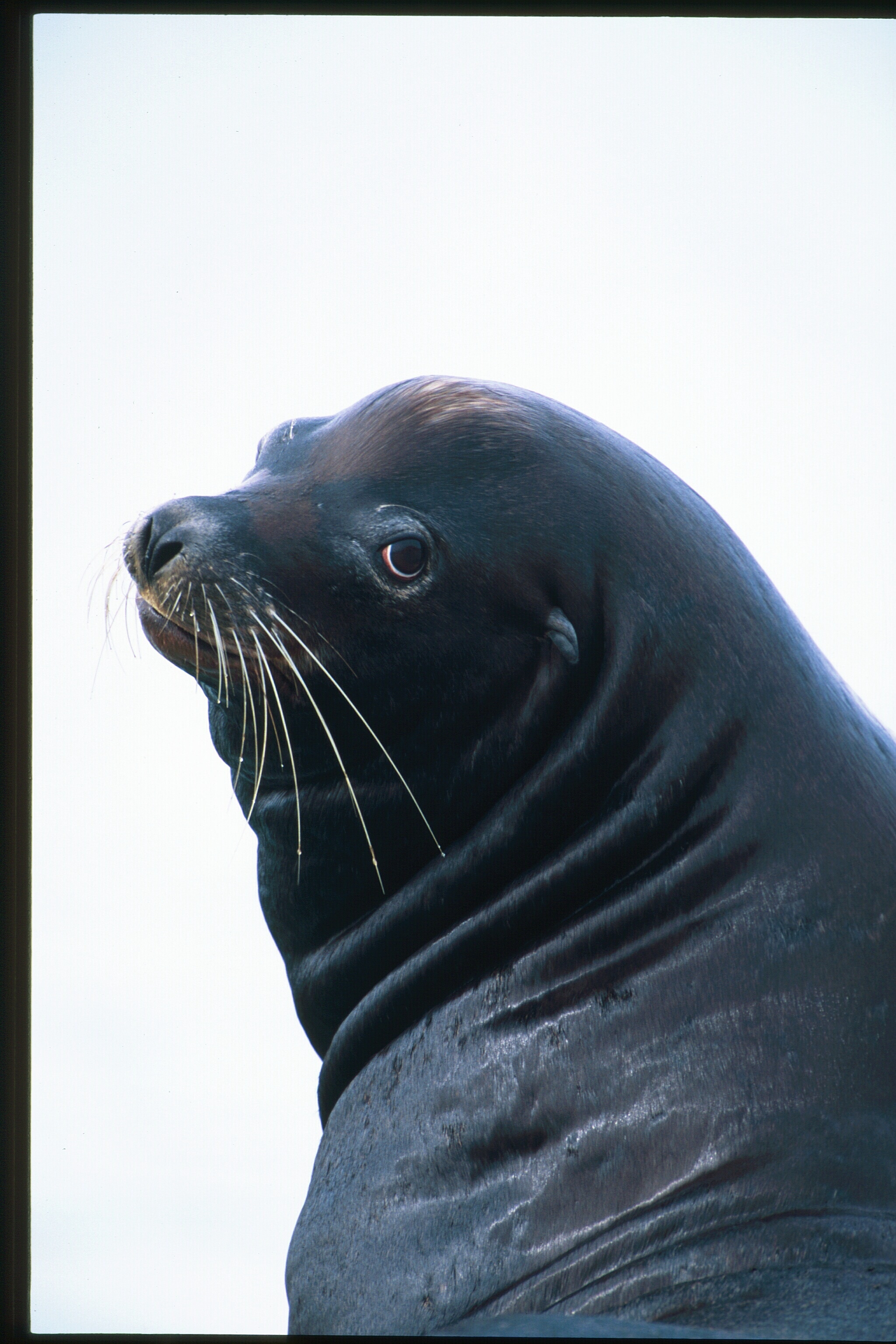
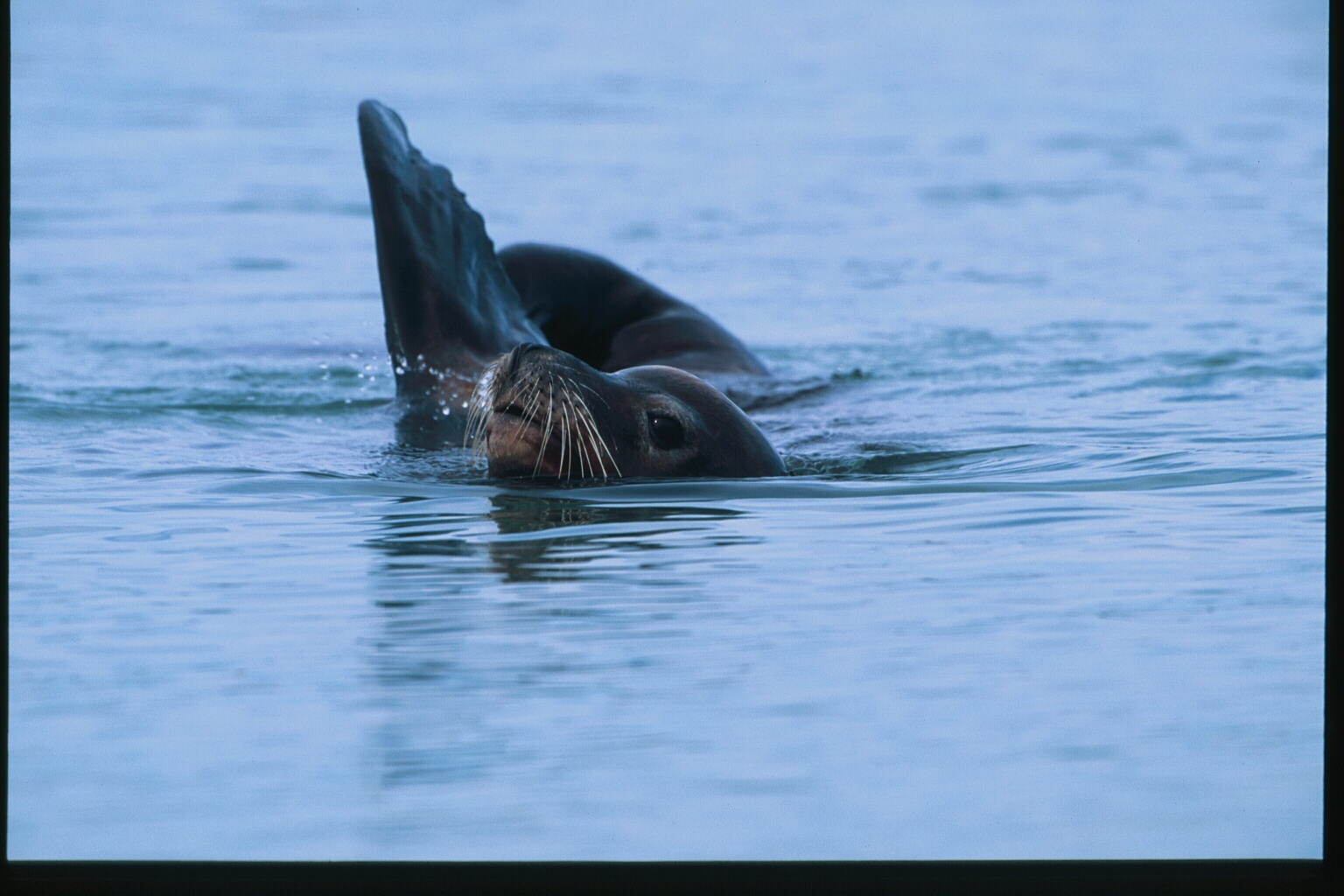
On Friday, May 4, my wife and I stopped at the East Moring Basin on the Columbia River in Astoria, Oregon, to see the sea lions who spend the daytime hours hauled out on one of the floating docks there. It’s always a treat to watch their antics and to hear the raucous roaring of competitive bulls mouthing off to anyone who might try to wriggle in and crowd their personal space. As expected we heard bellowing as soon as we arrived, but this time the sea lions had something serious to protest: an unfortunate herd-mate had been trapped and was being held down tightly and tormented by a group of strange and menacing two-leggers wearing orange raingear, one of whom pulled out a hot iron and repeatedly branded the restrained sea lion. As the victim struggled, acrid smoke from his burning flesh drifted for a hundred yards across the harbor.

The searing pain of the branding may have been temporary, but now the sea lion is branded in the figurative sense of the word as well, and his troubles are just beginning. With the numbers viciously burned onto the animal’s back, the Oregon Department of Fish and Wildlife thus has a clever way to recognize him. Later, they will decide whether or not to add him to their annual hit list of 92 sea lions they plan to kill if they reach the man-made dam that impedes the ancient migration route of spawning salmon.

It speaks volumes about the trusting nature of sea lions that they are willing to return to Astoria year after year. Since its establishment in 1811 as a hub for the booming, bloody fur trade, Astoria has been the scene of countless crimes against marine animals, including sea lions, who were killed along the Oregon coast by the thousands—exclusively for lamp oil.

Image

Charles M. Scammon—whaler, sealer, mariner and infamous discoverer and exploiter of the gray whale birthing lagoons in Baja California—devoted a chapter to sea lions in his book, The Marine Mammals of the Northwestern Coast of North America: Together with an account of the American Whale-Fishery. He begins that chapter with the lines, “Among the numerous species of marine mammalia found upon the Pacific coast of North America, none excite more interest than the sea lion;” Scammon goes on to describe an average day in the life of the pitiless sealers, and the last day ever for a group of sea lions. “On the south coast of Santa Barbara Island was a plateau, elevated less than a hundred feet above the sea, stretching to the brink of a cliff that overhung the shore, and a narrow gorge leading up from the beach, through which the animals crawled to their favorite resting-place. Several unsuccessful attempts had been made to take them; but, at last, a fresh breeze commenced blowing directly from the shore, and prevented their scenting the hunters, who landed some distance from the rookery, then cautiously advanced, and suddenly, yelling and flourishing muskets, clubs, and lances, rushed up within a few yards of them, while the pleading creatures, with lolling tongues and glaring eyes, were quite overcome with dismay, and remained nearly motionless. At last, two overgrown males broke through the line formed by the men, but they paid the penalty with their lives before reaching the water. A few moments passed, when all hands moved slowly toward the rookery, which had slowly retreated. This maneuver is called “turning them” and, when once accomplished, the disheartened creatures appear to abandon all hope of escape, and resign themselves to their fate. The herd at that time numbered 75, which were soon dispatched by shooting the largest ones, and clubbing and lancing the others, save for one young sea lion, which they spared to ascertain whether it would make any resistance by being driven over the hills beyond. The poor creature only moved along through the prickly pears that covered the ground, when compelled by his cruel pursuers; and, at last, with an imploring look and writhing in pain, it held out its fin-like arms, which were pierced with thorns, in such a manner as to touch the sympathy of the barbarous sealers who put the sufferer out of its misery with the stroke of a heavy club.”

Scammon ends his chapter with the prediction that the Pacific Coast sea lions “…will soon be exterminated by the deadly shot of the rifle, or driven away to less accessible haunts.” Today the few sea lions who have managed to hold on are again under attack, this time for the crime of daring to survive despite industrial scale over-fishing depleting their only food source.

California Animal Rights Groups Offer $10,000 Reward for Pelican Slasher

http://www.scientificamerican.com/article/california-animal-rights-groups-offer-10000-reward-for-pelican-slasher/

Apr 29, 2014

By Laila Kearney(Reuters) – U.S. animal rights groups are offering a $10,000 reward for information on a person who apparently mutilated a California brown pelican this month in a case that has drawn widespread public attention.

California brown pelicans are a threatened species that is protected by the Migratory Bird Treaty Act.

The pelican, named Pink after the colored band on its leg, was found in the city of Long Beach with a severed throat pouch, the International Bird Rescue (IBR) organization said in a statement.

The emaciated bird’s throat was stapled, so it could feed, and it is now being taken care of in a small Los Angeles aviary. On Sunday, it had a three-hour surgery to repair the laceration and IBR said it would require many more operations and extensive rehabilitative care to fully recover.

“In my 40-plus years as a wildlife rehabilitator, I’ve seen too many of these horrible attacks against innocent animals,” IBR executive director Jay Holcomb said in the statement. “The public is sick of it too, and we hear their frustration.”

The IBR is offering the reward along with the Animal Legal Defense Fund.

The U.S. Fish and Wildlife Service said is was investigating the possible crime, which is punishable by a fine of up to $15,000 and a county jail sentence of up to six months.


(Reporting by Laila Kearney; Editing by Sharon Bernstein and Miral Fahmy)

Action Alert for Raccoons

URGENT UPDATE! In spite of receiving hundreds of calls in opposition to HB 423, a bill that would allow LIVE raccoons to be trapped and used as bait in hunting field trail competitions, the Senate Natural Resources and Environment Committee approved this bill.

We must fight harder than ever. Committee members obviously had already made up their minds, but your senators may be undecided. They do not want to lose your vote. Your Georgia state senators MUST hear from you! Urge them to vote NO on HB 423!

To find your senator’s contact info follow the easy steps below:

1. For your State Senator click: http://votesmart.org/
2. Type your address or 9 digit zip code in the box and click "Search." (If your address doesn't bring the page up your 9 digit zip code will.)
4. Click "State Legislative."
5. Beneath "State Senate" your senator's name is underlined. Click his/her name.
6. Your senator's email address and phone contact information appears.
7. Call your senator at the capitol number AND the district number and ask him/her to "vote NO on HB 423."
8. The subject line of your email should read: Vote NO on HB 423
URGENT UPDATE! In spite of receiving hundreds of calls in opposition to HB 423, a bill that would allow LIVE raccoons to be trapped and used as bait in hunting …field trail competitions, the Senate Natural Resources and Environment Committee approved this bill.
We must fight harder than ever. Committee members obviously had already made up their minds, but your senators may be undecided. They do not want to lose your vote. Your Georgia state senators MUST hear from you! Urge them to vote NO on HB 423!
To find your senator’s contact info follow the easy steps below:
1. For your State Senator click: http://votesmart.org/ 2. Type your address or 9 digit zip code in the box and click “Search.” (If your address doesn’t bring the page up your 9 digit zip code will.) 4. Click “State Legislative.” 5. Beneath “State Senate” your senator’s name is underlined. Click his/her name. 6. Your senator’s email address and phone contact information appears. 7. Call your senator at the capitol number AND the district number and ask him/her to “vote NO on HB 423.” 8. The subject line of your email should read: Vote NO on HB 423

Urge Georgia Legislators to Oppose Raccoon Torture!

If House Bill (H.B.) 423 passes, it will allow hunters to trap and cruelly confine raccoons for use in field trial competitions. This bill has passed through the House and is now with the Senate Natural Resources and Environment Committee, which may discuss it as early as March 11. Your voice and the voices of everyone you know are desperately needed right now. Please forward this alert far and wide!

Every minute in confinement is already a terrifying eternity for raccoons, who, during field trial competitions, are flung high into trees or hauled across fields and bodies of water as frantic dogs give chase. They must repeatedly endure this hellish ordeal, often for hours on end, and many are badly injured or even killed during the trials. Survivors risk developing chronic and contagious stress-induced disorders, which could eventually prove fatal after their release.

Please urge the members of the Senate Committee  and your senator to oppose H.B. 423. Let them know that field trials are inhumane and harmful to local ecosystems and can spread disease. Tell them that these events should remain illegal in Georgia!

Action Alert Here:  https://secure.peta.org/site/Advocacy?cmd=display&page=UserAction&id=5343

Wildlife Photography Copyright Jim Robertson

Wildlife Photography Copyright Jim Robertson