Hunting is Legal Animal Cruelty

When is an act of cruelty to animals not considered a crime?

When it’s committed in the name of sport.

“Injuring or killing any animal, outside of its permitted hunting season, is a crime.”

That quote was from Putnam County SPCA Chief Ken Ross, in response to the shooting of a Canada goose by a man annoyed that geese leave their droppings in an area where human children might play. The entire quote read: “In New York State, all animals are protected under cruelty statutes. Injuring or killing any animal, outside of its permitted hunting season, is a crime” (my emphasis added).

Clearly, even in a state as progressive as New York, “sportsmen” like hunters, fishers and trappers are given a free pass to get away with the crime of animal cruelty. At the risk of undermining the few laws currently in existence protecting non-humans, it’s time to recognize the tradition of hunting as nothing more than legalized cruelty to animals.

Text and Wildlife Photography ©Jim Robertson, 2013. All Rights Reserved

Text and Wildlife Photography ©Jim Robertson, 2013. All Rights Reserved

Animal rights activists call for ban on “traditional” hunting games

2013/05/02 Taipei, By Yang Shu-min and Maia Huang

May 2 (CNA) Animal rights activists on Thursday called for a ban on traditional hunting contests by indigenous tribes, saying such competitions are a form of animal abuse.

The indigenous peoples’ traditions of hunting animals to show respect for their ancestors and Mother Earth often involve cruel actions such as torture of the animals, said the the Environment and Animal Society of Taiwan and some indigenous activists.

Furthermore, catching animals for fun and hunting pregnant creatures shows no respect for life and violates tribal traditions, said Chen Yu-min, director of the society.

The organization displayed video footage of a contest that showed about 200 people hunting squirrels and tearing the live creatures apart.

Such abuse hurts not only the indigenous culture, but also Taiwan’s international image and its tourism industry, the organization said.

It said that since 2009, at least 28 animal hunting contests have been held in 18 townships in nine counties across the country — all in the name of passing on traditions and cultural heritage.

Although hunters from indigenous tribes are excluded from the country’s wild animal protection laws, participants in such competitions could face animal abuse charges, said Lin Tzu-ling, general secretary of the Wild at Heart Legal Defense Association.

Lin urged the Council of Indigenous Peoples, Council of Agriculture and tourism-related agencies to help promote animal rights and push for the abolition of hunting games across the country.


TIME TO END A TWISTED TRADITION!

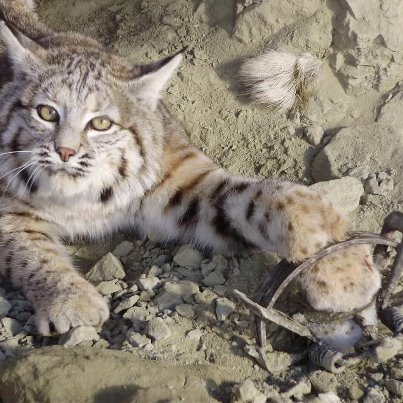
Unless a severe blow to the head or some congenital brain disorder has rendered them incapable of feeling empathy, anyone who has witnessed the harrowing ordeal suffered by an animal caught in a leg-hold trap should be appalled and outraged that trapping is legal in a society that considers itself civilized.

The continuation of this hellish violation in a country governed by the people suggests that either most folks have brain damage, or the majority of the voting populace is blissfully unaware of the terrible anguish someone caught in a trap goes through.

They must never have heard the cries of shock and agony when an animal first feels the steel jaws of a trap lock onto his leg. They must never have looked into the weary eyes of a helpless captive who has been stuck for days and nights on end…

525140_440817092654544_311118433_n

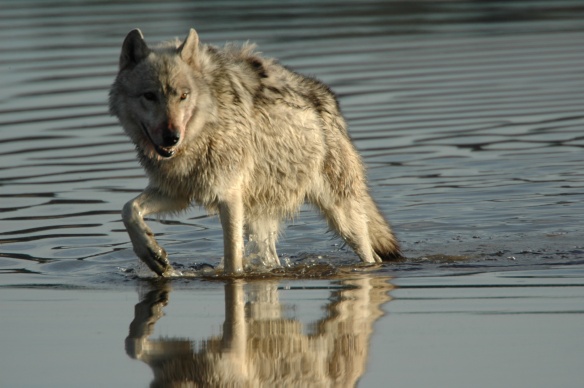
Sidestepping the indisputable cruelty issue, pro-trapping factions try to perpetuate the myth that this demonic practice is “sustainable,” but time and again entire populations are completely trapped out of an area, often within a single season. The winter after I found wolf tracks in Alaska’s Katmai National Park, all seven members of a pack who had filled a niche in and around that preserve were killed by trappers. Though wolves are extinct or endangered in most of the US, but 1500 are permissibly “harvested” in Alaska each year.

Leg-hold traps are now banned in 88 countries and a few enlightened US states. Yet in most states, as in Canada, this twisted tradition is not only legal, it’s practically enshrined as a sacred human right. Compassionate people everywhere must add their voice to the rising call to end this gratuitous torture for good.

__________________________________________

Text excerpted from the chapter “Time to End a Twisted Tradition” in the book, Exposing the Big Game: Living Targets of a Dying Sport.

Photo Copyright Jim Robertson

Photo Copyright Jim Robertson

“Game” Laws Are the Ultimate In Moral Schizophrenia

People like to think we live in a civilized society; after all, we no longer condone slavery, human sacrifice, cannibalism, lethal gladiator games or a host of other outdated cruelties. But in reality, we’re living in a time when the accepted treatment of non-human animals has never been more morally schizophrenic.

Take, for example, the following excerpt from a UK Mirror article about a criminal case of animal abuse that could easily be confused with a perfectly “legal” bird hunt…

Locked up: Yob shot dead 18 ducks and posted pictures of rampage on Facebook
The cruel 18-year-old went on the rampage up a canal bank and when caught told police he only killed the birds ‘for a bit of fun’
12 Jan 2013
A lout who shot dead 18 ducks and posted pictures of their corpses on Facebook was locked up for eight weeks yesterday.
Cruel 18-year-old Michael Prince went on the rampage up a canal bank and when caught told police he only killed the birds ‘for a bit of fun.’
The sick gunman caused armed police to be deployed to the scene to reel him in and his friend who was also armed with a gun at the waterside.
Animal welfare bosses described Prince’s actions as ‘senseless cruelty’ as he was sent to a young offenders’ institution for eight weeks.
Prince and his pal shot birds while others they had just targeted lay flapping their wings in agony and even took aim at horses in nearby fields in Stoke-on-Trent, Staffordshire.
Cops managed to catch the brainless teen when he stupidly posted photographs of his macabre exploits on the internet. …

A “bit of fun” eh? That sounds eerily reminiscent of a case of senseless animal cruelty I covered in an earlier blog post entitled, “Just Out For a Bit of Fun.”
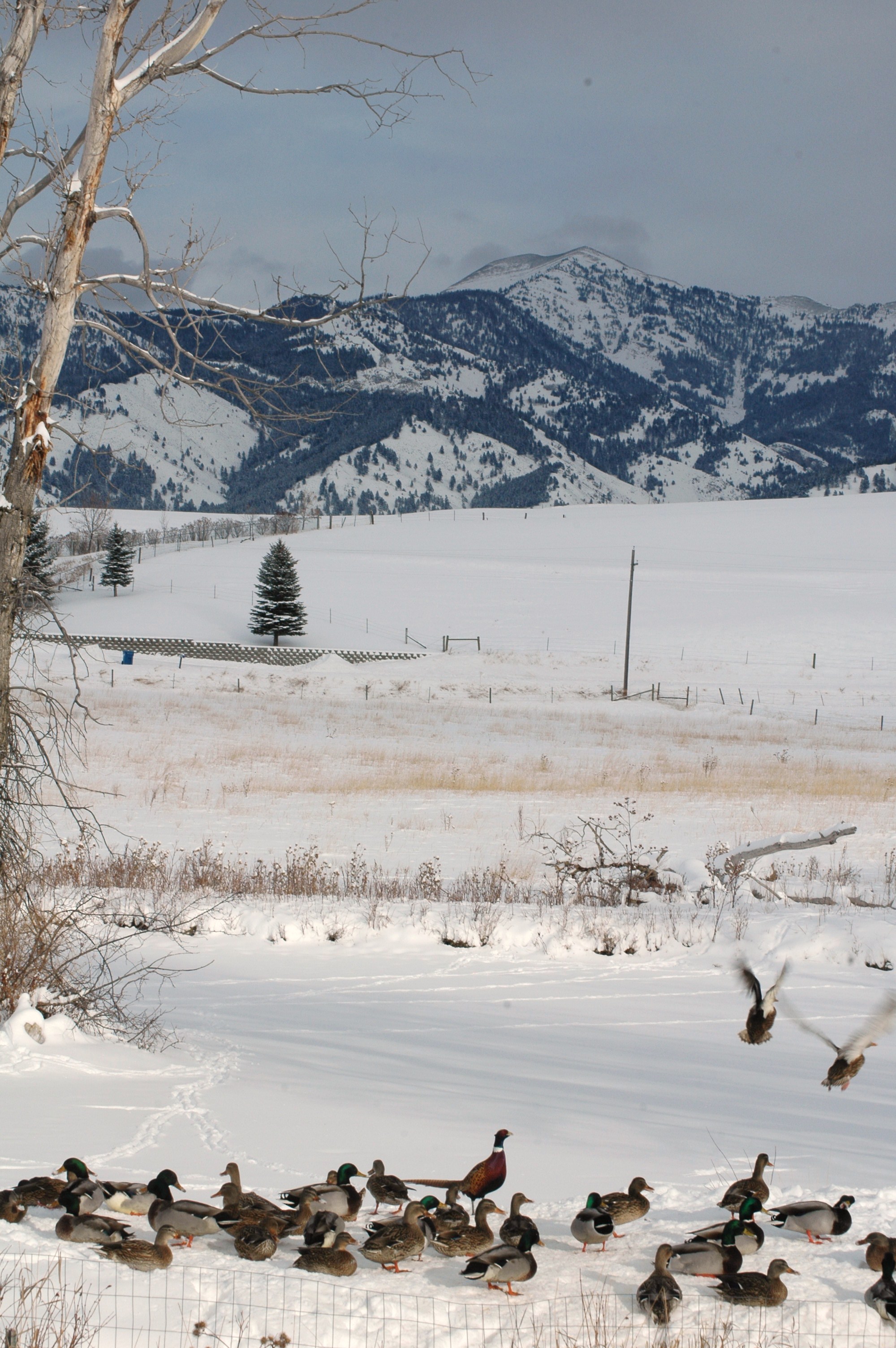
It’s good to know that crimes like these are prosecuted (though the punishments for crimes against animals are seldom more than a slap on the wrist). The question is how does the shooting of ducks “for a bit of fun” differ from the legalized blasting of birds in the name of sport? Depending on the species, the shooting of 18 ducks can be well within the “bag limit” set by local “game” departments. And leaving ducks winged and wounded is standard practice for the average bird hunter.

DSC_0082

More Unnecessary Animal Suffering

At the risk of inciting absurd accusations of misanthropy, I want to talk a little bit about animal experimentation. Don’t worry; I won’t make you hear about all the hellacious, gruesome, twisted and/or morbid things non-human animals are put through in the name of medical science. (If you don’t already know what goes on in those torture chambers they call animal testing labs, please go here or Google animal experimentation.)

What I want to look at is just how unnecessary all that animal suffering is. Not only are there other ways to reach the same conclusions, sans the insanity of experimentation, but the fact is, many of the drugs on the market today are simply superfluous. And many of the illnesses and conditions big pharmaceutical companies and the medical industry have us fearing on a daily basis—through obnoxious and irresponsible ads for their products in every medium—are avoidable, preventable or unlikely to ever threaten us.

How many times have their drugs, though tested endlessly on animals, done people more damage through side effects than the ailment they were said to protect us from? And how many nonhuman animals continue to suffer needlessly because of a national obsession with health care created and fueled by the world’s fastest growing industry?

HPIM1199


Yes, Hunters are Psychopaths—and Sport Hunting is Serial Killing

Based on your response to yesterday’s post, “Are Hunters Psychopaths?” the answer is clear: Yes, hunters are psychopaths. Therefore, by extrapolation, we can conclude that sport hunting is serial killing. There’s no way of getting around it. Not unless you consider non-human animals to be mere objects, possessions or “things,” but then you would be viewing them the way a psychopath views his victims. The fact that society still considers nonhumans as objects or possessions can only mean human society shares some of the traits of a psychopath.

Objectification is one of the benchmark behaviors of psychopathy.

Consider the words of Aaron Thomas, the accused East Coast serial rapist who says he doesn’t know why he couldn’t stop attacking women for nearly two decades. “They were objects,” Thomas recently told The Washington Post during a phone interview from his Virginia jail cell. “Whoever came down the street, an object,” he said.

Struggling to understand himself, Thomas admitted, “I don’t think I’m crazy, but something is wrong with me.” Yes, something is definitely wrong—it’s called psychopathy. Though not considered a defensible form of insanity that blurs the line between right and wrong, psychopathy is a disorder characterized by an inability to empathize with others, often accompanied by a compulsion to exploit, harm or kill in order to gain a sense of self-worth. Sound a lot like trophy hunting? It’s the same deal. Thomas said he carried out his attacks without regard for his victims. The same can surely be said about sport hunters in regards to their victims.

Predictably, Thomas’s early behavior involved cruelty to animals. As a youth, he dropped the family’s Lhasa apso into a post hole that had filled with water, nearly drowning it. Showing more insight than most animal abusers, Thomas told the Post, “I used to think to myself I could have turned out a serial killer.”

It’s eerie, yet enlightening, how much the obsession described by Thomas mirrors the preoccupation of an avid sport hunter. The following confession by a “lifelong sportsman” was printed in Montana Outdoors magazine, under the title, “Why I Hunt”:

“Why do I hunt? Well, I hunt because…. Yeah, right. As if there’s an acceptable answer to that question, one I can regurgitate to nonhunters at Christmas parties and still offer with a straight face to my fellow sportsmen, people who already know in their hearts and guts and bones that we hunt for the same reasons we breathe. Because we don’t have a choice. Just as some human beings are born with the gift of artistic talent and others have an innate facility with numbers, we hunters seem blessed with a genetic predisposition toward the chase.”

It is a “predisposition,” and it’s shared by stalkers, sexual psychopaths and serial killers. Sorry to burst their bubbles, but it’s not a blessing to be proud of, and it’s certainly not something to brag about.


Text and Wildlife Photography ©Jim Robertson, 2012. All Rights Reserved


Stop the Cycle of Violence

If you’ve read my book you already know I’ve had more than my share of first-hand experiences with the gruesome evils of trapping—enough to make me want to take my phazer off “stun” and instantly vaporize the next trapper I see out of existence. Surely the vacuous lunatics who participate in that pastime aren’t worthy of this wonderful world. As a compassionate society we must stop them from causing further torment.

But there are many otherwise good people—understandably enraged by the demonic actions of hunters and trappers—who take it a step too far. They say they want animal abusers to endure as much terrible agony as their victims. Not only do these foul thoughts bring us down to their level, they perpetuate the cycle of violence we should be striving to end. I wouldn’t wish the kind of suffering I’ve witnessed trapped animals going through on anyone, deserving or otherwise.

Of course, I don’t expect folks to shed a tear if a hunter or trapper dies in the act of harming others. That is, as they say, just “nature’s way.” Maybe they were bucking for a Darwin Award and finally earned one.

Still, if you can’t think of one good reason not to wish some awful un-pleasantry on a hunter or trapper, consider this: is a sheep rancher justified in wanting to see a coyote suffer as much as the lamb she preyed on? It’s the same mentality, the same sort of rationalization used to validate cruelly trapping, shooting or poisoning coyotes.

“An eye for an eye” is an outdated holdover from a time when fornicators were turned into pillars of salt and gods were so malevolent as to drown every animal on Earth (except the lucky couples on the Ark, as the story goes) just to punish the human species. As Mahatma Gandhi saw it, “An eye for an eye makes everyone blind.”

Text and Wildlife Photography ©Jim Robertson

He Was a “Decent” Man

Nobody is all good or all bad all of the time. Like the universe, people are multi-dimensional.  Some of the most “decent” people I know are hunters. These folks, who are inarguably unkind to animals during hunting season, are often as friendly and neighborly as you please to their fellow people. I have to assume there was some major peer pressure involved in their decision to start hunting as kids. And they must be doing some heavy compartmentalizing to keep it up as adults.

One of the most memorable and symbolic scenes in the movie, The Silence of the Lambs, is when Clarice Starling (Jodie Foster’s character) tells Hannibal Lecter of a traumatic experience she had while staying at a relative’s sheep ranch in Montana. She was awakened before dawn by the screaming of the lambs her uncle was slaughtering. When Lecter questioned the rancher’s morality, she quickly replied, “He was a very decent man.” No doubt the sheep wouldn’t agree. Somehow people who are capable of extreme cruelty can also have a convincingly “decent” side.

Ordinarily well-thought-of people can turn ugly and unkind when taking part in unnaturally cruel activities, where cruelty is the norm rather than the exception. One of the known coping mechanisms for workers in slaughterhouses is to objectify and demean animals as unworthy of consideration. Not only can people in these situations become indifferent towards “lowly” animals, they frequently turn sadistic. They can come to be obsessed with cruelty, taking pleasure in causing animals increased suffering.

Ten years before Jack the Ripper, nineteenth century French serial killer, Eusebius Pieydagnelle, developed such an obsession while growing up across the street from a butcher shop. He told police, “The smell of fresh blood, and appetizing meat, the bloody lumps–all this fascinated me and I began to envy the butcher’s assistant, because he could work at the block, with his sleeves rolled-up and bloody hands.” In spite of his respectable parents’ opposition, he became an apprentice at the butcher shop where he wounded cattle and drank their blood. But the greatest excitement for him came when he was allowed to kill an animal himself: “…the sweetest sensation is when you feel the animal trembling under your knife. The animal’s departing life creeps along the blade right up to your hand. The mighty blow that felled the bullocks sounded like sweet music to my ears.” Shocking words from someone who was probably always thought of as a decent man.

True crime writer, Ann Rule, worked with and befriended Ted Bundy before she knew of his infamous killing streak, but continued to think of him as a decent man, even after he was charged with the clubbing attack of five sleeping co-eds and the murder of a twelve year old school girl in Florida. Despite learning the gory details of his crimes, Rule was still unwilling to see through his mask of sanity and kept in contact with him, sending him letters and cigarette money in prison.

Like Bundy himself, she was able to compartmentalize; in some ways you could say she enabled his cruel behavior by being such an understanding and supportive friend. The same could be said of any of us who have friends who are hunters. By looking the other way and accepting them despite their dark side, isn’t our compartmentalizing in fact enabling their ill behavior and encouraging cruelty?