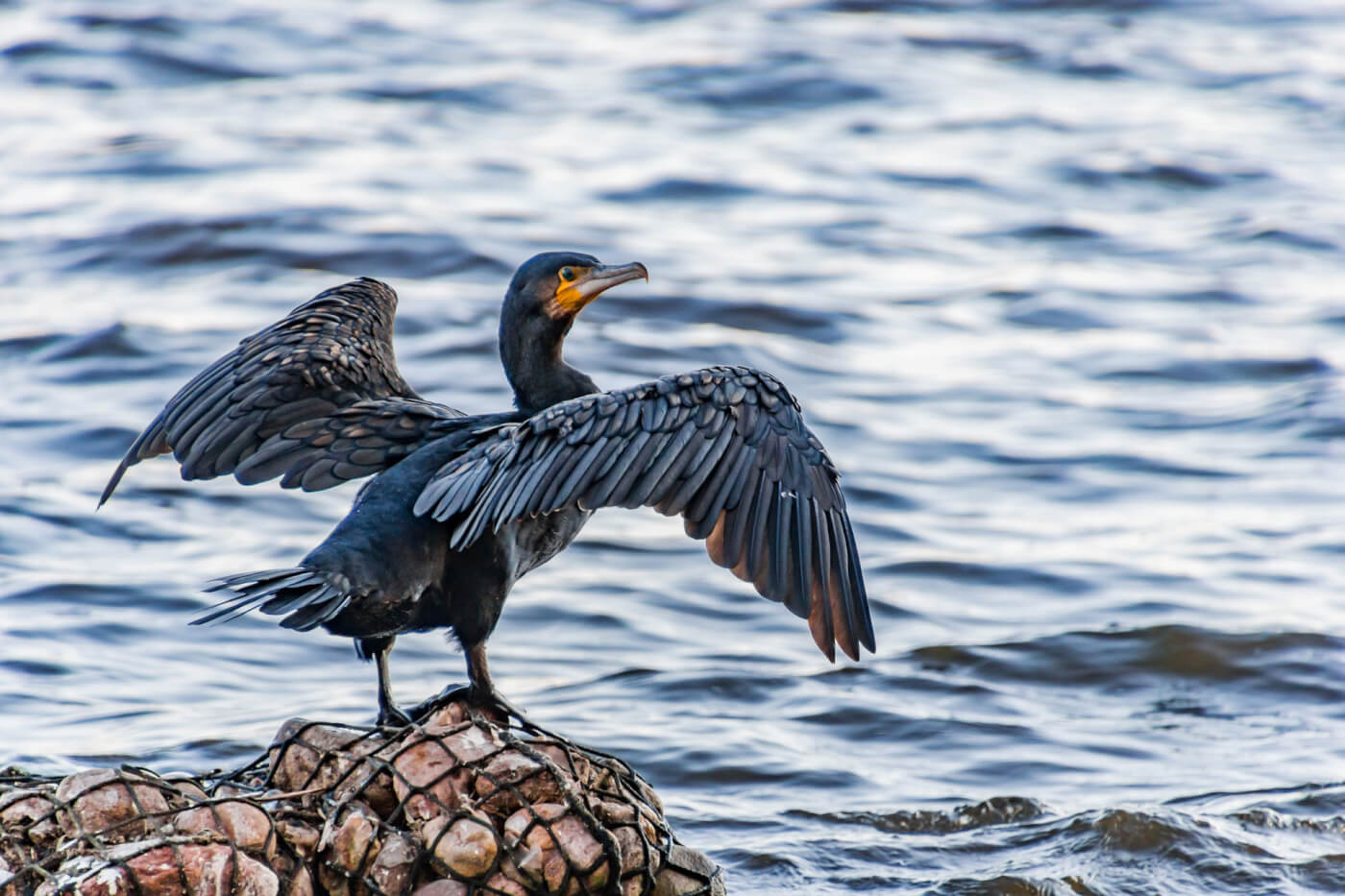
Goose cull cost questioned

goose cull will cost up to $40,000

David Wylie – Feb 8, 2021 / 7:00 pm | Story: 324484File photo

Vernon is moving ahead with its plan to kill at least 100 Canada Geese at a cost of up to $40,000.

https://www.castanet.net/news/Vernon/324484/Why-Vernon-s-goose-cull-will-cos

Coun. Scott Anderson says he’s been asked why the program costs so much.

“We know why it costs so much, but I don’t think the public does,” he said at Monday’s council meeting.

A memo included in the council agenda package does break down the spending somewhat:

  • $7,000 covers planning and permits
  • $27,000 covers catching the birds
  • $4,000 covers killing and disposing of the birds

The cull will take about three to four weeks to complete. About 10 people in kayaks will cover beaches including Paddlewheel, Lakeshore and Kin to roundup the birds.

Once killed, the federal government doesn’t allow for the donation of the meat, which means the bird carcasses will either end up in an animal compost or the landfill.

Anderson says they were allowed to offer the meat to the Okanagan Indian Band, but the OKIB turned it down. One group has requested the goose cull meat be donated to hunters as bait, and city staff have been asked to investigate that use.

City staff believe Vernon is the first city in the Okanagan to actually kill Canada Geese, rather than addling eggs or scaring them away. Municipalities on Vancouver Island have used lethal force.

The geese are considered a nuisance because of their prolific amounts of poop and their potential to destroy habitat.

Two petitions have been launched to stop the Vernon cull.

Mayor Victor Cumming was opposed.
Investigators say man killed hamsters to relieve stress; connected to crimes in Lee, Collier counties

javascript:false

Reporter:Justin Kase
Writer:Jack Lowenstein

Published:February 5, 2021 10:09 PM ESTUpdated:February 6, 2021 6:53 AM EST- Advertisement –

RECOMMENDED

video

Cape Coral Animal Shelters’s low-cost clinic is back open

video

Humane Society of Naples sees increase in pet adoptions during pandemic

WINK NEWS

A man accused of mutilating a hamster admits to buying the pet store animal just to kill it. At least eight hamsters are dead.

Collier County Sheriff’s Office originally arrested suspect Christian Hunter in Golden Gate Estates, and he faces new charges in Lee County Friday.

According to brand-new court documents, Hunter told investigators he did it to relieve stress and anger.

Investigators say receipts and surveillance video is what they were able to gather as evidence to connect Hunter to crimes in Lee County that were similar to crimes he was already arrested for in Collier County.

Hunter was first investigated in 2020 when a mutilated hamster was found in the parking lot of a Petco at Gulf Coast Town Center.

Collier County deputies arrested Hunter Tuesday, accusing him of killing and beheading a hamster he bought from a different pet store.

When Hunter was arrested for torturing and killing a hamster in Collier County, deputies relayed the information to the Lee County animal abuse unit and realized the cases were connected.

“It’s become habitual behavior, and as time goes on, a hamster isn’t going to be enough,” said Dr. Laura Streyffeler, a licensed mental health counselor. “And he may move up to a rabbit and then a dog, and who knows what else?”

Streyffeler says this is a major red flag.

Court documents also show Hunter admitted to buying and killing at least eight hamsters in the last year. He said he’d squeeze them to death and used scissors to cut them up.

“You can’t just put a Band-Aid on a gaping wound,” Streyffeler said. “This kind of behavior doesn’t happen from somebody who made a decision overnight. This is very deep-seated, emotionally disturbed behavior.”

Hunter told deputies killing these creatures relieved his own personal stress and anger.

“I got chills immediately when you explained the whole process of that,” FGCU student Sal Dietrick said. “That’s just disgusting.”

Employees at a pet store in Lee County told us it was extremely upsetting finding the hamster brutally killed in the parking lot of their business.

Others worry about the mental health of the people finding what is being left behind by Christian Hunter.

“Especially if he’s doing it in like the parking lot and stuff,” FGCU student Grant Steinke said. “I mean, there are people that are going to see that as well. I mean, could be a child walking by, wanting to get a hamster himself or herself.”

The employee of the Lee County pet store chatted with us but did not want to talk on camera. He told us, after they realized what Hunter did in the parking lot, they called all their other stores in the area and told them not to sell any animals to him.

They told us Hunter tried purchasing hamsters at two other Lee County Petco stores, but was turned down.

Hunter is no longer in law enforcement custody after bonding out of Collier County jail this week.

Lake Lowell female duck found with blow dart through her face


by Ariana PyperSaturday, January 30th

https://komonews.com/news/local/lake-lowell-female-duck-found-with-blow-dart-through-her-face

2021AAhttps://imasdk.googleapis.com/js/core/bridge3.437.0_en.html#goog_270600488Volume 90% 8VIEW ALL PHOTOSLake Lowell female duck found with blow dart through her face ( Lake Lowell Animal Rescue)

Facebook Share Icon
Twitter Share Icon
Email Share Icon

NAMPA, Idaho (CBS2) — A female duck from Lake Lowell is in recovery after she was found with a blow dart through her face on Jan. 24.

Lake Lowell Animal Rescue was called about a month ago about a report of a duck swimming around with a blow dart in its face.

After trying to catch the duck for weeks, the rescue was able to catch the female duck with the help of a BSU grad student’s net gun.

Matthew Gillikin, a BSU grad student, said he built the net gun for a senior capstone project. The goal of the project was to either do something to help the community or help solve a problem.

“Matthew has helped build us a net gun and we were able to take that out and use it to catch her,” Melissa Blackmer, Lake Lowell Animal Rescue Director said.

The duck was taken in and treated by Dr. Karlee Hondo-Rust, a veterinarian at Treasure Valley Veterinary Hospital.

“The dart actually entered just below her eye, so had it been a few millimeters back she would have lost her eye,” Dr. Hondo-Rust said.Lake Lowell female duck found with blow dart through her face (Lake Lowell Animal Rescue)
Dr. Hondo- Rust said the duck is doing well and responding to the pain medicine and antibiotics. She is hopeful that they can release her in a few weeks.

Blackmer said, unfortunately, this isn’t an isolated incident. Over the years, there have been reports around the valley about birds and cats being blow darted like this, but not all of them were as lucky as this duck.

“I do think there is someone or more than one person going around doing this and it’s incredibly unfortunate and very very cruel. It’s a recurring thing, so every few years or so we will get a run of ducks or geese come in because they have been blow darted and haven’t succumbed to their injuries,” Blackmer said.

Blackmer said she wants to raise awareness about animal cruelty in the valley, and the importance of reporting animal cruelty cases.

“We just want to raise awareness about some of the animal cruelty that happens because I think a lot of times people don’t realize what can happen to your pet who is outside or in this case, ducks or roosters, or other animals,” Blackmer said.

Blackmer said you can report an injured animal by calling Lake Lowell Animal RescueRuth Melichar Bird Center (Animals In Distress Association), or the police.

You can also join the Facebook group The Life Outdoors for updates on animal cruelty cases in the area.https://imasdk.googleapis.com/js/core/bridge3.437.0_en.html#goog_270600489Volume 90% Lake Lowell female duck found with blow dart through her face{ }(Lake Lowell Animal Rescue)

Rural New Mexicans oppose trapping, too

Las Cruces Sun-News

https://www.lcsun-news.com/story/opinion/2021/01/31/rural-new-mexicans-oppose-trapping-too/4325386001/

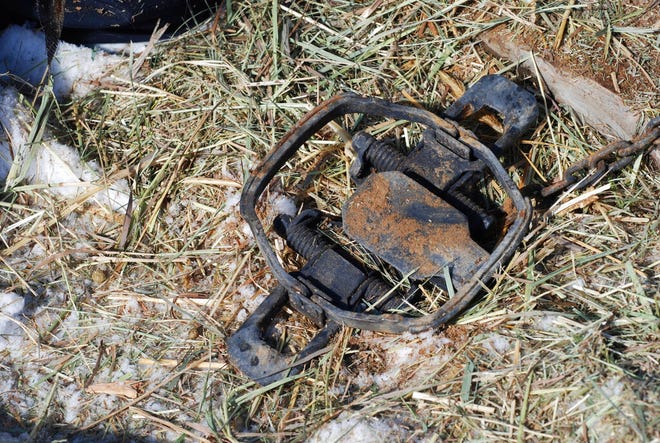
This Feb. 20, 2019, file photo, shows a foothold trap intended for bobcats, set by licensed trapper Tom Fisher, on the outskirts of Tierra Amarilla, N.M.

It’s come to our attention that a few prominent voices from the trapping community feel like they can speak for all rural New Mexicans in their quest to continue their grip on safe public lands. We are rural New Mexicans from across the state and we oppose the use of cruel, dangerous traps on public lands.

We have all chosen to live more rural lifestyles for a variety of reasons. Some of us want to be more connected to the land and nature. Some of us want a quieter, slower routine. Some of us want wide open spaces, including safe access to public lands. Some of us are in the country for our livelihood. Among us are educators, artists, authors, farmers and veterans. We come from all walks of life. Some of us are relatively new to New Mexico, some of us have been here for decades, raised our families here and some of us were born here. All of us revere and respect wildlife. And setting indiscriminate leghold traps to kill native animals for fun or money is just as foreign to us as it is to the nearly 70% of New Mexican voters who oppose trapping across the board.

The idea that we support trapping because we live in rural areas is like saying city-dwellers don’t drive trucks. It is preposterous.

One thing that does set us apart from a lot of urban and suburban residents is that we have the unfortunate fate of encountering traps more frequently. Traps are often closer to home for us, quite literally. They lie in wait for unsuspecting paws on state and federal lands that are sometimes adjacent to our homes. Many of us have had awful experiences encountering traps, from our own dogs being caught to finding brutally injured wildlife. If you look at a map of where people like us have had these experiences, the majority are away from the big cities. Rural residents face greater risk of being harmed and traumatized by a trap because we live closer to public lands. We want safe access to those lands, and traps put that safety at risk.https://1991c441286826fe16e9dfbea563a362.safeframe.googlesyndication.com/safeframe/1-0-37/html/container.html

And, most traps aren’t even necessarily set by rural New Mexicans. The New Mexico Department of Game and Fish sells more trapping licenses to urban New Mexicans than to those who live in rural areas. The notion that trapping is done by rural people and opposed by urban people is laughable.

Rural New Mexicans are a diverse set of folks. And there are plenty of us who do not trap, don’t want anything to do with trapping, and want traps off of public lands. Just like some city-dwellers support trapping (though probably not many since only 22% of voters approve of traps at all), some rural people do too. But don’t let trappers fool you by claiming to speak for all of us.

Biden administration withdraws Trump-era plan for higher line speeds at chicken slaughterhouses

By Kitty Block and Sara Amundson

January 25, 2021 0 Comments

Biden administration withdraws Trump-era plan for higher line speeds at chicken slaughterhouses

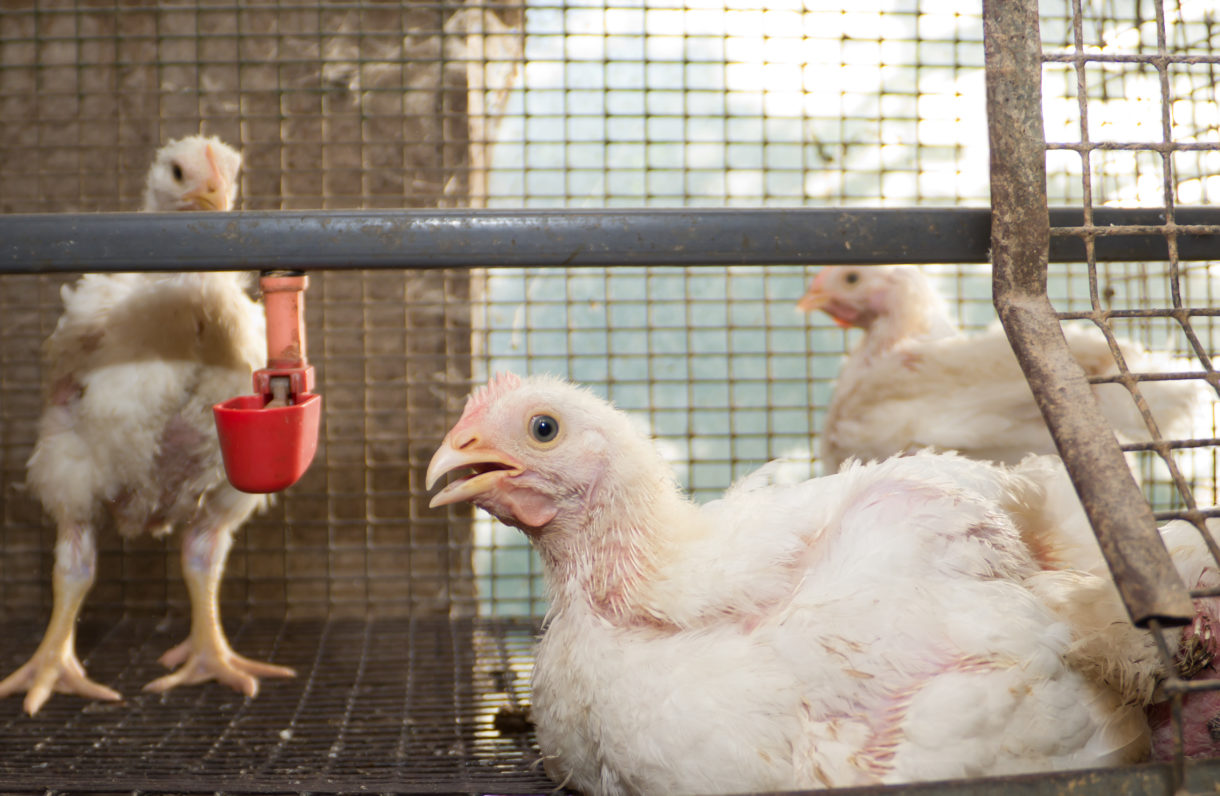
Increased line speeds benefit no one but chicken producers looking to fatten their profits. Even at existing speeds, conditions inside a slaughterhouse are already immensely dangerous and inhumane. Photo by Kharkhan_Oleg/iStock.com

The Biden administration has withdrawn a deplorable pending rule that would have allowed qualifying chicken slaughter plants in the United States to permanently dial up line speeds from an already inhumane and lightning-fast 140 birds per minute to 175 birds per minute.

The U.S. Department of Agriculture’s Food Safety and Inspection Service, under the Trump administration, approved waivers for slaughterhouses to operate at faster speeds. Dozens of chicken slaughterhouses received such waivers, including 16 that received waivers in the spring of 2020. It was a terrible decision given that slaughterhouses had been declared coronavirus hotspots. To add insult to injury, the Trump administration soon after began working on a new rule that would allow qualifying chicken plants to operate at the higher speed, without even applying for a waiver. In essence, chicken producers looking to make more profit could simply ratchet up the line speed to kill more chickens with no consideration for animal welfare or worker safety.

The Humane Society Legislative Fund had been working with key leaders in the House and Senate to advance a shift on this issue, directing the USDA to review its policy in the recently enacted omnibus appropriations package and critical lobbying to urge candidate Biden to speak out about line speeds on the campaign trail. Withdrawing this rule was one of our top priorities for the Biden administration. Next, we will continue to focus on ending the waiver for the dozens of slaughterhouses that are already operating at the higher speeds. We and our allies are already suing the USDA to stop this waiver program and revoke the waivers, and we are urging the USDA, under new leadership, to promptly do so.

Increased line speeds benefit no one but chicken producers looking to fatten their profits. Even at existing speeds, conditions inside a slaughterhouse are already immensely dangerous and inhumane. Workers, struggling to keep up with rapidly moving slaughter lines, grab the chickens and slam them into shackles, injuring the animals’ fragile legs while they’re still conscious. Some birds miss the throat-cutting blade and enter the scalder—a tank of extremely hot water—alive and fully conscious. Human injury rates are also high as workers struggle to keep up with fast-moving lines. Imagine the additional risks to animal welfare and worker safety from increasing line speeds even more.

Faster speeds also further increase the risk of pandemic spread in slaughterhouses, where more than 48,000 workers have already been infected with the coronavirus and at least 245 have died. In fact, other federal agencies, including the Centers for Disease Control and Prevention and the Occupational Safety and Health Administration, had asked that line speeds be slowed down during the pandemic.

We are excited about today’s outcome—it is the right decision for worker safety, animal welfare, food safety and the mitigation of pandemic risk. But there is a great deal more we hope to accomplish in coming weeks and months. President Biden has a strong record on animal protection, and we will be working with his administration to withdraw harmful regulatory actions against animals taken under Trump, including the removal of slaughter speed limits at pig slaughterhouses. We will also work to undo a number of harmful rules finalized by the last administration, including reinstating protections for gray wolves, reversing harmful changes to the Endangered Species Act, and stopping harmful hunting practices on Alaska’s federal lands. It’s a new day, and we are excited to make this one of the best years ever for animal protection policy gains at the federal level.

Mexican wolf killings expose a dark underbelly of western culture

by GRETA ANDERSON on DECEMBER 21, 2020 · 28 COMMENTS · in WILDLIFE NEWS

*Trigger warning: Animal cruelty and wolf abuse discussed below

Photo courtesy the awesome Wolf Conservation Center, nywolf.org

For over a year, my colleague at Western Watersheds Project and I have been paging through gory reports of dead livestock, most of them (questionably) attributed to Mexican wolf predation. I’ve gotten somewhat inured to seeing the bloody corpses of cattle, decapitated calves, and dissection necropsies. It’s unpleasant work, but it’s turned up some very interesting results: Namely, many of the confirmed Mexican wolf depredations are unsubstantiated based on the evidence in the reports, and some are so full-scale bogus as to call into question how, exactly, Wildlife Services is making these decisions.

Still, all the mangled livestock in those color photos didn’t prepare me for looking at photos of dead Mexican wolves. I have recently been poring through law enforcement reports of lobo deaths that were provided to me by the Center for Biological Diversity who obtained them under the Freedom of Information Act and, let me tell you, there are some real sickos out there killing wolves. Like, really sick.

I recently uncovered some evidence that Craig Thiessen, already known as a brutal wolf-hating rancher who whacked a trapped young wolf #1385 (named “Mia Tuk”) with a shovel so hard that it broke loose the lobo’s jaw, actually admitted to beating trapped wolves twice. He apparently confessed that he beat two trapped lobos into submission, and in a later declaration, he claims he let Mia Tuk go free afterwards and “sadly, it was later killed by other wolves.” The “sadly” of that sentence really ices the cake of this guy’s crime, given that he’s the same person who was investigated for leaving out poisoned meatballs near cow carcasses on the public lands that he rents from the American public to graze his cattle.

Other wolves from the same pack went missing the same year, and many of these disappearances look pretty darned suspicious. There’s the skull of Mia Tuk’s mother, AF1279, that was recovered a few months later in the vicinity of Mia Tuk’s body. The lower jaw had been cut with a handsaw, meaning (maybe?) that someone knew something about this wolf’s death and went back to try to… I don’t know… retrieve some wolf teeth? Why does someone take a saw to a wolf skull?

I wish that I could put these reports into a file called “Isolated Incidents,” and close that box. But then there’s female pup fp1389 who was shot with a projectile twice, hit in the head with a hammer-like object, and didn’t die until several days later when she developed a secondary infection. There’s adult female wolf #1212 who was caught in a snare trap by a rancher who knew there were wolves in the area but went ahead and set up traps for “coyotes.” (And yes, I’m just as horrified that coyotes are treated this way, but lobos are a highly endangered species, already at high risk of a second wild extinction, and every loss of an individual wolf puts the recovery of the entire species at risk). Then there are the poisoned meatballs, the high-powered rifles, the people who intentionally ran over a wolf with their truck, all the various ways that people kill wolves simply out of hatred and stupidity.

Somehow, even after years of hearing about “Shoot, Shovel, and Shut Up” from ranchers and trophy hunters, and seeing social media posts that boast about acts of extreme cruelty, the existence of these sick people still shocks me. I’m shocked at the maliciousness, the remorselessness, and the sheer spite it would require to torture or kill these creatures, and it enrages me how so many of them get away with it. My outrage alone doesn’t change anything; 96 wolves were known to have been killed illegally and missing under suspicious circumstances between 1998 and 2018.

So how do we change this? How do we get state law enforcement interested in prosecuting under the Animal Cruelty laws? How do we get federal prosecutors to actually go after these bastards? How do we get rid of the McKittrick policy that allows liars to claim they “thought it was a coyote” despite the brightly colored collars and the knowledge that there are lobos in the area? How do we solve the problem of entitled sickos who think it’s OK to rob wolf packs of family members and ecosystems of essential predators? I sure don’t know, but I know that by burying the crimes deep in the agency files isn’t helping, but maybe bringing some of these horrible stories to light will. Maybe with enough public pressure, we’ll see more interest in pursuing and prosecuting these crimes.

Dogs rescued after being caught in animal traps in frigid stream

This ad will end in 1 secondsDogs rescued after being caught in animal traps in frigid stream

By: Michele Newell, WPXI-TV
Updated: January 13, 2021 – 10:33 PM

DONEGAL, Pa. — Daniel Bogey said if he hadn’t shown up, two dogs would likely be dead.

“Heard this awful howling and yelping, and I thought it was a pack of coyotes,” he said.

He said he made a last-minute decision to check one of his properties in Donegal when he came across two dogs stuck in animal traps in the middle of a frigid, fast-moving stream.Content Continues Below

“That water was freezing cold. You wouldn’t even want to stand in it. That dog was probably in that water for well over an hour,” Bogey said.

He immediately called state police troopers.

“We were able to get the dog out of the trap and at least get him on the other side of the creek,” Bogey said. “The state trooper actually was able to pick him up. He went in with his uniform. He didn’t care.”

It took nearly three hours to get the dogs to safety. They were able to put blankets over them to help them start warming up.

Bogey said he found multiple traps that weren’t supposed to be there because it is private property. He confronted the person who put them there.

“He’s doing good now. He had his first meal. So he will get better,” Bogey said of one of the dogs.

A friend is caring for one of the dogs. The other one walked off after being rescued.

CLICK HERE if you want to donate to help with medical expenses for the rescued dogs.


TRENDING NOW:Deputies shoot, kill 91-year-old woman after she opens door holding shotgun

Speak Out Against Cormorant Massacre in Ohio!

ShareTweet

Double-crested cormorants—once killed so frequently that only 250 birds remained in the Great Lakes area—are again in danger of mass killings, despite federal protections.

cormorant

The U.S. Department of Agriculture’s Animal and Plant Health Inspection Service (APHIS) is considering a new rule that would authorize lethal control of these majestic and federally protected birds in Ohio. Under this proposal, birds could be shot, their necks could be wrung, or they could be shoved into gas chambers—dark boxes in which severely crowded animals often slowly suffocate while convulsing and desperately trying to escape. Furthermore, lethal control has proved to be ineffective at “managing” wild populations, as more animals simply move in to replace those who were killed.

Click here to urge APHIS to oppose the proposal to allow lethal control and urge it to seek humane alternatives to human-animal conflicts. Comments on this proposed rule will be accepted until Friday, January 15, so please act promptly!

Three Men Arrested for Beating Dolphin to Death in Vicious Attack

Samantha Lock  2 hrs ago

Three Men Arrested for Beating Dolphin to Death in Vicious Attack (msn.com)


Rep. Crenshaw slams congressional push to overturn election as…Josh Hawley rebuked by fellow Republicans and home-state newspapers —…Three Men Arrested for Beating Dolphin to Death in Vicious Attack

A dolphin was beaten to death by a group of men who used sticks and rods to beat the helpless animal in a vicious attack in India.animal on the water: File photo: A bottle nosed dolphin swimming in the Bay of Islands in Pahia, New Zealand.© Lisa Wiltse/Getty File photo: A bottle nosed dolphin swimming in the Bay of Islands in Pahia, New Zealand.
The disturbing incident, which took place on December 31, was filmed in Uttar Pradesh in the country’s far north.

In the footage, at least three men can be seen beating the critically endangered freshwater Ganges river dolphin as one man pins the animal down.

The dolphin struggles to free itself but is powerless against the group of men as blood pours from its body.

Horrific , difficult to watch video from UP’s Pratapgarh where these villagers beat a Dolphin ( yes a dolphin ) to death on dec 31 . Three arrested , says @pratapgarhpol . Must take a different level of depravity to do this … pic.twitter.com/KsV7eBZW4F— Alok Pandey (@alok_pandey) January 8, 2021

Towards the end of the 30-second clip, the dolphin appears to show few signs of life from the vicious attack.

“You are assaulting it for no reason,” one man can be heard saying, according to NDTV.

A forest department official who responded to a call about the incident, reportedly found the animal lying lifeless by the side of the Sharda Sahayak canal.

The official said the dolphin had received multiple injuries, including axe wounds. Villagers were reportedly unwilling to reveal how it died.

Three men have since been arrested after the video went viral on social media, according to the Pratapgarh Police Department.

In November, the gutted carcass of an endangered freshwater dolphin was found in a river sanctuary in Bangladesh, leading wildlife officials to express fears of a spike in poaching during the country’s coronavirus lockdown.

Residents in the town of Raojan spotted the body of the Ganges river dolphin on the banks of the Halda River, AFP reported. It contained a deep incision from the neck to the tail.

Poachers appeared to have gutted the 62-inch-long animal, removing layers of body fat—a product that is used in local traditional medicine—Abdullah al Mamun, an official from the Bangladeshi fishery department, told AFP.

The Ganges dolphin is critically endangered. According to the World Wildlife Fund, there are thought to be between just 1,200 and 1,800 Ganges river dolphins left living in the wild in Nepal, Bangladesh and India.

Concerns over poaching during coronavirus lockdowns have been raised by wildlife officials in countries around the world.

Poaching attempts have increased in Kaziranga National Park in India, which is home to the world’s biggest population of one-horned rhinos, during the country’s lockdown, AFP reported.

There has also been a spike in the killing of other animals in India, with poachers targeting the endangered Indian gazelle, peacocks, and other species, according to The Hindu Times.

Related Articles

B.C. mink farmer decides to destroy 1,000 animals after positive COVID-19 tests

The Canadian PressStaff

ContactPublished Tuesday, January 5, 2021 12:56PM PSTMinks

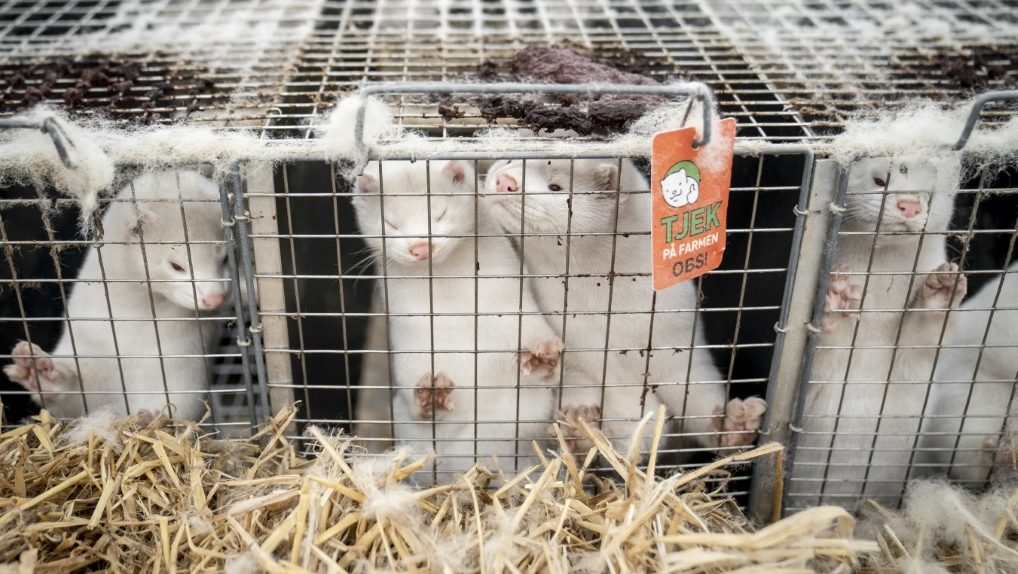
Denmark has ordered the slaughter of all of the country’s minks, estimated at up to 17 million. (AFP)

VICTORIA — British Columbia’s chief veterinarian says a mink farmer decided to euthanize the remaining 1,000 animals on his Fraser Valley operation after some of the mink tested positive for COVID-19.

Dr. Rayna Gunvaldsen says the operator was not ordered by the provincial government to euthanize the animals as more tests are underway to determine the extent of the presence of COVID-19.

The first farm where the virus spread to mink also had eight workers who tested positive and Gunvaldsen says both farms remain under quarantine.

She says there are no other reports of COVID-19 at B.C.’s eight other mink farms.

Alan Herscovici, a spokesman for the Canada Mink Breeders Association, says imposing strict quarantine and biosecurity measures at mink farms for about two weeks appears to limit the spread of COVID-19 to other animals.

After COVID-19 was diagnosed on the first farm, the B.C. Society for the Prevention of Cruelty to Animals called for a moratorium on mink farming in the province.

This report by The Canadian Press was first published Jan. 5, 2021.

https://bc.ctvnews.ca/b-c-mink-farmer-decides-to-destroy-1-000-animals-after-positive-covid-19-tests-1.5254551