MILAN/COPENHAGEN (Reuters) – Denmark’s coronavirus-driven mink cull has put the fur business in a spin, with industry officials expecting fashion houses such as Louis Vuitton, Dior and Fendi to snap up fox and chinchilla to fill the gap.kill 17 million farmedhttps://imasdk.googleapis.com/js/core/bridge3.432.0_en.html#goog_1953459022
The global fur trade, worth more than $22 billion a year, is reeling from Denmark’s decision to kill 17 million farmed mink after COVID-19 outbreaks at hundreds of farms led to the discovery of a new strain of coronavirus in the mammals.
Worries of a sudden shortage of slinky mink pelts, of which Denmark was the top exporter, have lifted prices by as much as 30% in Asia, the International Fur Federation (IFF) says.
Now, all eyes are on Finland, where one million mink and 250,000 fox pelts will soon be up for grabs for buyers in Korea, China, the United States and elsewhere next week. Auction house Saga Furs plans to hold the international sale, the first since the Danish cull, via livestream from Dec. 15.
A sales programme offers mink fur from both Europe and North America, such as “Pearl Velvet” and “Silverblue Velvet” mink, in addition to “Silver Fox”, “White Finnraccoon” and Russian sable.
Saga Furs, which last year took over its North American rival NAFA, expects to sell all the pelts, compared with a 55% take-up so far in 2020 as a result of the coronavirus crisis.
ADVERTISEMENT
“The market will strengthen, an increase in prices will help our business in general,” Saga Furs CEO Magnus Ljung said of the industry, which has seen years of falling prices.
“We’ve already had more requests about foxes, if people see that there is a lack of mink, they could consider using something else,” Ljung told Reuters.
LVMH’s head of sustainability Helene Valade said this week that the French luxury group obtains fur from Finland. The owner of Louis Vuitton, Dior and Fendi, which relies on brokers to bid, says it is using only 100% certified mink, fox and finnraccoon.
Fur demand has been falling since the 1950s, except for a rise between 2000 and 2013 when it was popular on fashion runways and Chinese appetite for luxury pelts boomed, Lise Skov, an academic who researched the Danish fur industry, said.
A typical mink pelt sold for more than $90 at auction in 2013, while last year skins fetched around $30. This was despite a fall in global production to just under 60 million pelts last year, from more than 80 million in 2014.Slideshow ( 5 images )
Euromonitor predicts the value of fur and fur products, both real and faux, will fall by 2.6% this year.
IS FUR FINISHED?
A Danish breeder-owned cooperative that sold 25 million mink hides last year, or 40% of the global total, is considering selling its brand and other assets after announcing that it would gradually shut down operations over the next 2-3 years.
Kopenhagen Fur CEO Jesper Lauge Christensen told Reuters he had received expressions of interest from Chinese customers to take over the auction house’s brand, which he said could be valued at up to 1 billion Danish crowns ($163 million).
It still plans to sell some 25 million pelts over the next two years, from Danish farms not infected by the virus, frozen stocks and foreign animals.
Animal activists hope the Danish debacle, which has had political repercussions in the country, will finish off the fur industry and demand for items such as $1,700 fur trinkets, $16,000 fur vests and $60,000 fur coats will disappear.
Countries and states which have already banned fur farms or fur products includes Britain, Austria, the Netherlands, France, Norway, Israel and California.
PJ Smith, director of fashion policy at Humane Society International, says that brands still using real fur will ditch it soon, following Gucci, Prada, Armani and others.
But for now, Kopenhagen Fur’s Christensen said fashion brands in Europe had expressed concern they will not be able to find a similar quality to the Danish mink furs.
“One of the biggest challenges from the brand perspective is that the unique Danish qualities will be disappearing from the collection and you cannot source that product elsewhere.”Slideshow ( 5 images )
He said he was looking at selling warehouse facilities and equipment such as automated vision machinery to grade the skins.
China, followed by Russia, is the biggest buyer of Danish fur as its own mink are considered of lower quality than those raised in Europe, where breeding standards are generally higher.
“We wouldn’t choose Chinese-made fur due to its poor quality,” Zhang Changping, owner of China’s Fangtai Fur, told Reuters, adding that it had already bought enough fur at least for the first half of 2021.
Fangtai would shift to auctions in Finland if Denmark failed to supply enough mink in the future, he said.
Niccolò Ricci, chief executive of Italian luxury designer label Stefano Ricci which has many clients in Russia and eastern Europe, said he expected mink prices to increase by up to 50% but that high-end labels like his would continue to seek top quality pelts, mainly from U.S. suppliers.
ADVERTISEMENT
“The real shortage could come from 2022, but by then we are hoping mink farmers in Canada, Poland, America and Greece will increase production to replace Danish output,” said IFF head Mark Oaten. Russia and China are also expected to hike output.
“People will also be looking at other types of fur. Fox has been very popular for trimmings, in parkas for example. Wild fur is also becoming more popular, as is chinchilla,” Oaten added.
Reporting by Nikolaj Skydsgaard in Copenhagen and Silvia Aloisi in Milan; additional reporting by Shanghai newsroom and Sarah White in Paris; Editing by Vanessa O’Connell and Alexander Smith
His rescue inspired generosity during a weekend fundraiser for the Ten Lives Club. But now the organization says generosity and community support is needed after a major rescue.
The organization has taken in 42 cats in just one evening, from a local rescue, as well as out of state rescues in Kentucky and South Carolina.
The Ten Lives Club is working to process all of these cats, in hopes they’ll be able to “send them home for the holidays.”
The organization will be having openings on the Tuesday before Christmas, as well as Christmas Eve, to hopefully get these cats adopted.
Anyone interested can call (716) 646-5577 ext. 2, to set up an appointment. They’ll be open 11 a.m. to 6 p.m. on Tuesday and 11 a.m. to 3 p.m. on Thursday (Christmas Eve).
Ten Lives Club says they’ve been able to have over 2,300 cats adopted in 2020 so far.
HELENA — Montana Fish, Wildlife and Parks will offer the last online wolf trapping certification class of the season Tuesday, Dec. 8, from 5 to 8:30 p.m.
To register for the free class, people can visit the FWP website at http://fwp.mt.gov and follow the links to “Education” and “Wolf Trapper Education & Certification.”
Because of current COVID-19 restrictions, FWP will offer no in-person classes this fall. The class will be online via ZOOM. Students will be sent the ZOOM address for the class when they register.
People always tell us they love our newsletter. Find out yourself with a weekly dose of our ad‑free, independent journalismYour emailYour emailSUBSCRIBE
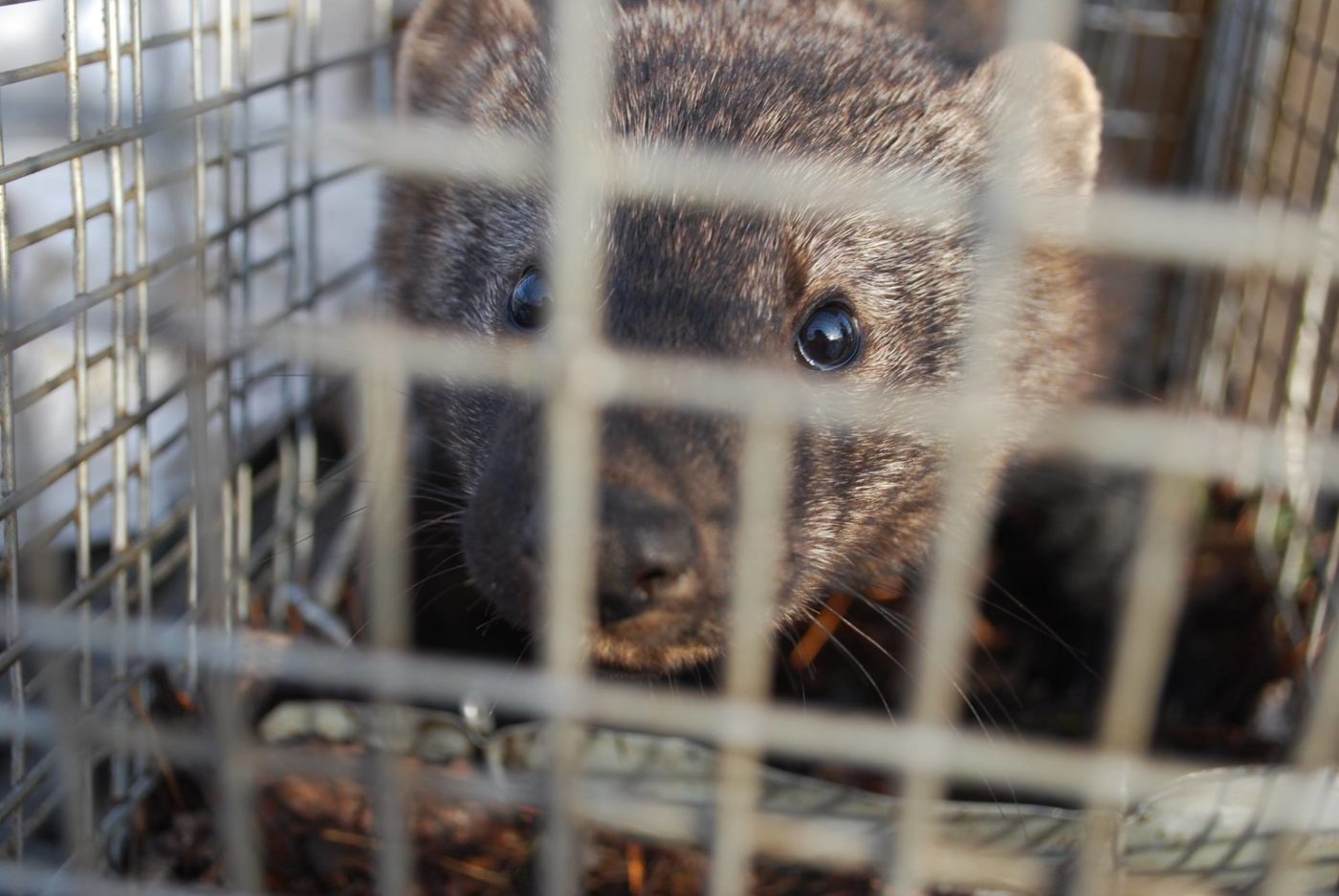
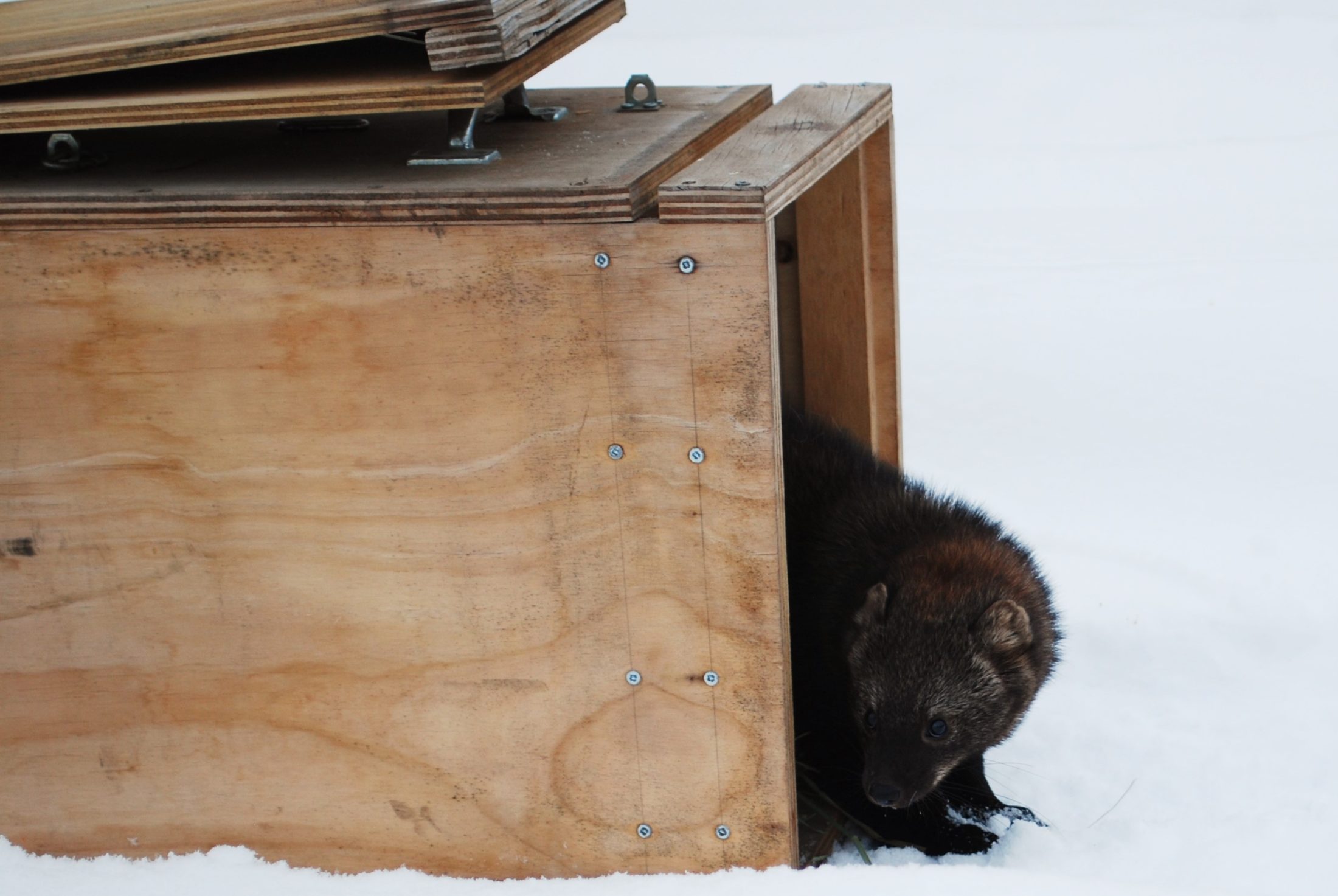
Trappers Wayne and Leilah Kirsh stopped harvesting fisher on their trapline, in the Nazko region southwest of Prince George, as fisher disappeared following industrial logging. Photo: Leilah KirshNEWS
Unlike six other provinces, B.C. has no endangered species legislation, which allows species at risk to be killed outside of protected areasSarah Cox Nov 20, 2020 11 min read
Nine months after listing the interior fisher population as endangered, the B.C. government has approved winter trapping of the elusive forest animal even though a scientist warns it could wipe out fishers in some areas.
“A red-listed population of this size, with a negative population growth rate … should not be trapped,” biologist Larry Davis, a member of the B.C. fisher working group, told The Narwhal.
“These animals are a low-density species. So many areas have been impacted by [forest] harvesting and fires that removing even a few more animals from these areas will probably result in local extirpations.”
What’s going on with the Site C dam?
You’ve got questions, we’ve got answers. Join The Narwhal Nov. 26 for a panel discussion on the future of the most expensive public infrastructure project in B.C.’s history.REGISTER
B.C. has no endangered species legislation, allowing species at risk of extinction to be killed outside of protected areas. Out of 1,336 species at risk currently recognized by the province, only four are legally protected under B.C.’s Wildlife Act — the burrowing owl, American white pelican, Vancouver Island marmot and sea otter.
B.C.’s hunting and trapping regulations for 2020-2022, which came into effect on July 1, noted the interior fisher was red-listed earlier this year, meaning the genetically unique population is in danger of disappearing. The regulations said fisher trapping seasons were under review and could be amended prior to the start of trapping season on Nov. 1, but no changes have been made.
Fisher, which are about the size of a housecat but stretched out like a limo, require mature trees for denning and shelter. Only five species of tree in B.C. have cavities suitable for female fisher to birth and raise their kits while avoiding predators.
The interior fisher population has suffered steep declines, largely due to habitat destruction as a result of accelerated logging for the mountain pine beetle, which has eliminated fisher denning trees such as cottonwoods and balsam poplars.
Only 300 to 500 interior fishers remain, according to Davis.
“If an area’s already been impacted by extensive harvesting and wildfires, the remaining fisher population is likely to have a hard time sustaining itself — and even removing a few more individuals will make that more difficult,” he said.
B.C. doesn’t protect endangered species
The fisher trapping season coincides with a Nov. 16 letter sent to Premier John Horgan from 17 scientists, urging the newly elected NDP government to create “long overdue” endangered species legislation and to invest in protection and recovery efforts needed to reverse biodiversity loss across the province.
“Provincial leadership is sorely needed,” the scientists wrote. “With every passing year, it becomes more and more difficult to reverse species declines.”
B.C., the most biodiverse province in Canada, has the greatest number of species at risk of extinction, with 1,336 species on the red and blue lists. Another 1,037 species meet provincial status requirements for red and blue listings but have not yet been added.
Red and blue listing in B.C. is currently an empty exercise, however, because species at risk of extinction receive no unified legal protection in the province.
Unlike six other provinces that have endangered species legislation, B.C. relies on an uncoordinated mish-mash of legislation to protect plants and animals, including the Forests and Range Practices Act, the Oil and Gas Activities Act, the Environment and Land Use Act, and the Wildlife Act.
When the NDP came to power in 2017, Premier John Horgan instructed Environment Minister George Heyman to enact an endangered species law, in keeping with an election promise made by the party. But the government subsequently reneged on its commitment.
Tara Martin, one of the scientists who signed the letter to Horgan, said she and other scientists worked with the province and other stakeholders to advance the promised legislation.
“We were hugely disappointed that nothing came of it,” Martin said in an interview. “Essentially, the province walked away from their commitment, with no statement as to why.”
Lack of endangered species legislation ‘negligent’
The push for B.C. endangered species legislation comes as scientists around the world warn we are witnessing the sixth mass extinction event in the planet’s four-billion-year history. Scientists estimate as many as half of all species may be headed toward extinction in the next 30 years, in large part due to habitat destruction.
Martin said species continue to be added to B.C.’s list of at-risk species and ecosystems.
“This is negligent. This is really unacceptable. We’re losing many opportunities that come with having a biodiverse region. We’re so fortunate to live where we do, and we are not heeding the responsibility that we have for protecting these species and ecosystems,” she said.
Martin and the other scientists told Horgan that B.C.’s wildlife populations are decreasing in abundance, “with many species approaching extinction” due to unsustainable land use and development.
“We’re all losing,” Martin said. “We’re losing our life support system. We’re losing our natural heritage. We’re losing our economic opportunities. And we’re really impacting future generations by taking away opportunities, by not putting in legislation to safeguard our species and ecosystems.”
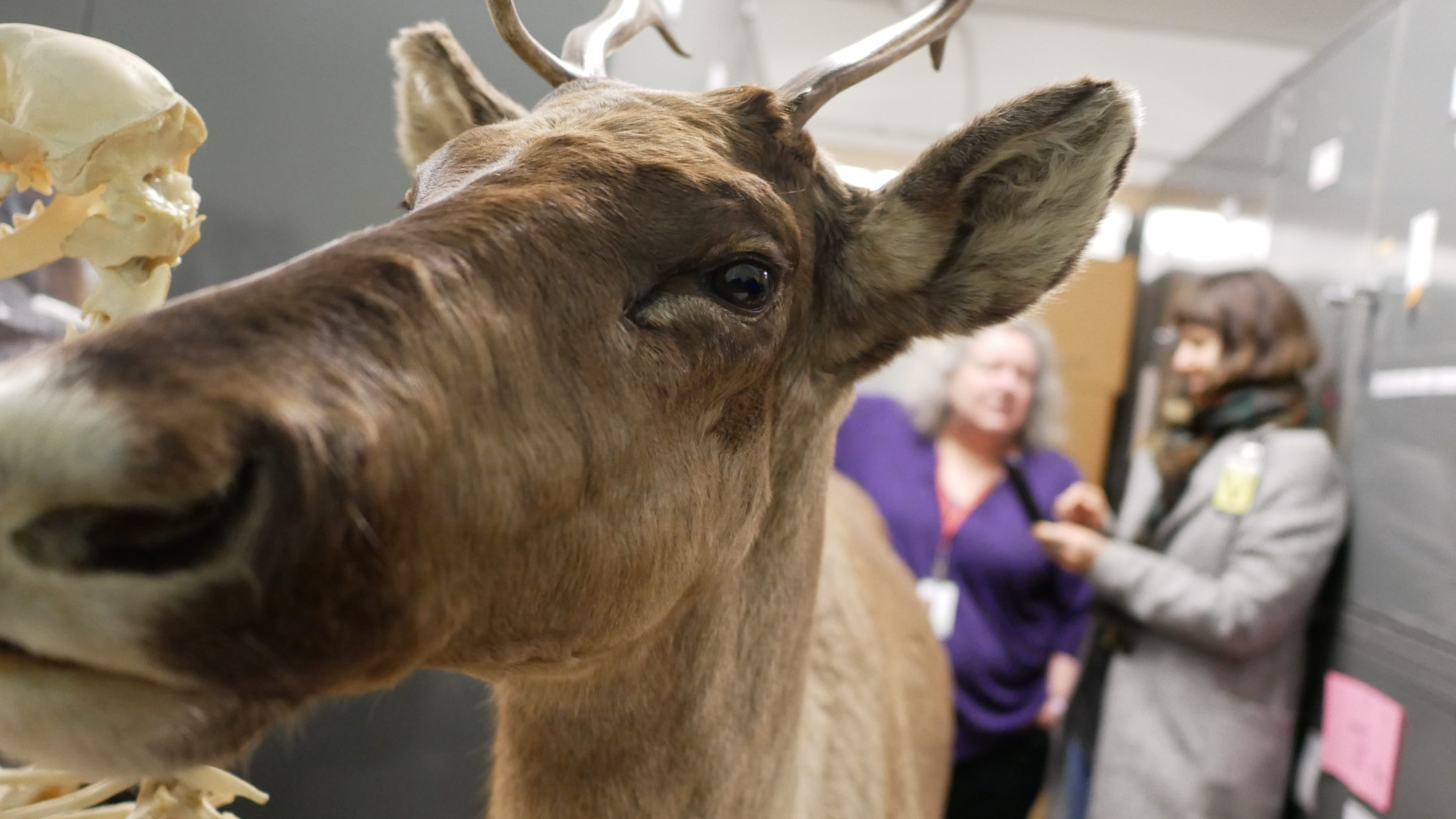
A taxidermied caribou cow from an extirpated herd in a back room of the Royal B.C. Museum. Caribou populations have been winking out of existence in B.C. due to over development, industrial logging, road building and other human incursions into wilderness. Photo: Carol Linnitt / The Narwhal
Failing to protect B.C.’s species and ecosystems also violates the rights of Indigenous peoples to have access to species for food, social and ceremonial purposes, the scientists said in their letter. “Not protecting biodiversity in the province is antithetical to the B.C. government’s commitments to reconciliation,” they stated.
Trapper Wayne Kirsh said he is frustrated by the B.C. government’s lack of action to protect fisher habitat. “I don’t think the trapping is going to hurt the fisher, compared to the loss of habitat,” said Kirsh, who trapped interior fisher for decades.
Kirsh and his wife Leilah stopped harvesting fisher on their trapline, in the Nazko region southwest of Prince George, as fisher disappeared following industrial logging. The couple tried, unsuccessfully, to persuade logging companies and the provincial government to leave behind denning and nesting trees.
“When you have a trapline it’s kind of like having a farm. You have to farm it because if you don’t, in a couple of years, you have nothing left to trap,” Kirsh said in an interview.
In 2016, the Kirshes filed a complaint with B.C.’s forest practices board, an independent watchdog for forestry practices, saying forestry companies were harvesting heavily on their traplines with no designated cutting areas.
The forest practices board upheld the complaint, saying the provincial government failed to use legal tools available to protect fisher habitat.
Kirsh, who worked in the forestry industry for 37 years, said logging practices in interior fisher habitat “haven’t changed one bit. They’re just going in there and raping the habitat.”
“Why don’t they leave some habitat? … It’s not the trapper who is screwing things up,” he said. “Fires are one thing, but logging is the number one killer. They’re not leaving their denning trees and they’re not leaving the spruce with the witch’s broom.”
Fisher use witch’s broom, a dense mass of shoots on a tree branch that resembles a nest, for resting sites and to shelter from the elements.
David said about 170 fishers are trapped each year in B.C., which has a second fisher population in the Peace region that is blue-listed, meaning it is vulnerable to local extinction.
The Kirshes’ stopped trapping fisher for fur in the Nazko in 2014, in a voluntary effort to help the struggling population. In 2015 and 2016, the couple live-trapped 19 fisher for a reintroduction project in Washington state’s Cascade Mountains. Photo: Leilah Kirsh
Trapping guidelines note ‘increased concern’ for fisher
Biologist Eric Lofroth said it’s not typical for a red-listed species like the fisher to be harvested.
The impact will depend on where interior fishers are trapped, said Lofroth, adding that government-approved trapping “is certainly not going to be of any help” in recovering populations. “Whether it’s going to result in the extirpation of fisher from any particular part of its current distribution is hard to know.”
He said new data — that he and other scientists have collected — indicates the interior fisher population has a lower reproductive rate than the boreal fisher population in the Peace, possibly due to food availability. Fisher prey on shrews, mice, voles, snakes, squirrels, snowshoe hares and grouse. They also consume mushrooms and berries but not, despite their name, fish.
“The number of females that den on an annual basis and the average litter size is much lower in the central interior than it is in the boreal population,” Lofroth said, noting that a paper on the new data is awaiting peer-review. “That has a real bearing on potential population growth rates.”
The province’s new hunting and traplines guidelines regulations said there is “increased concern” for fisher populations in areas of the Thompson, Cariboo, Omineca and Skeena Regions that have experienced large habitat changes due to forest harvest and salvage of beetle and fire-killed forests.
“Where habitats are compromised, trapping poses a compounding threat to population persistence,” say the regulations, which encourage trappers to reduce the incidental capture of fisher by modifying marten boxes, which attract fisher.
Davis said he has spoken with a few trappers who are not planning to trap fisher this year due to low fur prices related to the COVID-19 pandemic. “That at least gives us a glimmer of hope that those populations of fishers won’t be heavily impacted with the trapping this winter.”
“There are areas out there that could be refugium for fishers, whereas in other areas trappers are still active.”
The fisher working group, supported by the B.C. government, has built close to 1,000 boxes to give out to trappers who harvest marten but who also catch fisher in their traps, Davis said.
“We are rolling that out right now, trying to get these boxes out to trappers, just to test them, to see if they’re comfortable using them.”
The boxes have an entry plate with a hole designed for the skull size of martens, which are smaller than fishers. “There’s a difference in the width of their head so they’ve designed the box to have a hole that would fit a large male marten but shouldn’t allow a female fisher to enter, and for sure a male fisher would not be able to enter,” Davis said.
In response to a forest practices board report based on the complaint from Wayne and Leilah Kirsh, the B.C. forests ministry said it would develop a provincial fisher management plan. In June, the ministry told The Narwhal the plan is underway, with a “targeted” completion date of 2022.
Endangered species legislation was not mentioned in the 2020 NDP election platform. Instead, the party vaguely pledged to “work with neighbouring jurisdictions to cooperatively develop and invest in new strategies aimed at better protecting our shared wildlife and habitat corridors.”
B.C. has no laws that specifically prohibit harm to species at risk (other than prohibitions around hunting) or laws that provide mandatory protection for the habitat that species vulnerable to extinction require for their survival and recovery. Nor do B.C. laws require recovery planning or implementation for species at risk.
The scientists are requesting a meeting with B.C.’s next environment minister, who will be named on Nov. 26 when the new provincial cabinet is announced, to discuss how the new government can safeguard endangered species and ecosystems.
“We feel that Horgan has a clear mandate to govern, and a responsibility to re-engage in this really important effort to bring about species at risk legislation for the province,” Martin said.
The B.C. government is not answering media questions during the interregnum period following the Oct. 24 election, unless questions pertain to health and safety or statutory requirements.
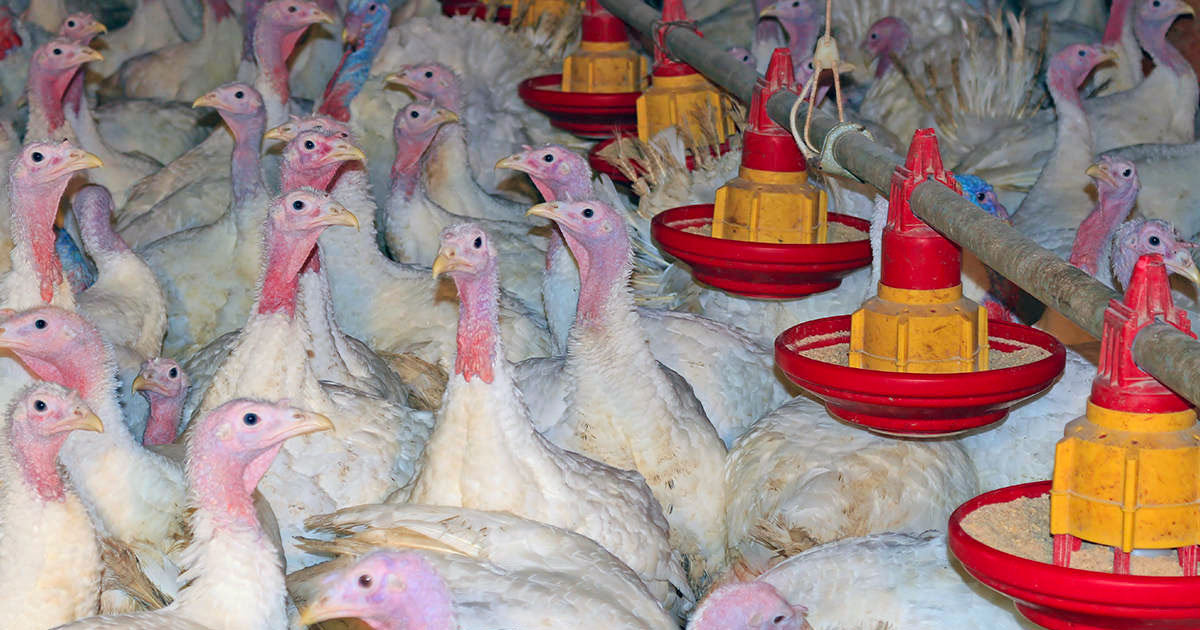
Because of crowded conditions on factory farms (where most Thanksgiving turkeys are raised), beautiful birds who started out as a species looking like this …
when kept in dark, stinking windowless barns (with maybe a small access door to the muddy, lifeless yard, so the farmer can claim they’re “free-range”) turn out looking like this…
Perhaps it’s time to swear off flesh foods and give the turkeys something to be thankful for. Someday you’ll give thanks you did.
Pork giant Smithfield has settled with North Carolina residents who sued over stench, flies and truck traffic from Kinlaw FarmsAnimals farmed is supported byAbout this content
Barry Yeoman
Fri 20 Nov 2020 11.34 EST
Shares889
Pigs in a pen at a farm in Ayden, North Carolina. Photograph: Callaghan O’Hare/Bloomberg/Getty
A US judge has issued a blistering condemnation of industrial farming practices. The judgment comes as one US meat giant finally settles after a six-year legal battle with plaintiffs who sued the company over the stench, flies, buzzards and truck traffic coming from its industrial swine farms in North Carolina.
J Harvie Wilkinson III, one of the judges in a case that pitted locals against the Smithfield subsidiary formerly known as Murphy-Brown, decried the “outrageous conditions” at Kinlaw Farms, the operation at the center of the lawsuit – “conditions that there is no reason to suppose were unique to that facility”.
“How did it come to this?” wrote Wilkinson, who was nominated to the fourth US circuit court of appeals by then president Ronald Reagan and has served since 1984. “What was missing from Kinlaw Farms – and from Murphy-Brown – was the recognition that treating animals better will benefit humans. What was neglected is that animal welfare and human welfare, far from advancing at cross-purposes, are actually integrally connected. The decades-long transition to concentrated animal feeding operations [CAFOs] lays bare this connection, and the consequences of its breach, with startling clarity.”
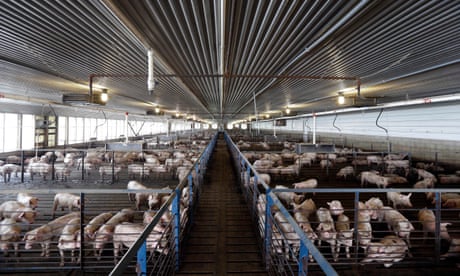
Wilkinson described a system in which pigs were forced to live in enclosures they had outgrown, reducing them “to almost suffocating closeness … The dangers endemic to such appalling conditions always manifested first in animal suffering. Ineluctably, however, the ripples of dysfunction would reach farm workers and, at last, members of the surrounding community.”
His comments concurred with the court’s main opinion.
More than 500 North Carolinians, most of them black, filed more than two dozen lawsuits in 2014. Some lived near farms that had contracts with Smithfield. Others lived near farms owned by the company outright. They described being trapped inside their own homes, sickened by the smell of hog waste stored in open pits, and unable to hang laundry, cook outdoors, or entertain visitors.
The announcement of the company’s decision to settle came immediately after the fourth circuit in Richmond, Virginia, rejected a call from the world’s largest pork producer for a retrial of one of the cases. Juries in 2018 and 2019 had awarded hog farm neighbors almost $550m. The US district court in Raleigh, North Carolina, knocked the awards down to about $98m because of a state law capping punitive damages.
Smithfield’s chief administrative officer, Keira Lombardo, said in a statement: “In the midst of a global pandemic, where food shortages have been commonplace, it is now the time to keep our full attention on the important work of producing good food in a responsible and sustainable way – rather than returning to the court for what would be ongoing and distracting litigation.” Details of the settlement were not disclosed.
Smithfield lost the first five cases that went to trial. It appealed the three largest verdicts, calling the litigation an “almost existential threat” to North Carolina farmers. It claimed the district court had made numerous errors, such as allowing the neighbors’ odor expert to testify while excluding some testimony from Smithfield’s expert.
In the new ruling, a three-judge panel rejected most of the pork producer’s arguments. The company “persisted in its chosen farming practices despite its knowledge of the harms to its neighbors, exhibiting wanton or wilful disregard of the neighbors’ rights to enjoyment of their property,” Judge Stephanie Thacker, an Obama nominee, wrote for the court.
The appellate judges did agree with Smithfield on one point: that the plaintiff’s lawyer improperly used the parent company’s financial data to convince jurors that punitive damages had to be large enough for the pork giant to feel. The appellate ruling said jurors should not have heard those details. “We fail to see what value the parent company financial evidence would have that could possibly outweigh the substantial risk of prejudice it carries in that delicate context,” wrote Thacker.
Elsie Herring, a plaintiff in another of the cases, said she was pleased that the court had sided with the neighbors on most issues. “Our lives have been destroyed by the industry,” she said. The North Carolina law firm Wallace & Graham, which represented the plaintiffs, did not respond to questions about the settlement. It said in a statement that the appellate court “fully got the truth” of its clients’ struggles.
[In regards to their treatment of non-human animals, the human world has finally gone mad!]
by: Vic FaustPosted: Nov 12, 2020 / 06:39 PM CST / Updated: Nov 13, 2020 / 11:07 AM CSTjavascript:false
ST. LOUIS – To hear the saying “that’ll happen when pigs fly” usually mean it’ll never happen. However, pigs flew for the first time out of St. Louis Lambert International Airport Thursday morning.
The airport had their first-ever live animal export, shipping more than 200 breeding pigs from Henderson, Tenn. to Sao Paulo, Brazil.
Breeding animals is a twenty billion dollar a year global industry with demands increasing during pandemic restrictions.
St. Louis is said to be a perfect location and one of the best airport facilities for the transportation of live animals.
The facility is extremely important when it comes to the care of animals especially because time is of the essence.
The airport can make transportation happen quickly.
“We have a facility that’s designated to ship pigs, cattle, horses, for breeding purposes to Asia, South America, and all throughout the world,” Nowak said.
Several groups like the World Trade Center of St. Louis and the Midwest Cargo Pub Commission contributed to the project.
“We’re right here in the mid part of U.S…so pigs could come from anywhere or around in Missouri or around the state of Missouri,” Nowak said.
The transportation of live animals actually began a decade ago when the St. Louis area tried to secure a relationship with China.
Shimon Shuchat, a 22-year-old animal rights activist from Brooklyn, died on Tuesday, July 28th. In spite of being so young, Shimon was one of the most wise, humble, ethical, empathetic and hard-working activists in New York City. He was also extraordinarily smart. No tribute, including this one, could do justice to Shimon.
Animal rights activist Shimon Shuchat
Shimon’s story is different than most. He was raised in an ultra-Orthodox Jewish home in Brooklyn. According to his Uncle Golan, he learned how to read when he was two years old, and he showed unusual signs of empathy when he was a little boy. For instance, he somehow figured out that a leather jacket was made from a cow, and he asked his parents why people would wear that. When he was a teenager, he came across animal cruelty videos that shook him to the core. He became an atheist, and he made the decision to chart his own course in life.
Leaving the insular ultra-Orthodox Jewish community is not easy for anyone, especially a teenager, but Shimon found the courage to transfer from his yeshiva, which was familiar, to secular high school, where he didn’t know anyone. He also immersed himself in the NYC animal rights community, participating in multiple events every week. Ironically, among the first acts of cruelty that he protested was Kaporos, a ritual animal sacrifice performed by the very community in which he was raised.
Shimon Shuchat bears witness to chickens languishing in transport crates
Throughout his childhood, Shimon had a close relationship with his father, Velvel. According to Shimon’s relatives, “Velvel validated and loved Shimon, and always supported him. He would frequently take him on trips, despite tight finances, often using Greyhound buses to bring him to different states to visit animals. Velvel advocated for Shimon when his yeshiva was unprepared to answer Shimon’s difficult questions. His father always lovingly took the time to listen and support Shimon in any way he could.” His extended family said that Shimon “is a shining light and a blessing to this world, and may his memory also be for a blessing.”
In 2015, Shimon was accepted to Cornell, and he brought NYC-style activism to a reserved animal rights club on campus. After college, he returned to NYC and worked in the animal rights movement until he passed away. He talked about going to law school one day.
Animal rights activists Shimon Shuchat and Rina Deych
Shimon was a quiet, shy, and anxious person, but, according to his fellow activists, he stepped far outside of his comfort zone in order to advocate for the animals. Rina Deych, an activist in NYC who mentored Shimon when he joined the movement, fondly recalls a Kaporos protest during which she offered Shimon a bullhorn to lead the chants. “He shyly refused,” Rina said, “But when he didn’t like the accent I used to pronounce a Hebrew phrase, he grabbed the megaphone from me and led the chants for the duration of the protest. His willingness to prioritize the animals over his anxiety demonstrated just how committed and compassionate he was.”
Shimon Shuchat advocating for captive animals and showing his support for LGBTQ equality
His colleague Nadia Schilling, who also served as a mentor to Shimon, said, “Shimon’s work for animals was unmatched by any person I’ve ever worked within the animal rights movement. It’s easy to lose hope and feel defeated in this line of work, but I honestly believed that, with Shimon by my side, we could make this world a better place.”
Shimon Shuchat participates in an Direct Action Everywhere disruption at Whole Foods, protesting the Company’s “humane meat” advertising.
Unaware of Shimon’s anxiety, Nadia asked him to testify in front of the NYC Council in support of legislation to ban the sale of ban foie gras. “He intentionally waited until after he delivered his remarks to confess that public speaking exasperated his anxiety. He knew I wouldn’t have asked if I had been aware of his fear, and he didn’t want to let down me or the animals. That’s how selfless he was.”
Shimon set the bar high for his activist colleagues with his impeccable work ethic and selflessness. He was singularly focused on reducing animal suffering, and he had no interest in the material world or even the basic comforts that most of us take for granted. One summer during college, Shimon asked if he could do an internship with TheirTurn. “I was reluctant because he was so serious and had such high standards, but I wanted to support him,” said Donny Moss. “He worked so efficiently that he completed his assignments more quickly than I could create them. If I didn’t force him to take a break for lunch by putting the food on top of his keyboard, then he would not have eaten.”
Shimon Shuchat phone banking for Voters for Animal Rights (VFAR) in support of the NYC bill to ban the use of wild animals in circuses
Shimon’s asceticism was stunning at times. “One day, while running an errand, Shimon and I walked into Insomnia Cookie, which had just added a vegan cookie to its menu. When I offered to buy him one, Shimon asked me to donate the amount of money I would have spent on the cookie to PETA. Even after explaining that I could buy him a cookie AND make a contribution to PETA, I practically had to use force to get him to eat the cookie, which I knew that he secretly wanted.”
Shimon Shuchat advocating for the use of coins instead of live chickens during a religious ritual called Kaporos
Shimon was painfully humble for someone who contributed so much. “People like Shimon, who work so hard behind the scenes with no public recognition, are the pillars of our movement,” said Nadia.
Perhaps more than anything, Shimon was empathetic. His uncle Golan said that he “felt things extraordinarily deeply” from a young age. One year during a Kaporos protest, Donny witnessed this firsthand when he found Shimon off to the side weeping. “In the face of so much cruelty and suffering, Shimon practically collapsed from a broken heart.”
While delivering his testimony at the foie gras hearing at City Hall, Shimon made a plea that should, perhaps, be his parting message to those he left behind. “Regardless of our ethnicity, race, religion, or political affiliation, we should be unanimous in opposing and condemning cruelty directed at animals, who are among our society’s most vulnerable members.”
Shimon Shuchat participates in an animal rights protest in NYC
Shimon’s father Velvel, Uncle Golan, Aunt Leah, Cousin Debbie, Rina, Nadia, Donny and others who cared about Shimon hope that Shimon, who made a lifetime of contributions in his short, 22 years, is resting in peace in a kinder place. “Shimon was a shining light and blessing to this world,” according to his family, “May his memory also be for a blessing.”
Shimon Shuchat (bottom right) volunteers at Safe Haven, a sanctuary for rescued farm animals
BEJON HASWELL/STUFFThe Ocean Drover, the world’s largest livestock carrier, arrived in port at PrimePort Timaru on Saturday.
Trustworthy, accurate and reliable news stories are more important now than ever. Support our newsrooms by making a contribution.
The world’s largest livestock carrier, the Ocean Drover, entered Timaru’s port on Saturday night for its first visit in two years.
A Ministry for Primary Industries (MPI) spokesperson said the Ocean Drover was in Timaru to collect up to 14,000 cattle bound for China.
Saturday’s arrival marked the third time the boat has docked in Timaru. The vessel was due to depart, carrying a mix of dairy and beef cattle, in a few days’ time once loading was complete, they said.
“The Animal Welfare Export Certificate sets stock numbers for this export at no more than 14,000 cattle, predominantly dairy – friesian and jersey – with some beef – hereford and angus,” they said.
“No export of live animals can proceed until we have conducted a post-loading review to ensure we are completely satisfied with the conditions on board.”
MPI introduced strengthened requirements last year stating that exporters were required to provide a report on the condition of the animals at 30 days after their arrival at their destination. There are also added conditions because of the coronavirus pandemic.
BEJON HASWELL/STUFFThe Ocean Drover is in Timaru to collect up to 14,000 cattle bound for China.
“In response to Covid-19, MPI introduced two further conditions that exporters must meet for their Animal Welfare Export Certificate applications to be granted,” the spokesperson said.
“The master of the ship [is] to provide a contingency plan for a rejection at the port of arrival or a delay in unloading [and] the exporter satisfies MPI that there is unlikely to be any delay in the unloading of the cattle from the ship or movement of the cattle to a quarantine facility after arrival.”
They said the cattle will be accompanied by 10 stock handlers, of whom two are veterinarians.
BEJON HASWELL/STUFFThe exporters had to provide MPI with a back-up plan in case Covid-19 prevented the vessel from entering its destination port.
Livestock exports have been operating for the past few months and the timing of this shipment has not been affected by Covid-19, they said.
MPI did not know where the cattle were coming from, commenting that often a shipment will have stock from more than one farm and from different regions.
“Live animal exports can help in supporting New Zealand farmers to manage stock numbers.”
The Ocean Drover is 176.7 metres long and 31.1m wide and is capable of transporting 75,000 sheep or 18,000 cattle.
Wahkiakum County Engineer Paul Lacy and his wife, Daria were scheduled to be in Wahkiakum District Court on Wednesday morning for a preliminary hearing. The pair have been charged with 11 counts of animal cruelty in the second degree and two counts of transporting or confining a domestic animal in an unsafe manner in a case that brought Wahkiakum County Sheriff’s Office to their Skamokawa property multiple times over the course of several months in 2019.
A brief overview, according to reports from the Wahkiakum County Sheriff’s Office:
On May 2, 2019, WCSO received a complaint that several horses were loose in Skamokawa. When deputies responded, they found a small pig standing atop a larger decomposing pig carcass in a pig pen that was several inches deep in mud and feces. Nearby in a garage, they found several dogs standing shoulder to shoulder, unable to lay down in a kennel, along with a smaller cage containing more dogs. The dogs were without food and water. Two calves were found without water, and a dozen or more chicks were found without food or water.
On June 8, 2019, the WCSO received a report of possible animal cruelty at a property in Skamokawa.
A deputy found one horse up to its knees in mud and feces. There was an overturned water bucket nearby, and no feed. The horse had swollen knees and had lost patches of hair. Nearby in a horse area, he found four horses with untrimmed hooves and swollen knees. Several of the horses had ribs showing.
Paul Lacy said he had sold about 20 horses and still had about 18 remaining. He said it was not uncommon for horses to not get their hooves trimmed, stating that the Department of Natural Resources does not trim wild horses’ feet.
A witness provided photos of neglect, including a horse with visible ribs standing in a stall in mud up to its knees. A second photo showed a horse with overgrown hooves and visible ribs, and a third photo showed two horses with visible ribs.
On June 15, 2019, deputies and an animal control officer from Cowlitz County visited the Lacy home to inspect the animals. The animal control officer “found them to be in such bad conditions and health, according to her training and experience, that probable cause existed for Animal Cruelty.”
On June 18, 2019, deputies were told about an injured horse. A caller said she had witnessed people loading most of the horses onto a truck, but found a horse with a broken leg in a stall, bleeding out. Deputies responded. They found two horses in a muddy pen, one of which had clearly defined ribs, hips, and shoulder bones. Several pigs were in a large stall, laying in and wandering around in mud, feces, and bones. A horse with a leg injury was found deceased nearby, with what appeared to be a gunshot wound to the head.
On June 21, 2019, deputies returned to the farm. They found a horse with open wounds on its muzzle and face. Photographs were taken.
Paul Lacy said that the horse that had been euthanized had been buried in his back field, and that he had gotten rid of several dogs. He said that he did not want to get rid of any more, as he and his wife, Daria, planned to breed them to sell. He was advised that they would need a license.
Lacy was advised at that time that if he did not continue to improve the care of his current animals, he would be subject to criminal charges.
On June 24, 2019, Lacy said in a missive that he had reduced the number of horses from 18 to two, the number of dogs by five, the number of chickens by two, and the number of pigs by one, with a plan to auction three and harvest two.
On July 3, 2019, a neighbor reported that some of Lacy’s animals were on their property. The Lacys were given a warning. Deputies noted that the two remaining horses appeared to be in better condition, and that pigs were in a newly constructed pen with food and water available.
On December 15, 2019, a search warrant was served by the sheriff’s office in conjunction with the Cowlitz County Humane Society, which seized four pigs, one sow, five piglets, 15 sheep/goats, four ducks, four ducklings, one turkey, seven dogs, and 32 bird eggs in an incubator. Two dogs were found in a room, with evidence that they had attempted to gnaw and scratch their way out. The floor was smeared with feces, and there was no food or water. In the same room, they found a cage containing a duck and ducklings, the bottom of the cage full of liquid feces, resulting in a fetid odor. The animal control officer was heard to say that day that “this was one of the worst cases she has worked on.”
On December 19, they returned to collect the remaining animals, including 10 turkeys, 11 geese, 61 ducks, 42 chickens, one pack rat, and two pigeons. Every bird had a lice infestation, according to the report.










 Exposing the Big Game