(See:
https://cites.org/sites/default/files/eng/com/ac/31/Docs/E-AC31-18-02.pdf)
Tracy Keeling
4th August 2020
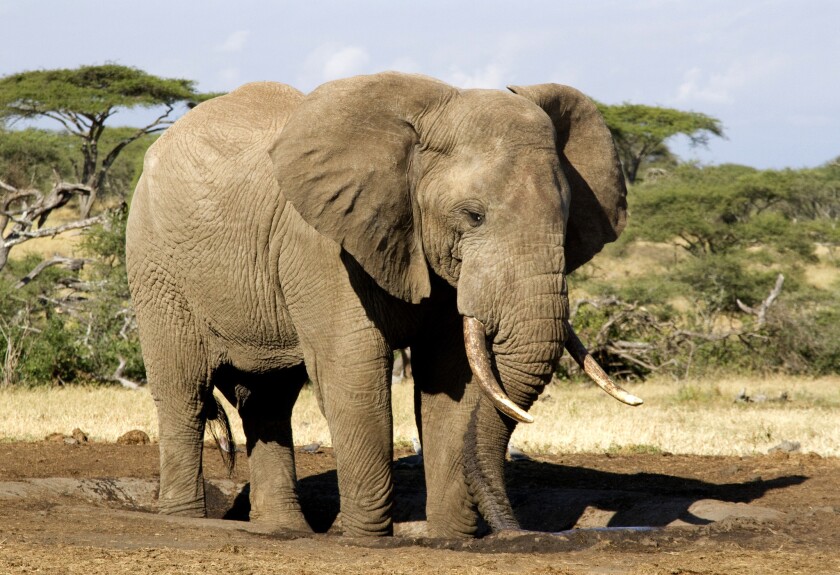
Zimbabwe loaded 32 baby elephants onto a China-bound plane in October 2019. It had sold off the young animals, who it had separated from their wild families a year earlier, to an unnatural and torturous life in zoos. Zimbabwe authorities went ahead with the baby elephants’ export in the face of legal action. It also did so just before the global wildlife watchdog, the Convention on International Trade in Endangered Species of Wild Fauna and Flora (CITES), implemented a landmark rule change that would have made the export impossible.
Zimbabwe, however, isn’t guaranteed to get off scot-free with its much criticised move. A recent CITES report accuses the country of not only contravening the “will” of CITES members, but the “good faith” and “spirit” of the Convention overall. It also asserts that, regardless of the landmark rule change that was about to come into force, Zimbabwe contravened prior provisions of CITES.
The report’s authors call on CITES’ Animals Committee to take “appropriate steps” after considering its findings. Such a step would be removing the elephants from the distressing situation they now find themselves in, and giving them the chance to live out the rest of their lives in relative comfort.
Rule change
Zimbabwe and a number of other nations that African elephants call home have been easily able to sell them on to non-African countries for display in zoos until very recently. But parties to CITES – which are nation states – voted to change the rules at the 2019 conference. The definition of what constitutes an ‘appropriate and acceptable destination’ for export of elephants was limited to “in situ”
conservation programmes. Simply put, the change means that African elephants should stay in Africa.
The rule change came into force on 26 November 2019, 90 days after the vote. This grace period between parties approving resolutions and them coming into force is to allow countries time to adjust their national laws and policies to fit the incoming CITES’ requirements.
But Zimbabwe used the time to export the young elephants it had captured in 2018 to China. At the time, elephant biologist and wildlife director at Humane Society International/Africa, Audrey Delsink, said:
We are left feeling outraged and heartbroken at this news today that the Zimbabwe authorities have shipped these poor baby elephants out of the country. Zimbabwe is showing total disregard for the spirit of the CITES ruling as well as ignoring local and global criticism. Condemning these elephants to a life of captivity in Chinese zoos is a tragedy.
Inhumane
Now two parties to CITES, Burkina Faso and Niger, have submitted a report to the authority’s Animals Committee. The report looks at exports of live elephants from African nations since 2010 in the context of CITES’ various rules, such as countries having to find ‘appropriate and acceptable destinations’ for them.
Zimbabwe has outstrippped all others in sheer numbers of exports. The report found it has exported 144 young elephants, mostly to China, since 2010. Namibia came second, with 24 elephants. The report spotlights Zimbabwe’s 2019 export in great detail. The report states that, at the time of writing in May, the elephants were in Longemont Animal Park close to Hangzhou. It continues:
Undercover video footage shows the elephants separated from each other in barren, indoor cells. Many appear to be very young (2-3 years).
Recent photographic evidence from China indicates that the elephants have undergone inhumane training by mahouts, presumably to prepare them for entertainment use. There are unconfirmed reports that some of the elephants are going to Yongyuan Biotech Company. The reason remains unknown.
Against the rules, by any measure
The report further assesses whether the export complied with CITES provisions. It notes that Zimbabwe can only export an elephant to ‘appropriate and acceptable destinations’ that are “suitably equipped to house and care for it”, due to a resolution that came into force in 2000. Parties have added further provisions over time. As a result, the scientific authorities for both the importing and exporting country also have to be “satisfied” that the export ‘promotes in situ conservation’, i.e. conservation in the place the elephant comes from. Furthermore, the
2019 landmark rule change, as already mentioned, limits what constitutes an ‘appropriate and acceptable destination’ to those that are ‘in situ’.
Burkina Faso and Niger argue, however, that, by any measure, Zimbabwe’s hurried export of the young elephants didn’t abide by CITES’ provisions.
The report says:
there is no publicly available evidence suggesting that the safari park in Shanghai which received the 32 young elephants from Zimbabwe in October 2019 –or any of the likely further destinations –can be considered as “suitably equipped to house and care for” live elephants, and thus meet the recommendations in the non-binding guidance, or that this particular import would promote in situ conservation. …
By any reasonable metric, the conditions of the transfer and housing are demonstrably inhumane.
Highlighting the 2019 rule change and the fact that, as part of that change, parties explicitly recognised elephants are “highly social animals” and removing them from their social groups has “detrimental effects” on their “physical and social well-being”, the report said the
export:
not only contravened the will of the CITES Parties, it undermined the good faith and the spirit of the Convention.
Mighty and toothless
In short, the CITES report by two of its member countries is scathing about Zimbabwe’s actions. It asserts that, no matter how you look at it, or what resolution you test it by, the country’s choice to fly out the young elephants was flawed.
The parties recommend that the Animals Committee considers the report’s findings on the Zimbabwe 2019 export, in relation to the ‘appropriate and acceptable destinations’ condition, and takes “appropriate steps”.
The report doesn’t clarify what those steps should be.
CITES essentially plays god as an authority. It’s immensely powerful, deciding the fate of countless earthly beings, by controlling the trade in them – alive and dead. But it’s fairly ineffective when it comes to cracking down on wildlife trade offenders. The illegal trade in wildlife, for example, is booming (as is the legal trade). And what action CITES is empowered to take against Zimbabwe, and indeed China, for their apparent transgressions is unclear. South African journalist Adam Cruise told The Canary:
The appropriate steps would be haul Zimbabwe over the coals but just how CITES does that is the question. They are pretty toothless in that regard as they cannot really ‘do’ anything after the fact but simply an acknowledgement that Zimbabwe and by extension CITES were wrong and this sort of export will never happen again may be enough. Sadly, the elephants cant go back in the wild, that’s for sure.
Amid a global pandemic likely to have been caused by the wildlife trade, and a biodiversity crisis, the global wildlife watchdog increasingly appears unfit for purpose. A functional authority would reverse this trade and force the return of these young elephants to Africa, for rehabilitation and care in a wildlife sanctuary. If CITES is unable, or unwilling, to do that then really, what is the point of it?
https://www.thecanary.co/discovery/analysis-discovery/2020/08/04/wildlife-watchdog-told-to-take-action-after-report-finds-zimbabwes-baby-elephants-sale-violated-rules/
Tag Archives: cruelty
Coronavirus: ‘Wake-up call’ for how we treat wild animals
2 Aug 20202 August 2020Last updated at 23:03View Comments (25)
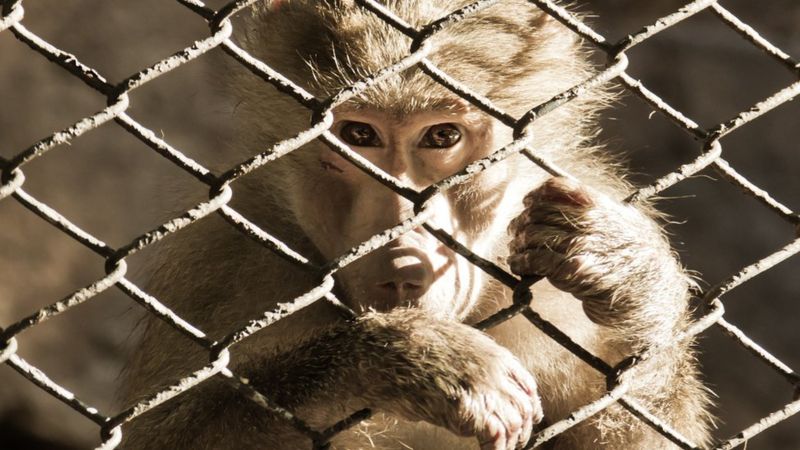
GETTY IMAGESAnimals like this baboon are caught in the wild and then sold
https://www.bbc.co.uk/newsround/53519296
Animal campaigners say the coronavirus pandemic is a “wake-up call” about how wild animals are treated across the world.
It’s thought the virus, known as Covid-19, might have originally come from animals at a wildlife market in Wuhan, China.
The pandemic has highlighted some of the problems around the way people treat wild animals and the impact that this can then have on humans.
So how does a disease pass from animals to humans, and what can be done to help stop it happening again?
What is a zoonotic disease?
Covid-19 is what scientists call a zoonotic disease – that means it starts off in animals and then humans catch it.
Diseases like this have been around forever – you may have heard of others like Swine Flu, Bird Flu, Ebola and Malaria.
Because of how quickly Covid-19 has spread around the world, we’ve heard much more about it and the problems it can cause for people.https://emp.bbc.co.uk/emp/SMPj/2.32.16/iframe.htmlWATCH: World Animal Protection’s Sonul Badiani-Hamment explains what the global wildlife trade isHow does a disease pass from animals to humans?
Animals can carry bacteria and viruses that cause disease, and these may be passed on to – or even jump to – other animal species, including humans. The other species’ body tries to fight the bacteria and virus but, if it can’t, it can become ill.
When wild animals are in unnatural conditions, they can become stressed or weak which makes it more likely that they will pass on the bacteria or viruses they have.
It also makes the wild animal more likely to catch them from others.
If a place isn’t clean enough for the animal, or if they’re near species that they wouldn’t normally meet in the wild, disease is more likely to spread as well.Why does a disease pass from wild animals to humans?
It can happen when wild animals come into contact with humans.
This occurs more often when their habitat is reduced, for example through deforestation and the impacts of climate change.
It means wild animals don’t always have the most suitable or right types of places to live, and some might come into cities instead to find food. This then means they can have much closer contact with humans than they naturally would.
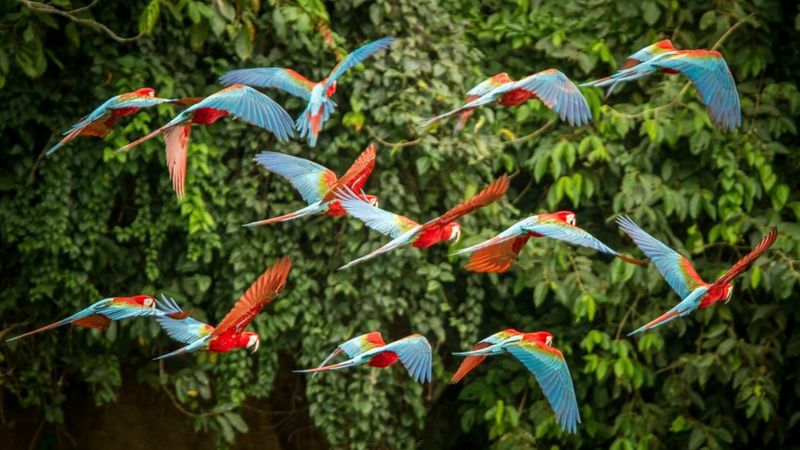
GETTY IMAGESIf tropical forests like this get smaller then animals, like these birds, won’t have a place to live
Most wild animals live in the wild where they can find their own food, make their own home and live in the conditions that their bodies were designed for.
However around the world, millions of wild animals such as parrots, iguanas, lizards, tortoises, pangolins and chimpanzees are taken from the wild.
They’re then bought and sold for lots of different reasons, for example to be kept as pets, to be eaten, to provide entertainment, to be used in traditional medicines, or parts of their body, like their scales or nails, might be used for ornaments.https://emp.bbc.co.uk/emp/SMPj/2.32.16/iframe.htmlWATCH: Pangolins are often caught and sold for their scales
More on wild animal protection
Wildlife groups want animal markets to be shut down
Can tech help protect global wildlife?What’s being done about it?
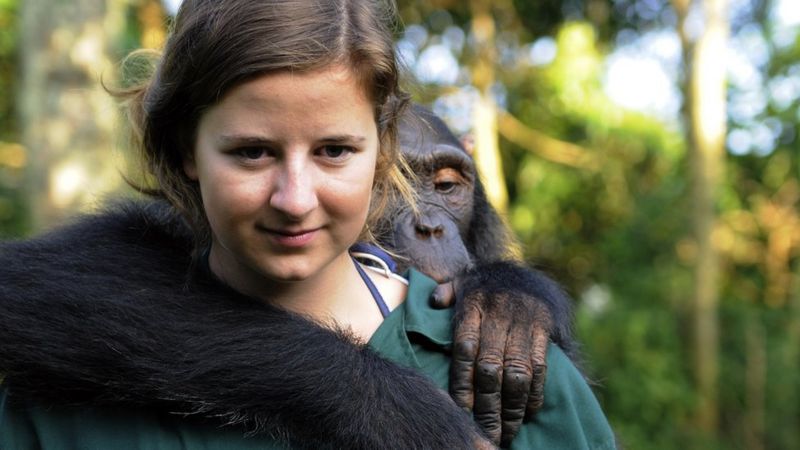
GETTY IMAGESConservationists around the world work to get animals, like this chimpanzee, back to living in the wild
Conservationists around the world work really hard to make sure wild animals, and the places where they live, are protected – so that the animals can live their life as naturally as possible.
Following the first outbreak of Covid-19 the city of Wuhan, in China is banning the farming and eating of live wildlife. Thousands of wildlife farms raising animals such as porcupines, civets and turtles have been shut down.
But it’s a worldwide problem. Professor Cunningham from the Zoological Society of London (ZSL) told the BBC: “It’s easy to finger point, but it’s not just happening in China, it’s happening in many other countries and even in the western world. We like to have exotic pets and many of those are wild caught and we ought to be putting our own house in order too.”
But tackling the problem is tricky as there are many poor people in parts of the world who depend on the wildlife trade for their jobs.
Professor Cunningham added: “The people who are providing them, whether that’s farmed wild animals or animals from the wild, that’s an important source of income for them.”
This L.A. hunter killed an elephant. Now he’s a PETA target in bid to end trophy hunting
By SUSANNE RUSTSTAFF WRITER AUG. 3, 20205 AM
In mid-December, Aaron Raby shot and killed an elephant. Hours later, he had a piece of it for dinner, with a side of sliced tomato and avocado.
A self-described “blue-collar” Los Angeles crane operator, Raby paid more than $30,000 for the once-in-a-lifetime experience — traveling more than 10,000 miles to South Africa to shoot and kill the tusked pachyderm. He then paid roughly $10,000 to have its head preserved as a souvenir of his adventure.
Yet Raby may never receive his trophy — which is still in South Africa being prepared by a taxidermist — if California enacts new legislation, Senate Bill 1175.
The legislation, which has passed the state Senate and is expected to pass the Assembly on Tuesday, would prohibit the importation and possession of animal parts from a list of endangered and threatened African species, including elephants, lions and rhinos.
“It’s time to wake up and realize that we’re in the middle of a mass extinction event,” said Sen. Henry Stern (D-Canoga Park), who wrote and shepherded the bill through the Senate.
Similar legislation passed both the Assembly and Senate two years ago but was ultimately vetoed by then-Gov. Jerry Brown, who called the trophy ban “unenforceable.” Stern said circumstances have since changed, and is confident the current governor, Gavin Newsom, will sign this year’s bill.
For Raby, the consequences of his latest kill are just starting to unfold. After the hunt, he posted images of his trophy on Facebook, YouTube and AfricaHunting.com, a website for hunters.
People for the Ethical Treatment of Animals, an animal rights activist organization, independently obtained video of the elephant shooting, which it released Monday and plans to use in a late-session campaign to ensure passage of Stern’s legislation.
Raby said he has faced threats and online harassment before, such as when he posted an image of himself with a lion he had killed. But the PETA campaign is sure to bring him a new notoriety, and deepen the debate about trophy hunting.
“I don’t understand why this is anybody’s business but my own,” Raby said. “What I did is legal. I didn’t break a law. They’re going to place a ban because a bunch of … crybabies that don’t like hunting.”
California has become a focus of the trophy fight partly because the federal government has vacillated on banning such imports. This year, the Trump administration approved the import of a lion trophy from Tanzania, the first since lions began receiving protections in January 2016 as a threatened species.
Fearing the administration may approve more trophy imports, wildlife advocates are hoping California will provide a line of defense.
For years, trophy hunting has also quietly divided conservation biologists. Last fall, that split became publicly acerbic within the pages of the prestigious research journal Science.
Some experts argue the practice provides funding for local communities, raises money for wildlife management and gives people who live near dangerous or destructive animals — such as lions and elephants — an incentive to conserve them instead of kill them.
Nov. 16, 2017
Others say there is no evidence that trophy hunting provides these benefits, and, even if it did, they question whether killing and dismembering such creatures justifies those ends.
The scope of the imports is vast. In 2017 alone, more than 650,000 wildlife trophies were imported to the United States, including species considered internationally rare or threatened, according to a report from the Congressional Research Service.
Last winter, after years of diligently saving, Raby embarked on a two-week hunting expedition in South Africa, led by a pair of experienced safari guides.
A video of the hunt, which PETA shared with The Times, shows a startled elephant facing the hunter and his phalanx of guides and trackers. As the young male pachyderm looks on — his ears widening — the guides set up a tripod upon which Raby places his rifle.
Raby shoots, and the bullet hits the elephant in its head. The elephant crumbles to his knees. Over the next 2½ minutes, Raby shoots the elephant four more times — three more hitting the animal’s head. The footage shows the elephant breathing heavily, groaning, bleeding and struggling to get up.
Raby’s guides continue to encourage him to get a cleaner shot. They never offer or attempt to intercede to quickly end the animal’s suffering.
The video cuts off before the elephant dies, although later footage — which Raby posted on YouTube and his Facebook page — shows crews skinning and deboning the elephant.
Raby has killed hundreds of animals across North America, as well as in Europe, Africa and Russia. Photos of his forays can be viewed on his public Instagram page, including one that shows a dead wolverine and another in which he is hugging a dead leopard.
The elephant was the culmination of Raby’s African “Big Five” quest. He’d already killed a lion, rhinoceros, Cape buffalo and leopard.
Raby said he hunts not for the kill, but for the experience and adventure of the hunt — living outdoors, cooking around a campfire, tracking an animal and immersing himself in the wild.
He also notes that lions regularly kill agricultural and pastoral animals — and occasionally people — while elephants can destroy homes and crops.
“We pay a lot of money to hunt these animals,” Raby said. “If we didn’t hunt, that land would be converted into cattle ranches and there’d be poaching. They don’t want lions killing their cattle or elephants destroying their crops.”
Mike Axelrad, a trophy hunter from Texas, said hunting provides financial incentives that prevent poaching. He said animals are often poisoned if considered a nuisance — a painful and often prolonged death.
Craig Packer, a biology professor and director of the University of Minnesota’s lion research center, said there are examples of successful trophy-hunting conservation preserves in countries such as Namibia and Zimbabwe — in which the proceeds from international hunting expeditions have provided funding to conserve wildlife habitat and employ people from local communities.
Unfortunately, he said, in most places, these reserves don’t translate into the desired outcomes because the money spent by hunters — a lion hunt can range from $20,000 to $70,000 — doesn’t come close to the kind of money needed to conserve biodiversity and manage habitat. Or employ enough people to have a meaningful effect on a community.
In addition, corruption in many countries and regions often makes it impossible to know where the money is going, to whom, and how the hunts are regulated.
“Many of these hunting preserves are fly-by-night operations. Business owners swoop in, sell big takes, and leave. They aren’t in it for the long term,” he said.
Others dispute Packer’s examples of hunting’s benefits.
“The emperor has no clothes,” said Adrian Treves, a conservation biologist at the University of Wisconsin and director of the Carnivore Coexistence Laboratory.
Treves says there are no concrete data supporting the idea that hunting promotes biodiversity, habitat conservation or local employment and engagement. Proponents tend to repeatedly cite the few studies that bolster the argument for hunting, creating a body of research that boils down to “self-citation,” he said.
An even bigger issue, said Chelsea Batavia, a conservation biologist at Oregon State University, is ethics.
“We know these animal are intelligent, they have emotional capacity and they have complicated social lives,” she said. Even if proponents could demonstrate that trophy hunting benefits conservation, she added, “do the ends justify the means?”
The debate, she said, needs to be seen in the context of colonialism, in which European traditions were and still are imposed upon Africans. What is needed, she said, are alternative conservation measures that aren’t issued from the top or from outside, but supported and embraced by local communities.
PETA is requesting that officials from South Africa investigate Raby’s hunt and, in particular, the prolonged death of the elephant.Newsletter
Toward a more sustainable California
Get Boiling Point, our newsletter exploring climate change, energy and the environment, and become part of the conversation — and the solution.Enter Email AddressSIGN ME UP
You may occasionally receive promotional content from the Los Angeles Times.
In a letter to officials at the Balule preserve, Jared Goodman, PETA’s vice president and deputy general counsel, said the kill violated the preserve’s requirement that animals are provided with “ethical and humane” treatment and that its guides comply “with the highest moral and ethical standards in recognition of a reverence for life and good sportsmanship.”
As for Raby, he said he’d leave California if Stern’s legislation becomes law.
“We’re not all bloodthirsty, psycho machines that people make us out to be,” he said. “I promise you, I can read an animal better than someone who is against hunting. They say they like animals, but they don’t know anything about them.”
PEER on Double-Crested Cormorants
Public Employees for Environmental Responsibility
July 15, 2020
Comments: Migratory Bird Permits: Management of Conflicts Associated with
Double-Crested Cormorants (Phalacrocorax auritus) Throughout the United
States Proposed Rule by FWS on 06/05/2020 ID: FWS-HQ-MB-2019-0103-1411
These comments are submitted on behalf of Public Employees for Environmental
Responsibility (PEER):
1. Public Resource Depredation Reversal Unexplained
In Chapter 3.0 of the 2017 Environmental Assessment for issuing
Double-crested Cormorant (DCCO) depredation permits, the U.S. Fish and
Wildlife Service (FWS) eliminated reduction of adverse impacts on
free-swimming fish populations from the list of resources qualifying for
permits. In section 3.2, FWS stated that to determine if there may be
significant impacts essential to a reasoned choice among alternatives the
agency would need additional information requiring analyses beyond the scope
of the EA. FWS acknowledged that scientific evidence to demonstrate DCCO
presence as a limiting factor for declines in free-swimming fish on a
landscape level was limited, and that available data indicate impacts are
likely site-specific. FWS also noted limited ability to clarify whether DCCO
depredation on free-swimming fish is compensatory or additive and that in
some systems, the issue is further complicated by introduction of invasive
species.
In 2020, however, FWS revived the idea of a Public Resource depredation
permit for 48 states and an unknown number of tribes yet cites no new
information to justify the reversal of its 2017 position.
2. Not Science Based
The current FWS proposal is not based on new scientific research. Indeed,
the new proposal appears as legally vulnerable as the predecessor
Depredation Orders (DOs) which were invalidated by court order in 2016 in a
lawsuit brought by PEER.
In the succeeding years, FWS has failed to take the required “hard look” at
impacts or to explore alternatives. Instead, FWS appears to have fashioned
what it believes to be a political solution that is unsupported by any
scientific research. In short, this proposal appears to be the antithesis of
competent wildlife management.
3. Nature of Conflict Undocumented
The purported purpose of the new FWS plan is to reduce predation of fish by
DCCOs. Yet, FWS has not even specified which fish populations are at risk
from unabated DCCO predation.
In the prior litigation, PEER and co-plaintiffs offered significant evidence
that DCCOs actually benefitted native fish populations by feeding on
invasive species that were competing with those native stocks. FWS offers no
evidence that these impacts have changed.
Further, FWS overlooks evidence in its own Draft Environmental Impact
Statement (DEIS) that
* The majority of studies find that important commercial and
sport-fish species made up a very small proportion of the cormorant diet.
(p.30)
* Invasive fish make up much of DCCO diets, up to 85% of the biomass
during periods of the breeding season, (p.31)
* There remains “much controversy regarding whether cormorants, in and
of themselves, have the ability to affect an entire fish population.” (p.33)
In addressing the criticism that FWS has failed to show that
avian-suppression measures have had an appreciable impact on the fish
populations that such measures were supposed to protect, FWS response is
that “assessing the influence of predation on a fishery is a complex
endeavor that requires vast amounts of data.” (DEIS, p.33). Yet, FWS has not
marshalled any of this data.
Instead, it offers vague generalities. In its Federal Register notice FWS
states:
“Importantly, reducing the abundance of double-crested cormorants is not the
goal of the Service or this proposed management action. Reducing their
overall abundance does not guarantee that conflicts in specific areas will
decrease. If cormorants are attracted to an area due to food resources,
nesting habitats, or other factors, those places will remain attractive
regardless of the size of the cormorant population and may still experience
damage to the resources. Rather, the goal of the Service is to reduce the
number of conflicts with cormorants by combining lethal and nonlethal
methods and allowing the lethal take of cormorants only when supported by
information that such take would reduce conflicts.”
This distinction is meaningless, however, since FWS lacks data to indicate
whether conflicts will be reduced.
4. No Coherent Explanation for Eschewing Individual Permit System
In his May 25, 2016 ruling, U.S. District Judge John D. Bates concluded that
revoking or vacating these DOs was the appropriate remedy by finding that
individual permits for removal, as are used for most other birds protected
by the Migratory Bird Treaty Act (MBTA), would be sufficient to alleviate
any “any serious detrimental impact” caused by cormorants.
Nothing in the latest FWS filing invalidates that finding or explains why
the issuance of individual depredation permits is an unworkable approach for
controlling excessive DCCO damage.
In its Federal Register notice, FWS stated that “between 2007 and 2018, the
number of permit requests to take depredating birds (exclusive of requests
to act under the depredation orders) increased from slightly less than 200
to almost 300.” This hardly seems like a burdensome number, considering it
covers all bird species. FWS does not specify the number of depredation
permits it has issued in the past few years for DCCOs except to claim that
they are administratively burdensome.
In that notice, the FWS declares that “the use of only depredation permits
to address conflicts will become increasingly time- consuming and
cumbersome, and will be less responsive to needs of those seeking relief
from conflicts with cormorants.” The basis for that statement is not
articulated.
In its place, FWS proposes far more elaborate permits for 48 states, the
District of Columbia, and an unknown number of tribes. Unless FWS does not
intend to perform the monitoring described in its DEIS, the level of
administrative burden on FWS will actually increase under its proposed rule.
In the DEIS, FWS concedes it “can still authorize the take of as much as
76,000 cormorants nationwide under depredation permits for other purposes
(e.g., human health and safety, property, aquaculture, vegetation,
co-nesting species damage).” (P.62). However, FWS does not explain why the
take of that many DCCOs is insufficient.
5. One-Size-Fits-All Proposal Inappropriate
Contrary to the earlier DOs which were limited to Eastern states, the new
FWS proposal is national (the lower-48) in scope. Yet, FWS makes no showing
that there is a DCCO problem in all 48 states or that shoot-on-sight permits
are an appropriate remedy in any one state.
In the earlier litigation, the lack of appropriate controls in DCCO hunting
programs within South Carolina and Texas was a factor in the ruling striking
down the DOs. FWS offers no evidence indicating that the failures of these
state programs have been cured.
6. Sole Focus on DCCOs Unexplained
DCCOs are not the only aquatic wildfowl that eat fish, yet it is the only
species FWS targets for mass lethal removal. FWS offers no evidence
justifying this singular focus. If all DCCOs were suddenly to be lethally
removed, it is unclear whether other birds would fill that void with the
same impact on fish populations.
The closest thing to a rationale can be found in the DEIS where it explains
why the No Action alternative was rejected:
“Because mortality of cormorants would occur only from natural causes, the
continental and regional populations would likely increase to the carrying
capacity of the landscapes they inhabit before density-dependent mortality
and/or recruitment limit further growth. At that point, the populations
would stabilize around a mean value, although annual and periodic
fluctuations in abundance around that mean would occur due to extant
environmental conditions. Given the growth of cormorant populations in the
absence of lethal management efforts, the abundance of cormorants likely
would be higher than it is currently. Additional population growth would
result in increased conflicts between cormorants and society exacerbating
issues that presently exist. Therefore, we do not believe this alternative
to be a reasonable action.” (p.20)
This is hardly a compelling rationale. Nor does it explain why this
reasoning would not apply to every cormorant species or every fish-eating
bird species.
7. Bias against Non-Lethal Measures
The FWS Potential Take Limit model used to justify killing more than 123,000
wild cormorants presupposes the failure of non-lethal measures in favor of
lethal removal. However, the empirical basis for this presupposition is
never presented, let alone explained.
The DEIS cites studies that “have shown that harassment at hatchery release
sites is often sufficient to reduce cormorant foraging until fish are able
to disperse. Likewise, non-lethal measures are sometimes effective at
deterring migrating cormorants from foraging on local fish stocks as they
are moving through an area.” (p. 62)
FWS claims that it permits would require that non-lethal means are exhausted
prior to undertaking lethal removal. If these studies are correct, no lethal
take should be required to protect fish populations and state-wide permits
would be unnecessary.
8. Take Level May Be Excessive
The DEIS states that the current estimate of cormorant abundance in the
continental U.S. and Canada is 871,001 to 981,394 birds. (p.24). FWS’
proposal would set an allowable take of 123,157 cormorants per year,
nationally. (p.10)
That take level would allow removal of between 1 in 7 and 1 in 8 cormorants
in North America every year for the five-year duration of the permits.
Notwithstanding FWS’ convoluted Potential Take Level calculations, this take
allowance appears excessive and could destabilize DCCO populations.
9. FWS Lacks Ability to Monitor
These high take levels underscore the importance of FWS monitoring of DCCO
populations, what the DEIS labels “an important component of all the
alternatives.” (p.10)
Yet, FWS admits that it “has not yet developed population-monitoring
programs for the alternatives presented in this DEIS.” (p. 57) The Service
also concedes that “To minimize significant negative impacts to the Southern
and Western populations, the Service would need to develop a more
comprehensive take-tracking program that would entail participation of
monitoring from WS [USDA Wildlife Service], states, tribes, and commercial
aquaculture facilities to ensure authorized take levels are not exceeded.”
(p. 58)
FWS further recognizes the particular vulnerability of “the Western and
Southern populations, which may be more vulnerable to negative impacts if
authorized take is exceeded.” (p. 72) These are regions that were outside
the scope of the previous DOs.
Yet, it is not at all clear that FWS has the ability or the organizational
will to invest in achieving substantially upgraded monitoring capability,
especially since the driving motive behind this plan is easing the agency’s
administrative burden. In sort, FWS should not proceed with this proposal
until it has developed the monitoring capacity to prevent excessive DCCO
take.
10. Harm to Co-Nesting Birds Inappropriately Minimized
The DEIS acknowledges “an increasing concern” about harm to co-nesting birds
who will also be driven from their nests during DCCO take operations and
creating “opportunities for gulls to prey on eggs and chicks” of co-nesting
species (p.45). Yet, on the next page of the DEIS, FWS goes on to minimize
this concern with the statement –
“However, the Service anticipates the unintentional take of nontarget
species to occur infrequently and involve very few individuals of a
particular species.” (p.46)
FWS offers no evidence or analysis for this apparently unfounded optimism.
11. No Meaningful Check on Take of Look-Alike Birds
FWS also discounts the danger to look-alike bird species, such as neo-tropic
cormorants, great cormorants, and anhingas. The DEIS points out why this
should be a concern:
“Those species often intermix with cormorants. The misidentification of a
bird species that appears similar to a cormorant can occur especially when
those species mix with cormorants in flight and lowlight conditions.” (p.46)
The only safeguard FWS identifies is that states and tribes with permits
would be required to report any other species of bird taken incidentally due
to double-crested cormorant management activities under this permit, along
with the numbers of birds of each species taken.
It is unclear how often misidentifications will ne noticed, especially if
carcasses are promptly destroyed. Moreover, states and tribes have no
incentive to report mistakes, especially if doing s could result in
suspension or loss of their permit.
Nonetheless, without evidence or analysis, FWS dismisses this concern in the
DEIS, writing:
“The Service anticipates the unintentional take of nontarget species to
occur infrequently and involve very few individuals of a particular species;
therefore, the Service does not anticipate cumulative adverse effects to
occur from unintentional take of nontarget species under any of the
alternatives.”(p.75)
12. The Illogic of Depredation Trigger
The permits FWS proposes would authorize killing DCCOs only when cormorants
are committing or are about to commit depredations. Yet, DCCOs diet consists
almost entirely of fish. Thus, these birds are always either predating on
fish or are about to. In essence, FWS through this proposal and past DOs
wants to extend shoot-on-sight authority to whichever entity it deputizes to
dispatch cormorants.
This indiscriminate approach is poor wildlife management which reflects no
credit on FWS.
13. Inability to Assess Environmental Impacts
Without any knowledge of what permits will be issued for taking what numbers
of cormorants in what locations under what circumstances, it is impossible
to evaluate the environmental impacts of this proposal.
The pandemic highlights the gruesome animal abuses at US factory farms
https://www.theguardian.com/commentisfree/2020/aug/03/coronavirus-animal-abuse-us-factory-farms
Stories have emerged of mass killings of chickens and pigs, a tiny fraction of daily abuses heaped on farmed animals
Mon 3 Aug 2020 08.53 EDT
Shares297

More than any event in recent history, the coronavirus pandemic has made plain the consequences of our abuse of animals. From the Chinese wet market where the virus likely emerged to the American slaughterhouses which have become key vectors of transmission, our ravenous demand for cheap meat has been implicated in enormous human suffering. But the suffering is not ours alone. The pandemic has also focused our attention on how American agribusiness – which has benefited from deregulation under the Trump administration – abuses animals on an industrial scale.
Republican proposal slashes weekly unemployment benefits to $200 – as it happened
Read more
As slaughterhouses across the nation have been forced to close by the virus, gruesome stories have emerged of the mass killing of millions of chickens and pigs who can no longer be brought to market. Chickens have been gassed or smothered with a foam in which they slowly suffocate. Among other methods, pigs – whose cognitive abilities are similar to dogs – have been killed by a method known as ventilator shutdown, in which the airways to a barn are closed off and steam is introduced. A whistleblower’s video shows thousands of pigs dying as they are slowly suffocated and roasted to death overnight.
Although the pandemic has focused attention on these incidents, they represent a tiny fraction of the daily abuses heaped on farmed animals. The billions of animals slaughtered every year in the United States are intelligent, sensitive beings capable of feeling a range of emotions. They are driven to raise their young and form complex social structures, both impossible under the conditions of modern farming. Instead, they live short, painful, disease-ridden lives. Chickens, who make up over 90% of the animals slaughtered every year, suffer the worst. Their deaths are subject to effectively no federal regulation, meaning the birds are frequently frozen, boiled, drowned or suffocated to death.
Trump has moved to deregulate agribusiness even further, giving companies that abuse animals freer rein to prioritize profit over welfare
Unsurprisingly, the Trump administration has moved to deregulate agribusiness even further, giving companies that abuse animals freer rein to prioritize profit over welfare. The administration dropped enforcement of animal welfare statutes and moved forward with proposals to reduce the role of government inspectors in overseeing conditions at slaughterhouses – proposals which an inspector general says are based on faulty data. The administration also removed from public view a searchable database of animal inspection reports, shielding abusers from scrutiny. The records only went back online when Congress forced the administration’s hand.Advertisementhttps://tpc.googlesyndication.com/safeframe/1-0-37/html/container.html
As in other areas, the culture war waged by Trump’s supporters has enabled his pro-business policies. “Soy boy” has emerged as the insult of choice among the alt-right, identifying meat consumption and complicity with animal suffering as markers of masculinity. When the right cast the Green New Deal as an assault on the American way of life, they were sure to include copious meat consumption among the precious tenets under threat. “They want to take your hamburgers,” former White House aide Sebastian Gorka told a conservative audience, equating the Green New Deal with “Communism”. The reactionary writer Jordan Peterson, who has made a fortune from trolling the left, even chimed in by claiming to follow an all-beef diet.
Bringing an end to the atrocity which is America’s system of animal agriculture requires challenging both the coziness of the government-agribusiness connection and the cultural norms which underpin it. But other recent developments have shown how hard this will be. Sales of meatless meat have exploded in recent years, but they remain a tiny fraction of overall sales. Meanwhile, although Cory Booker became only the second vegan to seek a major party presidential nomination, the strength of cultural and political headwinds prevented him from drawing a link between his dietary preferences and public policy. When pushed, he embraced the framing of the issue favored among the right, declaring the freedom to eat meat “one of our most sacred values”.
As concern over abusive practices on factory farms and public interest in alternative diets have grown, businesses and their political allies have fought back with laws intended to restrict the information and choice available to consumers. So-called “ag-gag” laws, which criminalize undercover investigations of conditions on farms, have been joined by state laws preventing plant-based alternatives from using labels such as “meat” or “sausage”. The Food and Drug Administration is even considering a nationwide ban on the use of the word “milk” to label alternatives derived from soy or oats, in an effort to protect the dairy industry.
In the face of so many vested interests, even the harm caused by the pandemic looks unlikely to lead to fundamental change in America’s system of food production anytime soon. But there are glimmers of hope. When meat supplies dwindled in the first weeks of the lockdown, sales of plant-based products surged, suggesting consumers see them as a genuine alternative. If these products can be improved to a point where they can compete with meat on taste and cost, consumers and even the meat industry might embrace them on a large scale, potentially spelling the end of industrialized animal abuse.
For both the billions of animals raised and killed each year and for ourselves, that day cannot come soon enough. There is nothing natural or inevitable about factory farms, which have transformed human agriculture into a monstrosity which would be unrecognizable to previous generations. After they pass into history, future generations will view them as one of the greatest crimes ever perpetrated by humankind. As coronavirus ravages our economies and our bodies, it is clearer than ever that only a pervasive and self-defeating blindness prevents us from seeing factory farms the same way.
- Andrew Gawthorpe is a historian of the United States at Leiden University
Will Killing the Geese Stop?– A Reason for Cautious Optimism
https://upc-online.org/ducks/200726_will_killing_the_geese_stop-a_reason_for_cautious_optimism.html
As of today, Denver Parks & Recreation (DPR) have said there will be no more killing of the Canada geese in 2020 and that killing will be unnecessary in 2021. — Marc Bekoff, PhD
Read Marc Bekoff’s latest coverage:
Why Geese Matter, July 24, 2020.
See our latest Action Alert:
Protect Denver’s Canada Geese: Take Action! July 23, 2020.

This family of Canada geese lived peacefully together until they were captured and killed by government agents.
(Photo: Karen Trenchard; Garland Park, Denver, Colorado, June 2020)
More From UPC
UPC Summer 2020 Poultry Press – Volume 30, Number 1
Will Killing the Geese Stop? – A Reason for Cautious Optimism
SHARK Undercover Investigation: Kentucky Cockfights Exposed!
Alliance to End
Chickens As Kaparos
EndChickensAsKaporos.com
Vegan Starter Kit
Great Recipes & More
Order Printed Copies!
United Poultry Concerns
FrontlinePBS on slaughterhouse workers includes undercover animal video from COK, aired 7/21/2020
| I want to make sure DawnWatch subscribers know about the most recent episode of Frontline, on PBS, which looked at the plight of agricultural and slaughterhouse workers during the Covid-19 pandemic. Upon learning that the episode included video of egregious animal abuse, in addition to the inherent animal abuse of slaughterhouses, I feared that animals would be what Carol Adams has termed the “absent referent” (a term well worth learning about) in the show, with their suffering being an unacknowledged backdrop. Instead, Frontline shared the undercover video at the top of the slaughterhouse segment, letting viewers know that the Central Valley Meat Co, which has shown shocking indifference to the plight of its workers, has a famously bad history with animals as well. PBS does not mention that the video being shared comes from a Compassion Over Killing undercover investigation from 2012, but some of you might enjoy the DawnWatch alert from that time about the superb coverage the investigation achieved: https://dawnwatch.com/alert/20120822190107/ The Frontline episode can be watched on line at:https://www.pbs.org/video/covids-hidden-toll-lof6d5/ The animal cruelty segment is at the 22 minute mark, but I personally would highly recommend watching the full show. It is eye opening and thought provoking. It was not easy to find a link for feedback to the Frontline producers, while very easy to find information for sharing the episode online, which tells us that sharing is the positive feedback the producers prefer. They offer their social media address as @FrontlinePBS and hashtag as #FrontlinePBS . And so I highly recommend you check out and share the segment. I have it on the DawnWatch Facebook page athttps://www.facebook.com/DawnWatchInc/posts/662804937776490 |
Pup paralyzed after brutal beating demonstrates urgency for Iowa to make animal torture a felony
| A Humane WorldKitty Block’s Blog |
| July 21, 2020 |
Activists call for ban on 1,000-year-old whale slaughter tradition as ‘insane blood sport’ turns seas red
The islands see around 800 long-finned pilot whales killed every year as they often swim in close proximity to the shoresBy Akshay Pai
Published on : 02:57 PST, Jul 19, 2020
(Getty Images)
Animal rights activists have called for a ban of the Faroe Islands’ annual whale hunt, which they termed as an “insane blood sport” and which sees the waters turn a dark red as hundreds of the mammals are slaughtered.
The Grindadràp, which means slaughter in Faroese, has been practiced in the islands for more than a 1,000 years, as per some estimates, and involves the killing of schools of long-finned pilot whales that often swim in proximity to the islands’ shores.
The hunt involves the whales being surrounded by boats, who then drive them into a bay or to the bottom of a fjord, where they are killed by people lying in wait with knives. After the slaughter, the waters turn red, with pictures of the same shared around the world in recent times as calls to ban the “cruel” and “unnecessary” practice have increased in recent years.
It initially appeared as if the Grindadràp would not go ahead this year because of the coronavirus pandemic, but AFP reported that the hunt began this week with the killing of around 300 of the mammals.
Concern had been raised about fisherman proximity after the territory, located in the North Atlantic between Norway and Iceland and comprising of 18 islands, had logged 188 cases of Covid-19 despite having a population of just 55,000. However, on July 7, Fisheries Minister Jacob Vestergaard gave his approval for the hunt on the condition that people avoid large gatherings.

NGO Sea Shepherd, a non-profit marine conversation organization based in Washington state, said 250 long-finned pilot whales and some Atlantic white-sided dolphins were killed on Wednesday, July 15, off Hvalba, a village on the southernmost island of Suduroy.
“252 long-finned pilot whales and 35 Atlantic white-sided dolphins were killed in Hvalba last night after the huge pod was found off Sandvik,” they said in a statement. “This is the first organized Grindadràp hunt of 2020 with the meat from the hunt distributed first to the approximately 70 hunt participants from the boats and those killing on the beach – and then the remainder to villages on Suðuroy with all recipients then free to sell their share of the meat if they so wish.”
Sea Shepherd successfully managed to disrupt the hunt in 2014 but has since been banned from Faroese waters after legislation was passed to authorize Danish military vessels to stop them with force.
ORCA, another non-profit environmental conservation organization dedicated to protecting marine life, similarly condemned the practice and called it an “insane blood sport.”
“To the beautiful family of pilot whales that were brutally murdered in the Danish #FaroeIslands, we are so deeply sorry… We will keep fighting to end this insane blood sport. RIP beautiful family…” they tweeted. “Please Boycott the Faroe Islands! #GrindStop #Denmark #StopKillingWhales”
The Faroese have repeatedly defended the hunt by stating that it is sustainable since they catch just 800 whales out of the 100,000 that call the islands their home. But concerns have been raised about how these whales are killed.
Alastair Ward, a Cambridge University student who photographed the event in 2018, told the BBC that the hunt was not carried out humanely. “The squealing from the whales was horrible. They were putting hooks on ropes in their blowholes to pull them in and then hacking at them with knives,” he said. “They didn’t die in a very humane way.”If you have a news scoop or an interesting story for us, please reach out at (323) 421-7514
REPORT: FACTORY FARMING IS THE “SINGLE MOST RISKY BEHAVIOR” FOR FUTURE PANDEMICS

“The recipe for disaster is surprisingly simple: one animal, one mutation, one human, and a single point of contact,” Michael Webermann, US Executive Director of ProVeg International, said about the pandemic risk posed by intensive animal farming.
JULY 16, 2020
305 Shares
Anew report published today by global food awareness organization ProVeg International singled out intensive animal farming as the “most risky human behaviour in relation to pandemics.” The Food & Pandemics Report outlines the interacting factors that lead to zoonotic disease, namely the destruction of natural habitats and biodiversity (driven by animal agriculture); the use of wild animals for food; and the use of farmed animals for food. It points out that while new diseases are thought to have originated in wild animals, many have in fact come from domesticated animal origin, including diphtheria, measles, mumps, the rotavirus, smallpox, and influenza A. The report explains that the fatality rate of COVID-19 is 4.7 percent (or 47 percent higher than that of the typical flu strain) and that of H5N1 (or “bird flu” which is of avian origin) is at 60 percent, and predicts that future pandemics will be deadlier and more frequent. The report urges that a vast transformation of the global food system away from intensive factory farming—which it said “functions as a large-scale zoonotic incubator”—is necessary to prevent future pandemics such as COVID-19.
“The recipe for disaster is surprisingly simple: one animal, one mutation, one human, and a single point of contact. We don’t yet know the full story about the emergence of COVID-19, but there is no uncertainty regarding swine flu and avian flu: those viruses evolved on factory farms, where conditions are perfect for the evolution and transmission of viruses, as well as for the development of antimicrobial resistance,” Michael Webermann, US Executive Director of ProVeg International, said. “Factory farms are perfect breeding grounds for future pandemics.”
ProVeg International’s report has drawn support from the United Nations Environment Programme (UNEP). “The ProVeg report clearly demonstrates the connection between industrial animal production and the increased risk of pandemics,” Musonda Mumba, Chief of the Terrestrial Ecosystems Unit of the UNEP, said. “Never before have so many opportunities existed for pathogens to jump from wild and domestic animals to people.”