Conservationists Ask Court to Halt Wolf Extermination in One of Nation’s Premiere Wilderness Areas

http://www.thewildlifenews.com/2014/01/07/conservationists-ask-court-to-halt-wolf-extermination-in-one-of-nations-premiere-wilderness-areas/

POCATELLO, Idaho – A coalition of conservationists, represented by the non-profit environmental law firm Earthjustice, today asked a federal judge in Idaho to halt an unprecedented program by the U.S. Forest Service and Idaho Department of Fish and Game (IDFG) to exterminate two wolf packs deep within the largest forested wilderness area in the lower-48 states.

In mid-December 2013, IDFG hired a hunter-trapper to pack into central Idaho’s 2.4-million-acre Frank Church-River of No Return Wilderness to eradicate two wolf packs, the Golden and Monumental packs, in the interest of inflating elk populations for outfitters and recreational hunters. The U.S. Forest Service, which administers the wilderness, approved the extermination program by authorizing use of a Forest Service cabin and airstrip to support wolf extermination activities.

“A wilderness is supposed to be a wild place governed by natural conditions, not an elk farm,” said Earthjustice attorney Timothy Preso. “Wolves are a key part of that wild nature and we are asking a judge to protect the wilderness by stopping the extermination of two wolf packs.”

Earthjustice is representing long-time Idaho conservationist and wilderness advocate Ralph Maughan along with three conservation groups—Defenders of Wildlife, Western Watersheds Project, and Wilderness Watch—in a lawsuit challenging the wolf extermination program. The conservationists argue that the U.S. Forest Service’s approval and facilitation of the program violated the agency’s duty to protect the wilderness character of the Frank Church Wilderness. They have requested a court injunction to prohibit further implementation of the wolf extermination program until their case can be resolved.

Frank Church-River of No Return Wilderness ©Ken Cole

Frank Church-River of No Return Wilderness ©Ken Cole

“Idaho’s program to eliminate two wolf packs from the Frank Church Wilderness Area for perceived benefits to elk hunting is just the most recent example of the state bending over backwards to accommodate the wishes of people who hate wolves,” said Jonathan Proctor of Defenders of Wildlife. “Wilderness areas are places for wildlife to remain as wild as is possible in today’s modern world. If Idaho’s wildlife officials won’t let wolves and elk interact naturally in the Frank Church Wilderness, then clearly they will allow it nowhere. The U.S. Forest Service must immediately prohibit the use of national forest wilderness areas for this hostile and shortsighted wolf eradication program.”

The region of the Frank Church Wilderness where IDFG’s hunter-trapper is killing wolves is a remote area around Big Creek and the Middle Fork of the Salmon River. Even though this region hosts one of the lightest densities of hunters in the state, IDFG prioritized elk production over protection of the area’s wilderness character. The Forest Service failed to object to IDFG’s plans and instead actively assisted them.

“As someone who has enjoyed watching members of the Golden Pack and spent time in the area where these wolves live, I am startled that IDFG thinks it is acceptable to kill them off. If wolves can’t live inside one of America’s biggest wilderness areas without a government extermination program then where can they live?” asked Ken Cole of Western Watersheds Project. “The value of wilderness is not solely to provide outfitters elk to shoot,” Cole added.

acrobat pdfRead the Complaint acrobat pdfRead the Motion for a Temporary Restraining Order (TRO) acrobat pdfRead the Memo in Support of TRO and Preliminary Injunction

National Park Service Starts Mass Slaughter of Deer in Rock Creek Park

Washington, D.C. (January 8, 2014) – As Christmas trees and charming illuminated

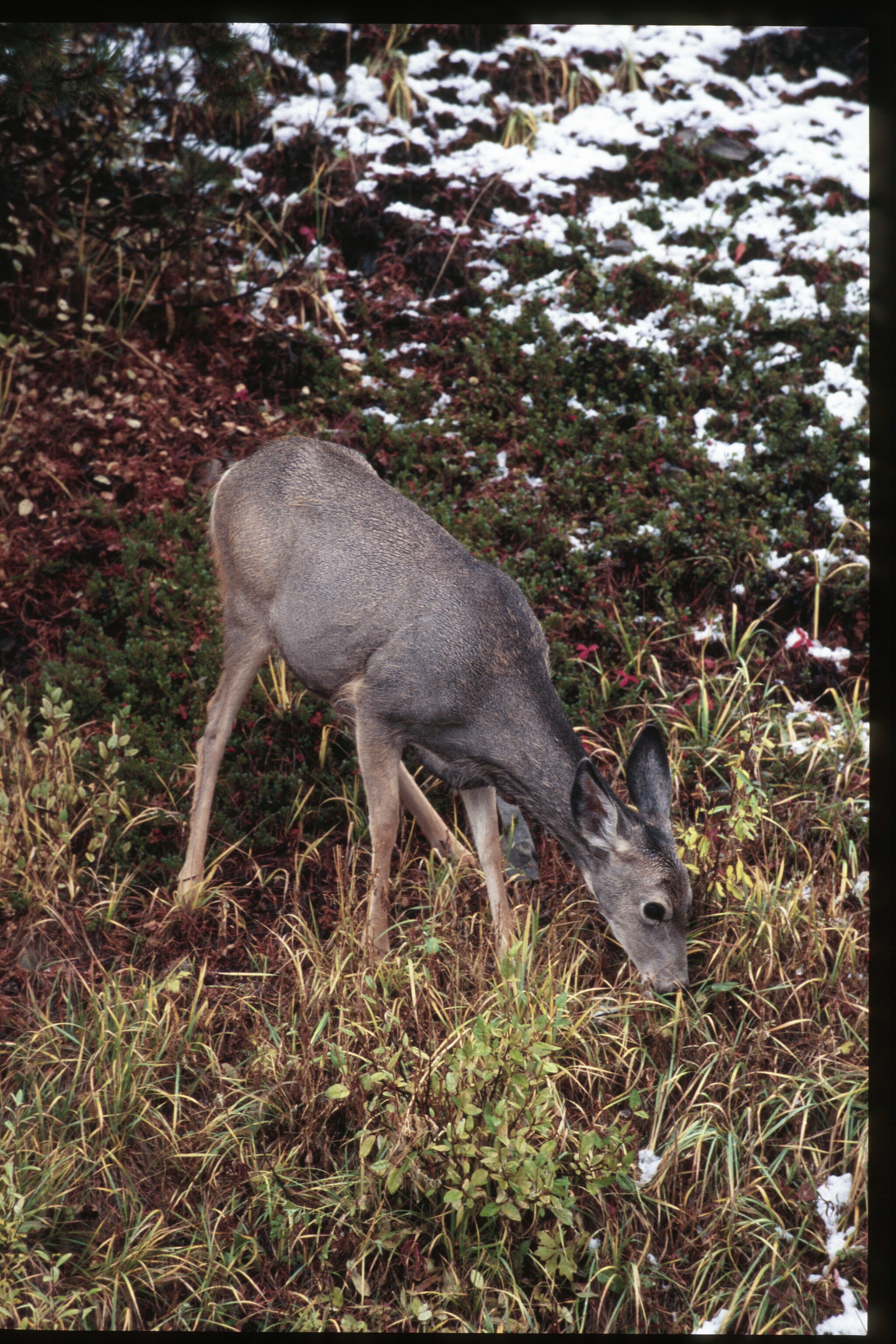
Photo Copyright Jim Robertson

Photo Copyright Jim Robertson

deer decorations sparkled on lawns in the nation’s capital last night the real deer who live in Washington, DC, were being gunned down by the National Park Service in the bitter cold. Last night’s begin of the mass killing of deer was the first of several unannounced deer kills that the NPS plans to conduct in Rock Creek National Park through March 31.

In record-breaking bitter cold temperatures that reached into the single digits with 40 mph wind gusts the National Park Service, in a sneaky attack, last night set up unannounced road blocks around Rock Creek Park and turned its guns on some of the 300 deer who live there.

Although gunshots could not be heard, Park Police acknowledged to passers-by that the killing was taking place. The NPS has announced in the past that silencers would be used by USDA Wildlife Service’s agents on guns so that residents who live near the Park would not be disturbed. It is also possible that archery was used, an unusually cruel method of killing animals.

Unlike last year’s killing, in which the NPS announced in advance on what days the killing would occur, the NPS has now changed tactics. In an attempt to outwit deer supporters, the NPS has announced that it will conduct surprise kills on unannounced nights through March 31.

Last night’s killing was exceptionally unconscionable because it took place during a record-breaking cold spell during which wild animals need to preserve their heat and energy by hunkering down. Hunting the deer during such extreme weather stressed not only the deer but all the other animals who live in the Park.

“The National Park Service’s decision to enter in an endless cycle of killing deer is appalling in terms of its brutality, and it goes against the public’s will, common sense, compassion and science,” says Anja Heister, In Defense of Animals’ Director for the Wild and Free-Habitats Campaign. “The agency kills deer despite its failure to provide proof that it is actually the park’s deer and not exotic plants that interfere with forest regeneration.”

“Urban deer are here to stay, and we need to take responsibility in treating them humanely” adds Heister. “Instead of being so incredibly backward, the NPS should enter the 21st century and use existing nonlethal methods, including fertility control.”

Legal action by a coalition of local Washington D.C. residents and In Defense of Animals against the NPS killing continues, as will negative publicity and protests by local residents for as long as it takes to put a halt to this senseless killing, and for the agency to realize that it had better start to listen to the public, who strongly opposes the killing of deer in our nation’s capital as unacceptable.

###

Contact: Anja Heister, anja@idausa.org, 406-544-5727

In Defense of Animals is an international animal protection organization located in San Rafael, Calif. dedicated to protecting animals’ rights, welfare, and habitat through education, outreach, and our hands-on rescue facilities in India, Africa, and rural Mississippi.

IN DEFENSE OF ANIMALS – 3010 KERNER BLVD. – SAN RAFAEL, CA 94901 – 415-448-0048

Documentary Spotlights Wildlife Services’ Lethal Mass Killings

Activist discovered an “agency running amok and totally out of control” with no authority to answer to.
By   |      January 6, 2014

(Photo/Tom Ryburn via Flickr)

(Photo/Tom Ryburn via Flickr)


 Since its inception in 1931, the U.S. Department of Agriculture’s Wildlife Services has taken its mission “to improve the coexistence of people and wildlife” to heart, killing an estimated 3 million animals per year, which often includes endangered species such as eagles and household pets.

Though the agency does kill some species that are overpopulated and prey on livestock such as wolves, coyotes, mountain lions, and other wild carnivores, a new documentary from the Oregon-based nonprofit Predator Defense spotlights a darker side of the agency, hoping to spark public-demanded reform.

Brooks Fahy is the executive director of Predator Defense, the group behind Exposed: USDA’s Secret War on Wildlife. He says he heard stories about Wildlife Services officials brutally killing thousands of animals each year with poisons and aerial guttings for years, but never thought the agency actually was capable of such behavior until he launched his own investigation.

Fahy says what he discovered was an “agency running amok and totally out of control” with no authority to answer to. He believes the American public needs to know how their tax dollars are being inhumanely spent.

Lethal killings

Dubbed “criter assassins” by those opposed to the agency’s work, makers of the expose hope the documentary brings animal rights activists, environmentalists, politicians and the public together in order to stop the agency from continuing to use steel traps, wire snares, poisons, and snipers to kill wild animals in mass, unnecessarily.

Although calls for the agency’s reform may have started out as a concern about changes in the ecosystem, Democratic Rep. Peter DeFazio of Oregon says “Wildlife Services is one of the most opaque and obstinate departments” he has ever dealt with, including the Pentagon, which is why he is pushing for the agency’s reform.

“We’re really not sure what they’re doing,” DeFazio said. “I’ve asked the agency to give me breakdowns on what lethal methods they’re using. They can’t or won’t do that. We’ve asked them to tell us what goes into their poisons. They won’t say.”

DeFazio and John Campbell, a Republican from California, have teamed up and have tried to press for Congressional hearings regarding the agency’s work, as well as for the Agriculture Department’s inspector general to investigate Wildlife Services, but so far their efforts have been largely unsuccessful thanks to Wildlife Services corporate agriculture allies.

In response to the video, Carol Bannerman, public affairs specialist for Wildlife Services, told MintPress that some of the information provided is outdated, as the agency has changed in the last 20 to 40 years. And while Bannerman acknowledges that the agency largely uses lethal means to remove predator species, she says that the agency also does a lot of good work that is being overlooked.

Talking to the Sacramento Bee, William Clay, deputy administrator of Wildlife Services, said the agency attempts to use non-lethal control methods first, but “The problem is, generally when we get a call, it’s because farmers and ranchers are having livestock killed immediately. They are being killed daily. Our first response is to try to stop the killing and then implement non-lethal methods.”

However, Carter Niemeyer, a former Wildlife Services district manager who worked for the agency for 26 years, told the Sacramento Bee much of the agency’s work is excessive, scientifically unsound, and a waste of tax dollars.

“If you read the brochures, go on their website, they play down the lethal control, which they are heavily involved in, and show you this benign side,” Niemeyer said. “It’s smoke and mirrors. It’s a killing business. And it ain’t pretty.

“If the public knows this and they don’t care, I’m not going to lose any sleep over it. But they are entitled to know.”

Nuclear wildlife management

Though many lawmakers and activists including Andrew Wetzler, director of the land and wildlife program at the Natural Resources Defense Council, recognizes the agency does good work as well, Wetzler says the agency needs to be held responsible for its inhumane actions.

“We asked them about data,” he said, “How much do they use poison, where. How much do they spend renting helicopters to gun down coyotes and wolves,” but “The consistent answer we’ve gotten back … is: ‘We don’t know.’ There’s a severe lack of transparency.”

In the Predator Defense documentary, Rex Shaddox, a former special investigator for the Wyoming Sting Operation and a former Wildlife Services Trapper, explained that the USDA sells illegal pesticides to state Agriculture Department’s, who in turn sell the poisons to farmers and ranchers to kill coyotes.

Shaddox said poisons he worked with were all banned in the 1970s, such as Compound 1080 and DDT, and were not supposed to be in existence any longer, but the government was selling the pesticides “like a big huge drug operation.”

Although Bannerman says Compound 1080 has been largely replaced by sodium cyanide M-44 containers, Fahy says it is absurd to use a device that kills anything that investigates it, including people, and called Wildlife Services’ killing techniques a “nuclear approach to wildlife management.”

News of Wildlife Services lethal work may be shocking to the public, and largely absent from the mainstream media, but calls for the agency’s reform date back to the early 1960s, when scientists reported that eradicating certain species of animals was not leading to a balanced ecosystem.

In 1971 President Richard Nixon signed an executive order banning the use of poison for federal predator control, saying the public needed to learn to coexist with wildlife, but President Gerald Ford later amended the order to allow for the use of sodium cyanide.

As Fahy and others in the documentary pointed out, it’s not that the agency needs to incorporate more rules and legislation that dictates what trappers can and can’t do, they have to actually follow those laws.

Failure to follow federal law

Gary Strader is a former wildlife services trapper who currently works as a private trapper. He shared that on one occasion two mountain lions were shot from the air, which is a felony. A retired law enforcement officer, Strader said that government employees are not supposed to be committing any sort of crime, especially on taxpayer dollars, so he went to his supervisor.

Strader says he didn’t want to get anyone in trouble, but he wanted abuse of the law to stop. But after talking to his supervisor, Strader says he was treated poorly and within a few months, his job was eliminated.

“I’m not an animal rights activist,” Strader said, but Wildlife Services should have to abide by state laws, including checking traps every 24-hours so animals don’t languish in pain. “If the American public saw this and understood the brutality of this,” Strader says the practice would be ended almost immediately.

“I learned the hard way they lie from the top to the bottom,” Strader said. Shaddox agreed and added that while there are about 26 restrictions regarding the use of M-44, including a complete ban on using the poison on domestic animals, he said his supervisor often tested the poisons on dogs at city dumps.

“Most of top supervisors have total disregard for their own policy,” he said, adding that the goal is to keep the customer — the farmers and ranchers — happy above anything else.

Though Bannerman says the agency has improved in recent years, Fahy says the documentary was made not because there is just one individual who has an axe to grind. He said these employees have done things and witnessed things that are hard for them to live with.

“It isn’t he said, she said,” Fahy said. “There’s a tremendous amount of information out there. We have evidence … Wildlife Services doesn’t dispute our cases.”

Congressmen question costs, mission of Wildlife Services agency

http://www.latimes.com/nation/la-me-wildlife-killing-20140105,0,2146578.story#axzz2pXmR2tyM

By Julie Cart
January 4, 2014, 7:41 p.m.la-me-wildlife-killing-g

The U.S. Department of Agriculture’s inspector general will investigate a federal agency whose mission is to exterminate birds, coyotes, mountain lions and other animals that threaten the livelihoods of farmers and ranchers.

The investigation of U.S. Wildlife Services is to determine, among other things, “whether wildlife damage management activities were justified and effective.” Biologists have questioned the agency’s effectiveness, arguing that indiscriminately killing more than 3 million birds and other wild animals every year is often counterproductive.

Reps. Peter A. DeFazio (D-Ore.) and John Campbell (R-Irvine) requested the review, calling for a complete audit of the culture within Wildlife Services. The agency has been accused of abuses, including animal cruelty and occasional accidental killing of endangered species, family pets and other animals that weren’t targeted.

DeFazio says the time has come to revisit the agency’s mission and determine whether it makes economic and biological sense for taxpayers to underwrite a service, however necessary, that he argues should be paid for by private businesses.

“Why should taxpayers, particularly in tough times, pay to subsidize private interests?” said DeFazio, ranking Democrat on the House Committee on Natural Resources. “I have come to the conclusion that this is an agency whose time has passed.”

Wildlife Services was created in 1931 as part of the USDA’s Animal and Plant Health Inspection Service. It has wide-ranging responsibilities, including rabies testing and bird control at airport runways. But the bulk of its work is exterminating nuisance wildlife by methods that include poisoning, gassing, trapping and aerial gunning.

The agency acts as a pest management service not only for agribusiness and ranches, but also for other federal agencies, counties and homeowners who might have such problems as raccoons in an attic. Other services include protecting endangered species and maintaining game herds for hunters.

The services are free or substantially subsidized, which many private predator- and pest-control companies say unfairly undercuts their business. States and counties complain that they are responsible for an increasing share of the costs.

DeFazio and Campbell are also calling for congressional oversight hearings. DeFazio says he has spent years asking for but not receiving information from Wildlife Services, which he calls “the least accountable federal agency” he has ever seen.

He said he had to learn from the Los Angeles Times about an internal audit the agency conducted last year. The audit found the agency’s accounting practices were “unreconcilable,” lacked transparency and violated state and federal laws. Further, the audit revealed that $12 million in a special account could not be found.

“The last time I tried to get more specific financial information, they just blew me off and said they couldn’t provide that,” DeFazio said in an interview. “Yet, at the same time, they were undertaking this audit. So, the managers were, at best, disingenuous, and at worst, undertaking a coverup.”

A Wildlife Services spokeswoman said the agency had already begun to carry out changes recommended in the audit.

In response to allegations of improper behavior by agents, the spokeswoman said the department does not condone animal cruelty and that employees are trained to strictly follow state and federal wildlife laws.

Information that DeFazio’s office says Wildlife Services has refused to disclose includes the identities of its clients. DeFazio’s office has determined that the agency acts as an exterminator for golf clubs and resorts, hunting clubs, homeowners associations, paving companies and timber giants International Paper and Weyerhaeuser.

The agency’s supporters argue that the cost is appropriately borne by consumers, who value local food production. In California, many ranchers and farmers would go broke if they had to pay private companies to do the work provided free of charge by Wildlife Service agents, said Noelle G. Cremers, a lobbyist for the California Farm Bureau.

Members of Congress have heard allegations for years of improper — and in some cases, illegal — practices within Wildlife Services. Attempts at congressional investigations have been stalled by what DeFazio calls the agency’s “powerful friends” in agriculture and ranching lobbies.

Among the allegations legislators want to review are those by Gary Strader, a Wildlife Services hunter in Nevada until 2009. He alleges he was fired for reporting to superiors that colleagues had killed five mountain lions from airplanes, which is a felony. He said his supervisor told him to “mind his own business.”

Strader said the same supervisor gave similar advice when the hunter discovered that a snare he set had unintentionally killed a golden eagle. Knowing that the bird was protected under federal law, Strader called his supervisor for guidance. “He said, ‘If you think no one saw it, take a shovel and bury it,'” Strader said.

Agents are required to maintain records of their kills, but critics say those records are opaque and probably inaccurate. The official count, for instance, does not include offspring that will die after adult mountain lions or bears are killed, or coyote pups inside a den that has been gassed.

“The numbers are absolutely manipulated — gravely underestimated,” said Brooks Fahy, executive director of Predator Defense, a wildlife conservation group.

Part of the difficulty of wildlife control work is making sure the lethal methods reach only the intended targets. Cyanide traps set for coyotes can kill other animals. Many domestic dogs — thousands, by the accounting of watchdog groups — have been inadvertently poisoned by capsules meant for coyotes.

Rex Shaddox, a former Wildlife Services agent in Wyoming, said agents “were told to doctor our reports — we were not allowed to show we killed household pets.” Shaddox said he knew a rancher who kept a grisly souvenir of the agency’s collateral damage: a 10-foot chain of interconnected dog collars.

Shaddox says the agency rarely handles federally controlled poisons legally. Agents are required to post signs where pesticides and poisons are placed and maintain detailed logs. But supervisors tell them not to, Shaddox and other former agents said.

Wildlife Services agents have also been accused of animal cruelty, particularly in the use of dogs to control and kill coyotes. Last year, a Wyoming-based trapper posted photographs to his Facebook page showing his dogs savaging a coyote caught in a leg-hold trap. Other pictures showed the agent’s animals mauling bobcats and raccoons.

The agency said it was investigating.

Wildlife biologists also criticize the agency’s work, which they say ignores science. Bradley J. Bergstrom, a conservation biologist at Valdosta State University in Georgia, and other biologists at the American Society of Mammalogists say they have been frustrated by the agency’s unwillingness to share scientific data tracking the effectiveness of its approach.

For instance, Bergstrom said, eradicating coyotes from a landscape creates unintended consequences. He said a Texas study found that killing coyotes that preyed on cattle led to an increase in rodents, which prey on crops. The pest problem shifted from those who raise cattle to farmers who grow crops.

“Preemptive lethal control … makes no sense,” Bergstrom said. “It’s known as the ‘mowing the lawn’ model — you just have to keep mowing them down.” .

http://www.latimes.com/nation/la-me-wildlife-killing-20140105,0,2146578.story#ixzz2pZziBW5a

Stop the exterminat​ion of Idaho wolf packs!

A hit man sent by the Idaho Department of Fish and Game may be the last thing the Monumental and Golden Creek wolf packs will see before they die.

Yes, you read that correctly.

The U.S Forest Service (USFS) has ignored their own wilderness management policy and allowed the Idaho Department of Fish and Game (IDFG) to send a trapper out to exterminate two wolf packs deep within the vast Frank Church-River of No Return Wilderness.

This is a massive betrayal of the public trust. Tell the USFS, the agency in charge of protecting this Wilderness Area, to immediately stop the wolf eradication program in the Frank Church-River of No Return Wilderness area.

The future of wolves in Idaho is grim if we don’t act against their brutal anti-wolf agenda. In 2012, IDFG funded the aerial killing of 14 wolves, paying a bounty of $1600 per dead wolf. And now the Forest Service is letting it happen – against their own policies.

Enough is enough. Tell the USFS that their reckless decision to allow entire wolf packs to be exterminated in a protected wilderness area is unconscionable.

There isn’t any time to lose – as you read this, the state’s hit man is out laying his traps which by Idaho law can be left unchecked for up to 72 hours – leaving anything caught to bleed to death or succumb to exposure while waiting to be shot by the returning trapper.

This is going on as we speak – time is of the essence.

Please, take action immediately! Tell the USFS that it’s their duty to protect the wild in Wilderness Areas – and they must stop this reckless wolf extermination!

Thank you for all that you do.

https://secure.defenders.org/site/Advocacy?cmd=display&page=UserAction&id=2679

528624c939a88_preview-620

Salmon Idaho Derby “Winners” Announced

The photo is one sent by someone that was at the Derby. It is not from the Salmon Recorder-Herald weekly newspaper, which is not on line, and which has ranted against wolves since 1995. A friend summarized what the article said in today’s paper.
 from left to right (according to the Recorder-Herald)
Jeremiah Jones, Terry Cummings, Cody Morgan, Casey Thompson, Chip Johnson, Ray Whittier
Caption in paper reads:
“WINNERS IN THE coyote and wolf derby stand together with their winnings and trophies.  Left to right are Jeremiah Jones, Terry Cummings, Cody Morgan, Casey Thompson, Chip Johnson and Ray Whittier.  The pots were divided between the winners and trophies awarded.”
according to the article – $1,000 and trophies for most coyotes (5) went to Ray and Chip.
Largest female pot of cash went to Cody Morgan – 26.5 lbs
Largest male pot of cash went to Terry Cummings – 31 lbs
Chip Johnson had the most females
Mark Anderson won a camo suit (door prize??)
film crew from Montana Public TV shot video and Eric Stuart of London, England shot still photos for “Shooting Times”
billi jo beck quoted in article saying that the $1,000 wolf prize would carry over until the second annual derby.
Also see:

Advertising for videos of “coyote dogs”
 And:
Upcoming JMK Coyote Hunt this weekend out of Crane Oregon. $100 fee for 2-man teams.

Action Alert: Urge Long Island to Halt Deer Massacre

Urge Long Island to Halt Deer Massacre!

cute deer

According to news sources, the Long Island Farm Bureau intends to contract with the U.S. Department of Agriculture’s Wildlife Services to kill deer in local municipalities by using sharpshooters or by using netting to catch them so that they can be slaughtered, apparently in hopes of controlling the deer population. Animals who are shot often do not die outright. Wounded deer commonly “disappear,” only to succumb unseen to their injuries or to die from extreme stress or in attacks by other animals. And netting is a terrifying ordeal for these easily frightened prey animals, who thrash frantically when ensnared, often harming themselves in the process, and then endure rough handling before finally being killed.
Deer are beneficial to ecosystems because they distribute key nutrients. Even if population control is insisted upon, there is no need for lethal measures when effective, humane methods exist. Please politely urge the Long Island Farm Bureau to halt this cruel initiative—and then forward this alert widely!

Take Action Here: https://secure.peta.org/site/Advocacy?cmd=display&page=UserAction&id=5221

NYT Approves of Killing 3,000 Deer on Long Island

THE NEW YORK TIMES EDITORS APPROVE OF KILLING 3,000 DEER ON LONG ISLAND

by Anne Muller

When The New York Times editorial staff gives its imprimatur to an idea, policy, politician, or event, it carries a lot of weight. I’m an avid online reader of the NYT, sometimes waking at 3:45 a.m. to read the NYT in my inbox. As an anti-hunting advocate, the subject of wildlife management has been a specialty of mine for many years, so I was disappointed to read that the killing of deer was given short shrift by the Times’ editors.

There’s something wrong when the killing of 3,000 living, breathing beings is given a thumbs-up by an esteemed newspaper. I prefer to believe that the support shown for this “cull” is not a lack of ethics, but rather a lack of information about how deer populations increase. It’s important to know the truth in order to apprehend the real culprit.

To allow hunters to remove a considerable percentage of the deer population while ensuring a continuing “crop” for the next hunting season, land manipulation and hunting regulations are designed to increase their birthrate and food supply. The current goal of wildlife management agencies is to sustain hunting from season to season. (There is an exception to this form of management but it would be too lengthy to discuss here.)

Wildlife Services, which operates almost as a separate fiefdom within the USDA, benefits greatly from killing “excess” wildlife that occurs due to sloppy miscalculations by state game departments, and their indifference to wild animal suffering. It’s a win-win situation for both a state wildlife management agency and the federal Wildlife Services, but it is a huge loss for the general public, the deer, and those who love them.

Both state game agencies and Wildlife Services operate as if they were private enterprises functioning within a larger government entity, enjoying all the benefits of public money and the credibility that municipal governments attribute to them. Yet, the very survival of Wildlife Services depends on outside contracts from private or government entities; and the survival of state game departments depends on hunting license sales and excise taxes on handguns, other firearms, and ammunition used legally against wild animals and illegally against people.

While hunting has been given a pass by President Obama and other gun control proponents, there are certain fiscal inequities that need to be exposed, and opposed as vigorously as other wrong laws plaguing our society.

I wonder if those who believe that gun control is needed but hunting is okay understand that every firearm purchased and every bit of ammunition used in the killing and injury of students, theater goers, elected officials, and thousands of individuals shot in urban areas, increases the revenue of the Conservation Fund whose purpose is to fund game agencies so that they can continue to benefit from the excise taxes on weapons and ammunition. Put another way, the goal of wildlife management agencies is to increase the use of firearms and ammunition in order to collect the excise tax.

Isn’t it time to revisit the Pittman-Robertson Act, which created an insulated and circular business that cares little about how firearms are used just so long as they are used?

Wouldn’t it only be fair that funds derived from the sale of guns and ammunition be allocated to compensate victims, or their care-takers, to mitigate the impact of losses from death, injury, or property damage resulting from the use of such weapons and ammunition?

Does it really seem right that all conservation funds are used to promote hunting and more use of firearms and ammunition?

Wildlife management needs to shift from a weapons-based and hunting-based foundation to a non-consumptive, wildlife watching one. That alone will reduce the artificially increased number of deer, thus obviating the pretense of a “necessary cull” due to natural causes rather than the choreography of wildlife management agencies.

How much longer must we and wildlife suffer with our current form of wildlife management? How much longer should families of victims of gun violence be left without compensation to cover the financial burden of their loss? How much longer should the public be kept in the dark about the funding scheme of firearms use? How much longer should our wild animals suffer as a result of mismanagement and a lack of ethics regarding their welfare?

Killing the Long Island deer is wrong both morally and strategically. The real culprit is wildlife management’s connection to the firearms industry. Slaughter of these precious beings will not solve anything, but it will allow the nightmare to continue. Hunting should not be a sacred cow for gun control proponents. It’s time to take it on and change the game.

Anne Muller, VP

Committee to Abolish Sport Hunting

New Paltz, NY and Las Cruces, NM

Photo Copyright Jim Robertson

Photo Copyright Jim Robertson

Resurgence of hunting is “welcome, overdue”

[Some people actually agreed with the Time article, if you can believe that!]

http://democratherald.com/news/opinion/editorial/editorial-resurgence-of-hunting-is-welcome-overdue/article_f19d2988-642f-11e3-bcee-0019bb2963f4.html

A recent cover story in Time magazine made the case that hunting is on the verge of making a comeback.

If true, that would be welcome.

Interest in both hunting and fishing in the United States (and even in Oregon, despite the state’s rich outdoors tradition) has been declining for years.

Now, as the article in Time argued, we’re starting to see one of the results: Our forests and wildlands are packed with unsustainable numbers of wild animals — and the critters, starving for habitat, are starting to move in on more urban areas.

States and cities have adopted what appear to be extraordinary measures to deal with the overflow. Consider these examples cited by Time:

— The City Council in Durham, N.C., recently authorized bow hunting for deer inside the city limits to help deal with an outbreak of Lyme disease and an increase in the number of deer-vs.-vehicle collisions.

— Officials in San Jose, Calif. — yes, in the heart of Silicon Valley — now allow the hunting of wild pigs within the city.

— Rock Island, Ill. recently approved bow hunting in town, as long as it occurs on the city’s green spaces — golf courses, parks, cemeteries — or on public land.

The long-running shift in attitudes toward hunting (it dates, in some ways, to the release of the movie “Bambi“) has had exactly the result you would expect: The number of animals in our forests in some cases has reached historic highs. Consider, for example, white-tailed deer — in 1930, hunted nearly to the point of extinction. Today, estimates suggest, 32 million deer are in the United States — and a couple of million of them recently have been in your back yard, eating everything they can.

We have dramatically underestimated the important role hunters play in maintaining a balanced ecosystem. In retrospect, the results should have been obvious.

But the price we are paying for that failure, in some ways, isn’t as obvious: Damage from the nation’s 5.5 million feral pigs, for example, is estimated at $1.5 billion every year. The U.S. Department of Agriculture is considering a plan to encourage wild pig hunting.

It is true that the actions of some thoughtless vandals have hurt the image of hunting. Consider the incident last month in Oregon State University’s McDonald-Dunn Research Forest, in which poachers dumped a bull elk, wasting more than 250 pounds of meat. The elk’s antlers had been cut from its skull with a saw.

The people responsible for despicable actions like these are not hunters. They are criminals — but their actions tarnish the reputation of the sport, and likely have played some role in the decline of hunting.

Now, however, the table might be set for true hunters to reclaim their position as critical players in maintaining the balance that allows both animals and humans to thrive. (mm)

Mike McInally is the editor of the Democrat-Herald. He can be reached at 541-812-6097

1459861_559462450790007_563882710_n

Pennsilvania Considering a Bounty on Coyotes

[Talk about backsliding…]

Hunters could cash in on coyotes

By Brad Pedersen

Published: Saturday, Dec. 14, 2013, 1:01 a.m.

Pending legislation could make controlling the coyote population lucrative for hunters across Pennsylvania.

The State House approved a bill on Wednesday in a 111-78 vote, which would allow the Pennsylvania Game Commission to place a $25 bounty on coyotes. The bill proposes to use $700,000 for coyote control, meaning the state could pay bounties for up to 28,000 coyotes per year.

The bill needs to be approved by the State Senate before it becomes a law. The senate reconvenes on Jan. 7.

If it gets approval from the Senate, the Pennsylvania Game Commission plans to conduct a study on the state’s coyote population and complaints, to determine if a bounty is necessary, according to game commission press secretary Travis Lau.

“Right now, the Game Commission’s stance is we need to wait and see what happens in the Senate,” Lau said.

The game commission does not keep estimates on the coyote population in Pennsylvania, but loosely bases the number of animals on game surveys and harvest reports, Lau said.

According to a report from the Game Commission, the number of coyotes harvested across Pennsylvania quadrupled from 10,160 in 2000 to 40,109 in 2012.

Cliff Chestnut, a local hunter and hunter safety course instructor from North Buffalo, said although coyotes have taken residence in Armstrong County, the region is not overrun with them.

Although he has never gone hunting for coyotes specifically, Chestnut said he has encountered the animals in the wild.

“Most hunters, especially archers, see them out around October,” Chestnut said. “In certain areas, there are a lot of coyotes, but I don’t think Armstrong County has a problem with them.

“Even with a bounty, I don’t think you’ll ever eradicate the coyotes here. They have a foothold.”

The Game Commission’s last bounty program was in the 1950s, in an attempt to control the state’s red fox population, Lau said.

“Historically, bounties were used in Pennsylvania for wolves, cougars, the red fox and predators,” Lau said. “The bounties are meant to thin the population of predators, hunters blamed for killing too many game animals or that generated a safety concern or general fear for the public.”

Hunters can harvest coyotes all year, as long as they have a general hunting license, Lau said.

The Game Commission limits coyote hunting during the rifle deer hunting season, Lau said. Although it permits hunters to hunt coyote, they must also have a deer-hunting license, he said.

“We do it as a way to keep people from deer hunting without a license,” Lau said.

Today (Saturday) marks the final day of rifle deer hunting season, he added.

The Game Commission regulates coyote trapping by setting a statewide trapping season from Oct. 27 to Feb. 23, Lau said. Trappers using a cable restraint trap can begin coyote trapping on Dec. 26, he added.

“The harvest is high, so people are going out there to find and hunt coyotes,” Lau said. “Coyotes can be elusive and a true challenge to find and hunt because they do a lot of their moving at night, when they’re harder to see.”

Chestnut said a $700,000 per year allotment for coyote bounties may be too steep. Instead, he said the game commission could explore other ways to spend the money.

In addition, coyote pelts sell for $75 to $100 each, depending upon the fur market, which is more than the bounty program could offer, Chestnut said.

“Wherever you see deer populations, you’ll probably find coyotes,” Chestnut said. “It’s a beautiful animal, but I think around here, we have them under control, and they’re not a problem.”

Brad Pedersen is a staff writer for Trib Total Media. He can be reached at 724-543-1303 , ext. 1337.

Read more: http://triblive.com/news/armstrong/5250458-74/coyotes-coyote-game#ixzz2nZsvdA8i
Follow us: @triblive on Twitter | triblive on Facebook

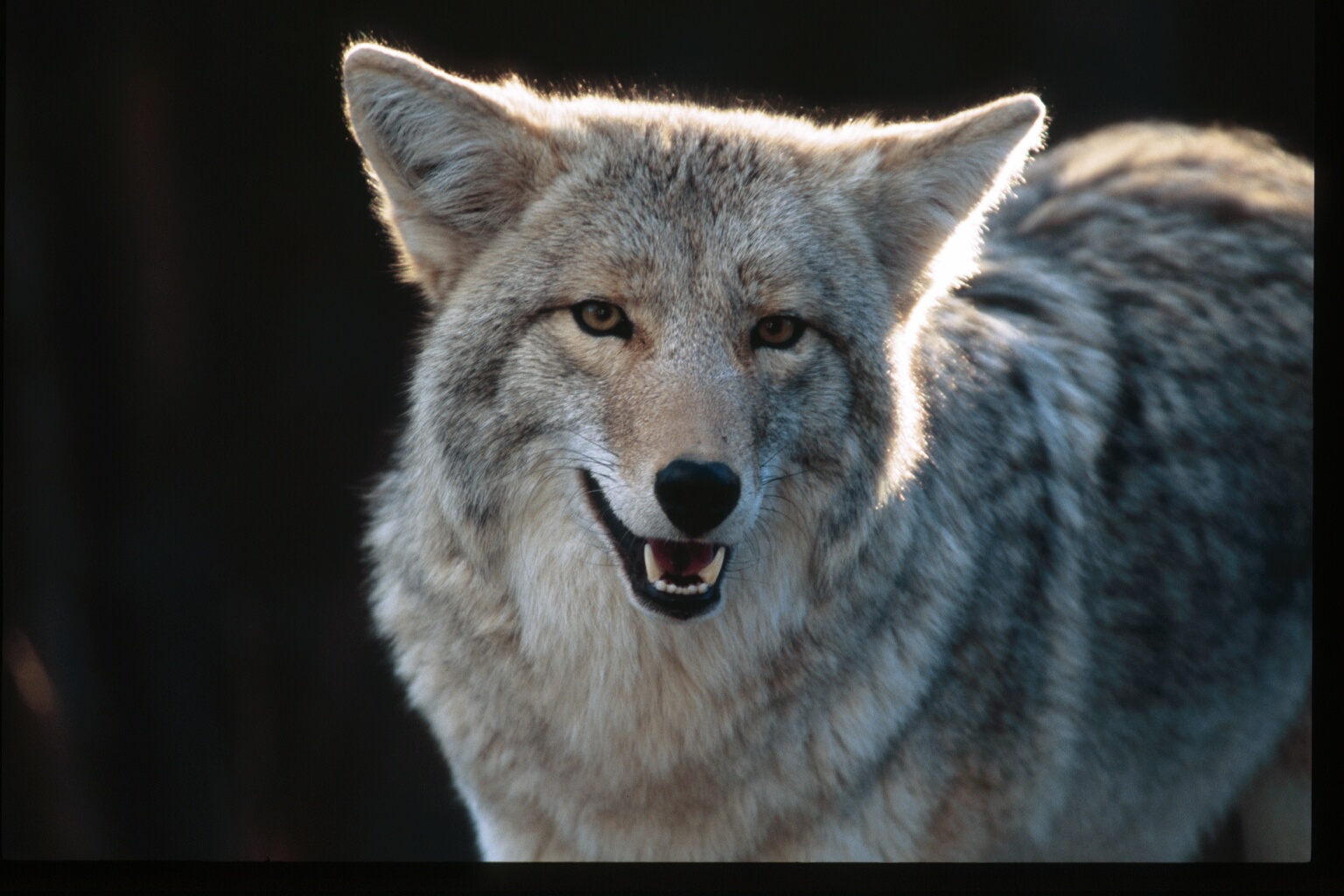
Coyote Photo Copyright Jim Robertson

Coyote Photo Copyright Jim Robertson