Excerpt: Letter from Predator Defense on the slaughter of the Profanity Peak pack

Wildlife Photography ©Jim Robertson

Wildlife Photography ©Jim Robertson

The Profanity Peak wolf pack was wrongfully slaughtered. They were set up for the kill. The rancher, a known wolf-hater, put his cattle to graze on pristine, forested public land in the core of the pack’s territory. His cattle, of course, displaced the wolves’ normal prey–elk and deer. The cattle then became prey. The rancher did not use anywhere close to an adequate level of nonlethal deterrents to prevent predation. He also put salt blocks near the pack’s den, according to WDFW, which drew the cattle right to the wolves. And so, the wolves predated on the cattle.

After this WDFW’s Wolf Policy Lead had the gall to state in a TV interview: “Is that really the wolf population we want to repopulate the state? Wolves that have demonstrated that behavior and see livestock as prey items.” In other words, wolves being wolves (let alone being set up!) and doing the job nature gave them as apex predators should not be themselves?!

So WDFW has now killed at least 6 of the 11-member pack and is actively trying to kill the rest. This situation is an outrage! The slaughter of the Profanity Peak Pack must be stopped. And cattle should cease being placed in wolves’ territory unless truly adequate nonlethal control methods are in use. There are also areas where it is inappropriate to have livestock, and this is surely one of them.

Brooks Fahy
Executive Director, Predator Defense
http://www.predatordefense.org

State Turns Down Sanctuary’s Proposal to Save Wolves Facing Extermination

http://www.chronline.com/state-turns-down-sanctuary-s-proposal-to-save-wolves-facing/article_b0a9b220-7700-11e6-af50-37a4b2d1b449.html

Profanity Peak Pack: Official Says California Facility’s Offer Isn’t Feasible

Posted: Friday, September 9, 2016 7:45 pm

Washington state officials have rejected a proposal by a wildlife preserve to save the Profanity Peak wolf pack targeted for extermination.

“We received the proposal to relocate the remaining Profanity Peak pack members to California, but that approach just isn’t feasible,” said Eric Gardner, assistant director of the Washington Department of Fish and Wildlife, in an emailed statement.

Lorin Lindner and Matthew Simmons, co-founders of the Lockwood Animal Rescue Center, a 4,000-acre preserve near the Los Padres mountains in Ventura County, Calif., offered to use helicopters to find and tranquilize the wolves, then move them to the preserve.

The pack, originally estimated at 11 animals — six adults and five pups — was cut in half in August after six of the wolves were killed. State officials authorized the exterminations following a series of attacks on livestock put out to graze on public land in the Colville National Forest.

Since mid-July, WDFW has confirmed that wolves from the Profanity Peak pack have killed or injured six cattle and possibly five others. The most recent incident occurred on Aug. 31, when a calf was killed, a WDFW spokesman said.

Simmons and Lindner said they began putting out feelers about their proposal after hearing of the state’s decision in August. 

Last week, they traveled from California to rural Ferry County to make a pitch directly to state and local officials about providing a nonlethal alternative at no cost the state.

“We knew it was a last-ditch effort,” Simmons said. “Bringing wolves into a sanctuary should be a last option, but we think it’s a viable one if the alternative is killing the animals.”

But according to WDFW officials, Simmons’ proposal is unworkable. “We know from experience that darting and capturing wolves when there’s no snow on the ground to slow them down isn’t practical,” Gardner said.

Reached Thursday, Simmons rejected the state’s assessment of his offer, adding that he would be open to adjusting the means of removing the wolves.

“People in your state seem to be determined to kill these animals even when there’s an offer to remove them that won’t cost the state a dime,” he said.

The fate of the remaining members of the wolf pack remains in limbo. The department is open to new strategies, but will continue to re-evaluate the situation at the end of each week to determine whether efforts to exterminate the pack should continue, said WDFW spokesman Craig Bartlett. What, if any, nonlethal strategies are being considered was not immediately made clear.

State policy authorizes “lethal removal” after confirming that wolves have preyed on livestock at least four times in one calendar year, or six times in two consecutive years. Livestock must have been confirmed to have been killed by wolves in at least one of the events.

The state’s Wolf Advisory Group is scheduled to hold meetings on wolf management policy in North Bend on Wednesday and Thursday.

The Profanity of the Profanity Peak Wolf Pack Massacre

By George Wuerthner

The recent killing of six members of the Profanity Peak wolf pack in NE Washington in retribution for the loss of a few cattle is emblematic of what is wrong with public land policy. As I write, trappers are out to kill the remaining pack members – including 4-month old pups.

What is significant about the destruction of this pack is that the Profanity Peak wolves roamed national forest lands. These are our lands. They belong to all Americans and are part of our national patrimony.

Currently private commercial businesses such as the livestock industry are allowed to use public lands if they do not damage, degrade and impoverish our public lands heritage. Clearly the killing of this pack violates that obligation and responsibility.

What is particularly egregious about the on-going slaughter of the Profanity Pack is that it was essentially a preventable conflict. Had the rancher, whose cows invaded the wolf pack’s territory, been required to use other public lands, or better yet, simply lease private pasture, there would have been no livestock losses, hence wolf deaths.

Placing cows on top of a wolf pack territory is analogous to, and irresponsible as leaving picnic baskets or coolers out in a campground. In most national parks, if you leave a cooler or other food available to bears, you are fined for this careless behavior. We don’t blame the bear if it happens to eat that food. But when it comes to the livestock industry, we essentially allow four-legged picnic baskets to roam at will on our lands, and should a predator – be it a coyote, cougar, bear or wolf – kill one of those mobile picnic baskets, we don’t hold the rancher responsible, we kill the public wildlife.

This represents the wrong priorities.

We expect different behavior from people using public resources. I can, and do, mark up and highlight passages in books that I own in my personal library, but it would be inappropriate for me to mark up or otherwise damage books in a public library.

In a similar manner, we should expect different consequences for livestock owners who willingly use public lands (at almost no cost I might add) for their private commercial interests. In this case and others like it across the public lands of the West, we should expect ranchers utilizing public lands (our lands) to at the least accept any losses from predators that may occur while they are using public property. And if conflicts continue, we should remove the livestock, not the wolves or other predators.

It’s important to note that the mere presence of livestock negatively impacts wolves whether they are shot or otherwise killed.

Domestic livestock consume forage that would otherwise support the native prey of wolves, like elk. So more domestic animals means fewer elk.  In essence, domestic livestock grazing public lands are compromising the food resources of public wildlife so that ranchers can turn a private profit.

Worse for wolves, especially wolves confined to a den area because of pups, as was the case in the Profanity Peak Pack, when domestic cattle are moved onto our public lands, it creates a social displacement of elk. In other words, elk avoid areas actively being grazed by livestock. If the livestock are grazing lands near a den site, then the wolves automatically have fewer elk to take and must travel further to find their dinner.

Who can blame the wolves if they take the most available prey—which is often domestic livestock. Robert Weilgus, a Washington State University professor, studying the Profanity pack noted that cattle were placed near the den site, or as he was quoted in a Seattle Times article as saying the cattle were released “right on top of the den”.

Some commentators, including Washington State University tried to discredit Wielgus suggesting the cattle were released about four miles away. What that demonstrates is either their ignorance of wolf biology or a not so-veiled attempt to confuse the public. If you are a wolf where regular daily hunting exclusions of 20-30 miles are common, four miles is a short romp. It is essentially “right on top” of the wolves.

If you place cattle within a dozen miles of a wolf pack you are essentially putting the livestock “right on top” of the wolves. And if the presence of cattle forces native prey like elk to abandon the area, can anyone blame the wolves if they resort to killing a domestic animal once in a while?

The loss of the Profanity Peak Pack has occurred on the same grazing allotment where another wolf pack was destroyed in 2012. This begs the question of whether any livestock grazing should be permitted in this area. It is obviously good wolf habitat—except of course for the presence of domestic animals. The only realistic long-term solution is to retire the grazing allotment. Either transfer the cattle to another portion of the public lands or, better yet, simply pay the rancher with a voluntary permit retirement to close the allotment and permanently remove the livestock.

George Wuerthner is an ecologist who has been studying predators for four decades. He serves on the Science Advisory Board of Project Coyote and is the author of 38 books including Welfare Ranching, Wildfire: A Century of Failed Forest Policy, Energy: The Delusion of Endless Growth and Overdevelopment, Thrillcraft, and Keeping the Wild.

More wolves killed because of the sacred cow at the public trough

copyrighted-wolf-argument-settled
The way the state Department of Fish and Wildlife are slaughtering wolves is an outrage. Guest columnist Brooks Fahy explains way.
By Brooks Fahy
Special to The Times
IF you’ve heard about the wolf killing under way in northeastern Washington, you most likely have been led to think that progress is being made, simply because groups as disparate as ranchers, wildlife officials and environmentalists have agreed on something.

But what’s going on is an outrage. And it can only be understood if the common assumptions about ranching and wolves are exposed for what they are — a travesty for wildlife, public lands and the taxpayer.
What has happened is a family of wolves known as the Profanity Peak pack has been targeted for death by the Washington Department of Fish and Wildlife (WDFW). Their “crime” was killing livestock grazing on public lands in remote and rugged parts of the Colville National Forest after ranchers had allegedly used nonlethal deterrents. The first two wolves were gunned down by helicopter on Aug. 5. Four more were killed by Friday morning. The agency has slated the rest for death — this in a state that has barely more than 90 wolves.

The agency’s reaction — killing wolves at the behest of ranchers — is a loss for Washingtonians and the American public. Here’s why:

• It’s cruel, anti-science and fiscally unfair.

• Nonlethal deterrents work when used appropriately.

• Ranching is destroying our public lands.

• Wildlife should live in peace on public lands.

More Op-Eds
Why a single-payer health-care system is inevitable | Op-Ed
A cheap, workable model to solving hunger in Seattle
Vaccinate your child against a killer: meningitis type B | Op-Ed
The role of government in fixing the broken mental-health system | Op-Ed
The real value of our national-park system is conservation | Op-Ed
Settling for the ‘enough house’ brings sigh of relief | Op-Ed
First, the cruelty: Science increasingly shows that animals experience pain and loss. Wolves are pack animals with a social hierarchy similar to our own families. Imagine what they experience when they see family members killed and maimed. With aerial gunning, wolves are chased by helicopters and often run to exhaustion before being blasted by a shotgun as the helicopter hovers. They experience sheer terror. The actual act is something government agencies don’t want the public to see. Isn’t it odd that we see news coverage from war zones, but not from the war on our wildlife?

Next, the financial reality: The iconic image of cowboys on horseback tending their herds was deeply ingrained into our psyches by old Western movies. No one is stopping ranchers from tending livestock this way now — but ranchers don’t tend livestock this way. Livestocks on public land tend to be scattered far and wide, and most ranchers don’t want to spend time and money guarding them. Why should they? They know the government will come in and kill predators on the taxpayers’ dime. They also know they’ll be compensated for their losses, and many ranchers now consider these handouts a right, not a privilege. No other industry has been more adept at externalizing their costs. This is not a fair or sustainable business model.
Nonlethal ways to protect livestock abound, but the best is effective human presence. With the Profanity Peak pack, the terrain is not suitable for grazing; it is pristine forest where only an army of range riders could effectively deter wolves. Equally troubling, ranchers have been known to put cattle in the middle of wolf rendezvous areas in hopes of encouraging predation. We’ve heard reports that may have happened in this case.

Livestock causes enormous environmental damage. They remove forage and ground cover other animals need to survive. Cattle trample and denude riparian areas and pollute streams with waste. Heated-up streams can no longer support dozens of species, including fish. Thousands of miles of fencing fragment habitat, causing deathly obstacles for fast-running species like pronghorn antelope.

So we pay for ranchers to destroy our land, and wildlife’s habitat!

Surely we want the word “wild” to remain part of wildlife. Wolves and other predators shouldn’t have to suffer a mortal fate for doing what they are born to do. And we shouldn’t remove what balanced ecosystems require.

It all points to bigger questions. But I will close with just one: What is the appropriate use of public lands?

Public lands are our lands; they don’t belong to ranchers. They are inappropriate places for livestock.
It’s high time the public and politicians say: “Enough! Get your livestock off our lands!”

Brooks Fahy of Seattle is a wildlife filmmaker and executive director of the national wildlife advocacy organization Predator Defense.

Profanity Peak wolf pack in state’s gun sights after rancher turns out cattle on den

http://www.seattletimes.com/seattle-news/environment/profanity-peak-wolf-pack-in-states-gun-sights-after-rancher-turns-out-cattle-on-den/

Profanity Peak wolf pack in state’s gun sights after rancher turns out cattle on den
Originally published August 25, 2016 at 7:59 pm Updated August 26, 2016 at 1:29 pm
Gabe Spence, of the WSU Large Carnivore Lab, listens for the signal from radio collars on the Profanity Peak wolf pack. (Robert Wielgus/Washington State University)
Washington Department of Fish & Wildlife authorized fieldstaff to kill the Profanity Peak wolf pack to prevent more attacks on cattle in the rangelands between Republic and Kettle Falls.

The state is going to wipe out the Profanity Peak wolf pack because they are killing cattle, but a WSU researcher monitoring the den says the conflict is predictable and avoidable.

By Lynda V. Mapes
Seattle Times environment reporter
For the second time in four years, the Washington Department of Fish & Wildlife is exterminating a wolf pack to protect Len McIrvin’s cattle — this time, a WSU researcher says, after the rancher turned his animals out right on top of the Profanity Peak pack’s den.

Robert Wielgus, director of the Large Carnivore Conservation Lab at Washington State University, has radio-collared 700 cattle and dozens of wolves, including animals in the Profanity Peak pack, as part of his ongoing study of conflicts between wolves and livestock in Washington. He also camera-monitors the Profanity Peak pack’s den.
“This livestock operator elected to put his livestock directly on top of their den site; we have pictures of cows swamping it, I just want people to know,” Wielgus said in an interview Thursday.

McIrvin, of the Diamond M Ranch, near the Canadian border north of Kettle Falls, Stevens County, in northeastern Washington, did not return calls for comment Thursday. The allotment Wielgus monitors, and McIrvin grazes, is on public land in the Colville National Forest.

Related Opinion content
Op-Ed: More wolves killed because of the sacred cow at the public trough
The cattle pushed out the wolves’ native prey of deer, and with a den full of young to feed, what came next was predictable, Wielgus said.

After the wolves repeatedly killed McIrvin’s cattle, the Washington Department of Fish & Wildlife, as per its protocol, authorized shooting wolves in the pack by helicopter, killing the pack’s breeding female by mistake. The department then stopped the killings after the wolf predations subsided.

But the department announced Saturday that after more cows were killed, it would eliminate the entire Profanity pack. That killing is ongoing, and department staff killed four more wolves this week, bringing the total to six.

The department targeted the Wedge Pack after McIrvin lost cattle to that pack, near the same area.

McIrvin has refused to radio-collar his cattle to help predict and avoid interactions with radio-collared wolves, Wielgus said.

He called the killing of cows by the Profanity Peak pack at their den site predictable and avoidable.
By contrast, Wielgus has documented no cattle kills among producers who are participating in his research studies and very few among producers using Fish & Wildlife’s protocol.

“In Washington, more cattle are killed by logging trucks, fire and lightning than wolves,” Wielgus said.

Carter Niemeyer, of Boise, Idaho, a wolf expert who led the effort to reintroduce them into Idaho for the U.S. Fish & Wildlife Service before he retired in 2006, said things won’t change until the Forest Service changes its policy to bar grazing on allotments with known active dens and pup rendezvous sites.

“If this were on private land, it’s turn the page, ho-hum,” Niemeyer said. “But public lands have to be managed differently. Those lands belong to all of us, and so do the native wildlife.”

Killing the wolves is not a lasting solution, he predicted. “It is a short-term solution to a long-term problem; they will just come back,” Niemeyer said.

“It puts the responsibility on the managing authority; it’s, ‘Come get your wild dogs, you said you would, and you set the protocol, and I want these wolves out of here,’ and he (McIrvin) has a good track record of demanding that.”
But it’s the pack that’s got to go, not the ranchers using the allotment, said Ferry County Commissioner Mike Blankenship.

“The McIrvin family has run cows on that allotment for 73 years, and now all of a sudden they have to pull out because of wolves and go somewhere else?

“I haven’t met anyone here who wants them wiped out,” Blankenship said of wolves. “But we want them managed.”

The commission last Friday passed a resolution authorizing the Ferry County sheriff to take out the pack if the state doesn’t.

“For the most part, the local people believe the removal of that pack is long overdue,” Blankenship said. He said the county depends on a healthy ranching economy, which is also part of the state’s culture, custom and history.

“You don’t think Seattle had wolves originally? I am more than willing to pay as a county to round these critters up and bring them to you. If they are in your backyard, you have a whole new attitude about it,” Blankenship said.
Wolf advocates have been dismayed by the state’s decision to kill the pack — 11 animals of a total estimated state population of 90 wolves in 19 packs, as of early 2016.

Listed for protection under the Endangered Species Act west of U.S. Route 97, the wolves are not protected east of the highway. People remain their biggest impediment to recovery, which is required by state law.

Since July 8, 12 cattle have been killed or hurt in the Profanity Peak pack area, according to Fish & Wildlife. So far, the department has killed six wolves in the pack under the authorization of Director Jim Uns­worth. He is appointed by the state Fish and Wildlife Commission, which in turn is appointed by the governor and confirmed by the state Senate.

Donny Martorello, the department’s wolf-policy lead, said the state remains committed to wolf recovery and coexistence. It confirmed its first wolf recolonizations in 2008, and so far has authorized lethal removals in three instances.

“The majority of the time, these two can coexist,” Martorello said of wolves and livestock. “The department is committed to wolf recovery, but we also have a shared responsibility to protect livestock from repeated depredation by wolves.”

Wolves were hunted to extinction in Washington in the early 1900s, but have been gradually recolonizing, from populations in Idaho and British Columbia.

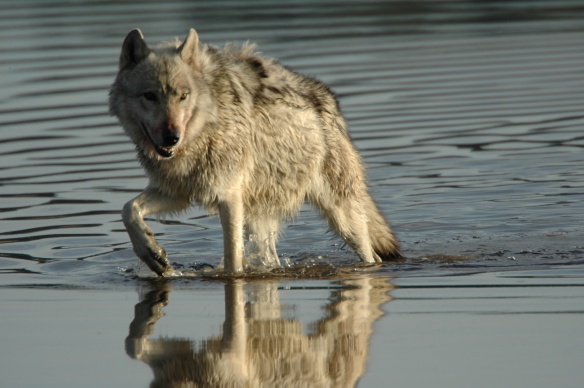
Stop the Slaughter of the Profanity Peak Wolves!

Tell Governor Inslee — Stop the Slaughter of the Profanity Peak Wolves!

20,381 SUPPORTERS
25,000 GOAL
In early August, two members of the Profanity Peak wolf pack were brutally gunned down by helicopter sharpshooters in northeast Washington. The fallen included the pack’s matriarch, whose death could destroy this wolf family.

The wolves were killed by the state on behalf of livestock operators who run their cattle on public land in wolf territory. The killings occurred after the pack was confirmed to have preyed on three calves and a cow and three other stock losses were deemed probable wolf kills.

There is strong science showing that killing a breeding animal like the Profanity Pack’s matriarch may lead to a splintering of the pack and cause increased conflicts with livestock.

The Profanity Pack wolves were killed to satisfy the demands of a politically connected minority of cattle interests that want to operate America’s public lands like a publicly subsidized feedlot.

Authorities have finally suspended their hunt but say they will reinitiate efforts to kill wolves if more livestock conflicts occur. Take action — tell Washington Governor Jay Inslee to prevent the slaughter of any more members of the Profanity Peak wolf pack by ordering non-lethal measures if further conflicts arise.

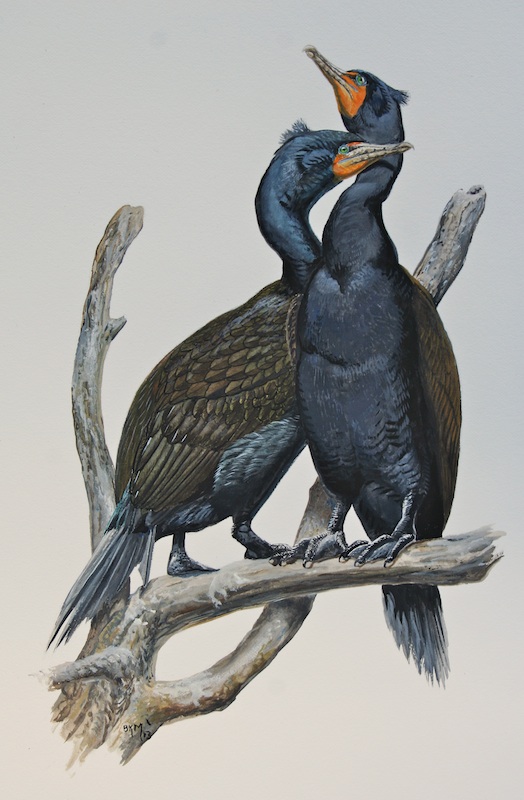
Kill Bill 205, not cormorants

Draconian bill will send Ontario’s cormorants back
to the brink of extinction

On May 18, 2016, Ontario <http://tracking.etapestry.com/t/32187921/1197279304/71603365/0/54980/> MPP Robert Bailey introduced Private Member’s Bill 205, Fish and Wildlife Conservation Amendment Act (Double-crested Cormorants) 2016 that, if passed, would allow the uncontrolled hunting and trapping of Double-crested cormorants by anyone for any reason.

Bill 205 ignores science and instead is based on myths and misunderstanding. It’s an attempt to slip into existing legislation what many may incorrectly see as an innocuous amendment, but one that will set the stage for the wholesale slaughter of cormorants across the province and drive them back to near extinction.

Bill 205 passed quickly through second reading and has been referred to the Standing Committee on Legislative Assembly. The Bill must be stopped in its tracks and should not be called for consideration and debate by the Committee.

Remarkably, while the regressive Bill 205 sits active in the process, a US federal court just ended cormorant culling in 24 eastern US states saying that there was little scientific basis for it.

Briefing notes on this bill can be read by <http://tracking.etapestry.com/t/32187921/1197279304/71603368/0/54980/> clicking here.

For more than 10 years, Animal Alliance of Canada, Born Free Foundation, Zoocheck, Earthroots and other groups have been working to gain protections for cormorants. These unfortunate birds have been scapegoated for everything from water pollution to environmental destruction to the decimation of fish populations.

All of these claims are false.

Double-crested cormorants are native Ontario birds that have repopulated parts of their former range and they fulfill a valuable ecological role. Not only do they benefit biodiversity, they help generate healthy fish populations and should be considered a integral component of Ontario’s natural heritage.

But irrational hatred of cormorants runs deep and special interest, anti-cormorant groups would like nothing more than to see Bill 205 passed. They must not succeed. It may be cormorants on the proverbial chopping block now, but if it can happen to one, who might be next?

Take Action Today to Stop Bill 205!

Contact your Member of Provincial Parliament (MPP) and tell them you strongly oppose Bill 205. Urge them to do everything in their power to make sure the Bill is stopped dead in its tracks.

Painting Courtesy Barry Kent McKay

Painting Courtesy Barry Kent McKay

Park Service ended a study of Alaska wolves, since so many have been killed

Wildlife Photography ©Jim Robertson

Wildlife Photography ©Jim Robertson

https://www.hcn.org/articles/national-park-service-ends-study-on-alaska-wolves-because-adfg-killed-too-many

The state culled wolves that had been collared, and it’s no longer feasible to continue research.

For more than two decades, the National Park Service monitored the wolf packs in Alaska’s Yukon-Charley Rivers National Preserve. Now, so many of the predators have been killed by the state’s Department of Fish and Game that the feds have had to drop the program. It’s no longer feasible to conduct research, according to information recently published by the watchdog nonprofit, Public Employees for Environmental Responsibility (PEER).

The state has been shooting the wolves when they wander outside the boundaries of the federal preserve, to try to increase populations of moose and caribou for human hunters. According to Greg Dudgeon, superintendent of the preserve, since 2005, 90 wolves with ranges in Yukon-Charley have been killed, including 13 radio-collared animals that were essential to the park’s study. Each of the preserve’s nine wolf packs has lost members, and three packs have been entirely eliminated, while another five have been reduced to a single wolf each. The last population count by the National Park Service in 2011 came up with 77 wolves. Since that count, the Park Service wound down its study, officially ending it in 2014.

Jeff Rasic, chief of resources for Yukon-Charley Rivers and Gates of the Arctic National Park, says that federal budget constrictions played a factor in ending the study, but so did the number of collared wolves killed by ADFG and the fact that the state stopped giving the Park Service permits for collaring wolves on state land. “The state was pretty successful in killing wolves,” Rasic adds.

Public Employees for Environmental Responsibility published a letter on August 8, 2016 about the impacts the state’s predator killings had on the feds’ wolf study, bringing these issues back into the public eye.

“The expense of collaring and monitoring wolves for research is not sustainable when ADFG culls the same animals when located outside of the Preserve,” Dudgeon wrote in the letter to Richard Steiner of PEER, who had asked him what impacts ADFG has on wolf packs.

In additional correspondence that has been made public by PEER, Bruce Dale of ADFG confirmed that from 2011 to 2015, the department killed 179 wolves through its wolf control program. Dale also confirmed that his department uses 28 radio-collared “Judas” wolves to help them locate and kill other wolves.

Last fall, the National Park Service banned several sports hunting practices within federal preserves in an attempt to protect Alaskan predators like wolves and bears. But recent news of how many wolf packs have been eliminated or severely reduced by Alaska Department of Fish and Game across the state call into question if the federal ban went far enough to protect predators.

The 1916 Organic Act requires the National Park Service to manage wildlife for healthy populations of all animals, not just the ones that humans hunt for food. In October 2015, the Park Service made a breakthrough with something they had been asking Alaska Board of Game to do for years — exclude harmful practices within preserves like hunting wolves and coyotes with pups, baiting black and brown bears and using artificial lights to rouse hibernating bears out of their dens. The ban took effect this January.

Alaska’s Board of Game says that it’s required to curb predators by a 1994 food security law that required managing for abundant ungulate populations. By reducing wolves and bears, the board said, those populations would do better, benefiting Alaskans that rely on the herds for sustenance. The ban was eventually approved within the preserves, but the practices are still allowed outside their borders. This includes directly outside Denali National Park, where in 2010 the Board of Game eliminated a 122-square-mile buffer that protected wolves from hunting and trapping.

The park’s famed East Fork wolf pack, which had 17 members in 2014, disappeared in July 2016, according to state biologists. A number of wolves were known to have been hunted and killed, but it’s not clear what happened to the rest. Three days before Dudgeon wrote about the loss of wolves in Yukon-Charley Rivers National Preserve, biologists visited the den. Vegetation had begun to creep back over the entrance, and there were signs that porcupines had taken up residence. No wolves had been there for some time.

Anna V. Smith is an editorial intern at High Country News. She tweets

Howling Coyote Mom Killed in Seattle


A Seattle neighborhood is divided over a coyote pack that was recently killed.

According to USDA APHIS, someone asked for them to remove the coyotes. Other neighbors are horrified.

“It was howling. It was crying. It was moaning. It was horrible,” Nancy Bagnulo said.

Early Tuesday morning, several people woke up to gunshots near the Talaris conference center in Seattle’s Laurelhurst neighborhood.

Bozena Jakubik left her house to see what happened, noticing a white truck driving off. Daylight revealed more of what she’d heard overnight.

“I saw this huge stain of blood coming from the exit of her den,” she said.

According to USDA, three coyotes were killed.

“Wildlife services received a request to assist in the management of several coyotes near the Laurelhurst neighborhood in Seattle. The coyotes had become increasingly aggressive toward people and pets in the area,” Jeanine Neskey said.

The coyotes were killed on the Talaris conference center property. The center did not return phone calls asking for comment.

Neighbors said the coyote had pups, and by simply leaving her alone, they never had an issue.

“I’m bothered by the fact we weren’t given the notice or chance to weigh in on this decision,” Janice Sutter said.

According to USDA, someone requested their services. They worked for 3-nights, and used a call box, which is a device that mimics animal distress sounds and attracts coyotes.

“The thing that bothers me mostly is that they’re baiting them. I just don’t think that’s right,” Linn Blakeney said.

“I like the coyotes and it just makes me sick,” David Barnes added.

Wildlife officials believe there are no more coyotes left in this spot, but neighbors worry there may be a pup remaining.

“I’ve seen him running frantically out on the property and calling and crying and looking for his family,” Jakubik said.

Nancy Bagnulo and others say, they like living here because it’s a little bit of wild in the heart of a city, and that means learning to live together.

“If not, there’s not going to be any wildlife left. It’s just going to be people. And who wants that, really?” Bagnulo said.

Copyright 2016 KING