
April 2, 2014 4:30 am
The New West / By Todd Wilkinson
“Predators are bad for wildlife.” How often have Americans heard this refrain in public forums?
Pervasive as a belief in rural Western culture, it drives political discourse. It also is part of a nonstop feedback loop of social reinforcement, rife in barber shops, ammo stores, saloons, coffee klatches and outfitter camps.
But does it withstand scientific scrutiny? Do predators such as wolves and cougars “devastate” wildlife or do they help keep public game herds healthier?
Predator experts and others specializing in wildlife conservation medicine say it’s an important consideration when thinking about protocols for managing zoonotic diseases in the Greater Yellowstone Ecosystem.
I contacted biologist L. David Mech, one of the world’s foremost wolf authorities. He has written or contributed to hundreds of peer-reviewed scientific papers on wolves and prey.
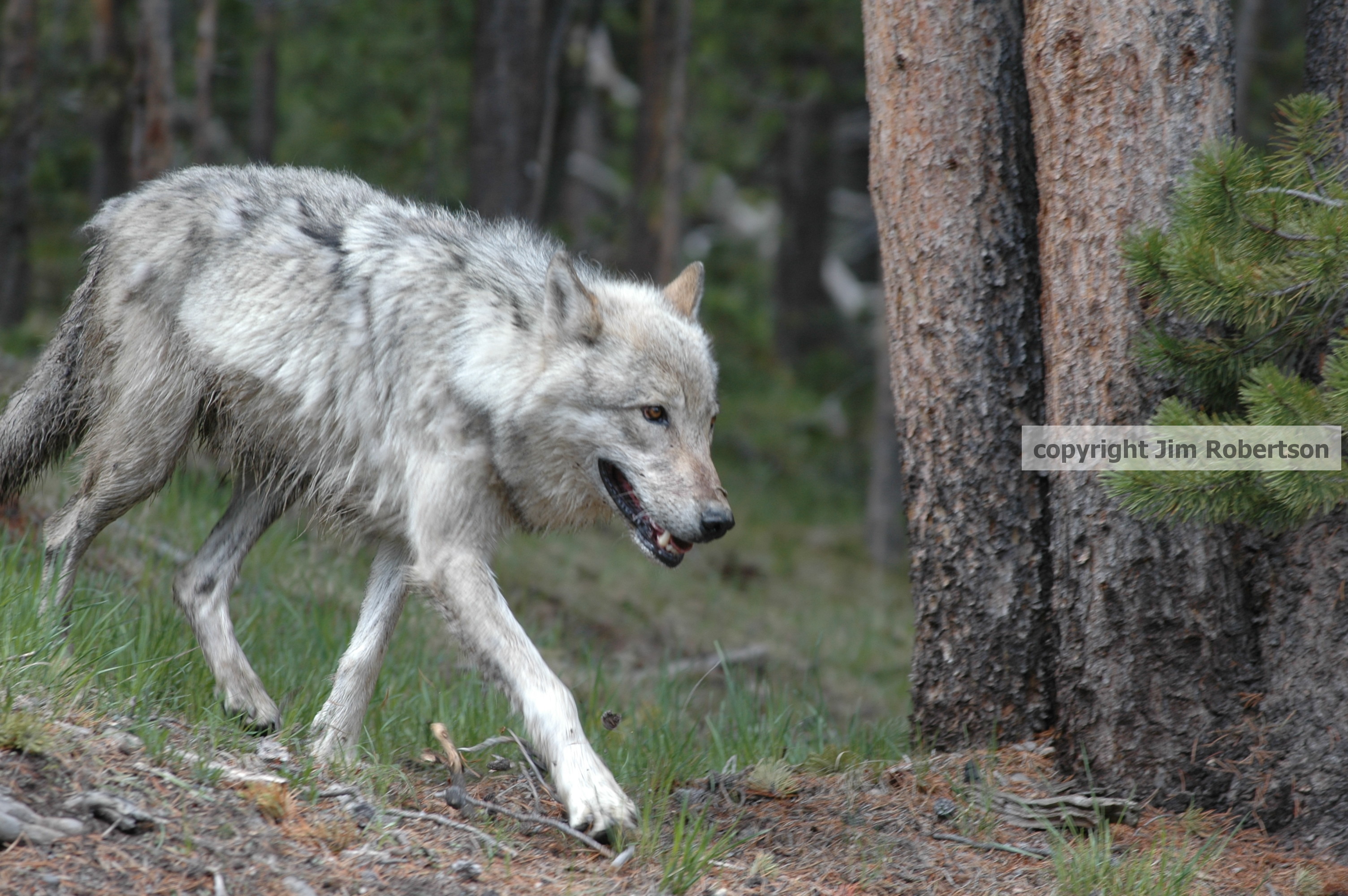
“In the main, the preponderance of scientific evidence supports the view that wolves generally kill the old, the young, the sick and the weak,” Mech began. “There’s so much documented field data behind it.”
All the things humans treasure about every wild prey species — their physiology, agility and resilience — are reflections of the predators that made them adapt and evolve over eons.
Keeping domestic livestock healthy and fat often involves huge doses of antibiotics and, in some cases, growth hormones. Not so for free-ranging wildlife, especially wildlife not subjected to unnatural animal husbandry practices, such as artificially nourishing wild elk at crowded feedgrounds.
Wildlife professionals know such conditions elevate animal susceptibility to deadly pathogens like brucellosis, tuberculosis and chronic wasting disease, threatening ecological well-being.
Mech made a fascinating point: Wolves appear to target sick animals that, to the human eye, exhibit no overt symptoms of disease.
“There’s a lot more going on than we can detect,” Mech said. “They are killing animals that most people would say, ‘That animal looks pretty healthy to me,’ but in fact it isn’t.”
In 2003, Denver Post reporter Theo Stein interviewed scientists about CWD spreading though deer and elk in Colorado. Dr. Valerius Geist, who paradoxically has become a darling of anti-wolfers, made this assertion about the significance of wolves in containing CWD spread via proteins called prions.
“Wolves will certainly bring the disease to a halt,” he said. “They will remove infected individuals and clean up carcasses that could transmit the disease.”
Stein added that “Geist and Princeton University biologist Andrew Dobson theorize that killing off the wolf allowed CWD to take hold in the first place.”
Wolves aren’t alone. In a 2009 study titled “Mountain lions prey selectively on prion-infected mule deer,” researchers in Colorado discovered that “adult mule deer killed by mountain lions were more likely to be prion-infected than were deer killed more randomly … suggesting that mountain lions were selecting for infected individuals when they targeted adult deer.”
Researchers said, “Other studies indicate that predators like wolves and coyotes select prey disproportionately if they appear impaired by malnutrition, age or disease.”
In another study researcher N. Thompson Hobbs examined the potential impact of wolves on CWD-infected elk in Rocky Mountain National Park, where lobos are now absent.
Wolves, he found, could reduce average life spans of infected elk and therefore limit the amount of time infectious animals could spread disease to others.
“We suggest that as CWD distribution and wolf range overlap in the future, wolf predation may suppress disease emergence or limit prevalence,” Hobbs said.
Wyoming doesn’t accept this scientific reality. In Jackson Hole, where unnatural feeding of wapiti on the National Elk Refuge is contributing to persistent brucellosis infection and putting migrating elk at high CWD risk, wolves are killed under the ironic guise of “keeping elk herds healthy.”
In Wyoming’s “predator zone” which encompasses many of the state’s 22 elk feedgrounds, wolves can be killed at any time of day year round.
Are Wyoming, Idaho and Montana spending millions in tax dollars to eliminate the natural allies that help keep wildlife diseases such as brucellosis and CWD in check? Mech stays out of the political fray, though he says the value of predators is clear.
“Based upon everything I’ve seen over the course of my career, I generally stand behind the assertion that wolves make prey populations healthier,” he said. “The evidence to support it is overwhelming.”
Todd Wilkinson’s column appears every week in the News&Guide. He is author of “Last Stand: Ted Turner’s Quest to Save a Troubled Planet.”


 Exposing the Big Game