Columbia/Snake Ports, Growers Weigh In On Dam-Breaching Plan

Columbia/Snake Ports, Growers Weigh In On Dam-Breaching Plan – The Waterways Journal

APRIL 9, 2021  BY DAVID MURRAY

A letter of concern signed by a broad coalition of more than 40 agricultural groups, ports and other river stakeholders along the Columbia/Snake river system is opposing a plan to breach four Snake River dams to protect spawning salmon. The plan was proposed by Rep. Mike Simpson of Idaho and includes compensation for farmers and others that would be hurt by the plan. The letter, addressed to key members of Congress and available as a template, was released March 26. The letter says that while the plan wouldn’t do much to protect salmon, it would likely devastate wheat growers and other agricultural interests in the region that depend on cheap barge transportation.

According to Simpson’s plan, the first dam breaching of the Lower Granite Dam would happen in 2030. Little Goose, Lower Monumental and Ice Harbor dams would follow by 2031. The $33 billion plan would essentially reorder the entire transportation structure of the region.  Simpson announced his plan in early February in a video on his website. Much of the money would go to compensate interests, including farmers, injured by the closures. 

The Pacific Northwest states of Oregon, Washington, Idaho and parts of Montana grow wheat for export to 20 Asian Pacific Rim nations and elsewhere. According to U.S. Wheat Associates, a wheat-export marketing organization, U.S. farmers produce about 1.9 billion bushels of wheat a year, with about 500 Panamax-sized ships-worth a year exported. 

In the PNW, that wheat is barged down the Columbia/Snake system. Without the cost savings of barge transportation, it’s unlikely PNW wheat would remain competitive. About 60 percent of the cargo that moves on the Snake River is high-quality U.S. wheat grown in the region. Nearly 10 percent of all U.S. wheat exports travel by barge on the Snake River each year. The remaining 40 percent of the cargoes on the Snake are fuel products, fertilizers, wood products and large industrial components like wind turbine parts and other project cargo.Sign up for Waterway Journal’s weekly newsletter.Our weekly newsletter delivers the latest inland marine news straight to your inbox including breaking news, our exclusive columns and much more.Your EmailEmail AddressSubscribe

The letter was signed by the Washington Association of Wheat Growers, Pacific Northwest Grain & Feed Association, Oregon Wheat Growers League, the Idaho Wheat Commission, the Idaho Farm Bureau, the Montana Grain Growers Association and other ag groups, including the National Association of Wheat Growers. It was also signed by every river port, including the ports of Benton, Chinook, Clarkston, Ilwaco, Kalama, Lewiston, Longview, Morrow, Pasco and Royal Slope, as well as the American Waterways Operators and the Pacific Northwest Waterways Association.

Wouldn’t Fix Spawning Concerns

The letter addresses the concerns about spawning salmon that led to the proposal. The letter points out that studies have shown a broad decline in spawning salmon populations along the whole West Coast, including in free-flowing rivers without any dams. The causes for this decline are debated; some scientists attribute it to ocean acidification and other changes in the ocean environment brought about by climate change.

“While we share Representative Simpson’s concerns about poor smolt-to-adult returns (SARs) for the Snake River, there is no scientific evidence that breaching the lower Snake River dams will address that problem in a meaningful way,” the letter says. It claims the Lower Snake River already has 95 percent free passage for salmon. 

Environmental Impact

The dams are crucial for providing clean power to the Bonneville Power Administration, which has estimated that replacing the emissions-free hydropower with other sustainable and emissions-free sources would cost the region $16 billion over a 20-year span, raising its wholesale rates by 50 percent and the average public power customer’s electricity bills by 25 percent, and would double the risk of power outages.

Another “brown” effect of this closure would be to increase emissions by trucks and rail. “Over 38,000 rail cars or over 149,000 semi-trucks would be needed to move the cargo that went by barge in 2018, assuming that many trucks, drivers, locomotives and rail cars could be sourced, and highways and rail lines through the sensitive airshed of the Columbia River Gorge could accommodate the additional traffic. The impact to the environment cannot be overstated. … Shifting cargo from Snake River barging to truck and rail will result in significant annual increases in emissions, as follows: over 860,000 tons of CO2, 306.5 tons of NOx, 7.5 tons of PM, 69.7 tons of CO, and 7 tons of VOC,” according to the letter.

The letter concludes, “We strongly support science-based salmon recovery solutions that address the myriad threats to Northwest fish runs over every part of their life cycle. Though we do not question Rep. Simpson’s commitment to salmon, this proposal continues the narrow focus on four run-of-river dams with some of the highest fish passage numbers in our region. It is a speculative and costly plan that assumes we must choose between productive, fish-friendly federal projects and our Northwest salmon and steelhead runs.”

Fortunately for PNW ag interests, the plan has attracted little support in Congress; there is not yet a bill including the plan, and its chances of passage are slim, according to observers.

The full letter is available at www.wawg.org/coalition-letter-supporting-dams-goes-out-to-regional-legislators/.

Orca Expert says: Breach the Snake River Dams

Breach the Snake River Dams

Posted here:http://voices.nationalgeographic.com/2015/06/15/breach-the-snake-river-dams/ by Carl Safina of The Safina Center on June 15, 2015

By Kenneth Balcomb, guest essayist

Note: In this guest essay, long-time killer whale researcher Ken Balcomb shows how obsolete but still salmon-killing dams are helping cause the decline of killer whales due to food shortage in the Northwest. The dams do feed us one thing: propaganda. As Ken wrote to me, “I was flabbergasted that the dams are closed to photography, and that their wasteful secret is downplayed in the mainstream propaganda fed to the public.” For more on the dams, see my book Song for the Blue Ocean. For more on Ken and the whales he has spent his life loving and studying, see my soon-to-be-released book Beyond Words; What Animals Think and Feel, which will hit bookstores on July 14. — Carl Safina

I have studied the majestic southern resident killer whales of the Pacific Northwest for forty years (approximately one productive lifespan – whale or human), during which time much has been learned and shared with the world about this iconic endangered population. They are now arguably the best known whales in the world! But, that was not always the case. The common response in the 1960‘s and 1970‘s to my announcement that I was studying whales was, “Why?” “What good are they?”

My best response was to point out that as top marine predators whales are indicators of the health of that environment in which they live – the ocean – and that is also an environment upon which humans depend. Now, with growing numbers of people appreciating the whales’ natural role in the marine environment, and better understanding their ecological requirement for specific food—Chinook salmon in this case—to survive, the conversation has moved toward a strategy of how best to provide that food. There is currently an active discussion about removal of the Snake River dams to save fish, or whales. The issue of whether dams should be breached to provide this food for the whales has now arrived. Would that be reasonable? Are we sure that will work?

I don’t consider this lightly. I tend to consider the status quo of institutions and structures to be enduring and worthy of protection, even if only as displays of the truly amazing feats our species has achieved in the course of human evolution and ingenuity. Not all of our feats have been without unforeseen consequence, however; and, most tend to crumble over time anyway. Dams require maintenance, and they eventually fill with sediment.

Until recently, dam removal was against my conservative nature. And it still seems to be counter to our government’s intent. This is in spite of clear evidence that the salmon-eating population of “killer” whales that I am studying is on a path to extinction along with significant populations of their main food resource—Chinook salmon—huge numbers of which formerly spawned and returned to the Snake River, and fed whales in the Pacific Ocean and humans, before the dams were built.

I had to see for myself what was going on in the Snake River watershed currently. So last week my brother and I drove up the highway to visit the dams on the Columbia River and upstream, sightseeing and taking photos and videos along the way and learning about the current passage of remnant populations of salmon.

But when we got to the McNary and Ice Harbor dams just below the Snake River and on it, it seemed as if an iron curtain had come down and we were prevented from taking any photographs, or even carrying cameras and cell phones behind the fences surrounding the dam structures. It was as if something was being hidden from view. And, it was. There was no point in our continuing upstream to Lower Monumental, Little Goose and Lower Granite dams to take photographs and videos of fish passage, because that was not allowed.

Lower Monumental Dam, Snake River
Lower Monumental Dam, Snake River, Photo: USACE

In truth, already well known to others but not to me, these four Snake River dams are obsolete for their intended purposes and are being maintained at huge taxpayer expense for the benefit of a very few users. Plus, they are salmon-killers in a former river (now a series of lakes) that historically provided spawning and rearing habitat for millions of Chinook salmon. And, they now doom all technological attempts to bolster these salmon populations to expensive failure.

Even many of the Army Corps of Engineers’ internal documents recommend that returning the river to natural or normative conditions may be the only recovery scenario for Snake River fall Chinook salmon, and it will also benefit other salmon populations.

You and I are paying for this economic and ecological blemish with our tax dollars spent to maintain structures and negative return on investment in power generation, “barge” transportation, and recreation. The question I would now ask is “Why?” and “What good are they?”

Killer Whales off San Juan Island
Killer whales off San Juan Island, Photo by Carl Safina

Removal can be done inexpensively and doing so makes perfect ecological sense. The technological fixes for the dams have not improved wild salmon runs, and there is nothing left to try. There are no fixes for the deadly lakes behind the dams. As a nation, we are dangerously close to managing the beloved southern resident killer whale population to quasi-extinction (less than 30 breeding animals) as a result of diminishing populations of Chinook salmon upon which they depend. There are only about eighty of these whales now remaining (including juveniles and post-reproductive animals), down from nearly 100 two decades ago and down from 87 when they were listed as “Endangered” in 2005.

If you really want to have healthy ecosystems with salmon and whales in the Pacific Northwest future, and save tax/rate payer money at the same time, please contact or mail your thoughts to your elected representatives in support of a Presidential mandate to begin the return of the Snake River ecosystem to natural or normative conditions by the end of the current presidential administration. The time is now!

When they are gone it will be forever. Returning the Snake River to natural condition will help salmon and whales, and save money. Please do not wait until all are gone. Call or write your representatives today!


Ken Balcomb, 11 June 2015

Senior Scientist, Center for Whale Research

Audubon Action Alert: Stop Cormorant Slaughter

Audubon logo | ACTION ALERT
STOP CORMORANT SLAUGHTER
arrow pointing at letter
Double-crested Cormorant with eggs

A Double-crested Cormorant protects its eggs on East Sand Island.

Tell the Army Corps of Engineers that you oppose the plan to kill 16,000 cormorants.

Take Action

Dear Jim,

The Army Corps of Engineers is planning to kill 16,000 Double-crested Cormorants—more than 25 percent of the entire western North American cormorant population—in a misdirected effort to reduce avian predation on endangered salmon. The cormorants live and nest on East Seal Island, a globally-significant Important Bird Area (IBA) in Oregon’s lower Columbia River estuary. While cormorants do prey on salmon, the fish are endangered because of dams, pollution, habitat loss, and an array of other factors—not because of the cormorants.

Write to the Army Corps of Engineers today to oppose their plan to kill 16,000 Double-crested Cormorants.

According to the Audubon Society of Portland, which is closely tracking this issue, “It is time for the US Army Corps to do a ground-up review of its entire approach to managing birds in the Columbia Estuary.” Audubon opposes the Corps’ Alternative C, which emphasizes lethal control, and favors Alternative A, no action, until such time as the Corps and its partners can review and rebuild their strategy for management of avian predation on fish on a regional scale. Such a strategy needs to be based on sound science, fully employ and evaluate non-lethal measures of reducing avian predation, and consider a full range of alternatives beyond manipulation and control of native wildlife.

Send your public comments to the Army Corps today to oppose their plan to kill thousands of cormorants at East Sand Island!

Something Serious to Protest

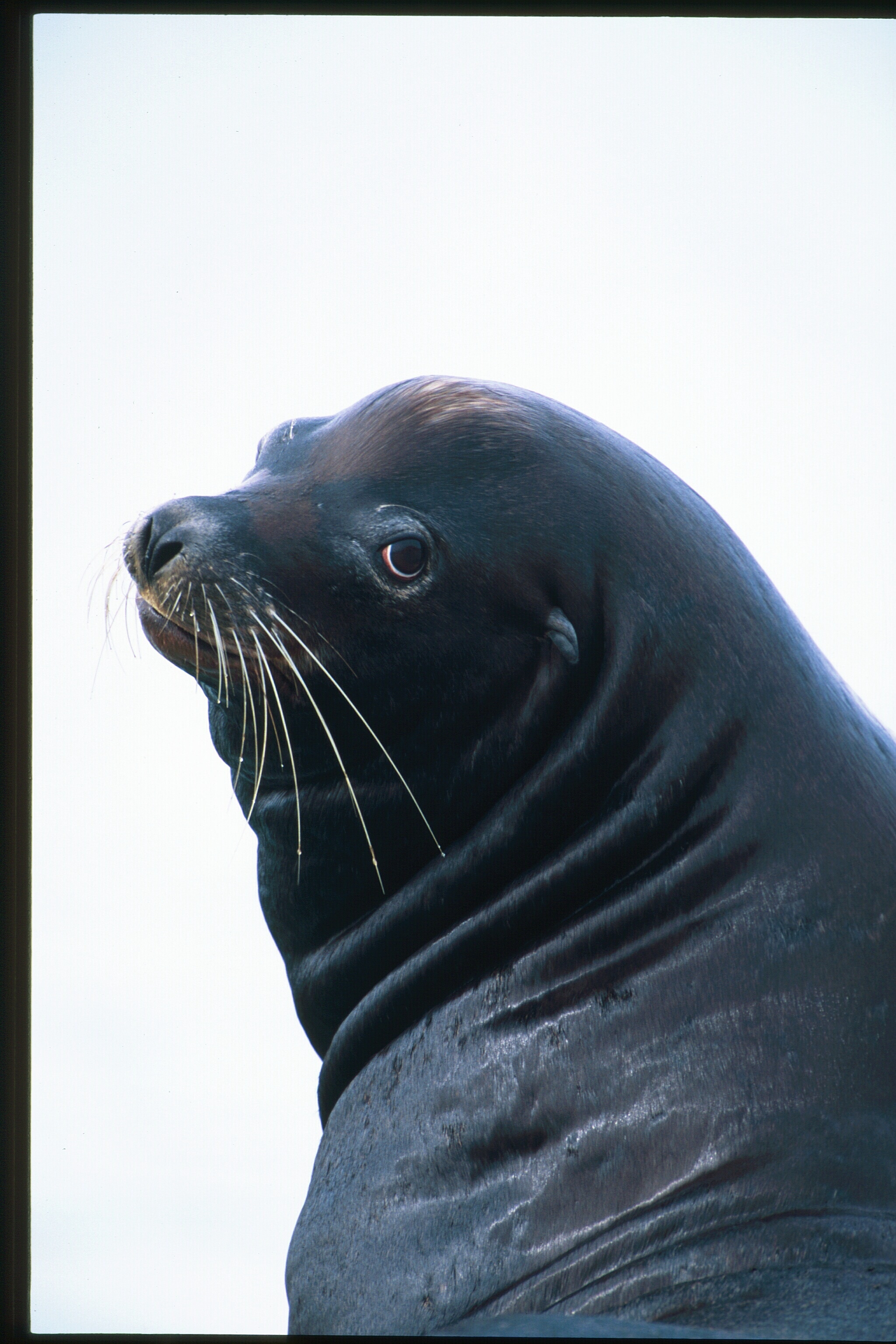
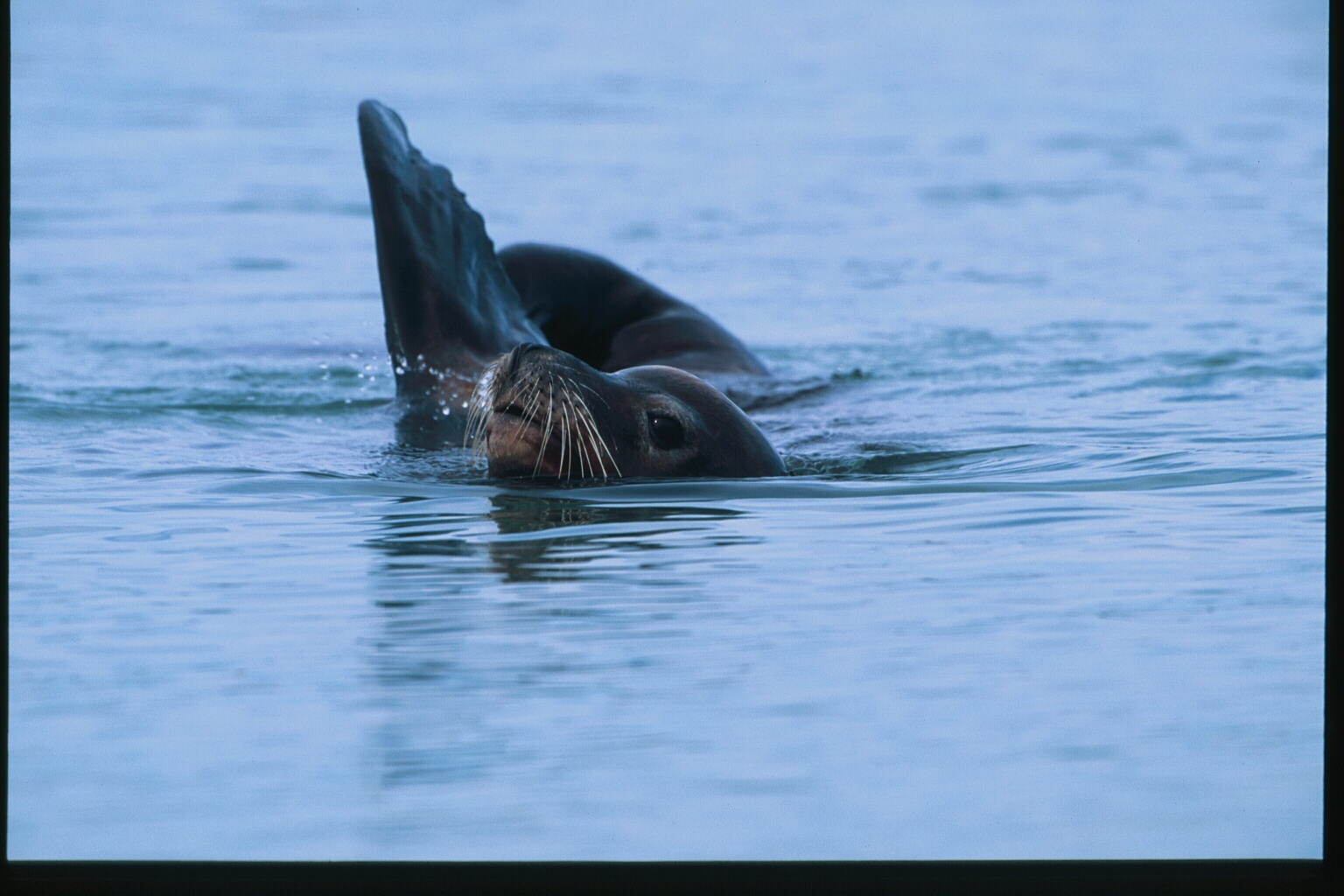
On Friday, May 4, my wife and I stopped at the East Moring Basin on the Columbia River in Astoria, Oregon, to see the sea lions who spend the daytime hours hauled out on one of the floating docks there. It’s always a treat to watch their antics and to hear the raucous roaring of competitive bulls mouthing off to anyone who might try to wriggle in and crowd their personal space. As expected we heard bellowing as soon as we arrived, but this time the sea lions had something serious to protest: an unfortunate herd-mate had been trapped and was being held down tightly and tormented by a group of strange and menacing two-leggers wearing orange raingear, one of whom pulled out a hot iron and repeatedly branded the restrained sea lion. As the victim struggled, acrid smoke from his burning flesh drifted for a hundred yards across the harbor.

The searing pain of the branding may have been temporary, but now the sea lion is branded in the figurative sense of the word as well, and his troubles are just beginning. With the numbers viciously burned onto the animal’s back, the Oregon Department of Fish and Wildlife thus has a clever way to recognize him. Later, they will decide whether or not to add him to their annual hit list of 92 sea lions they plan to kill if they reach the man-made dam that impedes the ancient migration route of spawning salmon.

It speaks volumes about the trusting nature of sea lions that they are willing to return to Astoria year after year. Since its establishment in 1811 as a hub for the booming, bloody fur trade, Astoria has been the scene of countless crimes against marine animals, including sea lions, who were killed along the Oregon coast by the thousands—exclusively for lamp oil. 

Image

Charles M. Scammon—whaler, sealer, mariner and infamous discoverer and exploiter of the gray whale birthing lagoons in Baja California—devoted a chapter to sea lions in his book, The Marine Mammals of the Northwestern Coast of North America: Together with an account of the American Whale-Fishery. He begins that chapter with the lines, “Among the numerous species of marine mammalia found upon the Pacific coast of North America, none excite more interest than the sea lion;” Scammon goes on to describe an average day in the life of the pitiless sealers, and the last day ever for a group of sea lions. “On the south coast of Santa Barbara Island was a plateau, elevated less than a hundred feet above the sea, stretching to the brink of a cliff that overhung the shore, and a narrow gorge leading up from the beach, through which the animals crawled to their favorite resting-place. Several unsuccessful attempts had been made to take them; but, at last, a fresh breeze commenced blowing directly from the shore, and prevented their scenting the hunters, who landed some distance from the rookery, then cautiously advanced, and suddenly, yelling and flourishing muskets, clubs, and lances, rushed up within a few yards of them, while the pleading creatures, with lolling tongues and glaring eyes, were quite overcome with dismay, and remained nearly motionless. At last, two overgrown males broke through the line formed by the men, but they paid the penalty with their lives before reaching the water. A few moments passed, when all hands moved slowly toward the rookery, which had slowly retreated. This maneuver is called “turning them” and, when once accomplished, the disheartened creatures appear to abandon all hope of escape, and resign themselves to their fate. The herd at that time numbered 75, which were soon dispatched by shooting the largest ones, and clubbing and lancing the others, save for one young sea lion, which they spared to ascertain whether it would make any resistance by being driven over the hills beyond. The poor creature only moved along through the prickly pears that covered the ground, when compelled by his cruel pursuers; and, at last, with an imploring look and writhing in pain, it held out its fin-like arms, which were pierced with thorns, in such a manner as to touch the sympathy of the barbarous sealers who put the sufferer out of its misery with the stroke of a heavy club.”

Scammon ends his chapter with the prediction that the Pacific Coast sea lions “…will soon be exterminated by the deadly shot of the rifle, or driven away to less accessible haunts.” Today the few sea lions who have managed to hold on are again under attack, this time for the crime of daring to survive despite industrial scale over-fishing depleting their only food source.