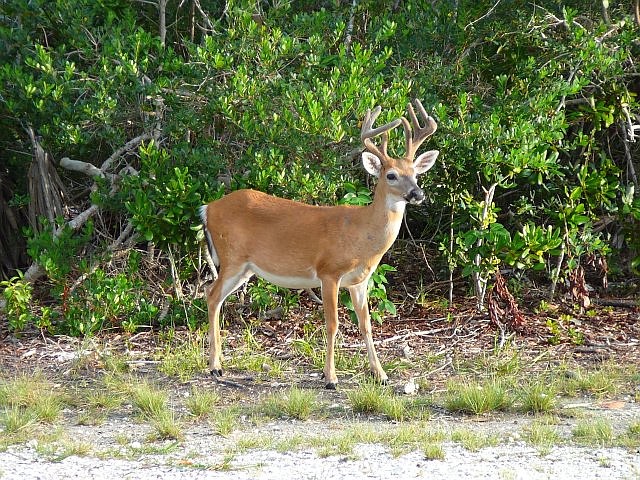
[Keep those barf bags handy]

How science-based hunting is protecting Utah wildlife

By Emily LeFevre

October 24, 2024

2021-03-24-buck-deer.jpeg
A Utah buck deer in the wild. The Utah Division of Wildlife Resources uses GPS tracking to monitor deer populations throughout the year. (Utah Division of Wildlife Resources)

As deer hunting season draws to a close, the Utah Division of Wildlife Services is optimistic about the future of hunting — and its impact on Utah’s environment.

Since 2019, Utah’s struggling deer populations prompted state limitations on the number of issued hunting permits. This year, however, the state released an increase in permits for the first time in six years.

“When populations decline due to factors like a severe winter or prolonged drought — we adjust permit numbers to account for those impacts,” Dax Mangus, Big Game Coordinator for the Utah Division of Wildlife, said. “When populations are growing and the number of excess males in the population increases, we will recommend increased hunting permit numbers.”

While deer populations are mostly regulated by natural predators, many of Utah’s wildlife species are dependent on hunting to keep them in check, Mangus said. Doing so provides efficient, targeted relief to overpopulated habitats and over-foraged plants.

rifle.jpeg
A Utah hunter holds a rifle. The Utah Division of Wildlife Resources has partnered with Cabela’s, Bass Pro Shops and the International Cartridge Corporation to provide hunters vouchers with lead-free bullets. (Utah Division of Wildlife Resources)

“It’s a win-win in many regards as hunters are happy to pay for the chance to pursue big game animals with family and friends to harvest organic meat, while at the same time helping keep populations at a healthy level on the landscape,” Mangus said.

When done properly, hunting is a positive practice with few environmental detriments, Mangus said. Science-based practices, such as GPS systems and data analysis, help game wardens create management and preservation plans.

The Division of Wildlife Services also educates hunters about proper treatment and disposal of animal remains to avoid perpetuating disease.

This September, the division launched the Hunters Helping Condors program to incentivize and educate hunters across the state.

“Over the years, many of these enormous rare birds have been inadvertently sickened and killed by lead poisoning. Lead poisoning is, in fact, their leading cause of death,” the program website said. 

To encourage hunters to limit lead use, the Division of Wildlife Services partnered with the International Cartridge Corporation, Bass Pro Shops and Cabela’s to extend vouchers for lead-free bullets, according to the website.

While the Division of Wildlife Services encourages positive change, it also responds to harmful practices, Mangus said. Catching and prosecuting poachers, enforcing game laws, and educating the public are all part of this effort.

Additional measures, such as excise taxes on firearms through the Pittman-Robertson Wildlife Restoration Act and hunting-based conservation fundraisers throughout the state, support wildlife research and environment preservation projects, Mangus said. Several programs are designed for individuals.

2024-10-08-elk-rut-near-panguitch-lake.jpeg
An elk bull stands near Panguitch Lake, UT. Elk and deer hunting seasons overlap in the autumn. (Utah Division of Wildlife Resources)

“Hunters pay for wildlife disease management efforts, wildlife capture and transplant projects and contribute more money directly to habitat improvement projects than other natural resource user groups,” Mangus said.

Mangus believes these projects are an effort to not only preserve the environment but the future of hunting itself.

“For many hunters, their top priority is the sustainable management of wildlife so that they can continue to enjoy it the rest of their life and pass that enjoyment along to their posterity,” Mangus said. “The recruitment and retention of younger hunters is something that hunters regularly focus on and work towards.”

Deer season closes in November and overlaps with several other hunting sessions, including elk and bobcat. Mangus — and the Division of Wildlife Services as a whole— hope hunters will be sensitive advocates to the public and participate in ongoing education efforts both within and outside of the hunting community.

“We want to pass along our wildlife heritage to future generations,” the Division of Wildlife Services website said, “and we want it to be in better shape than when it was passed to us.”
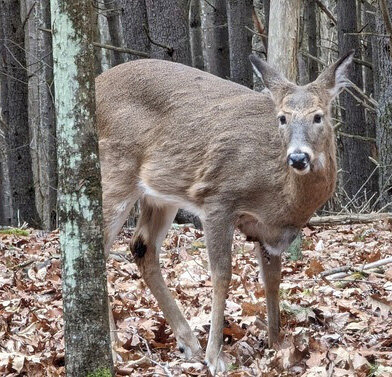
Chronic wasting disease: How will zombie-like deer impact Kentucky hunting season?

by: Allie Root

Posted: Oct 23, 2024 / 07:07 AM EDT

Updated: Oct 23, 2024 / 07:07 AM EDT

SHARE https://fox56news.com/news/kentucky/chronic-wasting-disease-how-will-zombie-like-deer-impact-hunting-season/

KENTUCKY (FOX 56) — A new case of chronic wasting disease (CWD) will likely throw a wrench in some people’s hunting plans. Signs of the disease are weight loss, brain lesions, and zombie-like behavior.

The illness is common in deer and was recently found in a dead one from a facility in Breckinridge County.

“And we’ve tried to put together the very best plan that we can to make these recommendations to mitigate the disease,” said Gabe Jenkins, deputy commissioner for the Kentucky Department of Fish and Wildlife Resources. 

Harris and Cheney stump in battleground states

volume_off

-00:00

sd

closed_captions

fullscreen

On Tuesday, the state approved a CWD surveillance zone in Breckinridge, Hardin, and Meade counties.

LATEST KENTUCKY NEWS:

While deer hunting is still allowed, hunters cannot bait deer with items such as corn, grain, or mineral blocks. Deer killed inside the zone cannot be taken outside of it.

Some meeting attendees were not happy with these restrictions, saying several local hunters have already put a lot of time and money into their hunting properties.

“A lot of hunters do not use woodsmanship anymore like they used to,” said one attendee. “They’re hunting straight over a feeder or some kind of mineral, and they’ve hung their stands there and everything. The concern now is if we stop that today, we’ve ruined them for the rest of the season.”

Kentucky Fish and Wildlife officials said an investigation is now underway that will allow them to check the deer population to determine if there are any other CWD cases, but some say banning bait won’t be effective.

“I think it’s going to potentially impact the underparticipation and harvest rates, which is going to be counterintuitive to getting more deer there to sample to see what the prevalence rate is,” said Matt Rhodes, the 3rd District Representative for the Kentucky Fish and Wildlife Commission.

Jenkins said this is necessary to limit the spread of the disease among Kentucky’s deer population.

https://285bc54a0092deb0ed20f762cfa00d03.safeframe.googlesyndication.com/safeframe/1-0-40/html/container.htmlRead more of the latest Kentucky news

“We know the disease is on the landscape and we know modes of transportation of that disease from an animal to an animal and how that looks. So, there’s a high probability it’s in the environment. It’s on there. And so, anything we can do right out of the gate to decrease the chances of infection and the spread of the disease is paramount for us.”

No CWD infections in people have ever been reported, but the CDC notes that if CWD could spread to humans, it would most likely be by eating meat from an infected animal.

Anyone with questions or concerns can attend a public meeting set for Nov. 7 at the Breckinridge County Extension Office.

Here is what hunters can do to share the woods safely this season in St. Lawrence County

Posted Sunday, October 13, 2024 8:40 am

The New York State Department of Environmental Conservation (DEC) today encouraged outdoor enthusiasts to respectfully share the woods and follow safety precautions this fall and winter. Hikers, nature photographers, leaf peepers, mountain bikers, hunters, and trappers are encouraged to follow safety measures while afield. Regular big game hunting season in the Northern Zone begins Oct. 26 and closes Dec. 8. Bowhunting season for deer and bear is ongoing in the Southern Zone and ends at the beginning of the regular firearms season on Nov. 16.

Tips for hikers and hunters venturing afield this fall include:

  • Tell someone intended destinations and return times. If plans change, notify them;
  • Dress for the weather and plan for both location and elevation changes;
  • Become familiar with planned hiking trails or hunting areas;
  • Wear bright clothing; blaze orange or blaze pink. Bright colors allow hikers and hunters to be seen more easily and from farther away; and,
  • Pack the 10 Essentials, especially a light source, map, and first aid kit.

For more tips on sharing the woods this fall, check out this recent DEC video

While hunting-related shooting incidents involving non-hunters are extremely rare, DEC encourages all outdoor adventurers to be aware of the presence of others enjoying New York’s natural resources. Hikers should be aware they may meet hunters bearing firearms or archery equipment while hiking on trails. Hunters are fellow outdoor recreationists and hunting is permitted on Forest Preserve and Conservation Easement lands. Hunters should likewise recognize they may encounter hikers and others enjoying the outdoors.

Hunting is among the most popular forms of wildlife recreation in the state, with almost 600,000 New Yorkers participating. Hunting is safe and economically important, helping to manage wildlife populations and promote family traditions while fostering an understanding and respect for the environment.  

Hunting is safe and is getting safer thanks to the efforts of DEC’s Hunter Education program, volunteer instructors, and the vigilance of hunters. The last few years have been the safest on record with 2021 and 2022 having the fewest ever number of hunting-related shooting incidents, and 2019 and 2023 tying for second.

Hunters looking for solitude can minimize the disturbance associated with other forms of recreation by following a few tips. Before a season opens, when hunters are scouting for the perfect spot or stand location, take the time to check if the planned location is a popular one. Avoid crowding other hunters and recognize that if a hunting location is near a popular hiking spot, noise can be a factor. If a preferred hunting spot is too crowded, identify an alternative location ahead of time.

Northeast Wisconsin families bond during state’s two-day youth deer hunt season


by Andrew Mertins, FOX 11 NewsSun, October 6th 2024 at 7:22 PM

Updated Mon, October 7th 2024 at 10:34 AM

https://fox11online.com/news/local/northeast-wisconsin-families-youth-deer-hunt-season-wisconsin-buck-tales

0 seconds of 0 secondsVolume 90%

Maliyah Mounce's first buck during Wisconsin's youth deer hunt season (Photo: Lukas Mounce)IMG_3089.jpeg

Mack Rabas with a buck harvested in Michigan in September (Photo: Leigha Degeneffe-Rabas)

12

VIEW ALL PHOTOS

View All Photos

Maliyah Mounce’s first buck during Wisconsin’s youth deer hunt season (Photo: Lukas Mounce)

Comment bubble

1

BROWN COUNTY (WLUK) — This weekend marked the youth deer hunt season across Wisconsin, bringing families out together in the wilderness.

While the 2024 deer hunting season will be out in full force later this year, early October presents a great opportunity for hunters like Ty Rabas and his 10-year-old son, Mack.

“It brings me a lot of joy and excitement to pass on what my dad showed me to him and my other little guy and the other one behind him,” said Ty Rabas.

The father and son duo were trekking on public land in Brown County on Sunday during the youth deer hunt, hoping to find the perfect buck.

Mack already harvested a buck last month in Michigan.

“At the end of the day it’s like, it feels like you’re not gonna get anything but then like they come in like right before the sun sets,” said Mack Rabas.

Promoted Links

Doctors: Sleep Apnea Alleviation Without CPAP (It’s Genius)NoctivioRead More

Mack made the tough decision to choose deer hunting over Green Bay Packers football — and is happy to spend time with dad.

“I just like spending time with him, he teaches me a lot of things when we go out into the woods,” said Mack Rabas.

Share your Buck Tales photos and videos with us here:

https://widget.stackla.com/widget/show/?wid=6196c582de977&ct=&ttl=60&product_link_attribute=&brand=&categories=&unique_id=1&tag_group=&v=1Submit your content

Wisconsin’s youth deer hunt offers hunters 15 years and younger the chance to learn the techniques of hunting.

Lukas Mounce’s 7-year-old daughter, Maliyah, harvested this eight point buck on Saturday in the Fox Valley, her first in her young hunting career.

“I’m really proud that I got that buck, and my little brother, he really really wants to go hunting with me,” said Maliyah Mounce.

For Lukas, he’d describe that moment with his daughter as special.

“Her eyes said it all when she found it. I mean, she just whipped around and her eyes were as big as pie plates and, I mean, that was the most exciting part for me,” said Lukas Mounce.

Comment bubble

JOIN THE CONVERSATION (1)

Whether you come home with a trophy buck or empty-handed, hunting is all about the memories you make along the way.

Ahead of hunting season, wild game processors adapt to CWD’s spread


SharePrint https://cdapress.com/news/2024/oct/05/local-butcher-shops-adapt-as-cwd-raises-concerns-ahead-of-deer-hunting-season/

A healthy white-tailed deer.
Idaho Fish and Game

by HAILEY HILL
Staff Writer | October 5, 2024 1:07 AM

This year’s deer hunting season will look a little different for North Idaho wild game processors after cases of chronic wasting disease were confirmed in the Bonners Ferry deer population.  

CWD is a neurological disease found in deer, elk and moose that causes degeneration of the animal’s brain, resulting in emaciation, abnormal behavior, loss of bodily function and eventually death.  

Woods Meat Processing in Sandpoint still plans to process wild game — however, the shop will not accept any carcasses from CWD zones, which are designated by Idaho Fish and Game. Additionally, a negative CWD test is required for harvested, boneless meat.  

ADVERTISING

“If anybody tells you they’re not doing anything different, that’s not a good thing,” said Jody Russell, co-owner of Woods Meat Processing.  

Mike Edgehouse, who operates a mobile meat processing business called Primal Edge Pursuits, believes working exclusively with wild game — and one animal at a time — is what will allow him to avoid potential for contamination.  

“I think those who do both domestic and wild game are in a much tougher position,” Edgehouse said.  

Such was the case for Mountain View Custom Meats, a Coeur d’Alene shop that stopped processing wild game meat two years ago when the first case of CWD was confirmed in Idaho.  

Since the shop is located on private property, owner Kevin Trosclair explained, they did not want to risk CWD prions getting into the property’s groundwater and infecting nearby wildlife and livestock.  

“We decided from a safety standpoint that we don’t want to have that in our shop,” Trosclair said.  

Idaho Fish and Game has designated Units 14, 18 and a portion of unit 1, the portion of Boundary County east of the Selkirk Mountains crest, as CWD Management Zones as of Oct. 1. Fish and Game prohibits the transport of whole deer, elk or moose carcasses out of these zones.  

Mandatory sampling is required for all mule deer and white-tailed deer harvested in units 14, 18, 23, 24, 32A and the same portion of unit 1, according to IFG 2024 CWD Hunting Rules.  

Any-weapon hunting for white-tailed deer opens Oct. 10.

Watching This Disabled Hunter Get His First Deer Is The Most Heartwarming Thing You’ll See All Week

Mary Claire Crabtree·

HUNTINGRIFF OUTDOORS

·September 23, 2024

Disabled hunter shoots his first deer with modified trigger

@soggybottomlodge

A moment this young man will never forget.

Last hunting season, this video left the internet in an absolute puddle when they saw a disabled man shooting his first deer.

Meet Will Freeman, an outdoors enthusiast with special needs that most hunters do not face. However, instead of just wishing he could hit the deer stand, Soggy Bottom Lodge in Marengo County, Alabama (a five-star hunting resort) invited Will and his family out to make his dreams come true… taking him out to the field and making sure that Will got a buck.

While most people think that he might have just been in the stand while the deer was shot, think again. With the aid of a special gadget, Will was instructed when it was time to shoot his deer from inside a truck, and he pulled the trigger…or a modified version of one. A contraption attached to the riffle allowed Will to shoot his own gun via an air trigger straw. When Will was ready to pull, he sucked the air from the straw, signaling the weapon to fire.

The result? The takedown of a MASSIVE buck.

While you are watching the video, you can feel the emotion of excitement through the phone screen as Will not only hears all the cheering from outside the truck after the gun was fired but also the excitement from his family knowing that they were able to make their son’s dream come true.

Will has a huge smile on his face, and the video is so emotional. I’m not going to lie… it made me tear up.

Soggy Bottom noted on the video’s caption:

“Best thing ever! Will’s daddy promised him when he was little that somehow, some way, one day, he would get him a deer! Today was that day! What an experience! Kidz outdoors had a contraption when Will sucked the straw; it shot the gun. Will got his first deer today! I wouldn’t take anything for the happiness I saw today.”

Will’s dad flung open the car door, cheering on his son as the whole group was filled with so much excitement and thrill over Will’s buck. I lost it when Will’s dad kissed him and said:

“You got it, buddy. You got it.” 

That is one proud dad.

https://www.tiktok.com/embed/v2/7304175949048728875?lang=en-US&referrer=https%3A%2F%2Fwww.whiskeyriff.com%2F2024%2F09%2F23%2Fwatching-this-disabled-hunter-get-his-first-deer-is-the-most-heartwarming-thing-youll-see-all-week%2F

The videos were swarmed with comments noting viewers’ excitement for Will.

“‘Gone make an old man cry,’ me too, sir. Me too.”

“Not a huge fan of hunting, but I am a huge fan of love. Good stuff.”

“I was doing great until Dad opened the door. That’s one proud daddy.”

“This is AMAZING! Everyone in that truck got to experience buck fever all at once, and that’s a cool thing!”

“Didn’t expect to have tears with my coffee.. ‘best part of waking up is watching will kill that buck.’”

“As a hunter and outdoorsman, this is the coolest thing I’ve ever seen.”

Later on, Will’s mother shared a compilation of the pictures captured from the hunt… including the prized buck that Will got.

Decline In Deer And Wild Horses Kindling Catastrophic Wildfires

Large herbivores, such as deer and wild horses have over evolutionary time evolved to control and maintain the grass and brush that is ubiquitous across the landscape. The now prodigious grass and brush that has resulted from a significant decline in our native herbivores is fueling and kindling catastrophic wildfires, makes them abnormally hot, resulting in the incineration of everything in their path.

And as these devastating wildfires burn for weeks and months at a time, the air quality in many areas reaches a ‘hazardous’ level due to extreme particulate concentrations combined with gaseous toxins that are deadly.

During this 2020 wildfire season, the air quality in many areas of California and Oregon (and elsewhere in America) reached levels where people are made seriously ill, while others who are exposed to this deadly air are then preconditioned and made more susceptible to a myriad of health issues down the road, and that is especially true for our children.

As a result of the ongoing mismanagement of large herbivores, this letter was penned to the Bureau of Land Management managers in the Medford, Oregon District offices by William E. Simpson II, a naturalist-researcher who studies the effects of herbivores (specifically wild horses) on wilderness landscape and wildfire.

TO: Elizabeth Burghard – BLM District Manager Medford, OR

Lauren P. Brown –

Manager – Cascade-Siskiyou National Monument

CC: Et. Al.

RE: Who Should Americans Blame For Incinerating Flames And Deadly Smoke From Wildfire?

Dear Ms. Burghard and Ms. Brown:

Enjoying our “hazardous air”? It stems from obtuse management policies that fail to observe the reality of science instead of politics, egos and money.

At a time when we need all the fuels (grass and brush) reduction and maintenance we can muster, here we discover that the Bureau of Land Management (‘BLM’) is removing large herbivores (nature’s grass and brush mowers) from our landscape locally and nationally, which is already deficient in large herbivores according to the best science.https://googleads.g.doubleclick.net/pagead/ads?client=ca-pub-1227307663574741&output=html&h=280&adk=2608271695&adf=2437803625&pi=t.aa~a.829776362~i.57~rp.4&w=640&fwrn=4&fwrnh=100&lmt=1622913282&num_ads=1&rafmt=1&armr=3&sem=mc&pwprc=9818545385&psa=1&ad_type=text_image&format=640×280&url=https%3A%2F%2Fwww.valuewalk.com%2F2020%2F09%2Fwild-horses-removal-wildfire%2F%3Ffbclid%3DIwAR3_Kp6Fysuv6XlPJLPWIhnX-YjmMog5kZd9RWoLrqvclVwq1vIzpJpWKCk&flash=0&fwr=0&pra=3&rh=160&rw=640&rpe=1&resp_fmts=3&wgl=1&fa=27&adsid=ChEI8MHshQYQ5PCP54y7qNiNARI9AHrZIcfPygrQDYGhQoBHe0GW9B4Pnbi72rZuDsVrklnKKnDh1YPkK29FgEInFXhefuPHUzywQxN2sbPIiQ&uach=WyJXaW5kb3dzIiwiMTAuMCIsIng4NiIsIiIsIjkxLjAuNDQ3Mi43NyIsW11d&dt=1622913273351&bpp=12&bdt=10194&idt=13&shv=r20210601&cbv=%2Fr20190131&ptt=9&saldr=aa&abxe=1&cookie=ID%3D81320396d220691a-224bdd61e9c70067%3AT%3D1622913267%3ART%3D1622913267%3AS%3DALNI_May8IVXWnwcl6JI7Ggb7t01SLhXcw&prev_fmts=0x0%2C300x250&nras=3&correlator=7277685408563&frm=20&pv=1&ga_vid=371416190.1622906261&ga_sid=1622913267&ga_hid=613557061&ga_fc=0&u_tz=-420&u_his=1&u_java=0&u_h=640&u_w=1139&u_ah=607&u_aw=1139&u_cd=24&u_nplug=3&u_nmime=4&adx=71&ady=3583&biw=1123&bih=537&scr_x=0&scr_y=1700&eid=44744007%2C44744015&oid=3&psts=AGkb-H-w-xXCkoT5lMP_1xZEaA50xORYygGZwwkAJHZaqMv09ieplvYaYtv_5ejtmPWw5RkQlSZw6nDf509SMA&pvsid=4320925660688057&pem=550&ref=https%3A%2F%2Foutlook.live.com%2F&eae=0&fc=1408&brdim=0%2C0%2C0%2C0%2C1139%2C0%2C1139%2C607%2C1139%2C537&vis=1&rsz=%7C%7Cs%7C&abl=NS&fu=128&bc=31&jar=2021-06-05-17&ifi=6&uci=a!6&btvi=2&fsb=1&xpc=Czy9KwzYsb&p=https%3A//www.valuewalk.com&dtd=9188

The following statement is relevant in regard to the removal of wild horses from the Cascade-Siskiyou National Monument and areas surrounding the Monument, like the Soda Mountain Wilderness Area and the Pokegama Herd Management Area, where the BLM is idiotically rounding up wild horses (aka: large herbivores) this coming week.

Jozef Keulartz:

“The removal of large herbivores has adverse effects on landscape structure and ecosystem functioning. In wetter ecosystems, the loss of large herbivores is associated with an increased abundance of woody plants and the development of a closed-canopy vegetation. In drier ecosystems, reductions of large grazers can lead to a high grass biomass, and thus, to an increase in the frequency and intensity of wildfires. Together, with the loss of a prey base for large carnivores, these changes in vegetation structures and fire regimes may trigger cascades of extinctions (Bakker et al., 2016; Estes et al., 2011; Hopcraft, Olff, & Sinclair, 2009; Malhi et al., 2016).” http://oxfordre.com/environmentalscience/view/10.1093/acrefore/9780199389414.001.0001/acrefore-9780199389414-e-545

Additionally, you should be taking more of a leadership role in controlling your subordinate, Mr. Joel Brumm of your Bureau of Land Management (‘BLM’) office and his obtuse rantings (in public) that are both scientifically and legally incorrect, when he says: “wild horses are trespass animals in the Cascade-Siskiyou National Monument (‘Monument’)”. Mr. Brumm’s blathering in this regard is just nonsense in the face of real science and arguably incorrect in the face of the law.https://googleads.g.doubleclick.net/pagead/ads?client=ca-pub-1227307663574741&output=html&h=280&adk=2608271695&adf=3999567714&pi=t.aa~a.829776362~i.65~rp.4&w=640&fwrn=4&fwrnh=100&lmt=1622913348&num_ads=1&rafmt=1&armr=3&sem=mc&pwprc=9818545385&psa=1&ad_type=text_image&format=640×280&url=https%3A%2F%2Fwww.valuewalk.com%2F2020%2F09%2Fwild-horses-removal-wildfire%2F%3Ffbclid%3DIwAR3_Kp6Fysuv6XlPJLPWIhnX-YjmMog5kZd9RWoLrqvclVwq1vIzpJpWKCk&flash=0&fwr=0&pra=3&rh=160&rw=640&rpe=1&resp_fmts=3&wgl=1&fa=27&adsid=ChEI8MHshQYQ5PCP54y7qNiNARI9AHrZIcfPygrQDYGhQoBHe0GW9B4Pnbi72rZuDsVrklnKKnDh1YPkK29FgEInFXhefuPHUzywQxN2sbPIiQ&uach=WyJXaW5kb3dzIiwiMTAuMCIsIng4NiIsIiIsIjkxLjAuNDQ3Mi43NyIsW11d&dt=1622913273390&bpp=12&bdt=10226&idt=12&shv=r20210601&cbv=%2Fr20190131&ptt=9&saldr=aa&abxe=1&cookie=ID%3D81320396d220691a%3AT%3D1622913267%3AS%3DALNI_MYyGFZlR7oZi_8Kc-CzgVwc6PX0HA&prev_fmts=0x0%2C300x250%2C640x280&nras=4&correlator=7277685408563&frm=20&pv=1&ga_vid=371416190.1622906261&ga_sid=1622913267&ga_hid=613557061&ga_fc=0&u_tz=-420&u_his=1&u_java=0&u_h=640&u_w=1139&u_ah=607&u_aw=1139&u_cd=24&u_nplug=3&u_nmime=4&adx=71&ady=4913&biw=1123&bih=537&scr_x=0&scr_y=2926&eid=44744007%2C44744015&oid=3&psts=AGkb-H-w-xXCkoT5lMP_1xZEaA50xORYygGZwwkAJHZaqMv09ieplvYaYtv_5ejtmPWw5RkQlSZw6nDf509SMA%2CAGkb-H_P7fos85x85_9J5tOM6oZNhUE_o0T4B5M_lQRUZ2Usp6zMc1I5RarpivSl_mwE4Hh4U0BnoxVxT9NS&pvsid=4320925660688057&pem=550&ref=https%3A%2F%2Foutlook.live.com%2F&eae=0&fc=1408&brdim=0%2C0%2C0%2C0%2C1139%2C0%2C1139%2C607%2C1139%2C537&vis=1&rsz=%7C%7Cs%7C&abl=NS&fu=128&bc=31&jar=2021-06-05-17&ifi=7&uci=a!7&btvi=3&fsb=1&xpc=7dn3FoUAnG&p=https%3A//www.valuewalk.com&dtd=74943

We all need to keep in mind that ‘administrative policy’ does not supersede established law or Acts of Congress, which represent the will of the American people as a whole, as opposed to the whims of some administrative fiefdom and it’s ruler (dictatorship), as has been the case at the BLM.

The corruption and malfeasance at the BLM now seems to arguably top any other government agency… here are just three of many examples, one concerns a BLM employee from the Medford District Office:

1) Former BLM Official (Medford, OR) Pleads Guilty to Public Corruption Charges Sophisticated Contract Manipulation Scheme Defrauds BLM of Over $400,000 https://archives.fbi.gov/archives/portland/press-releases/2010/pd041610

2) Inspector General Report Confirms Mass Slaughter of Wild Horses During Reign of Then-Interior Secretary Ken Salazar: https://www.huffpost.com/entry/inspector-general-report_b_8393670

3) The BLM make a material misrepresentation to the Congress of the Unites States of America in their 2018 Report To Congress ‘Management Options For A Sustainable Wild Horse And Burro Program’, where on page-1, paragraph 5 of the Executive Summary they wrote: “Wild horses and burro have no natural predators...”. That statement is false in the face of wildlife ecology and evolution. Mountain lions, bears, wolves, and coyotes kill and eat the foals and adults as their natural prey.

Motorist, 18, ticketed for intentionally hitting, critically injuring deer with pickup truck in Old Forge

https://www.syracuse.com/outdoors/2021/04/dec-motorist-ticketed-for-intentionally-hitting-critically-injuring-deer-with-his-pickup-truck-in-old-forge.html?fbclid=IwAR3pZksjt2FDcFeYvwRvIteu_7_Q71r0JOQKd-xkH0trrIWktUbJfyl_1aA

[Only ticketed?!!?]

Updated Apr 15, 2021; Posted Apr 15, 2021

A white-tailed deer.

Facebook ShareTwitter Share928sharesBy David Figura | dfigura@nyup.com

An 18-year-old driver in Old Forge was ticketed late last month by state conservation officers for intentionally speeding up his pickup truck, hitting and critically injuring a white-tailed deer.

That incident and other recent incidents below involving state Department of Environmental Conservation officers (ECOs) was reported this week by the DEC.

Intentional Deer Strike – Herkimer County

“On March 31, Town of Webb Police contacted a state Conservation Officer about a deer struck and killed by a vehicle in the village of Old Forge. Multiple eyewitnesses claimed the driver intentionally accelerated his truck toward two deer standing in the road, striking one and dragging it approximately 70 to 100 yards down the road. Due to the extent of its injuries, the deer had to be euthanized, according to wktv.com. An officer accessed video footage from a local business’ security camera that corroborated eyewitness statements. With help from Old Forge Police, ECOs located the truck and driver in the town of Forestport, Oneida County, and found deer hair in the front bumper of the suspect’s truck. After interviewing him and presenting him with the evidence, the driver, Grady Boulier, 18, admitted to accelerating toward the two deer, striking one, and dragging it down the road before stopping. The subject was issued appearance tickets to the Town of Webb Court for Environmental Conservation Law violations of taking deer from a public highway, taking deer while in a motor vehicle and taking deer during the closed season.”

There’s No Such Thing as “Wounding” a Deer With Your Car

May be an image of deer, food and nature
Text and photos by Jim Robertson

If you’re barreling down the road safely behind the wheel of your carbon-spewing steel-cage-contraption and “clip,” “wing” or “sideswipe” a soft-bodied deer trying to cross one of the ubiquitous roadways, even if it hobbles away looking “okay” you killed the poor creature. Maybe not outright and maybe not today, but you can bet that he or she won’t make it through too many cold nights without succumbing to his or her injuries.

The fact is, there are just far too many cars, driving far too fast for conditions (which include marked or unmarked deer crossings) for any semblance of sanity.

Just this morning, I had the displeasure of having to “put down” a wounded deer who had been staying in our hay shed for the past two nights. I knew he (one of his antlers was lost when the car or truck hit him) was wounded, but it wasn’t until he limped off yesterday morning dragging his broken and mangled hind leg that I knew for certain he had no hope of any natural recovery. The bone was protruding from the compound fracture which would never heal right on its own—and no vet around here would treat an injured deer since this county fancies itself a “trophy” mule deer area and deer are just a “resource.”

As much as I hate to take the life of any animal, I was forced to do what the deer ultimately wanted of me and end his suffering as quickly and humanely as possible. After the deed (I shot using a high-powered rifle with a scope through the open bathroom window), my wife and I rolled his lifeless body onto a tarp and slid it across the snow to a safe spot for scavengers to feed.

“Roadkill” is so prevalent in this valley that signs have been placed at either end of the highways leading into what should just be a deer wintering range warning motorists that the annual tally of deer deaths are 150+ (that figure updated yearly). But more ominous to most drivers is the estimated cost repairing their precious vehicles. Still, no dollar-value or loss of non-human life would convince most drivers they should change the speed limit to 25 or 35 miles-per-hour (as it’s marked and enforced through the towns).

I’m sure it would be considered heresy these days to demand an enforced 45 mph daytime speed limit on any highway bisecting any deer winter range, but that’s the kind of “extreme” step we’ll have to take if we want to go on using the name homo sapiens, meaning “intelligent ape,” and not be demoted to something reflecting recklessness or self-centered-ness—something like homo erraticus, homo psychopathicus, homo drive-too-fasticus or whatever type of homo scientists deem appropriate.

May be an image of deer and nature

Deer Snatches Hunter’s Gun In Czech Republic

November 27, 20207:33 AM ETHeard on Morning EditionLISTEN·0:2929-Second ListenAdd toPLAYLIST

You might think twice about hunting deer if one comes charging at you with a gun. In the Czech Republic, a hunter’s gun got caught in a deer’s antlers. The animal promptly ran off.

STEVE INSKEEP, HOST:

Good morning. I’m Steve Inskeep. Hunters in the Czech Republic were following a deer when something went wrong. One of their dogs startled it. The deer ran toward them and one of its antlers caught the strap of a hunter’s rifle. It ran off. Someone later saw the deer, still with the gun, more than a mile away. Apparently, the gun isn’t loaded, but some future hunter may think twice about opening fire when encountering a deer that also appears to be armed. It’s MORNING EDITION.

Copyright © 2020 NPR. All rights reserved. Visit our website terms of use and permissions pages at www.npr.org for further information.