N.J. woman says deer carries arrow in its head as it wanders suburban backyards

[I make a point not to talk to bowhunters. Like if I knew a guy watching the kids in a school yard is a pedophile, I can’t be held accountable for what I might do if I saw one aiming at a deer! This isn’t some kind of a game, and the animals aren’t your playthings put here for you to do with as you will! Each and every dear, elk, bear, or any other living target you fantasize about is a living being far more deserving of life than you camo-clad bow-toting scumbags who take pleasure in sending arrows into them!

Here’s the statement made by the person who sent me this article about ANOTHER wounded deer:
“I can’t even contain my outrage. Just like what happened here, this woman saw this poor deer who had been injured with an arrow. This is where our reactions differ: the article says ‘I know a lot of hunters and I know that was nothing done intentionally,’ Darrah said by phone this morning, noting her yard attracts deer often since it has a large pear tree and its located near Split Rock Reservoir. ‘I’m sure if any hunter saw him, they would have been kind of enough to put him down,’ she said.

Really? Not intentional? Ok, it was a bad shot. WHICH CONFIRMS THAT BOW HUNTING MUST BE OUTLAWED. But what is even more ironic is her comment about hunters being ‘kind.’ Fuck that. Clearly she is out of her mind and drank the cool aid on hunting.  ‘Yes, we shoot them with a gun or an arrow and they quietly go to heaven and give us food.'”]

deer.jpg
                    A Boonton woman saw this deer in her backyard on Friday and Saturday.                                             (Courtesy Susan Darrah)

Jeff Goldman/The Star-Ledger By Jeff Goldman/The Star-Ledger The Star-Ledger Email the author | Follow on Twitter on November 04, 2013 at  1:32 PM, updated November 04, 2013 at  8:36 PM

    http://www.nj.com/morris/index.ssf/2013/11/nj_woman_spots_deer_with_arrow_in_head_in_her_backyar.html

ROCKAWAY TOWNSHIP — Seeing deer wander through her Boonton backyard is a regular occurrence for Susan Darrah.

But even Darrah admits she was taken aback by what she saw when she looked out her living room window at about noon on Friday: a young deer with an arrow through its head.

As startling a sight as it was, the animal wasn’t bleeding and didn’t appear to be frightened, she said. Darrah immediately contacted animal control in town as well as the New Jersey Division of Fish and Wildlife.

“I know a lot of hunters and I know that was nothing done intentionally,” Darrah said by phone this morning, noting her yard attracts deer often since it has a large pear tree and its located near Split Rock Reservoir. “I’m sure if any hunter saw him, they would have been kind of enough to put him down,” she said.

Darrah spoke to a Fish & Wildlife representative and followed their advice to put out a supply of corn for the deer, which appeared to be traveling in a herd with four others.

The animal re-appeared at 5 p.m. Friday and then again at 8 a.m. and 3 p.m. Saturday, but Darrah said she hasn’t seen it since.

The state Division of Fish and Wildlife sent out a crew to the area today looking for the deer, spokesman Bob Considine said. He added that the department would tranquilize the animal in the hopes of removing the arrow.

The state is in the midst of its fall bow hunt season.

Local officials face deadline over enacting rifle hunting restrictions

[You can expect a lot more hunting accidents when this season starts up…]

Towns and villages in 18 counties across eastern and western

Wildlife Photography ©Jim Robertson

Wildlife Photography ©Jim Robertson

Wisconsin have  only a few weeks to decide if there are public safety reasons to prohibit rifle  hunting for deer.

Local governments are scrambling to get the issue on meeting agendas before  the Nov. 23 start of the annual nine-day deer gun season.

The state Department of Natural Resources declared in late September rifles  will be allowed statewide for the traditional deer gun hunt and the December  antlerless deer hunt, except where municipalities enact local restrictions.

Most counties in southern and central Wisconsin in the past were designated  as shotgun-only for deer hunting, primarily in response to a public perception  that shotguns were safer for hunting in open farm fields.

While shotgun slugs are not as accurate or powerful as rifle bullets over  long distances, the DNR says a study of hunting accidents shows a switch to  rifle hunting did not boost the number of injuries and other incidents.

DNR officials in the past few years could not confirm any safety advantages  to hunting deer with shotguns rather than rifles so the change was made,  according to Conservation Warden Todd Schaller, chief of the DNR’s recreational  enforcement section.

The department set off the dash for a local decision by announcing the end of shotgun-only counties for deer hunting in Wisconsin  as of Nov. 1.

The decision followed votes in favor of the change at Conservation Congress  spring meetings in 2011 and 2013, said Matt O’Brien, a DNR administrative warden  in Madison.

And the number of counties prohibiting rifle hunting for deer had steadily  declined before this year.

As of January 2013, the DNR listed 19 counties with shotgun-only zones for  deer hunting. In one, Milwaukee County, all communities had enacted separate  regulations to prohibit rifle hunting in any season.

The other 53 counties permitted rifle hunting for deer before the recent rule  change.

Any new local regulation of rifle hunting should balance public safety issues  with the state’s responsibility to regulate hunting and manage wildlife  populations, Schaller and O’Brien said.

One complication for hunters is that the DNR’s declaration came after the  2013 deer regulations were printed, so a state map in the pamphlet still shows  the 19 counties as shotgun-only zones.

One other complication: the DNR will not track local ordinances and provide a  central database. It is the hunter’s responsibility to determine if there are  municipal restrictions on rifle use.

Patchwork of rules

The Village of Germantown in Washington County last week enacted a year-round  ban on rifle hunting with an exception for low-powered .22-caliber and  .17-caliber models using rimfire cartridges.

“It was a difficult decision, but it came down to topography and density of  population,” Police Chief Peter Hoell said.

Large flat fields of corn and soybeans north of Freistadt Road are his  primary concern. High-powered rifle bullets could carry long distances across  those fields, which are sandwiched between rural homes, subdivisions and  crossroad hamlets, he said.

When the dust settles in a few weeks in the other 18 counties, the result  likely will be a checkerboard quilt of ordinances with some municipalities  imposing year-round prohibitions on rifle hunting, others restricting rifles  only in the deer season, and the remainder taking no action.

But maneuvering through dozens of differing local regulations would be at  odds with one of the main reasons for eliminating the shotgun-only counties, DNR  officials said.

The change was intended to simplify hunting rules so that hunters would not  need to check the deer regulation pamphlet, and switch weapons, each time they  crossed a county line, according to O’Brien.

The checkerboard design is a work in progress:

From Germantown, a group of hunters walking north across Pioneer Road into  the Town of Jackson will need to call ahead for information on rifle use.

Town staff and board members are studying the issue but no meeting has been  scheduled.

Hunters walking south from Germantown into Menomonee Falls will have to put  away their rifles and check where they can discharge a shotgun.

The village in Waukesha County had established a prohibition on rifle hunting  several years ago and requires a municipal permit for hunting with shotguns or  bows. Shotgun hunting is only allowed on designated properties that are 5 acres  or larger.

West of Germantown, the Richfield Village Board is planning a special meeting  Nov. 7 to discuss the need for restricting rifle use, Village Administrator Josh  Schoemann said.

Hunters entering Richfield from Germantown should call ahead to determine  which firearms are allowed.

Rifles are welcome for deer hunting in the Town of Cedarburg in Ozaukee  County, a former shotgun-only county. The Town Board in October decided not to  impose restrictions on rifle hunting.

The town posted a link on its website to a Pennsylvania study of the need for rifle hunting  restrictions. The study concluded shotguns with rifled barrels could pose a  greater public safety risk than rifles on level terrain, and there was a greater  risk of ricochet with shotgun slugs than rifle bullets.

The Waukesha Town Board will discuss the issue of rifle hunting at its Nov.  14 meeting, Town Chairman John Marek said.

One additional consideration for local officials is that the old shotgun-only regulation applied only to deer seasons. There was a flip side of the rule: use of rifles for legal hunting of coyote, fox and bear during open seasons was permitted unless local restrictions were established.

In Mequon, the city had designated zones of 10 acres or more generally west  of the Milwaukee River for hunting. Rifle hunting is prohibited throughout  Mequon under an existing ordinance.

The Town of Addison in Washington County decided to re-establish a  shotgun-only deer hunting zone within its town boundaries.

On Oct. 17, the Town Board adopted an ordinance prohibiting use of rifles in  any gun deer hunting season. The board cited population density in enacting the  limited restriction.

Even so, hunters can use rifles in other open seasons.

The Town of Hartford in Washington County took no action. The Hartford Town  Board on Thursday could not reach consensus on either a year-round prohibition  on rifles or a rifle ban only during the deer gun season.

On a 2-1 vote, the board decided to step back and monitor complaints in the  upcoming season.

“There’s not a lot of open area left in this town,” Clerk Marvin Justman  said. There are 22 rural subdivisions crisscrossing the municipality with the  historic St. Lawrence hamlet on the north.

Enforcement difficult

Shotgun-only deer hunting regulations will be difficult to enforce and vulnerable to challenge now that  the DNR has decided there is no safety advantage in hunting with shotguns, the  Wisconsin Towns Association advises local governments.

Adding to the challenge: Conservation wardens do not have the authority to  enforce local regulations.

This is one situation where the DNR recommends town officials either go big —  impose year-round rifle hunting restrictions for public safety reasons — or do  nothing.

A deer season-only restriction on rifles would be viewed by the department as  a hunting regulation, rather than a public safety rule, and municipalities do  not have authority to regulate wildlife hunting seasons, O’Brien said.

Why would a community restrict rifle use only during a deer gun season? he  asked.

“If there is a public safety risk in hunting deer with rifles, then the risk  exists 365 days a year” in hunting other wildlife with rifles, O’Brien said.

For that reason, the DNR has distributed its preferred model town ordinance  with a year-round ban on rifle hunting.

“Although the department does not feel any local ordinances are required, and  in fact emphasizes minimal local regulation, certain localities may not share  this position,” O’Brien said in discussing the need for a model ordinance.

Read more from Journal Sentinel: http://www.jsonline.com/news/milwaukee/local-officials-face-deadline-over-enacting-rifle-hunting-restrictions-b99125880z1-229644941.html#ixzz2j8w5IEhw Follow us: @NewsHub on Twitter

New Photo of Deer With Arrow Stuck in Him

Here’s an update on the wounded deer I posted about two days ago: https://exposingthebiggame.wordpress.com/2013/10/25/wildlife-vet-or-rehabber-needed-asap/
If you know anyone who might have a new suggestion (aside from shooting him or doing nothing), or if you have experience with this and can determine from this photo what should be done to help this poor guy, please post it here or email: exposingthebiggame@gmail.com

IMG_1185

Wildlife Vet or Rehabber Needed ASAP

Today I received this message and photos from a friend in need who lives in rural Oregon:

IMG_1170

“F-ing bow hunters. I took this pic in my backyard minutes ago. Arrow sticking out his back, bleeding. How do I help him?! Do you know anyone who works with wildlife? This buck spent the entire summer with me….I can’t stop shaking. ”

Desperate to help the poor deer and hoping to find help getting the arrow removed, the friend had called the game department, who told her it wouldn’t be safe to tranquilize the deer. Next she reached a vet, who said she was in luck because a wildlife vet was visiting and that they would come over and see what they could do. Well, they never showed up! Here are some of the posts she made throughout the day:

“He’s laying down surrounded by the other bucks, does and fawns.  It seems as though they are trying to help him, protect him, support him.  You have to love the culture of animals.  Still waiting for help…”

“…this buck is very comfortable around me.  I think that’s why he came here.  I don’t want to approach him until help arrives.  If he runs off, we can’t help him.  If he says here, hunters can’t see him from the road (see the big wood fence in the photo.)  I’m sure the person who shot him is trying to find him so he can mount his head on his wall.  Thanks for all the suggestions.  Just waiting for help.”

“I’m shaking too bad to get any video….I’m so worried about him.  I also want to keep a good distance so he doesn’t leave.  If he takes off, I can’t help him.  Still waiting for help.”

“F&W have told me it’s too risky to tranquilize him.  He could fall in the pond and drown, or fall and roll on the arrow.  I’m desperately trying to find other avenues for help.”

“I’m just trying to make sure he stays.  He walks just fine.  He’s sleeping now.  If a hunter crosses my fence and comes into my yard, it won’t bode well for him.  He wouuld have to kill me.  Whoever shot him is gone.  The deer has been here wounded for at least 7 hours, probably a lot longer.  I’m just waiting for the wildlife vets to see if there is anything we can do.  They are professionals from Minnesota, who just happen to be visiting the area.”

Another friend of hers posted: “I just did some research and found some interesting info. In Oregon it is NOT legal for any person to enter your property to retrieve wounded game without permission. They have to get permission no matter what. If you deny them and the animal dies and you do not claim it than you can be (supposedly) charged with waste.”

To which she replied: “Thanks TJ.  How likely do you think it would be that I would give them permission to come on my property?  Not likely at all.  Like I said, anyone who wants to kill this deer on my property will have to kill me first.  Still waiting for the vets.  He’s resting now.”

“Still waiting for help.  He’s doing remarkably well, considering the circumstances.  I’m not handling as well as he is. I’m so sick over this.”

“Just found out that early bow season ended 4 WEEKS AGO!     This animal was poached, and I think I know who did it.  Bow hunting needs to be outlawed.  2 out of 3 animals hit aren’t killed immediately and suffer….enough!”

“It’s going to be dark soon and the deer will leave.  Still waiting. This may have to be handled tomorrow.  The good news is that he’s hanging in there.”

” I’ve known him since he was a fawn.  No sleep for me tonight.  He’s family…”

Bowhunting must end!!  If anyone knows of a wildlife rehabber who will take this on, please let me know and I’ll pass her your info.  You can email me at: exposingthebiggame@gmail.com

IMG_1182

Careful, Hunters: PETA’s Drones May Be Watching You

http://mashable.com/2013/10/23/peta-drones/?utm_medium=feed&utm_source=rss

Ar-drone-2.0

By Fran Berkman16 hours ago
Animal rights activists are promoting a new way to make sure game hunters don’t break the rules — but the tool itself may not be legal.

People for the Ethical Treatment of Animals (PETA) has introduced a surveillance drone called the “Air Angel,” which the organization is selling to anyone who wants to keep tabs on hunters. PETA debuted the Air Angel on Monday, the first day of bow hunting season in Massachusetts.

If watchers witness any illegal or cruel hunting practices, they can call the authorities and contact PETA to get the footage shared online, PETA spokeswoman Lindsay Rajt told Mashable. This can also help raise awareness about the cruelty of hunting, she said.

Rajt added that by using the hobby drone, activists could find out which Massachusetts hunters jumped the gun on their Monday morning expedition, which could not start until “one-half hour before sunrise,” according to state regulations. The drone users reported this alleged offense to the local authorities.

“[Authorities] were very receptive, and they said they were going to look into it,” Rajt said. “I think people should call in violations as they see them.”

Dennis Boomer Hayden, president of the Massachusetts Bowhunters Association, said he doesn’t see the point of these drones and called PETA’s efforts “redundant.”

“Hunters already have a police force that watch us, they’re called game wardens,” Hayden told Mashable. “Obviously, they more than protect the wildlife in Massachusetts. They would arrest a hunter if they were doing something wrong.”

Hayden also warned potential drone users that there is a law against harassing hunters in Massachusetts

Hayden also warned potential drone users that there is a law against harassing hunters in Massachusetts, under which it is illegal to both “drive or disturb wildlife or fish for the purpose of interrupting a lawful taking” and to “block, follow, impede or otherwise harass another who is engaged in the lawful taking of fish or wildlife.”

“Anybody that’s going to go out there and buy one of these things to go watch hunters, it’s a form of harassment, and they’re breaking the law,” Hayden said.

The Massachusetts Office of Energy and Environmental Affairs declined to comment on the matter.

Most other hunters don’t seem too excited about this new option for surveillance, either.

“This is just another of the ridiculous antics developed by PETA and other anti-hunting organizations,” reads a post about the drones on the U.S. Sportsmen’s Alliance’s website.

Kali Parmley, a communications specialist at the U.S. Sportsmen’s Alliance who wrote the blog post, did not reply to our inquiry.

Drones, or unmanned aerial vehicles, have sparked a great deal of controversy lately. The Obama administration has used them as its signature weapon in the war against terrorism. Other groups have found more peaceful uses for drones, such as monitoring warlords in Africa, delivering textbooks to Australian students, rescuing victims of heart attacks and even delivering pizza.

PETA is selling the Air Angel for $325 on its website. Rajt insists the organization isn’t earning a profit from the sales.

The aircraft is actually a Parrot AR Drone 2.0 with custom decals that read, “Air Angels: Protecting Wildlife With Drones.” The description of the device on PETA’s website describes its possible uses:

Using your hobby drone, you can collect instant to-your-phone video footage of hunters engaging in illegal activity, such as drinking while in possession of a firearm, injuring animals and failing to pursue them, and illegally using spotlights, feed lures, and other nasty but common hunting tricks. Your amateur footage can be used to alert game wardens and other authorities to who is doing what to animals.

“As a hunter with a high-powered rifle, I can see this getting very very expensive … for PETA, that is,” wrote a commenter with the username “Buck” on the U.S. Sportsmen’s Alliance blog post. This sentiment was a common thread.

Girl Kills Two Bucks, Asks “What Now?”

“Some guys think, you know, ‘OK, well, you’re a girl, you can’t kill a deer.’ You know, I can say, ‘Yeah, I’ve killed two of them. What now?'” – Magan Hebert
[An ominous question if there ever was one.]

For Some Girls, The Ultimate Goal Is To Kill A Buck

by Tamara Keith

December 09, 2010
Looking at Magan Hebert in her orange-and-blue cheerleading uniform, you’d never guess that she could shoot a rifle and kill a deer with a single shot.

Her hair is teased up and pinned back into a pouf. Her cheekbones and eyelids are defined with bold, colorful sweeps of makeup.

Magan, 15, of Wayne County, Miss., defies the typical image of a hunter — a man wearing camouflage, holding a gun.

But an increasing number of girls now hunt. According to the latest data from the U.S. Fish and Wildlife Service, there are some 300,000 female hunters under the age of 16. From 1991 to 2006, the number of girls who hunt in this country nearly doubled.

‘I Like To Cheer. I Like To Hunt.’

On a recent Saturday morning, Magan is headed to a cheerleading competition at her high school in Waynesboro. She sings along with the car stereo on the drive over.

Magan Hebert cheerleading

Magan, especially in her cheerleading uniform, defies the typical image  of  a hunter.

Courtesy of Marcy Hebert

“I like to cheer. I like to hunt,” she says. “I get really good grades in school. I keep an A.”

Magan is tiny — one of the girls at the top of the pyramid who flips through the air like a rag doll. And on this day, she lands every stunt. But the team comes in second place out of two. Magan is quiet on the drive home. Maybe she’ll have better luck hunting deer on Sunday.

Magan started hunting when she was in the fourth grade. Her dad hunts every spare minute he can get.

“He would ask, like, every time he went if we wanted to go,” she says, reflecting on how she got into hunting. “One time I was like, ‘Yeah, I want to go.’ I just thought it would be pretty cool, you know, and I just loved it.”

For Magan’s mom, Marcy Hebert, it was a bit of a surprise that her little girl wanted to hunt.

“She wanted to do it, as a matter of fact, before my son did,” Marcy says. “Of course, a lot of the girls up here hunt.”

“I started shaking when I put the gun up, so [Dad] had to hold it steady for me,” Magan says.

But she did it. She hit the doe in the shoulder. Marcy couldn’t believe it. Magan was hooked.

“I just like the peace and quiet,” Magan says, explaining the appeal.

She says she likes it when she sees a mother deer playing with her fawns. “I think it’s cute. ‘Cause, you know, you can’t kill them yet. But when they grow up, it’s really good food. I don’t know. I just like it.”

The family gets almost all the red meat it needs for a whole year during hunting season.

Hunting And Texting

It’s still way before dawn and freezing cold when Magan and Marcy load into the truck and head out to the spot where the family hunts. It’s in a private, wooded area. They have a stand — a small, slightly elevated shack with slits for windows. There’s a feeder off in the distance that occasionally spreads corn and protein pellets on the ground.

Among hunters, baiting is controversial. It’s illegal in some states but standard practice in Mississippi.

Marcy lights a propane camp heater inside the stand, but it’s still cold.

Magan shown with the first deer she killed

Magan killed her first deer when she was 10

Courtesy of Marcy Hebert

“Basically, what you watch for is — at the edge of the tree line, you watch for movement,” Marcy says.

The sun is rising in the sky. The frost is melting off the grass. Magan and Marcy haven’t seen a thing.

Magan flips open her phone and updates her Facebook status: “Sittin’ in the stand, freezin’, waitin’ for the deer to come out,” she taps out on the small keys.

She’s texting, too, and occasionally nodding off. And Marcy says this is how it goes: sitting side by side in the quiet, staring out at trees and grass, hoping to see a deer and breaking the boredom with text messages.

“A lot of times we’d text back and forth, sitting in the stand,” Marcy says. “That’s how I learned how to text, was sitting in a deer stand with her.”

A little before 9 a.m., they give up.

They go back to the house empty-handed, and Magan’s little brother is gloating. He has killed a deer — his second one of the weekend.

“Like, every time he goes hunting — almost every time — he kills something,” Magan says, clearly a little bit jealous.

It’s been five years since the last time she got one. That’s partly because she hasn’t had as much time to hunt now that she’s on the varsity cheerleading squad. But partly, it’s luck: catching the right deer, walking into the right spot at the right time.

“I want to get a buck,” she says. “I don’t care how big. I just want a buck.”

Getting Her Buck

In the afternoon, they go back out, hoping for that buck. They wait and wait. And then, “Shhhh,” Marcy says as she spots a deer. “It’s a spike.”

A spike, a young buck, walks into a clearing near the feeder. He’s about 120 pounds, with just two small antlers. Magan starts texting excitedly.

“You’d better put the phone down and put the gun up,” Marcy whispers firmly.

Magan picks up the gun and releases the safety. She is tense. She takes several deep breaths as she gets the deer in her sight.

There’s a long silence. Then a single gunshot. The sound reverberates around the stand.

Marcy Hebert, with Magan

Magan’s mother, Marcy Hebert, says Magan was interested in hunting before her brother was.

“You got him, you got him,” Marcy says.

The deer runs about 50 feet before collapsing. The shot is clean, and fatal, just behind the front leg. Magan has her buck.

“Some guys think, you know, ‘OK, well, you’re a girl, you can’t kill a deer,’ ” Magan says, reflecting on her triumph. “You know, I can say, ‘Yeah, I’ve killed two of them. What now?’ You know? Not a lot of people can say that.”

Mother and daughter come out of hiding in the deer stand, grab the lifeless spike by the legs and hoist him into the back of the truck. It takes all the strength they have to get it in. They close the truck gate and drive home.

There are bragging rights in the bed of that truck — and there’s venison. Within the hour, Magan’s dad will butcher the deer, filling a cooler with the meat.

Government shutdown complicates deer hunting season at Mojave NP

http://www.mydesert.com/article/20131011/NEWS10/310110003/Shutdown-complicates-deer-hunting-Mojave-NP?nclick_check=1

The government shutdown-induced closure of all federal lands — including national parks — is going to put a damper on Saturday’s  opening of deer hunting season, when scores of hunters will be turned away at the gates of the Mojave National Preserve.

Compounding the situation is the fact the California Department of Fish and Wildlife, which regulates hunting, fishing and other game-related activities in the state, allows hunting in state wildlife areas, but must enforce the federal government’s closure of national parks and Bureau of Land Management territory — where hunting is normally permitted.

“If people are hunting, they are subject to a citation,” Andrew Hughan, California Department of Fish and Wildlife public information officer said Friday.

But there’s been confusion throughout the week as to what, if any, federal lands would be open to hunters on Saturday

The shutdown has made it difficult for state and federal agencies to communicate, and local officials are trying to clarify conflicting information.

“Mojave National Preserve is closed to all recreational use, including hunting,” said Linda Slater, the preserve’s public information officer. “Our rangers are going to use an educational and informational approach to work with hunters to help them understand the situation.”

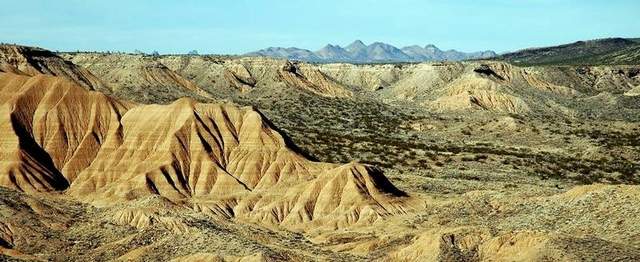
The southern boundary of the sprawling, 1.6 million-acre preserve is north of Marine Corps Air Ground Combat Center, Twentynine Palms in San Bernardino County, just north of the I-40 freeway, about an hour-and-a-half drive from Palm Springs. The preserve was established in 1994 with the passage of the California Desert Protection Act by Congress and is part of the national park system.

“Mojave National Preserve is arguably the most popular location for hunters in Southern California,” said David Lamfrom, senior California desert program manager for the National Parks Conservation Association.

But those who purchased hunting licenses and “tags” — required for the taking of certain big game animals, including deer — might not realize they can’t enter the grounds.

The preserve has multiple access points, a situation that creates a “high potential for conflict with law enforcement,” if disgruntled hunters decide to ignore the closure, he said.

“It’s public land,” Lamfrom said. “It’s going to be another example of a portfolio of people not being served. They miss the opportunity to do the things they love to do or want to do.”

“We share everyone’s disappointment that the National Park Service is shutdown,” said Slater, who happens to be on furlough but is handling press inquiries. “We look forward to getting back open as soon as we can.”

The preserve is the third largest park unit in the lower 48 states. Only Death Valley National Park (3.4 million acres) and Yellowstone National Park (2.2 million acres) are larger.

Dennis Schramm, who retired as Mojave National Preserve superintendent in 2010, worked at the preserve during the previous  government shutdown for several weeks in 1995 and 1996.

A couple of hundred hunters, many who’ve been coming since the preserve opened, look forward to the first weekend of deer hunting, he said.

“Opening day of rifle season for deer hunting is a big deal,” Schramm said. “They go to the same spots every year. The group campsites get filled up.”

He said the thinly-stretched preserve employees — only essential personnel are still working while most of their colleagues are furloughed — could face some angry hunters who might choose to bypass the barriers.

“It’s a major concern,” Schramm said. “If they don’t resolve this … it’s going to catch people off guard. Hunters are going to show up there and not be very happy. It’s going to be a very difficult impact for park staff.”

“Nothing about this situation is easy,” Schramm said. “It is difficult for the park staff to implement the closures, and equally difficult for the public to understand why they can’t just visit the parks anyway.”

Schramm, who was traveling with family through Durango, Colo. during this interview, had plans to visit some of the state’s national parks during the weeklong trip —including a visit to the Great Sand Dunes National Park & Preserve.

 “All the things we planned on doing this week, we can’t do,” he said.

Lamfrom said the fallout is going to be felt by gateway communities that provide goods and services for hunters and campers coming in and out of the preserve.

“The shutdown of the federal government has created countless unexpected and unnecessary impacts to the National Parks in the California desert, and on the communities that rely heavily on them for their economic well-being,” he said.

How long the shutdown lasts is anyone’s guess, he said.

“We’re all in denial,” Lamfrom said. “We thought it would be over the day after the government shut down. There are economic impacts that are radiating. Look how deeply connected all these economic systems are.”

When open for business, the three California desert national parks sites – Joshua Tree National Park, Mojave National Preserve and Death Valley National Park – combined, welcome more than 6,500 visitors a day in October. The three parks collectively infuse more than $230,000 a day into local communities.

bilde

Secretary Jewell Should Look Up the Word “Refuge”

On September 26th 2013, just in time for “National Hunting and Fishing Day,” Sally Jewell, our new (and allegedly improved) Secretary of the Interior announced a U.S. Fish and Wildlife Service proposal to expand hunting opportunities throughout the National Wildlife Refuge System. The plan would open up hunting on six refuges currently free from armed ambush and expand existing hunting and fishing on another 20 “refuges.” The new rule would also modify existing regulations for over 75 additional refuges and wetland “management” districts.

The proposal is yet another nod to the “hunter’s rights” movement that has been sweeping the nation.

But what about the wildlife’s right to a true refuge, free from human hunting? Oh that’s right, animals don’t have rights, only humans—even including hunters—do. It is such an arrogant and absurd notion that sport hunters—arguably the lowest creatures to ever crawl out of the primordial ooze—have rights, while all other species of life do not, that I sometimes forget it’s the currently accepted law of the land.

In 1997, the U.S. Sportsmen’s Alliance (USSA) pushed for changes in wildlife laws to ensure that hunting and fishing were priority public uses on “refuge” lands. Thanks in part to USSA’s self-serving effort, the National Wildlife Refuge System Improvement Act was signed into law. As they openly boast, “The language of the Refuge Improvement Act has been essential in opening new Refuge lands to sportsmen.”

Meanwhile, Interior Secretary Jewell recently stated, “Sportsmen and women were a major driving force behind the creation and expansion of the National Wildlife Refuge System more than a century ago…” Of course they were, Sally, they were the ones who nearly hunted most of America’s wild species—including bison, elk, pronghorn, bighorn sheep, swans, sandhill cranes and too many others to mention here—to extinction. Jewell also suggested that, “Keeping our hunting and angling heritage strong” would “help raise up a new generation of conservationists.” Well, that depends on your definition of “conservation.”

There is so little land left in today’s world where wildlife can breathe easy, free from the constant fear that every human they see might be intent upon shooting them or taking the lives of their herd, pack or flock-mates. Studies have shown that animals suffer from the stress of hunting season in the same way that people during wartime suffer from Post-traumatic Stress Disorder. Yet, hunting is permitted on over 330 wildlife “refuges.”

According to the National Survey of Fishing, Hunting and Wildlife-Associated Recreation, published every five years by the USFWS, more than 90 million Americans, or 41 percent of the United States’ population age 16 and older, pursued wildlife-related recreation in 2011. Nearly 72 million people observed wildlife, 33 million fished, while 13 million hunted. In other words, while 80% of the total number of Americans who pursue “wildlife-related recreation” do so in a peaceful, non-consumptive, appreciative and respectful manner, only 14% hunt. And yet the rules are made—and everyone else is effected—by those who feel compelled to hunt down and kill our wildlife.

Hunting is not compatible with the quiet enjoyment of our nation wildlife refuges. It’s hard to watch birds while someone’s busily blasting at them. As a wildlife photographer, I can always tell by an animal’s nervous and elusive behavior that they are living in an area open to hunting. This was made abundantly clear on a photo tour of Alaska. In Denali National Park, which is closed to hunting, people are regularly rewarded with quality, up-close wildlife viewing. Conversely, wildlife sightings of any kind are extremely rare in national parks such as Wrangle-Saint Elias, where hunting is permitted.

Encarta defines the word “refuge” as “a sheltered or protected place, safe from something threatening, harmful, or unpleasant.” Given that hunting is indeed threatening, harmful and unpleasant, how can the blood sport be considered compatible with our national wildlife refuges?

______________

Your written comments about the 2013-2014 proposed Refuge-Specific Hunting and Sport Fishing Regulations can be submitted by one of the following methods:

Federal eRulemaking Portal Follow the instructions for submitting comments to Docket No. [FWS-HQ-NWRS-2013-0074]; or

U.S. mail or hand-delivery: Public Comments Processing, Attn: [FWS-HQ-NWRS-2013-0074]; Division of Policy and Directives Management; U.S. Fish and Wildlife Service; 4401 N. Fairfax Drive, MS 2042–PDM; Arlington, VA 22203.

Comments must be received within 30 days, on or before October 24, 2013. The Service will post all comments on regulations.gov. The Service is not able to accept email or faxes.

Comments and materials, as well as supporting documentation, will also be available for public inspection at regulations.gov  under the above docket number. In addition, more details on the kinds of information the Service is seeking is available in the notice.

Here are some of the refuges which the U.S. Fish and Wildlife Service proposes opening to hunting for the first time ever:

New York:

Shawangunk Grasslands National Wildlife Refuge: Open to big game hunting.

Oregon:

Baskett Slough National Wildlife Refuge: Open to migratory bird hunting.

Nestucca Bay National Wildlife Refuge: Open to migratory bird hunting.

Siletz Bay National Wildlife Refuge: Open to migratory bird hunting.

Pennsylvania:

Cherry Valley National Wildlife Refuge: Open to migratory bird, upland game and big game hunting.

Wyoming:

Cokeville Meadows National Wildlife Refuge: Open to migratory bird, upland game and big game hunting.

Meanwhile, under the proposal, the Service would expand hunting and sport fishing on the following refuges:

California:

Colusa National Wildlife Refuge:  Expand migratory bird and upland game hunting.

Florida:

Arthur R. Marshall Loxahatchee National Wildlife Refuge: Add big game hunting. The refuge is already open to migratory bird hunting.

St. Marks National Wildlife Refuge: Expand migratory bird hunting, upland game hunting and big game hunting.

Idaho:

Kootenai National Wildlife Refuge: Expand upland game hunting. The refuge is already open to migratory bird hunting and big game hunting.

Illinois:

Cypress Creek National Wildlife Refuge: Expand migratory bird hunting, upland game hunting and big game hunting.

Middle Mississippi River National Wildlife Refuge: Expand migratory bird hunting, upland game hunting and big game hunting.

Indiana:

Patoka River National Wildlife Refuge and Management Area: Expand migratory bird hunting, upland game hunting and big game hunting.

Iowa:

Neal Smith National Wildlife Refuge: Expand migratory bird hunting, upland game hunting and big game hunting.

Northern Tallgrass Prairie National Wildlife Refuge: Expand migratory bird hunting, upland game hunting and big game hunting.

Port Louisa National Wildlife Refuge: Expand migratory bird hunting, upland game hunting, big game hunting and sport fishing.

Maine:

Rachel Carson National Wildlife Refuge: Expand migratory bird hunting, upland game hunting and big game hunting.

Missouri:

Mingo National Wildlife Refuge: Expand migratory bird hunting, upland game hunting and big game hunting.

New Mexico:

San Andres National Wildlife Refuge: Expand big game hunting.

Oregon:

Bandon Marsh National Wildlife Refuge, OR and WA: Expand migratory bird hunting. The refuge is also already open to sport fishing.

Julia Butler Hanson Refuge for the Columbian White-Tailed Deer, OR and WA: Expand migratory bird hunting. The refuge is already open to big game hunting.

Malheur National Wildlife Refuge: Expand migratory bird hunting and sport fishing. The refuge is already open to upland game hunting and big game hunting.

Texas:

Aransas National Wildlife Refuge: Add migratory bird hunting. The refuge is already open to big game hunting.

Balcones Canyonlands National Wildlife Refuge: Expand hunting for migratory birds, upland game and big game.

Vermont:

Silvio O. Conte National Fish and Wildlife Refuge: Expand migratory bird hunting, upland game hunting and big game hunting.

Washington:

Willapa National Wildlife Refuge: Expand migratory bird hunting and big game hunting. The refuge is already open to upland game hunting.

More info:  http://www.doi.gov/news/pressreleases/interior-department-proposes-expansion-of-hunting-fishing-opportunities-in-national-wildlife-refuge-system.cfm

Text and Wildlife Photography ©Jim Robertson, 2013. All Rights Reserved

Text and Wildlife Photography ©Jim Robertson, 2013. All Rights Reserved