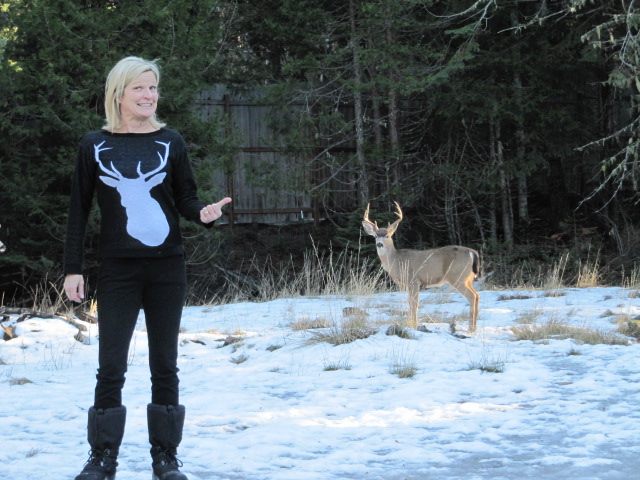
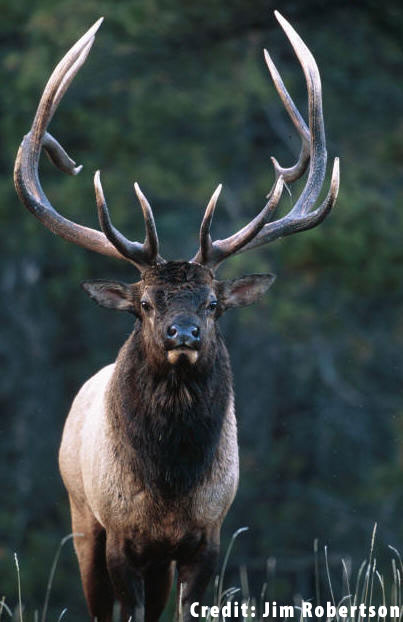
Most of you remember the buck in Oregon who was hit by an arrow. Apparently the wound wasn’t too deep and the arrow worked its way back out. Here he is now; Buck showed back up just the other day at the home of the woman who worked so hard to keep him safe throughout the rest of hunting season. I’m sure for her, this was the best Christmas gift she could ever hope for!!
Tag Archives: deer
MT Sentators Host “Sportsmen’s” Town Hall
Bitterroot Valley legislators to host sportsmen’s town hall on regulation changes
HAMILTON – Two Ravalli County state senators will host a sportsmen’s town hall meeting this week on proposed changes to hunting in the Bitterroot Valley.
The meeting will be held at the Bitterroot River Inn in Hamilton on Thursday, Dec. 19 at 6:30 p.m.
Sen. Fred Thomas, R-Stevensville, and Sen. Scott Boulanger, R-Darby, will host the event.
The purpose of the meeting is to allow sportsmen to offer ideas, comments and concerns about proposed changes to the local hunting regulations, including requiring all hunters to obtain an unlimited permit to hunt elk in three of the four districts in the valley.
Other topics will include the youth cow elk season, whitetail doe seasons, hunting district boundary changes, anti-trapping initiatives and wolves.
Guest speakers include Keith Kubista of the Montana Sportsmen for Fish and Wildlife, who will address the anti-trapping ballot initiative.
Safari Club Regional Representative Jon Wemple will talk about the loss of elk hunting opportunity under the
proposed valleywide permit system.
……Meanwhile in Oklahoma……
local OKC hunting news:
Oklahoma deer hunters have a final opportunity to take firearm into the woods
when the 10-day holiday antlerless gun season opens Saturday in most
of the state.
Deer taken during the antlerless season are not included in the hunter’s combined season limit.
Okla. state wildlife officials encourage a high doe harvest to reduce overpopulation and improve buck-doe ratio for a more healthy deer herd.
Archery deer season continues thru Jan. 15th statewide.
The Washita National Wildlife Refuge, which is located west of Butler, Okla., still has duck blinds available for three midweek hunts this season.
This refuge offers some of the best goose hunting in the state.
All the weekend dates have been filled. However, the midweek hunts are still available.
Wildlife activists outraged at TIME’s cover story this month Special
Almost immediately, activists took to the internet expressing their outrage. The article’s dateline is Dec 9, 2013, but is available online now. A Facebook event page is already set up to encourage people to write physical letters to TIME. The event page has this in its description
Time Magazine is coming out with an article to the general public, supporting the slaughter of wildlife on a grand scale. This article is extremely dangerous and inaccurate. This article supports outright slaughter of our wildlife in all parts of the country stating that we are all being overrun with animals and that “experts” say it is necessary. Time Magazine has a responsibility to the public to be accurate and unbiased, and not promote an anti-environment extremist point of view.
Protecting Endangered Species, the Facebook page hosting the letter writing event had this to say in a statement
It is disturbing that Time Magazine has used it’s reputation as a legitimate news source to promote a very extreme and controversial opinion as fact. The consequences of promoting this type of intolerance of our wildlife are severe and promotes violence and cruelty towards our animals. Wildlife belongs to all of us as a nation, not to the special interests of oil, the livestock industry, and recreational hunters. The opinion expressed by Time is that of these special interest businesses and is in direct opposition to wildlife experts and the overwhelming number of voters in the states of concern. This is an opinion which could be freely expressed in an op-ed section, but to present it as fact, as a cover story, is highly unprofessional and exerts the power of Time magazine in an inappropriate manner.
The use of hunting today beyond the purpose of sustenance is a very important contributor to the destruction of our environment. The use of hunters to control populations or “manage” them IS THE PROBLEM. At the turn of the century the wolves and other predators were nearly exterminated out of fear and lack of knowledge of biology, contributing to over and under populations of other animals. We know more about biology than we did in 1900 and this needs to stop. No form of hunting is superior to Nature, and the motivations of special interests are based on human desires of consumption, they are not based on the best interest of the animals or the environment. Misinformation needs to be corrected before we destroy what we do have left. We have nonviolent and nonlethal means to correct problems and we need to use them.
One of the activists participating in the event, Mar Wargo, expressed her opinion as well
Americans seem to be learning and expressing a new ethic today. It seems to me it is not a well educated ethic and lacks moral grounds. In the 40 years of the Endangered Species Act, Wild Free Roaming Horse and Burro Act we have come full circle and now have this tremendous backlash towards the wild animals and wild lands. I believe much of this is corporate interests and this now encompasses hunters who had not been the enemy at one time. They had been the conservationists once. No longer. Killing is too popular and this is all weighed down in ignorance and greed. We have good laws that allowed us to participate in the process and stop actions against wild lands and wildlife. This is Not user friendly any longer, we have lost much of our own traction as a result. We need to regain sanity and science in this country. We need to respect this Earth which is now damaged beyond repair if we intend to survive. Killing the Earth is not the way to survival.
“Time” Has it Backwards, People Are the Pests
By now, many of you have seen the outrageous Time magazine article egotistically entitled, “America’s Pest Problem: It’s Time to Cull the Herd.” If so, you probably shared my first reaction, which was:
How haughty to label the recovering animal species from whom we stole this land “pests” whenever they cross paths with the real pests, the most overpopulated and rapidly expanding, exploitive, environmentally reckless, imperialistic, pretentious, self-centered, self-important, self-aggrandizing, stuck-up, conceited, condescending –in a word, arrogant—urchins ever to emerge from the primordial ooze, namely humans.
As ethologist Marc Bekoff wrote in a recent blog post,
“There are so many things that are profoundly disturbing in [the Time magazine] essay I’m not sure where to begin or just which points to highlight. Some of the messages I received had quotes from this essay that at once shocked and saddened me. Kill, kill, and kill some more; that’s the only solution for righting the wrongs for which we — yes, we — are responsible. We move into the homes of other animals and redecorate them because we like to see them or because it’s “cool” to do so, or we alter their homes to the extent that they need to find new places in which to live and try to feel safe and at peace. And then, when we decide they’ve become ‘pests’, we kill them. Yes, technically we cull them, but of course the word ‘culling’ is a way to make the word ‘killing’ more palatable. To many people this sanitizing mechanism — using culling instead of killing — is readily transparent. But, a subtitle like ‘It’s Time to Kill the Herd’, would likely offend many people who find it difficult to grasp that that’s what we do – we kill other animals with little hesitation absent any data that this really works.
“We treat them as if they’re the problem when, in fact, whatever ‘problems’ they pose can most frequently, some might say invariably, be traced back to something we did to make them become ‘problems’.”
Well, I’m one of those who would definitely say “invariably.” On the other hand, I’m not real comfortable with the “we” part. Personally, I don’t consider the wildlife to be “pests,” I don’t fear them and I do not kill them. Ultimately, I don’t consider myself superior to the other animals.
Bekoff also writes, “Until we confront the indisputable fact that there are too many of us, we and other animals are doomed.” Talk about uncomfortable… Actually, my wife and I faced that fact decades ago and consciously chose not to add any more children to the burgeoning human horde.
The problem where we live is that, though we’re surrounded by prime habitat which we’ve left wild for the wildlife, we rarely see the deer, elk and bears who’ve had to adapt to locally rampant hunting and poaching pressure by only coming out of the heavy forest at night. The last thing the animals around here need is for Time Magazine to come along and promote more hunting!
While the Hunters Are Away…
Image
Ohio expands hours of youth deer-hunting season
COLUMBUS — Ohio is slightly extending the hours during which young hunters
can take white-tailed deer during the two-day season this weekend.
The Ohio Department of Natural Resources says youngsters can hunt deer from 30 minutes before sunrise to 30 minutes after sunset on Saturday and Sunday. The hunters must have a hunting license and a deer permit. They’re required to wear hunter orange and be with an adult who isn’t hunting.
Last year, young hunters checked nearly 9,200 white-tailed deer during the two-day season.
Deer Hunters Would Freak if They Saw a Wolf
Despite news that wolves are starting to spread out to other states, after their re-introduction to the Tri-state area of the Northern Rockies, wolves are still extinct in most of their former range in the continental U.S. Yet, it seems there’s no shortage of deer; in fact ungulate populations have been booming since the near continent-wide extermination of wolves and other predators that left the lower 48 in ecological turmoil.
Take Oklahoma for example. According to their “local OKC weekend hunting news”:
Oklahoma’s gun season opens Saturday. The rut is expected to be going strong across the state in the coming days. State wildlife biologists in Okla. expect the peak of the rut in most areas of the state to happen sometime before Saturday’s opening.
Barring any major weather events that keeps hunters at home, Saturday will be the biggest deer hunting day of the year. More deer are taken on the opening day of gun season than on any other. The rut, the mating season of deer, is triggered primarily by moon phases. However, the rutting activity that hunters see has more to do with the weather.
The first time Oklahoma hunters checked in 100,000 deer for all seasons combined was 13 years ago. Since then, there have been only three years that Oklahoma’s deer harvest has not exceeded 100,000.
Wildlife biologists estimate deer hunters take about 10 percent
of the deer population during hunting seasons. This gives Oklahoma an estimated deer population about one million.
Approximately one million deer in a state as small as Oklahoma. And exactly ZERO wolves. 100,000 deer killed during hunting season, and it’s not even a dent in the deer population. Natural processes have been ousted and ignored–hunters there would freak if they if they saw a wolf. I can just hear their screams of, “Those wolves are going to eat all our game…” It’s the same story that’s going on across the country. Hunters don’t want healthy deer or elk populations, they want a surplus to justify their “harvests.”
Saving the Deer of Invermere
Canadian Blog
by Barry Kent MacKay,
Senior Program Associate
Born Free USA’s Canadian Representative
<http://www.bornfreeusa.org/weblog_canada.php?p=3936&more=1>
Saving the Deer of Invermere
Part 1: There’s No Paradise on Earth, but…
Published 11/13/13
When I drove into Invermere, population near 4,000, in the Columbia River
Valley of the interior of British Columbia, I was both enchanted and
worried. Animals totally fascinate me (and that includes human animals, as
I’ll discuss in a future blog) and I greatly enjoy seeing them, drawing and
painting them (I am a wildlife artist, too), photographing them, interacting
with them, and being in their presence. It’s just the way I am; not everyone
is like that. We’re all different. Diversity itself is as natural as a
beaver’s dam, a robin’s song, or the wide-eyed, innocent expression of a
baby screech-owl.
But, of course, the beaver’s dam may flood a roadway; the robin’s song may
awaken an exhausted shift-worker; and there could be a trace of blood and
fur or feathers on the beak of the baby owl. I get that.
Still, what I saw in Invermere was a community that I could envy, where a
dusky grouse strode boldly up to us, where a pileated woodpecker met us near
the door of a home we visited, and where mule deer wandered on lawns, in
parks, and on sidewalks, even crossing roads.
We tend to think that wild animals “should” be afraid of us-should flee-and
deer usually do, unless left alone. These deer were different (although not
unlike mule deer I’ve seen in California). Indeed, I met my first mule deer
when I was six years of age. She walked up to me at Mount Wilson Observatory
near Los Angeles, reached down, and chomped off the top half of the banana I
was eating. Was I terrified? Nope. I ate the second half. But that’s me. I
have touched a wild beluga whale, have had chickadees alight on my shoulder,
and have had foxes, who have never met a human, trot up to give me a sniff.
Animals fear us, but not necessarily instinctively; we give them ample
reason.
I was in Invermere with my Toronto-based colleague, Liz White, to help
support a “no” vote in a referendum that asked Invermere’s residents if the
town’s deer should be baited to enter a large, square frame, where they
would be trapped until men arrived to collapse the trap around them, holding
the panicked, struggling animals down. Then, a metal bolt would be driven
into their brains, sometimes after many botched tries-ultimately rendering
them unconscious so that they could be bled from the back of a truck into a
pail, until dead. (That’s not how the ballet was worded; it just asked if
the deer should be culled.) Doing that would, citizens were told, prevent
the things about deer that concerned them.
We tried to expose the truth, which is hard to do with a population that’s
unaware of wildlife population dynamics, with both real and imagined
concerns about the deer. With our colleagues, local citizens banded together
as the Invermere Deer Protection Society (IDPS). We methodically canvased
every part of town (about 1,000 houses), speaking to approximately 300
people about why culling does not work. It seemed that the majority of
people supported us. But, when the vote was held on November 2, only 26%
agreed with us and voted “no.”
Do we stop there? No. As I will explain in a future blog, the canvasing
reinforced formal studies in why people act illogically. Based on figures
from the cull in Cranbrook (see
<http://www.bornfreeusa.org/weblog_canada.php?p=3833&more=1> here and
<http://www.bornfreeusa.org/weblog_canada.php?p=3487&more=1> here), it’ll
cost the good folks of Invermere more than $600 per deer removed, with, as I
suspect they will discover, no significant improvement.
Luckily, the referendum is not binding. So, we have something to build on: a
means to show a less costly and more effective suite of options. The night
of the poll, we were already planning for the work ahead-and, by the next
morning, we had already met with IDPS members to strategize.
OSP Bags Hunter on Multiple Charges
Deer head discovered in felon’s pickup
Posted: Tuesday, November 12, 2013 9:49 am | Updated: 10:14 am, Tue Nov 12, 2013.
By Chelsea Gorrow
The Daily Astorian | 0 comments
A convicted felon who decided to take two 12-year-olds out shooting on McGregor Road was arrested Monday for 11 charges, after police discovered a fresh deer head in the back of his truck.
Oregon State Police made contact in South Clatsop County with
Alex Arias, 51, just after 9:30 a.m., after Arias shot an elk decoy several times near milepost 17.
Arias, from Cornelius, fired the weapon from inside of his vehicle, while a 19-year-old female, Dominique Arias, fired at it from the roadside. Two 12-year-olds were in the backseat of the vehicle.
Neither Alex or Dominique Arias had an elk hunting tag and troopers discovered the head of a four-point buck blacktail deer in the back of the truck, as well as fresh meat.
Most of the meat, however, had been left with the animal carcass, which troopers believe was shot by Dominique Arias and dressed out by Alex Arias.
Troopers discovered marijuana and an open container of alcohol in the truck. Alex Arias had allegedly been smoking the drug inside the vehicle with the kids inside.
Arias was arrested for wildlife offenses, including no big game tag, take or possession of a spike elk, aiding in a wildlife offense, waste of a game mammal, hunting from a motor vehicle, driving while suspended, an ex-convict in possession of a weapon, possession of marijuana, open container of alcohol and two counts of reckless endangering. He was booked into the Clatsop County Jail.
Dominique Arias was arrested for no big game tag, take or possession of a spike elk, take or possession of a buck deer and hunting in a prohibited area, a public road.
A Bloody Weekend’s in Store For Minnesota
Minnesota deer hunting: Firearms season starts Saturday
About 500,000 hunters will each try to kill one of Minnesota’s roughly 1
million deer Saturday on the opening day of the state’s firearms deer season.
It’s the state’s most popular outdoors event aside from the spring fishing opener, and unlike other types of hunting, deer hunting is holding its own, if not growing, in Minnesota.
As of Monday, license sales were ahead of last year’s pace. In 2012, nearly 522,000 firearms tags were sold, the most since at least 2000.
For the past several years, roughly 98 percent of all tags have been purchased by Minnesotans. Much of the reason for that, wildlife officials say, is that deer hunting is as much about family traditions as shooting a deer.
Still, it is a hunt, and more than 100,000 deer are expected to be taken.
The state’s total deer take for the year largely will be determined by how hunters fare Saturday and Sunday. Seventy percent of the kill occurs during opening weekend, according to the Department of Natural Resources.
Last year, 186,000 deer were killed during the fall archery, muzzleloader and regular firearms seasons, and with population levels and license restrictions generally similar to last year, the agency forecasts a similar take this year.