Elk Hoof Disease Detected in Del Norte County Herd

https://cdfgnews.wordpress.com/2020/05/07/elk-hoof-disease-detected-in-del-norte-county-herd/

May 7, 2020
<https://cdfgnews.wordpress.com/2020/05/07/elk-hoof-disease-detected-in-del-norte-county-herd/>
by ptirawildlife <https://cdfgnews.wordpress.com/author/ptirawildlife/>,
posted in Uncategorized
<https://cdfgnews.wordpress.com/category/uncategorized/>

The California Department of Fish and Wildlife (CDFW) has detected the
state’s first cases of a potentially crippling hoof disease in two
Roosevelt elk from a resident herd in Del Norte County.

Treponeme-associated hoof disease (TAHD) – commonly referred to as “elk
hoof disease” – can cause deformed, overgrown and otherwise damaged hooves.
The lesions and resulting deformities are painful and lead to limping,
lameness and even death as observed in other states. When the disease is
severe, elk may become too weak to graze, fight off other infections or
escape predators.

TAHD was first identified in elk from Washington state in the 1990s, but
much remains unknown about the disease. Currently, there is no known cure
or vaccination.

TAHD has been documented in elk in Washington, Oregon and Idaho. Recent
detections in Oregon’s Douglas County
<https://www.dfw.state.or.us/news/2020/04_April/040820.asp> were previously
the closest to California. TAHD gets its name from a bacterium, *Treponema* sp.,
that is associated with this disease, but other pathogens also may play a
role. Scientists at Washington State University who are experienced with
TAHD confirmed the disease in the two Roosevelt elk from Del Norte County.

It is unknown what impact TAHD may have on elk populations in California or
other states. California is home to three subspecies of elk – Rocky
Mountain elk, Roosevelt elk and tule elk – that together inhabit
approximately 25 percent of the state. In other states, both Rocky Mountain
and Roosevelt elk have contracted TAHD. To date, there are no known cases
of TAHD among tule elk.

While the disease appears to be highly infectious among elk, there is no
evidence that it affects humans. Still, hunters who harvest an elk
exhibiting signs of deformed or damaged hooves should exercise caution and
practice safe hygiene when processing, cooking and consuming the meat.
Hunters also are encouraged to submit hoof samples to CDFW from suspect elk.

CDFW will be working with natural resource agencies in other western states
and academic partners to increase surveillance for TAHD in California, plan
management actions and facilitate research.

The general public can assist CDFW’s efforts by reporting any elk that
appears to be limping, lame or have abnormal hooves via CDFW’s Wildlife
Investigations Lab disease and mortality reporting website:
https://wildlife.ca.gov/conservation/laboratories/wildlife-investigations/monitoring/mortality-report
.

Additional information on elk hoof disease is available at the following
links:

– Washington State University’s webpage on TAHD:
vmp.vetmed.wsu.edu/research/elk-hoof-disease
– Washington Department of Fish and Wildlife’s webpage on TAHD:
wdfw.wa.gov/species-habitats/diseases/elk-hoof
– Oregon Department of Fish and Wildlife’s fact sheet on TAHD:
http://www.dfw.state.or.us/wildlife/health_program/docs/elkhoofdiseasefactsheetfinal.pdf

Media Contacts:
Dr. Brandon Munk <Brandon.Munk@wildlife.ca.gov>, CDFW Wildlife
Investigations Lab, (916) 358-1194
Peter Tira <Peter.Tira@wildlife.ca.gov>, CDFW Communications, (916) 215-3858


There’s a hidden consequence of climate change: A deadly virus that’s killing key marine species

Arctic ice faces trouble from above and below

Arctic ice faces trouble from above and below 04:56

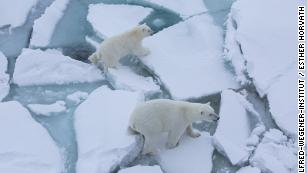
(CNN)Climate change means melting ice and habitat loss for animals in the Arctic. But there’s an invisible side effect of warming temperatures and rising tides, and it’s killing key marine species.

Melting Arctic sea ice has opened new pathways for Arctic and sub-Arctic species to interact, and that contact has introduced a potentially deadly virus to mammals in the Northern Pacific Ocean, according to a new study in Scientific Reports.
Over 15 years, researchers identified two new channels linking the Atlantic and Pacific oceans between Russia and Alaska. Animals who live there are interacting for the first time, creating a reservoir of the deadly pathogen Phocine distemper virus.
The virus, also called PDV, was first identified in European harbor seals, killing thousands in 1988 and again in 2002. It reemerged in 2004, but this time in northern sea otters in Alaska.
It was surprising that the disease jumped to a different species in a different ocean, said study author Tracey Goldstein, associate director of One Health Institute at UC Davis School of Veterinary Medicine. It’s what led scientists to believe that melting ice was to blame for the infection’s spread.
“Animal health and human health and environmental health are so linked, if one deteriorates then the rest do, too,” she told CNN.

Infection peaked when ice was at its lowest

To evaluate the extent of the infection, researchers took nasal swabs and blood samples from more than 2,500 ice-dwelling seals, Steller sea lions and northern sea otters from Alaska to Russia living in its marginal seas and oceans.
Widespread exposure to the infection peaked twice, in 2003 and 2009. Both outbreaks were preceded by record-low sea ice, Goldstein said.
Ice is essential for marine mammals, she said. It’s where they breed, rest and give birth. When water temperatures warm, their food likely travels deeper into the ocean, so animals are traveling further to catch them, spreading the pathogen across large swaths of northern seas.
Animals can’t keep up with the rate of their rapidly changing environments, Goldstein said, and that makes them more susceptible to disease.

PDV has already impacted people

Goldstein compared PDV to measles in humans — both are highly contagious respiratory diseases that spreads easily through contact (though PDV doesn’t infect humans).
But it’s already indirectly impacted humans who rely on the animals. It’s harder for Alaskans to hunt and maintain their livelihood as seals and fish move further off-shore, she said.
Because the Arctic is so remote, it’s difficult to discern how many species have died from the virus since the start of the study, she said. Some, particularly European harbor seals, are more vulnerable than others — up to 50% of the harbor seal population died in the first two outbreaks, she said.
Outbreaks occur every five to 10 years, typically when ice is at its lowest. Sea ice cover in the Arctic hit its second-lowest level in 2019, according to NASA — and that could mean new paths opened up, linking animals in both oceans and increasing the likelihood of the virus’s reintroduction.
Eliminating the virus may be impossible, but humans can at least stall its spread, Goldstein said. Reducing the global carbon footprint can slow the effects of climate change and give animals a chance to catch up and adapt.

China’s Pig Crisis Is Pushing Up Bacon Prices Worldwide

  • African swine fever will wipe out hundreds of millions of pigs
  • Global pig-meat index is headed for steepest jump in 15 years
RF - Closeup Pile of Hot Sizzling Bacon
Photographer: adogslifephoto/iStockphoto

Bringing home the bacon will cost more. Blame African swine fever.

The deadly pig disease is wiping out hundreds of millions of hogs, mostly in China, driving a global surge in pork and bacon prices from Auckland to Vancouver. In Europe, swine carcasses have soared 31% and piglets 56% in the past year. Pig-meat is poised for the steepest jump since mad cow disease and bird flu outbreaks in 2004 led consumers to eat more pork, according to an index compiled by the Food and Agriculture Organization of the United Nations in Rome.

Run on Pigs

Pork is heading for the steepest annual increase in 15 years

Source: Food & Agriculture Organization of the United Nations

“It doesn’t matter where you are in the world at the moment, pork prices are up,” said Justin Sherrard, Rabobank’s Utrecht-based global animal-protein strategist, in a telephone interview. “China is the market to focus on. Firstly, because it’s big and, secondly, because this is really the first place that African swine fever started to hit.”

Read More: The Deadly Virus That’s Killing Off Millions of Pigs

Prices will remain high for at least the next three months in the lead up to the Lunar New Year on Jan. 25, a peak time for pork consumption in China, Vietnam and other countries that celebrate the festival. Retailers will have “no choice” but to pass on at least some of the extra cost to consumers, Sherrard said.

Bacon Around The World

A snapshot of what shoppers are paying for 500 grams (18oz) bacon

Source: Online retail data

By the end of 2020, China’s swine herd will slump to 275 million head, down almost 40% since the beginning of 2018, before the world’s largest animal disease outbreak began, according to the U.S. Department of Agriculture. That will pull down global pork production by 10% in 2020.

Hog Apocalypse

China’s annual pig production has been savaged by African swine fever

Source: U.S. Department of Agriculture

2019 & 2020 are forecasts

“African swine fever has had a significant impact on the production of pork in China and increasingly in Vietnam and other Southeast Asian countries,” said Tim Foulds, Euromonitor International’s head of research for Australasia. “Government attempts to control the crisis, including the large-scale culling of animals, resulted in pork production dropping dramatically in 2019.”

Peak Pork

Prices in China have surged 120% since deadly pig outbreak reported

Source: China Ministry of Commerce

Reduced domestic supplies will boost China’s demand for foreign pork, resulting in record prices and imports. However, Chinese consumers will “feel the pinch,” with a 32% slump in per-capita pork consumption over two years, the USDA said in an Oct. 10 report.

Bloomberg TicToc

@tictoc

Swine fever is causing pork prices to go up in China

Embedded video

See Bloomberg TicToc’s other Tweets

African swine fever, which kills most pigs in a week but isn’t known to harm humans, has had a greater impact in China than in any country or previous outbreak, and the disease there is now considered endemic, or generally present, according to the USDA.

Boss Hog

China’s $118 billion market dominates global pork sales

Source: Euromonitor International

UP NEXT

Study: Opossums are Our Best Defense Against Lyme Disease, Killing 5000 Ticks Per Week Each

JANUARY 27, 2019 AT 7:27 PM

https://returntonow.net/2019/01/27/study-opossums-are-our-best-defense-against-lyme-disease-killing-5000-ticks-per-week-each/?fbclid=IwAR2bXBy0B3sQ20slWV37PtGaBZag5V_qaDuTYeJC9O-J8dk8kfXMsk8qklU

Next time you see a possum in the road, try not to hit it

Opossums attract and then kill thousands of ticks per acre, per week, making them one of our best allies in stopping the spread of Lyme disease, researchers say.

A study compared squirrels, mice and opossums, which all eat ticks, and found opossums were the most effective exterminators.

Ticks favor opossums twice as much as the other rodents, the researchers, from Syracuse University, found.

Fortunately, for humans, possums are also the most effective at killing the disease-carrying pests.

Opossums kill almost every tick that occupies them, the study found. A single opossum kills over 5500 ticks per week.

“Opossums are extraordinarily good groomers it turns out – we never would have thought that ahead of time – but they kill the vast majority – more than 95% percent of the ticks that try to feed on them,” disease ecologist Rick Ostfeld explained.

“So these opossums are walking around the forest floor, hoovering up ticks right and left, killing over 90% of these things, and so they are really protecting our health.”

Worldwide, more than 1.3 million people die each year of infectious diseases transmitted by a vector, such as a mosquito, sand fly or tick, according to the .

Vector-borne diseases also inflict heavy tolls on crops, livestock and wildlife, the study’s authors wrote.