Skip to primary content
Skip to secondary content

Exposing the Big Game

Forget Hunters' Feeble Rationalizations and Trust Your Gut Feelings: Making Sport of Killing Is Not Healthy Human Behavior

Exposing the Big Game

Main menu

  • Home
  • “Unfathomable tragedy” as fire kills more than 30 animals at German zoo
  • About
  • CITES World Wildlife Conference postponed to October
  • Hasidic Jews Speak Out Against Mass Animal Sacrifice, Kaporos
  • Mike Pence’s unbelievable answer on whether climate change is a threat
  • New Jersey woman sentenced to jail for helping crying bear cub escape trap

Tag Archives: Domestic Animals

Resources for people and pets affected by COVID-19

Posted on April 2, 2020 by Exposing the Big Game
Reply

RedRover is greatly concerned for people and animals during this COVID-19 crisis. Here are some resources for ensuring the health and safety of your pet(s) during the novel coronavirus pandemic. We will update as more information and resources become available.

Resources

RedRover Relief
Emergency Boarding Grants

We provide financial assistance for pet boarding while pet owners are hospitalized due to the COVID-19 virus.

The RedRover Relief Emergency Boarding grant program helps animals who need temporary boarding while their owners are hospitalized due to the COVID-19 virus. This grant will cover the cost of up to two (2) weeks of boarding while a pet owner is hospitalized.

Once an application has been submitted, you can expect to receive a response by email or phone within one business day. Please be sure to check your email for confirmation that your application was submitted, as well as for a response to your application.

NOTE: RedRover recognizes the fluidity of the novel coronavirus pandemic and will continue to follow expert recommendations concerning COVID-19 as it relates to pets.

If you are looking for boarding assistance because of domestic violence, please visit our Safe Escape grant page for more information and assistance.

2 Steps to Apply

STEP01

Read the eligibility guidelines below to make sure the situation meets our grant guidelines.

Review Guidelines

STEP02

If the situation qualifies for a grant, complete the RedRover Relief Emergency Boarding grant application below.

Step 1

Eligibility Guidelines

This is a national program and we will not know what boarding resources are available in your area. Please reach out to local boarding facilities (kennels, veterinarians, animal shelters/humane societies, etc.) to find somewhere reasonably priced before submitting this application.

  • Establish a plan for how the animal’s needs can be met. For example, will they need boarding, vaccinations, and/or veterinary care? How long are they likely to need boarding? Is there a plan in place if the owner cannot reclaim the pet or will need help beyond what RedRover can provide?
  • Contact the kennel and/or veterinarian and request that they provide RedRover with both a written estimate, and a final invoice once the animal leaves boarding. (Boarding must be done through a business, we cannot pay an individual for boarding.)
  • Submit an online application.
  • If someone other than the pet owner is submitting the application, obtain permission from the pet owner to release information to RedRover.
  • Provide updates on the pet owner’s situation if requested.
  • Both the applicant and the animal must live in the United States.
  • If a grant is awarded, RedRover will follow up to ask if grant recipients are able to provide updates and photos.

RedRover will cover the cost of vaccinations that are needed for the animal to enter boarding. Any requests for veterinary care beyond vaccinations will be taken on a case-by-case basis as this grant is intended to cover the cost of boarding.

RedRover will make payment to the kennel and/or veterinarian once care is complete and RedRover has received a final invoice. Kennels and veterinarians must be willing to provide a Form W-9 (for tax purposes) if grants exceed $600 in a calendar year.

Before submitting an application, notify the boarding kennel and/or veterinary clinic that the pet owner is seeking financial assistance and give them permission to release information to RedRover.

RedRover cannot help if any of the following apply:

  • The boarding has already been completed and you need assistance paying the bill.
  • The client is not hospitalized due to Covid-19.

The program is unable to respond to funding requests by email, phone, fax or mail, all applications must be submitted through this website.

Emergency Boarding Grants

Posted in Pandemic | Tagged coronavirus, Domestic Animals, pets | Leave a reply

Shenzhen becomes first Chinese city to ban consumption of cats and dogs

Posted on April 2, 2020 by Exposing the Big Game
2
  • https://edition.cnn.com/2020/04/02/asia/shenzhen-cats-dogs-ban-scli-intl/index.html
LIVE TV
Edition

By Jack Guy, Steven Jiang and Shanshan Wang, CNN

Updated 1320 GMT (2120 HKT) April 2, 2020

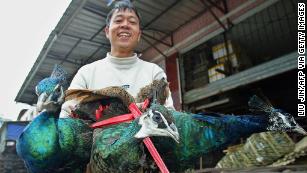
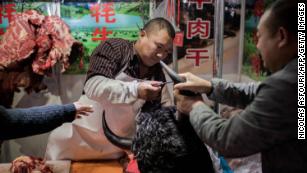
Chinese animal rights activists stage a protest calling for people to refrain from eating cats and dogs.

Chinese animal rights activists stage a protest calling for people to refrain from eating cats and dogs.

(CNN)Shenzhen, in southeastern China, has become the first city in the country to ban the consumption of cats and dogs, the government announced Thursday.

Under new rules which will come into effect May 1, the government said it will be illegal to eat animals raised as pets.
In February, following the coronavirus outbreak, China passed a law to ban the consumption of wild animals.
China has made eating wild animals illegal after the coronavirus outbreak. But ending the trade won't be easy

China has made eating wild animals illegal after the coronavirus outbreak. But ending the trade won’t be easy
Now Shenzhen will prohibit the consumption of state-protected wild animals and other terrestrial wild animals taken from the wild, as well as captive-bred and farmed terrestrial wild species.
In addition, the consumption of animals raised as pets, such as cats and dogs will also be banned.
Animals that can be consumed include pig, cattle, sheep, donkey, rabbit, chicken, duck, goose, pigeon, quail, as well as aquatic animals who are not banned by other laws or regulations.
“If convicted, they will be subjected to a fine of 30 times of the wild animal’s value, if the animal is above the value of 10,000CNY [$1400 USD],” announced authorities.
Chinese officials crack down on wildlife markets as coronavirus outbreak nears 3,000 cases

Chinese officials crack down on wildlife markets as coronavirus outbreak nears 3,000 cases
The coronavirus outbreak is thought to have started at a wildlife market in the Chinese city of Wuhan, and authorities have acknowledged they need to bring the lucrative wildlife industry under control if it is to prevent another outbreak.
However ending the trade will be hard. The cultural roots of China’s use of wild animals run deep, not just for food but also for traditional medicine, clothing, ornaments and even pets.
This isn’t the first time Chinese officials have tried to contain the trade. In 2003, civets — mongoose-type creatures — were banned and culled in large numbers after it was discovered they likely transferred the SARS virus to humans. The selling of snakes was also briefly banned in Guangzhou after the SARS outbreak.
But today dishes using the animals are still eaten in parts of China.

CNN’s Ben Westcott and Shawn Deng and journalist Anna Kam contributed to this report.

Posted in Cruelty | Tagged ban, China, Domestic Animals, meat eating | 2 Replies

Update: Trump signs omnibus funding package with wins for horses and burros, companion animals, animals in research and more

Posted on December 21, 2019 by Exposing the Big Game
6

By Kitty Block and Sara Amundson

December 19, 2019
https://blog.humanesociety.org/2019/12/house-and-senate-pass-omnibus-funding-package-with-wins-for-horses-and-burros-companion-animals-animals-in-research-and-more-bills-now-head-to-trump.html?credit=blog_post
Update: Trump signs omnibus funding package with wins for horses and burros, companion animals, animals in research and more

The funding package provides an additional $21 million to the Bureau of Land Management’s Wild Horse and Burro Program—funds that can only be accessed after the agency submits a comprehensive plan on how it will implement an aggressive, non-lethal program. Photo by Grace Kahler/The HSUS

President Trump has just signed into law the omnibus appropriations package with major victories for animals, including horses and burros, companion animals, marine mammals and animals in zoos and research facilities.

The package, comprised of two bills (H.R. 1865 and H.R. 1158) funding all federal agencies for Fiscal Year 2020, was passed by the House on Tuesday with bipartisan votes of 297-120 and 280-138, respectively, followed by Senate votes of 71-23 and 81-11 yesterday. The wins for animals in the package include:

  • Wild horses and burros: The funding package provides an additional $21 million to the Bureau of Land Management’s Wild Horse and Burro Program—funds that can only be accessed after the agency submits a comprehensive plan on how it will implement an aggressive, non-lethal program. The program must be based on scientifically sound, safe and humane fertility control tools that exclude surgical sterilization, an increased focus on adoptions, and relocation of wild horses and burros to larger, more humane pastures instead of perpetually warehousing these animals in holding pens. Additionally, the bill prohibits the BLM and, for the first time ever, also the U.S. Forest Service from killing or sending healthy horses or burros to slaughter.
  • Wildlife trafficking whistleblowers: The package includes the Rescuing Animals With Rewards Act, which authorizes the State Department to award monetary incentives to persons who disclose original information concerning transnational wildlife crimes that result in a successful enforcement action.
  • USDA inspection and enforcement records: Language in the omnibus directs the U.S. Department of Agriculture to promptly resume online posting of all inspection reports and enforcement records under the Animal Welfare Act and Horse Protection Act in their entirety without redactions that obscure the identities of puppy mills, roadside zoos and other businesses cited for violations. This is the first time Congress has included bill language (rather than report language) to fix this problem, and the USDA will have no choice but to follow this directive.
  • Companion animals in domestic violence situations: The package provides $2 million for a new grant program authorized by the 2018 Farm Bill, based on the Pet and Women Safety (PAWS) Act. The grant program will help provide emergency and transitional shelter options for domestic violence survivors with companion animals. House committee report language directs the USDA, and the Departments of Health and Human Services as well as Housing and Urban Development to coordinate implementation during FY20 (House and Senate committee report language not explicitly reversed is deemed agreed to by both chambers in the omnibus).
  • Horse slaughter: Prohibits USDA expenditures on horse slaughter inspections, effectively preventing horse slaughter plants from operating in the U.S. during FY20.
  • Animal Welfare Act enforcement: The House committee report calls on the USDA to require that inspectors document every observed violation, to reverse concealment practices that the agency has promoted during the past few years. The omnibus includes $31,310,000 for Animal Welfare Act (AWA) enforcement.
  • Horse soring: Provides $1 million (a $295,000 increase) for USDA enforcement of the Horse Protection Act (HPA), to crack down on the cruel practice of “soring”Tennessee Walking Horses and related breeds.
  • Alternatives to animal research/testing: Provides a $40 million increase to the National Center for Advancing Translational Sciences (NCATS), which is charged with making direct applications of non-animal alternatives for research and regulatory needs by federal agencies. The additional funds will help speed the transition to non-animal methods.
  • Trafficking of companion animals for research and testing: Renews the prohibition against the USDA using funds to license Class B random source dealers who are notorious for trafficking in dogs and cats obtained through theft for research and testing.
  • Use of primates in research: Omnibus report language directs the National Institutes of Health to report to Congress on alternatives to reduce and replace primates in biomedical research.
  • USDA enforcement: The House committee report presses the USDA Inspector General to strengthen its animal fighting enforcement and to audit the USDA’s enforcement of the AWA, HPA and Humane Methods of Slaughter Act.
  • Humane slaughter of farm animals: Renews bill and report language directing the USDA to ensure that inspectors focus attention on compliance with humane handling rules for live animals as they arrive at slaughter plants and are offloaded and handled in pens, chutes and stunning areas, and that all inspectors receive robust training.
  • Pet food safety: Provides $500,000 for the Food and Drug Administration to address pentobarbital contamination in pet food, which has caused illness and death in pets.
  • Disaster planning: Continues funding for the USDA to coordinate with the Federal Emergency Management Agency and to support state and local governments’ efforts to plan for protection of people with animals and incorporate lessons learned from previous disasters. Directs the USDA to work with producers that want to voluntarily develop disaster plans to prevent livestock deaths and injuries.
  • Vet care: Provides $8,000,000 for the Veterinary Medicine Loan Repayment program that encourages veterinarians to locate in underserved rural or urban areas.
  • Wildlife protection funding: Maintains level funding for U.S. Fish and Wildlife Service programs that protect species listed under the Endangered Species Act. Provides an increase of almost 30% from FY19 for the internationally focused Multinational Species Conservation Fund. The omnibus also rejects a proposed cut to the Wolf Livestock Demonstration Program, maintaining funding for its grants supporting proactive, non-lethal measures by livestock producers to reduce the risk of livestock loss by wolves, and to compensate producers for livestock losses caused by wolves.
  • Marine mammals: Provides $3 million to the National Oceanic and Atmospheric Administration for North Atlantic right whale conservation, with $1 million specifically reserved for a pilot project for research and development of safer fishing gear to lessen entanglements with these critically endangered whales. Also maintains funding of the Marine Mammal Commission—a key independent federal agency tasked with addressing human impacts on marine mammals and their ecosystems—overcoming its proposed elimination in the president’s budget.
  • Trophy imports: Directs the USFWS to reevaluate its current policy allowing imports of hunting trophies on a case-by-case basis and analyze how targeted investments and technical assistance to the exporting countries’ conservation programs would impact the survival of elephants and lions, improve local communities, and sustain species’ populations. The omnibus expresses concern that the current trophy import policy is detrimental and may not adequately determine whether a country has proper safeguards in place to protect species vulnerable to poaching.
  • Wildlife trafficking: Dedicates funds under the State Department and the Department of the Interior to combat the transnational threat of wildlife poaching and illicit wildlife trafficking. Prohibits use of State Department funds by any military units or personnel credibly alleged to have participated in wildlife poaching or trafficking.

We are grateful to the many congressional champions of these provisions with whom we worked over the past year, to House and Senate leadership for keeping the process on track, and to all the legislators who voted for these measures. We also thank President Trump for signing both appropriations bills, helping us create a brighter future for animals in 2020 and beyond.

Sara Amundson is president of the Humane Society Legislative Fund.

Posted in Animal Rights | Tagged burros, Domestic Animals, horse, HSUS, primate | 6 Replies

“Great Wake” for the Turkeys

Posted on November 28, 2019 by Exposing the Big Game
Reply
27 November 2019Bookmark and Share

Prayer Circle for Animals #454

November 25, 2019

https://upc-online.org/turkeys/191127_prayer_circle_for_animals_454_great_wake_for_the_turkeys.html

Our Daily Noon Prayer
“COMPASSION ENCIRCLES THE EARTH FOR ALL BEINGS EVERYWHERE”

And Our Prayer for the Week from Judy Carman
TURKEYS DANCE, PLAY, EMPATHIZE, PROTECT AND MOURN.


UPC sanctuary turkey, Amelia. Photo by Davida G. Breier.

We know that turkeys are people too, have emotions, and value their lives and the lives of those they love. Karen Davis, President of United Poultry Concerns, has written a special tribute to turkeys.

Please read it and share it widely, especially with those who still think, ironically, that they must kill and eat turkeys in order to give proper thanks. In her article, she notes, “An emotional behavior in turkeys that has been said to ‘defy logic’ is ‘the great wake’ they will hold over a fallen companion.

In one episode cited by A.W. Schorger, in The Wild Turkey…, the wing beat of a turkey hen who had been shot ‘brought a flock that stopped beside the dying bird instead of running away as expected.’” Imagine the millions of turkeys who have been murdered in just the last few weeks. With no turkey friends left to hold “the great wake” for each of them, it falls to us to do so.

Prayers and mourning this week for every precious turkey who has been killed for “Thanksgiving” meals in America.

In the tradition of the great wake of turkeys, which may be millions of years old, may we each find ways to circle around these fallen companions of ours, honor them, acknowledge their beautiful souls, and mourn their loss and the terrible ways in which they have died. Yet in our grief, let us also give thanks for our undying vision that one day soon all turkeys everywhere will be free from the ignorance and violence of human beings.

This vision we hold is more real than all the killing that is happening now. We rejoice in knowing that it is more real for the simple reason that it is the true way of living for humanity. We ask for and give thanks for the never-ending divine assistance, the love of the universe, that gives us strength to never give up until all turkeys and all beings are free from human domination and violence. We see the day coming soon when all human beings will advance in consciousness and join us in reverence and love for all life.

May all beings live in joy and harmony together sharing this world of love as brothers and sisters. I give thanks for you, dear Prayer Circle members. You are shining the Light of Truth so that one day soon, all beings will be free. Thank you for your faithful prayers, your visionary thoughts, and your devotion to truth. Because of all of you, compassion is encircling the earth for all beings. May compassion and love reign over all the earth for all beings everywhere. Thank you all for your devotion to truth, love, liberation and peace for all beings.

With love, peace, and gratitude from Judy Carman, and from Will, Madeleine, and the Circle of Compassion team.


PLEASE VISIT the Circle of Compassion website for “A prayer a day for animals;” and the Daily Noon Prayer. To help expand this ministry, donations are gratefully accepted.


UPC sanctuary turkey, Amelia. Photo by Davida G. Breier.

  • Alerts
  • Turkeys
Posted in Turkey | Tagged compassion, Domestic Animals | Leave a reply

Senator Rand Paul Destroyed Pet Food Safety

Posted on November 27, 2018 by Exposing the Big Game
7

http://truthaboutpetfood.com/senator-rand-paul-destroyed-pet-food-safety/
By Susan Thixton
– November 27, 2018
10

Senator Paul deliberately introduced legislation deleting pet food safety law and denying pet owners the right to know what’s in their pet food.

Senator Rand Paul of Kentucky, a physician that should understand the necessity of food safety, recently submitted an addendum to Congress that resulted in the complete destruction of pet food safety promised pet owners for nine years. Senator Paul’s bill, Section 306 of H.R. 5554 – completely ignored safety laws promised pet owners after the deadliest pet food recall in history and assured a Kentucky-linked private corporation would continue to be allowed to write and profit from law making.

Senator Paul explained away the devastating addendum as conflict of interest telling constituents the 2007 pet food safety laws “has called into question FDA’s longstanding relationship with the Association of American Feed Control Officials (AAFCO), a voluntary membership association that maintains a published list of animal food ingredient definitions.”

There it is. Senator Rand Paul took intentional action to protect the profits of AAFCO while ignoring the safety of pet food and ignoring the needs of millions of pet food consumers.

Background.

On March 16, 2007 a pet food recall announced by Menu Foods turned into the deadliest recall in history. The FDA reported more than 8,500 pets died in 2007, but actual pet death counts are far higher. Some estimate hundreds of thousands of pets died due to the melamine poisoned pet food in 2007.

In response to the massive number of pet deaths, Congress wrote “Ensuring the Safety of Pet Food“ laws included in the Food and Drug Administration Amendments Act of 2007. These laws were written in an effort to prevent another pet food disaster. The laws – Section 1002 (a) of the Act stated:

“Not later than 2 years after September 27, 2007, the Secretary of Health and Human Services (referred to in this chapter as the “Secretary”), in consultation with the Association of American Feed Control Officials and other relevant stakeholder groups, including veterinary medical associations, animal health organizations, and pet food manufacturers, shall by regulation establish-

  1. ingredient standards and definitions with respect to pet food;
  2. processing standards for pet food; and
  3. updated standards for the labeling of pet food that include nutritional and ingredient information.”

To emphasize the significance of these pet food laws we were given back in 2007…thousands of pets died due to unscrupulous Chinese suppliers that added a plastic component melamine to common pet food ingredients such as wheat gluten. The added melamine resulted in kidney blockage and death of the pets consuming the tainted ingredient pet foods. In 2007 Congress recognized that pet food ingredients had no ‘standard’ of quality and wrote laws requiring FDA to establish the needed quality standards (required to be completed by September 2009). Using the same wheat gluten example – a standard would require pet food wheat gluten to be 100% pure wheat gluten instead of part wheat gluten and part melamine as what happened in 2007. A pet food ingredient standard would also require meat ingredients to be sourced from slaughtered, healthy animals instead of diseased and non-slaughtered animals that are allowed by FDA now.

But…because of the actions by Senator Rand Paul, pet owners lost what we were promised in 2007.

In 2007 Congress also recognized pet food labels do not give consumers adequate information to make their purchasing decisions on. Law passed by Congress required FDA to provide consumers more information on the pet food label; “nutritional and ingredient information”. And, in 2007 Congress recognized that pet owners have no public access to pet food ingredient definitions. Congress required FDA to update pet food definitions – which would have finally taken ownership of pet food ingredient definitions away from AAFCO providing public access to pet owners.

And now we’ve reached the bottom line. Now we know why Senator Paul of Kentucky single-handedly submitted an addendum to destroy pet food safety. It’s all about money. AAFCO’s money.

The University of Kentucky is the regulatory body over pet food – not the State Department of Agriculture as in most other states. In Kentucky, a public university that openly accepts financial donations from the pet food industry is who writes pet food law through AAFCO and enforces law in the state. And it just so happens that a University of Kentucky employee – Kristen Green – is the chair of the AAFCO pet food committee.

Senator Rand Paul actions protected the financial interests of the private corporation AAFCO – assumed at the request of the University of Kentucky Regulatory Services – instead of protecting pet food safety and the Freedom of Information rights of every pet owner in the US.

Do you know what the ingredients listed on your pet’s food label mean? Do you know the legal definition of “chicken” in your pet’s food? It is NOT the same as the legal definition of ‘chicken’ in human food. Do you know the difference between human food chicken and pet food chicken? Do you know the legal definition of “chicken meal” or “pea protein” or “animal fat” or “animal digest” or any other ingredient stated on your pet food label? You probably don’t. Because the private corporation Association of American Feed Control Officials (AAFCO) owns all pet food regulations including definitions of ingredients and charges $120.00 a year for access.

AAFCO owns the regulations governing pet food labels too. AAFCO – a private company that is heavily influenced by industry – determines what information pet owners are given on a pet food label. And pet owners are not provided with those legal details either.

In human food – consumers have public access to detailed information on every single food ingredient. In human food, consumers can provide input to food regulation through notices published in the Federal Register. But not in pet food. In pet food, everything is decided on and owned by the private corporation AAFCO.

Significant: Pet food is the only U.S. product where laws governing that product are written by a private corporation.

Senator Rand Paul’s addendum to H.R. 5554 was deliberate action to assure AAFCO will continue to control and profit from writing pet food law.

Think about that…an elected official – an elected law maker intentionally ignored a principal foundation of U.S. government; in this case the pet owner right to public access and comment on pet food rule making.An elected law maker purposely took basic rights away from ‘the People’ and gave them to a private corporation.

How do we know that Senator Rand Paul is the sole reason these pet food safety laws and Freedom of Information rights were deleted? The FDA told us.

Back in October when I first reported on this crime to pet owners, I sent questions to FDA asking who wrote the amendment that deleted the pet food safety laws. The FDA responded late Friday Novenber 23, 2018 with (bold added):

“Dear Ms. Thixton,  

In response to your request for “…. who at FDA submitted Sec. 306….,”  we are providing the legislative history of the language.

Senator Lamar Alexander (R-TN) introduced S. 2434, the “Animal Drug and Animal Generic Drug User Fee Amendments of 2018” on February 15, 2018.  That legislation can be found here.

On February 28, 2018, the Senate Committee on Health, Education, Labor, and Pensions marked up, amended, and reported S. 2434.  During this mark-up, Senator Rand Paul (R-KY) offered an amendment concerning animal food additives which, among other things, struck 21 U.S.C. § 2102(a)(1).  All other provisions of 21 U.S.C. § 2102 remain in force and can be viewed here.  A video of the markup can be viewed on the Committee’s website here.  This amendment was adopted in Committee by voice vote.  The amendment became Section 306 of S. 2434 as reported by the Committee.  You can view the amended version of S. 2434 reported out of the Committee and to the full Senate on March 7, 2018, here.  This markup is noted in the Congressional Record daily digest for February 28, 2018, here.  The March 7, 2018 digest notes the bill being reported to the full Senate; the digest can be viewed here.

The House bill to reauthorize the animal drug and generic drug user fee programs, H.R. 5554, included similar language in Section 306 of the version passed by the House on July 16, 2018.  That legislation can be viewed here.  More information on this can be found in the Congressional daily digest for July 16, 2018, here; and in the Congressional record for July 16, 2018, here.  H.R. 5554 then passed the Senate on July 31, 2018.  More information on its consideration by the full Senate can be found in the Congressional record for July 31, 2018, here.  H.R. 5554 (now Public Law no. 115-234) was signed into law by the President on August 14, 2018.

Sincerely,

AskCVM”

I spoke with Senator Paul’s office yesterday morning (11/26/2018). I explained to a not so enthusiastic staffer the devastation Senator Paul’s action caused. I asked for an explanation which the staffer could not immediately provide, so I asked that the explanation be provided by end of business (11/26/2018). Senator Paul’s office did not provide a statement.

I think it is time for Senator Paul to hear from us. He needs to hear pet owner stories of sick pets, pet deaths, your struggles to find a safe pet food. He needs to hear about the misleading pet food labels, the illegal ingredients such as euthanized animal meat allowed in pet food. He needs to hear your frustration about FDA’s lack of enforcement of law and the absurdity of a private corporation writing and owning pet food laws.

Email Senator Paul here: https://www.paul.senate.gov/connect/email-rand

Phone number for his Washington DC office: 202-224-4343

And one more step – sign the petition to demand that Senator Rand Paul reintroduce the pet food safety laws Ensuring the Safety of Pet Food requiring FDA to complete the task in 6 months or less. Click Hereto sign.


This unforgivable action by Senator Paul must be turned around. Please share this post and the petition. Senator Paul needs to hear from all of us.


Wishing you and your pet(s) the best,

Susan Thixton
Pet Food Safety Advocate
Author Buyer Beware, Co-Author Dinner PAWsible
TruthaboutPetFood.com
Association for Truth in Pet Food


Become a member of our pet food consumer Association. Association for Truth in Pet Food is a a stakeholder organization representing the voice of pet food consumers at AAFCO and with FDA. Your membership helps representatives attend meetings and voice consumer concerns with regulatory authorities. Click Here to learn more.

What’s in Your Pet’s Food?
Is your dog or cat eating risk ingredients?  Chinese imports? Petsumer Report tells the ‘rest of the story’ on over 5,000 cat foods, dog foods, and pet treats. 30 Day Satisfaction Guarantee. Click Here to preview Petsumer Report. www.PetsumerReport.com


The 2018 List
Susan’s List of trusted pet foods. Click Here to learn more.


Have you read Buyer Beware?  Click Here

Cooking pet food made easy, Dinner PAWsible

Find Healthy Pet Foods in Your Area Click Here


Posted in Poison | Tagged dogs, Domestic Animals | 7 Replies

Enter your email address to follow this blog and receive notifications of new posts by email.

Join 664 other subscribers

Archives

Exposing the Big Game

Exposing the Big Game

Book info

Click image for info

Tags

  • "sportsmen"
  • Africa
  • Alaska
  • animal-rights
  • animal abuse
  • anti-hunting
  • anti-wolf
  • B.C.
  • ban
  • bear
  • bear hunt
  • bird flu
  • black bear
  • bowhunting
  • california
  • Canada
  • captive animals
  • cat
  • chickens
  • China
  • climate change
  • commercial fishing
  • contest hunt. coyote
  • coronavirus
  • coyotes
  • cruelty
  • culling
  • deer
  • deer hunting
  • dogs
  • duck hunting
  • elephant
  • elk
  • endanged species
  • endangered species
  • endangered species act
  • environmentalism
  • extinctions
  • factory farm
  • global warming
  • Grizzly bear
  • humans
  • humor
  • hunting
  • hunting accidents
  • Idaho
  • Lion
  • livestock
  • marine mammal
  • mass extinction
  • meat eating
  • Methane
  • Montana
  • nature
  • Oregon
  • overpopulation
  • pandemic
  • poachers
  • sport hunting
  • trapping
  • trophy
  • Trump
  • vegan
  • veganism
  • Washington
  • Washington wolves
  • whales
  • wildlife
  • wildlife "services"
  • Wisconsin
  • wolf
  • wolf hunt
  • wolves
  • Wyoming
  • Yellowstone ecosystem

Blogroll

  • A Humane Nation
  • Animal Connection
  • Animal Emotions
  • Author Home Page
  • Canadian Blog
  • Committee to Abolish Sport Hunting
  • DawnWatch
  • Howling for Justice
  • Liberation BC
  • Save Wildlife from Threat
  • Sea Shepherd Conservation Society
  • Striking at the Roots
  • Wisconsin Wildlife Ethic
  • Subscribe Subscribed
    • Exposing the Big Game
    • Join 664 other subscribers
    • Already have a WordPress.com account? Log in now.
    • Exposing the Big Game
    • Subscribe Subscribed
    • Sign up
    • Log in
    • Report this content
    • View site in Reader
    • Manage subscriptions
    • Collapse this bar
 

Loading Comments...