Desertification as a Source of Conflict in Darfur

Thanks again to Rosemary for the link:

http://www.worldwatch.org/node/5173

In Sudan’s Darfur region, brutal scorched-earth tactics by nomadic militias and government army units have killed at least 200,000 people and forced 2.5 million out of their homes since 2003. Stopping the mass violence has become a rallying cry for many who argue that there is a need for “humanitarian intervention.” The ENOUGH Project, for instance, calls for an approach that mixes peacemaking, protection, and punishment of perpetrators of mass violence. In contrast to such sweeping demands, however, negotiations have focused on shoring up a weak African Union mission by deploying a “hybrid” African Union/United Nations peacekeeping force.

While Darfur shows the limits of current peacekeeping and humanitarian policy, it is also becoming clear that the roots of conflict are not found in the often-repeated claim of simplistic “ethnic hatreds.” To a considerable extent, the conflict there is the result of a slow-onset disaster—creeping desertification and severe droughts that have led to food insecurity and sporadic famine, as well as growing competition for land and water. The “Sudan Post-Conflict Environmental Assessment”—a new report by the United Nations Environment Programme (UNEP)—argues that severe environmental degradation is among the root causes of the conflict. The 354–page study includes the following findings:

  • Deserts have spread southwards by an average of 100 kilometers over the past four decades.
  • Land degradation is linked with overgrazing of fragile soils. The number of livestock has exploded from close to 27 million animals to around 135 million.
  • A “deforestation crisis” has led to a loss of almost 12 percent of Sudan’s forest cover in just 15 years, and some areas may lose their remaining forest cover within the next decade.
  • Declining and highly irregular patterns of rainfall in parts of the country—particularly in Kordofan and Darfur states—provides mounting evidence of long-term regional climate change. In Northern Darfur, precipitation has fallen by a third in the past 80 years.

Achim Steiner, the agency’s Executive Director, warns that “Sudan’s tragedy is not just the tragedy of one country in Africa – it is a window to a wider world underlining how issues such as uncontrolled depletion of natural resources like soils and forests allied to impacts like climate change can destabilize communities, even entire nations.”

Along similar lines, the Sudan Environment Conservation Society says that average annual rainfall in El Fasher in northern Darfur has dropped nearly in half since data was first gathered in 1917. Meanwhile, Darfur’s population—and with its, pressure on the land—has grown six-fold over the past four decades, to about 6.5 million.

Resource challenges might have spurred cooperation between Darfurs’s farming and nomadic communities. The two populations have both a history of competing for scarce water and fertile land, but also a record of economic interdependence and a tradition of seeking negotiated solutions. But encroaching deserts have pushed nomads further south and into growing conflict with farming communities. Increasing scarcity has led to rising tribal antagonism over the past 20 years.

Darfur has also experienced increased banditry and lawlessness, and it has played involuntary host to insurgent groups from neighboring Chad. Decades of economic and political neglect by the central government in Khartoum finally led to rebellion in February 2003. The Sudanese government responded by playing up ethnic distinctions and arming the so-called Janjaweed nomadic militias.

Both environmental restoration and reconciliation between different communities are key. And those driven off their land by the conflict need to be either allowed back home or resettled in sustainable communities. Refugee camps in Sudan and neighboring Chad themselves are contributing to additional environmental degradation: the displaced have little choice but to cut down trees for firewood, or to deplete the little underground water there is.

We’re Still Asleep and We May Never Wake Up

Commentary by Captain Paul Watson

How many more wake-up calls do we need before the human race actually wakes up if we ever do?

A thousand kilometres of Australian coastal mangrove forests have died and once again we hear another expert say it’s a ‘wake-up call for humanity.’

“The Gulf dieback has been a wake-up call for action on shoreline monitoring,” says Dr. Norman Duke, head of the Mangrove Research hub at James Cook University.

The ice has disappeared from the Gulf of St. Lawrence – another wake-up call for humanity.

Fukushima, mass fish die-offs in Chile, whales dying with stomachs full of plastic, groundwater diminishment, major droughts, superstorms, a 40% diminishment in phytoplankton populations, on and on and on it goes, one bloody ‘wake-up’ call after another and yet we don’t wake up.

We’re wide awake if Kim what’s her name gets robbed in Paris. We’re wide awake when Angelina and Brad file for divorce. We’re wide awake when some celebrity has a ‘wardrobe malfunction’.

Yet when any news bulletin is issued about how our very life support systems are collapsing, we as a species are comatose.

What is it going to take? One more major nuclear meltdown, or two or three more? Or maybe another major fishery collapse? Perhaps a super, super storm?

Dr. Duke added, “The mangrove wipeout could have multiple impacts, including the loss of fisheries worth hundreds of millions of dollars, more coastal erosion because of the loss of forest protection, and poorer water quality given the filtering role the trees play”

Some attention will be given to that statement I’m sure the reaction being, “what a loss of hundreds of millions of dollars?” And the reaction will be, “let’s catch more fish soon before they’re all gone.”

I mean you can’t shut down progress but the rub is this, progress can shut down the human species.

If the Mangrove forests are diminished, we are diminished, if the Ocean dies, we die!

The hands of the Doomsday clock move closer to human extinction every year. It is now 2.5 minutes to midnight and it has not been this close for 64 years when the Soviet U.S. nuclear arms race and the cold war had the world in a grip of fear.

Today it seems nobody actually cares enough to be afraid,

The circuses keep pitching their tents electronically, keeping us happily distracted from a world that is sliding towards disaster.

Now we have conspiracy cameras in microwave units to distract us from a government that absolutely denies there is a climate change problem.

Religion, sports, fantasies, politics, non-reality TV, celebrities, petty scandals, and an endless stream of circuses to keep us from thinking, to keep us from caring, to keep us from acting and to keep us in our place as mindless consumers marching like lemmings towards a future that is rapidly fading into it’s never going to happen, the real ‘end of days,’ and the demise of the human race due to extreme ecological stupidity.

Really, a new Zombie apocalypse movie? Cool!

Image may contain: one or more people and text

The unprecedented death of Australia’s northern mangrove forests has been put down to a lack of water.
SMH.COM.AU|BY PETER HANNAM

California Water District Allowing Wildlife to Die

I saw a reservoir at a wildlife area outside Reno, Nevada a few years ago where livestock “growers” had drawn the water down so far that all the fish were left high and dry. The white pelicans were trying to make use of them, but the stranded fish were too big to swallow and the birds were just choking on them…

Action Alert from All-Creatures.org

FROM

People for the Ethical Treatment of Animals (PETA)
June 2014

ACTION

NOTE: California’s diary industry is one of the largest in the nation. Producing one gallon of milk uses 1,000 gallons of water! Priorities?!

SCVWD officials have informed PETA that wildlife are not a priority and that the drought is being used as a pond-cleaning opportunity.

wildlife California drought dairyPlease tell Santa Clara Valley Water District (SCVWD) officials to allocate water to reservoirs, ponds, and creeks for wildlife immediately and/or relocate animals to areas with sufficient levels, if possible.

Beau Goldie
Chief Executive Officer
Santa Clara Valley Water District
5750 Almaden Expressway
San Jose, CA 95118-3686
fax (408) 266-0271
bgoldie@valleywater.org

Santa Clara Valley Water District Board of Directors
5750 Almaden Expressway
San Jose, CA 95118
fax (408) 266-2897
board@valleywater.org

INFORMATION / TALKING POINTS

Because of extreme drought conditions, water levels have dropped significantly in many Central California creeks, reservoirs, and ponds, resulting in turtles, fish, and other aquatic animals slowly suffocating. Yet instead of assisting these animals, the Santa Clara Valley Water District (SCVWD) is reportedly moving water OUT of key reservoirs and allowing numerous percolation ponds to dry up!

SCVWD officials have informed PETA that wildlife are not a priority and that the drought is being used as a pond-cleaning opportunity. Now it’s your turn to weigh in!


Thank you for everything you do for animals!


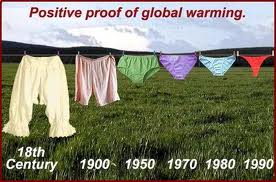
In Case You Haven’t Noticed Yet, Global Warming Is Real

If you’re one of the lucky few who live somewhere as yet relatively unaffected by climateunderwear change, or you spend all your time indoors listening to Rush Limbaugh and watching Donald Trump on Fox News, I’m here to tell you, global warming is real.

It may be hard to accept that the Earth’s overall temperature is rapidly warming up if your state has just experienced a polar vortex, but if you live in California or the Pacific Northwest you know all too well the drastic effect climate change is having on winter weather—especially if you’re a skier like me.

As an avid powder skier I’ve been closely following the snow reports for the mountains in the western United States and I’m seeing a depressing trend toward shallower snow packs and away from our normal winter wonderland.

Why is this happening? As the San Jose Mercury News reported it, “Meteorologists have fixed their attention on the scientific phenomenon they say is to blame for the emerging drought: a vast zone of high pressure in the atmosphere off the West Coast, nearly four miles high and 2,000 miles long, so stubborn that one researcher [Swain] has dubbed it the ‘Ridiculously Resilient Ridge.’ Like a brick wall, the mass of high pressure air has been blocking Pacific winter storms from coming ashore in California, deflecting them up into Alaska and British Columbia, even delivering rain and cold weather to the East Coast.” Much to the dismay of skiers, this stubborn high pressure ridge is pushing the jet stream, and our winter moisture, along a much more northerly track.

Ok, but what does this, and the lack of winter storms (for us here in the West) have to do with global warming? In an article in ThinkProgress.org, “Leading Scientists Explain How Climate Change Is Worsening California’s Epic Drought,” we learn that “Beyond the expansion and drying of the subtropics predicted by climate models, some climatologists have found in their research evidence that the stunning decline in Arctic sea ice would also drive western drought — by shifting storm tracks…Scientists say this anomaly looks very much like what the models predicted as sea ice declined. The storm track response also looks very similar with correspondingly similar impacts on precipitation (reduced rainfall in CA, increased precipitation in SE Alaska).”

In addition to California’s record-breaking drought and water rationing, you probably heard on the national news about their destructive January brush fires. But even more shocking than those unseasonable fires are a recent pair of 300 acre wildfires on the normally soggy North Oregon Coast, which burned nearly to the beach. January fires in the Pacific Northwest rain forest are almost unheard of, as anyone who has tried to light a campfire in winter there will attest. In an article about the forest fires, The Daily Astorian (North Oregon Coast ’s local paper) reported that the National Weather Service in Portland issued a “red flag” warning in response to conditions (strong dry east winds and humidity as low as 25%) that can contribute to wildfires burning out of control. Instead of the 25% humidity, coastal Oregon humidity on a winter’s day should be more like 125%.

Whether you choose to “believe in” global warming or not, I urge any of you enjoying this mild, dry winter weather to please think snow!

DSC_0098

Pray for Snow Drought

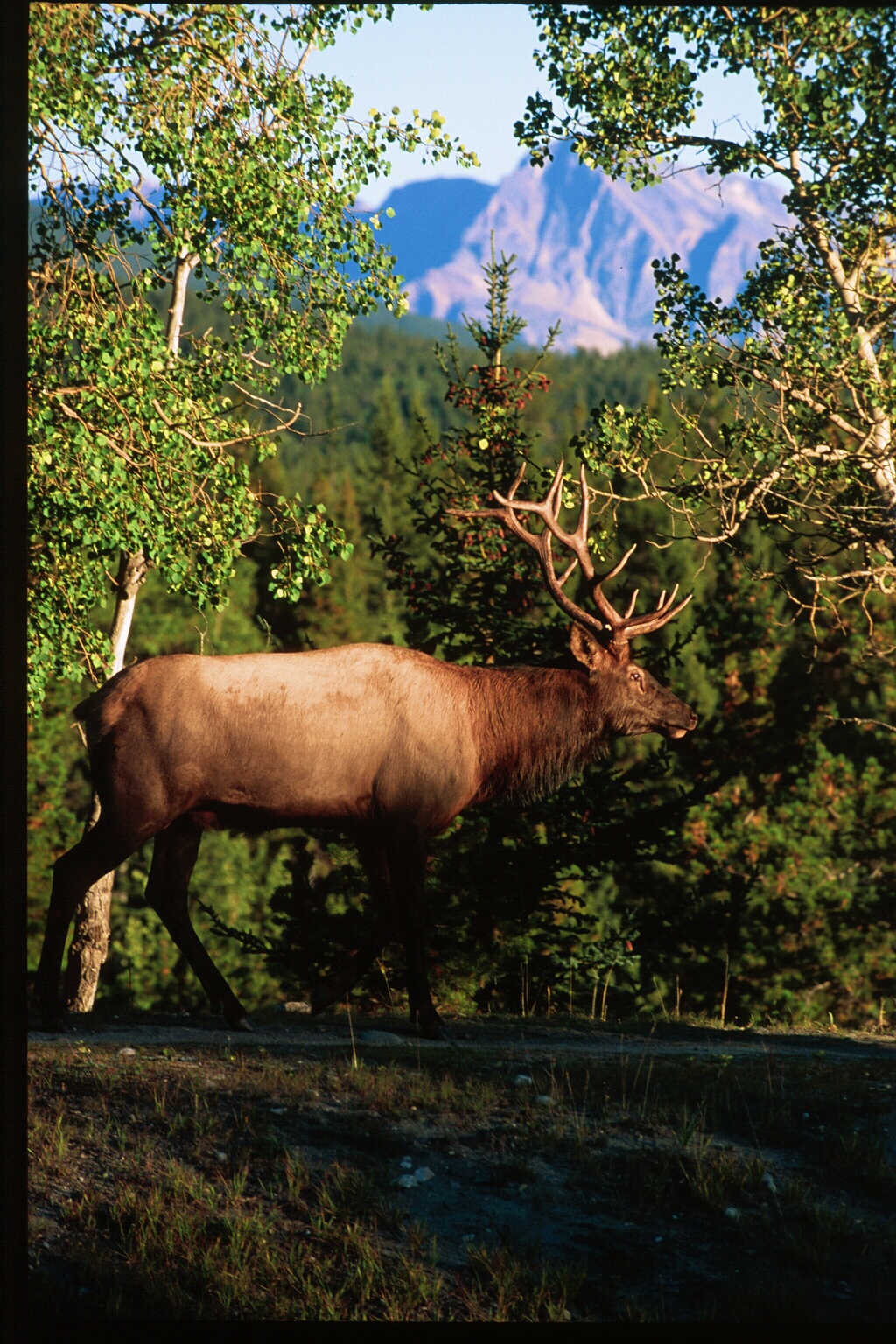
The customary mantra for those of us who have who have spent much time in search of powder to ski in the semi-arid mountains of Montana is, “Pray for snow!”  Consequently, I never thought I’d catch myself chanting, “Pray for Snow Drought,” but after reading the Montana Fish, Wildlife and Parks department’s “2012 elk hunting outlook,” a late winter is what I’m praying for—for the elk’s sake. You’ll see what I mean as you read their outlook (and pay no attention to their glib use of depersonalizing words like “harvest” or “hunting opportunities” for the senseless murder of noble beings like elk—psychopaths can’t help themselves):

“There are elk in Montana’s hills and if the big sky drops some snow hunters could be in for a banner season in many areas.

“’Most hunters are going to find elk populations in good physical shape and will benefit from liberal hunting opportunities,’ said Quentin Kujala, Montana Fish, Wildlife & Parks’ wildlife sections coordinator in Helena. ‘If the weather cooperates, and if hunters do their homework and line up access early where it’s needed, we’d expect very good harvest numbers by season’s end in late November.’

“Montana’s general, five-week long, elk hunting season opens Oct. 20.

“Kujala noted that cold and snowy conditions should lead to elk hunting success, while mild weather usually spells lower elk harvests, despite additional elk-hunting permits and more liberal seasons. ‘We’re all hoping the weather tips to hunters’ favor this fall,’ Kujala said.”

All? Not me! Not the elk! Sorry, Mr. Kujala, those of us who care about elk are praying that Montana’s current drought conditions last well into November.

Checking their regional population rundown, it’s clear that—despite the occasional natural wolf predation that sportsmen are quick to freak out over—elk are doing pretty well in the state. According to Montana FWP, “Biologists say elk numbers are at or above management objectives in most hunting districts.” “…the milder winter of 2011-2012 led to good calf recruitment…” “Elk populations are healthy and growing. Elk populations are solid.” and “The biggest challenge for hunters continues to be finding access.”

Whether it’s wolves competing for “their” elk “harvests” or a few darned private land owners who won’t let hunters kill animals on their properties, it seems like hunters and their game department lackeys always have something to bitch about.

Text and Wildlife Photography ©Jim Robertson