

http://www.huffingtonpost.com/stephanie-feldstein/earth-day-now-with-95-per_b_5176580.html
by Stephanie Feldstein Population and Sustainability Director, Center for Biological Diversity
Forty-four years ago, students, activists and political leaders looked at the impact human population was having on the world around them and decided something needed to be done. Earth Day was born, and the modern environmental movement wasn’t far behind.
Since then, there have been a lot more births. Billions more. In the 44 years since the first Earth Day, our population has increased by nearly 95 percent (and we still add 227,000 people to the planet each day).
That’s more people using more land and water, eating more meat, paving more wild places, demanding more energy and producing more climate-changing emissions. More cars and more consumerism; more trash and more pollution.
The one thing we don’t have more of: Earth
We still only have one planet. Though you wouldn’t know it by the way we live our lives, especially here in the U.S. In fact, if everyone in the world lived like Americans, it would take 4.4 Earths to sustain the planet. Unfortunately, among all those Earth Day sales for yard accessories, eco-friendly t-shirts and other mass-produced “green” products, you won’t find a single spare Earth on clearance.
There are a few things this Earth Day has less of than the first celebration 44 years ago. Most notably absent are the conversations about our runaway population growth and overconsumption, what it’s doing to wildlife and the environment, and what we need to do about it if we’re really going to save the planet… and ourselves.
It’s time to go retro on Earth Day. There were 3.7 billion people on the planet for the first Earth Day in 1970, and one of the biggest concerns then was that our growing population was destroying the planet and driving other species to extinction. Now that we have 7.2 billion people on the planet, the one thing we need more of is concern about human population and the extinction crisis.
The Center for Biological Diversity is bringing population back to Earth Day this year by giving away 44,000 Endangered Species Condoms in honor of the 44th anniversary of the celebration. More than 500 volunteers across all 50 states will be bringing the condoms to Earth Day festivals, parties and other community events to get more people talking about the issue that inspired the original Earth Day.
Doing your part is even easier than remembering to bring your reusable tote bag to the grocery store. Start by having the conversation. Share this blog post and the video below. Join us on Facebook. Sign up to be an Endangered Species Condoms volunteer. Check out our Earth Day Event Toolkit for information and downloadable fact sheets. Write a letter to the editor. Next time your friends and family are talking about organic food, climate change or their other favorite environmental issue, add population growth to mix.
We can’t create more Earth by the next Earth Day, but we can raise more awareness about population growth and commit to leaving more room for wildlife.
A steady stream of reports on the deterioration of the environment is issued. There is a brief flurry of media coverage. The corporate-funded climate change deniers make counter claims. We wake briefly to the crisis then most of us lapse into a couch potato stupor. Neoliberal dogma and an almost mystical belief in capitalism makes almost certain that little will be done to avert coming calamities. Charades called climate summits offer nothing more than photo ops of smiling world leaders and vacuous press releases. We blithely turn our heads away from reality. As the ice caps melt it is not just penguins and polar bears that are in danger. The wider implications for the planet and humanity are profound. What level of catastrophe is it going to take for business as usual policies to change? Will we hear the distress signals from Earth?

Paul Ehrlich is Bing Professor of Population Studies in the Department of Biology and president of the Center for Conservation Biology at Stanford University. He is a MacArthur Fellow, a member of the National Academy of Sciences and has received numerous honors including the Crafoord Prize of the Royal Swedish Academy of Sciences, given in areas where the Nobel Prize is not awarded, the Tyler Prize for Environmental Achievement, and the Blue Planet Prize. He is active in the Millennium Alliance for Humanity and the Biosphere. He is author of over 40 books.
Program #EHRP001. Recorded in Fort Collins, CO on February 17, 2014.
| Audio sample: |
Please <a href=”http://enable-javascript.com/”>enable Javascript</a> to use the audio player. |
Originally posted on April 22, 2012
You’ve probably heard the cliché, “Every day is Earth Day to an environmentalist.” Well, it’s true actually, at least to a true environmentalist—the kind of person who makes daily choices based solely on their concern for our planet and the life it supports. The gal, for example, who chooses not to eat farmed animals because of the enormous amount of abuse (not to mention gargantuan carbon footprint) inherent in those Styrofoam and shrink-wrapped packages that clog the sprawling meat isles across the country; or the guy who does not hunt because wild animals are a part of the living Earth he loves and respects.
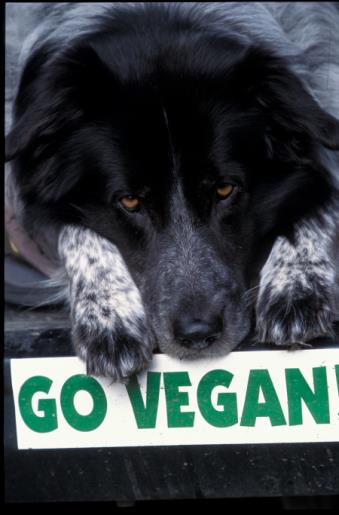
Eager to look like the sensible ones, conventional environmentalists often assume the wobbly, half-hearted stance of dismissing, rather than embracing, the animal rights movement. On the other hand, dedicated animal rights advocates don’t shy away from calling themselves environmentalists. They know that only by adopting a vegan lifestyle can one truly be an environmentalist. Vegans understand that the Earth cannot sustain billions upon billions of hungry bipedal carnivores and they recognize that the surest way to ease suffering for all is to eat lower on the food chain—in keeping with our proven primate heritage.
Absurd as it sounds to folks who really do care for the planet, certain atypically adroit sportsmen have been caught spreading the dogma that gun-toting Bambi-slayers actually have a “love for the land” and a concern for the animals they kill—that murdering animals is a wholesome Earth Day activity. Proselytizing hunter-holy-men try to downplay the obvious lethal impacts hunting has on individual animals and entire populations, wielding one of the weariest—and wackiest—of all clichés, “Hunters are the best environmentalists,” despite well-documented proof that hunting has been—and continues to be—a direct cause of extinction for untold species throughout the world.
Over-zealous hunters completely eradicated the once unimaginably abundant passenger pigeon and the Eskimo curlew (both killed en masse and sold by the cartload for pennies apiece), the Carolina parakeet (the only species of parrot native to the US) and the great auk (a flightless, North Atlantic answer to the penguin).
Hunting is the antithesis of environmentalism. The very notion of the gas-guzzling, beer-can-tossing hunter as an environmentalist is laughable even to them. Show me a hunter who is not antagonistic toward the rights of animals and I’ll show you a rare bird indeed.
____________________________________________________
Portions of this post were excerpted from the book, Exposing the Big Game: Living Targets of a Dying Sport: http://www.earth-books.net/books/exposing-the-big-game
 Exposing the Big Game