Exposing the Big Game

Forget Hunters' Feeble Rationalizations and Trust Your Gut Feelings: Making Sport of Killing Is Not Healthy Human Behavior

Exposing the Big Game

Killing the myth of hunting as conservation

http://www.all-creatures.org/articles/ar-myth-hunting-conservation.html

by Fran Silverman, FOA Friends of Animals
March 2018

The Trump administration is making it easier for Americans to go to Africa, shoot elephants and lions and bring their body parts home as trophies to mount on walls – all in the name of conservation….

Hunter supporters use unscientific bear sightings to inflate numbers and livestock conflicts to scare the public to justify bear hunting.

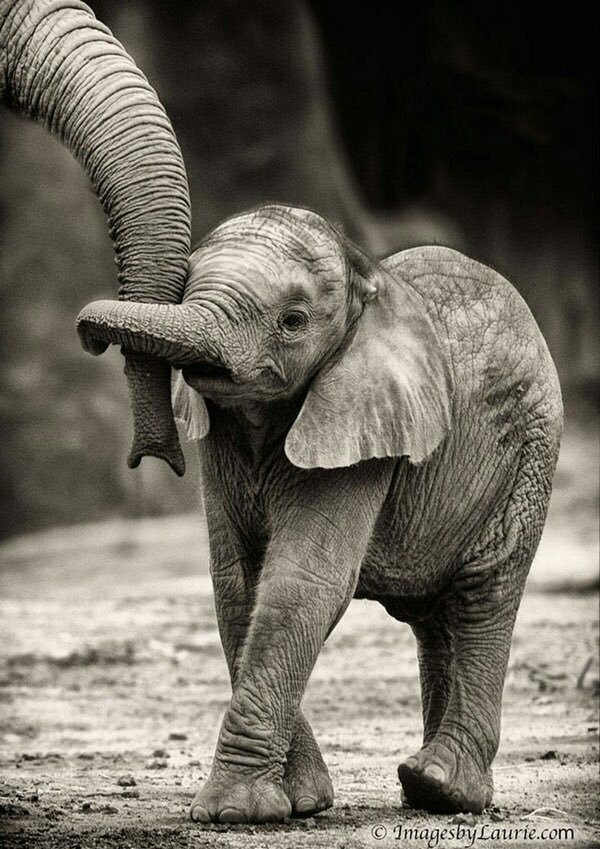
elephant and calf
Image from Memories of Elephants

If it sounds ridiculous, it likely is. So say this out loud and tell me how it sounds.

Shooting endangered and threatened species will help save them.

Here’s another one.

Hunters are helping keep you safe by killing black bears.

In honor of National Wildlife Week, let’s parse these statements.

Supporters of black bear hunts assert that the bears are a nuisance at best and a safety hazard at their worst. They point to unscientific bear sightings to inflate numbers and livestock conflicts to scare the public. Killing them will solve this, they say. And the hunters then get to take home the bears to mount or use as rugs. Nice reward for saving all of us.

On a national level, the Trump administration is making it easier for Americans to go to Africa, shoot elephants and lions and bring their body parts home as trophies to mount on walls – all in the name of conservation.

The thing is, the science doesn’t back any of this up. This month a new study published in Science Advances found issues with the science cited in the “North American Model of Wildlife Conservation,” which guides hunting policies. The study found that what counts for science is rarely defined. In fact, a majority of the science in management plans surveyed — 60 percent — contained fewer than half of criteria for the fundamental hallmarks of science, which include measurable objectives, evidence, transparency and independent review. The report reviewed 62 U.S. state and Canadian provincial and territorial agencies across 667 species management systems.

“These results raise doubt about the purported scientific basis of hunt management across the U.S. and Canada,’’ it concluded.

The claims of hunting as conservation of endangered and threatened species also don’t stand up to scientific scrutiny. There aren’t any documented, peer-reviewed studies that show that lawful hunting does not overall disadvantage the species being hunted. Emerging studies, in fact, indicate that legal hunting can increase demand, promote black-market trade of sport-hunted animals and reduce the stigma associated with killing wildlife.

The African elephant population has plummeted by 30 percent in seven years, with just 350,000 left in the world where once there were millions. The population of lions has declined by 42 percent, with just about 20,000 left. Additionally, a new study by Duke University found that poaching and habitat loss have reduced forest elephant populations in Central Africa by 63 percent since 2001.

Yet, the U.S. Fish and Wildlife Service announced it was lifting a ban on trophies from several African nations and will allow them on a case-by-case basis. This action, coupled with the Department of Interior’s creation of an International Wildlife Conservation Council comprised of hunting industry representatives whose stated goal is to advise the agency on the benefits of international hunting, removing barriers to the importation of trophy-hunted animals, and reverse suspensions and bans on trade of wildlife, sends the message that the only way to save these majestic creatures is to make sure it’s easier to shoot them to death.

On a local level, here in my home state of Connecticut where FoA is headquartered, I listened intently as supporters of a bill to kill 5 percent of the black bear population in the lovely Litchfield County region insisted it was necessary to prevent bear-human conflict. Bears are killing livestock! Bears are getting into garbage cans! Knocking over bird feeders! Scaring hikers on trails! Lions and tigers and bears. Oh my!

I’m not making light of a bear encounter. They are formidable. But the science and the math for a shoot-first approach doesn’t add up. First, bears are shy and attacks are more associated with human behavior than the population of bears, studies show. To ward them off if you are a hiker, wear bear bells, carry bear spray. Worried about your backyard farm animals? Install an electric fence. Certainly, don’t feed bears, keep your doors shut and remove bird feeders in the spring.

The truth is black bear attacks are super rare. In the past 20 years, there’s been 12 fatal black bear attacks in the U.S, yet thousands of black bears have been slaughtered in legal hunts. More than 4,000 bears were killed in New Jersey alone since bear hunts were legalized there under Governor’s Christie’s reign before the new governor halted them. In New York, more than 1,000 black bears were killed in hunts last year.

Yet, along with that news in New York about the success of its 2017 bear hunt, there was this item buried in a press release from the N.Y. Department of Environmental Conservation: 19 humans were injured by hunters last year and one was fatality shot, a woman who was just walking her dogs in the woods by her house. In fact, between 2011-2017, there’s been 14 humans killed by hunters and 131 injured in New York. In Connecticut, hunters have killed one human and injured 13 between 2011-2016. The number of bear fatalities in both these states? Zero.

The more I dug into fatal black bear attacks verses fatal hunting incidents, the more alarmed I became. In just six states I reviewed where bear hunting is allowed or being considered, there have been 500 humans injured by hunters and 63 killed. The stories are sad. People who were fishing when they got shot by an errant hunter’s bullet. Hunters shooting each other and themselves. And there was Rosemary Billquist, a 43-year-old hospice volunteer who was the woman from upstate New York shot dead last fall by her neighbor.

When FoA testified against a black bear hunt in Connecticut, pointing out the hundreds of injuries and startling number of humans killed by hunters, dispelling the myth that bear sightings at all indicate bear populations and showing there is a weak correlation between the number of bears in a region and bear-human conflict, the majority of lawmakers on the state’s environment committee saw the light and voted down the hunt.

But black bear hunts are still legal in a majority of states. It’s estimated that 40,000-50,000 black bears have been killed in hunts. But the fact is the number of fatal black bear attacks are rare.

Human hunting related deaths and injuries – not so rare.

The number of U.S. residents who hunt is dwindling every year. Yet, the damage they are doing to wildlife and other humans is astounding.

Elephants are becoming rare. So are lions. Shooting them to hang on walls doesn’t conserve them.

The math is the math and the science is the science.


Friends of Animals’ Communications Director Fran Silverman oversees FoA’s public affairs and publications. Her previous experience includes editor of a national nonprofit consumer advocacy site, staff writer and editor positions and contributing writer for The New York Times.


Return to Animal Rights Articles

Conservation groups sue to overturn trophy hunting decision

(CNN)Several animal conservation groups are challenging in court the Trump administration’s recent decision to consider big game trophy import applications on a case-by-case basis.

The groups — which include the Center for Biological Diversity, Humane Society International and Humane Society of the United States — said Tuesday that they are asking a federal court in Washington, DC, to rule that the US Fish and Wildlife Service did not follow the proper process to make its March 1 decision, which withdrew a series of Endangered Species Act findings that apply to some African elephants, lions and bontebok, a type of antelope.
The groups also say the decision violates the Endangered Species Act.
Justice Department spokesman Wyn Hornbuckle told CNN that the department is reviewing the amendment complaint.
Tuesday’s filing amends a lawsuit the conservation groups filed in November, when the FWS, under Interior Department Secretary Ryan Zinke, announced it would accept applications on elephant trophy imports from Zimbabwe and Zambia.
In November, President Donald Trump then ordered that decision be blocked and called trophy hunting a “horror show.”
In December, a federal appeals court ruled in a separate trophy hunting case brought by proponents of the practice, including Safari Club International, ordering FWS and the Department of Interior to reconsider past decisions on trophy imports.
And a few days after the March 1 decision, Zinke told Congress no applications have been approved under the case-by-case guidelines.

Conservation groups oppose pro-hunting slant of new Trump admin panel

US to allow some imports of elephant trophies 01:48

(CNN)Members of a new Trump administration pro-hunting council met Friday for the first time, drawing objections from other conservation groups that say hunting is not the answer to saving big game species.

Hunters and supporters of trophy hunting hold nearly every seat on the International Wildlife Conservation Council, which Interior Secretary Ryan Zinke created to advise him on “the conservation, wildlife law enforcement, and economic benefits that result from US citizens traveling to foreign nations to engage in hunting.”
Several members spoke in favor on Friday of trophy hunting in certain regions of Africa and Central Asia, saying it provides important funding for conversation efforts.
“Hunting is the crux of all of this. Without hunting, there is no other industry there,” said member Cameron Hanes, a member of the council who’s a bow hunter. “The messaging is what’s poor. To me, hunters haven’t done a very good job of it.”
Conservationists who oppose trophy hunting say the panel is one-sided.
“Noticeably missing from this council are qualified representatives of the broader conservation community with scientific credentials and direct experience with the management of successful conservation programs,” said Masha Kalinina of Humane Society International.
She spoke during a portion of the meeting reserved for public comment; her group is not represented on the council.
Peter LaFontaine, of the International Fund for Animal Welfare, said he had nominated a member for the council who was not accepted. The group is a “really strange way to focus on conservation,” he said.
The council includes the president of Safari Club International, a pro-hunting group that gives awards for trophy animal kills; an official from the National Rifle Association; several self-described hunters; and two hunting-oriented television personalities.
Members selected as their chairman Bill Brewster, a former Democratic congressman from Oklahoma. A 2014 profile of Brewster in the NRA publication American Hunter notes he has hunted in all 50 states.
“There is a conspicuous conflict of interest concern hanging over this council,” Kalinina said. The businesses of many members, she said, would benefit from relaxed regulations on hunting, such as imports of trophies like African elephants and lions.
The issue of trophy hunting was cast in the spotlight in November, when the Fish and Wildlife Service under Interior Secretary Ryan Zinke decided to overturn an Obama-era ban on importing elephant trophies from Zimbabwe and Zambia to the US.
After the issue made headlines, President Donald Trump announced he was putting the decision “on hold” to review the “conservation facts.” He later called trophy hunting a “horror show.”
Earlier this month, the Department of Interior reacted to a court order by saying it will consider big game trophy imports from several African countries on a “case-by-case” basis.
The department has not yet issued any trophy permits under that policy, Zinke told Congress at a hearing this week.

Everything to Know About Trump’s New Trophy Hunting Council

(C) Elizabeth Heyd

In early November—the same week the Trump administration announced its disastrous decision to allow elephant and lion trophy imports from Zimbabwe and Zambia—the administration decided to create an advisory committee, the International Wildlife Conservation Council (IWCC), to advise Trump on how to enhance trophy hunters’ ability to hunt internationally.

Yup, that means the administration now has a council dedicated exclusively to promoting the killing of more imperiled species, like elephants and lions, for sport. The council’s mandate includes counseling Trump on the economic, conservation, and anti-poaching benefits of trophy hunting, of which there are very few. Sadly, Trump doesn’t want advice on the many drawbacks of trophy hunting.

The committee’s duties are similarly biased. They include “educating” the public about trophy hunting; ensuring federal programs support hunting; making it easier for U.S. citizens to import trophies; ending trophy import bans and suspensions (despite the fact our country heavily favors them, as shown recently), and using the pretext of “regulatory duplications”  to eviscerate protections for foreign species under both the Endangered Species Act and the Convention on International Trade in Endangered Species (CITES) (even though the U.S. law and the global treaty do different things).

Many conservation groups—including NRDC, World Wildlife Fund, Humane Society, Center for Biological Diversity, the Wildlife Conservation Society, and the International Fund for Animal Welfare—urged the administration to abandon this dangerous proposal. Many also urged the council to, at the very least, include members from the conservation community. Instead, the Department of Interior went ahead with this flawed idea.

Even more shocking, all but one of the 16 discretionary members the administration chose, hunt foreign species that are subject to import permits, represent an organization that promotes hunting of such species, guide hunts for such species, or is a “celebrity hunter” who  glorifies hunting of such species. Yes, I’m talking about people that head the NRA and Safari Club International. This insanely biased membership ensures that all committee decisions will benefit hunters  at the expense of iconic species already on the brink.

Oh, did I mention that we, the public, will pay for these members to travel to Washington, D.C. twice a year for meetings?

The IWCC was created under a statute called the Federal Advisory Committee Act, which was promulgated to ensure that advice by the various advisory committees is “objective and accessible to the public.” The law states that advisory committees must also be “essential,” “in the public interest,” “fairly balanced in terms of the points of view represented” and “not be inappropriately influenced by . . . any special interest.” Clearly, the administration forgot to read the law when they formed this committee as it violates each and every requirement!

The first meeting of this council is scheduled for March 16 from 9:30 am-4:30 pm. While advance RSVP is required—the council is clearly trying to shield its actions from the public eye—we will keep everyone posted on what occurs.

Unfortunately, there’s one thing we all know without attending: this council spells disaster for elephants, lions and other imperiled foreign species that we all treasure.

Trump’s cave to elephant and lion hunters

Editorial:  http://www.chicagotribune.com/news/opinion/editorials/ct-edit-elephants-africa-trump-trophy-20180307-story.html

“I watched him beating his bunch of grass against his knees, with that preoccupied grandmotherly air that elephants have. It seemed to me that it would be murder to shoot him. At that age I was not squeamish about killing animals, but I had never shot an elephant and never wanted to.”

— George Orwell, “Shooting an Elephant”

Well, some people do want to shoot elephants, for reasons that are all but impossible to fathom. Their meat doesn’t appeal to Western palates; they aren’t so abundant that their numbers must be reduced; and taking part in a guided hunt costs tens of thousands of dollars. But the Trump administration, after some delay, has sided with the shooters against the prey.

Elephants are unusually intelligent creatures with rich social lives and elaborate means of communication. They are also under unending siege. In the past three decades, the number in Africa has plummeted by two-thirds, leaving just 400,000. About 20,000 are killed each year for their tusks.

Some African governments allow them to be taken by trophy hunters. One of those sportsmen is Donald Trump Jr., who in 2012 was photographed holding the bloody tail of a slain elephant.

Under President Barack Obama, the U.S. Fish and Wildlife Service tried to discourage this macabre pastime by outlawing imports of elephant trophies from specified countries. African elephants are listed as “threatened” under the Endangered Species Act, and the law says their body parts may be brought in only if “the killing of the trophy animal will enhance the survival of the species.”

In Zambia and Zimbabwe, the agency was not convinced that the governments’ policies served the purpose of conserving elephants. So Americans who wanted to shoot an elephant so they could bring back its head to hang on the wall were out of luck.

Last year, the agency announced it would lift the ban. But the decision sparked furious criticism, even from some conservative commentators — and prompted President Donald Trump to block it temporarily.

The president tweeted that he would be “very hard pressed to change my mind that this horror show in any way helps conservation of Elephants or any other animal.”

Now, however, his administration has quietly given its sanction to the practice — not just for elephants but also for lions. Instead of forbidding trophies from Zambia and Zimbabwe, the FWS said it would grant permits on a case-by-case basis, under criteria it has yet to state.

How Trump squares this step with his previous objections is hard to guess. The latest FWS move followed a ruling from a federal appeals court that the Obama administration failed to use required procedures in issuing its ban. But that verdict didn’t require abandoning the policy. The agency could have started over and followed the rules as spelled out by the court.

The biggest threat to these beasts is not legal trophy hunting but killing by poachers who want to harvest their tusks for the ivory trade. The good news is that progress has been made in suppressing that commerce. Last year, China said it would stop all sales of ivory, and Hong Kong moved to ban them all by 2021. The black-market price has dropped sharply since 2014, reflecting a decline in demand.

But legal trophy hunting doesn’t help, because it gives a sheen of legitimacy to the whole business of slaughtering elephants for their body parts. In January, Trump proudly said, “I didn’t want elephants killed and stuffed and have the tusks brought back.” It’s not too late for him to stop it.

Elephant trophy hunting, and Trump’s confusing positions on it, explained

Paula Bronstein/Getty Images

Here’s a seemingly simple question: Is it legal to bring elephant body parts collected in hunting exhibitions in Africa back to the United States?

During the Obama administration, the answer became a clear “no” — the import of elephant trophies was banned outright under the Endangered Species Act. But in November, President Trump’s US Fish and Wildlife Service announced it was set to lift the ban. Hunting groups like the National Rifle Association and the Safari Club International Foundation, which had opposed the ban, were thrilled by the news.

But after a flood of criticism (including from conservatives), Trump himself suddenly was not.

In a tweet, Trump announced that the lifting of the ban was on hold, pending further review. In a follow-up tweet, he went on to say he’d “be very hard pressed to change my mind that this horror show in any way helps conservation of Elephants or any other animal.”

Put big game trophy decision on hold until such time as I review all conservation facts. Under study for years. Will update soon with Secretary Zinke. Thank you!

So are elephant trophies still banned then?

Here’s the latest:

This week, Fish and Wildlife has decided, in response to a lawsuit from hunting advocates and the NRA, to allow the import of trophies on a case-by-case basis. Hunters argue that the trophies actually aid in elephant conservation: The fees they pay to governments for the permits to hunt are supposed to be fed back into conservation efforts. And in its latest memo, Fish and Wildlife says that the case-by-case decisions will be determined “to ensure that the [hunting] program is promoting the conservation of the species.”

So why is this happening? In December, a federal appeals court ruled on a suit brought by the NRA and the Safari Club arguing that the Obama administration had not followed the exact letter of the law when creating the regulation that banned the trophies. Specifically, the judge said it didn’t go through the usual lengthy rulemaking process that involves a period of public comment.

Because of the decision on the case, Fish and Wildlife says, it’s lifting the Obama-era ban and moving to this “case-by-case” evaluation of permits instead.

It will be interesting to see how the president responds, since he has publicly disagreed with hunting advocates and Interior Secretary Ryan Zinke, the uberboss of Fish and Wildlife, on this issue. It is also unclear to what degree the White House was involved in the latest announcement. Fish and Wildlife released its latest decision without much fanfare. We’ll have to wait and see if Trump himself wades back into the issue.

Since the Trump administration certainly hasn’t been telling much of a coherent story on elephant hunting, it’s worth revisiting the facts. Does the hunting actually help elephants? Here’s what we know.

African elephant populations are still near historic lows

There used to be 10 million elephants in Africa in the early 1900s. Today there are just a few hundred thousand, and their numbers are still declining. African elephants are protected under the Endangered Species Act as a threatened species and are listed as vulnerable (which is between “near-threatened” and “endangered”) on the International Union for Conservation of Nature’s Red List of the conservation status of animals.

Though the populations are greatly diminished across the continent, they are not direly small. There are an estimated 82,000 elephants in Zimbabwe, down 10 percent since 2005.

Normally the Endangered Species Act would prevent any trade of a protected animal’s carcass. But there’s an exception. If, according to Title 50, “the killing of the trophy animal will enhance the survival of the species,” the animal can be permitted to be imported — though no more than two per year, per hunter. (The import of trophies had been allowedfrom South Africa and Namibia.)

Wait, what? How does hunting elephants for “trophies” aid their survival?

Yes, on the face of it, the argument doesn’t make any sense: How can condoning the killing of animals actually aid their survival?

The thrust of the argument: There are Americans who are willing to pay exorbitant sums for the chance to kill one of these creatures. That money then can be put toward conservation efforts that protect the remaining herd. These trips can cost upward of $20,000. National Geographic documents one elephant hunt that over the course of 14 days cost $80,000. In Zimbabwe, the “trophy fee” — the administrative cost to kill one elephant — is $14,500.

That’s no small donation to conservation efforts. That money pays for law enforcement to stop poachers and better track elephant populations (not to mention the tourism dollars that support local economies).

Are there reasons to doubt that the trophies could actually help the elephants?

A big one is that the countries that allow for elephant hunting, like Zimbabwe, are often caught up in political unrest. Political turmoil in areas notorious for corruption does not make for a compelling setting for environmental conservation.

The money-raising schemes sound okay on paper, but in practice, they don’t always work out so cleanly. As the Humane Society notes, “it was Zimbabwe where Walter Palmer shot Cecil, one of the most beloved and well-studied African lions, who was lured out of a national park for the killing.”

And there’s not great evidence that this conservation tactic works. For its October issue, National Geographic investigated the claim that hunting helps conserve threatened animals. Tanzania lost two-thirds of its lions from 1993 to 2014, despite a trophy hunting program. Overall, reporter Michael Paterniti found, “what happens to the hunters’ fees … is notoriously hard to pin down — and impossible in kleptocracies.”

https://www.vox.com/2018/3/7/17091000/ban-lifted-elephant-trophy-hunting

 Ivory investigator killed in Kenya


One of the world’s leading investigators into the illegal trade in ivory and rhino horn has been killed in Kenya.

Esmond Bradley Martin, 75, was found with a stab wound to his neck at home in the capital Nairobi on Sunday.

The former UN special envoy for rhino conservation was known for his undercover work establishing black-market prices.

The US citizen had recently returned from a research trip to Myanmar.

Bradley Martin was in the process of writing up his findings when he died, reports the BBC’s Alastair Leithead from Nairobi.

His wife found him in their house in Langata. Police are investigating the circumstances but suspect it was a botched robbery.

Our correspondent says Bradley Martin had spent decades risking his life to secretly photograph and document the illegal sales of ivory and rhino horn, travelling to China, Vietnam, and Laos to pose as a buyer – helping to find out the level of black market prices.

He first went to Kenya from the US in the 1970s when there was a surge in the number of elephants being killed for their ivory.
Image copyright AFP
Image caption Conservationists believe that the ivory trade is largely responsible for the world’s declining elephant numbers

His work on illegal wildlife markets helped pressure China to ban the rhino horn trade in the 1990s, and domestic sales of ivory, which came into force this year.

Fellow conservationists have been paying tribute to him on social media.
Skip Twitter post by @paulakahumbu

2/3 Esmond was at the forefront of exposing the scale of ivory markets in USA, Congo, Nigeria, Angola, China, Hong Kong, Vietnam, Laos and recently Myanmar. He always collaborated with Save the Elephants and worked with many of us generously sharing his findings & views.
— Dr. Paula Kahumbu (@paulakahumbu) February 5, 2018

Always sharply dressed with a colourful handkerchief falling from his top pocket, Esmond Bradley Martin would immediately cut to the chase, honing in on the latest issue that was consuming him.

He was a well-known and highly respected character in the conservation community – passionate and unwavering in his efforts to crack down on illegal wildlife crime.

In a major report last year from Laos, he and his colleague Lucy Vigne established that the country had the world’s fastest growing ivory trade.

They risked their own safety staying at a Chinese casino inhabited by gangsters and traffickers in order to visit the illegal markets and find out the latest prices by posing as dealers.

His life’s work was combating the illegal trade of wildlife and he produced a huge body of highly respected research and investigative reports.

He will be a huge loss to the international conservation community.

http://www.bbc.com/news/world-africa-42943503

Exclusive: Trump Slams Elephant Hunting For Trophies, Skeptical Fees Go For Conservation

https://www.huffingtonpost.com/entry/trump-slams-elephant-trophies_us_5a6d1759e4b01fbbefb25ea5

In an interview with Piers Morgan set to air Sunday, Trump calls the initial U.S. decision to lift a ban on trophy imports “terrible.”

In an interview with Piers Morgan set to air Sunday night in the U.K., President Donald Trump used the word “terrible” to describe the initial decision last year by the U.S. Fish and Wildlife Service to overturn an Obama era ban on the import of elephant trophies.

Trump also says he does not believe the substantial fees that hunters pay to hunt elephants and other species actually go toward conservation efforts, as is often claimed, and instead are pocketed by government officials in other countries.

Trump confirms that the ban on importing elephant trophies from the African nations of Zimbabwe and Zambia will remain in place. That was not clear after he initially put the ban reversal on hold, pending further study.

The Fish and Wildlife Service, overseen by Interior Department Secretary Ryan Zinke, announced on Nov. 15 that it was rescinding an Obama administration ban on the import of elephant trophies from Zimbabwe and Zambia, saying money generated by the hunting goes toward conservation efforts.

“Legal, well-regulated sport hunting as part of a sound management program can benefit the conservation of certain species by providing incentives to local communities to conserve the species and by putting much-needed revenue back into conservation,” the service said.

But the announcement on reversing the ban was met with scathing criticism from both the left and right. Powerful conservative media figures like Michael Savage and Laura Ingraham criticized Trump for the decision and called on him to keep the ban in place. Talk show host Ellen DeGeneres announced a campaign to persuade Trump to maintain the ban that quickly went viral through the hashtag #BeKindToElephants.

On Nov. 17 Trump tweeted, “Put big game trophy decision on hold until such time as I review all conservation facts. Under study for years. Will update soon with Secretary Zinke. Thank you!”

Put big game trophy decision on hold until such time as I review all conservation facts. Under study for years. Will update soon with Secretary Zinke. Thank you!

The announcement that he was putting the reversal on hold shocked many, primarily because his two eldest sons, Donald Jr. and Eric, are both avid hunters and have been criticized for hunting wildlife in Africa.

Trump also is closely aligned with the National Rifle Association, which strongly lobbies for trophy hunting rights. Two days after he made that announcement, he tweeted, “Big-game trophy decision will be announced next week but will be very hard pressed to change my mind that this horror show in any way helps conservation of Elephants or any other animal.”

Big-game trophy decision will be announced next week but will be very hard pressed to change my mind that this horror show in any way helps conservation of Elephants or any other animal.

That tweet led some to believe the ban would remain in place but no further announcement was made as promised.

In his comments to Morgan, Trump said, “Well, I changed it,” referring to reversing the move to end the ban.

He continued: “I didn’t want elephants killed and stuffed and have the tusks brought back into this [country] and people can talk all they want about preservation and all of the things that they’re saying where money goes towards ― well, money WAS going ― in that case, going to a government which was probably taking the money, OK? I turned that order around. You know, that was an order. I totally turned it around. Were you shocked that I did it?”

Morgan: “I was surprised.”

Trump: “I thought it was terrible. That was done by a very high level government person. As soon as I heard about it, I turned it around. That same day ― not even a day went by. No, I was not believing in [the conservation argument].”

The interview with Morgan is Trump’s first major sit-down interview with a non-U.S. television network and airs at 10 p.m. Sunday on ITV.

War isn’t just bad for people — it harms wild animals, too

https://www.washingtonpost.com/news/animalia/wp/2018/01/10/war-isnt-just-bad-for-people-it-harms-wild-animals-too/?utm_term=.9d325d23f49d&wpisrc=nl_rainbow&wpmm=1

 January 10

A baby mountain gorilla in the Sabyinyo Mountains of Rwanda. (Ivan Lieman/AFP/Getty Images)

As if we needed another argument against war, here goes: It’s bad for wild animals.

This is true even with low-level conflict, and it’s especially true if the conflict repeats or drags on, according to a new study published in Nature. In a wide-ranging examination of the net effect of such disruptions on African wildlife populations over more than six decades, researchers found the frequency of war — rather than the intensity — to be a key factor in declines of wildlife.

“It takes a relatively little amount of conflict, and a relatively low frequency of conflict, before the average population is declining,” said lead author Joshua Daskin, a conservation ecologist and postdoctoral fellow at Yale University. “All the socioeconomic things that come along with a war are probably making conservation quite difficult.”

The researchers’ conclusion might sound obvious, but there has been little previous examination of the overall impact of armed conflict on animals. The case-study work to date focused on specific conflicts’ consequences and actually found both positive and negative effects.

Those downsides are numerous. Land mines and bombs can kill fauna as well as human targets. Armies sometimes intentionally destroy critical habitat — by dumping herbicides on forests, for example, as the United States did during the Vietnam War — or finance their fight by selling ivory. Collapsed institutions mean less enforcement of laws protecting animals, and economic fallout can force desperate civilians to hunt wild animals for food.

On the other hand, wars can also cause human displacement, and “anything that causes people to vacate can be a beneficial thing for nonhuman wildlife,” said co-author Robert Pringle, an assistant professor of ecology and evolutionary biology at Princeton University. Poaching and habitat destruction might slow, and mining might stop. This is sometimes called the “refuge effect,” and it can be seen in the demilitarized zone dividing North Korea and South Korea.

Pringle and Daskin, who finished his PhD at Princeton last year, both do research in Mozambique’s Gorongosa National Park, where a 15-year civil war nearly decimated wildlife. They wanted to know more about the big picture — is war generally positive, negative or neutral for wildlife? Among other reasons, they note, the question is important because the vast majority of wars since 1950 have taken place in the world’s most biodiverse regions.

An elephant in Hwange National Park in Zimbabwe. (Martin Bureau/AFP/Getty Images)

The pair decided to focus on protected areas in Africa between 1946 and 2010. They mapped events  there using a standard definition — fights that killed at least one person in a broader battle that caused 25 human deaths in a year — and found conflicts in a depressing 71 percent of the areas during that time period. Then came the hardest part: finding reliable wildlife population data.

Daskin said he used published research as well as “gray literature” such as park management figures, government wildlife agency documents and reports from nongovernmental organizations. He looked only at populations of large herbivores, in part because they “have really outsize roles in maintaining these ecosystems,” but also because they’re counted more easily and therefore more frequently. In the end, Daskin had data for 253 wildlife populations and 36 species, including giraffes, warthogs and wildebeests.

Next, the authors looked at correlations between wildlife populations and variables that can influence them, like drought, human population density and the presence of mining, as well as two factors related to war: conflict frequency and conflict intensity.

When they crunched it all together, the biggest and only statistically significant predictor of wildlife declines was conflict frequency. While wildlife population trajectories stayed stable in peaceful times, they dropped with even a slight increase in conflict and were “almost invariably negative” in high-conflict zones, the authors found.

Pringle said they were somewhat surprised that conflict intensity wasn’t correlated with dips in wild animals. The numbers don’t suggest why, and Pringle said understanding these dynamics will take more research with larger data sets. But he and Daskin have some theories.

“Our interpretation is that conflict destabilizes everything. When people don’t feel secure, institutions start to break down, livelihoods start to be disrupted,” Pringle said. Yet intense conflict may provide a buffer for wildlife because “people evacuate. People don’t hang around and go set snares in the forest.”

Cinereous vultures on a rice paddy in South Korea near the demilitarized zone with North Korea. The area has become a nearly untouched nature refuge. (Jeon Heon-Kyun/European Pressphoto Agency)

The researchers emphasized that their findings were not limited to gloom. The only cases of extinction in the areas they studied took place in the Pian Upe Wildlife Reserve in Uganda, where giraffes and two species of antelope vanished between 1983 and 1995.

“War is awful for people. It’s bad for wildlife. But it’s not so cataclysmically bad that we should be giving up on anything,” Pringle said. “In fact, there are great opportunities for restoration.”

He and Daskin hope their findings can help governments and wildlife organizations better predict and mitigate the influence of conflict on wildlife. Both point to the place where they do work — Gorongosa National Park — as an example. It lost about 90 percent of its wildlife during the war that ended in 1992, but it’s now back to “about 80 percent of the prewar populations,” Daskin said.

“That’s been achieved not just by trucking in large numbers of animals from other protected areas, as has often been highlighted, but by creating the conditions in the local region for conservation to be possible,” Daskin said. “It’s an excellent case study in what can happen after the conflict.”

Read more:

30 years after Chernobyl disaster, camera study captures a wildlife wonderland

These heroic rats detect land mines. Now they might help save an endangered animal.

A rhino at a French zoo was killed for his horn. Could that happen here?

Two lions survived a circus, only to be killed and mutilated in a sanctuary

Elephant poachers are even deadlier than we knew

In Africa, Geneticists Are Hunting Poachers

Workers at Kruger National Park in South Africa moving a rhino from a high-risk poaching area in 2014. Researchers in South Africa are turning to genetic fingerprinting to track down poachers for prosecution. CreditStefan Heunis/Agence France-Presse — Getty Images

South African authorities long had eyes on Rogers Mukwena. They knew the former schoolteacher was wanted in Zimbabwe for poaching rhinoceroses and selling their horns, which can command hundreds of thousands of dollars.

He’d jumped bail and fled to northern Pretoria, but it was vexingly difficult to catch and prosecute him — until a scientist helped make the case against him with rhino DNA.

His subsequent conviction resulted from a new tactic in wildlife preservation: The genetic fingerprinting methods that have been so successful in the criminal justice system are now being used to solve poaching crimes.

First, researchers in South Africa had to build a large database of genetic samples drawn from African rhinoceroses. The DNA would be used to match a carcass to a particular horn discovered on a suspected poacher or trafficker, or to rhinoceros blood on his clothes, knives or axes.

To make that possible, Dr. Cindy Harper, a veterinarian at the University of Pretoria, and her colleagues collected DNA from every rhinoceros they could find — more than 20,000 so far. They have taught park rangers how to retrieve blood, tissue or hair samples from every rhinoceros that is killed, dehorned or moved.

C

The rangers have learned forensic crime-scene principles and the importance of the so-called chain of custody to ensure that the samples are not corrupted. Dr. Harper’s lab performs the analysis and stores DNA fingerprints.

The scientists’ database, which they call Rhodis, is modeled after Codis, the F.B.I. system used to link the DNA of suspects to evidence at a crime scene.

The approach is promising, said Crawford Allan, senior director of Traffic, which monitors illegal wildlife trade at the World Wildlife Fund.

A poaching scene is a crime scene, he said: “If you want to get through detection and investigation and prosecution, treat it as a crime scene and use forensics.”

Poaching has escalated exponentially in the past decade, he noted. More than 7,000 rhinos have been killed in the past ten years. The World Wildlife Fund estimates that 20,00 to 30,000 African elephants are killed each year for their tusks.

Their tusks and horns are trafficked through experienced criminal networks. “You really need sophisticated tools to help solve these crimes,” Mr. Allan said.

Photo

A pile of poached ivory is prepared for burning in Libreville, Gabon. CreditTyler Hicks/The New York Times

The rhino project provides “a ‘cold hit’ database,” said Stephen J. O’Brien, referring to the identification of a perpetrator by DNA when there are no other apparent clues.

Dr. O’Brien, an expert on DNA fingerprinting and chief scientific officer of the Theodosius Dobzhansky Center for Genome Bioinformatics at St. Petersburg State University in Russia, is co-author of a new paper, published on Monday in Current Biology, describing the anti-poaching effort.

A similar attempt to use DNA to convict poachers is led by Sam Wasser, director of the Center for Conservation Biology at the University of Washington. His group’s focus is African elephants.

Over a period of 15 years, he and his colleagues have collected and analyzed DNA from dung to create a map of the ranges of various elephant groups based on their genetic differences. It helps show where ivory seized from poachers originated.

The project has not linked specific carcasses to specific tusks recovered from traffickers. But the analysis has provided valuable clues about the regions in which poachers are operating.

“To our surprise, the ivory was consistently coming from two areas,” Dr. Wasser said. Tusks from savanna elephants were initially coming from southeastern Tanzania and northern Mozambique, the data showed, but the illegal trade then shifted northward to southern Kenya.

Tusks from forest elephants originated in a small triangular area in northeast Gabon, northwest Republic of the Congo, and southeastern Cameroon.

“Instead of focusing everywhere, if we really want the big criminals we should focus on those two spots,” Dr. Wasser said.

The sale of ivory and rhino horns is hugely lucrative. Rhino horns may bring $60,000 or more per kilogram. A horn generally weighs a few kilograms, but a few have been as heavy as 10 kilograms, or about 22 pounds.

“Pound for pound, a rhino horn is worth more than heroin or gold or platinum,” Mr. Allan said. And prosecutions are so rare that the risks for the traffickers are “very low.”

The poacher sells horns to a trafficker, who disguises them and ships them to destination countries, mainly Vietnam and China. Some horns are carved into jewelry while still in South Africa, which can make it extremely difficult to trace them.

Most horns are ground and used as medicine in Asia, believed to cure cancer, impotence — or, Mr. Allan said, “you name it.” More recently, people in Asia have begun wearing beads or bangles made from rhino horns thought to have curative powers and to be status symbols. Some horns are made into ceremonial cups.

Photo

A forensic investigator using a metal detector to find bullets in a rhino carcass in Kruger National Park in South Africa. CreditMarco Longari/Agence France-Presse — Getty Images

Elephant tusks currently sell for $1,000 a kilogram, Dr. Wasser said. Unlike rhino horns, which are shipped in relatively small volumes, traffickers typically collect and ship at least half a ton of ivory, or 500 kilograms, in a container.

Some seizures have uncovered as much as seven tons of ivory in a single shipment, Dr. Wasser said. Ivory is primarily bought by collectors or as an investment.

Dr. Wasser’s primary target is traffickers, not poachers. Even when poachers are caught and convicted, he said, “there are 10 more waiting in line to replace them.”

But traffickers form the basis of the business that makes poaching profitable. “The analogy is, are you after a serial killer or a one-time murderer?” he asked.

To catch a serial killer, Dr. Wasser added, authorities require “intelligence-based forensics to prevent future crimes.”

Dr. Harper also hopes to disrupt the criminal networks shipping contraband — in this case, rhino horns — to destination countries. So far, the rhino database has been used to convict hunters and traffickers in South Africa, Namibia, Kenya and Swaziland.

But the group has not disrupted the criminal conglomerates at the top of the chain, she said.

The rhinoceros project began in 2010, when poaching was skyrocketing. Thirteen were poached in South Africa in 2007; more than 1,000 are now killed each year.

In 120 criminal cases completed or still pending, Rhodis has linked DNA on horns, equipment or clothing to particular carcasses, Dr. Harper said. But it can take years for a case to move through the courts and end in a conviction.

The first successful such conviction involved a Vietnamese smuggler who was caught with seven horns at O.R. Tambo International Airport in Johannesburg in 2010. Two were matched to carcasses, and he was sentenced to 10 years in prison.

But the case involving Mr. Mukwena was one of the first to involve a well-known smuggler. He was arrested on Jan. 16, 2012, after a police officer spotted him walking across a field carrying a black bag.

When the officer confronted him, Mr. Mukwena dropped the bag and ran. It contained three rhinoceros horns, two from a cow and one from her calf.

Apprehended, Mr. Mukwena admitted to killing the cow but said an accomplice had killed the calf because it was bothering him.

Correction: January 8, 2018 
An earlier version of this article misidentified the organization that hosts Traffic, the group monitoring illegal wildlife trade. It is the World Wildlife Fund, not the World Wildlife Federation.