Exposing the Big Game

Forget Hunters' Feeble Rationalizations and Trust Your Gut Feelings: Making Sport of Killing Is Not Healthy Human Behavior

Exposing the Big Game

Trump Defends His Sons’ Sick Hobby Of Killing Innocent Animals

https://www.thedodo.com/trump-speaks-on-sons-hunting-1275724124.html

By Stephen Messenger

Unfortunately for one Republican presidential hopeful, the answer is: his sons.

Donald Trump was forced to weigh in on the issue this week after a gory photo of his trophy hunting sons resurfaced online, tying his family to the very practice that has sparked fierce backlash in recent days. When asked for his response at a press conference in Scotland this week, Trump was reportedly far from condemning of the fact that his sons had a hobby of killing innocent animals, too.

“My sons love to hunt,” The Telegraph and The Daily Mail report Trump said, though he reportedly refused to directly address shooting endangered animals. “They are members of the NRA, very proudly. I am a big believer in the Second Amendment. But my sons are hunters, Eric is a hunter and I would say he puts it on a par with golf, if not ahead of golf. My other son, Don, is a hunter. They’re great marksman, great shots, they love it. I em, like golf. I don’t do that.”

As benign as he makes it sound, Trump’s sons are hardly run-of-the-mill hunters. The family’s fortune has apparently been used to fund safaris to Africa, targeting beloved animals like elephants and leopards — hunting trips that can range in the tens of thousands of dollars.

While the senior Trump has stated before that he’s not a believer in hunting, his unwillingness to discourage the practice outright given the chance stands in contrast to the reaction of other public figures.

See below for more of The Dodo’s coverage on Cecil:

Lion Killer Dentist Writes Letter To Patients About His Passion For Hunting

Jimmy Kimmel Tears Into ‘A-hole’ Dentist Who Killed Cecil The Lion

Lion Killer Dentist Is Having The Worst Day Ever

Cecil’s Death Just Got More Depressing: His 12 Cubs Will Probably Die Now

We Can Do A Lot More To Save Lions Than Sign Petitions For Cecil

Time for Major Airlines to Stop Shipping Africa Big Five Trophies

Featured Image -- 10026

http://blog.humanesociety.org/wayne/2015/08/time-for-major-airlines-to-stop-shipping-africa-big-five-trophies.html?utm_source=ha_080315&utm_medium=email&utm_campaign=wildlife

By on August 3, 2015

Breaking News: Today, both Delta and United – the biggest U.S. based carriers to Africa – announced new policies that ban transport of trophies from lions, elephants, rhinos, leopards, and buffalo – the “Africa Big Five.” These announcements come in response to the global furor of the illegal killing of Cecil, and will put pressure on foreign-based carriers that serve major African cities to stop their carrying of trophies from these species. 

Dr. Walter Palmer’s behavior in killing and mutilating Cecil the lion is disgraceful. But he’s not a one-off character. He’s a very enthusiastic participant in the larger enterprise of globe-trotting international trophy hunting, where rich trophy hunters seek out and kill some of the largest animals in the world to fill their dens or private museums, get their names in the record books of Safari Club International, and brag to their buddies that they’ve killed the biggest and the grandest of creatures on earth.

Now, sure as shooting, a second low-life character has come to light – Jan C. Seski, a gynecologist from Pittsburgh – for a possible illegal lion killing under similar circumstances in April. In addition to the lion he killed, Dr. Seski also shot his sixth elephant on that trip. (He apparently threatened to shoot his neighbor’s dogs too – as if any of us needed more evidence that this guy, too, is a heartless thug.)

Seriously, what is wrong with these people? Why are they obsessed with killing the world’s biggest, most magnificent animals, and denying the rest of us the pleasure of sharing the earth with these creatures? What is it about the serial killing of animals that titillates them so much?

Cecil the lion with his cubs.

Cecil the lion with his cubs. Photo by Brent Stapelkamp

It’s been reported that after Cecil’s death, Palmer requested help in finding an elephant with tusks above a certain weight. He only left the country after he was informed by his guide they could not help him with that.

The trophy hunters like to excuse their passion for killing by saying that their spending promotes conservation. That’s nonsense, and more of a self-serving diversion.

A 2013 economic report demonstrated what anybody with their wits about them knows: These animals are worth more alive than dead. Kenya, which banned trophy hunting in the 1970s, has an  eco-tourism economy that brings in far more than trophy hunting brings in to South Africa as a whole.

The fact is, trophy hunting of lions, elephants, and rhinos is a net revenue loser for African economies. Trophy hunters may throw around some money, but they rob parks, reserves, and other natural areas of the wonderful animals that are the real draw – the animals that attract countless people willing to spend money to see them and to be close to them.  In that respect, trophy hunters are like bank robbers who leave a little cash behind.

South African Airways suspended the transport of big game trophies from Africa several months ago, including the heads of lions killed on canned hunting operations in the country. But recently, under pressure from Safari Club International and other groups aligned with the trophy hunting industry, they resumed transports. Emirates Airlines, on the other hand, has remained steadfast in not accepting hunting trophies of lions, elephants, and rhinos. So has Lufthansa.  With the announcements from Delta and United, the momentum is clearly on our side.

Let’s let all the major airlines know it’s time to cut off the shipments for good of African lions, elephants, rhinos, leopards, and Cape buffalo – the so-called Africa Big Five. This “hunting achievement” award leads to disgraceful behavior, and the airlines should not provide a getaway vehicle for trophy hunters’ larceny.

Using wealth to kill the magnificent animals of the world is a misuse of the gifts these people have been given. If trophy hunters are serious about conservation they should do some real good with their wealth – and stop spreading destruction, pain, and death.

Take action today to tell the rest of the airline industry: Don’t fly wild »

Protect Imperiled Elephants and Wolves

From HSUS.org…

On June 16, the House Appropriations Committee will vote on a harmful federal bill that would protect ivory traffickers and open up trophy hunting and commercial trapping of wolves. Some members of Congress slipped language into an annual spending bill that would block the U.S. Fish and Wildlife Service from cracking down on the illegal ivory trade. Approximately one African elephant is poached every fifteen minutes, putting the species on a path toward extinction in our lifetime.

This language would also force the removal of gray wolves from the Endangered Species Act, resuming the mass killing of wolves in the Great Lakes. The best available science shows that gray wolves, which only occupy a tiny portion of their historic range, need to maintain their federal protections.

TAKE ACTION
Please make a brief, polite phone call to your U.S. Representative today You can say: “I’m a constituent and I would like you to protect wolves and elephants. Please oppose any Interior Appropriations riders that allow the illegal ivory trade in the U.S. to continue unchecked and that remove federal protections for endangered gray wolves.”

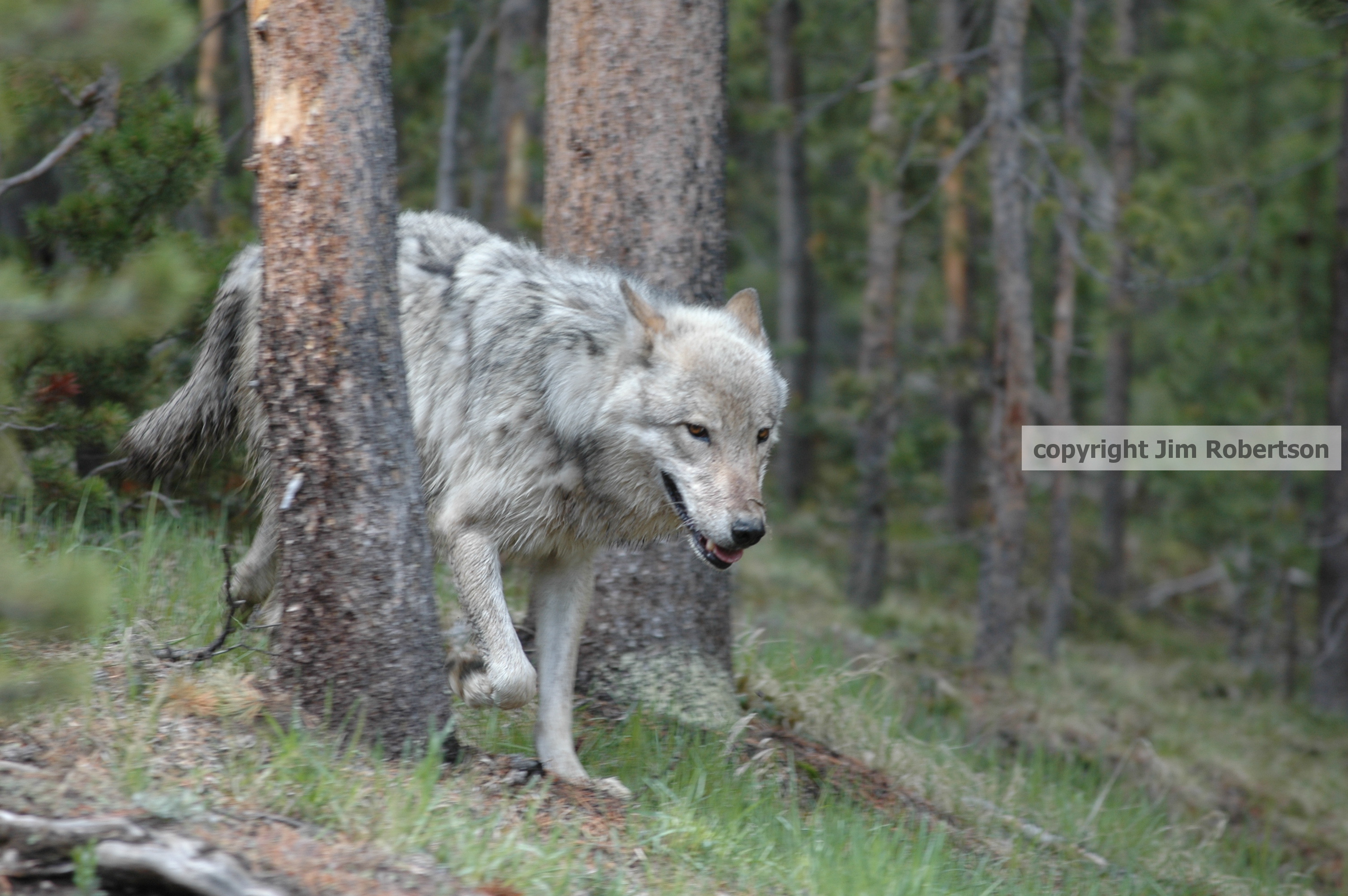
copyrighted Hayden wolf in lodgepoles

Elephants Shelter Young as Bomb Siren Rings in Israel

A group of elephants were filmed sheltering their young when bomb sirens rang out in Tel Aviv, Israel on Thursday as fighting continues in Israel and Gaza.

The elephants at Ramat gan Safari zoo near Tel Aviv began trumpeting and making other noises as they quickly gathered together when the sirens rang out, placing the young elephants in the middle of the circle with the larger adults on the outside.

ImageProxy

Zoos Bring Out the Worst

http://www.komonews.com/news/national/Elephant-escapes-from-circus-kills-man-in-Germany-307258541.html

Elephant escapes from circus, kills man in Germany

BERLIN (AP) – A German man taking his regular morning stroll was killed by an elephant who had escaped from a nearby circus, police said Saturday.

The 65-year-old man was walking in the woods near Buchen, a town in southwest Germany, when the African elephant attacked him shortly after 5 a.m. (0300 GMT), said Heidelberg police spokeswoman Yvonne Schmierer. She declined to say what injuries the unnamed man suffered.

The 34-year-old female elephant, called ‘Baby,’ was captured and returned to the circus. Police are now investigating whether someone let the elephant out of its secure enclosure, and why the animal acted aggressively toward the man.

“There’s evidence of third party involvement,” said Schmierer. “Either someone forgot to shut the enclosure, or the elephant was released intentionally.”

German news agency dpa reported that the elephant had previously injured people. It quoted a representative of the German branch of animal rights group PETA calling for authorities to take the elephant away from the circus.

1924891_10152211828561061_1647642544_n

Dr. Goodall Applauds China’s Action to End the Domestic Sale of Ivory

Monday, June 1, 2015 – 11:53am
In a statement from today, Dr. Jane Goodall congratulates China on their announcement to end the domestic sale of ivory. Dr. Goodall and the Jane Goodall Institute appluad the government’s destruction of 1,500 pounds of their ivory stocks, expressing their commitment to supporting the international action against the poaching of elephants and rhinos.

If we could stop the demand from the world’s two largest ivory markets – China and the United States – we could turn the tide on illegal poaching. Illegal poaching has taken 64 percent of Central Africa’s elephants in the last decade alone. The only way we will put an end to this senseless slaughter is to put an end to the market for ivory. I applaud China’s action and urge them to do more in hopes that other countries will follow their lead, both in banning ivory and in cracking down on its illegal trade.
Sincerely,
Jane Goodall, Ph.D., DBE
Founder, the Jane Goodall Institute &
UN Messenger of Peace
the Jane Goodall Institute-USA Headquarters
1595 Spring Hill Road | Suite 550 | Vienna, VA 22182

Phone 703.682.9283 | Fax 703.682.9312

Extinction of your favorite animal more real than you realize

Extinction of your favorite animal more real than you realize

This week a study published in Science Advances has suggested that the extinction of some of the world’s most beloved animals is a clear and present danger. Fourty-four of the 74 largest terrestrial herbivores are now threatened with extinction, 12 of them “critically endangered” or extinct in the wild. Many of the species in decline, suggests the study, “are poorly known scientifically, and [are] badly in need of basic ecological research.” Not only will they die unless we do something, we’ll never know what they are all about in the first place.

Below you’ll see a set of two maps. The map at the top shows areas where large herbivore species exist. The cool colors show places where large herbivores exist, but only a handful of species.

The warmer the color, the more species of large herbivore exist.

F1.large-1

The second map shows where large herbivores are threatened. Save South America, most areas with very few large herbivore species seem to be less threatened.

The following species are currently threatened:
• African elephant (VU)
• Asian elephant (EN)
• Hippopotamus (VU)
• Pygmy hippopotamus (EN)
• Eastern gorilla (EN)
• Western gorilla (EN)
• Malayan tapir (VU)
• Baird’s tapir (EN)
• Lowland tapir (VU)
• Mountain tapir (EN)
• Philippine warty pig (VU)
• Oliver’s warty pig (EN)
• Visayan warty pig (CR)
• Palawan bearded pig (VU)
• Bearded pig (VU)
• Indian rhinoceros (CR)
• Javan rhinoceros (CR)
• Sumatran rhinoceros (CR)
• Black rhinoceros (CR)
• Grevy’s zebra (EN)
• Mountain zebra (VU)
• African wild ass (CR)
• Przewalski’s horse (EN)
• Asiatic wild ass (CR)
• Sambar (VU)
• Barasingha (VU)
• Père David’s deer (EW)
• White-lipped deer (VU)
• Bactrian camel (CR)
• Indian water buffalo (EN)
• Gaur (VU)
• Kouprey (CR)
• European bison (VU)
• Wild yak (VU)
• Banteng (EN)
• Takin (VU)
• Lowland anoa (EN)
• Tamaraw (CR)
• Mountain nyala (EN)
• Scimitar-horned oryx (EW)
• Mountain anoa (EN)
• Sumatran serow (VU)
• Walia ibex (EN)

This study shows three of the best-known species whose populations are contracting as we speak. These herbivores are the African Elephant, the Common Hippopotamus (not common for long), and the Black Rhinoceros.

F3.large

The most recent range polygons for the rhino are not shown here because of “recent poaching pressure.”

The change in population and possibility of extinction in all of these areas is due largely to one (or more) of four elements. Exploitation (hunting), Livestock (problems therein), Land-use change, and Conflict – as in Civil Unrest between warring human factions.

oops

Above you’ll see the percentages of large herbivore species threatened based on these four major threat categories.

NOTE: The total here adds up to more than 100% because each large herbivore may have more than one existing threat.

Photo Credits: Elephant and hippopotamus (K. Everatt), rhinoceros (G. Kerley).

You can see the full study in Science Advances 01 May 2015: Vol. 1, no. 4, e1400103. Code DOI: 10.1126/sciadv.1400103. Authored by William J. Ripple, Thomas M. Newsome, Christopher Wolf, Rodolfo Dirzo, Kristoffer T. Everatt, Mauro Galetti, Matt W. Hayward, Graham I. H. Kerley, Taal Levi, Peter A. Lindsey, David W. Macdonald, Yadvinder Malhi, Luke E. Painter, Christopher J. Sandom, John Terborgh, and Blaire Van Valkenburgh.

The title of the paper this information comes from is “Collapse of the world’s largest herbivores”. This paper is available now for further review – again, from Science Advances.

Tell Craigslist to end ivory sales on its sites!

1924891_10152211828561061_1647642544_n
Jobs, used bikes, apartments, ivory trinkets. They’re all available on Craigslist, but only one comes from the gruesome slaughter of elephants.
But here’s the thing: Craigslist’s own policy prohibits the sale of animal parts, including ivory on its sites. And yet, right now, the sale of ivory is rampant on Craigslist. Do they know that all ivory comes from dead elephants?
Craigslist’s policy is humane and simply the right thing to do. But they need to follow through and enforce their own rules.
We just conducted a joint investigation with our friends at the International Fund for Animal Welfare and what we found was shocking. A sample of Craigslist sites in cities both large and small yielded hundreds of postings for ivory – valued at well over one million dollars! And this was only examining a small percentage of what is available on the 420 sub-sites that make up Craigslist.
We’ve sent multiple letters to Craigslist leadership drawing attention to this issue. They have taken a first step by explicitly adding ivory to their list of prohibited items.
It’s a start, but we need them to take it further and enforce the rules.
So now we’re turning to you, our elephant-lovers (and many Craigslist users!), to help turn up the heat.
To be clear, what Craigslist is doing isn’t illegal. Many of the listings say that the ivory is antique, imported to the U.S. before the bans in the 1970s and 1980s and in compliance with state and federal law. But they offer no documentation proving this authenticity, and it’s incredibly difficult to tell the difference between ivory that’s decades old and ivory that came from an elephant poached 6 months ago. Even experts can be duped.
That’s exactly why eliminating all ivory sales is necessary. If we’re going to save African forest elephants from extinction, we need to drive down demand for ivory. That means enacting bans on the federal and state levels and then securing the resources to enforce those bans. Persuading corporations to enact and enforce their own bans is another critical piece of the puzzle.
Craigslist is one of the most popular online classified companies in the world. Taking a stand for elephants would be a huge step forward on this issue and make it easier for other companies to follow in their footsteps.
Together, we can win this! We’ve helped enact bans in New York and New Jersey. We convinced PBS’s Antiques Roadshow to stop appraising ivory on-air. Here’s to the next big win.
Sincerely,
John F Calvelli
John F. Calvelli
Executive Vice President for Public Affairs
Wildlife Conservation Society
Director, 96 Elephants

Elephant kills professional big game hunter in Zimbabwe

10671222_10202527690853624_1897035803926677117_n

Professional hunter tracking a lion for American client crushed to death by young bull elephant in Zambezi Valley

By Peta Thornycroft, Johannesburg

17 Apr 2015

A young bull elephant killed professional hunter Ian Gibson early on Wednesday as he tracked a lion for an American client in a rugged part of north-east Zimbabwe.

Mr Gibson, 55, one of Zimbabwe’s best known big game hunters, died scouting for prey in the Zambezi Valley after a young bull elephant charged, then knelt on him and crushed him to death.

“We don’t yet know the full details of how ‘Gibbo’ as we called him, died, as the American client and the trackers are still too traumatised to give us full details,” said Paul Smith, managing director of Chifuti Safaris’ which employed Mr Gibson for the hunt.

The American hunter was on his first trip to Zimbabwe, and only has one leg, but was “fit and strong” and had already shot a leopard. Mr Gibson was scouting for lions when he encountered the elephant.

Mr Gibson’s trackers said the young bull had been in a musth period, which means it was producing much more testosterone then usual.

“We know ‘Gibbo’ shot it once, from about 10 yards away, with a 458 [rifle]. He would never have fired unless he had no alternative. He was a hunter, yes, but he was also a magnificent wildlife photographer and conservationist.

“He was so experienced and this is a most unexpected tragedy.” …

Mr Smith said the young bull elephant appeared not to be a natural target for any hunter as its tusks were too small.

“In most years someone is usually killed on a hunt somewhere in Africa, and that is why it is called ‘dangerous game hunting‘ but we are very shocked that it was ‘Gibbo’,” said Mr Smith.

Mr Gibson began his wildlife career in Zimbabwe’s department of national parks, but left to become a hunter about 25 years ago.

He was well-known in the US, where the Dallas Safari Club is paying his funeral expenses.

More: http://www.telegraph.co.uk/news/worldnews/africaandindianocean/zimbabwe/11546066/Elephant-kills-professional-big-game-hunter-in-Zimbabwe.html

Hunter Killed by Bull Elephant!

http://africageographic.com/blog/hunter-killed-bull-elephant-musth/

Ian Gibson, a professional hunter for Chifuti Safaris, was killed by an elephant bull while guiding an elephant hunt in Chewore North in the lower Zambezi Valley. 

Ian Gibson hunter

A message shared on africahunting.com by Safari Classics said:

“It is with deep sadness to announce the passing of Chifuti Safaris professional hunter Ian Gibson. Ian was tragically killed by an elephant bull earlier today while guiding and elephant hunt in Chewore North (lower Zambezi Valley).

The details are just starting to emerge as we write this. However it appears that Ian and his client had been on the tracks of an elephant bull for approximately five hours when they decided to take a break and allow the client to rest. Feeling he was quite close to the elephant, Ian and his tracker Robert continued to follow the tracks in hopes of getting a look at the ivory as the client, stayed with the game scout to rest. Robert indicated the bull was in musth. They eventually caught up to the bull, spotting him at about 50-100 meters. The bull instantly turned and began a full charge. Ian and Robert began shouting in order to stop the charge. At very close range, Ian was able to get off one shot before the bull killed him. The scene was very graphic.”

– See more at: http://africageographic.com/blog/hunter-killed-bull-elephant-musth/#sthash.u6QkEGCu.dpuf