Humans show their thirst for blood

Roger, one of our regular readers, posted the following letter he wrote which was printed yesterday in the Missoulian, under the heading “Hunting and fishing.”

: Humans show their thirst for blood

The sports killing season of 2013 is upon us. In Montana alone, “sportsmen” will kill around 19,000 antelope, 40,000 deer, 300 wolves, 1,300 black bear, 200 bighorn sheep, 200 moose, 20,000 elk – then there are turkeys and an assortment of other birds to kill.

It is sporting tradition. Wyoming will kill even more elk, having had record years the past 10. The states of Montana, Wyoming, Idaho and Wisconsin will push wolf-killing as far as they think they can get away with and not risk re-listing. Montana sells $19 wolf tags to kill five wolves.

Then there is the U.S. Department of Agriculture Wildlife Services, which kills around 72,000 coyotes each year and around 28,000 other animals, a million animals a decade.

Then there are the poachers of Africa, and the sportsmen who go there to kill dwindling populations of elephants and rhinos and lions.

We, human animals, are overfishing the oceans and threatening sharks, whales, bluefin tuna and other marine life.

Then there are the slaughterhouses, which will kill a billion chickens worldwide and millions of cattle, pigs and sheep each year. Now conservative state legislatures are pushing every year, despite what the American people have opposed over and over, the opening of horse slaughterhouses.

Animal shelters “put down” (kill) thousands of dogs and cats each year because there are too many and too few homes for them.

You would think that humans are primarily bloodthirsty carnivores, something as scary as the worse aliens you can imagine, which we are.

Roger Hewitt
Great Falls, MT

Game Departments Must Think They’re God

Cannon Beach, nestled along the northern Oregon Coast, used to be a prettymore housepix 235 peaceful place. It’s a nice, romantic getaway or a great place to bring the entire clan. Haystack Rock, perched immediately off CB’s two mile stretch of sand, appears on more post cards and magazine covers than any other feature on the entire coast.

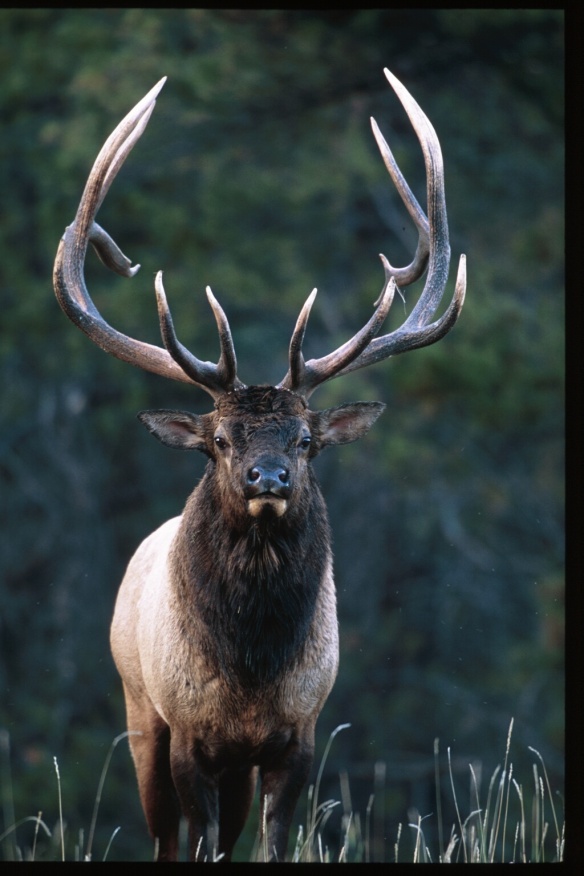
Folks stay there to escape the noise and manic pace of Portland or Seattle, enjoying quiet walks, hoping to catch a glimpse of some of the native wildlife. A small herd of elk lives there and can sometimes be seen taking their own cautious walks out on the beach in the early morning, foraging on the thick, leafy salal bushes in Ecola State Park or resting on the grass in city parks at the edge of town, adding to the natural character of area.

Cannon Beach is not the kind of place people expect to run into cammo-clad Elmers with shotguns or compound bows stalking the area’s half-tame animals.

But when the town’s parks and community services committee wanted to limit the local hunting season to only one month, the Oregon state Department of Fish and Wildlife told them they could not limit the hunting season and instead set five seasons there, totaling 90 days.  And although the town of Cannon Beach wanted to restrict hunting to bows and arrows and shotgun slugs, the ODFW informed them that buckshot would be allowed as well.

Yes, you read that right—now any hunter who wants to can blast a 700 pound bull elk with a shotgun. What a mess that would be for some sightseeing family to come across. And how many elk and deer, who were nearly out of range at the time they were shot at, will escape with a gaping, bleeding, lead-filled hole in them?!!

According to the almighty ODFW, hunting on the Ecola Creek Forest Reserve will be extended from one month to 92 days, beginning Aug. 24. And rather than being limited to one season from Sept. 28 through Nov. 1, five seasons will be allowed through Dec. 8!

The great and powerful ODFW have decreed that hunting dates in the reserve shall be:
• Aug. 24 through Sept. 22: bow hunting for deer and elk.
• Sept. 28 through Nov. 1: shotgun hunting for buck deer.
• Nov. 9 through Nov.12: shotgun hunting for bull elk.
• Nov. 16 through Nov. 22: shotgun hunting for bull elk.
• Nov. 23 through Dec. 8: bow hunting for deer.

This is just another example of state game departments pushing their weight around, defying the will of the people and town councils, not to mention the will of the wildlife. Who do “game” regulators think they are, God? Sorry, but I hear that position has already been filled.

Text and Wildlife Photography © Jim Robertson

Text and Wildlife Photography © Jim Robertson

Wildlife Recovery Just a Big Game for “Game” Departments

More proof that reintroduction and recovery is all just a big game for state wildlife department managers: Missouri recently reintroduced a mere 100 elk over the past two years, and already they’re talking about implementing a hunting season on them soon.

It seems hunting groups and their “game” department lackeys live by a time-tested formula:

1) Wipe out a species through over-hunting and/or trapping
2) Allow it to recover
3) Open a season and sell tags to kill the animals off again

Lately we’ve seen this formula in action with wolves in the intermountain West and Great Lakes states. In addition to their full-scale assault on wolves, Montana recently started up a hunting season on bison, and they’re already talking about one for grizzly bears the minute they lose federal protection.

Now the recovering elk in Missouri may soon be under fire, as a local paper tells us in the following article entitled,

Elk hunting in Missouri now predicted to start in 2016

Tuesday, July 9, 2013 Supervising editor, Jake Kreinberg

COLUMBIA — The Missouri Department of Conservation now estimates that an elk hunting season in the state will begin in 2016.

The department slowly reintroduced elk from 2010 until earlier this year, trapping about 50 annually in Kentucky and then bringing them to the Peck Ranch Conservation Area in southeast Missouri for observation. The program has since moved to its operational phase, in which the herd will grow only via reproduction.

Elk were common in Missouri before European settlement but had been eradicated from the state by the end of the Civil War. Resource scientist Lonnie Hansen says “about 100” elk are now in the herd following several dying off during relocation and last year’s drought.

“I’d be pleased if we had 125 animals in the herd” by the end of this year, Hansen said.

The department wants at least 200 elk in the herd before it will give any consideration to allowing elk hunting, which might not happen for another three years, Hansen predicted. He previously expected hunting to start in 2015, according to previous Missourian reporting. Whenever hunting begins, it won’t be easy to get a license, as there may be only 30 to 40 available.

“We’d like to see them become part of the natural landscape,” Hansen said about the animals.

Reintroducing elk to the state could be beneficial not only to the ecosystem of Missouri, but also the economy. Joe Jerek, the department’s news services coordinator, said the conservation areas could “expect to see a lot of people” hoping to catch a glimpse of the new herd.

“There are lots of people that just want to see them,” he said. “It brings another large native species back to Missouri.”

According to the department’s website, residents’ interest in reintroducing elk led to a restoration feasibility study in 2000, but that was suspended a year later because of fears of Chronic Wasting Disease the elk could introduce to local livestock.

A method for testing for the disease and continued interest in having elk revived the reintroduction effort in 2010.

[Just who is interested in “having elk,” and for what purpose, the paper didn’t say.]

Wildlife Photography ©Jim Robertson, 2013. All Rights Reserved

Wildlife Photography ©Jim Robertson, 2013. All Rights Reserved

Celebrate the Right to Be Quiet Instead

Text and Wildlife Photography ©Jim Robertson, 2013. All Rights Reserved

Text and Wildlife Photography ©Jim Robertson, 2013. All Rights Reserved

On the way home from the ocean, just before sundown yesterday evening, I passed a field where a local elk herd can often be seen peacefully grazing or lounging at the edge of the forest. This time the elk were running away from some unseen threat. Being as it was July 3rd and considering the number of fireworks stands around, there was no sense second-guessing what was frightening them—fireworks!

Despite the increasing fire danger this time of year and regardless of who or what they might annoy, celebratory Americans can’t seem to resist launching their little rockets and lighting off their pocket-sized explosives. Those without their own box of bombs compensate by shooting their semi-automatics ‘till the cows flee home.

What a thrill—but not for everyone. While people play their war games, the wildlife head for the hills. To them, the sound of fireworks and gunfire are synonymous: they both spell human-up-to-no-good. As the raucous revelers express their right to be obnoxious assholes, the non-human animals—much more in tune with the senses—have to live in terror. Don’t believe it? Just look at your family pet.

And all so we can relive a war over and over. But the one good thing about war: while humans are busy fighting with each other each other, they don’t have as much time to torment the wildlife. Also, from the scavengers’ perspective, there’s sometimes a lot of fresh carrion left on the battlefield.

Study: Wolves Don’t Cause Elk Drop

Even they know that wolves are NOT the culprits…

http://www.spokesman.com/blogs/hbo/2013/jun/21/study-wolves-dont-cause-elk-drop/

June 21, 2013 1:22 p.m.

Any hunter who’s spent time in wolf country can attest to the predators’ influence. We see wolf tracks, find old kills, and often times we spot fewer game animals. But exactly how wolves affect big-game populations is still greatly unknown. Yeah, wolves eat elk. But, do they kill mostly adults or calves? Do they eat enough elk to wipe out a whole herd? Do they pressure elk into hiding in the timber or force them off their feeding patterns? Are wolves even one of the main factors in elk population dynamics? New research from the Wyoming Cooperative Fish and Wildlife Research Unit at the University of Wyoming is starting to shed light on some of these questions. After three years of studying the Clark’s Fork elk herd (about 5,000 animals) in northwest Wyoming, lead researcher Arthur Middleton found that wolves might not be as detrimental to elk populations as many outdoorsmen think/Alex Robinson, Outdoor Life. H/T: Rich Landers, SR Outdoors.

copyrighted wolf in water

Save the Wolves: Support the Rights of All Animals

Make no mistake, I love wolves as much as just about anyone; yet some people practically worship them, putting them above any other species except perhaps whales and dolphins. To be sure, wolves are sacred, but there are folks who think of them as hyper-sentient—the great Northern furred land-dolphin, if you will.

I’m not for a minute denying wolves’ intelligence or adherence to an almost human-like social caste system, but I can’t get behind campaign slogans such as “Real hunters don’t hunt wolves.” I call bullshit on that. Real hunters hunt wolves, coyotes, elk, deer, prairie dogs, pigeons, pronghorn, bears, cougars, raccoons— anything and everything that moves or has ever moved. Hell, they’d probably hunt whales and dolphins if it weren’t for the Federal Marine Mammal Protection Act. Most hunters just want a target and a trophy, they don’t really care what species it is.

Granted, some hunters are more sadistic than others, just as some serial killers revel in their victims’ suffering, while others dispatch their prey as quickly as possible—they’re only interest: harvesting a trophy corpse to have around, for whatever morbid reason. The most sadistic hunters are probably fueled by the fact that there are people out there who adore wolves while state laws still consider delisted wolves “property” like every other non-human animal.

Serial killers have been known to derive sick pleasure from taunting the families of their victims, calling them from prison to recount their murders. The same kind of thing likely goes on in the minds of sadistic wolf hunters who boast and post photos of their kills, knowing that some sentimental environmentalist or animal rightsists might come across one and be hurt or outraged by it. They’d love to know that one of us broke down, burned out or resorted to lethal action because of their post (as long as they weren’t on the receiving end of the action).

The wolf situation is unique among modern-day animal atrocities, in that it’s as yet perfectly “legal” for hunters and trappers to film themselves in action. In sharing them online, they’re banking on the fact that the general public is unmoved and apathetic. But I’d like to think that if factory farmers readily shared footage of their routine acts of animal abuse online, there would be a lot more vegans in this world.

For now, the only way anti-wolf sadists can be stopped is by eliminating them from the world of the living. But if you happen to reside in one of those backward states that have yet to implement a death penalty for wolf hunting, the best advice is to just ignore them like you would the taunts of any other bully. Meanwhile, keep petitioning Facebook and other social media outlets where their death porn appears. As long as animals, including wolves, are seen only as “property” by the powers that be, the people who run Facebook will feel entitled to allow anti-wolf evil to be spread throughout their pages and posts.

Eventually common decency will prevail and violent anti-wolf/anti-animal sites will come under serious scrutiny, just as misogynistic sites recently have. We need to step up the pressure on Facebook and let them know that freedom of speech does not give one the right to victimize. Be sure to sign this petition and pass it on: http://www.change.org/petitions/facebook-executives-ban-sadistic-pages-of-wildlife-torture

Meanwhile, let’s fight for the rights and personhood of all animals, not just a chosen few.

Text and Wildlife Photography ©Jim Robertson, 2013. All Rights Reserved

Text and Wildlife Photography ©Jim Robertson, 2013. All Rights Reserved

Top 10 Retorts to Hunter Fallacies

Hunters’ arguments and rationalizations for their sport are so repetitive and predictable that, to save valuable time and precious mental energy, it might help to have your responses printed out ahead of time like flash cards, and kept at the ready in your back pocket. Here, then, are the Top 10 Retorts to Hunter Fallacies you’re most likely to hear the next time you debate a sportsman. (I would apologize to David Letterman, but this isn’t meant to be a joke.)

10) Hunting is”sustainable.”                                              
In today’s world of 7 billion people? Never mind, that’s a joke if I’ve ever heard one.
Do we really want to encourage 7 billion humans to go out and kill wildlife for food as if wild animal flesh is an unlimited resource? The only way hunting could be sustainable for humans these days is if we drastically reduced our population…and killed off all the natural predators. Overhunting has proven time and again to be the direct cause of extinctions, from the passenger pigeon to the Eastern and the Miriams Elk. Now wolves in the Rockies and Great Lakes are being hunted and trapped to oblivion—for the second time.

9) Animals kill other animals, so we can too.
That’s an example of what’s known as the naturalistic fallacy—the notion that any behavior that can be found in nature is morally justifiable. But wolves and other natural predators need to hunt to survive, humans don’t—for them it’s nothing more than a thrill kill. Human beings have moved beyond countless other behaviors such as cannibalism or infanticide, so why can’t some people tear themselves away from hunting?

8) Humans have teeth like carnivores                                                                     Human beings have mostly flat teeth, designed primarily for chewing plant-based foods, as our primate cousins do. Our canines, or “fangs,” are teensy compared to those of gorillas, who are strict vegetarians and only show them to appear fierce. Also, our intestinal tract is long to allow for the slow digestion of high-fiber foods, while true carnivores have short intestines as needed to process meat and dispose of the resulting toxic wastes quickly.

7) Wild game meat is health food.
All animal flesh is rife with cholesterol throughout, and the protein in animal flesh is acidic, causing bone calcium losses as it is metabolized. According to the American Dietetic Association, a diet high in animal products has been linked to obesity, diabetes, colon and other cancers, osteoporosis, kidney stones, gallstones, diverticular disease, hypertension and coronary artery disease. New studies have found that another culprit in causing heart disease may be a little-studied chemical that is burped out by bacteria in the intestines after people eat meat.

6) Hunting is needed to control animal populations.
You’d really have to have no understanding of or faith in Mother Nature to make such a claim—she was doing a fine job of taking care of her own before Man came along and appointed himself “manager” and “game” keeper. No niche goes unfilled for long before some natural predator finds it and fixes a “problem”…if we allow them to. Besides, hunting animals like deer makes them breed more, resulting in more deer, not fewer.

5) If we don’t kill deer they’ll become a traffic hazard.
Two words: Slow the fuck Down. (Sorry, that was four words.)
More animals are hit by cars during hunting season than any other time of year, usually when fleeing from bloodthirsty sportsmen with guns.

4) Hunting teaches respect for wildlife and an appreciation for nature.
Ha! That’s like a serial killer claiming his crimes foster a respect for women. Tracking down and shooting something does not equal respect. Try using a camera or binoculars if you really want to respect them.

3) Hunting is a “manly” sport.
First of all, hunting isn’t even a sport—Sport is generally recognized as an activity based in physical athleticism or physical dexterity. Sports are usually governed by rules to ensure fair competition. A sport is played by two equally matched, or at least equally willing, sides. According to SportAccord, the second criteria determining if something is a sport: it be in no way harmful to any living creature. And anyway, real men respect animals (see above).

2) Hunting licenses pay for wildlife refuges.
In truth, hunting licenses pay for hunter playgrounds, not true wildlife refuges. Take a look at how many “refuges” have been opened up to hunting; or just try to close an area to hunting for the sake of wildlife and hear the nimrods wail. If hunters hadn’t hijacked all the refuges, more bird watchers, hikers and others who truly appreciate nature would gladly pay for a pass to frequent those places. Furthermore, non-consumptive wildlife watchers contribute far more to local economies than do hunters.

1) Hunting keeps kids out of trouble.
Sticking a gun in a child’s hand and telling him or her to shoot Bambi is likely to leave lasting psychological scars, whether it’s PTSD or a heart calloused for killing.

Bonus fallacy) God put Animals here for us to use.
Don’t flatter yourself.

Text and Wildlife Photography ©Jim Robertson, 2013. All Rights Reserved

Text and Wildlife Photography ©Jim Robertson, 2013. All Rights Reserved

Hunting Conditions Us to Killing

The Following is an Op/Ed I sent to the New York Times in response to a recent article they featured glorifying hunting. For some reason, they didn’t print this—it must not have fit in with their agenda…


Hunting Conditions Us to Killing

I’d like to thank the New York Times for inadvertently giving us a glimpse inside the hunter’s mind, through their recent article, “Hunting your own dinner.” In my book, Exposing the Big Game: Living Targets of a Dying Sport, I spend an entire chapter probing “Inside the Hunter’s Mind” and I’m here to tell you, it’s a dark and disturbing place in there—and no one divulges that better than the hunters themselves. Here are a couple of quotes from hunters waxing poetic on the thrills they get out of killing:

“I had wondered and worried how it would feel to kill an animal, and now I know. It feels — in both the modern and archaic senses — awesome. I’m flooded, overwhelmed, seized by interlocking feelings of euphoria and contrition, pride and humility, reverence and, yes, fear. The act of killing an innocent being feels — and will always feel — neither wholly wrong nor wholly right.”

“You’re the last one there…you feel the last bit of breath leaving their body. You’re looking into their eyes and basically, a person in that situation is God! You then possess them and they shall forever be a part of you. And the grounds where you killed them become sacred to you and you will always be drawn back to them.”

Both quotes were from people who considered themselves hunters—men who stalked and killed innocent, unarmed victims. The first was taken from the aforementioned Times article written by Bill Heavey, an editor at large for the “sportsman’s” magazine, Field and Stream. The second one triumphantly reliving his conquest was none other than the infamous Ted Bundy, as he sat on death row musing over his many murders to the authors of The Only Living Witness.

It seems that, whether the perpetrator is engaged in a sport hunt or a serial kill, the approach is similar. Though their choice of victims differs, their mindset, or perhaps mental illness, is roughly the same.

Even our former cold war enemy seems to be light years ahead of the U.S. in moving beyond the barbarity of hunting. Oleg Mikheyev, MP of the center-left Fair Russia parliamentary party, told daily newspaper Izvestia just what I’ve been saying all along: “People who feel pleasure when they kill animals cannot be called normal.”

Mikheyev entered a draft law to ban most hunting in Russia and expressed his belief that hunting is unnecessary and immoral, regardless of whether one sees it as a sport, a pastime or an industry. According to the bill, forest rangers will still be allowed to hunt but must first pass a psychological test, which Mikheyev points out, “…can help us in early detection of latent madmen and murderers.”

Here in the states, Heavey went on to write, “What ran in the woods now sits on my plate… What I’ve done feels subversive, almost illicit.”

Then why do it?

Though some hunters like Heavey may put on a show of innocuousness by temporarily eschewing guns and choosing to test their skill at bowhunting—arguably the cruelest kill method in the sportsman’s quiver—the typical American hunter sets out on their expeditions in a Humvee or some equally eco-inefficient full-sized pickup truck, spending enough on gas, gear, beer and groceries to buy a year’s supply of food, or to make a down payment on a piece of land big enough to grow a killer garden.

Clearly the motive for their madness is more insidious than simply procuring a meal.

There’s been plenty of discussion about controlling weapons to stave off the next school shooting, but the media has been mute over the role hunting plays in conditioning people to killing. And the New York Times article is a shameful example of the press pandering to the 5 percent who still find pleasure in taking life. Do we really want to encourage 7 billion humans to go out and kill wildlife for food as if hunting is actually sustainable and wild animal flesh is an unlimited resource?

Overhunting has proven time and again to be the direct cause of extinction for untold species, including the passenger pigeon, the Carolina parakeet and the Eastern elk. Meanwhile, hunters out west are doing a bang-up job of driving wolves back to the brink of oblivion for the second time in as many centuries.

Heavey ended his Times article gloating, “I have stolen food. And it is good.” Like serial killers and school shooters, hunters objectify their victims; so insignificant are they to them that hunters don’t even recognize them for what they are—fellow sentient beings. Does somebody have to point out the obvious—he didn’t just steal “food,” he stole a life.
Text and Wildlife Photography ©Jim Robertson, 2013. All Rights Reserved


Text and Wildlife Photography ©Jim Robertson, 2013. All Rights Reserved
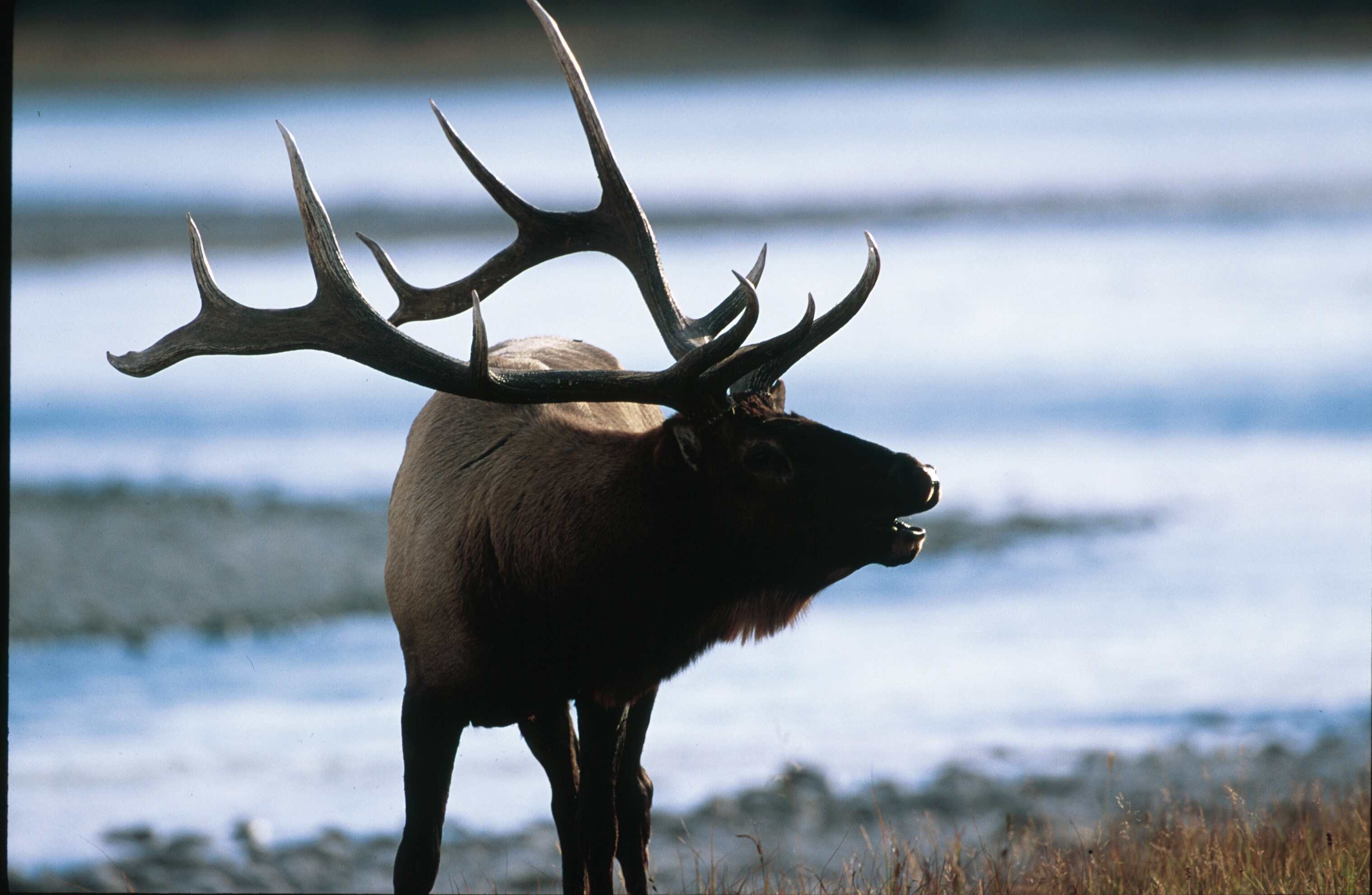
Signs I’d Like to See More Of

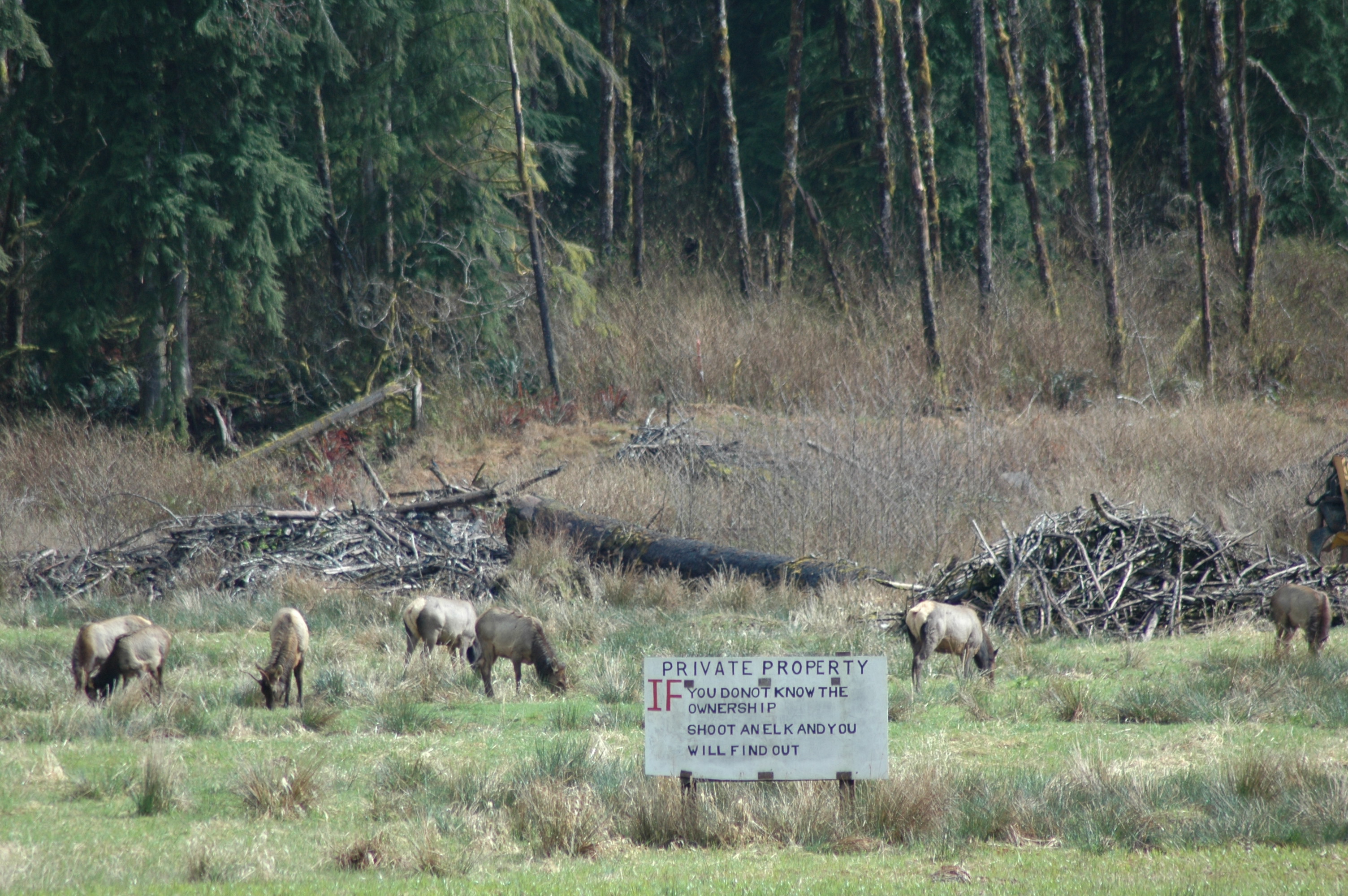
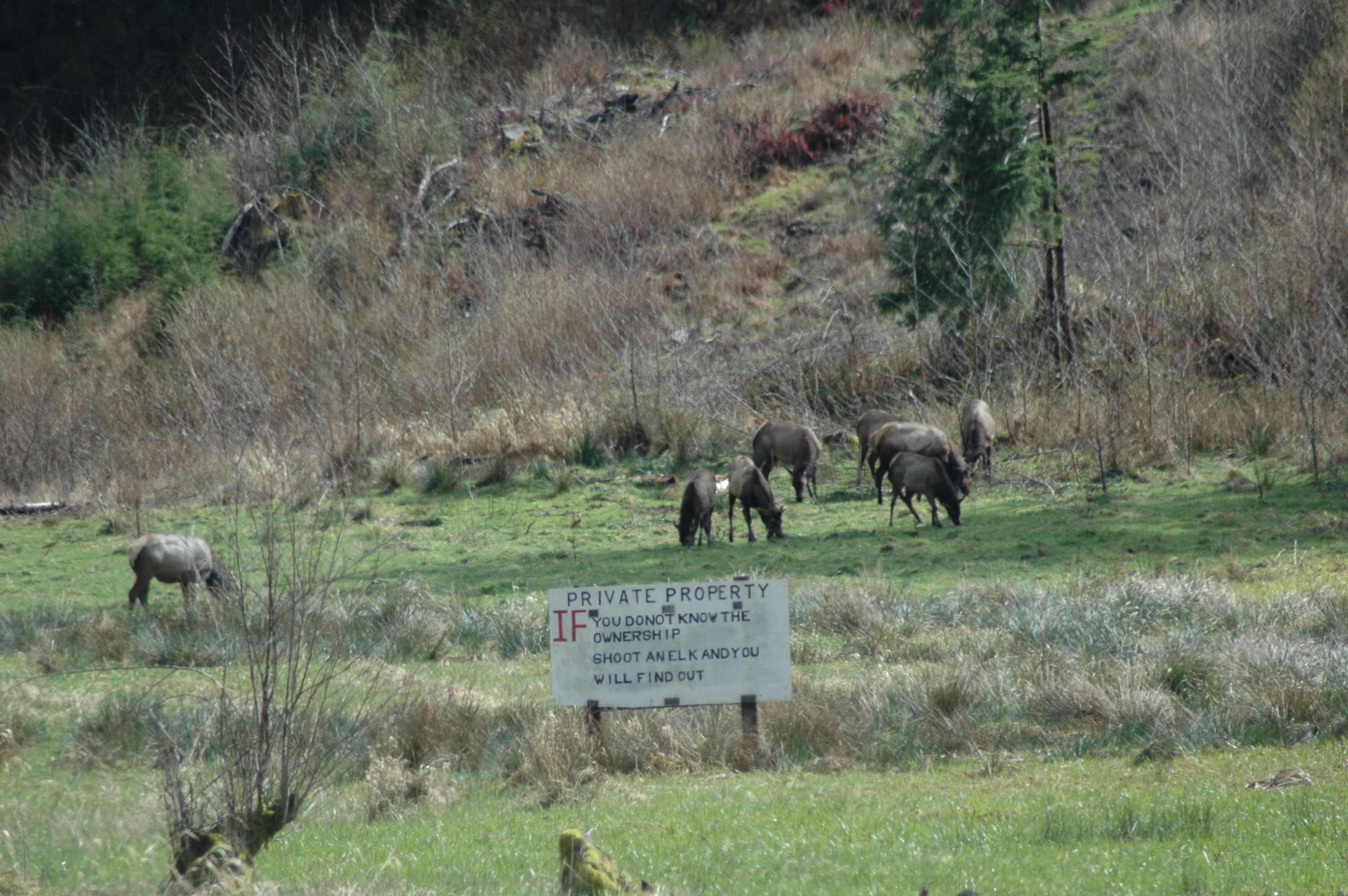
I know that some people have a problem with “Private Property” signs, but there’s no reason to suggest that property owners should not mark their land with “No Hunting” signs. I’d like to see all unnecessary fences taken down or modified so wildlife can pass safely through. But a well-marked piece of private land can serve as a de-facto refuge for our wildlife neighbors—as long as said landowner is not himself a hunter.

Here are some signs I’d like to see more of…DSC_0017

DSC_0026

and of course, this one

734503_607608749267357_1194895074_n

I’m About Sick of Control Freaks

What the hell’s going on with state lawmakers and wildlife agencies lately? With just a cursory glance at the headlines this morning I counted at least a half dozen cases of puffed-up politicians overstepping their bounds by offering up some non-human species to appease the bloodlust of a few of their freakiest constituents.
Headlines like “State lawmaker wants open season on woodchucks,” about Wisconsin state representative, Andre Jacque (R-De Pere), who is pedaling a bill that would remove woodchucks from Wisconsin’s protected species list and allow people to kill an unlimited number of them during a season that would run nearly year-round. Jacque said woodchucks are abundant and a “nuisance.”

Though newspaper journalists are, as a rule, impartial, the article’s reporter couldn’t help but see the disturbing trend going on across the dairy state:

Deer, bears, wolves, mourning doves, even wild pigs – if it walks, crawls or flies in Wisconsin, hunters can probably shoot it. Now a state lawmaker wants to declare open season on one more animal: the wily woodchuck.

The bill represents another expansion of hunting rights in Wisconsin and promises to reignite a years-old debate over whether hunters really need another target species. Attempts over the last decade to create hunts for feral cats and mourning doves, the state’s symbol of peace, drew fierce opposition. The state’s new wolf season sent animal lovers into a rage last year and an attempt to create a sandhill crane hunt last spring went nowhere after opponents mounted an intense campaign to stop it. Woodchucks, also known as groundhogs, aren’t as near and dear to Wisconsinites’ hearts as wolves, mourning doves and cranes.

Here’s an idea, why not let their “nuisance” wolves control the “nuisance” woodchucks? Predators like wolves and coyotes have been in charge of “controlling” woodchucks, beavers, prairie dogs, ground squirrels and other scary rodents for thousands of centuries. But I guess letting nature take care of itself would cheat hunters and other human control freaks out of some of their coveted “shooting opportunities.”

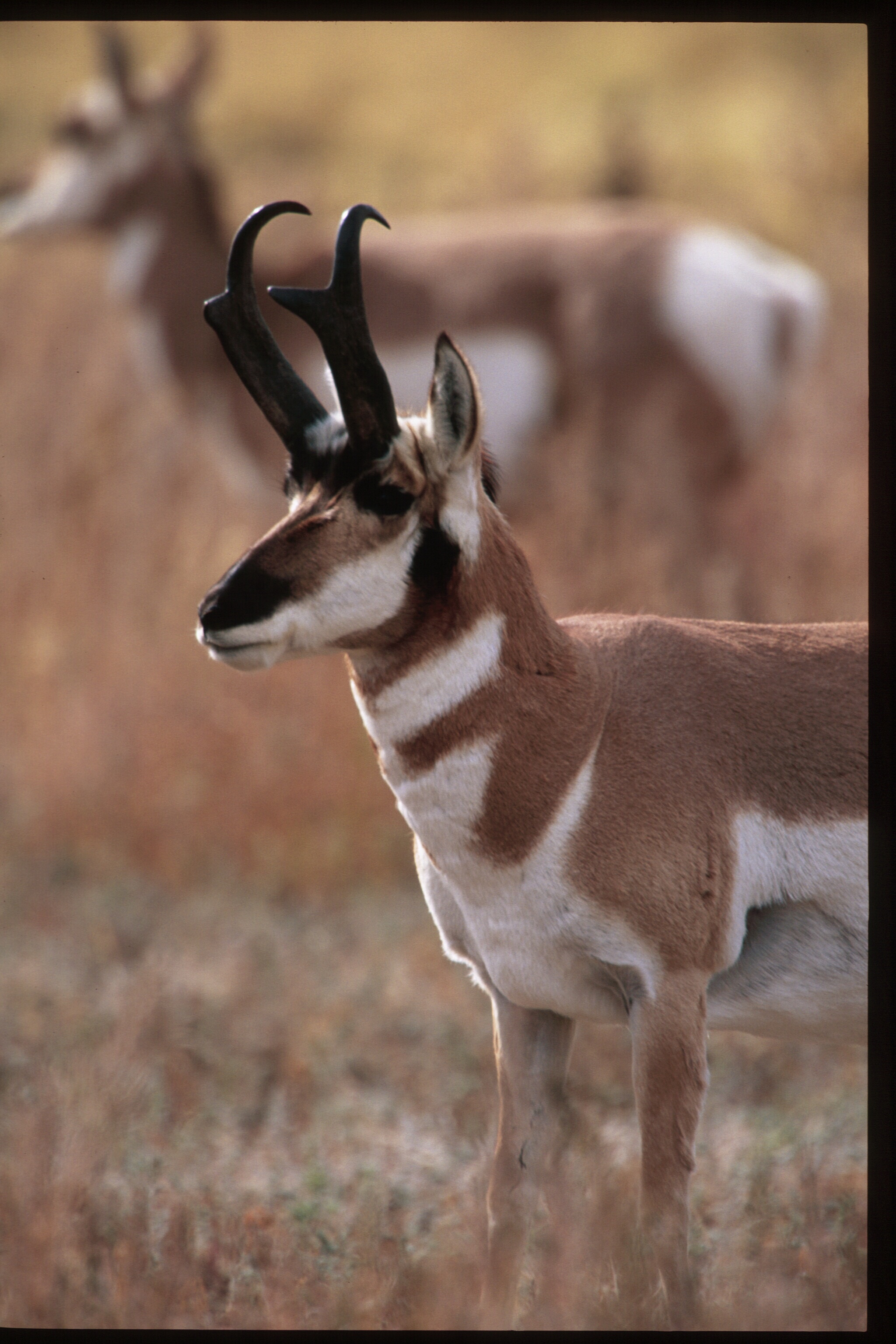
Meanwhile, a Spokane Spokesman Review article, “Idaho sets 2013 big-game hunting seasons, rules,” reports: permits for antlerless elk hunting will be increased statewide under the 2013 hunting seasons for deer, elk, pronghorn, black bear, mountain lion and gray wolf adopted today in Boise by the Fish and Game Commission. The new seasons also include an increase in pronghorn tags and expanded wolf hunting and trapping seasons. Wolf hunting on private lands in the Idaho Panhandle will be allowed year round.

Again, like in Wisconsin, Montana and so many other trigger-happy western states, populations of both wolves and deer or elk are slated for reduction. It seems the work of control freaks is never ending.

Since they don’t have any wolves to scapegoat, wildlife policy-makers in Utah are setting a $50.00 bounty on coyotes, presumably to keep in practice.
And in Oklahoma, spring youth turkey season will begins today for youth hunters ages 17 and younger. Turkeys won’t be safe in that state until sometime in May.

Also in Oklahoma hunting news, on Wednesday 1200 students and 64 teams from Oklahoma high schools, middle schools and elementary schools will convene at the OKC State Fairgrounds to compete in the state’s ninth archery championship tournament. Archery in the Schools has become the most popular educational program the Okla. Dept. of Wildlife “Conservation” has ever introduced. More than 400 schools and almost 50,000 students in Oklahoma are taking an eight week archery session taught indirectly by the Oklahoma Wildlife Department.

Now, I like to shoot arrows at straw bales as much as the next guy, but you know it doesn’t end there for most of these Okies. Sure enough, the success of their archery program has inspired the Oklahoma Wildlife Dept. to introduce other courses in schools such as hunter education, bow hunting and fishing. And this spring the Wildlife Dept. will introduce a scholastic shooting sports program in several pilot schools.…

I could go on, but trying to keep up with every state’s new anti-wildlife programs is really getting to be a nuisance.

 Text and Wildlife Photography ©Jim Robertson, 2013. All Rights Reserved

Text and Wildlife Photography ©Jim Robertson, 2013. All Rights Reserved