Police investigate hunting accident that kills N.L. man in early 60s

http://nationalpost.com/pmn/news-pmn/canada-news-pmn/police-investigate-hunting-accident-that-kills-n-l-man-in-early-60s

COLINET, N.L. — A man in his early 60s was killed when a gun accidentally discharged during a rabbit hunting trip on Newfoundland’s east coast, police said Monday.

RCMP Const. Steven Hatch said officers were called to a remote dirt road near Colinet at about 1:35 p.m. Saturday for a report of an accidental shooting.

“We got a 911 call from one of the people in the hunting party that there was an accidental discharge of a firearm, striking another male in the upper body,” he said from Placentia. “Indications are that it was a hunting accident.”

He says police and paramedics responded, but the man was pronounced dead at the scene on Route 91.

Hatch said the man, from the Foxtrap area of Conception Bay South, was hunting rabbit with others and was on the dirt road when the shooting occurred.

Police are investigating with help from the medical examiner’s office.

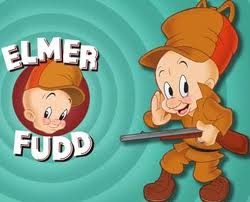
An Elmer’s Code of Ethics

Fudd

If an animal lives,

kill it.

If it gets away,

hunt it down and kill it.

If it learns to adapt to humans,

hate it and kill it year ‘round.

If it becomes endangered,

kill its mother and put it in a zoo.


If an animal proves intelligent,

respect it then kill it.

If you think it dumb,

kill it and eat it.

If it simply is,

kill it because it’s there.

If anyone’s watching,

Just call it “conservation.”

A “Special” Time of Year

It’s Saturday morning, in elk country on the last weekend in October. The air is crisp and trees are slowly shedding their golden leaves. Autumn can be a special time of year, but not for everyone. A week from today is opening day of elk (murdering) season. Since first light the peace of the morning has been desecrated by the repeated blasts of hunters, sighting-in their rifles—or warming up their itchy trigger fingers.

To say that hunters ruin it for the rest of us would be an understatement. Their noises, actions and attitudes not only irk those of us who enjoy living peacefully near wildlife habitat, they cause overwhelming stress to the animals who know they could be the next target.

When I hike through the forest, I try to use the same routes, respectfully leaving unexplored certain areas where deer and elk are likely to be bedded. The hunter’s outlook is just the opposite, purposely tromping through every corner of the woods in hopes of scaring up any animal who might call it their home.

During the fall, elk should be bugling loudly, competing with other bulls and rounding up their harems.  Meanwhile, the cow elk try to stay out of harm’s way as much as possible, yet feel reproductive stirrings of their own.

All are distracted enough already. The last thing they need right now is a bunch of Elmers out trying to “harvest” their flesh—or their head to mount on the wall to boost their fragile Fuddly egos.

Text and Wildlife Photography ©Jim Robertson, 2013. All Rights Reserved

Text and Wildlife Photography ©Jim Robertson, 2013. All Rights Reserved

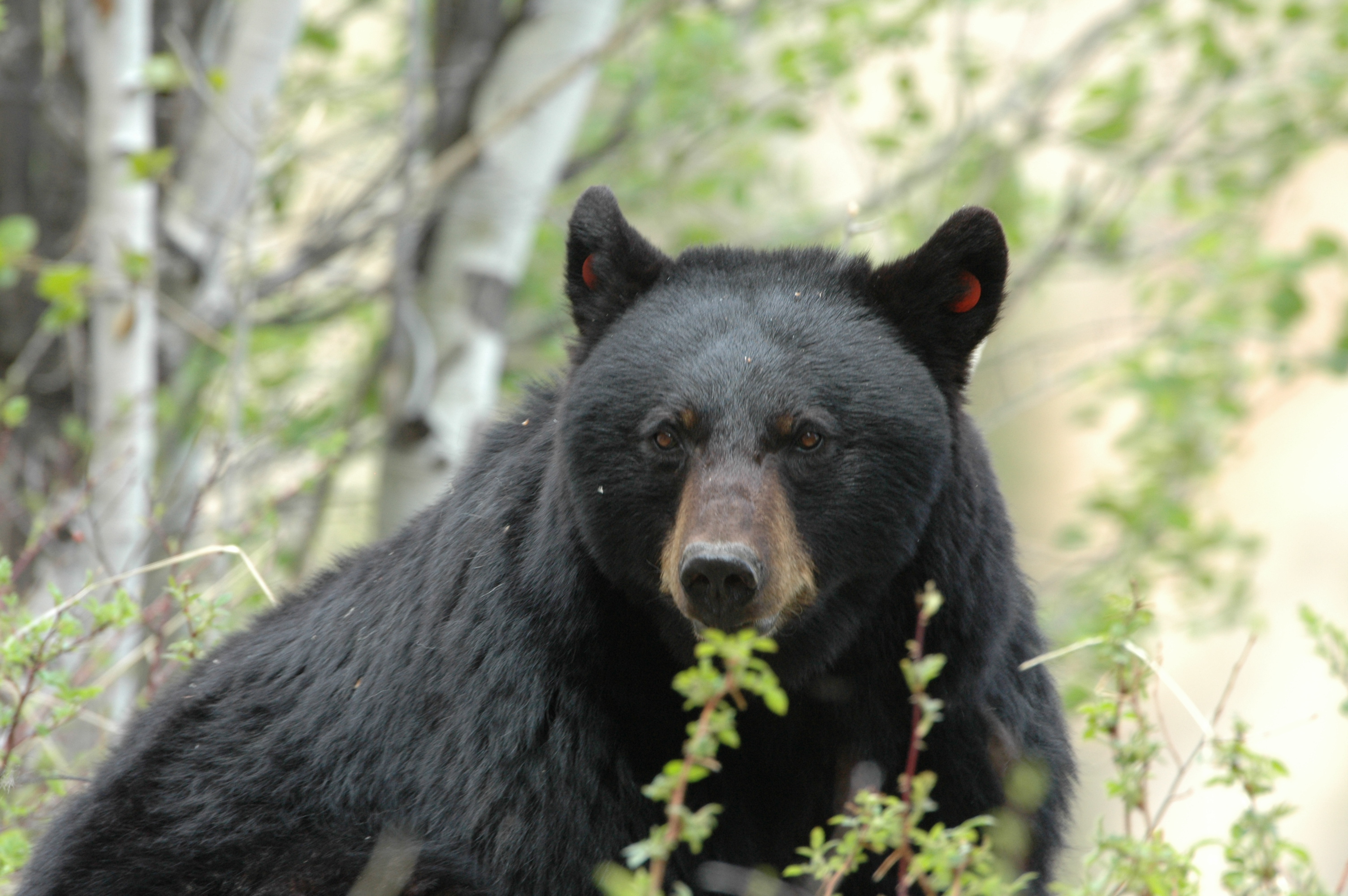
Today is Opening Day of “Bear Season” in Washington!

The first day of August: summer is at its peak, young birds have fledged and the wild berries are just now ripening up…

But on this very same day, demonic dimwits and narcissistic nimrods that enjoy making sport of murdering animals are out trying to end the life of a humble being whose only focus lately is filling up on fresh fruit.

That’s right; believe it or not, August 1st is the beginning of bear season across much of Washington! From today until November 15th, any loathsome scumbag with a bear tag and an unwholesome urge to kill can “bag” himself a bruin—just for the sport of it—in this presumably progressive state.

Sure, one or two people may be killed by bears in a given year, but over that same time period 50 will die from bee stings, 70 will be fatally struck by lightning and 300 will meet their maker due to hunting accidents. A person has about as good a chance of spontaneously combusting as being killed by a bear.

Meanwhile, tens of thousands of bears are killed by people each year, and no one is keeping track of how many are wounded, only to crawl off and die slowly without hospital care to pamper them back to health. 30,000 black bears are slain during legal hunting seasons in the US alone. Possibly another 30,000 fall prey each year to ethically impotent poachers seeking gall bladders to sell on the Chinese black market. Victims lost to that vile trade are eviscerated and left to rot, since bear meat is not considered a desirable taste treat. To make it palatable, backwoods chefs traditionally douse the flesh and offal with salt and grind the whole mess into sausage.

Why then, is it legal to kill bears when we have long since concocted a myriad of ways to turn high protein plant foods (such as soy, seitan or tempeh) into a perfectly scrumptious, spicy sausage, sans intestines? Unquestionably, the hunting of bears is nothing but a warped distraction motivated by a lecherous desire to make trophies of their heads and hides. But, dangerous and terrifying as they must seem to trophy hunters out to prove their manhood from behind the security blanket of a loaded weapon, they aren’t the “most dangerous game,” as the serial killer, Zodiac (an avid hunter who grew bored with “lesser” prey and progressed to hunting humans) divulged.

An irrational fear of bears dates back to the earliest days of American history and is customarily accompanied by obtuse thinking and quirky spelling. The most famous inscription (carved into a tree, naturally) attributable to Daniel Boone (that guy who went around with a dead raccoon on his head) bragged how he “…cilled a bar…in the year 1760.” The bears Boone killed (and there were many) in North Carolina and Tennessee were black bears, a uniquely American species that, like coyotes, evolved on the Western Hemisphere.

Every year a fresh crop of Elmers decides to play Daniel Boone and blast a poor little black bear with a musket ball (which, although extremely painful and traumatic, often isn’t enough to kill them outright). Others prefer the test of archery, savagely impaling innocent bears who are just out trying to find enough berries to get them through the winter.

Rachel Carson, whose 1962 book, Silent Spring, advanced the environmental movement, saw the brutality of hunting as a detriment to civilized society:

“Until we have the courage to recognize cruelty for what it is—whether its victim is human or animal—we cannot expect things to be much better in this world. We cannot have peace among men whose hearts delight in killing any living creature. By every act that glorifies or even tolerates such moronic delight in killing we set back the progress of humanity.”

The question is, how long will society continue to tolerate the moronic act of sport hunting?

————

This post contained excerpts from my book, Exposing the Big Game: Living Targets of a Dying Sport
http://www.earth-books.net/books/exposing-the-big-game

Text and Wildlife Photography ©Jim Robertson, 2013. All Rights Reserved

Text and Wildlife Photography ©Jim Robertson, 2013. All Rights Reserved

Unfortunately Twinkies are Back, and Sport Hunting isn’t Gone Yet

In honor of the return of the Hostess Twinkie (just announced on CNN Money), I’m revisiting a post I wrote last November, entitled:

Sport Hunting Should Go the Way of the Twinkie

Bemoaning the end of the Twinkie era (the company was only able to sell 36 million of the nutrition-less, lard-filled sponge-cakes last year and thus had to declare bankruptcy), the press have been calling Twinkies an American icon; a “family tradition,” even.

But what do Twinkies have to do with sport hunting? Well, both are long-standing traditions that should never have been. Hostess Twinkies (on par with hot dogs and canned spam) are an extremely unhealthy, potentially addictive, pseudo-food gimmick that should never have been invented, while hunting is a murderous act of desperation that should never have been taken lightly enough to have morphed into a sport. Both have seen better days, but while the Twinkie, along with its partners in crime, Ho Hos and Ding Dongs, will soon be ancient history, the US Senate is considering forever enshrining sport hunting with its very own act of Congress, the “Sportsmen’s” Act of 2013.

Those of you fortunate enough to own a first edition copy of Exposing the Big Game are in possession of a collector’s item. Subsequent printings will have the word “Twinkie” removed, since future generations will have no idea what they were. [Update: Twinkies are back much to the delight of Elmers and Elmerettes everywhere].

The following paragraph from the book mentions the iconic junk food in association with an exceptionally despicable form of hunting–bear baiting…

Sometimes Elmer sets out a pile of “bait,” using whatever he happens to have on hand. Today it’s Twinkies and hot dogs (no surprise there). Then he waits in a lawn chair safely perched on a tree stand (a platform secured high in a tree, reminiscent of his childhood tree-house) for an unsuspecting ursine to discover his offering. To pass the time, Elmer reads a frightening bear-scare story in the latest issue of his favorite sportsmen’s magazine. After a while, a beastly bruin catches wind of his Twinkies. Now it’s time for action! With the scary bear’s attention focused on the goodies, the plucky huntsman makes his kill.

Unfortunately, now anti-hunters won’t be able to use the “Twinkie Defense” if they go ballistic to protect an animal from hunters like Elmer.

130715091007-twinkies-box-comparison-620xa

Book Review: Exposing the Big Game

http://www.openlettersmonthly.com/book-review-exposing-the-big-game/

Book Review: Exposing the Big Game

Exposing the Big Game: Living Targets of a Dying Sport

by Jim Robertson

Earth Books, 2012

Exposing the Big Game, Jim Roberton’s fire-breathing jeremiad on the evils of hunting, opens with a passage that deserves quotation in full:

During the nineteenth century, a serial killer known as Buffalo Bill terrorized the American West, shooting and dismembering his victims who numbered in the thousands. But no special agents from the FBI headquarters in Quantico were ever sent to stop Bill or the procession of copycat killers joining in the fun. The carnage was endorsed and encouraged; the targets, though gregarious, caring and benign, were nonhuman after all.

Robertson refers to the near-extinction of the American buffalo as “a holocaust to the tenth power,” with over 60 million bison massacred, sometimes by ‘hunters’ shooting from the windows of passing trains, often by shooters lost in blood-lust, and always, always, always by individuals who had no actual need to kill even one buffalo, much less almost all of them.

Language like this – explicit equating of human and nonhuman lives, explicit equating of the evil of ending human and nonhuman lives – is virtually guaranteed to be dismissed as extremist hyperbole, and Robertson must know that as well as anybody. But he’s a nature photographer living deep in the wilds of the Pacific Northwest, and spending so much time in the company of animals tends to erode the sanctimonious sense of uniqueness humans feel about themselves. If you hike for even so little as a week in the northern Yukon, for instance, you will see many dozens of smart, fully engaged creatures going about their lives – concentrating on things they find important, waking groggily from impromptu naps, goofing around, playing with each other, and caring for their friends and their young … and none of those creatures will be human. Impossible to see all that and react indifferently to some human hiking in for a day and shooting those creatures for sport.

Robertson’s book is an angry, detailed call for the elimination of hunting, but it’s canny in its proceedings. Horrible statistics fill the pages of this book – figures on the killing-campaigns mankind has waged against bears, coyotes, prairie dogs, geese, beavers, elk, wolves, and moose – but much more detailed statistics are available, and Robertson could have used them. Likewise the visuals: this book could have been filled with shots of the sickening carnage inflicted on the animals it describes (the photos available just for wolves are dread-inspiring) – instead, on every page, there are magnificent black-and-white photos taken by Robertson himself, photos that show these animals in the full range of their natural glory. You are meant to hate hunting, yes – but you’re just as strongly meant to love the hunted.

There’s a slim bravery in appealing to subjectivities like love in a book so likely to be burned by hard-bitten cattle-ranchers. Robertson refuses to be driven onto firmer ground; vigorously protecting wild animals makes overwhelming ecological sense, but that’s secondary in Robertson’s book to the fact that it’s the right thing to do:

How many times have humane activists heard [hunters] say that laws regarding animals should be based on “science, not emotion”? Science is important for understanding behavior, the workings of nature and evolution or how heat-trapping carbon is changing the earth’s climate, but it’s not in and of itself a source of moral guidance. And whether hunters can take it to heart or not, how animals are treated is strictly a moral issue. There is no scientific argument against pedophilia, for example, or any other human on human crime a hedonistic perpetrator can dream up.

Our author is no fan of the more bloodthirsty members of his own species – he refers tothem as “egomaniacal mutant carnivorous apes” (and that’s in a restrained passage) – but who can blame him? He has patiently, carefully, and above all respectfully walked with wild animals in their own habitats, granting them their individuality and dignity and reaping the immense personal rewards of doing so. The casual cruelty of hunting will seem all the more repulsive to such a writer – it’s an outrage that’s been felt by a great many of those ‘caring few’ throughout America’s frenziedly homicidal past. Robertson quotes Rachel Carson at her most eloquent:

Until we have the courage to recognize cruelty for what it is – whether its victim is human or animal – we cannot expect things to be much better in this world. We cannot have peace among men whose hearts delight in killing any living creature. By every act that glorifies or even tolerates such moronic delight in killing, we set back the progress of humanity.

Exposing the Big Game brims with righteous anger, but it’s remorselessly rational in its arguments. It’s far too caustic toward hunters (“Elmers” in Robertson’s disdainful terminology) to give them a moment’s pause, let alone enlist their sympathy. But its passion and conviction should be more than sufficient to convert a few fence-straddlers to the cause of active wildlife protection.

And like most jeremiads, it’s a powerful lot of fun to read