After Years of Progress, a Setback in Saving the Wolf

From the New York Times

By VERLYN KLINKENBORG

Published: June 1, 2013

The 1973 Endangered Species Act provides federal protection — breathing space, in a very real sense — to plants and animals threatened with extinction. Had this task been left to the states alone, almost none of the species that have returned to health would have done so.

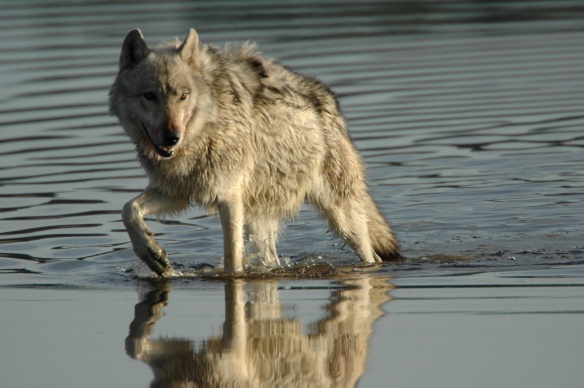
But the Interior Department’s Fish and Wildlife Service now plans to remove wolves from the endangered list in all 48 contiguous states and transfer control over their fate to the states. This may save the department from running battles with Congress, state officials and hunters about protecting the wolf. Whether it will save the animal is another matter.

Thanks entirely to federal protections, wolves have rebounded remarkably in some places. There are now about 4,000 in Michigan, Minnesota and Wisconsin, and 1,600 or so more in the Rocky Mountain states of Idaho, Montana and Wyoming. Interior has gradually delisted the wolves in all these places because, it says, their numbers are enough to guarantee survival. And it is not necessary to their survival, the service says, to protect wolves elsewhere.

But many scientists argue, persuasively, that these delistings are premature — that the service is giving up on recovery before the job is done. For one thing, they note a 7 percent decline in Rocky Mountain wolves since they were delisted and controlled hunts were authorized. They also note that other recovered species — notably the bald eagle and the American alligator — were allowed to expand into much of their historical range before they were removed from the list.

The historical range of the wolf is nearly the whole contiguous United States. There is suitable habitat all across the West still unoccupied by wolves, including the Pacific Northwest, Northern California and Colorado. A recovering wolf population isn’t static. It spreads as wolves rebound. The northern Rockies and the upper Midwest are proof of that. Can wolves recover suitable parts of their historical range without federal protection? The answer is almost certainly no.

Interior’s plan has little to do with science and everything to do with politics. Congress bludgeoned President Obama’s first interior secretary, Ken Salazar, into delisting the Rocky Mountain wolf. But there is no reason his successor, Sally Jewell, has to accept a plan to delist the wolves everywhere. It is hard enough to protect species that occupy hidden ecological niches. Politics has made it harder still to protect an intelligent, adaptive predator living openly in the wild.
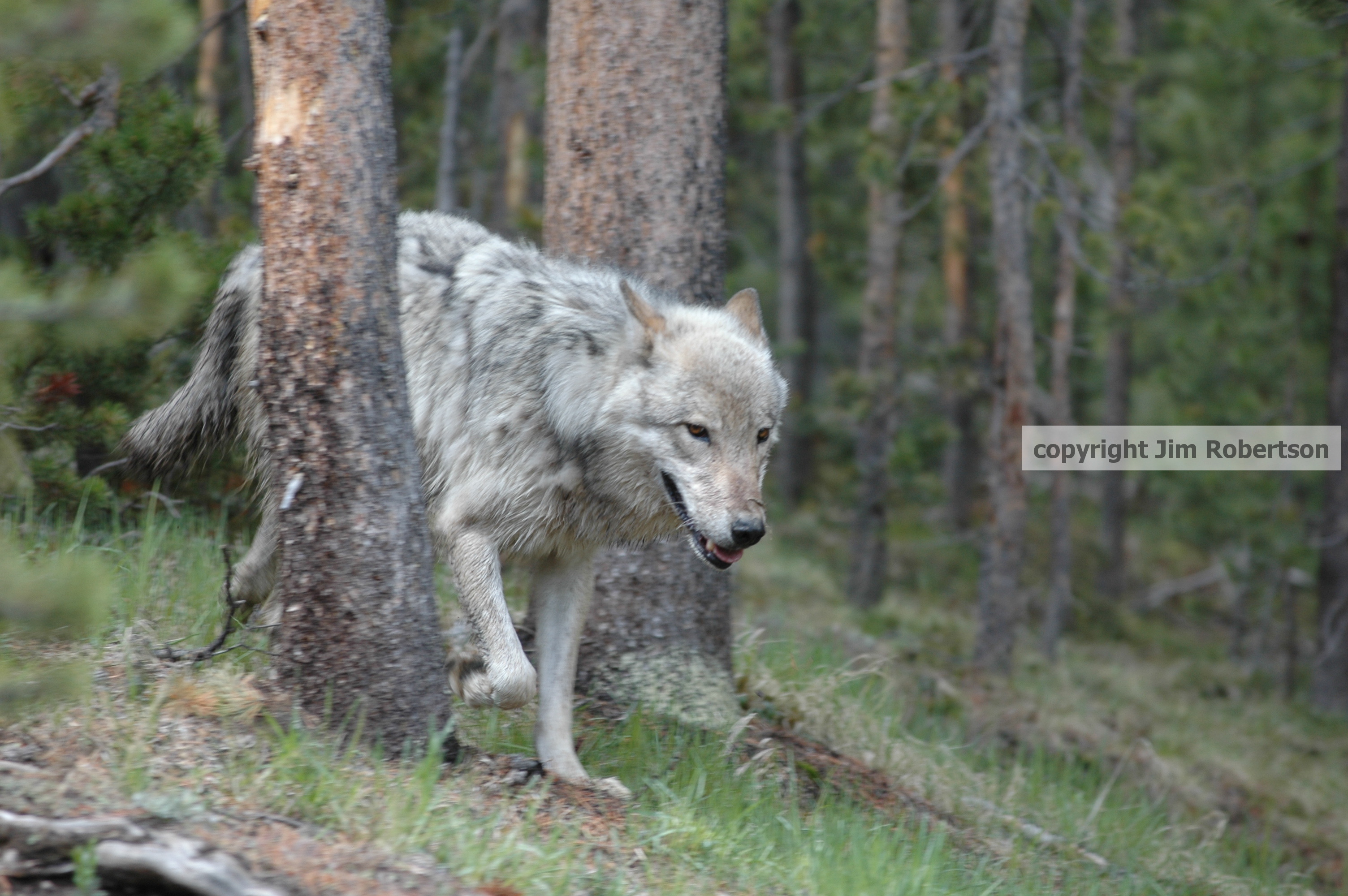
copyrighted Hayden wolf in lodgepoles

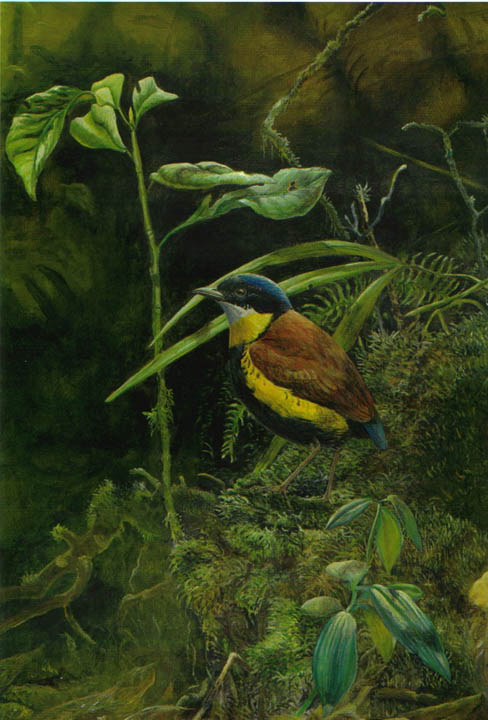
Goodbye, Gurney’s pitta

In keeping with the theme of yesterday’s post, “Where Will We Be in Y3K?” (the loss of biodiversity/mass extinction), here’s an article about another species faced with extinction which I received from fellow naturalist and wildlife advocate/animal activist, Barry Kent MacKay. Barry is also a great painter of birds, including this one of the critically endangered Gurney’s pitta…

Painting copyright Barry Kent MacKay

Painting copyright Barry Kent MacKay

Published: 22 May 2013 Post Publishing:

Southern Thailand is home to one of the world’s rarest bird species, but authorities must act now to save it from extinction

From May to October every year, the Gurney’s pitta (Pitta gurneyi), one of
Thailand’s protected wild animals, have their breeding season. Their last
remaining habitat in the Kingdom is a small fragment.

The site is an Important Bird Area (IBA) and arguably the most important
one on the peninsula, supporting the richest lowland forest birdlife in
Thailand. …

The Royal Forest Department (RFD), the Department of National Parks (DNP)
and Krabi provincial administration have been able to halt the destruction and a
little of the lowland forest remains. It is estimated that there may be as few as 13 individuals (perhaps only four to five breeding pairs) now surviving…

Continued…Full story here:

http://www.bangkokpost.com/lifestyle/family/351259/goodbye-gurney-pitta.

Great News For Wolves! For Now

Decision on wolf protections in Lower 48 delayed
May 20, 2013 22:00 GMT

http://ktvl.com/template/inews_wire/wires.national/20f04fe9-www.ktvl.com.shtml

Wildlife advocates and some members of Congress argue that the wolf’s recovery is incomplete because the animal occupies just a fraction of its historical range….

BILLINGS, Mont. (AP) — Federal wildlife officials are postponing a much-anticipated decision on whether to lift protections for gray wolves across the Lower 48 states.

In a court filing Monday, government attorneys say “a recent unexpected delay” is indefinitely holding up action on the predators. No further explanation was offered.

Gray wolves are under protection as an endangered species and have recovered dramatically from widespread extermination in recent decades.

More than 6,000 of the animals now roam the continental U.S. Most live in the Northern Rockies and western Great Lakes, where protections already have been lifted.

A draft proposal to lift protections elsewhere drew strong objections when it was revealed last month.

Wildlife advocates and some members of Congress argue that the wolf’s recovery is incomplete because the animal occupies just a fraction of its historical range.

copyrighted Hayden wolf in lodgepoles

BREAKING: National Wolf Delisting Plan Moving Forward!

From Defenders of Wildlife:

One decision could forever change the future of gray wolves in our country.

The U.S. Fish and Wildlife Service (FWS) is proposing to remove all Endangered Species Act (ESA) protections for most of the gray wolves across the United States.

Yes, you read that correctly.

The FWS is moving forward with a proposal to strip nearly all gray wolves throughout the United States — with the exception of the Mexican gray wolf — of Endangered Species Act protections.

Please send an urgent message to Secretary of Interior Sally Jewell — demand that the federal government not turn its back on wolves when there is still more important wolf recovery work that needs to be done.

This proposal reflects an unacceptable and short-sighted vision of our nation’s conservation goals, and would give up on wolf recovery well before the job is done; a true conservation tragedy!

Delisting would prematurely turn wolf management over to the states, and we’ve already seen what can happen when rabid anti-wolf politics are allowed to trump science and core wildlife management principals.

Montana, Wyoming and Idaho — all states where wolves have been delisted — are not treating wolves like other wildlife such as elk and bears. Instead they’re driving the wolves’ population numbers back down to the bottom. More than 1,100 wolves have already been killed in the Northern Rockies since Congress took ESA protections away from them in 2011.

Wolves’ lives are at stake. Please help send 250,000 signatures to the Department of Interior starting today.

This decision would derail wolf recovery efforts in areas around the country where it has barely begun — in places like the Pacific Northwest and in states that possess some of the nation’s best unoccupied wolf habitat, such as Colorado, Utah and northern California.

This proposal represents yet another monumental setback for wolf recovery in the U.S.

Tell Secretary Jewell: The important work of wolf recovery is NOT FINISHED — don’t turn back the clock on almost 40 years of wolf conservation.

Photo Copyright Jim Robertson

Photo Copyright Jim Robertson

Save the Animals—For Their Sake, Not Mine

Anthropocentricism is so deeply imbedded into the human psyche that these days it’s even hard to find a wildlife-related action alert which doesn’t focus on how some group of people might benefit from the continued existence of a given species. The well-being of the individual animal—let alone its species—so often takes a back seat to the ways humans benefit or profit from them.
Take wolves, for example. When Montana’s wildlife lawmakers were considering closing a few small areas around Yellowstone to wolf hunting and trapping, the primary reasons given by most wolf proponents for wanting the exclusion zones had to do with the value wolves have as tourist attractions and as part of a scientific study. To the majority of those who testified, the facts that the wolves themselves are sentient beings and/or are essential elements in nature’s design—who don’t deserve to be shot on sight as vermin—seemed secondary to the ways in which watchers and biologists were affected by the wrongful deaths of Yellowstone wolves.

Similarly, a petition to force Facebook to remove the page, Wolf Butchering, Cooking, and Recipes reads, “To protect the Wolves, and the Sensitivities of Native Americans. It is offensive, and a discrimination against the Religious Beliefs of Native Americans.” Of course I signed the petition, but I did so for the sake of the wolves, not because of anyone’s purported religious beliefs. I’m against cannibalism as well—for the sake of the victims of such barbarity, not because the culinary choice is considered a cultural taboo. At the same time, I don’t want migratory waterfowl habitat set aside just so I can go bird watching, or to save the whales so I can go whale watching. It’s about them, not about our perception or enjoyment of them.

As we’ve all heard, ad nauseam, “sportsmen” help wildlife by hunting—or so they would have us believe. As James McWilliams blogged in a timely post entitled Hunting, Land Conservation, and Blood Lust, “This land preservation defense of hunting is a common one. Get enough people who like to blow away animals on board and you can prevent undeveloped land from becoming a Walmart,” dispelling this myth with, “The vast majority of conservation-driven hunting policies are designed not to improve the quality of a particular ecosystem but to improve the quality of the hunt.”

Westerners didn’t know okapis or orangutans even existed until around a century ago. Were the lives of such unutilized and therefore unappreciated animals meaningless up until the day they were “discovered”? You or I may never get the chance to see a black rhino or a snow leopard, but that certainly doesn’t diminish their intrinsic value.

Text and Wildlife Photography ©Jim Robertson, 2013. All Rights Reserved

Text and Wildlife Photography ©Jim Robertson, 2013. All Rights Reserved

One Park Does Not a Recovered Species Make

Ignorance must be such sweet bliss for anyone who visits Yellowstone National Park and thinks the wildlife they see there represents fully recovered populations of some of North America’s most endangered species. Sorry to say, one park does not a recovered species make. For all its size, spectacularity and relative biodiversity, Yellowstone is little more than an island in an anthropogenic wasteland to much of its megafauna.

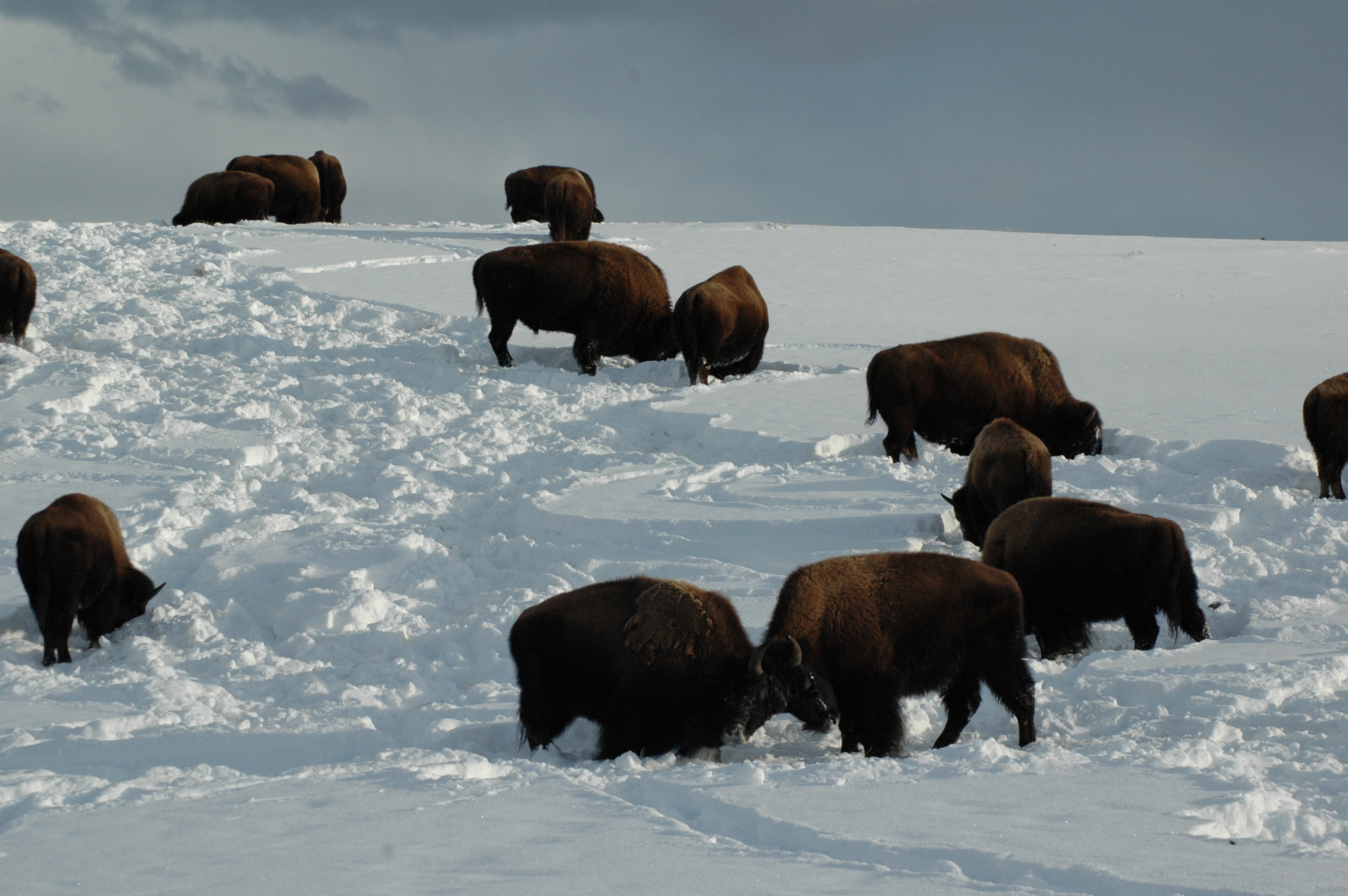
If ranchers and hunters had their way, wolves and grizzlies would be restricted to the confines of the park. Ranchers already have such a death-grip on Montana’s wildlife that bison are essentially marooned and forced to stay within park borders, battling snow drifts no matter how harsh the winter, despite an instinctual urge to migrate out of the high country during heavy snow winters.

Though Yellowstone is synonymous with the shaggy bovines, bison would prefer to spend their winters much further downriver, on lands now usurped and fenced-in by cowboys to fatten-up their cattle before shipping them off to slaughter.

Yellowstone’s high plateaus are on average well over 5,000 feet in elevation and can hardly be considered prime habitat for the wild grazers. Much of the park actually sits within the caldera of one the world’s largest active volcanoes. Any sizable eruption could release enough toxic gasses to kill off all of Yellowstone’s bison—the last genetically pure strain of the species now left on the continent.

People driving through cattle country on their way to Yellowstone often have no idea just how sterile the open plains they’re seeing really are. Gone are the vast bison herds that once blackened them for miles on end—killed off by hide-hunters, market meat-hunters or by “sportsmen” shooting them from trains just for a bit of fun. Gone are the wolves and plains grizzlies adapted to that arid habitat. And nearly gone are the prairie dogs as well as the ferrets, kit fox, plovers, burrowing owls and a host of others who depended on them for food or shelter.

Part of the reason I wrote Exposing the Big Game: Living Targets of a Dying Sport was to remind people about the wild species who once called so much of this continent home. No one’s going be able to claim ignorance on my watch; if I can’t go through life blissfully then neither can anyone else.

The following is an excerpt from one of the book’s two chapters on bison:

Selfless and protective, bison develop lasting bonds in and outside the family, not only between cows, calves and siblings but also between unrelated individuals who grew up, traveled and learned about life together. Juveniles help mothers look after the youngsters and will gladly lend a horn to keep potential predators away from the calves. I have witnessed cooperation among bison families often in the years I’ve spent observing and photographing them. I’ve also seen them put themselves in harm’s way to defend elk from hungry wolves, and even mourn over the bones of their dead.

But in a ruthless act of rabid backstabbing, 1600 bison—who had never known confinement or any reason to fear people—were slain to appease Montana ranchers during the winter of 2008. More than half of Yellowstone’s bison were killed in what was the highest body count since the nineteenth century. 1438 were needlessly and heartlessly shipped in cattle trucks to slaughterhouses (those nightmarish death camps where so many forcibly domesticated cattle meet their ends), while 166 were blasted, as they stood grazing, by sport and tribal hunters. Two winters prior, 947 bison were sent to slaughter and 50 were shot by hunters.

Instead of making amends for the historic mistreatment of these sociable, benevolent souls, twenty-first-century Montanans are still laying waste to them. Spurred on by industry-driven greed for grazing land (veiled under the guise of concern about brucellosis, a disease with a negligible risk of transmission that has never actually been passed from wild bison to cattle), the state of Montana sued to seize control of bison ranging outside Yellowstone. Now their department of livestock has implemented a lethal policy and the US National Park Service is facilitating it. Since the dawn of the new millennium, nearly 4000 Yellowstone bison have been put to death.

Text and Wildlife Photography ©Jim Robertson, 2012. All Rights Reserved

Text and Wildlife Photography ©Jim Robertson, 2012. All Rights Reserved


Great News! The “Sportsmen’s” Act is Dead…for Now

Great news—the “Sportsmen’s” Act of 2012 did not get past the Senate. Ironically, it was the Republicans that killed the bill. Not because of any great concern for wilderness or wildlife—quite the opposite; they just didn’t like how much of the budget the bill allocated for conservation projects.

What really doesn’t make sense is why every Democrat (except for Senator Barbara Boxer) voted to approve a bill with a main goal of opening up even more public lands for hunters. Why, for instance, did my two Senators from Washington State approve of a bill that would have allowed for the importation of “trophy” polar bear carcasses from Canada, undermining the ESA? And what did they stand to gain by giving a de facto federal thumbs-up to lead buckshot and other ammunition that have already poisoned so many birds, including endangered condors?

We dodged the bullet this time, but in the years to come there are sure to be other “sportsmen’s” acts rearing their hideously ugly heads (I was just going to say “ugly heads,” until I saw that one of my regular readers used the fitting adverb “hideously” before “ugly head” in reference to these contemptible acts). We can count on more puff about allowing bowhunting in parklands where wildlife is currently protected, more trophy hunters whining against regulations and most nauseating of all, politicians of both parties waxing poetic about hunting.

Hell, some people won’t be satisfied until Ted Nugent’s (hideously ugly) head is carved into Mt. Rushmore alongside Teddy Roosevelt’s.

The Wolf was Better off Endangered

Paradoxical as it may seem, wolves were better off endangered.  Not as a species perhaps, but to the individual wolf stuck for days in a steel-jawed leg-hold trap, or to the pack forced to dodge a hail of gunfire from cammo-clad snipers and a volley of arrows from a phalanx of archers, it must feel like the misguided war on wolves has begun anew.

Now that they have been declared “recovered” here, wolves are again under threat of the trap and rifle just as they were during the environmentally reckless Nineteenth Century.

By 1872, the year President Grant created Yellowstone National Park (in part to protect “game” species like elk from wanton destruction by overeager hunters), 100,000 wolves were being annihilated annually. 5450 were killed in 1884 in Montana alone, after a wolf bounty was initiated there. Wyoming enacted their bounty in 1875 and in 1913 set a penalty of $300 for freeing a wolf from a trap.

Though the federal Endangered Species Act safeguarded wolves from overzealous state hunting and trapping laws, as the director of the USFWS pointed out, the ESA is “not an animal protection act.”

The right of an American species not to be hunted to extinction is a relatively new advancement. At present, it‘s about the only right extended to the nonhumans in this, the land of the free. Alas, the river of speciesism still runs deeper than the Potomac at spring breakup.

Founding father and second US president, John Adams, may, or may not, have believed that all men were created equal, but he clearly took a dim view of the wildlife native to our formerly pristine land. In 1756 he openly expressed his scorn for the world his ancestors had strived to transform: “Then, the whole continent was one continued dismal wilderness, the haunt of wolves and bears and more savage men…Then our rivers flowed through gloomy deserts and offensive swamps.“

Unfortunately for any animal not blessed enough to be born human, our unalienable rights to life and liberty were specific initially only to white males, next, to all males and then to all human animals regardless of gender or sexual orientation but as yet do not extend to the nonhuman animals with whom we share this planet.

Our lawmakers have had a sad history of turning a blind eye to the most basic rights of those who differ from us primarily in that all four of their limbs are used for walking and they don‘t wax the hair off their backs. This seems a little biased when you consider that in terms of social skills, devotion to family and intellect relevant to survival animals, like wolves, are every bit our equals.

Why is this happening? So that “sportsmen” can claim all the “game” species for themselves. The return to full-scale wolf hunting gives today‘s anti-wolf bigots their chance to drive this misunderstood embodiment of wilderness back to the brink of oblivion.

____________________________________________

Portions of this post were excerpted from the book, Exposing the Big Game: Living Targets of a Dying Sport

Text and Wildlife Photography ©Jim Robertson