Feds Move to Strip Endangered Species Protections From Yellowstone Grizzlies in 2014

March 27, 2014 by Louisa Willcox,

LIVINGSTON, Mt.— The U.S. Fish and Wildlife Service announced plans on Wednesday to strip Endangered Species Act protections from Yellowstone’s iconic grizzly bears later this year. The agency will release a proposed rule removing federal protections for the bears by the end of this year, and following a public-comment period will make a final decision, said Chris Servheen, grizzly bear recovery coordinator for the Service. The move, announced at a meeting of grizzly bear managers in Jackson, Wyo., responds to a major push by Idaho, Montana and Wyoming to take over management of bears and enact sport hunts, much as they have with wolves.

“The science is clear — it’s simply way too soon to pull the plug on grizzly bear recovery,” said Louisa Willcox, a longtime advocate for grizzly bears and Northern Rockies representative of the Center for Biological Diversity. “With the lowest reproductive rate of any North American mammal, vanishing food sources and increased human-caused mortality, Yellowstone’s bears can’t withstand hunts led by states that are openly hostile to our few remaining large carnivores.”
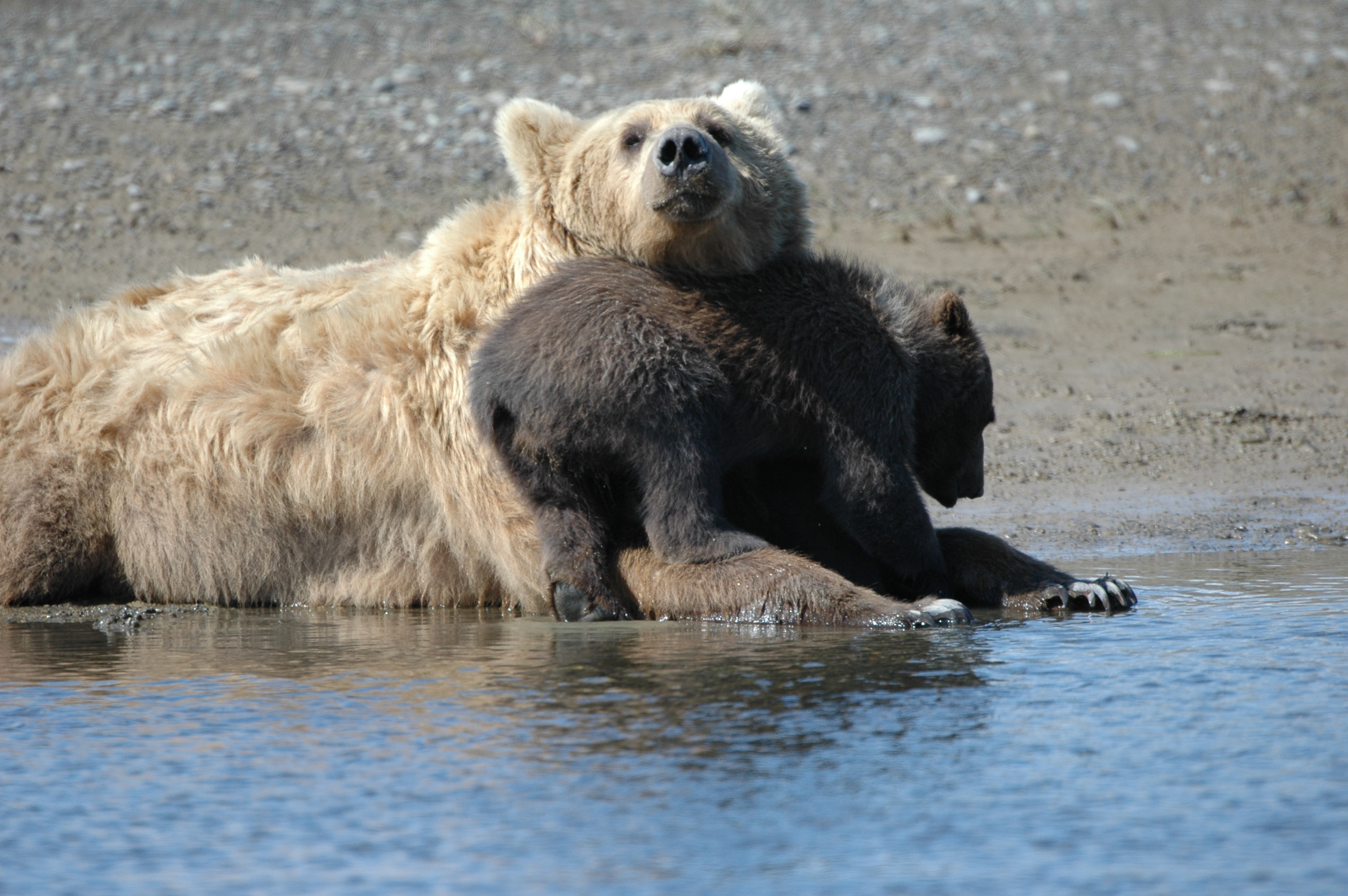
Photo Copyright Jim Robertson

Photo Copyright Jim Robertson

The proposal comes at a time when key grizzly bear food sources in the heart of the Yellowstone ecosystem have been collapsing and grizzly mortality rates have been increasing. The dramatic decline of whitebark pine and Yellowstone cutthroat trout has prompted bears to eat more meat, such as big game gut piles and livestock, resulting in increases rates of conflict with humans and grizzly bear mortality. Drought and climate change will exacerbate these problems.

A 2009 interagency report recommended more than 70 ways to reduce conflicts, including requiring hunters to carry bear pepper spray, which is proven to be much more effective than a gun in repelling a charging bear. Other recommendations included improved grazing practices, rapid removal of hunted big game from the field and increased law enforcement.

“Unfortunately the government did not incorporate these recommendations in their policies and practices,” said Willcox. “Instead of delisting grizzlies, the government should take these practical steps to reduce conflicts and the high levels of grizzly bear mortality since 2007. It’s clear that current efforts to educate the public on how to avoid conflicts are not working.”

Yellowstone’s bears have long been isolated from other bear populations, forcing the government to keep them on permanent life support by trucking bears in to avoid inbreeding. This highlights the fact that, as a result of excessive killing and habitat destruction, grizzly bears occupy only about 1 percent of their former range in the lower 48 states. And in five of the seven remaining grizzly bear recovery zones, bears have either been exterminated or are perilously close to extinction.

“Without the protection of the Endangered Species Act, grizzly bears would not likely have survived in Yellowstone,” said Willcox, “and with the unraveling of their ecosystem, there’s no doubt they still need the federal safety net in the years to come.”

A new federal study suggests the grizzly population may have been declining by an average of 4 percent per year since 2008. A second independent analysis found that the agency’s population estimate for bears may be based on flawed assumptions that inflated total population numbers.

“The feds are bending to political pressure from the states rather than providing grizzly bears the additional breathing room they need to compensate for climate change and the loss of key foods,” said Willcox. “Now is not the time for the feds to walk away from Yellowstone grizzly bears and leave their fate up to three states that want to hunt them instead of save them from extinction.”

Grizzly bears are especially important as a measure of the health of the lands where they live. Where grizzly bears are healthy, so are an array of other species, from bighorn sheep to raptors.

The Center for Biological Diversity is a national, nonprofit conservation organization with more than 675,000 members and online activists dedicated to the protection of endangered species and wild places.

http://www.biologicaldiversity.org/news/press_releases/2014/grizzly-bear-03-27-2014.html

America’s Wolves Are Under Attack

The U.S. Fish and Wildlife Service (FWS) received feedback from nearly a million citizens and a host of conservation biologists for its decision to remove federal protections from wolves last year, and recently convened a new panel of experts to revisit the issue. This new panel found that the FWS relied upon one faulty paper to make its wrongful decision to strip wolves of their Endangered Species Act protections.

Without their federal safeguards, several states have opened trophy hunting and trapping seasons, and thousands of wolves have been mercilessly slaughtered. Help protect wolves and demand that they be given adequate federal protections to prevent future inhumane acts.

TAKE ACTION Here.
The FWS needs to hear from you before March 27. Please fill out the form below to submit a letter to U.S. Secretary of the Interior Sally Jewell.
Dear Secretary Jewell,

I value wolves and I want to see them protected by the Endangered Species Act. Without these federal safeguards, wolves are pitted against an unfair arsenal of traps, snares, baits, hounds, and shooters who kill them from low-flying aircraft. Killing wolves puts their family packs in disarray and leaves young pups to starve.

Most Americans love wolves, and wolf-watching tourists spend millions of dollars to see them in places like Yellowstone National Park. After receiving pressure from the livestock industry and extreme groups, the government has given up on wolves and literally put them in the crosshairs before they could recover to most of their historic range. It’s quite simple: wolf populations are still recovering, and the best available science does not support their removal from the protections afforded to them by the Endangered Species Act. Please provide adequate protections for this iconic and beautiful species.

528624c939a88_preview-620


One More Wolf in Washington

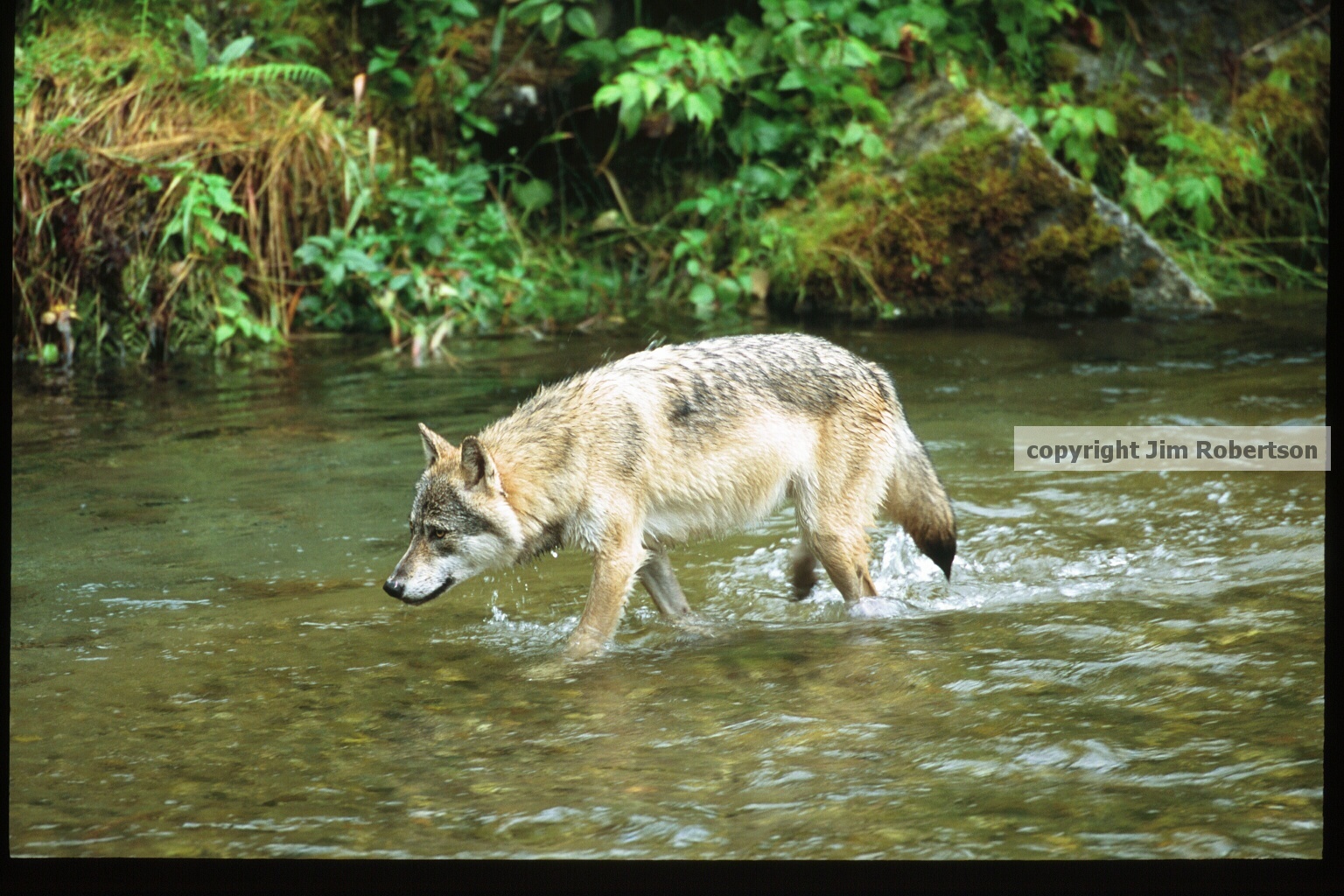
copyrighted wolf in river

http://www.komonews.com/news/local/Washington-state-wolf-population-grows-by-1-249141411.html

Washington state wolf population grows by 1

By PHUONG LE Associated Press Published: Mar 8, 2014

SEATTLE (AP) – Washington’s wildlife agency reported Saturday that its annual survey tallied 52 endangered gray wolves living in the state at the end of 2013, one more than in 2012. The count’s results come as conservation groups urge the state to pull support from a federal effort to roll back protections for the predators.

The state Department of Fish and Wildlife also found five successful breeding pairs in 2013, the same number as reported in the 2012 count.

The wolf population has been a controversial topic since the predators returned to the state much faster than expected in the past several years. In 2008, there were only a handful of wolves. In March 2013, there were an estimated 50 to 100 animals in 10 confirmed packs, all in central and eastern Washington.

Farmers and hunters in the West blame the returning gray wolf population for killing livestock and reducing elk herds.

Wolves are listed as endangered throughout Washington under state law and as endangered in the western two-thirds of the state under federal law.

But federal wildlife officials want to remove wolves from the endangered species list across much the Lower 48 states, including the western portion of Washington.

State wildlife managers support federal delisting of the wolves, saying it would give the state more control over managing conflicts between wolves and livestock.

Phil Anderson, director of the Washington Department of Fish and Wildlife, has said federal restrictions hamper the state’s ability to resolve those conflicts in the western part of the state.

On Thursday, several conservation groups sent a letter asking Anderson to rescind the agency’s support for federal delisting.

“Wolves are just beginning to recover in Washington and face continued persecution. Federal protection is clearly needed to keep recovery on track,” Amaroq Weiss, with the Center for Biological Diversity, said earlier this week.

Suzanne Stone of Defenders of Wildlife expressed concern for the safety of the wolf population.

“The stability of Washington’s wolf population is good news, but the population is still incredibly vulnerable during these early stages of recovery in Washington and wolves have a long way still to go,” she said.

Stone expressed hope that Washington wouldn’t let anti-wolf sentiment come over the border from Idaho and affect wolf management practices.

“We hope Washington is observing the tragic example being set in Idaho, where wolves are treated like vermin,” she said.

USFWS Grants Landowner Permit to Kill Critically Endangered Red Wolf

USFWS Grants Landowner Permit to Kill Critically Endangered Red Wolf

Landowners who own property in the vicinity of the Red Wolf Recovery  Program, a 27-year federal project aimed at restoring to the far-eastern  edge of North Carolina one of nature’s most fragile species, claim red  wolves are invading their private property and impacting their  longstanding cultural tradition of deer hunting.   Although the deer  population has dropped somewhat, NC Wildlife Resources Commission  representatives believe the decline is more likely the result of  increased doe hunting than impacts by red wolves.

USFWS Red Wolf Recovery Coordinator, Dave Rabon, said opposition to  red wolves isn’t pervasive. Cultural differences in Eastern North  Carolina make it difficult for people to support a government-funded  predator program. “A lot of them will work with us,” he said. “But  they’re not going to advertise it. They’re not going to put a bumper  sticker on their car.”

Fourteen red wolves died in 2013 that the coalition knows about,  including nine dead by suspected or confirmed gunshot wounds. Another  wolf was found killed, apparently shot, on Jan. 7.  “Because of the  similarity of appearance between red wolves and coyotes, it is nearly  impossible for individual hunters to avoid shooting red wolves,” said  the recent lawsuit that the Red Wolf Coalition and other wildlife groups  filed against the state in its claim that it is not doing enough to  protect.

To date, there are no known red wolf attacks on humans and few  documented livestock kills. Still, resentment started building early on.  Though red wolves are protected under the Endangered Species Act,  locals were promised that they would be classified as “nonessential and  experimental,” giving landowners more leeway in dealing with them.

Farm owner Jett Ferebee has recently been granted by the USFWS the  first (and only) known permit to kill one of the red wolves that they  had not been able to trap and remove it from his Tyrell County  property,  as long as the taking was done while trying to legally kill  coyotes on his farm.

Relief for landowners depends on what they expect,” said USFWS Red  Wolf Recovery Coordinator, Dave Rabon.”  Canids of some kind, whether  wolves or coyotes, will always be in the area.  With Mr. Ferebee,” he  said, “we’ve been very successful removing animals from his property  when he’s called us. But it’s temporary. They’re going to come back.  Something is going to come back.”   Rabon added that opposition isn’t  pervasive. Cultural differences in Eastern North Carolina make it  difficult for people to support a government-funded predator program. “A  lot of them will work with us,” he said. “But they’re not going to  advertise it. They’re not going to put a bumper sticker on their car.”

Fourteen red wolves died in 2013 that the Red Wolf Coalition knows  about, including nine dead by suspected or confirmed gunshot wounds.  Another wolf was found killed, apparently shot, on Jan. 7.   “Because of  the similarity of appearance between red wolves and coyotes, it is  nearly impossible for individual hunters to avoid shooting red wolves,”  said the lawsuit that the Red Wolf Coalition and other wildlife groups  filed against the state.

If successful, the suit could stop coyote hunting altogether in the  five eastern counties. If it does, one can expect continued conflict  between pro-recovery efforts and landowners.

The red wolf (Canis rufus) is one of the world’s most endangered  canids.  Once common throughout the eastern and southcentral United  States, red wolf populations were decimated by the early part of the  20th century as a result of intensive predator control programs and  habitat loss.  We oppose USFWS’ action to allow this landowner to  lethally remove a red wolf. Thus, we ask that you express your  opposition with a respectful email to the parties below:

By email:

cynthia_dohner@fws.gov (Regional Director, Southeast Region)

leopoldo_miranda@fws.gov (Assistant Regional Director, Southeast Region)

d_m_ashe@fws.gov (Director, U.S. Fish and Wildlife Service)

US government could drive grey wolf to extinction

http://www.salon.com/2014/02/14/outrageous_the_u_s_may_take_the_grey_wolf_off_the_endangered_species_list_paper/

Friday, Feb 14, 2014

OnEarth About 300 wolves live in the nearly 2-million-acre swath of central Ontario forest known as Algonquin Provincial Park. These wolves are bigger and broader than coyotes, but noticeably smaller than the gray wolves of Yellowstone. So how do they fit into the wolf family tree? Scientists don’t agree on the answer—yet it could now affect the fate of every wolf in the United States.

That’s because last June, the U.S. Fish and Wildlife Service proposed removing gray wolves across most of the country from the endangered species list, a move that would leave the animals vulnerable to hunting. To support its proposal, the agency used a contested scientific paper—published, despite critical peer review, in the agency’s own journal—to argue that gray wolves never existed in the eastern United States, so they shouldn’t have been protected there in the first place.

Instead of the gray wolf, the service said, an entirely different species of wolf—the so-called “eastern wolf,” a species whose remnants perhaps survive in Algonquin Park—once inhabited the forests of eastern North America. Canid biologists have argued over the existence of this “lost species” for years. Yet researchers on all sides say that even if the Algonquin wolves are a separate species, that shouldn’t preclude continuing protections for the gray wolf.

On Friday, an independent panel of five leading geneticists and taxonomists came down hard on the agency’s proposal to delist gray wolves, unanimously concluding that the service had not relied on the “best available science.” Individual panel members described “glaring insufficiencies” in the supporting research and said the agency’s conclusions had fundamental flaws.

“What’s most significant,” says Andrew Wetzler, director of land and wildlife programs for the Natural Resources Defense Council (which publishes OnEarth), “is that this is coming from a group of eminent biologists who disagree with each other about the eastern wolf—and even so, they agree that the agency hasn’t properly understood the scientific issues at hand.”

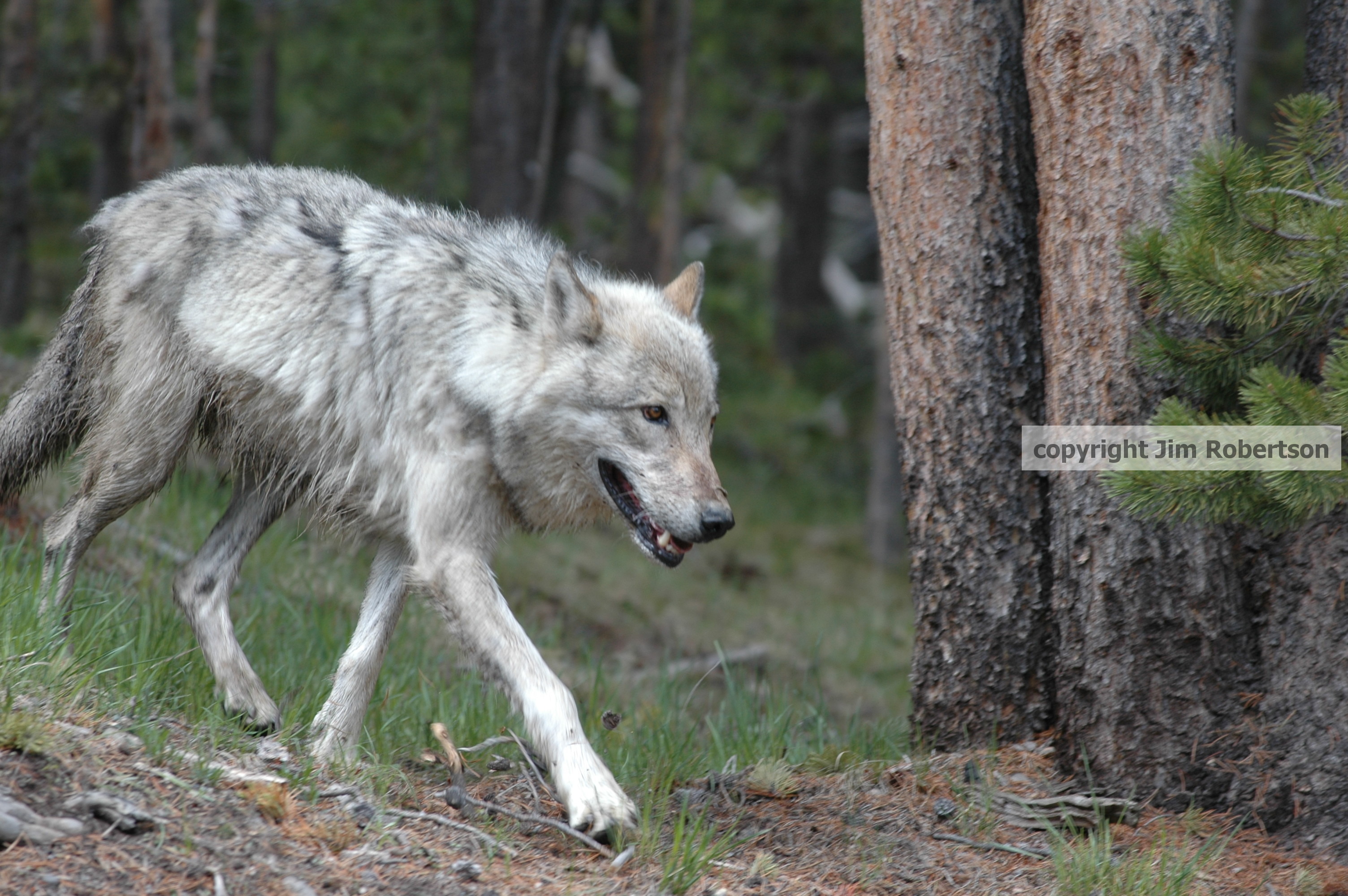
copyrighted wolf in water

Service Reopens Comment Period on Wolf Proposal

http://www.fws.gov/news/ShowNews.cfm?ID=0D493E53-AC54-99DD-52400A7BAA5A6085

February 7, 2014
Contacts: Gavin Shire, 703-346-9123 , gavin_shire@fws.gov

Independent scientific peer review report available for public review

Following receipt of an independent scientific peer review, thecopyrighted Hayden wolf walking U.S. Fish and Wildlife Service is reopening the comment period on its proposal to list the Mexican wolf as an endangered subspecies and remove the gray wolf from the Endangered Species List. The Service is making that report available for public review, and beginning Monday, February 10, interested stakeholders will have an additional 45 days to provide information that may be helpful to the Service in making a final determination on the proposal.

The independent scientific peer review was hosted and managed by the National Center for Ecological Analysis and Synthesis (NCEAS), a highly respected interdisciplinary research center at the University of California – Santa Barbara. At the Service’s request, NCEAS sponsored and conducted a peer review of the science underlying the Service’s proposal.

“Peer review is an important step in our efforts to assure that the final decision on our proposal to delist the wolf is based on the best available scientific and technical information,” said Service Director Dan Ashe. “We thank the National Center for Ecological Analysis and Synthesis for conducting a transparent, objective and well-documented process. We are incorporating the peer review report into the public record for the proposed rulemaking, and accordingly, reopening the public comment period to provide the public with the opportunity for input.”

The peer review report is available online, along with instructions on how to provide comment and comprehensive links relating to the proposal, at http://www.fws.gov/home/wolfrecovery.

The Service intends that any final action resulting from this proposed rule will be based on the best available information. Comments and materials we receive, as well as some of the supporting documentation used in preparing this proposed rule, are available for public inspection at http://www.regulations.gov under the docket number FWS–HQ–ES–2013–0073.

The Service will post all comments on http://www.regulations.gov. This generally means the agency will post any personal information provided through the process. The Service is not able to accept email or faxes. Comments must be received by midnight on March 27.

The Federal Register publication of this notice will be available online Feb. 10 at http://www.fws.gov/policy/frsystem/default.cfm by clicking on the 2014 Proposed Rules under Endangered and Threatened Wildlife and Plants.

http://www.fws.gov/news/ShowNews.cfm?ID=0D493E53-AC54-99DD-52400A7BAA5A6085

The Service expects to make final determination on the proposal by the end of 2014.

The mission of the U.S. Fish and Wildlife Service is working with others to conserve, protect, and enhance fish, wildlife, plants, and their habitats for the continuing benefit of the American people. We are both a leader and trusted partner in fish and wildlife conservation, known for our scientific excellence, stewardship of lands and natural resources, dedicated professionals, and commitment to public service. For more information on our work and the people who make it happen, visit http://www.fws.gov.

Connect with our Facebook page at http://www.facebook.com/usfws, follow our tweets at twitter.com/usfwshq, watch our YouTube Channel at http://www.youtube.com/usfws and download photos from our Flickr page at http://www.flickr.com/photos/usfwshq/

Why Wolves Need ESA Protection

1509686_1453770291507881_1955386015_n

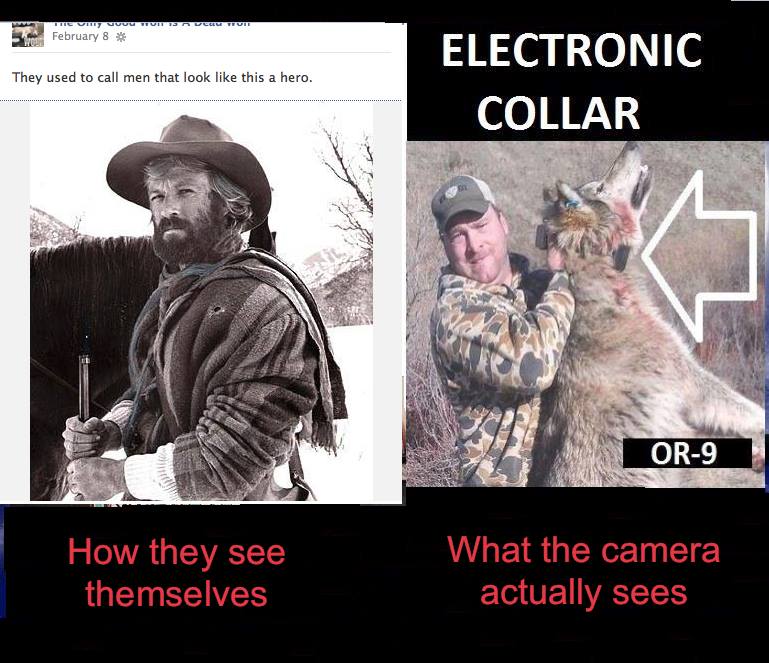
The sad story of OR9 is a prime example of why wolves need to remain on the federal Endangered Species list…

Sibling of famous OR-7 wolf killed by hunter in Idaho

Published: Friday, February 10, 2012

JOSEPH — A sibling of Oregon’s world-famous wolf OR-7 has been shot and killed in Idaho by a hunter whose wolf tag was no longer valid.

“What an amazing difference between how this wolf’s story evolved compared to his brother, OR-7, who is now in California and is an international celebrity,” said Suzanne Stone of Boise, spokeswoman for the 530,000-member Defenders of Wildlife environmental group.

The radio-collared male wolf identified as OR-9 was killed Feb. 2 near a cattle feedlot and winter calving area north of Emmett, between Boise and the Snake River, said Mike Keckler, spokesman for the Idaho Department of Fish and Game.

Like his famous brother, OR-9 was born into the Imnaha pack near the northeastern Oregon town of Joseph. He was collared Feb. 26, 2011, in the Grouse Creek area east of Joseph when he was about 1 1/2 years old and weighed 90 pounds then.

OR-9 departed Oregon in July two months before OR-7 began his epic 730-mile trek to Crater Lake and south into California earlier this winter. OR-9 headed east, swam the Snake River into Idaho at Brownlee Reservoir and traveled south toward Emmett.

His travel destination turned out to be dangerous. Unlike the Joseph area, where gray wolves are protected under Oregon’s Endangered Species Act, Idaho’s wolves are classified as big game animals and subject to regulated hunting rules.
More…http://www.oregonlive.com/pacific-northwest-news/index.ssf/2012/02/sibling_of_famous_or-7_wolf_ki.html

From Defenders of Wildlife:
You didn’t support it. We didn’t support it. Now it’s been shown that the best available science doesn’t support the plan to delist nearly all gray wolves in the Lower 48 either.

ACT NOW: Demand that Secretary Jewell abandon this reckless delisting proposal and allow for the full recovery of gray wolves!

An independent peer review board, commissioned to assess the quality and adequacy of the science underlying the U.S. Fish and Wildlife’s (FWS) delisting plan for gray wolves, just released their unanimous decision: that the proposal to strip gray wolves of Endangered Species Act Protection is not based on the best available science and contains numerous omissions and errors.

This is a major development in our efforts to stop this irresponsible proposal from going through.

Please speak out! Urge Secretary Jewell to direct the Fish and Wildlife Service to withdraw this proposal immediately!

Now that it’s been confirmed that this proposed delisting is clearly not based on the best available science, we are left wondering why FWS wants to turn its back on wolves.

In states like Idaho, we continue to see what happens when wolves are prematurely stripped of federal protection and left to be managed by states with deadly anti-wolf agenda’s – just recently they announced a proposal to kill off as many as 450 wolves statewide!

Wolves now serve as a scapegoat for anti-government extremists with a political agenda – and these groups will spare no expense to try and derail wolf conservation in America. We simply can’t allow politics and private interests to trump science – it’s irresponsible and unacceptable.

A Federal Reprieve for Wolves

WASHINGTON — The Obama administration backed away — for now — from its plan to lift federal protections for gray wolves throughout the continental United States after an independent report on Friday faulted the science behind the proposal.

The study by the National Center for Ecological Analysis and Synthesis found that U.S. Fish & Wildlife Service’s proposal to delist the animal from the Endangered Species Act is “not well supported by the available science,” according to a statement from the University of California-Santa Barbara, which houses the center.

The proposal “was strongly dependent on a single publication, which was found to be preliminary and not widely accepted by the scientific community,” according to the statement.
The authors — who at the administration’s request did a peer review of the science behind the wolf plan — said additional research is needed before the administration can decide whether to delist the species or keep it on Endangered Species Act.

The Fish & Wildlife Service turned to the California center for an objective scientific analysis after encountering a barrage of criticism from conservationists and scientists whose research was used in writing new wolf rules. The government had no role in picking the scientists who did the study.

In response to the findings, the Fish & Wildlife Service decided to once again seek public input before issuing final wolf rules. The previous public comment period ended in December and the administration planned to issue a final rule this year.

Reopening public comments is a sign that the administration is rethinking its position.

“Peer review is an important step in our efforts to assure that the final decision on our proposal to delist the wolf is based on the best available scientific and technical information,” Fish & Wildlife Director Dan Ashe said in a statement. “We are incorporating the peer review report into the public record for the proposed rulemaking, and accordingly, reopening the public comment period.”

copyrighted Hayden wolf in lodgepoles

No Surprise: Utah Farm Bureau urges delisting of wolves

528624c939a88_preview-620

http://www.heraldextra.com/news/local/utah-farm-bureau-urges-delisting-of-wolves/article_9c0648fa-a703-5f47-9bbe-be1d55a5400b.html

by Caleb Warnock

“The Endangered Species Act, if you look at the numbers, is a colossal failure,” said Leland Hogan, president of the Utah Farm Bureau Federation, in the latest issue of Utah Farm Bureau News magazine.

There are no wolves in Utah, but that doesn’t put a damper on the debate over their potential future in the state, should they ever appear here.

The federal government has oversight of all gray wolves in the U.S. because they are listed as endangered species. Now the feds are proposing to delist gray wolves and turn their management over to states, which in Utah would likely make it legal to shoot wolves, should they cross the border.

Because wolves prey on livestock, there is no love lost between the creatures and the Farm Bureau.

There has only been a single confirmed wolf sighting in Utah’s modern history. On November 30, 2002, a wolf from Yellowstone’s Lamar Valley was captured in Morgan County and returned to Yellowstone.

Since that day, there “have been a few border incursions, as extreme northern Utah is not far from Wyoming wolf range,” said John Shivik of the Division of Wildlife Resources, who oversees the management of large predators in Utah. “There is no evidence, however, that wolves have taken up residence in Utah.”

Hogan and the Farm Bureau are calling the Endangered Species Act a waste of taxpayer cash. In the UFB article, he calls wolves both “sinister” and “marauding.”

“Since its enactment in 1973, only about 20 out of nearly 2,000 endangered or threatened species — about 1 percent of the total — have been declared recovered, despite spending hundreds of millions of taxpayer dollars,” said Hogan in UFB magazine. “The draft rule being proposed by the agency would remove the gray wolf from the Endangered Species List in the continental 48 states and turn over wolf management to the states. We support the Service’s proposal to delist the gray wolf; however, we do not support listing the Mexican wolf as an endangered subspecies. In addition, Utah Farm Bureau calls on the federal government to turn management of wolves to the states.”

The Farm Bureau is not alone in its ideas for wolf management. The leadership of the Utah Division of Wildlife Resources, Gov. Gary Herbert and Utah’s congressional delegation “have repeatedly requested delisting throughout Utah,” said Shivik.

As for the Mexican wolf, their “core population did not range farther north than central Arizona and New Mexico, and Utah maintains that Mexican wolf recovery areas should not include any parts of Utah,” Shivik said.

The Mexican wolf is a unique subspecies that occurred in Mexico and parts of the southwestern United States.

Even when wolves are sighted in Utah, the state maintains some skepticism, based on experience.

“Coyotes and domestic dogs are often confused with wolves on the landscape, especially after news reports cause interest in the subject,” said Shivik. “Some people have hybrid or domestic dogs that very strongly resemble wolves, which adds to the confusion too. Division biologists receive hundreds of reports every year, but less than 3 percent are even potentially wolves.”

So if you think you saw a wolf, should you, well, cry wolf?

“If it is near a town, or not particularly afraid of humans, it may be best to call the local animal control officers,” said Shivik.

Rewrite of species-protection law seen in move to take wolves off the U.S. list

http://www.minnpost.com/earth-journal/2014/01/rewrite-species-protection-law-seen-move-take-wolves-us-list

By Ron Meador | 01/07/14

It is difficult to think of a species whose conservation has inspired disputes more bitter and ceaseless than those that swirl around the gray wolf.

From the journal “Conservation Letters” comes a compelling academic critique of the U.S. Fish and Wildlife Service‘s evolving enforcement of the Endangered Species Act, through some key rewriting of policy that might appeal to satirists like George Orwell or Joseph Heller.

The paper, published last week in the journal’s “Policy Perspectives” section, is focused largely on the service’s announcement that it will remove gray wolves from federal protection throughout the lower 48 states, following earlier “de-listings” in Minnesota, Wisconsin and Michigan, Wyoming and Idaho (as well as states of the northern Rocky Mountains and a scattering of others with few if any wolves).

But the authors — including Sherry Enzler of the University of Minnesota and John Vucetich of Michigan Technological University, who directs the wolf-moose population study on Isle Royale — argue that the service’s reasoning in support of its decision on gray wolves changes its application of the landmark wildlife law in two ways that effectively repeal it:

  • First, by redefining the Endangered Species Act’s notion of natural range from the territory a species historically inhabited to the territory it currently occupies.
  • Second, by deciding that human activity — especially intolerant activity — in portions of a species’ range can justify reclassification of those areas under the ESA as habitat no longer suitable for threatened animals and plants.

Or, as Orwell might have it, a creature’s natural habitat is natural no longer once the creature is driven out. For his part, Heller might see it as another Catch-22: The ESA exists to protect plants and animals from eradication by humans, except in those areas where humans prefer to eradicate them.

Clear phrasing in the law

Perhaps the ESA’s most important single passage is its clear, plain-language definition of an endangered species as one “in danger of extinction throughout all or a significant portion of its range” (emphasis added).

That wording may seem obvious today, but as the law moved toward passage in 1973 it was a significant and deliberate broadening from earlier species-protection laws, especially on what the paper’s authors call the “SPR phrase” italicized above.

Drawing on statements from U.S. Sen. John Tunney, the California Democrat who was a key author of the ESA and the legislation’s floor manager in the Senate, the paper notes his explanation that “a species might be considered endangered or threatened and require protection in most states even though it may securely inhabit others.”

This, too, seems commonsensical and until recently, the paper says, the Fish And Wildlife Service considered a species’ range to be both its current and historic territory — even, at times, resisting pressures to narrow its focus to current territory only.

But now the FWS seeks to redefine the gray wolf’s range as the territory it currently inhabits, and to declare the rest of its former territory as “unsuitable habitat” because people will no longer tolerate wolves there.

How wolves got on list

To understand the significance of this shift, consider that if the newer definition had been in use when wolves were initially listed for ESA protection in 1978 — just five years after Congress passed the law with barely a dissenting vote — they might not have qualified.

At that point, wolves were known to inhabit only two small territories in the lower 48 states — one in the Boundary Waters Canoe Area Wilderness and adjacent Superior National Forest, the other on Isle Royale.

These remnant populations totalling a few hundred wolves, though tiny, appeared to be stable and possibly growing slightly because of wilderness protections. And at that point, of course, Isle Royale had been in their “historic range” for less than three decades.

Today, the paper asserts, federal protections have restored wolves to about 15 percent of their historic U.S. range outside Alaska. Whether an 85 percent loss qualifies as a “significant portion” of that range is, I suppose, a matter of opinion. In the opinion of the paper’s authors,

Although prescribing a precise value to the SPR phrase is challenging, acknowledging egregious violations is not. Today, wolves occupy approximately 15% of their historic range within the conterminous United States. To conclude that this condition satisfies the requirement represented by the SPR phrases sets an extremely low bar for species recovery.

As for redefining “range,”

Interpreting range to mean “current range” is functionally identical to striking the SPR phrase  from the ESA’s definition of endangerment and narrowing the definition to being “in danger of extinction [everywhere].”

Effect on other species

It is difficult to think of a species whose conservation has inspired disputes more bitter and ceaseless than those that swirl around the gray wolf, with the possible exception of the grizzly bear in portions of the American West.

But the FWS reasoning under challenge in this paper could just have easily been applied in the past — or, more important, applied in the future — to the detriment of such recovered species as bald eagles, whooping cranes and peregrine falcons, not to mention the Kirtland’s warbler, the southern sea otter, the Virginia big-eared bat and the black-footed ferret.

And it is thinking of those species, along with some 2,000 others still listed, that makes one wonder what coherent philosophy or policy of conservation can justify a redefinition of “suitable habitat” to exclude places made inhospitable by human activity.

Indeed, as the authors point out,

In most cases, species are listed as endangered because current range has been reduced by human actions. The ESA is intended to mitigate such reductions in range, not merely describe them.

As such, a sensible interpretation of range in the SPR phrase is historic range that is currently suitable or can be made suitable by removing or sufficiently mitigating threats to the species.

One always wants to hope that sound science underlies federal policy decisions in these matters. Indeed, we appear to be entering an era of changing climate in which habitats are likely to be remade by forces well beyond the science of mitigation and the capabilities of wildlife managers, regardless of the level of empowerment they may choose to find within the ESA or settled case law.

But with regard to gray wolves, climate is not the critical issue. Human persecution is. And here, too, the authors challenge FWS’s fulfillment of their obligations under the ESA, in a section headed “The science of intolerance” (citations omitted):

A central tenet of the proposed delisting rule is: “the primary determinant of the long-term conservation of  gray wolves will likely be human attitudes toward this predator.”

Although bound by the ESA to base its listing and delisting decisions on the best available science, the FWS does not refer to any of the scientific literature on human attitudes toward wolves to justify its determination….

The proposed rule also asserts that delisting wolves at this time is critical for maintaining wolf recovery because “keeping wolf populations within the limits of human tolerance” requires humans be allowed to hunt entrap wolves. The best available science does not support this contention.

Indeed, a recent review found no evidence for the claim that the rates of poaching changed with higher quotas of legal harvest, and the recent longitudinal analysis found attitudes toward wolves were more negative during a period of legal lethal control than when the wolves were listed under the ESA … .

Ultimately, there is no empirical support for the notion that continued listing would result in a backlash against wolves.