Wolf and Grizzly Count Skewed

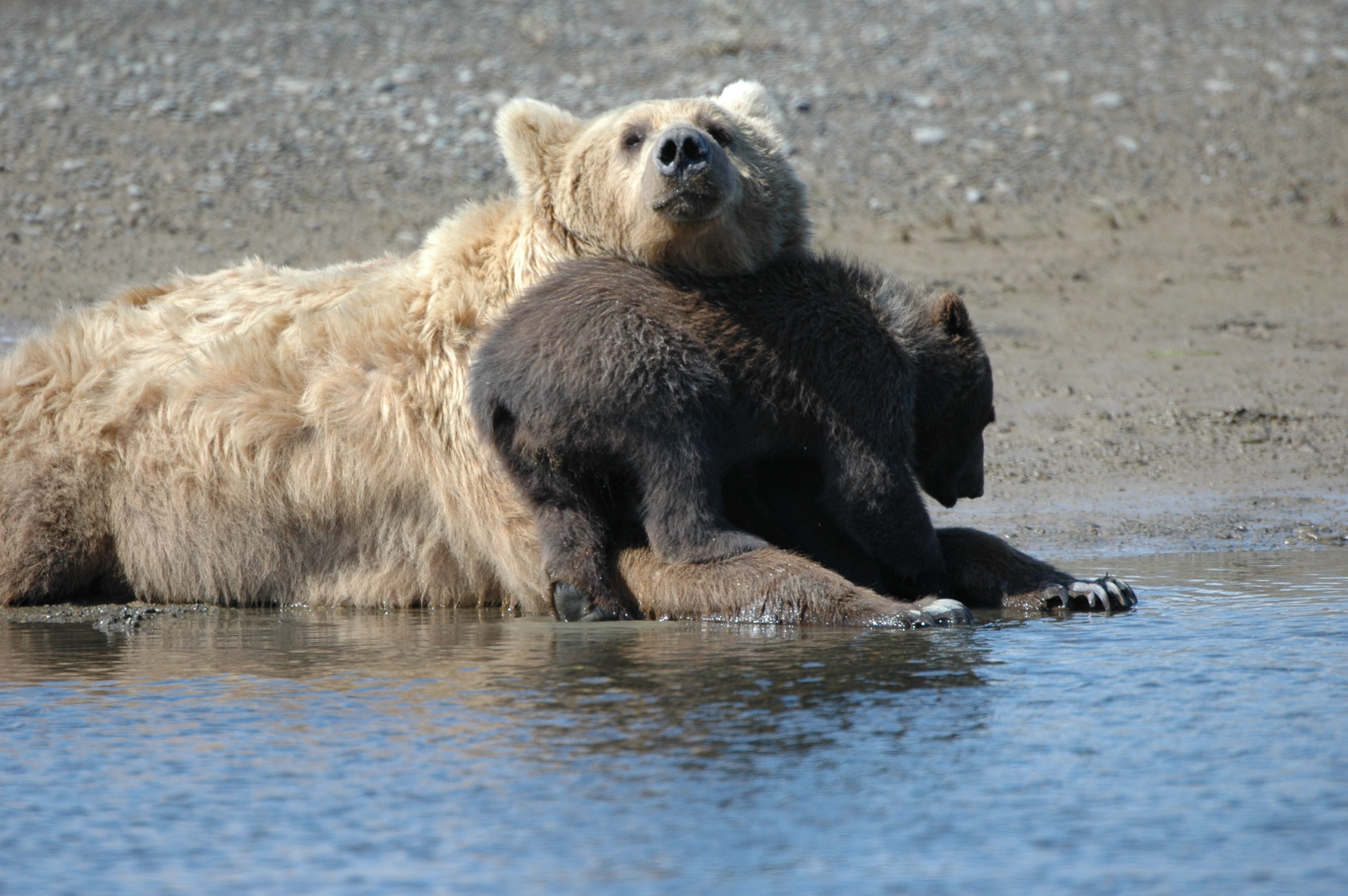
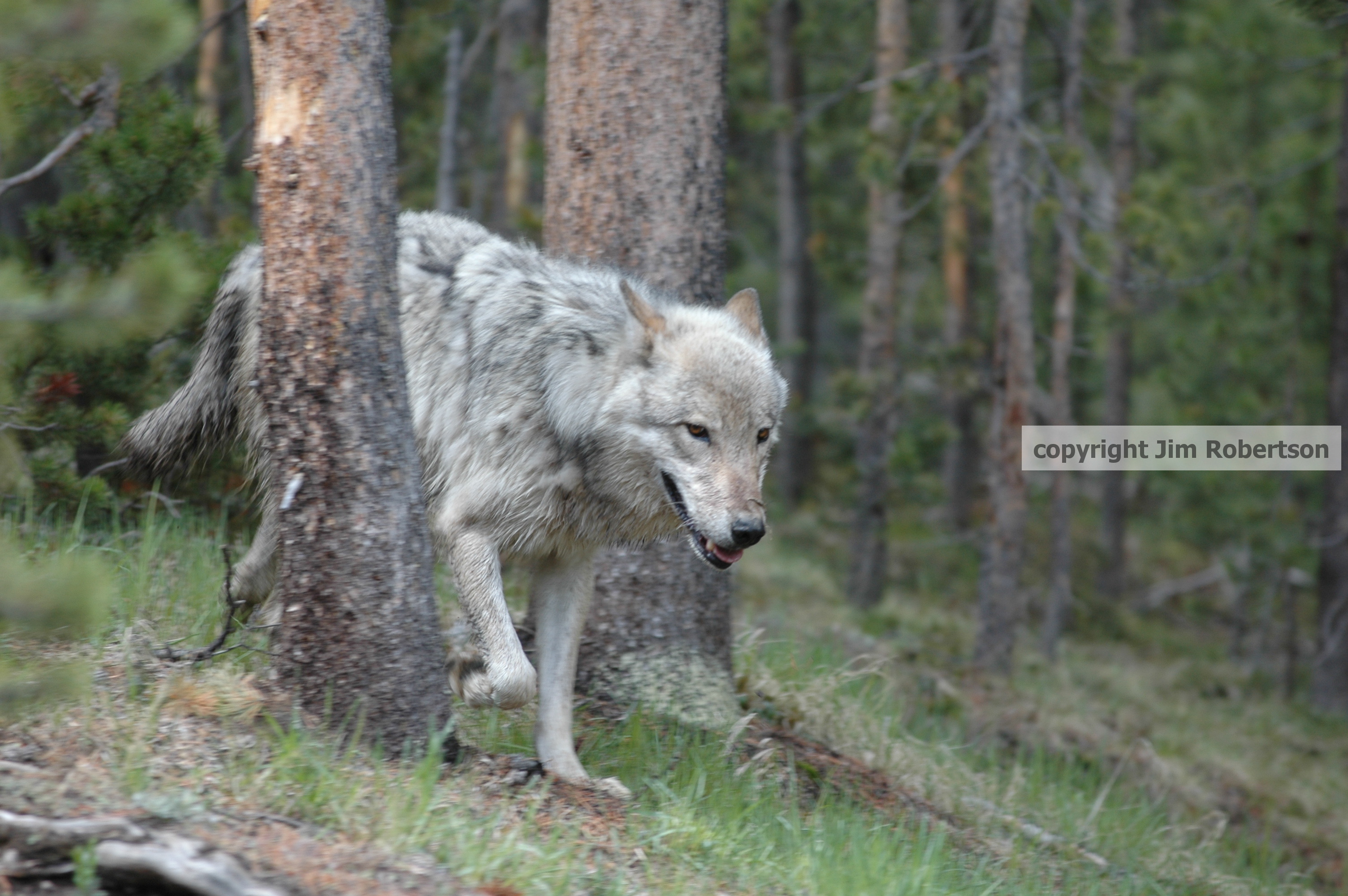
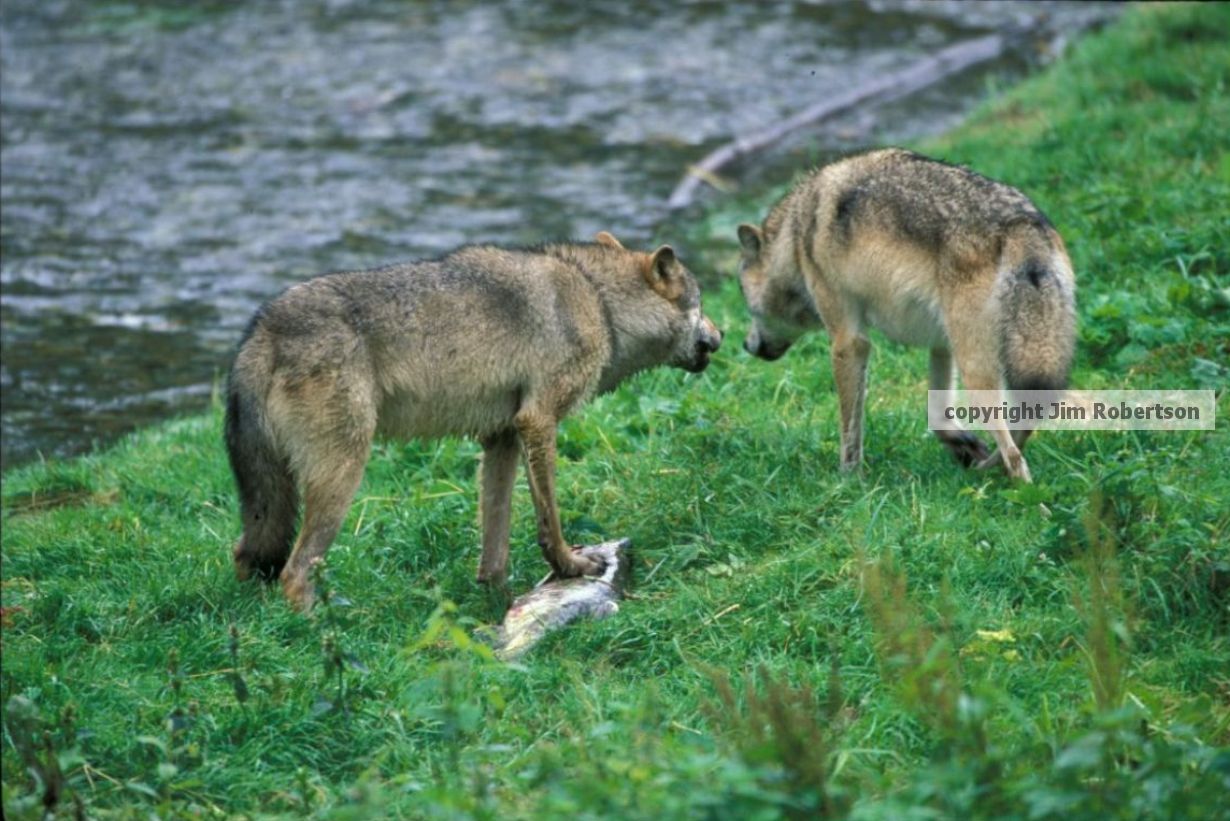
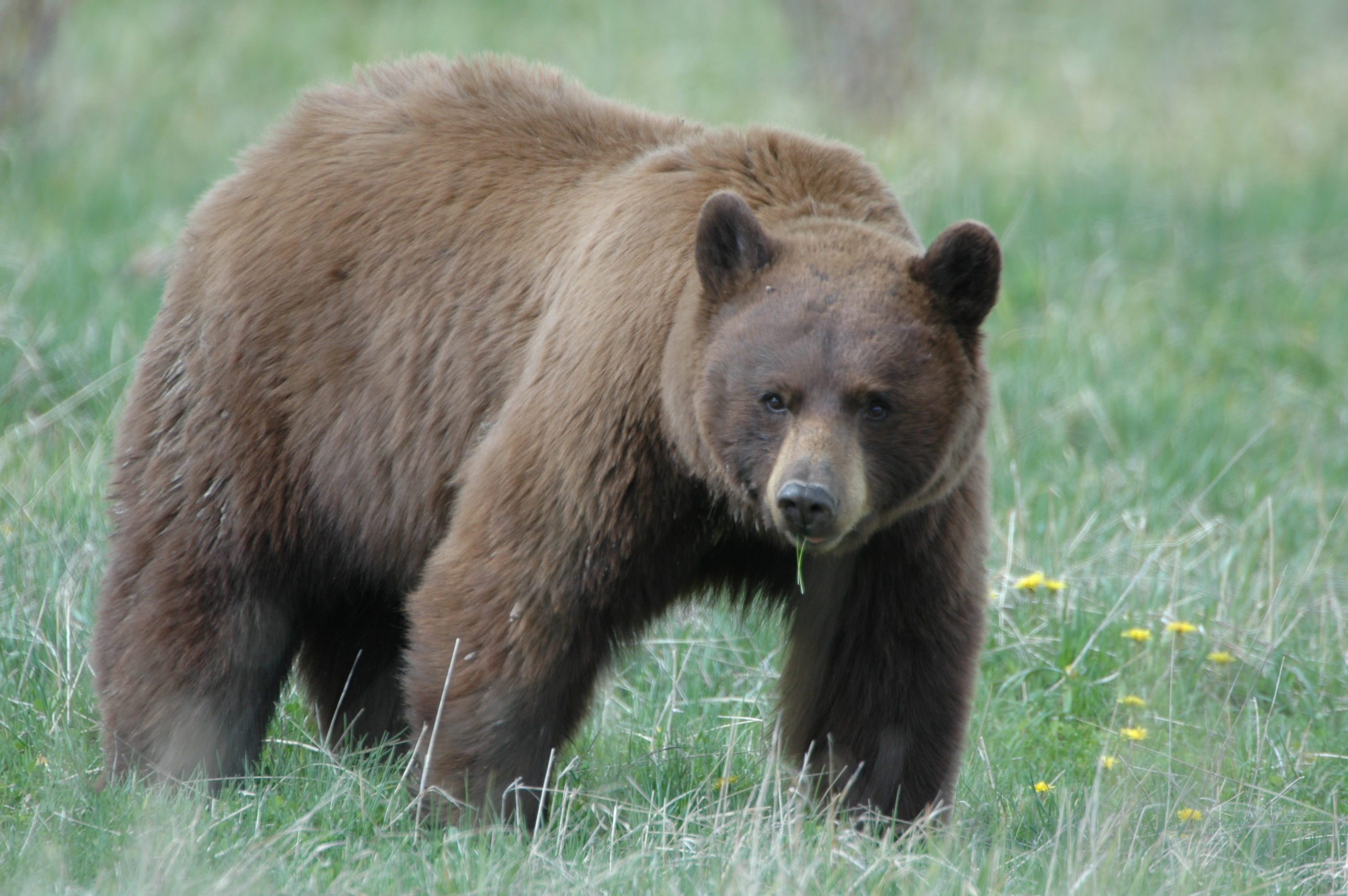
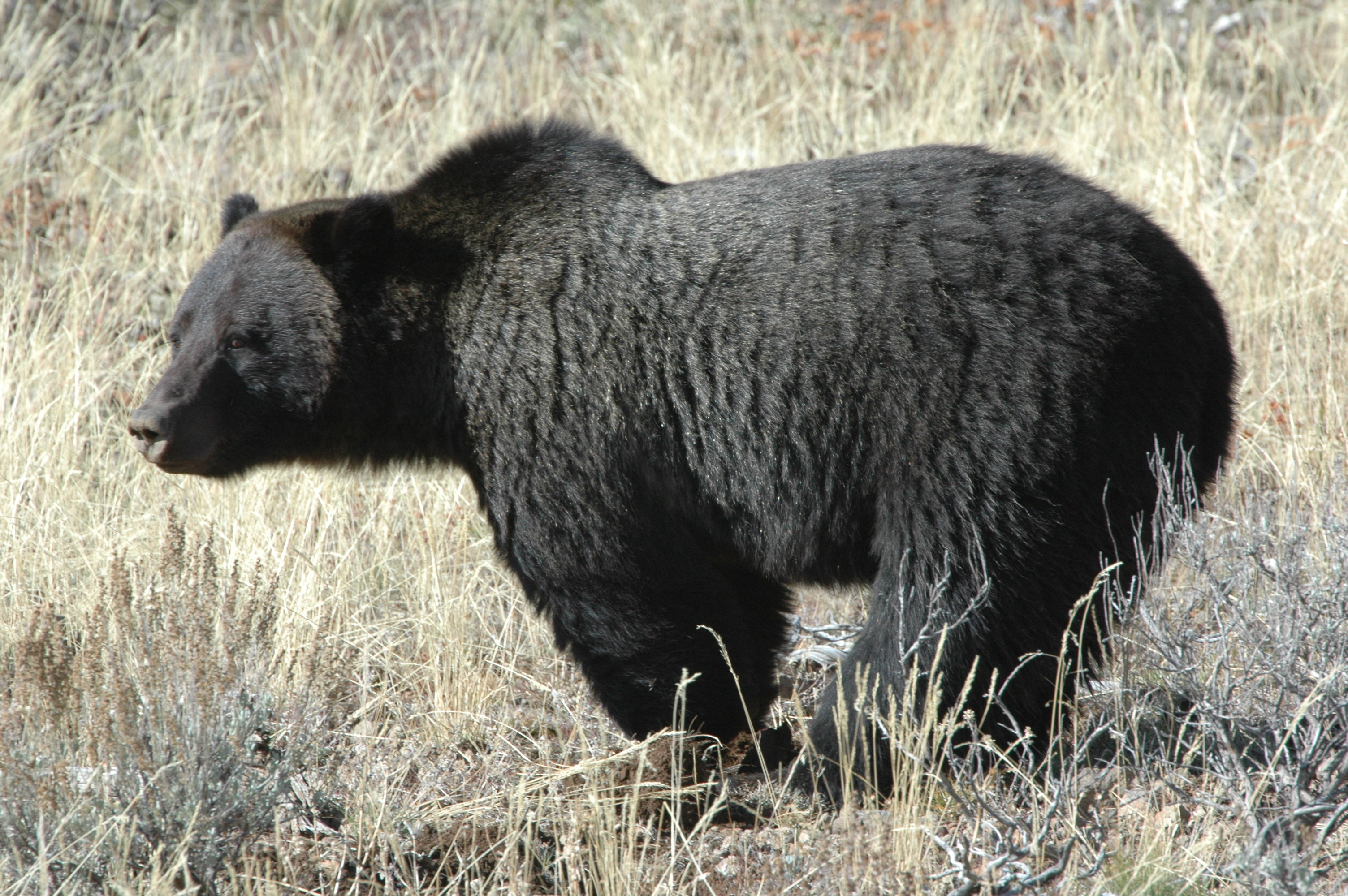
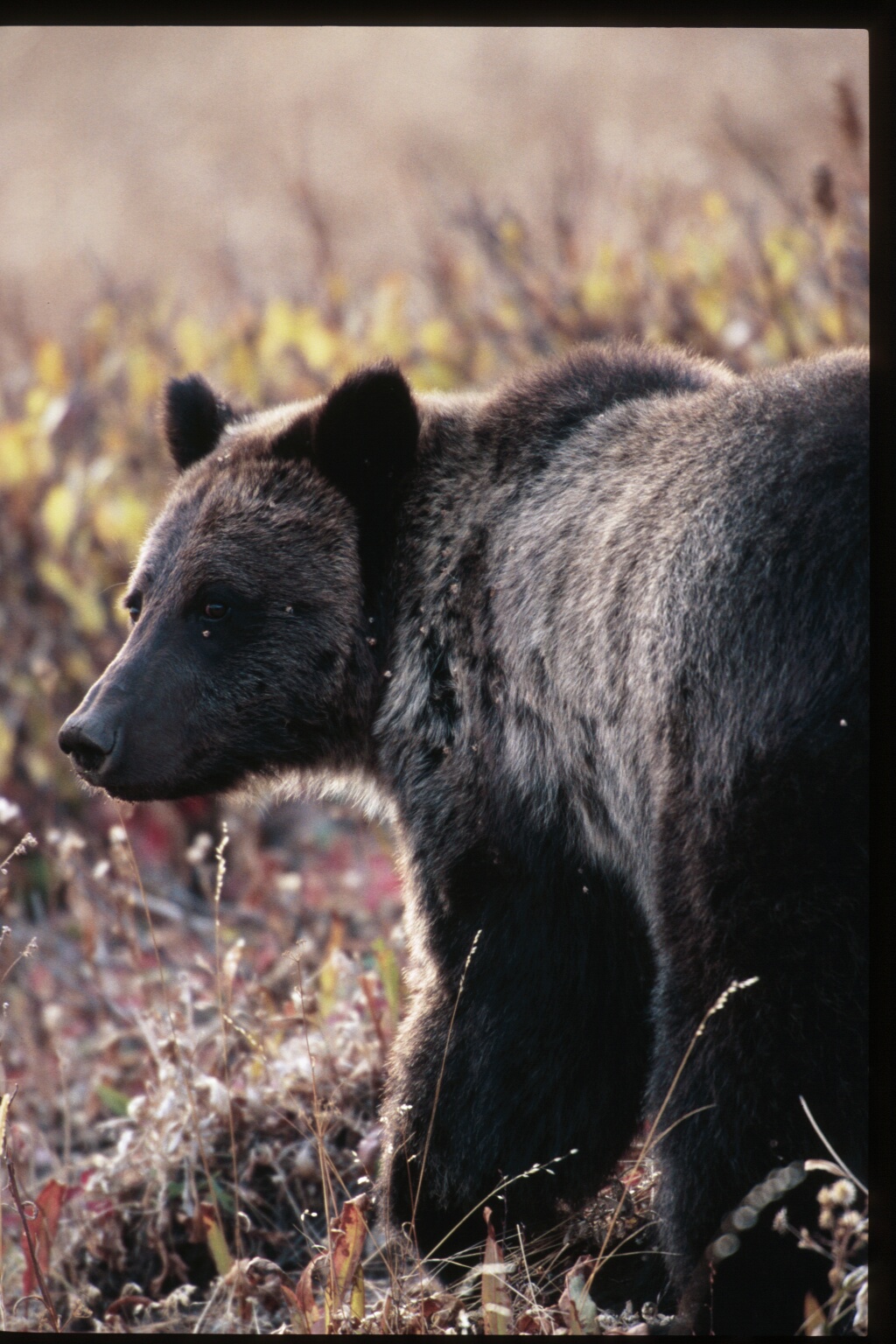
Photo copyright Jim Robertson

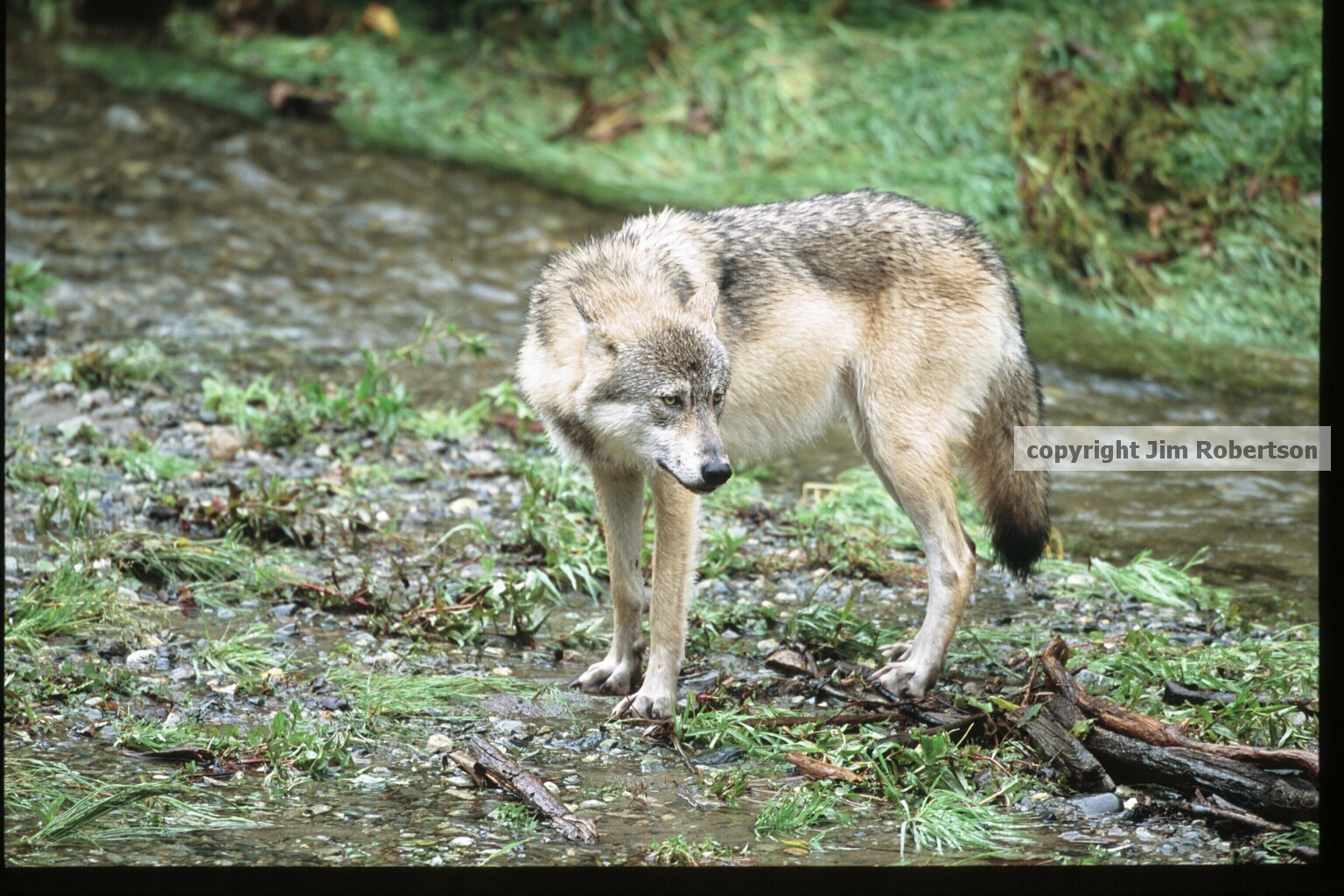
Photo copyright Jim Robertson

Counting Bears

New York Times Editorial                                               http://nytimes.com

By THE EDITORIAL BOARD

Published: July 7, 2013

There is nothing simple about counting grizzly bears. But counting them accurately will help determine whether they remain on the endangered species list or are delisted. The Interior Department’s Fish and Wildlife Service says there are about 700 grizzlies in the greater Yellowstone ecosystem, more than the 500 it deems essential for a healthy population. But a new study in the journal Conservation Letters calls those numbers into question.

A count is a projection, based on assumptions about the reproductive and survival capacity of grizzlies. The agency assumes that the bears live until they are 30 years old and reproduce at constant rates all along. This is a mathematical convenience, not a biological observation. The study argues that the inaccuracy of previous counts means that biologists know less than they think and concludes that grizzly numbers appear to have increased simply because government biologists are working harder to count the bears.

For these reasons, one federal researcher has said that current estimates are “essentially worthless.” Some biologists argue that a total of 500 bears isn’t nearly enough to guarantee a genetically healthy population. Their natural habitat — high-elevation pine forest — has been devastated by the mountain pine beetle. This has resulted in more frequent contact with humans, which nearly always ends in dead bears.

With some species, the Fish and Wildlife Service has done a good job chronicling and aiding their recovery. But those species do not include top predators like the gray wolf and the grizzly bear. Fish and Wildlife needs to pay close attention to the criticisms of its bear count and bear management plan. It is hard to imagine how a species whose habitat has been devastated and whose numbers are uncertain could be removed from federal protection.


Editorial: Making war on wolves

The feds want your comment on a plan to strip protection from these endangered creatures. Comment!

July 07, 2013
The gray wolf once numbered 2 million in North America, but relentless hunting nearly led the species to extinction.

The gray wolf once numbered 2 million in North America…
Yellowstone National Park’s best-known wolf, beloved by many tourists and valued by scientists who tracked its movements, was shot and killed Thursday outside the park’s boundaries, Wyoming wildlife officials reported. The wolf, known as 832F to researchers, was the alpha female of the park’s highly visible Lamar Canyon pack and had become so well known that some wildlife watchers referred to her as a “rock star.” The animal had been a tourist favorite for most of the past six years.

http://articles.chicagotribune.com/2013-07-07/opinion/ct-edit-wolves-20130707_1_best-known-wolf-wolves-federal-protection

They’re intelligent, majestic and, owing to the blood lust of Homo sapiens, never far from extinction. Yet to biologists and ecologists worldwide, the best case for saving wild wolves is their role as predator of some species and, paradoxically, shepherd to others: By stalking abundant elk, moose and other forest browsers, wolves unwittingly enhance the growth of crucial vegetation that gives foxes, beavers, songbirds, pronghorn antelopes and other critters a chance to survive.

Today, though, the survival most imminently threatened is that of the American gray wolf itself. Early in June an arm of the Obama administration pleased the politically influential livestock industry — plus hunting interests still smarting over gun control bills — by proposing that the wolves no longer need protection under the Endangered Species Act of 1973.

Until Sept. 11, citizens can submit comments to the U.S. Fish and Wildlife Service. We hope you’ll join the fray (details below) and tell the feds how premature and reckless that policy reversal would be: Continuing today’s level of protection would give wolves a chance to widen their territories and continue to recover — as bald eagles, alligators, brown pelicans and falcons were allowed to do when they, too, faced obliteration.

Thanks to federal protection that actually dates to the mid-1960s, wolves have begun to rebound from near-extinction — although today they roam less than 5 percent of their ancestors’ range. Stripping away that protection likely would freeze in place — and limit forever — this fledgling recovery. Expansion of packs to areas bulging with potential wolf habitat in the Pacific Northwest, California, the Southern Rockies and some Northeastern states would be virtually impossible.

This proposal, if enacted, would free the administration from passionate political clashes between environmentalists and livestock growers in several states. But it also would leave the wolf’s recovery not only unfinished, but seriously imperiled: The Center for Biological Diversity, one of many national environmental groups fighting the administration’s proposal, says the isolation of too many packs in small, disconnected locales promotes dangerous inbreeding; for lack of genetic variety, wolf litters grow smaller — as do pup survival rates.

Some 2 million gray wolves once roamed North America. By the mid-1900s, though, they had been hunted almost to oblivion in the 48 contiguous United States. A half-century of preservation efforts — federal protections chief among them — have rebuilt that population to about 6,000 in the Upper Midwest and Northern Rockies. Alaska’s vast hinterland has another 8,000 or more, living without endangered-species protection.

That “lower 48 states” head count, of course, doesn’t include the more than 1,000 wolves killed now that Wisconsin, Minnesota, Idaho, Wyoming and Montana have legalized wolf hunting. A group called Keep Michigan Wolves Protected is trying to block hunting scheduled to begin later this year in that state, too.

How can states legalize the hunting of such rare treasures? In a precursor to today’s across-the-board proposal, the administration unwisely released those states from federal wolf protection rules in recent years. Some of the killings to date have been barbarous. An Idaho trapper, Josh Bransford, became an Internet pariah after he posed, smiling, in front of a wolf caught in a leg-hold trap; rather than put out of its misery an animal standing in a circle of blood-reddened snow, Bransford used it as his photo prop.

Wolves rarely threaten humans but sometimes do attack livestock: Environmentalists calculate that last year wolves killed 645 of the 7 million cattle and sheep in Montana, Idaho and Wyoming. Ranchers who lose livestock to wolves receive government reimbursements.

That compensation helps balance what can be a good equilibrium. We’ve noted before that in some states the gray wolf has become a routine and accepted player in humanity’s interaction with nature. Other states, though, encounter a familiar collision of two forces: the desire of humans to control what they see as their environment alone, and potential extinction if wolf populations fall so low that disease can exterminate them.

Care to join the thousands of Americans who already have urged Fish and Wildlife to keep protection of gray wolves intact? Easy: chicagotribune.com/wolf takes you to the appropriate federal website and its blue “Comment Now!” button.

Comment now to protect one of America’s most ecologically valuable creatures.

Comment now in memory of 832F — shot down while wearing the GPS tracking collar that told researchers all about her storied life at Yellowstone.

Slate: Is the far right driving gray wolves to extinction?

copyrighted wolf in river

The Fish and Wildlife Service bows to pressure from antigovernment groups, removing the animals’ endangered status

By

The US Fish and Wildlife Service’s recent announcement that it is beginning the process for removing gray wolves across the country from the protection of the Endangered Species Act surprised no one. The Fish and Wildlife Service’s mid-1990s reintroduction of gray wolves — a species virtually extirpated in the nineteenth and twentieth centuries — into Yellowstone National Park and central Idaho marked a triumph for conservationists and ranks as one of the most striking fulfillments of the Endangered Species Act. But as I have reported here and here, the wolves quickly met enemies.

By the early 2000s a loose coalition of hunters’ groups, outfitters, and ranchers — along with the many disaffected men embracing militia groups, local “sovereignty” and states rights, particularly rights to use public lands without federal regulation — coalesced around the idea that wolves represented icons of the hated federal government. The wolves, they all-but-screamed, constituted lethal threats to deer and elk, livestock, and ultimately, people. The long, bitter wolf war reached its climax in the summer of 2011, when Congress took the unprecedented act of removing the wolf populations of the Northern Rockies from the endangered species list. In May 2011, the Fish and Wildlife Service, weary of the many problems involved in wolf management (or, rather, public relations management), delisted gray wolves in the Western Great Lakes states, where some 4,400 wolves resided. Idaho, Montana and Wyoming subsequently initiated hunts and the use of government marksmen to reduce wolf numbers from around 1,700 to a much lower level.

The FWS’s proposed delisting of gray wolves across the country is simply the continuation of the agency’s long retreat in the face of wolf hater intimidation. Still, it’s important to understand how the FWS legitimizes its abandonment of wolves. A close examination of the FWS’ proposed rule change is a case study in the politicization of science. The FWS report excels at cherry picking, choosing certain scientific studies while rejecting others. It’s also an excellent example of bureaucratic hand-waving, simply dismissing long established facts whenever they become inconvenient. The final result is like a weird game of scientific Twister: The FWS bends itself into all sorts of contortions to conform to a political agenda.

The article continues here: http://www.salon.com/2013/06/25/is_the_far_right_driving_gray_wolves_to_extinction_partner/

POLITICS DOMINATED WOLF DE-LISTING MEETINGS

Science Was Afterthought in Developing Preferred Alternatives for Wolf Recovery.

Jun 27, 2013

http://www.peer.org/news/news-releases/2013/06/26/politics-dominated-wolf-de-listing-meetings/

Washington, DC —The federal government’s plan to remove the gray wolf from the protections of the Endangered Species Act was hammered out through political bargaining with affected states, according to documents obtained by Public Employees for Environmental Responsibility (PEER) through a Freedom of Information Act lawsuit. Contrary to requirements of the Endangered Species Act that listing decisions must be governed by the best available science, the U.S. Fish & Wildlife Service presided over a process in which political and economic considerations were at the forefront..

The 52 documents produced by Fish & Wildlife Service detail how the “National Wolf Strategy” was developed in a series of closed-door federal-state meetings called “Structured Decision Making” or SDM beginning in August 2010. The meetings involved officials from every region of the Service and representatives from the game and fish agencies of 13 states. The SDM process featured –.
•A “Focus on Values. Determine objectives (values) first, and let them drive the analysis.” An SDM flow-chart starts with Problem and goes to Objectives, to Alternatives and then to Consequences at which stage a small box labeled “Data” finally comes into play;
•An explicit political test “Where should wolves exist? (emphasis in original) What does the public want? What can the public tolerate?”; and
•A matrix to weigh alternatives on a scale of “legal defensibility” then “public acceptance” followed by “wolf conservation” and finally “efficiency.”

“These documents confirm our worst suspicions that the fate of the wolf was decided at a political bazaar. The meeting notes certainly explain why no outside scientists were welcome,” stated PEER Executive Director Jeff Ruch who had been seeking the records since April 2012. “From what we can see, Structured Decision Making was structured primarily to deal out the lower-48 population of gray wolves.”.

Under a federal proposal currently out for public comment the gray wolf would be stricken from the federal list of threatened or endangered species. The Mexican wolf, with only a handful remaining in the wild, would keep its endangered status but no protected habitat would be delineated for it..

Much of the meetings were devoted to assuaging state threats to sue to halt wolf reintroductions. The tenor of these discussions was captured by a map titled “New Fantastic Alternative” which allowed unlimited hunting of gray wolves in Colorado and Utah. It also confined Mexican wolves to portions of Arizona and New Mexico..

“The Obama administration keeps preaching integrity of science and transparency but seems to practice neither on any matter of consequence,” Ruch added, pointing to PEER’s detailed complaint on how politics smothered the recovery plan developed for Mexican wolves by a team of scientific experts. “In simplest terms, these documents detail how the gray wolf lost a popularity contest among wildlife managers.”.

These foundational SDM documents obtained by PEER will likely provide fodder for the lawsuits that will almost certainly follow the expected final federal decision to de-list the gray wolf.

copyrighted wolf in river

Montana “Conservationist” Accused Of Declaring War On Wolves

From the San Francisco Chronicle:

Montana Conservationist Accused Of Declaring War On Wolves            

Robert Ferris,
Published 5:36 am, Saturday, June 15, 2013


Many conservationists are furious over a recent proposal by the U.S. Fish and Wildlife service to drop the gray wolf from the endangered species list.

At least one group of conservationists [their word, not mine], however, also supports dropping federal protection for wolves. They are the Rocky Mountain Elk Foundation, led by hunter David Allen. …

Allen’s controversial stance has alienated some former supporters of the Elk Foundation, who accuse him of turning the conservation group into a pro-hunting lobby. The family of famed wildlife biologist Olaus J. Murie pulled money last year for its annual Elk Foundation award on account of the organization’s “all-out war against wolves,” according to the Montana Pioneer. …

Allen would like to see the wolf population in the Rocky Mountain region shrink: “We do feel like the number could be managed downward and not threaten the population overall,” he said. [How many individual wolves will suffer while they “manage” them “downward”?]

When asked by the Pioneer about the natural predator-prey relations, Allen said: “Natural balance is a Walt Disney movie. It isn’t real.”

The former marketer for NASCAR is not what you might think of today as a conservationist. [That’s because he’s not; he’s a fucking marketer for NASCAR and a trophy hunter]. Allen poses for photos in hunter camo, and the Rocky Mountain Elk Foundation has a page on its site called “The Hunt,” where users can plan their own elk hunts and get game recipes from the “Carnivore’s Corner.”

But he and his cohort maintain that hunters are the original conservationists [LMFAO]. They take inspiration from early American hunters and outdoorsmen like Theodore Roosevelt. [Oh, you mean that guy who wrote African Game Trails in which he lovingly muses over shooting elephants, hippos, buffaloes, lions, cheetahs, leopards, giraffes, zebras, hartebeest, impalas, pigs, the not-so-formidable 30-pound steenbok and even (in what must have seemed the pinnacle of manly sport with rifles) a mother ostrich on her nest?]

The proposal to delist gray wolves across the country and return management to the states comes less than two years after populations in Idaho, Montana, Oregon, Washington, and Utah, which cover the Northern Rocky Mountain region, were stripped of Federal protections.

Environmental activists who oppose taking gray wolves off the endangered species list argue that the population has not been restored to its historical range, which once extended across the much of the contiguous United States.

Considered a threat to livestock, the gray wolf was nearly hunted to extinction in the early to mid-20th century. Canadian-born gray wolves were reintroduced to Yellowstone National Park in the mid-1990s and the population has largely recovered due to conservation efforts. [True conservation, that is. Not to be confused with the warped perversion practiced by the self-serving Rocky Mountain Elk Foundation.]

copyrighted-wolf-argument-settled


Comment Info for Wolf Delisting

From Defenders of Wildlife,

Well they did it.

Last week the U.S. Fish and Wildlife Service (FWS) formally proposed to remove federal Endangered Species Act protection for most of the gray wolves across the United States.

FWS is required by law to accept public comments before they can make their final decision on this misguided proposal. Defenders plans to use this 90 day comment period to organize strong and vocal opposition from supporters like you to make sure the decision makers in Washington hear what America thinks about the premature delisting of gray wolves.

Submit your comment today and tell the FWS that you strongly oppose their misguided proposal to delist nearly all wolves:

https://www.federalregister.gov/articles/2013/06/13/2013-13982/endangered-and-threatened-wildlife-and-plants-removing-the-gray-wolf-canis-lupus-from-the-list-of

You may submit comments by one of the following methods:

(1) Electronically: Go to the Federal eRulemaking Portal: http://www.regulations.gov. In the Search box, enter FWS-HQ-ES-2013-0073, which is the docket number for this rulemaking. Please ensure you have found the correct document before submitting your comments. If your comments will fit in the provided comment box, please use this feature of http://regulations.gov, as it is most compatible with our comment-review procedures. If you attach your comments as a separate document, our preferred file format is Microsoft Word. If you attach multiple comments (such as form letters), our preferred format is a spreadsheet in Microsoft Excel. Submissions of electronic comments on our Proposed Revision to the Nonessential Experimental Population of the Mexican Wolf, which also published in today’s Federal Register, should be submitted to Docket No. FWS-R2-ES-2013-0056 using the method described above.

(2) By hard copy: Submit by U.S. mail or hand-delivery to: Public Comments Processing, Attn: FWS-HQ-ES-2013-0073; Division of Policy and Directives Management; U.S. Fish and Wildlife Service; 4401 N. Fairfax Drive, MS 2042-PDM; Arlington, Virginia 22203.

We will post all comments on http://www.regulations.gov. This generally means that we will post any personal information you provide us (see the Public Comments section below for more information). Submissions of hard copy comments on our Proposed Revision to the Nonessential Experimental Population of the Mexican Wolf, which also published in today’s Federal Register should be addressed to Attn: Docket No. FWS-R2-ES-2013-0056 using the method described above.

                             ______________

From Defenders of Wildlife, Here are some important points you could include in your comments:

  • Gray wolf recovery is not complete.  This decision could derail wolf recovery efforts in areas around the country where it has barely begun — in places like the Pacific Northwest and in states that possess some of the nation’s best unoccupied wolf habitat, such as northern California, Colorado, and Utah.
  • Delisting would prematurely turn wolf management over to the states. We’ve already seen what can happen when rabid anti-wolf politics are allowed to trump science and core wildlife management principles.
  • Montana, Wyoming and Idaho — where wolves have already been delisted — are not managing wolves like other wildlife such as elk, deer, and bears. Instead they’re intending to drive the wolves’ population numbers back down to the bottom.
  • Other species, such as the bald eagle, American alligator, and peregrine falcon were declared recovered and delisted when they occupied a much larger portion of their former range. Wolves deserve the same chance at real recovery.

The future of wolves in the U.S. is at stake. Please send your comments to the FWS today.
Over the coming weeks, we are launching an unprecedented and aggressive campaign to convince the Obama Administration to withdraw this reckless proposal and make good on our nation’s commitment to restore imperiled wolves.

copyrighted Hayden wolf in lodgepoles

Salt Lake Tribune Extols Value of wolves

http://www.sltrib.com/sltrib/opinion/56437820-82/wolf-gray-wolves-management.html.csp

Value of wolves

Feds must maintain some oversight

Jun 10 2013

The image of the government declaring “Mission Accomplished” is etched in Americans’ minds, and not in a good way. Just as former President George W. Bush was wrong when he made that announcement about the Iraq war, the feds might well be wrong in declaring the gray wolf no longer in need of protection in the West.

The U.S. Fish and Wildlife Service says the mission of recovering populations of the gray wolf, which once roamed throughout the United States, has been successful, and the top predator can now fend for himself. Considering that the illogical and irrational attitudes toward the wolf that resulted in its extermination in the West nearly a century ago remain, the agency may be acting too soon.

The FWS has concluded the current number of gray wolves in the lower 48 states no longer qualifies it for listing under the Endangered Species Act, but rightly recommended the Mexican gray wolf remain listed as an endangered subspecies.

The FWS will open a 90-day comment period on the proposal to seek additional scientific, commercial and technical information.

Advocates for delisting the wolf say management decisions should be made at the state level, not by federal agencies, now that the reintroduction process is complete. The problem with state-level decisions is that in the minds of many officials, “management” of the wolf is synonymous with “eradicating” the animal. For example, Wyoming’s proposed management plan essentially allowed anyone to shoot any wolf on sight for any reason. That’s not management.

Maintaining wildlife populations for human hunters and protecting livestock are the primary objectives of most local officials and ranchers, who still see the wolf as, at best, an unnecessary nuisance, and, at worst, an evil demon bent on wiping out whole herds of cattle and sheep. In reality, wolves improve the ecosystems they share with elk, moose and deer, as scientific research has shown in the greater Yellowstone ecosystem since their reintroduction.

Ranchers are compensated for livestock predation by wolves under the Endangered Species Act. Will that compensation be continued if the predators are delisted? If not, and even in some cases if so, it will be open season on wolves wherever livestock graze.

The recovery of the gray wolf in the West is a dramatic success story. When the animal is delisted as an endangered species, the federal government should continue to monitor its management by states, or it could disappear once again.

Wildlife Photography Copyright Jim Robertson

Wildlife Photography Copyright Jim Robertson

Letter From Wolf Scientists to Sec. Sally Jewell

May 21, 2013

Secretary Sally Jewell Department of Interior 1849 C Street NW Washington, DC 20240

CC: Dan Ashe, Director U.S. Fish and Wildlife Service 1849 C Street NW Washington, DC 20240

Dear Secretary Jewell,

As scientists with expertise in carnivore taxonomy and conservation biology, we are writing to express serious concerns with a recent draft rule leaked to the press that proposes to remove Endangered Species Act protections for gray wolves across the Lower 48 States, excluding the range of the Mexican gray wolf. Collectively, we represent many of the scientists responsible for the research referenced in the draft rule. Based on a careful review of the rule, we do not believe that the rule reflects the conclusions of our work or the best available science concerning the recovery of wolves, or is in accordance with the fundamental purpose of the Endangered Species Act to conserve endangered species and the ecosystems upon which they depend.

The Service’s draft rule proposes to: 1) “remove the gray wolf from the List of Threatened and Endangered Wildlife”; 2) “maintain endangered status for the Mexican wolf by listing it as a subspecies (Canis lupus baileyi)”; 3) “recognize a new species of wolf known as Canis lycaon [that] occurs in southeastern Canada and historically occurred in the northeastern United States and portions of the upper Midwest (eastern and western Great Lakes regions)”; and 4) deny protection to wolves in the Pacific Northwest because they do not qualify as a distinct population segment for lack of discreteness from wolves in the northern Rocky Mountains.

We find these proposals problematic both in terms of their scientific support and their consistency with the intent of the statute. Specifically:

1) Removal of the gray wolf from the List of Threatened and Endangered Wildlife The gray wolf has barely begun to recover or is absent from significant portions of its former range where substantial suitable habitat remains. The Service’s draft rule fails to consider science identifying extensive suitable habitat in the Pacific Northwest, California, the southern Rocky Mountains and the Northeast. It also fails to consider the importance of these areas to the long-term survival and recovery of wolves, or the importance of wolves to the ecosystems of these regions.

2) Maintain endangered status for the Mexican wolf by listing it as a subspecies Although the taxonomic distinctness of the Mexican wolf is well-supported, and we thus support subspecific listing as appropriate, the draft rule fails to delineate the geographic extent of the area in which wolves would receive protection, specifying only that Mexican wolves would be

protected “where found”. Genetic analysis of historic Mexican wolves showed that the range of the Mexican wolf likely extended beyond the historic range initially inferred from limited record data. At the same time, the Service has inexplicably delayed completion of the recovery plan for the Mexican wolf, the draft of which had concluded that habitat to the north of the current recovery area may be essential for recovery of the subspecies. The lack of specificity in the rule, coupled with past actions by the Service, encourages continued efforts by stakeholders to block recovery actions essential to recover a subspecies that is among the most endangered mammals in North America.

3) Recognize a new species of wolf known as Canis lycaon There is not sufficient information to support recognition of a new species of wolf, C. lycaon, and the geographic range reduction for Canis lupus in the eastern US as currently proposed. The Service acknowledged this problem in 2011, concluding:

While Chambers et al. (in prep.) provide a scientific basis for arguing the existence of eastern wolves as a distinct species, this represents neither a scientific consensus nor the majority opinion of researchers on the taxonomy of wolves, as others continue to argue that eastern wolves are forms of gray wolves (Koblmuller et al. 2009, vonHoldt et al. 2011). 76 Fed Reg. 81669.

While we encourage the Service to continue to review the taxonomic history of wolves in the eastern US, any future proposed taxonomic revision of canids should be a reflection of a more settled, broader scientific consensus rather than a premature policy decision based on ongoing and unsettled scientific debate. New evidence from complete genome sequencing efforts will likely supersede previous limited genetic evidence. Whether the Service moves forward with recognizing C. lycaon should have no bearing on the possibility that C. lupus’ range may have extended into some, if not many, of the eastern states. If the Service is intent on recognition of C. lycaon, this new species itself needs immediate protection as an endangered species. The draft rule provides no coherent scientific or statutory basis for not protecting wolves in the northeastern United States. The rule also ignores the threat that interspecific hybridization may have on the listed wolf species.

4) Conclude that wolves in the Pacific Northwest do not qualify as a distinct population segment Finally, we cannot support the conclusion that wolves in the Pacific Northwest do not qualify as a distinct population segment due to lack of discreteness from other wolf populations. In 2007, the boundary between the northern Rocky Mountains population and the Pacific Northwest was established by the Service in order to recognize the recovery that has occurred, and delist Northern Rocky Mountain (NRM) wolves. The 2007 rule correctly stated that the “DPS policy does not require complete separation of one DPS from other U.S. packs or populations..if occasional individual wolves or packs disperse among populations, the NRM DPS could still display the required discreteness.” It defies logic for the Service to now argue that “dispersal of wolves across the NRM DPS boundary is likely to continue” and that such occasional dispersal prevents recognition of a DPS that would protect wolves that are beginning to establish in the Pacific Northwest. Additionally, genetic testing of gray wolves that have migrated naturally into the Pacific Northwest has established that some derive from British Columbia coastal wolf populations which are genetically distinct from the inland stock of wolves used as a source for reintroduction to the northern Rocky Mountains.

The extirpation of wolves and large carnivores from large portions of the landscape is a global phenomenon with broad ecological consequences. There is a growing body of scientific literature demonstrating that top predators play critical roles in maintaining a diversity of other wildlife species and as such the composition and function of ecosystems. Research in Yellowstone National Park, for example, found that reintroduction of wolves caused changes in elk numbers and behavior which then facilitated recovery of streamside vegetation, benefitting beavers, fish and songbirds. In this and other ways, wolves shape North American landscapes.

Given the importance of wolves and the fact that they have only just begun to recover in some regions and not at all in others, we hope you will reconsider the Service’s proposal to remove protections across most of the United States.

Respectfully,

Bradley Bergstrom, PhD Valdosta State University Valdosta, Georgia

Christine Bozarth, PhD Northern Virginia Community College, Alexandria, Virginia

Jeremy Bruskotter, PhD The Ohio State University Columbus, Ohio

Carlos Carroll, PhD Klamath Center for Conservation Research Orleans, California

Phil Hedrick, PhD Arizona State University Tempe, Arizona

Roland Kays, PhD North Carolina State University Raleigh, North Carolina

Jennifer Leonard, PhD Estación Biológica de Doñana Sevilla, Spain

Jesus Maldonado, PhD Center for Conservation and Evolutionary Genetics, Smithsonian Washington DC

Michael P. Nelson, PhD Oregon State University Corvallis, Oregon

Reed F. Noss, PhD University of Central Florida Orlando, Florida

Stuart L. Pimm, PhD The Nicholas School, Duke University, Durham, North Carolina

John P. Pollinger, PhD University of California, Los Angeles Los Angeles, California

Michael Soulé, PhD Prof. Emeritus, University of California, Santa Cruz Paonia, Colorado

Bridgett vonHoldt, PhD University of California, Los Angeles Los Angeles, California

John Vucetich, PhD Michigan Technological University Houghton, Michigan

Robert Wayne, PhD University of California, Los Angeles Los Angeles, California

copyrighted Hayden wolf in lodgepoles

Utah Leads the Pack of Anti-Wolf A-Holes

Before news of a full federal wolf delisting even came off the presses, anti-wolf assholes from the wolfless state of Utah are front and center, spouting their bullshit lines to the press. And the feeble-minded mainstream media are gobbling it up…

In an article just out entitled, “Feds want to remove gray wolf from endangered species list,” Salt Lake City’s Desert News opened with the cutesy lead-in: “Top Utah politicians are howling with delight over a federal proposal to remove the gray wolf from protections under the Endangered Species Act, while advocates are growling in disgust.”

Followed by a quote from Sen. Orrin Hatch, R-Utah, “I appreciate the Fish and Wildlife Service hearing our concerns and making this right decision…An unmanaged wolf population threatens livestock and native wildlife, and threatens our communities. I know that our wildlife managers in Utah and throughout the West are fully capable of managing the wolf populations in a way that benefits all.”

That benefits “all”? What about the wolves? Or wolf advocates? Bob Brister with the Utah Environmental Congress was quoted next, trying to counter the senator’s hype:

“We are deeply disappointed with the Obama administration’s decision to delist the gray wolves in the West. State wildlife management agencies have proven to be either incapable or disinclined to manage wolves in an ecologically responsible and humane way.”

Another Utah anti-wolf fanatic, Rep. Rob Bishop, R-Utah, said the decision by the agency is long overdue. “For quite some time, the gray wolf has been ‘recovered’ and the issues with their being listed as an endangered species has limited states from employing responsible management practices, thus allowing the wolves to terrorize public land users and other animal species.”

If the agency ultimately chooses to delist the wolf, management of the species will be rightfully put in the hands of the states, Bishop said.

“I am pleased that states will now be able to actively manage the gray wolf population in a way that is beneficial to the wolf population as well as public land users, the sportsmen’s community, and all those whose livelihoods have been impacted by the current listing,” he said.

[Again, how does active “management” benefit wolves?]

Brister, however, said the decision makes no sense, especially given that Utah has no verified wolf population.

“We have been campaigning for the last three years to get the wolves back into Utah, so this is very disappointing to us,” he said.

The service will have a 90-day comment period on both of its proposals, but the date has not been determined.

___________

You can read the full article here: http://www.deseretnews.com/article/865581317/Feds-want-to-remove-gray-wolf-from-endangered-species-list.html

Stay tuned to this blog for a updates on the public comment period…

copyrighted-wolf-argument-settled


Wolf or Coyote, Which Should You Shoot?

At the bottom of this post is a photo quiz to test your skill at species identification and/or differentiation to go along with this action alert from WildEarth Guardian…..

Poachers [hunters] are shooting Mexican wolves in cold blood and the government is doing almost nothing about it.

Why? Because the Department of Justice has a policy that basically allows the killers to make the excuse that they thought they were shooting at a coyote.

And so anti-wolf forces are just laughing it off.

Sound outrageous?  Well it is.  What’s worse is that it’s now happened dozens of times. With the body count mounting, we said enough is enough. So last week we filed a landmark lawsuit to stop the practice of letting killers get off scot free. Now we urgently need your help!

We need to raise $20,000 in the next 21 days to ensure we can defend wolves in court – thanks to a fellow outraged Guardian, the first 50 gifts will be matched dollar for dollar, up to $10,000! With less than 75 Mexican wolves in the wild we need to act urgently. Please contribute to our Mexican Wolf Protection Fund.

The Department of Justice has decided to simply walk away from enforcing the Endangered Species Act, which strictly prohibits killing of endangered species—no matter the excuse. As a result it’s not only killers of Mexican wolves that have not been prosecuted, but also killers of other endangered species, including Grizzly bears, whooping cranes and California Condors.

Because of its so-called “McKittrick Policy,” the Department of Justice is loathe to charge or prosecute individuals who kill “endangered” species if they claim that they mistook the identity of the animal as their defense.

Since 1998, at least 48 endangered Mexican wolves have been shot, but the government has only pursued two cases! WildEarth Guardians believes it’s time the wildlife poachers are brought to justice, but we need your financial support.

________________

…So, just how hard is it to tell a wolf from a coyote? A black bear from a grizzly? Should hunters be trusted to make that call?

I’ve posted some of my photos below so you can decide for yourself whether coyote hunting should be legal in an area where only 75 individuals of a critically endangered subspecies of wolves exist; or if black bears should be hunted in a grizzly recovery zone.

(Answers at bottom of post.)

Let’s start with an easy one. Choose which is the grizzly bear from the following two photos:

1.

Wildlife Photography Copyright Jim Robertson

Wildlife Photography Copyright Jim Robertson

2.

DSC_0262

So how about these two; same question, (left or right)?

82236aa124e9099856c9b595bcea598c  blue eyed black bear

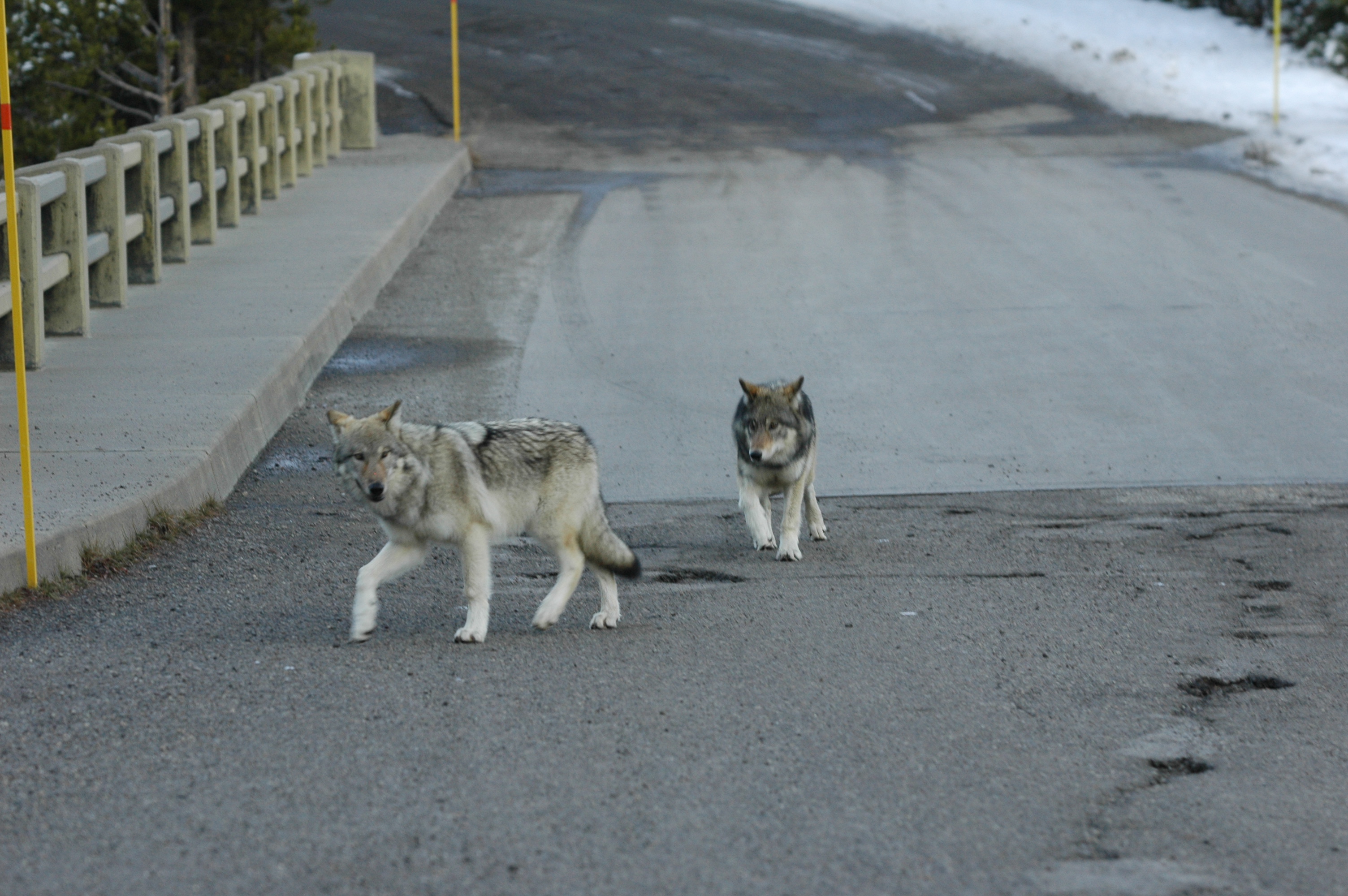
Now, which of these is the wolf?

DSC_0054

DSC_0298

Ok, this last one was a trick question; the two crossing the bridge are young wolves. But you get the point, it’s sometimes hard to tell.

Number 2. is the grizzly, as is the photo on the left below it.

Part of the credo of the alleged “ethical” hunter is, don’t pull the trigger unless you’re dead sure of your target. Better yet, don’t pull it at all; none of these animals deserve to die for your sporting pleasure.