Exposing the Big Game

Forget Hunters' Feeble Rationalizations and Trust Your Gut Feelings: Making Sport of Killing Is Not Healthy Human Behavior

Exposing the Big Game

Oregonion who shot wolf faces criminal charges

http://www.capitalpress.com/Oregon/20151116/oregon-man-who-shot-wolf-faces-criminal-charges

Eric Mortenson

Capital Press

Published:November 16, 2015 3:15PM

Courtesy of Oregon Department of Fish and Wildlife
OR 22, a male wolf that separated from the Umatilla River Pack in February, is pictured walking through a Northeast Oregon forest on Jan. 26. A Baker City, Ore., man who reported he shot the wolf now faces criminal charges.
1
1

<!–

–>

Although not a factor in the criminal case, the shooting happened as Oregon wildlife officials were deciding to take wolves off the state endangered species list.


A Baker City, Ore., man who told state police and wildlife officials that he’d shot a wolf while hunting coyotes on private property has been charged with killing an endangered species.

Brennon D. Witty, 25, also was charged with hunting with a centerfire rifle without a big game tag, Harney County District Attorney Tim Colahan said Monday. Both charges are Class A misdemeanors, each punishable by up to a year in jail and a $6,250 fine. Witty will be arraigned Dec. 2 in Grant County Justice Court, Canyon City.

The shooting happened in Grant County; the neighboring Harney County DA handled it as a courtesy because his Grant County counterpart was acquainted with the hunter’s family and wanted to avoid the appearance of a conflict of interest.

The incident happened Oct. 6, when Witty voluntarily notified ODFW and Oregon State Police that he’d shot a wolf while hunting coyotes on private property south of Prairie City. Police recovered a wolf’s body on the property.

Oregon’s action to remove wolves from the state endangered species list has no apparent bearing on the case. Wolves were listed under the state Endangered Species Act at the time of the shooting; the ODFW Commission on Nov. 9 removed wolves from the state list. Regardless, they remained on the federal endangered species list in the western two-thirds of the state.

The wolf was identified as OR-22, a male that has worn a GPS tracking collar since October 2013 and dispersed from the Umatilla Pack in February 2015. He was in Malheur County for awhile, then traveled into Grant County. Wildlife biologists don’t believe he had a mate of pups. Young or sub-dominant wolves often leave their home packs to establish their own territory and find mates.

OR-22 was the third Oregon wolf known to have died since August, when the Sled Springs pair in Northeast Oregon were found dead of unknown cause. The state now has a minimum of 82 wolves.

Conservationists Criticize Precedent Setting State Wolf Delisting

from: DOW.org

November 9, 2015

SALEM, Ore.

The state of Oregon has just stripped wolves of all protections under the state’s endangered species law. Below is the statement that we sent out immediately following the decision in an effort to bring national attention to this important issue.

This premature decision could lead to needless wolf deaths and could slow or halt Oregon’s fragile wolf recovery.

Defenders of Wildlife says the Oregon Fish and Wildlife Commission’s decision today to remove state endangered species protections for wolves is premature and would likely lead to slowed or stopped wolf recovery in the state. No other species has been removed from the state’s endangered species list with a population of fewer than 100 individuals statewide or when they were still absent from a significant portion of their historic range.

Shawn Cantrell, Defenders of Wildlife’s northwest director, testified at today’s meeting and issued the following statement:

“We are deeply disappointed to see the Fish and Wildlife Commission approve a state delisting of wolves when only the barest minimum requirements have been met. The better and more cautious alternative would have been to downlist wolves from endangered to threatened and not delist them entirely. This would have continued to provide vital state protections for wolves, while also recognizing the progress the state has made to recover wolves in the eastern part of the state. More importantly, it would have left wolves fully protected in the western part of Oregon, where they are only just starting to expand and are in the earliest stages of recovery.

“Unfortunately, the commission decided to prematurely delist wolves without first updating and amending the Oregon Wolf Management Plan, which is overdue for a planned update. It will be critical that any subsequent revision of the plan maintains protocols for using non-lethal conflict avoidance tools, like livestock guarding dogs or fencing, to reduce potential livestock-wolf conflicts.

“Oregon recently has been a real leader emphasizing non-lethal conflict management between livestock and wolves so that wolves can continue their recovery in the state. Given the commission’s decision on delisting today, it will be all the more critical for Oregon to continue to emphasize and promote non-lethal strategies for allowing wolves and livestock to coexist on the same landscapes.

Why Hunting of Yellowstone Grizzly Bears Could Resume


The successful recovery of the grizzly bears in Yellowstone National Park under the Endangered Species Act has caused some grizzly advocates[???] to call for delisting the species, and to allow hunting to resume.

Grizzly bears in Yellowstone National Park area saw unprecedented growth this year after being granted protection under the Endangered Species Act (ESA) in 1975, causing many hunting enthusiasts to call for the population’s delisting.

A study published in the journal Molecular Ecology last week found “independent demographic evidence for Yellowstone grizzly bear population growth since the 1980s.” The scientists studied 729 bears and found that genetic diversity in the population was stable and the effective population, also known as “the number of bears passing genes to the next generation,” had quadrupled.

Some say the grizzly population has grown too much, reaching the resource capacity for the Yellowstone National Park area in Wyoming and Montana.

(900 Reviews)

The Discovery Channel is now on the Windows Store! Watch thousands of clips…

“Grizzly bears are moving into areas outside the recovery zone,” Frank von Manen, a wildlife biologist and leader of the Interagency Grizzly Bear Study Team, told The Associated Press. “They are getting into more and more of those areas where the potential for conflicts are greater.”

Wildlife managers in the Yellowstone region have euthanized 24 grizzlies so far this year. Low availability of natural food sources, such as whitebark pine cone production, has caused Yellowstone grizzlies to hunt local livestock and other human food sources.

“They’re bumping up against the social human tolerance of where they can be,” Kerry Gunther, Yellowstone National Park’s bear management program leader, told The Associated Press.

In light of the corresponding population and euthanasia increases, the Obama administration is expected to announce its support for Yellowstone grizzlies’ removal from the ESA, after the Yellowstone Ecosystem and Interagency Grizzly Bear Study team first recommended species removal in 2013.

But Harmony Kristin Szarek, a graduate student at Ohio State University, interviewed a majority of prominent grizzly bear scientists and found that 60 percent of experts “believe delisting would be an incorrect decision, or at the very least a violation of the precautionary principle.”

Some delisting advocates, such as Daniel Thompson, a large carnivore specialist for the Wyoming Game and Fish Department, says grizzly bear delisting does not have to be an open endorsement for unregulated hunting.

“The discussion has switched more to hunting in the future and that clouds the issue of the notable recovery of an animal,” Thompson told The Missoulian. “That was the goal of (the ESA). This should be a very positive story, but there’s a lot of arguing in the background. And it ignores the sacrifices of the people on the ground who live in grizzly bear country.”

Some environmental protection organizations agree with Thompson. The National Wildlife Federation (NWF) says species are intended to recover under the ESA, “so long as adequate plans exist to assure recovery continues.” The NWF suggests a comprehensive conservation package for the Yellowstone grizzlies, including a six million acre Primary Conservation Area where the needs of grizzlies come first and extensive monitoring, which could give the species improved protection and free up funding and resources for other endangered animals.

But opponents of grizzly hunting say there is no reason to rush delisting, because local bears are worth more to the state alive than dead. In the 20 million acres of the greater Yellowstone area, nature-related tourism is a $1 billion industry. And without the potential of seeing a roadside bear, a 2014 study reported that Yellowstone National Park would lose about $10 million annually.

This article was written by Story Hinckley Staff from Christian Science Monitor and was legally licensed through the NewsCred publisher network.

http://www.msn.com/en-us/news/us/why-hunting-of-yellowstone-grizzly-bears-could-resume/ar-BBmKuYT?li=AAa0dzB&ocid=mailsignout

Fukushima Radiation in Pacific Reaches West Coast

Tuesday, 20 October 2015 00:00
Written by 
John LaForge By

John LaForge, Speakout

“[W]e should be carefully monitoring the oceans after what is certainly the largest accidental release of radioactive contaminants to the oceans in history,” marine chemist Ken Buesseler said last spring.

Instead, the US Environmental Protection Agency halted its emergency radiation monitoring of Fukushima’s radioactive plume in May 2011, three months after the disaster began. Japan isn’t even monitoring seawater near Fukushima, according to a September 28, 2015, story in “The Ecologist.”

The amount of cesium in seawater that Buesseler’s researchers found off Vancouver Island is nearly six times the concentration recorded since cesium was first introduced into the oceans by nuclear bomb tests (halted in 1963). This stunning increase in Pacific cesium shows an ongoing increase. The International Business Times (IBT) reported last November 12 that Dr. Buesseler found the amount of cesium-134 in the same waters was then about twice the concentration left in long-standing bomb test remains.

Dr. Buesseler, at the Woods Hole Oceanographic Institution, announced his assessment after his team found that cesium drift from Fukushima’s three reactor meltdowns had reached North America. Attempting to reassure the public, Buesseler said, “[E]ven if they were twice as high and I was to swim there every day for an entire year, the dose I would be exposed to is a thousand times less than a single dental X-ray.”

This comparison conflates the important difference between external radiation exposure (from X-rays or swimming in radioactively contaminated seawater) and internal contamination from ingesting radioactive isotopes, say, with seafood.

Dr. Chris Busby of the Low Level Radiation Campaign in the UK explains the distinction this way: Think of the difference between merely sitting before a warm wood fire on one hand, and popping a burning hot coal into your mouth on the other. Internal contamination can be 1,000 times more likely to cause cancer than the same exposure if it were external, especially for women and children. And, because cesium-137 stays in the ecosphere for 300 years, long-term bioaccumulation and bioconcentration of cesium isotopes in the food chain – in this case the ocean food chain – is the perpetually worsening consequence of what has spilled and is still pouring from Fukushima.

The nuclear weapons production complex is the only other industry that has a record of deliberate whole-earth poisoning. Hundreds of tons of radioactive fallout were aerosolized and spread to the world’s watery commons and landmasses by nuclear bomb testing. The same people then brought us commercial nuclear power reactors. Dirty war spawns dirty business, where lying comes easy. Just as the weapons makers lied about bomb test fallout dangers, nuclear power proponents claimed the cesium spewed from Fukushima would be diluted to infinity after the plume dispersed across 4,000 miles of Pacific Ocean.

Today, globalized radioactive contamination of the commons by private corporations has become the financial, political and health care cost of operating nuclear power reactors. The November 2014 IBT article noted that “The planet’s oceans already contain vast amounts of radiation, as the world’s 435 nuclear power plants routinely pump radioactive water into Earth’s oceans, albeit less dangerous isotopes than cesium.”

Fifty million Becquerels of cesium per-cubic-meter were measured off Fukushima soon after the March 2011 start of the three meltdowns. Cesium-contaminated Albacore and Bluefin tuna were caught off the West Coast a mere four months later; 300 tons of cesium-laced effluent has been pouring into the Pacific every day for the four and a half years since. On September 14, 2015, the Japanese government openly dumped 850 tons of partially-filtered but tritium-contaminated water into the Pacific. This latest dumping portends what it will try to do with thousands of tons more now held in shabby storage tanks at the devastated reactor complex.

Officials from Fukushima’s owners, the Tokyo Electric Power Co., have said leaks from Fukushima disaster with “at least” two trillion Becquerels of radioactivity entered the Pacific between August 2013 and May 2014 – and this nine-month period isn’t even the half of it.

The fact that Fukushima has contaminated the entirety of the Pacific Ocean must be viewed as cataclysmic. The ongoing introduction of Fukushima’s radioactive runoff may be slow-paced, and the inevitable damage to sea life and human health may take decades to register, but the “canary in the mineshaft” is the Pacific tuna population, which should now also be perpetually monitored for cesium.

Last November Buesseler warned, “Radioactive cesium from the Fukushima disaster is likely to keep arriving at the North American coast.” Fish eaters may want to stick with the Atlantic catch for 12 generations or so.

http://www.truth-out.org/speakout/item/33309-fukushima-radiation-in-pacific-reaches-west-coast

Is the Mexican grizzly bear extinct?

by Karen Kirkpatrick

Photo Copyright Jim Robertson

Photo Copyright Jim Robertson

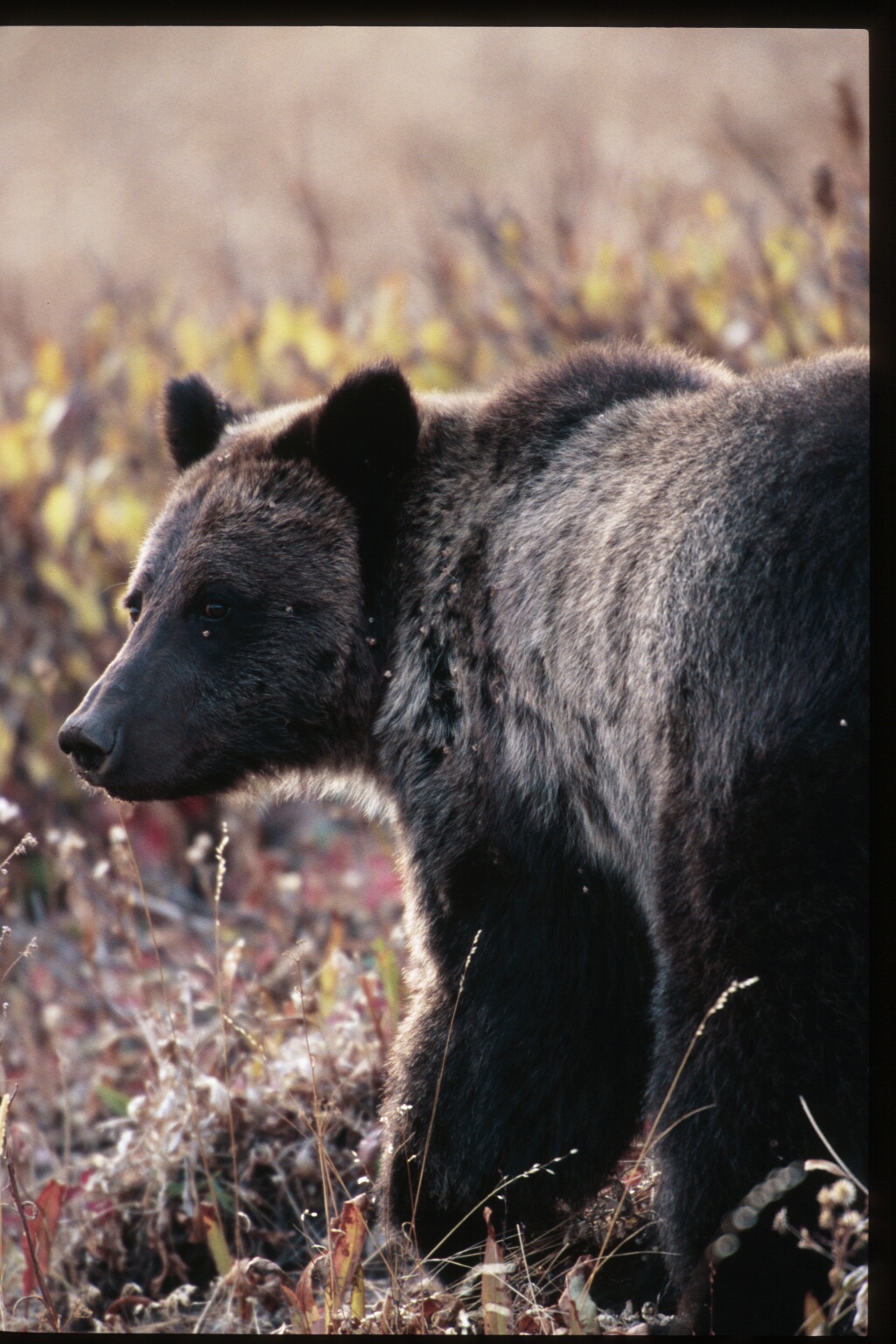
Many people may think grizzly bears are vicious, but they’ve gotten a bad rap.

The answer to this question depends on a definition that has changed over time. At one time, scientists thought that brown bears and grizzly bears were separate species, but today, they are considered the same species, Ursus arctos. There isn’t a consensus on how best to classify them or how many subspecies there are, however. An estimated 200,000 brown bears live primarily in North America and Russia

. The Mexican grizzly is a subspecies of brown bear, so cursory research would seem to indicate that the Mexican grizzly is not extinct.

However, if you do a little more digging, you’ll find that the International Union for Conservation of Nature produced a book in 1982 stating that Mexican grizzlies were extinct. The IUCN is the organization that tracks the conservation status of plants and animals and ranks animals as threatened, endangered or apparently safe. The group also classifies Mexican grizzlies as a subspecies of brown bear.

The story goes like this: Once upon a time, in the not-so-distant past, a subspecies of brown bears called Mexican grizzly bears lived in the southwestern United States and parts of Mexico. By all accounts, they were smaller than their counterparts in Canada and the northern United States. In the early 1960s, a Mexican rancher began a campaign to eradicate the bears because he blamed them for slaughtering his cattle (in reality, the bears eat mainly plants and insects and rarely go after small mammals). Due to the cattleman’s efforts, the Mexican grizzly was probably extinct by 1964.

So is the Mexican grizzly really extinct? It is presumed to be so, although the brown bear species continues to thrive in parts of North America, Europe and Asia. Ecologists consider the Mexican grizzly extirpated, which means it is locally extinct.

More: http://animals.howstuffworks.com/extinct-animals/is-mexican-grizzly-bear-extinct.htm

Tell Congress to pass the CECIL Act to fight trophy hunting of rare wildlife

Tell Congress to pass the CECIL Act to fight trophy hunting of rare wildlife

 https://www.change.org/p/tell-congress-to-pass-the-cecil-act-to-fight-trophy-hunting-of-rare-wildlife?recruiter=58625131&utm_source=share_petition&utm_medium=facebook&utm_campaign=autopublish&utm_term=des-md-action_alert-no_msg&fb_ref=Default

Alene Anello

Cambridge, MA

16,481

Supporters

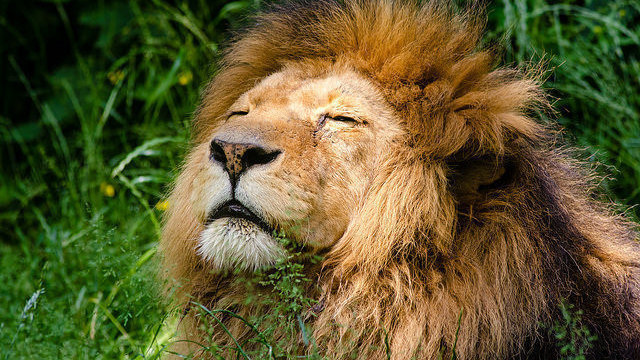
When I heard an American killed Cecil the lion, I felt sick to my stomach. I also felt embarrassed for our country. I know I am not alone in feeling concern, because people around the world reacted with horror to the needless killing of such an iconic African lion. A movement is building to protect rare wild animals, and I’m asking for your support to prevent future tragedies like what happened to Cecil. Please sign my petition telling Congress to pass the CECIL Act into law, which would place restrictions on trophy hunting of animals considered for endangered or threatened wildlife protections.

The Conserving Ecosystems by Ceasing the Importation of Large (CECIL) Animal Trophies Act may be our best chance to protect rare wild animals from getting killed for trophies and shipped here to the United States. Without this law, we leave animals around the world vulnerable to trophy hunting.

Right now, the Endangered Species Act prevents the import and export of wildlife already listed as endangered. The CECIL ACT would extend those protections to animals proposed for addition to the list. The CECIL ACT would prohibit the import of such hunting trophies into our country.

I’m at Harvard Law School right now to learn the most effective ways to protect animals from abuse and neglect. I know it’s important to show Congress that the public demands better laws. We must work together to make this change right now. Otherwise, big money from wealthy trophy hunters will drown out the compassionate voices of regular Americans like us.

By signing my petition, we can send a loud message to Congress that Americans want to protect rare wildlife. Tell Congress to pass the CECIL Act into law to protect animals like Cecil from trophy hunting.

6,000 grizzly bears left–End the Transport of Canadian Animal Hunting ‘Trophies’

Petitioning Calin Rovinescu, Gregg Saretsky

End the Transport of Canadian Animal Hunting ‘Trophies’

Petition by Pacific Wild

 Air Canada and WestJet have banned the transport of big game out of Africa, but continue to allow the transport of Canadian animal ‘trophies’, such as black bears, grizzly bears, polar bears and wolves.

Sign and share this petition to tell Air Canada and WestJet they should be taking a stand against trophy hunting in their own backyard.

On August 4, Air Canada and WestJet banned the shipment of big game trophies after the brutal killing of Cecil the lion in Zimbabwe in early July drew international attention and sparked a media outcry.

What about in our own backyard?

British Columbia is one of the last refuges of the grizzly bear, which once roamed widely across North America. Though listed as a species of special concern by the Committee on the Status of Endangered Wildlife in Canada, the province still allows a Limited Entry Hunt for grizzly bear trophy hunters twice a year.

Despite a recognized need for protection, independent biologists indicate B.C.’s grizzly population has fallen from 35,000 bears in 1915 to as low as 6,000 today. Still, trophy hunters shoot between 300 and 400 grizzlies each year, and Air Canada and West Jet kindly ship the trophies home.

In 2004, the European Union banned imports of all B.C. grizzly parts into member countries after its analysis found the BC grizzly bear hunt to be unsustainable.

A recent study by the Centre for Responsible Travel finds bear viewing in B.C.’s Great Bear Rainforest generates far more economic value than bear hunting. According to this study, visitors spent 12 times more on bear viewing than on bear hunting in British Columbia.

Ironically, the very businesses that benefit from tourist travel are undermining it!

Beyond the evidence, 90% of British Columbians simply do not support the trophy hunt including all Coastal First Nations.

In the absence of provincial leadership, we are all doing what we can to stop the trophy hunt. It’s time for Air Canada and West Jet to do their part at home.

Join us in:

a) acknowledging Air Canada CEO, Calin Rovinescu and WestJet CEO, Gregg Saretsky for taking these important first steps to oppose the trophy hunt; and

b) calling on them to take a stand against this brutal and inhumane ‘sport’ in their own backyard by refusing to transport grizzly, black bears, and wolves from their natural habitat.

Until the provincial government of British Columbia bans trophy hunting, it’s up to us to make it as difficult as possible.

Please sign and share this message to help #banthetrophy hunt, one step at a time.

New Mexico’s Native Wolves Need Your Voice

Tell Governor Martinez and her Game Commission: it’s time to end the war on New Mexico’s wolves and other carnivores

Please sign the petition today and stand for wolves and wildlife at the rally and  commission meeting in Santa Fe on Thursday, August 27th!
none

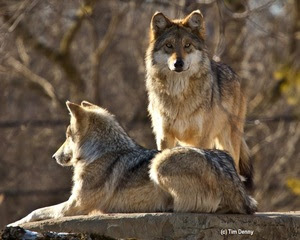
leader of the pack tim denny

New Mexico Governor Susana Martinez and her hand picked Game Commission are clearly out of touch with the majority of New Mexico voters, who support wolf recovery.

This is particularly troubling given that Representative Steve Pearce (R-NM) recently introduced legislation to remove Mexican gray wolves’ federal Endangered Species Act protections, which would leave them at the mercy of states clearly hostile to their recovery.

Please stand with us for wolves, cougars and bears on August 27th.

In the past few months, the New Mexico Game Commission has repeatedly sought to undermine the recovery of endangered Mexican gray wolves, first by denying, without justification, the 17 year old permit for Ted Turner’s Ladder Ranch to continue assisting with the Mexican wolf reintroduction and more recently by denying the U.S. Fish and Wildlife a permit to release Mexican gray wolves into New Mexico, which is necessary to boost the wild population’s declining genetic health.

The U.S. Fish and Wildlife Service’s appeal of the Mexican wolf permit denial is on the agenda for the August 27, 2015 Commission meeting. Members of the public will not be allowed to speak during the Mexican wolf agenda item, but we intend to make our voices heard at a rally at 8:00 am before the meeting begins and to stand in silence for wolves in the meeting during these agenda items.

The commission will also vote on its proposals to allow cougars to be cruelly trapped and to expand bear hunting in NM. Those who wish to speak for cougars and bears should plan to be at the meeting by 8:30 am to fill out speaker cards.


Please join us on August 27th to give wolves, cougars and bears a voice.
NM Game Commission Meeting and Rally
Santa Fe Community College
Jemez Room
6401 Richards Ave.
Santa Fe New Mexico
Click here for map
Got to the west side of the main entrance and gather at the front of the building.
You can see a flagpole at the front entrance as you drive up the hill to the front entrance-go towards the flag.
The rally is at 8 am

Please RSVP for the rally here.

The Game Commission meeting begins at 8:30 a.m.
The bear and cougar rules and wolf agenda items are numbers 7-8
For more information about the rally and meeting, email info@mexicanwolves.org
You’re also invited to join us for a pre-rally presentation: Key Predators in Wildife

Wolf supporters are invited to learn more and get inspired at an event hosted the night before the rally by conservation groups, including the Sierra Club, Center for Biological Diversity, Mexicanwolves.org, Animal Protection of New Mexico, Sandia Mountain BearWatch, Southwest Environmental Center and Great Old Broads for Wilderness.

August 26, 2015
Santa Fe, NM
August 26, 2015
6 – 7:30 pm
Santa Fe Public Library Community Room – 2nd Floor
145 Washington Avenue
Santa Fe, NM 87501

Michael Robinson from the Center for Biological Diversity will give a Mexican wolf presentation. Mexicanwolves.org representatives will introduce the Santa Fe Packtivist program for area wolf activists. Sierra Club’s Mary Katherine Ray will talk about the Game Commission’s proposals to expand bear hunting and cougar trapping.

For more information about this event, email tc.seamster@gmail.com

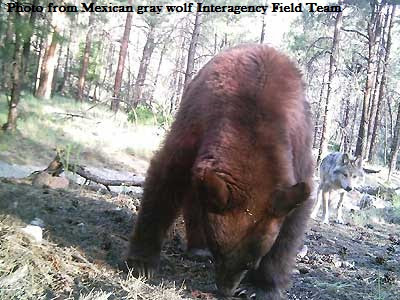
Middle-Fork-AM871-and-Bear IFT

Download rally/event posters here.

You can also help by signing a petition to the Governor, asking that she and her commission work for, not against, wolf recovery.

Please join us to stand for wolves and other carnivores.

Hunters “Accidentally Shoot” One of New Zealand’s Most Endangered Birds

http://news.yahoo.com/hunters-accidentally-shoot-one-zealand-most-endangered-birds-214343066.html

By Taylor Hill | Takepart.com August 21, 2015

There are around 300 colorful, flightless takahe birds left in the world, but thanks to a hunting snafu in New Zealand, there are now four fewer of the critically endangered species.

 New Zealand’s Department of Conservation had allowed hunters to target a similarly colored—but significantly smaller and more aggressive—bird called the pukeko on Motutapu Island, a predator-free site established to protect the takahe. The common pukekos can overtake takahe habitat and threaten the rare birds’ survival, and culls are one way to manage pukeko numbers.

But authorities discovered the wrong birds had been killed when they found four dead takahe peppered with shotgun pellets on Monday.

“We weren’t formally notified; we actually found the birds when my team were out on the island checking the transmitters,” Andrew Baucke, the DOC’s conservation services director, told Radio New Zealand. “Each of the transmitters have a mortality function on them, so that’s how they picked up the dead birds.”

The department had hired experienced hunting members from the New Zealand Deerstalkers Association who were “carefully briefed” on how to differentiate between the two bird species, Baucke said in a statement.

Before the shooting, the island was home to 21 takahe. Most of the birds alive today survive in sanctuaries, with only about 70 or 80 remaining in the wild.

RELATED: An American Dentist Killed Zimbabwe’s Famous Lion

It’s not the first time the rare flightless birds have been mistaken for pukekos by hunters, as a similar bird cull seven years ago on Fiji’s Mana Island ended in a takahe shot.

Baucke said the deaths are “deeply disappointing” for the department, and Bill O’Leary, president of the Deerstalkers Association, said he is appalled by the incident.

“I share with the department a concern that the deaths will affect efforts to save an endangered species,” O’Leary said in a statement. “I apologize to the department and to the country at large.”

For now, all pukeko hunts are off, the department announced.

Pukekos, which can fly, number well over 1,000 on Motutapu Island, located 10 miles east of Auckland. Their arrival and expansion continues to threaten native birds like the takahe—a species that’s been slowly recovering since the birds once thought extinct were rediscovered on New Zealand’s South Island in 1948.

If pukeko numbers aren’t managed, they could overrun Motutapu—one of the sancturies established by the department’s takahe recovery program, which hopes to have 125 breeding pairs at secure sites by 2020.

Now, the New Zealand Herald is reporting the Maori people of New Zealand’s South Island are angry with the department’s conservation tactics.

“There’s no way that they would send their treasured takahe to a sanctuary for it to be slaughtered,” Rino Tirikatene, a member of the New Zealand parliament, told the Herald. “There are even calls for the return home of those birds. There is a lot of goodwill that goes with these gifts to improve the biodiversity, and to see that they’ve needlessly been bowled over by some deer hunters is just really disappointing.”

Meat-eaters may speed worldwide species extinction, study warns

Diets rich in beef and other red meat can be bad for a person’s health. And the practice is equally bad for Earth’s biodiversity, according to a team of scientists who have fingered human carnivory—and its impact on land use—as the single biggest threat to much of the world’s flora and fauna. Already a major cause of extinction, our meat habit will take a growing toll as people clear more land for livestock and crops to feed these animals, a study in the current issue of Science of the Total Environment predicts.

“It’s a colossally important paper,” says Gidon Eshel, a geophysicist at Bard College in Annandale-On-Hudson, New York, who studies how human diets affect the environment, and who was not part of the study. Researchers have struggled to determine the full impacts of meat consumption on biodiversity, Eshel says. “Now we can say, only slightly fancifully: You eat a steak, you kill a lemur in Madagascar. You eat a chicken, you kill an Amazonian parrot.” That’s because species-rich habitats are being converted to pasture and feed crops as the human appetite for meat swells.

But others disagree that livestock production is the leading cause of habitat loss. “They’ve created [a] stickman to be knocked down,” says Clayton Marlow, a grassland ecologist at Montana State University, Bozeman, “without accomplishing anything for either the ecosystem or the poor.”

Previous studies have explored links between modern livestock production and climate change, water pollution, and the loss of some herbivores and top predators such as wolves and lions. “But how is it impacting other species?” asks Brian Machovina, an10405311_308608659330466_3235603653435958062_n ecologist at Florida International University in Miami, and the paper’s lead author.

To find out, he and his colleagues looked at studies that identified the world’s biodiversity hotspots—those areas that contain the highest percentage of endemic plant and animal species. Most are located in tropical nations. Then, the researchers picked out countries that are most likely to expand their industrial livestock operations, and determined where and how much land will be lost to grazing and growing crops to feed livestock. Using data from the Food and Agriculture Organization and other studies about the production of cattle, pigs, and chickens in these countries from 1985 to 2013 and the amount of land the livestock required, they extrapolated the likely future expansion of agricultural lands. Finally, they created maps of overlap.

Many of the places expected to see the greatest shift in land use from forest to livestock are in 15 “megadiverse” countries, which harbor the largest number of species, Machovina says. “By 2050, given current trends, these countries will likely increase the lands used for livestock production by 30% to 50%”—some 3,000,000 square kilometers—the researchers estimate.

The habitat loss is so great that it will cause more extinctions than any other factor, the study notes, particularly when coupled with other deleterious effects of livestock production, including climate change and pollution. “These changes will have major, negative impacts on biodiversity,” Machovina says. “Many, many species will be lost.”

The trend toward meat-eating is already having an impact, the scientists say.

Citing other studies, they note that more than three-quarters of the land previously cleared in the Amazon region is now used either as pasture for livestock or to raise feed crops for domestic and international markets. And the rapid deforestation there continues: Another 1898 square kilometers of forest were removed over the last year. Further, more than half of the Amazon’s Cerrado, a woodland savanna ecosystem known for its rare species, has also been cleared for raising cattle and soy. Habitats have also been—and continue to be—lost throughout Central and Latin America for the same reasons, the scientists say, who see a similar future for Africa.

By revealing where the most flora and fauna will disappear as lands are converted to agriculture for meat production, “the study equips us with a means to quantify the costs of our dietary choices in terms of species loss,” Eshel says.

The study also “suggests potential solutions that merit serious consideration,” notes ecologist David Tilman from the University of Minnesota, Twin Cities, who was not part of the work. To stop the loss of biodiversity, Machovina and his colleagues recommend that people limit meat consumption to 10% of their calories; eat more fruits and vegetables; replace beef—the most land-hungry meat—with pork, chicken, and fish; and change livestock production practices. But Tilman warns this won’t be easily done. “The challenge is to find solutions that meet human needs and simultaneously protect remaining natural habitats.”

Meeting the challenge of “feeding the world’s growing population with a shrinking land base” can’t be done without “intensive animal and crop production,” says Marlow, who argues that the real problem facing biodiversity is the loss of arable land to development such as urban and slum sprawl. He adds that developing countries are adopting industrialized livestock production because it’s efficient and “the only way we can feed the world’s growing population.”