Wildlife Photography ©Jim Robertson, All Rights Reserved


Wildlife Photography ©Jim Robertson, All Rights Reserved

Wildlife Photography ©Jim Robertson, All Rights Reserved
Wildlife Photography ©Jim Robertson, All Rights Reserved
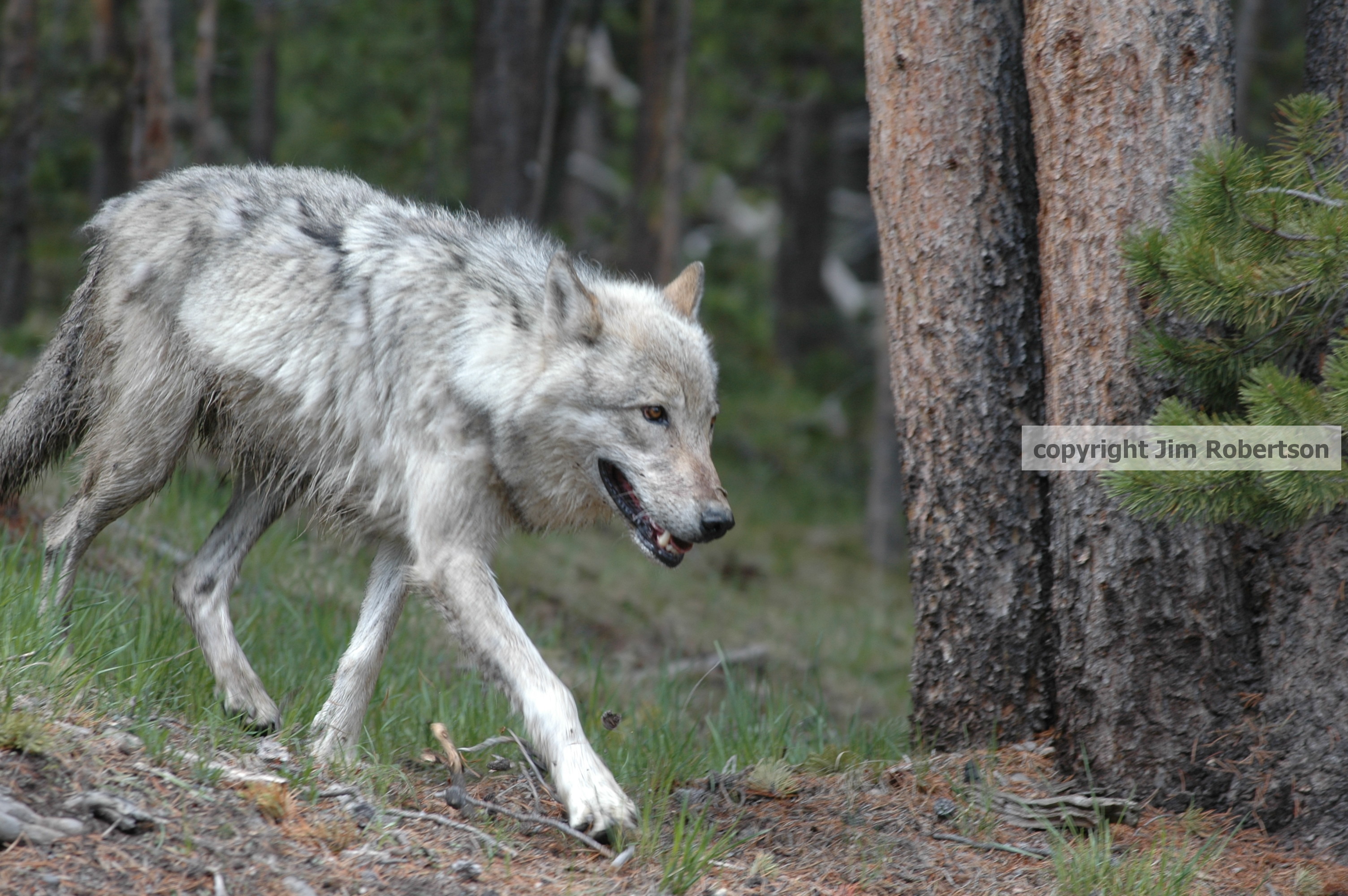
What would happen if there were no Mexican grey wolves in Arizona? We asked two experts to weigh in on federal programs to reintroduce the species
—————————–
IT WOULDN’T MAKE MUCH DIFFERENCE
Arizona would be identical to Texas in that respect and the Mexican wolf population would more closely resemble its historic range (90 percent of the Mexican wolf’s original habitat is in Mexico).
However, I am not advocating for Mexican gray wolf eradication. I simply want the U.S. Fish and Wildlife Service to leave species conservation efforts to the states, to comply with federal law, and to stop implementing a flawed experimental program that poses a serious threat to Arizona ranchers, citizens and economies.
Mexican wolves have repeatedly stalked citizens, devastated big game herds and killed livestock. In Catron County, N.M., the wolf’s presence has resulted in a $5 million economic hit and “1,172 calves lost annually,” according to the Southwest Center for Resource Analysis.
In January, Fish and Wildlife implemented new regulations that dramatically expanded the area Mexican wolves can roam and designated the wolf as an endangered subspecies. The agency acknowledged its failure to secure appropriations prior to implementing the new regs, in violation of federal law.
The Mexican wolf has lingered on the Endangered Species list for nearly 40 years. During that time, Fish and Wildlife has failed to work with local stakeholders and has been using an illegal recovery program, as it is not based on the best available science and fails to establish a recovery goal. Arizona recently sued as a result.
The agency has acknowledged the recovery plan violates federal law and that the new regulations will not result in a de-listing. In the U.S., the Mexican wolf population now exceeds the primary goal of 100 wolves, and there are another 250 in captivity. The wolf is no longer in danger of extinction.
The bipartisan Mexican Wolf Transparency and Accountability Act rejects the new January mandates as Arizonans deserve a viable solution that adequately protects local communities.
U.S. Rep. Paul Gosar is a Republican representing Arizona.
—————————–
IT WOULD BE A TRAGEDY
If there were no Mexican gray wolves in Arizona, this rarest gray wolf would be on a direct path to extinction. Essentially eradicated from the southwestern United States by the 1930s, the Mexican gray wolf It is one of the most endangered mammals in North America. There are fewer than 120 wild Mexican gray wolves in the entire world: 109 in Arizona and New Mexico and a handful in Mexico.
Why does that matter? Lobos hold profound cultural significance in our region, and are important apex predators that contribute to the environmental health of the areas they inhabit. Sadly, despite the work that has been done to recover them, the Mexican gray wolf is still noticeably rare on our beautiful landscape in Arizona. The truth is, Without lobos, Arizona would not be safer or more productive, but it would be lacking an iconic part of our heritage.
No one has ever been killed by a Mexican gray wolf, and in Arizona, wolves account for less than 1 percent of total cattle and calf losses. On the other hand, 87 percent of voters polled in Arizona agree that wolves are a “vital part of America’s wilderness and natural heritage,” and 83 percent of Arizonans agree that “the US Fish and Wildlife Service should make every effort to help wolves recover and prevent extinction.”
To lose the lobo would be a tragedy of our lifetime.
Eva Sargent is Southwest program director for Defenders of Wildlife.
Canada’s High Arctic could become the last stable refuge for polar bears as climate change melts away their hunting grounds, a U.S. government report says.
Populations elsewhere — in Alaska, Russia, Norway and around Hudson Bay, northern Quebec and Newfoundland and Labrador — are likely to decrease or greatly decrease by the year 2050 as global temperatures rise, the report projects.
But under a moderate scenario for greenhouse gas emissions, with enough reductions worldwide to keep the average global temperature hike to no more than two degrees, the polar bear population in northern Nunavut is most likely to remain stable and even has a decent chance of increasing, researchers say.
The 124-page research report comes from the U.S. Geological Survey, an entity of the U.S. Department of the Interior, and was published this week.
It looks at polar bear populations in four “eco regions,” including an area known as the Canadian Arctic Archipelago, home to perhaps 5,000 or more of the animals — about a quarter of the global total.
The archipelago has the best “potential to serve as a long-term refugium” for polar bears, the authors say.
But even then, if countries continue with “business as usual” and nothing is done to curb the world’s greenhouse gas emissions, the long-term viability of polar bears would be in doubt.
Polar bear populations are thought to be sensitive to global warming mainly because the animals spend the winter and spring on sea ice hunting for fatty seals as well as mating and giving birth.
When the ice retreats in the summer, the bears are forced onto land. But land-based food can’t satisfy their dietary needs.
“The terrestrial resources are just not sufficient. It’s the difference between eating fat and eating a few berries,” said Andrew Derocher, a polar bear expert and professor at the University of Alberta, who wasn’t involved in the U.S. government report.

A polar bear drags a seal along a floe in Baffin Bay, above the Arctic Circle in Canada’s North. The bears need sea ice to hunt seals, their main source of food. (Jonathan Hayward/Canadian Press)
“The whole fate of polar bears depends on how fast the sea ice disappears.”
Scientists have warned for years that climate change threatens polar bear populations. The U.S. Geological Survey study compares that risk against others like oil and gas shipping through the North, pollution and hunting of the bears, which is legal in Canada, the U.S. and Greenland.
It concludes that sea ice loss is the greatest menace to their survival, by a significant margin.
And it says about a third of the world’s polar bears — those in Alaska, Russia and Norway — could be in imminent danger from greenhouse gas emissions in as soon as a decade. Those areas of the Arctic have suffered some of the most dramatic declines in sea ice.
The scientists saw no rebound in overall population numbers in the projections that stretched to the year 2100 under either of the two scenarios they looked at: one in which greenhouse gas emissions stabilized, and the other in which they continued unabated.
“Polar bears are in big trouble,” said Rebecca Noblin, Alaska director for the Center for Biological Diversity. “There are other steps we can take to slow the decline of polar bears, but in the long run, the only way to save polar bears in the Arctic is to reduce greenhouse gas emissions.”
Polar bears aren’t the only marine species at risk from climate change.
In separate research released this week, an international team of scientists looked at the effects on sea creatures, concluding that under the “business as usual” scenario of unchecked greenhouse gas emissions, “most marine organisms evaluated will have very high risk of impacts.”
The effects will be felt “across all latitudes,” the authors write, “making this a global concern beyond the north/south divide.”
As more greenhouse gases enter the atmosphere, oceans will warm and become more acidic, says the study, published in the journal Science.
Fish will have to find new habitats in cooler waters. Warm-water corals and sea grasses at mid-latitudes are already being affected.
Even if the world commits and sticks to the most stringent of the proposed emissions targets, creatures like mussels, oysters, clams and scallops “will be at high risk” by the year 2100, the scientists say.
“All the species and services we get from the ocean will be impacted and everyone, including Canadians, who benefit from these goods and services are vulnerable,” said William Cheung, a co-author of the paper and an associate professor at the University of British Columbia’s fisheries centre.
With files from The Associated Press
Dahr Jamail, Truthout.org / TomDispatch.com
June 2015
[NOTE from All-Creatures.org: PLEASE visit WAR OF THE WHALES for detailed, sad, horrifying information about the effects of sonar on sea animals!]
Now, a dozen years after I left my home state and landed in Baghdad to begin life as a journalist and nine years after definitively abandoning Alaska, I find myself back. I wish it was to climb another mountain, but this time, unfortunately, it’s because I seem increasingly incapable of escaping the long and destructive reach of the US military.
Here’s just one example of the kinds of damage that will occur: the cyanide discharge from a Navy torpedo is in the range of 140-150 parts per billion. The Environmental Protection Agency’s “allowable” limit on cyanide: one part per billion.
Given that the Navy has been making plans for “ice-free” operations in the Arctic since at least 2001, their June “Northern Edge” exercises may well prove to be just the opening salvo in the future northern climate wars, with whales, seals, and salmon being the first in the line of fire.
Species affected will include blue, fin, gray, humpback, minke, sei, sperm, and killer whales, the highly endangered North Pacific right whale (of which there are only approximately 30 left), as well as dolphins and sea lions.
I lived in Anchorage for 10 years and spent much of that time climbing in and on the spine of the state, the Alaska Range. Three times I stood atop the mountain the Athabaskans call Denali, “the great one.” During that decade, I mountaineered for more than half a year on that magnificent state’s highest peaks. It was there that I took in my own insignificance while living amid rock and ice, sleeping atop glaciers that creaked and moaned as they slowly ground their way toward lower elevations.
Alaska contains the largest coastal mountain range in the world and the highest peak in North America. It has more coastline than the entire contiguous 48 states combined and is big enough to hold the state of Texas two and a half times over. It has the largest population of bald eagles in the country. It has 430 kinds of birds along with the brown bear, the largest carnivorous land mammal in the world, and other species ranging from the pygmy shrew that weighs less than a penny to gray whales that come in at 45 tons. Species that are classified as “endangered” in other places are often found in abundance in Alaska.
Now, a dozen years after I left my home state and landed in Baghdad to begin life as a journalist and nine years after definitively abandoning Alaska, I find myself back. I wish it was to climb another mountain, but this time, unfortunately, it’s because I seem increasingly incapable of escaping the long and destructive reach of the US military.
That summer in 2003 when my life in Alaska ended was an unnerving one for me. It followed a winter and spring in which I found myself protesting the coming invasion of Iraq in the streets of Anchorage, then impotently watching the televised spectacle of the Bush administration’s “shock and awe” assault on that country as Baghdad burned and Iraqis were slaughtered. While on Denali that summer I listened to news of the beginnings of what would be an occupation from hell and, in my tent on a glacier at 17 thousand feet, wondered what in the world I could do.
In this way, in a cloud of angst, I traveled to Iraq as an independent news team of one and found myself reporting on atrocities that were evident to anyone not embedded with the US military, which was then laying waste to the country. My early reporting, some of it for TomDispatch, warned of body counts on a trajectory toward one million, rampant torture in the military’s detention facilities, and the toxic legacy it had left in the city of Fallujah thanks to the use of depleted uranium munitions and white phosphorous.
As I learned, the US military is an industrial-scale killing machine and also the single largest consumer of fossil fuels on the planet, which makes it a major source of the greenhouse gas carbon dioxide. As it happens, distant lands like Iraq sitting atop vast reservoirs of oil and natural gas are by no means its only playing fields.
Take the place where I now live, the Olympic Peninsula in Washington state. The US Navy already has plans to conduct electromagnetic warfare training in an area close to where I moved to once again seek solace in the mountains: Olympic National Forest and nearby Olympic National Park. And this June, it’s scheduling massive war games in the Gulf of Alaska, including live bombing runs that will mean the detonation of tens of thousands of pounds of toxic munitions, as well as the use of active sonar in the most pristine, economically valuable, and sustainable salmon fishery in the country (arguably in the world). And all of this is to happen right in the middle of fishing season.
This time, in other words, the bombs will be falling far closer to home. Whether it’s war-torn Iraq or “peaceful” Alaska, Sunnis and Shi’ites or salmon and whales, to me the omnipresent “footprint” of the US military feels inescapable.

All of Southeast Alaska’s pristine coastline would be impacted by the Navy’s upcoming planned war games in the Gulf of Alaska. (Photo: Dahr Jamail/Truthout)
The War Comes Home
In 2013, US Navy researchers predicted ice-free summer Arctic waters by 2016 and it looks as if that prediction might come true. Recently, the National Oceanic and Atmospheric Administration (NOAA) reported that there was less ice in the Arctic this winter than in any other winter of the satellite era. Given that the Navy has been making plans for “ice-free” operations in the Arctic since at least 2001, their June “Northern Edge” exercises may well prove to be just the opening salvo in the future northern climate wars, with whales, seals, and salmon being the first in the line of fire.
In April 2001, a Navy symposium entitled “Naval Operations in an Ice-Free Arctic” was mounted to begin to prepare the service for a climate-change-induced future. Fast forward to June 2015. In what the military refers to as Alaska’s “premier” joint training exercise, Alaskan Command aims to conduct “Northern Edge” over 8,429 nautical miles, which include critical habitat for all five wild Alaskan salmon species and 377 other species of marine life. The upcoming war games in the Gulf of Alaska will not be the first such exercises in the region — they have been conducted, on and off, for the last 30 years — but they will be the largest by far. In fact, a 360 percent rise in munitions use is expected, according to Emily Stolarcyk, the program manager for the Eyak Preservation Council (EPC).
The waters in the Gulf of Alaska are some of the most pristine in the world, rivaled only by those in the Antarctic, and among the purest and most nutrient-rich waters anywhere. Northern Edge will take place in an Alaskan “marine protected area,” as well as in a NOAA-designated “fisheries protected area.” These war games will also coincide with the key breeding and migratory periods of the marine life in the region as they make their way toward Prince William Sound, as well as further north into the Arctic.
Species affected will include blue, fin, gray, humpback, minke, sei, sperm, and killer whales, the highly endangered North Pacific right whale (of which there are only approximately 30 left), as well as dolphins and sea lions. No fewer than a dozen native tribes including the Eskimo, Eyak, Athabascan, Tlingit, Sun’aq, and Aleut rely on the area for subsistence living, not to speak of their cultural and spiritual identities.
The Navy is already permitted to use live ordnance including bombs, missiles, and torpedoes, along with active and passive sonar in “realistic” war gaming that is expected to involve the release of as much as 352,000 pounds of “expended materials” every year. (The Navy’s EIS lists numerous things as “expended materials,” including missiles, bombs, torpedoes.) At present, the Navy is well into the process of securing the necessary permits for the next five years and has even mentioned making plans for the next 20. Large numbers of warships and submarines are slated to move into the area and the potential pollution from this has worried Alaskans who live nearby.
“We are concerned about expended materials in addition to the bombs, jet noise, and sonar,” the Eyak Preservation Council’s Emily Stolarcyk tells me as we sit in her office in Cordova, Alaska. EPC is an environmental and social-justice-oriented nonprofit whose primary mission is to protect wild salmon habitat. “Chromium, lead, tungsten, nickel, cadmium, cyanide, ammonium perchlorate, the Navy’s own environmental impact statement says there is a high risk of chemical exposure to fish.”
Tiny Cordova, population 2,300, is home to the largest commercial fishing fleet in the state and consistently ranks among the top 10 busiest US fishing ports. Since September, when Stolarcyk first became aware of the Navy’s plans, she has been working tirelessly, calling local, state and federal officials and alerting virtually every fisherman she runs into about what she calls “the storm” looming on the horizon. “The propellants from the Navy’s missiles and some of their other weapons will release benzene, toluene, xylene, polycyclic aromatic hydrocarbons, and naphthalene into the waters of twenty percent of the training area, according to their own EIS [environmental impact statement],” she explains as we look down on Cordova’s harbor with salmon fishing season rapidly approaching. As it happens, most of the chemicals she mentioned were part of BP’s disastrous 2010 oil spill in the Gulf of Mexico, which I covered for years, so as I listened to her I had an eerie sense of futuristic déjà vu.
Here’s just one example of the kinds of damage that will occur: the cyanide discharge from a Navy torpedo is in the range of 140-150 parts per billion. The Environmental Protection Agency’s “allowable” limit on cyanide: one part per billion.
The Navy’s EIS estimates that, in the five-year period in which these war games are to be conducted, there will be more than 182,000 “takes” — direct deaths of a marine mammal, or the disruption of essential behaviors like breeding, nursing, or surfacing. On the deaths of fish, it offers no estimates at all. Nevertheless, the Navy will be permitted to use at least 352,000 pounds of expended materials in these games annually. The potential negative effects could be far-reaching, given species migration and the global current system in northern waters. p>
In the meantime, the Navy is giving Stolarcyk’s efforts the cold shoulder, showing what she calls “total disregard toward the people making their living from these waters.” She adds, “They say this is for national security. They are theoretically defending us, but if they destroy our food source and how we make our living, while polluting our air and water, what’s left to defend?”
Stolarcyk has been labeled an “activist” and “environmentalist,” perhaps because the main organizations she’s managed to sign on to her efforts are indeed environmental groups like the Alaska Marine Conservation Council, and the Alaskans First Coalition.
“Why does wanting to protect wild salmon habitat make me an activist?” she asks. “How has that caused me to be branded as an environmentalist?” Given that the Alaska commercial fishing industry could be decimated if its iconic “wild-caught” salmon turn up with traces of cyanide or any of the myriad chemicals the Navy will be using, Stolarcyk could as easily be seen as fighting for the well-being, if not the survival, of the fishing industry in her state.
War Gaming the Community
The clock is ticking in Cordova and others in Stolarcyk’s community are beginning to share her concerns. A few like Alexis Cooper, the executive director of Cordova District Fishermen United (CDFU), a non-profit organization that represents the commercial fishermen in the area, have begun to speak out. “We’re already seeing reduced numbers of halibut without the Navy having expanded their operations in the GOA [Gulf of Alaska],” she says, “and we’re already seeing other decreases in harvestable species.”
CDFU represents more than 800 commercial salmon fishermen, an industry that accounts for an estimated 90 percent of Cordova’s economy. Without salmon, like many other towns along coastal southeastern Alaska, it would effectively cease to exist.
Teal Webber, a lifelong commercial fisherwoman and member of the Native Village of Eyak, gets visibly upset when the Navy’s plans come up. “You wouldn’t bomb a bunch of farmland,” she says, “and the salmon run comes right through this area, so why are they doing this now?” She adds, “When all of the fishing community in Cordova gets the news about how much impact the Navy’s war games could have, you’ll see them oppose it en masse.”
While I’m in town, Stolarcyk offers a public presentation of the case against Northern Edge in the elementary school auditorium. As she shows a slide from the Navy’s environmental impact statement indicating that the areas affected will take decades to recover, several fishermen quietly shake their heads.
One of them, James Weiss, who also works for Alaska’s Fish and Game Department, pulls me aside and quietly says, “My son is growing up here, eating everything that comes out of the sea. I know fish travel through that area they plan to bomb and pollute, so of course I’m concerned. This is too important of a fishing area to put at risk.” p>
In the question-and-answer session that follows, Jim Kasch, the town’s mayor, assures Stolarcyk that he’ll ask the city council to become involved. “What’s disturbing is that there is no thought about the fish and marine life,” he tells me later. “It’s a sensitive area and we live off the ocean. This is just scary.” A Marine veteran, Kasch acknowledges the Navy’s need to train, then pauses and adds, “But dropping live ordnance in a sensitive fishery just isn’t a good idea. The entire coast of Alaska lives and breathes from our resources from the ocean.”
That evening, with the sun still high in the spring sky, I walk along the boat docks in the harbor and can’t help but wonder whether this small, scruffy town has a hope in hell of stopping or altering Northern Edge. There have been examples of such unlikely victories in the past. A dozen years ago, the Navy was, for example, finally forced to stop using the Puerto Rican island of Vieques as its own private bombing and test range, but only after having done so since the 1940s. In the wake of those six decades of target practice, the island’s population has the highest cancer and asthma rates in the Caribbean, a phenomenon locals attribute to the Navy’s activities.
Similarly, earlier this year a federal court ruled that Navy war games off the coast of California violated the law. It deemed an estimated 9.6 million “harms” to whales and dolphins via high-intensity sonar and underwater detonations improperly assessed as “negligible” in that service’s EIS.
As a result of Stolarcyk’s work, on May 6th Cordova’s city council passed a resolution formally opposing the upcoming war games. Unfortunately, the largest seafood processor in Cordova (and Alaska), Trident Seafoods, has yet to offer a comment on Northern Edge. Its representatives wouldn’t even return my phone call on the subject. Nor, for instance, has Cordova’s Prince William Sound Science Center, whose president, Katrina Hoffman, wrote me that “as an organization, we have no position statement on the matter at this time.” This, despite their stated aim of supporting “the ability of communities in this region to maintain socioeconomic resilience among healthy, functioning ecosystems.” (Of course, it should be noted that at least some of their funds come from the Navy.)
Government-to-Government Consultation
At Kodiak Island, my next stop, I find a stronger sense of the threat on the horizon in both the fishing and tribal communities and palpable anger about the Navy’s plans. Take J.J. Marsh, the CEO of the Sun’aq Tribe, the largest on the island. “I think it’s horrible,” she says the minute I sit down in her office. “I grew up here. I was raised on subsistence living. I grew up caring about the environment and the animals and fishing in a native household living off the land and seeing my grandpa being a fisherman. So obviously, the need to protect this is clear.”
What, I ask, is her tribe going to do?
She responds instantly. “We are going to file for a government-to-government consultation and so are other Kodiak tribes so that hopefully we can get this stopped.”
The US government has a unique relationship with Alaska’s Native tribes, like all other American Indian tribes. It treats each as if it were an autonomous government. If a tribe requests a “consultation,” Washington must respond and Marsh hopes that such an intervention might help block Northern Edge. “It’s about the generations to come. We have an opportunity as a sovereign tribe to go to battle on this with the feds. If we aren’t going to do it, who is?”
Melissa Borton, the tribal administrator for the Native Village of Afognak, feels similarly. Like Marsh’s tribe, hers was, until recently, remarkably unaware of the Navy’s plans. That’s hardly surprising since that service has essentially made no effort to publicize what it is going to do. “We are absolutely going to be part of this [attempt to stop the Navy],” she tells me. “I’m appalled.”
One reason she’s appalled: she lived through Alaska’s monster Exxon Valdez oil spill of 1989. “We are still feeling its effects,” she says. “Every time they make these environmental decisions they affect us… We are already plagued with cancer and it comes from the military waste already in our ground or that our fish and deer eat and we eat those… I’ve lost family to cancer, as most around here have and at some point in time this has to stop.”
When I meet with Natasha Hayden, an Afognak tribal council member whose husband is a commercial fisherman, she puts the matter simply and bluntly. “This is a frontal attack by the Navy on our cultural identity.”
Gary Knagin, lifelong fisherman and member of the Sun’aq tribe, is busily preparing his boat and crew for the salmon season when we talk. “We aren’t going to be able to eat if they do this. It’s bullshit. It’ll be detrimental to us and it’s obvious why. In June, when we are out there, salmon are jumping [in the waters] where they want to bomb as far as you can see in any direction. That’s the salmon run. So why do they have to do it in June? If our fish are contaminated, the whole state’s economy is hit. The fishing industry here supports everyone and every other business here is reliant upon the fishing industry. So if you take out the fishing, you take out the town.”
The Navy’s Free Ride
I requested comment from the US military’s Alaskan Command office, and Captain Anastasia Wasem responded after I returned home from my trip north. In our email exchange, I asked her why the Navy had chosen the Gulf of Alaska, given that it was a critical habitat for all five of the state’s wild salmon. She replied that the waters where the war games will occur, which the Navy refers to as the Temporary Maritime Activities Area, are “strategically significant” and claimed that a recent “Pacific command study” found that naval training opportunities are declining everywhere in the Pacific “except Alaska,” which she referred to as “a true national asset.”
“The Navy’s training activities,” she added, “are conducted with an extensive set of mitigation measures designed to minimize the potential risk to marine life.”
In its assessment of the Navy’s plans, however, the National Marine Fisheries Service (NMFS), one of the premier federal agencies tasked with protecting national fisheries, disagreed. “Potential stressors to managed species and EFH [essential fish habitat],” its report said, “include vessel movements (disturbance and collisions), aircraft overflights (disturbance), fuel spills, ship discharge, explosive ordnance, sonar training (disturbance), weapons firing/nonexplosive ordnance use (disturbance and strikes), and expended materials (ordnance-related materials, targets, sonobuoys, and marine markers). Navy activities could have direct and indirect impacts on individual species, modify their habitat, or alter water quality.” According to the NMFS, effects on habitats and communities from Northern Edge “may result in damage that could take years to decades from which to recover.”
Captain Wasem assured me that the Navy made its plans in consultation with the NMFS, but she failed to add that those consultations were found to be inadequate by the agency or to acknowledge that it expressed serious concerns about the coming war games. In fact, in 2011 it made four conservation recommendations to avoid, mitigate, or otherwise offset possible adverse effects to essential fish habitat. Although such recommendations were non-binding, the Navy was supposed to consider the public interest in its planning.
One of the recommendations, for instance, was that it develop a plan to report on fish mortality during the exercises. The Navy rejected this, claiming that such reporting would “not provide much, if any, valuable data.” As Stolarcyk told me, “The Navy declined to do three of their four recommendations, and NMFS just rolled over.”
I asked Captain Wasem why the Navy choose to hold the exercise in the middle of salmon fishing season.
“The Northern Edge exercise is scheduled when weather is most conducive for training,” she explained vaguely, pointing out that “the Northern Edge exercise is a big investment for DoD [the Department of Defense] in terms of funding, use of equipment/fuels, strategic transportation, and personnel.”
Arctic Nightmares
The bottom line on all this is simple, if brutal. The Navy is increasingly focused on possible future climate-change conflicts in the melting waters of the north and, in that context, has little or no intention of caretaking the environment when it comes to military exercises. In addition, the federal agencies tasked with overseeing any war-gaming plans have neither the legal ability nor the will to enforce environmental regulations when what’s at stake, at least according to the Pentagon, is “national security.”
Needless to say, when it comes to the safety of locals in the Navy’s expanding area of operation, there is no obvious recourse. Alaskans can’t turn to NMFS or the Environmental Protection Agency or NOAA. If you want to stop the US military from dropping live munitions, or blasting electromagnetic radiation into national forests and marine sanctuaries, or poisoning your environment, you’d better figure out how to file a major lawsuit or, if you belong to a Native tribe, demand a government-to-government consultation and hope it works. And both of those are long shots, at best.
Meanwhile, as the race heats up for reserves of oil and gas in the melting Arctic that shouldn’t be extracted and burned in the first place, so do the Navy’s war games. From southern California to Alaska, if you live in a coastal town or city, odds are that the Navy is coming your way, if it’s not already there.
Nevertheless, Emily Stolarcyk shows no signs of throwing in the towel, despite the way the deck is stacked against her efforts. “It’s supposedly our constitutional right that control of the military is in the hands of the citizens,” she told me in our last session together. At one point, she paused and asked, “Haven’t we learned from our past mistakes around not protecting salmon? Look at California, Oregon, and Washington’s salmon. They’ve been decimated. We have the best and most pristine salmon left on the planet, and the Navy wants to do these exercises. You can’t have both.”
Stolarcyk and I share a bond common among people who have lived in our northernmost state, a place whose wilderness is so vast and beautiful as to make your head spin. Those of us who have experienced its rivers and mountains, have been awed by the northern lights, and are regularly reminded of our own insignificance (even as we gained a new appreciation for how precious life really is) tend to want to protect the place as well as share it with others.
“Everyone has been telling me from the start that I’m fighting a lost cause and I will not win,” Stolarcyk said as our time together wound down. “No other non-profit in Alaska will touch this. But I actually believe we can fight this and we can stop them. I believe in the power of one. If I can convince someone to join me, it spreads from there. It takes a spark to start a fire, and I refuse to believe that nothing can be done.”
Three decades ago, in his book Arctic Dreams, Barry Lopez suggested that, when it came to exploiting the Arctic versus living sustainably in it, the ecosystems of the region were too vulnerable to absorb attempts to “accommodate both sides.” In the years since, whether it’s been the Navy, Big Energy, or the increasingly catastrophic impacts of human-caused climate disruption, only one side has been accommodated and the results have been dismal.
In Iraq in wartime, I saw what the US military was capable of in a distant ravaged land. In June, I’ll see what that military is capable of in what still passes for peacetime and close to home indeed. As I sit at my desk writing this story on Washington’s Olympic Peninsula, the roar of Navy jets periodically rumbles in from across Puget Sound, where a massive naval air station is located. I can’t help but wonder whether, years from now, I’ll still be writing pieces with titles like “Destroying What Remains,” as the Navy continues its war-gaming in an ice-free summer Arctic amid a sea of offshore oil drilling platforms.

When the wolves returned, they revived the same old anxieties that inspired the state-sponsored hunts and zealous poachers to originally drive the wolf out. Some locals in the wolf range, anxious about unchecked wolf populations preying on livestock and affecting deer herds, continue to grow less tolerant toward returning wolves.
Four decades ago, wolves were added to the Endangered Species Act, and the once expulsed gray wolf trickled back into the Wisconsin wilderness. Protected by federal law, wolves were allowed to grow and spread out among the wooded north, resulting in a resurgence of a species once considered extirpated from the state.
When the wolves returned, they revived the same old anxieties that inspired the state-sponsored hunts and zealous poachers to originally drive the wolf out. Some locals in the wolf range, anxious about unchecked wolf populations preying on livestock and affecting deer herds, continue to grow less tolerant toward returning wolves. It is a trend that even a state-sponsored wolf hunt could not break, according to a recent study conducted by researchers at UW-Madison.
Led by Jamie Hogberg, a researcher at the Nelson Institute for Environmental Studies, the survey looked at public opinion about wolves from before and after the 2012 inaugural wolf hunt. According to a statement made by the Wisconsin Department of Natural Resources, the hunt was supposed to improve social intolerance toward the maligned wolf. Yet, according to Hogberg’s study, the harvest may have had the opposite effect, at least among hunters in the wolf range.
“One of the stated goals of the harvest was to maintain social tolerance,” said Hogberg. “But in just that first year of the hunt, we didn’t see that among a key stakeholder group.”
The survey focused primarily on male hunters in the wolf range, outspoken community members who were surveyed in previous studies to see if their attitudes changed. Researchers also surveyed people who reported conflict with wolves and people who lived outside of wolf range, though the majority of respondents were self-identifying hunters living within wolf range.
Hunters fear that wolves, who primarily hunt a deer herd’s weakest members, could be impacting deer herds and reducing hunting opportunities. However, the wolves’ stake in Wisconsin’s deer herd is dwarfed by the 340,000 taken annually by hunters, according to the Wisconsin DNR.
Wolves have been delisted and relisted seven times since 2001, and are once again protected under the Endangered Species Act. …[for now…]
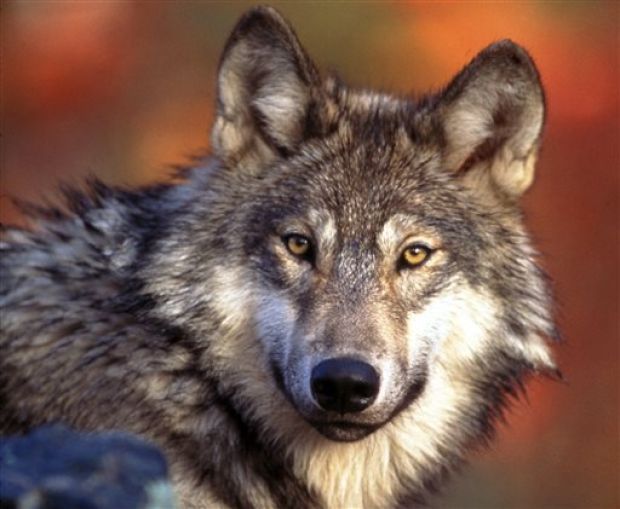
Republicans in the U.S. House of Representatives are pushing to take Minnesota’s gray wolves off the endangered species list.
Buried in the fiscal 2016 Interior and Environment Appropriations bill is language that would effectively require the secretary of the interior to reissue a federal rule that took gray wolves in the western Great Lakes, which includes Minnesota, off the list.
The bill also stipulates that the action would not be subject to judicial review.
Last year, a federal court decided that Minnesota’s gray wolves should be put back on the endangered species list.
U.S. Rep. Betty McCollum, D-Minn., said the provision amounts to “tremendous overreach” because the appropriations bill is meant to fund the Interior Department’s activities, not direct policy decisions.
“The judicial branch exists to provide oversight and review of our nation’s laws, and the idea that this Republican appropriations bill would try to circumvent that constitutionally critical process is wrong,” McCollum said.
McCollum, a Democrat, is on the House Appropriations Committee, and serves as the top Democrat on a subcommittee in charge of the interior and environment funding bill. Work on the legislation starts this week.

Text and Wildlife Photography ©Jim Robertson, 2015. All Rights Reserved
I’m getting kind of tired of hearing people talk about endangered species, as though they’re the only non-human animals they care about: ‘How dare some species do well or even begin to recover—it must be their fault that my favorite species is endangered.’
And if the endangered are a species people like to eat (such as salmon), then forget that humans sent them down the road to extinction by building dams along the rivers and heating up the planet so the spawning streams dry up or are too warm for fish eggs: ‘If some other non-human occasionally eats said endangered species, let’s wipe them out too.’
Scapegoating is happening to sea lions, to cormorants and to barred owls. Most people understand so little about the workings of nature that they forget they (all 7.3 billion of them) are a part of it.
It seems, unless they want to eat it, the only species they care about these days are the ones considered endangered.
Some people resent coyotes because they survive and even thrive where wolves sometimes didn’t. Sea lions are one of the most lovable creatures (and were nearly killed off once themselves during the fur trade), but it’s beyond appalling how many people hate them for eating fish, whether endangered or not.
I care about the fate of all individual animals, and don’t want to see any species extinctified. But this new policy of species favoritism has to go. I hate to break it to people, but we’re all endangered in today’s world of rapid climate change.
Whichever species makes it through the next century should be allowed to do so.
Now is really not the time for humans to think they can manage other species’ populations. They’ve done a pretty crappy job up of it so far. If anything, humans should be concentrating on their own kind.

Kayactivitists rally on Alki Thursday as the Shell rig is towed to Seattle, Wash.
SEATTLE (AP) – Activists opposed to drilling for oil in the Arctic were gathering Saturday morning under a cloudy sky as they prepared to launch a flotilla of kayaks and other boats on Seattle’s Elliott Bay, two days after the arrival of a towering rig.
The “Paddle in Seattle” – a daylong, family friendly festival in a West Seattle park and an on-the-water protest by “Shell No” kayaktivists – aims to continue the message sent as the Polar Pioneer drilling rig arrived: “Stand up for the climate and say no to Shell’s drilling plans.”
“This weekend is another opportunity for the people to demand that their voices be heard,” Alli Harvey, Alaska representative for the Sierra Club’s Our Wild America campaign, said in a statement Friday. “Science is as clear as day when it comes to drilling in the Arctic: the only safe place for these dirty fuels is in the ground.”
The gathering, hosted by a coalition of groups, is expected to draw thousands both on land and in the water. At the center of the paddle protest will be the “People’s Platform,” a 4,000-square-foot barge powered by renewable energy, said Jonathon Berman with the Sierra Club.
Just a quarter-mile away from the Seacrest Marine Park sits the 400-foot long, 300-foot tall Polar Pioneer, the first of two oil drilling rigs that Royal Dutch Shell plans to use this summer as it explores for oil off Alaska’s northern coast. The second rig, the Noble Discoverer, arrived at the Port of Everett last week and is slated join the Polar Pioneer at the Port of Seattle’s Terminal 5 at a later date. Everett port spokeswoman Lisa Lefeber said on Friday that they expect the Noble Discoverer to be there for two to three weeks.
The Arctic holds about 30 percent of the world’s undiscovered natural gas and 13 percent of its oil, according to Shell’s website.
“This amounts to around 400 billion barrels of oil equivalent, 10 times the total oil and gas produced in the North Sea to date,” Shell’s site says. “Developing Arctic resources could be essential to securing energy supplies for the future, but it will mean balancing economic, environmental and social challenges.”
The activists see it differently, however.
The protesters say it’s critical that they take a stand “against dirty fossil fuel projects” and want to put themselves on the front lines in the battle for Arctic oil.
By Associated Press April 25, 2015
The decision Friday by the Oregon Fish and Wildlife Commission came as the number of wolves and breeding pairs have increased in the state. By 2014, there were 77 wolves in 15 known packs.
The state’s conservation goal was to have four breeding pairs for three consecutive years, a goal that was reached earlier this year.
The commission will look at two options: delisting the wolves statewide and partially, in eastern Oregon only. The option of not delisting also remains.
State delisting would not impact a federal endangered listing that includes the state’s western two-thirds.
Commissioners will draft a proposal by June and vote on it in August.
 Exposing the Big Game