Bill Proposed to Remove Wolf Protection in UT, OR, and WA

http://newsradio1310.com/bill-proposed-to-remove-wolf-protection-in-ut-or-and-wa/

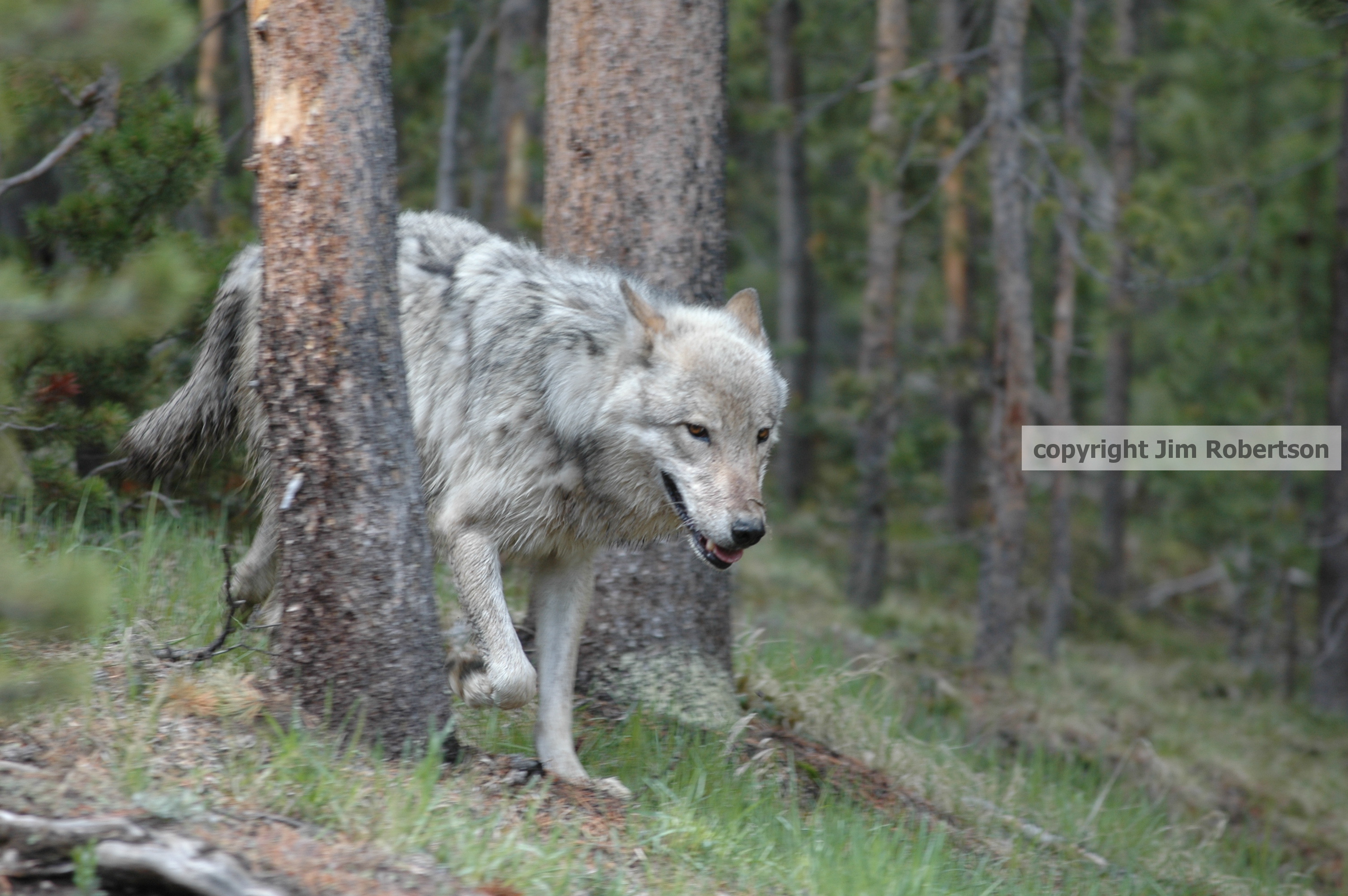
YAKIMA, Wash. (AP) — Republican U.S. Rep. Dan Newhouse has introduced a bill to remove the gray wolf from Endangered Species Act protections in Washington, Oregon and Utah.

The freshman lawmaker says removing wolves from the list is “long overdue” and would allow state wildlife officials to manage wolves more effectively.

The Yakima Herald-Republic reports his bill would also prevent states fromcopyrighted Hayden wolf in lodgepoles providing protections to wolves that are stronger than those found in the federal Endangered Species Act.

A spokesman for Conservation Northwest, which works on wolf recovery issues, calls the bill disappointing. Chase Gunnell says there are only a few wolves receiving federal protection in Washington and Oregon

Read More: Bill Proposed to Remove Wolf Protection in UT, OR, and WA | http://newsradio1310.com/bill-proposed-to-remove-wolf-protection-in-ut-or-and-wa/?trackback=tsmclip


NOAA proposes de-listing Humpback Whales

Agency proposes taking humpbacks whales off endangered list

By Caleb Jones
Star Advertiser
Associated Press

POSTED: 07:52 a.m. HST, Apr 20, 2015
LAST UPDATED: 08:56 a.m. HST, Apr 20, 2015

< http://www.staradvertiser.com/multimedia/photo_galleries/viewer?galID=300684361>
ASSOCIATED PRESS
A humpback whale jumps out of the waters off Hawaii in this undated photo.
(AP Photo/NOAA Fisheries)

The federal government on Monday proposed removing most of the world’s
humpback whale population from the endangered species list, saying they
have rebounded after 45 years of protections.

National Oceanic and Atmospheric Administration Fisheries wants to
reclassify humpbacks into 14 distinct populations, and remove 10 of those
from the list.

“As we learn more about the species — and realize the populations are
largely independent of each other — managing them separately allows us to
focus protection on the animals that need it the most,” Eileen Sobeck,
assistant NOAA administrator for fisheries, said in a statement.

Humpbacks were listed as endangered in 1970, four years after the
International Whaling Commission banned commercial whaling.

The whales have rebounded in the North Pacific since the listing, which
requires federal approval for federally funded or authorized activities
that could harm whales or their habitat.

Last year, the state of Alaska filed a petition to remove some North
Pacific humpback whales from protection under the Endangered Species Act.
That population, estimated at more than 5,800, feeds in Alaska in the
summer and breeds in Hawaii in winter.

Environmental groups have said North Pacific whales continue to be
vulnerable to factors including increased shipping, climate change and
ocean acidification, which affects the prey stock.

The NOAA said in a release announcing its proposal that protection and
restoration efforts have led to an increase in humpbacks in many areas.

Under the plan, two of the populations would be listed as threatened, in
Central America and the Western North Pacific. The agency said these whales
at times enter U.S. waters.

The other two populations — in the Arabian Sea and off Cape Verde and
northwest Africa — would remain listed as endangered.

Humpbacks are found around the world. They weigh 25 to 40 tons and can grow
up to 60 feet long, according to NOAA’s website. The whales are primarily
dark gray with some white spots, and their pectoral fins can get as long as
15 feet.

If the proposal passes, the humpback populations that are removed from the
endangered list would still be protected under the Marine Mammal Protection
Act.

The public has 90 days to comment on the recommended changes.

15 Species Just Won’t Make it Unless We Act Now

http://www.natureworldnews.com/articles/13628/20150322/15-species-wont-make-unless-act-now.htm

Mar 22, 2015 11:27 PM EDT

pocket gopher

(Photo : Wiki CC0 – Chuck Abbe)

Researchers have recently released a paper that details 15 of the most critically endangered species on Earth – organisms that not only are facing what looks to be inevitable extinctions, but are barely receiving any aid to stop it. Now conservationists are calling for the money and expertise that would be needed to help these creatures – ranging from seabirds to tropical gophers – survive.

A study recently published in the journal Current Biology details how a whopping 841 endangered species can still be saved from extinction if countries and organizations commit an estimated net value of $1.3 billion dollars annually towards their safety. However, for 15 of the species highlighted in the report, their chance of conservation success is dropping by the minute.

“Conservation opportunity evaluations like ours show the urgency of implementing management actions before it is too late,” Dalia A. Conde, the lead author of the study and Assistant Professor at the Max-Planck Odense Center at the University of Southern Denmark, explained in a recent statement. “However, it is imperative to rationally determine actions for species that we found to have the lowest chances of successful habitat and zoo conservation actions.”

So just what are these 15 species in trouble? Nearly half the list includes amphibians, and that’s something that shouldn’t be too surprising given that this class of creatures is battling a war on two fronts. (Scroll to read on…)

The Brazilian frog Physalaemus soaresi is one of the most critically endangered species in the world, as the great majority of its natural habitat has been converted into eucalyptus plantations.

(Photo : Ivan Sazima) The Brazilian frog Physalaemus soaresi is one of the most critically endangered species in the world, as the great majority of its natural habitat has been converted into eucalyptus plantations.

As things stand, a deadly fungus (Batrachochytrium dendrobatidis) continues to spread and wipe out frog species from the face of the Earth in places like Brazil and Spain. A variant of it (Batrachochytrium salamandrivorans) has even started to affect salamanders around the globe.

Meanwhile, the habitats that these creatures rely on are shrinking and changing in the wake of climate change and human influence. Salamanders are even shrinking, as they increasingly struggle to live in suddenly dry and warming climes.

Six of the 15 species listed also happen to be birds. This, too, is partially a consequence of climate change, where churning air currents and shrinking habitats are leaving migratory species with smaller rest stops and fewer food supplies. Even species who do not travel far are left to compete with invaders, pollution, and, most commonly, deforestation. The Tahiti monarch (Pomarea nigra), for instance, is estimated to total less than 50 in the wild, as livestock pastures are expanding at the cost of forest habitat. (Scroll to read on…)

The Amsterdam albatross - one of the most critically endangered birds in the world - boasts a population that hovers somewhere around 130 birds with only 25 known breeding pairs.

(Photo : Vincent Legendre) The Amsterdam albatross – one of the most critically endangered birds in the world – boasts a population that hovers somewhere around 130 birds with only 25 known breeding pairs.

Most interestingly, three mammal species are threatened, consisting of the Mount Lefo brush-furred mouse (Lophuromys eisentrauti) in Cameroon, the Chiapan climbing rat (Tylomys bullaris) in Mexico, and the tropical pocket gopher (Geomys tropicalis) along the Mexican and Central American coast.

Shrinking habitats are threatening all three, but the reasons vary from urbanization, to human conflict, to costly habitat protection. Some can’t even be reintroduced into the wild through a captive breeding system, as the expertise to raise them is too rare or costly in undeveloped worlds.

That’s why an international effort world be worth it, according to the study. The researchers determined that the total cost to conserve the 841 animal species in their natural habitats was calculated to be more than $1 billion (USD) per year. The estimated annual cost for complementary management in zoos was $160 million.

“Although the cost seems high, safeguarding these species is essential if we want to reduce the extinction rate by 2020,” added Hugh Possingham from The University of Queensland. “When compared to global government spending on other sectors – e.g., US defense spending, which is more than 500 times greater -, an investment in protecting high biodiversity value sites is minor.”

And most encouragingly of all, the researchers found that if these species get the funding they need, 39 percent of them could potentially be pulled out of their endangered status, given their high number of conservation opportunities.

That’s not the case for the most threatened 15, but even for those the researchers argue that taking “an integrated approach” could save them...

Shell lost control of an Arctic offshore drilling rig


Ted Danson with Oceana via Change.org

Oil giant Shell’s efforts to drill in the Arctic Ocean have been plagued by mistakes and near disasters. The company even lost control of an offshore drilling rig – allowing it to run aground in Alaska. You saw the destruction that the BP Deepwater Horizon oil spill caused to the Gulf in 2010. Imagine that same devastation brought to the Arctic – one of the most unique and important places left on earth. 

Now, after years of failing to find safe ways to drill in the Arctic, Shell is asking the federal government to extend its leases by five years.

I’m calling on the Bureau of Safety and Environmental Enforcement (BSEE) to deny Shell’s request for five more years to explore for offshore oil drilling in the Arctic. Please click here to join me.

I remember walking down the beach in Santa Monica over twenty years ago with my young daughters. At the time I was starring on the show “Cheers,” and during our walk we came to a sign that read: “Water polluted, no swimming.” I didn’t know how to explain to them that we allowed pollution into our oceans and beaches – and I don’t want any parent to have to explain to their children how Shell destroyed the Arctic.

Shell is the only company still actively pushing to drill in the U.S. Arctic Ocean, as other companies have walked away from the unpredictable Arctic environment or put plans on hold. Chevron recently pulled its plans to drill in the Canadian Beaufort Sea after finding the process too risky and expensive. If BSEE denies Shell’s request, the company will suffer a major blow to its dangerous efforts.

The oil industry does not have proven means to contain or clean a spill in the Arctic Ocean. A single accident could lead to serious environmental degradation, threatening iconic marine wildlife and impacting the region’s coastal communities. If Shell is given five more years, the Arctic’s polar bears, ice seals, belugas and many other inhabitants will be pushed further into harm’s way.

We have an incredible opportunity to protect the Arctic from offshore drilling. In the mid-1980s, I helped lead a successful campaign to stop Occidental Petroleum from drilling 60 oil wells in the waters beside Santa Monica. Now, along with Oceana, I desperately need your support to protect the Arctic.

Please sign our petition calling on BSEE to deny Shell’s request for five more years to drill for oil in the U.S. Arctic Ocean.

Thank you,

Ted Danson with Oceana

Serial Killing for Shopping Malls

The Earth is being raped, strangled and left for dead by people who care only about themselves and what they can get in the short term. The suffering of others is inconsequential. Indeed, they pride themselves in their ability to disregard the cries and struggles of their targets, whom they objectify while denying their very sentience. Like psychopathic serial killers, they ignore the rights and welfare of their victims, intentional or incidental.

Text and Wildlife Photography ©Jim Robertson

Text and Wildlife Photography ©Jim Robertson

Activists continue fight for prairie dogs

Wildlife Photography ©Jim Robertson

Wildlife Photography ©Jim Robertson

by Mike DiFerdinando  3/2/15

Group explores options to protect wildlife from future development

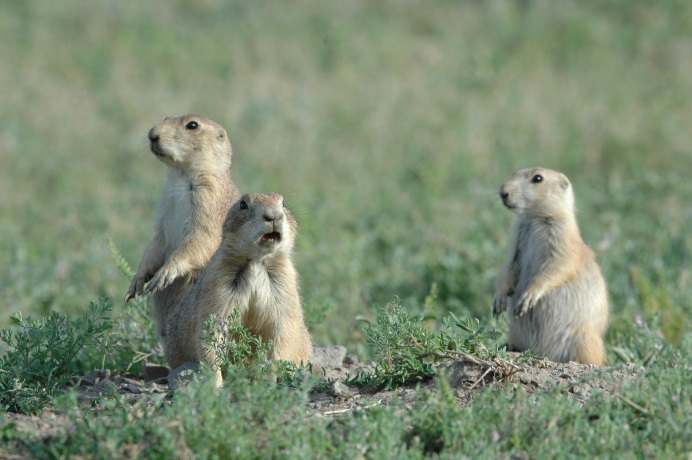
As protesters stood at Founders Parkway and Factory Shops Boulevard — waving signs and shouting at drivers to help save the prairie dogs — a few hundred yards behind them exterminators were already laying traps.

The grass-roots campaign, called Save the Castle Rock Prairie Dogs, wants to push back the construction of the Promenade at Castle Rock, at the north end of town between I-25 and U.S. Highway 85, near the Outlets at Castle Rock, until June.

That’s when the animals, many of them pregnant, could be moved. The prairie dogs are being trapped with baited cages. It is unknown how or if they are being killed at this time.

“Of course I was at the protest,” said Castle Rock resident Keith Lattimore-Walsh, one of about 40 protesters at the Feb. 24 rally. “My heart won’t allow me to do anything less than to fight for those who cannot speak.”

The controversy is part of the town’s continued conversation about growth and began when more than 20 residents spoke out against the Promenade at the Feb. 17 council meeting.

Activists said they hope snowy conditions and the slow pace of capture will give them time to find available land for relocation of the colony — about 1,000 prairie dogs.

“It’s slow, they aren’t capturing many at a time,” said Brian Ertz, board president of the activist organization the Wildlands Defense.

Alberta Development Partners, the developer behind the Promenade, could not be reached for comment about the removal of the prairie dogs, despite repeated attempts by the News-Press.

Town officials reiterated their stance that the situation is a matter of a private developer building on private land, therefore they have no jurisdiction to stop or delay construction.

This would be different if the prairie dogs were protected by state law, which they aren’t, because they are not an endangered species. [Not officially, buy they should be on the list–I challenge anyone who says prairie dogs are still common throughout the state.]

More: http://castlerocknewspress.net/stories/Activists-continue-fight-for-prairie-dogs,182035

Pacific Plastic Threatening Wildlife

http://action.storyofstuff.org/sign/pacific-plastic-epa-superfund

The massive amounts of plastic in the ocean are threatening to kill off Hawaii’s endangered seals and sea turtles on remote Pacific islands.The Great Pacific Plastic Patch is becoming an enormous threat to sea life, and the EPA is considering declaring the remote island of Tern Island an environment disaster area.
This crisis gives us an incredible opportunity — if the EPA designates the island a Superfund site, it could mean taking the first real steps to schedule clean-up of oceanic plastic. Not only would this protect the thousands of species — a fourth of which are found in no other place on Earth — it would also put significant resources into tackling one of the greatest threats to our oceans and could become a model for tackling plastic polluting our oceans worldwide.
A high concentration of plastics from global sources has accumulated in the Northwestern Hawaiian Islands, threatening many endangered species. Designated Papahanaumokuakea National Monument in 2006, this 1,200-mile chain of scattered islands and atolls is home to more than 7,000 incredible marine species, and is one of the first ecosystems being serious threatened by the Pacific Plastic Patch.
 
Tern Island and its surrounding atoll, French Frigate Shoals, are designated as critical habitat for Hawaiian monk seals, whose total population of 1,200 has been steadily declining in the northwestern islands. It’s also nesting habitat for 95 percent of threatened Hawaiian green sea turtles. Unless the problem with plastic pollution is addressed, these fragile seal and sea turtle populations may be destroyed altogether.
Resources:
The Center for Biological Diversity: Historic Step Toward Superfund Designation Could Save Ocean Wildlife From Plastic Pollution in Hawaii, Septermber 9, 2014

Michigan DNR appeals ruling that put grey wolves back on federal endangered species list

Featured Image -- 7624

By Jonathan Oosting

LANSING, MI — The Michigan Department of Natural Resources on Friday announced that it is appealing a recent federal ruling that returned the state’s grey wolves to the endangered species list.

The ruling, issued by U.S. District Judge Beryl Howell in December, reinstated federal protections for wolves in Michigan and other Great Lakes states that had been removed in 2012, effectively blocking local control efforts.

“Returning wolf management to wildlife professionals in the state of Michigan is critical to retaining a recovered, healthy, and socially-accepted wolf population in our state,” said DNR Director Keith Creagh said in a statement.

“Michigan residents who live with wolves deserve to have a full range of tools available to sustainably manage that population.”

Michigan’s Upper Peninsula is home to slightly more than 600 wolves, up from just six in the 1970s. The DNR has advocated for stronger management and backed the state’s first ever wolf hunt in 2013 as a means to reduce conflicts with livestock and comfort levels around humans.

Michigan’s grey wolf population has been the subject of intense debate in recent years, with the state’s Republican-led Legislature approving two separate hunting laws that were rejected by voters. But a third wolf hunt law, initiated by a petition drive and approved by lawmakers, cannot be overturned via referendum.

Animal rights groups, energized by the December ruling that reinstated federal protections, argue that hunting seasons in Michigan and other Great Lakes states have jeopardized the wolf recovery.

Jill Fritz, state director of the Humane Society of the United States and the Keep Michigan Wolves Protected coalition, said she was not surprised by the DNR’s appeal but “baffled” by the logic.

“I’m curious how having a wolf hunt — and that’s exactly what they want to do — would help retain a quote ‘recovered, healthy, and socially-accepted wolf population,'” she said. “I cannot make any sense of any part of that sentence.”

HSUS and allies have asked the U.S. Fish and Wildlife Service to “downlist” Great Lakes wolves, reclassifying them as a threatened species rather than an endangered one, which would give the state flexibility to kill or remove nuisance wolves.

Livestock attacks have been an issue for some farmers in the U.P. As MLive previously reported, there were 35 wolf attacks on livestock or dogs in Michigan last year, up from 20 in 2013 but lower than the 41 in 2012.

DNR Wildlife Division Chief Russ Mason, in a statement, called Michigan’s wolf recovery a “great success story” but said the endangered status “leaves farmers and others with no immediate recourse when their animals are being attacked and killed.”

http://www.mlive.com/lansing-news/index.ssf/2015/02/michigan_dnr_appeals_ruling_th.html

It’s Official: Wolf Killed in Utah Was Animal From Rare Arizona Sighting

http://abcnews.go.com/Technology/wireStory/mistakenly-killed-wolf-animal-rare-arizona-sighting-28890684

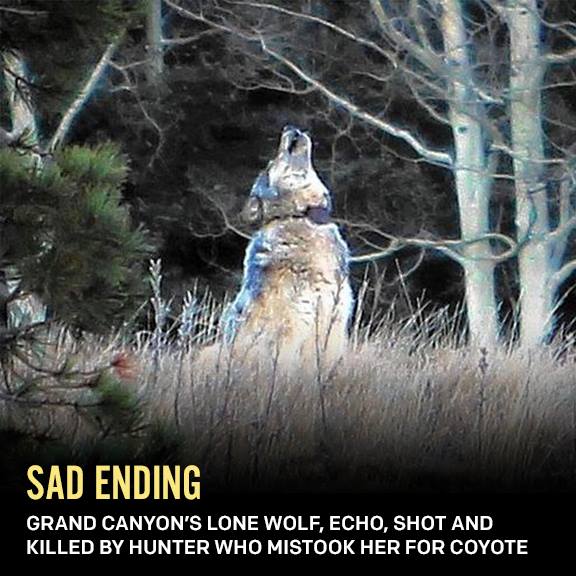
A gray wolf that was shot by a hunter in Utah was the same one spotted in the Grand Canyon area last year, federal wildlife officials said Wednesday.

The 3-year-old female wolf — named “Echo” in a nationwide student contest — captured the attention of wildlife advocates across the county because it was the first wolf seen in the Grand Canyon in 70 years.

The U.S. Fish and Wildlife Service did DNA tests to confirm the wolf killed in late December by a Utah hunter who said he thought he was shooting a coyote was the same one that was seen roaming the Grand Canyon’s North Rim and nearby forest in October and November, said agency spokesman Steve Segin.

Geneticists at the University of Idaho compared DNA taken from the northern gray wolf killed in southwestern Utah with scat samples taken from the wolf seen near the Grand Canyon last fall.

The hunter who killed the wolf called Utah state officials in December and said he mistook the wolf for a coyote, said Utah Division of Wildlife Resources spokesman Mark Hadley. The man, whose name was not released, said he didn’t realize his mistake until he came up on the dead animal. In Utah, anybody can hunt coyotes.

The state handed over its initial findings of what happened to U.S. Fish and Wildlife, Hadley said. That investigation is ongoing and could take weeks or months to complete, Segin said. It’s not clear yet what penalties the hunter could face for killing the animal.

Wolves are protected in Utah under the Endangered Species Act.

Wildlife advocacy groups have called the wolf’s death heartbreaking and say they want the hunter prosecuted. They said the animal could have helped wolves naturally recover in remote regions of Utah and neighboring states.

“Wolves and coyotes are distinguishable if one pauses for a second before pulling a trigger,” said Michael Robinson with the Center for Biological Diversity. “There are consequences for pulling the trigger when you don’t know what you’re aiming at. It’s important to have justice for this animal.”

Wolves and coyotes often have similar coloring, but wolves are usually twice as large as coyotes, said Kim Hersey, mammal conservation coordinator with Utah Division of Wildlife Resources. Wolves also have longer legs, bigger feet and rounder ears and snouts, she said.

But, Hersey says how well a person could distinguish between the two would depend on the lighting, the distance and how much experience a hunter has comparing the two animals.

The wolf had worn a radio collar since January 2014.

Wolves can travel thousands of miles for food and mates. Gray wolves had been spotted as far south as Colorado until the Arizona wolf was confirmed. Gray wolves last were seen in the Grand Canyon area in the 1940s.

In recent years, the Fish and Wildlife Service lifted protections for the wolves in the Northern Rockies and western Great Lakes. But a federal judge recently reinstated the protections after wildlife advocates in Wyoming sued.

The Center for Biological Diversity has documented 11 cases since 1981 where hunters told wildlife officials they had shot a wolf thinking it was a coyote.

10906075_10155034869550301_2511370178161460178_n

For California Salmon, Drought

For California Salmon, Drought
And Warm Water Mean Trouble

With record drought and warming waters due to climate change, scientists are concerned that the future for Chinook salmon — a critical part of the state’s fishing industry — is in jeopardy in California.

by alastair bland

Gushing downpours finally arrived in California last month, when December rains brought some relief to a landscape parched after three years of severe drought.

But the rain came too late for thousands of Chinook salmon that spawned this summer and fall in the northern Central Valley. The Sacramento River, running lower than usual under the scorching sun, warmed into the low 60s — a temperature range that can be lethal to fertilized

Chinook salmon

Pacific Northwest National Lab
Chinook, the largest species of Pacific salmon, need cool waters to reproduce.

Chinook eggs. Millions were destroyed, and almost an entire year-class of both fall-run Chinook, the core of the state’s salmon fishing industry, and winter-run Chinook, an endangered species whose eggs incubate in the summer, was lost.

The disaster comes on the heels of a similar event the previous autumn. It is also reminiscent of ongoing troubles on northern California’s Klamath River, where diversion of water for agriculture has at times left thousands of adult Chinook — the largest species of Pacific salmon — struggling to survive in water too shallow and warm to spawn in.

Now, scientists — who are observing increasing human demand for water, genetic decline of hatchery-reared salmon, and climate change models predicting intensified droughts — are concerned that the Chinook salmon will be unable to tolerate future river conditions and will all but vanish from California’s landscape.

Robert Lackey, a professor of fisheries at Oregon State University, Corvallis, says that as the climate continues to warm, “salmon at the southern edge of their range will be the first to go.” Lackey doubts any

Historically huge salmon runs could be reduced to almost nothing before the end of the century.

Pacific salmon species will go fully extinct soon, and in Alaska, Russia, and other northern regions he expects populations to remain relatively strong. But farther south, where rising water temperatures will reach or exceed the limits of the salmon’s physiological tolerance, Lackey predicts historically huge runs will be reduced to almost nothing before the end of the century.

Just two centuries ago, as many as two million Chinook spawned in the Central Valley each year. The fish headed from the Pacific into San Francisco Bay, and at the confluence of the valley’s two big rivers, about half turned north into the Sacramento River system while the rest went south into the San Joaquin River, seeking the cool headwaters where they would lay and fertilize their eggs.

In this large valley — where the Mediterranean climate is friendly to desert-loving crops like pistachios, figs, and olives — salmon may seem out of place. Yet they thrived here. That’s because some of the highest mountains in North America flank the Central Valley — the Sierra Nevada along the eastern side and the Cascades at the north end. These ranges are buried in snow most winters, and through the summer and fall meltwater gushes into the lowlands below, providing the cold flows Chinook salmon require to successfully spawn.

The 19th-century flood of miners and settlers to California rapidly changed the ecosystem. Mining destroyed watersheds while overfishing dented the huge salmon runs. Then, in the 20th century, came the extensive systems of dams and canals built for agriculture. Reservoirs filled. So did the irrigation canals, and in the western San Joaquin Valley, a region naturally too arid to support intensive farming, vast orchards proliferated. The salmon fared poorly, though. The dams blocked the way to their historic spawning grounds and in some cases dried out rivers. In the San Joaquin, salmon vanished. On the Sacramento and its tributaries, populations hung on, though mostly because of artificial propagation in hatcheries.

Today, climate change is emerging as the next great threat to California’s remaining salmon runs. Peter Moyle, a fisheries biologist at the University

The mountain snowpack that has made life possible for salmon runs in California is expected to retreat.

of California, Davis, says the mountain snowpack that has made life possible for salmon runs in the state will retreat in the coming decades, as average temperatures escalate. Just a few spring-fed streams, he says, may remain cold enough year-round to support spawning.

This fall, scientists and environmentalists got a glimpse of what snowpack loss could mean for salmon statewide. Shasta Lake, its inflow from tributaries greatly diminished, dropped, while its waters warmed. Most years, even after a long, hot summer, cool water is available at the bottom of the reservoir, where an intake system draws the water through Shasta Dam and into the Sacramento River downstream. But by October of 2014, the water was 61 degrees, top to bottom, according to Jim Smith of the U.S. Fish and Wildlife Service.

“There was no cold water available,” he says.

Tens — possibly hundreds — of thousands of salmon laid and fertilized their eggs through the autumn before any rain fell. “It would be a miracle if we had much survival in the river,” Moyle says.

Another autumn spawning disaster had occurred a year earlier, during the driest year in California’s recorded history. Government officials, hoping to ration reservoir water for later agricultural use, abruptly lowered the outflow from Shasta Lake in the midst of the largest spawning event the

Sacramento and San Joaquin Rivers

California Dept. of Fish and Wildlife
Chinook salmon historically headed inland from the Pacific Ocean and up either the Sacramento or San Joaquin rivers to spawn.

Sacramento had seen in years. The river, teeming with 20-to-40-pound fish, shrank by half its volume. Thousands of salmon nests, or redds, were left high and dry.

Even the remote Klamath River, which flows into the sea just south of Oregon in a region of rain-drenched forest, is not immune to drought and thirsty farms. Last summer, the diversion of Klamath basin water to the Sacramento Valley, compounded by a year with virtually no rain, caused the dewatering of the Klamath during a large salmon run. Thousands of adult Chinook almost died in lukewarm water before the U.S. Bureau of Reclamation, persuaded by Native American tribal leaders and environmentalists, reluctantly allowed more water to flow into the river, saving the fish. The action helped avoid a repeat of the kill in 2002, when sun-warmed waters caused a disease outbreak that killed roughly 34,000 adult fish.

The Klamath’s problems will get worse with climate change and increasing river temperatures, says Rebecca Quiñones, a U.C. Davis researcher who has extensively studied the Klamath ecosystem. “All the climate models show that the main stem of the [Klamath] river is going to be really

Some conservationists say hatchery production is making Chinook salmon more vulnerable to warming trends.

inhospitable to salmon,” Quiñones says.

Hatcheries in the Klamath and Sacramento basins produce most of the salmon that head out into the Pacific and are caught by fishermen off the California coast. But these facilities may now be causing more problems than they’re solving. For one thing, hatchery production is making Chinook salmon more vulnerable to warming trends, according to Jacob Katz, director of salmonid restoration initiatives with the group California Trout. He says hatcheries have traditionally harvested the very first salmon to swim through their processing rooms. In doing so, they have selected for a fall-run population that returns on the early end of the spawning season — exactly when waters may be warm and low, especially in the future.

Meanwhile, hatchery inbreeding and the elimination of natural selection is stripping the Chinook salmon genome of its evolutionary assets, Moyle says. The result is a domesticated animal not well suited to survive in a natural environment. Eventually, Moyle warns, hatchery fish will be so incompetent at finding food, evading predators, and finding their way back upriver to spawn that, even with tens of millions of them released each year, the Central Valley returns will diminish beyond hope. Hatcheries, without enough returning adults to provide sufficient eggs, will be forced to shut down. “This may take years, but the trajectory is there,” Moyle warns.

Today, in the Central Valley, juvenile salmon face multiple threats. In the Sacramento-San Joaquin delta, irrigation pumps draw the fish off their migration routes and into remote backwaters. Non-native bass and catfish, which are proliferating in the delta (and whose futures look bright in the warming waters), wait in ambush at reed clusters and pier pilings.

If rain falls at the right time, fast-moving torrents can wash the salmon safely out to sea; but in dry years, they drift slowly and precariously through the delta, and most perish before ever touching saltwater. Indeed, even critics of the hatcheries recognize that, were they to shut down, a fishing industry worth more than a billion dollars would collapse almost instantly.

Some scientists believe the Central Valley could still support a large, naturally spawning salmon population if the river system were restored to

Federal officials are considering a plan to trap adult salmon downstream and truck them upstream of Shasta Dam.

some semblance of its original state. Drained wetlands along the Sacramento River’s floodplains would need to be reconnected to the main channel, and dams would need to be operated to ensure that cold water always flowed downstream. In some cases, Moyle notes, dams could actually help salmon, since deep reservoirs would be the most reliable sources of cold water.

However, even outflow from the 500-foot depths of Shasta Lake will probably be too warm most years for endangered winter-run Chinook to spawn. To save this run from vanishing, the National Marine Fisheries Service is considering a long-term plan of trapping adult salmon downstream and trucking them upstream of Shasta Dam each winter so they can spawn where they did historically, in cool, high-elevation waters. The program — which Moyle calls a “desperation measure” — would also require trucking the juveniles back downstream in August.

Prospects for the Sacramento’s spring-run Chinook may be even worse. Most of the fish spawn in Butte Creek, a small tributary in the low hills just south of Mount Lassen. Each summer, this watershed is baked by the sun, and in the future, without reliable snowmelt from Lassen, successful spawning may not be possible here.

Along the West Coast of North America, the future for Chinook salmon looks bleak in the face of rising water temperatures. A study published in

ALSO FROM YALE e360

The Ambitious Restoration of
An Undammed Western River

Elwha Dam restoration

With the dismantling of two dams on Washington state’s Elwha River, the world’s largest dam removal project is almost complete. Now, in one of the most extensive U.S. ecological restorations ever attempted, efforts are underway to revive one of the Pacific Northwest’s great salmon rivers.
READ MORE

December in the journal Nature Climate Change predicts that Chinook salmon will likely experience “catastrophic” population losses by 2100 due to warming river temperatures. Lackey says collective compromises in water use and lifestyle choices in the American West must be made before West Coast salmon, now reduced on average to less than five percent of their pre-Columbian numbers, can rebound. He doubts Americans are willing to pay this price. “Everywhere that we’ve seen economic development and [human] population growth, salmon runs have crashed,” Lackey says.

Moyle thinks that salmon could rebound, but only with the long-term cooperation of the water agencies that played a lead role in the loss of fish and habitat to begin with.

“California only has so much water available,” Moyle says. “Now, we are going to have to decide how we want to use our resources.”

http://e360.yale.edu/feature/for_california_salmon_drought_and_warm_water_mean_trouble/2834/