Exposing the Big Game

Forget Hunters' Feeble Rationalizations and Trust Your Gut Feelings: Making Sport of Killing Is Not Healthy Human Behavior

Exposing the Big Game

Industrial logging invasion of the Tongass imminent! ‏

From Audubon.org

One of America’s most precious and endangered habitats is under siege — again.

Contrary to its own policies, the Obama Administration is rushing through a massive old-growth timber sell-off in the Tongass National Forest in Alaska — the largest sale of its kind in decades. This industrial level logging could put many vulnerable bird species at risk.

Audubon has joined with other conservation groups in federal court to stop this malicious sell-off of America’s globally important coastal temperate rainforest.

The ancient coastal woodlands of the Tongass are home to many bird species that depend on old-growth forests for their survival. Native species include nearly a third of the world’s Red-breasted Sapsucker population and at least 20% of the global population of pacific-slope flycatchers. Marbled Murrelets — listed under the Endangered Species Act in Washington, Oregon and California — are old-growth-dependent birds that rely on Tongass old growth to support healthy populations.

Perhaps most at-risk from the so-called Big Thorne timber sale is the Queen Charlotte Goshawk, an old-growth dependent raptor. Only 300 to 700 breeding pairs of these birds survive in the wild. The proposed timber sale would degrade goshawk habitat, perhaps past the point of no return.

The Big Thorne timber sale would put 120 million board feet of old-growth trees literally on the chopping block. What’s worse, this is only the first of four massive logging incursions proposed by the US Forest Service.

Four years ago, the Obama Administration said it was bringing to an end the era of massive and destructive logging in the Tongass. This latest sale, sadly, is a giant step in the wrong direction.

APA_2013_28905_229464_RogerBaker_Redbreasted_Sapsucker_K

WA legislation proposes relocating wolves

http://www.spokesman.com/outdoors/stories/2015/feb/05/kretz-legislation-proposes-relocating-wolves/

THURSDAY, FEB. 5, 2015, MIDNIGHT

Kretz legislation proposes relocating wolves

Washington’s best wolf habitat is in the southern Cascade Mountains, where vast federal lands support more than 20,000 elk in the state’s two largest herds.

State biologists expect wolves to discover this prime territory and thrive there by 2022, after gradually dispersing south along the Cascade range.

But seven years is too long a wait for state Rep. Joel Kretz, R-Wauconda, whose Northeast Washington legislative district is currently home to 11 of the state’s 14 wolf packs, as well as cattle ranchers and sheep herders.

He’s again sponsoring what he calls a “share the love” bill that would require the Department of Fish and Wildlife to try relocating wolves to other parts of Washington.

“Most of the support in the state for wolves … comes from areas where there are no wolves,” said Kretz, who last year sponsored a bill to capture Eastern Washington wolves and transplant them to the districts of West Side legislators opposed to any controls on the predators.

But the current bill, HB 1224, isn’t a jab at Western Washington, Kretz said. Instead, it’s intended to speed up wolves’ colonization of the state, which would hasten the removal of federal and state protections for wolves and allow for more active management.

The legislation is among several wolf-related bills scheduled for hearings today in the House Committee on Agriculture and Natural Resources.

Relocating wolves would face steep political hurdles, but some livestock producers and environmental groups think the idea has merit.

The Washington Cattlemen’s Association wants ranchers to have more options for dealing with wolves that attack livestock, said Jack Field, the association’s executive vice president. That won’t happen until wolf populations recover to the point that federal protections are lifted throughout the state, and relocating wolves would make that happen faster, he said.

According to Washington’s wolf recovery plan, wolves will remain a protected species until at least 15 breeding pairs are documented across the state for three years. The pairs must be geographically dispersed so there are breeding pairs in Eastern Washington, north-central Washington and a zone that includes the south Cascades and Western Washington.

Environmental groups also support faster colonization.

“The South Cascades has the best wolf habitat in the state because of the prey base,” said Mitch Friedman, Conservation Northwest’s executive director. In addition to the Yakima elk herd, with about 10,000 animals, the area contains the St. Helens herd, which is infected with a bacterial hoof disease.

“The state is hiring gunners to mercy-kill some of those elk. Wolves would do a better job,” Friedman said.

But the southern Cascades and the Olympic Peninsula, which also has good wolf habitat, are rural and conservative, much like Northeast Washington. Politically, it would be difficult to get the support to relocate wolves, Friedman said.

“There’s a big difference between wolves coming there on their own paws versus in a state pickup truck,” he said.

That’s one of the state Department of Fish and Wildlife’s concerns, said Dave Ware, the agency’s policy lead on wolves. In the Northern Rockies, anti-wolf advocates have never forgotten the federal government transplanted Canadian wolves into Yellowstone and Central Idaho.

“There’s that stigma that you brought them here, versus them moving in naturally,” Ware said.

The endeavor also would be costly and time consuming, he added. State biologists figure they would need to trap and transplant about 30 wolves – preferably in packs – to end up with several breeding pairs that would stick around in their new location.

Such an action would require thorough state and federal environmental analysis, which would take two to three years to complete. A wolf relocation pilot project, as outlined in Kretz’s bill, would cost about $1 million, according to state estimates.

In a few years, wolves will be establishing packs in the South Cascades on their own, Ware predicted. Wolf tracks have been documented northwest of Yakima, in the foothills of the Cascades, where credible sightings of multiple wolves also have occurred. Last spring, a photo of a wolf was taken in Klickitat County.

“They are bounding around. They’re looking,” Ware said. “It’s just a matter of time before a male and female find each other and decide to start a pack.”

But Kretz said livestock producers in Northeast Washington need faster action to protect their animals from wolf attacks. He and Rep. Shelly Short, R-Addy, also are sponsoring or co-sponsoring several other wolf bills.

Also on the agenda for today’s hearing are bills that would order the Fish and Wildlife Department to manage wolf problems with “lethal means” under certain circumstances and give the Fish and Wildlife Commission more leeway in changing a state endangered species classification.

Sen. Brian Dansel, R-Republic, is sponsoring a companion bill in the Senate, allowing state endangered species to be declassified by region. If adopted, it would allow the state to manage wolves differently in the eastern one-third of Washington than in other parts of the state.

“We’re putting out a number of ideas,” Short said. “We’re saying we just need some relief.”

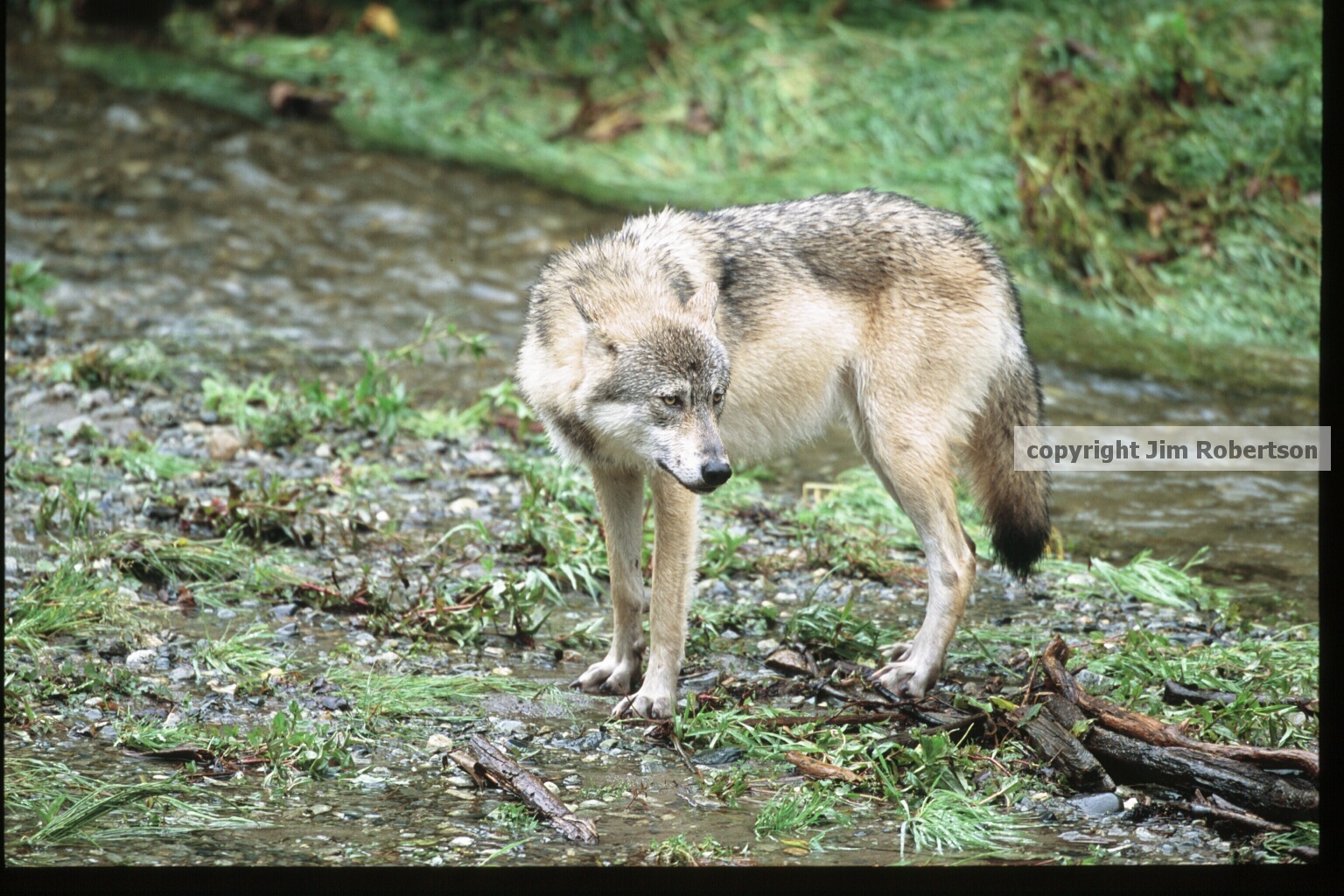
copyrighted wolf in river

Happy Prairie Dog Day!

      Keystone Prairie Dogs

Celebrate Prairie Dog Day

February 2nd has been nationally recognized as Groundhog Day since 1841, but in recent years, wildlife organizations officially added Prairie Dog Day to the date as a way to inform and educate the public on how important they are to the prairie ecosystem.

Urgent Call to Action

A Colorado mall developer takes lethal path with plans to kill approximately 5000 prairie dogs to construct a supermall in Castle Rock.  Protestors hope to force Alberta Development LLC to delay their extermination plans until June 1, to give conservationists time to find and prepare land where the prairie dogs can be safely moved, while the females will remain underground with their babies.  If the developer proceeds with the current timeframe, it will cause thousands of prairie dogs that aren’t trapped and killed to be fatally entombed.  READ FULL STORY HERE.

Federal Prairie Dog Conservation Report Remains Grim

WildEarth Guardians released their seventh annual Report from the Burrow to coincide with Prairie Dog Day and the grades given to federal and state agencies on the success of managing prairie dog populations remain poor.  The report reveals that “while a few states and federal agencies are improving their prairie dog conservation efforts—the generally deplorable status quo, where these intelligent, ecologically important animals are treated as pests and widely poisoned, gassed and shot—remains largely unchanged.”  Grades range from a B shared by the National Park Service and the state of Arizona to an F given to the Environmental Protection Agency.  SEE THE REPORT HERE.

Goodbye to PrairieDogPress

Since October 2012, PrairieDogPress has been the marketing arm of Keystone Prairie Dogs with footnotes to the KPD website linked at the bottom of each article published at the online news site Allvoices/Pulsepoint.  However, due to changes in that company’s platform to sponsored content only, freelance contractors will no longer be able to publish on the site, though their pages will remain as copyrighted property of AV.  Therefore, since the Examiner column KPD utilizes for wildlife and prairie dog content prohibits such promotion, KPD launched its own political and social commentary Facebook platform designed to broaden exposure.  The new page is called “Keystone Prairie Dogs Sunnyside Left” and we invite everyone to stop by, check it out and give us a “like”. IT CAN BE ACCESSED HERE.

Also, Keystone Prairie Dog website recently added two new pages: Newsroom and Memes.  CHECK THEM OUT HERE.

Thanks for your support of America’s meerkats and have a great spring everyone!

Oregon wildlife officials to consider removing gray wolves from endangered species list

http://www.oregonlive.com/environment/index.ssf/2015/01/wolf_delisting_oregon.html

By Kelly House | The Oregonian/OregonLive The Oregonian
Email the author | Follow on Twitter
on January 27, 2015

Protections for Oregon’s gray wolves could be rolled back after wildlife biologists counted more than four breeding pairs in eastern Oregon for the third straight year.

Under the state’s wolf plan, the Oregon Fish and Wildlife Commission can consider removing the eastern packs from the state’s endangered species list once that population bar is met.

Numbers from the annual wolf count released Tuesday afternoon indicate seven breeding pairs of wolves made it through 2014 – six of them in the eastern management area bounded by highways 97, 20, and 39.

Protections for wolves west of that boundary, including Oregon’s famed OR-7, are unaffected by the latest population figures.

The news came as no surprise to wildlife officials, who have said for months they expect to decide this year whether eastern Oregon wolves should continue to receive endangered species protections.

Of Oregon’s nine known wolf packs, only the Imnaha pack lacks a breeding pair. The Umatilla River pack still needs to be surveyed.

Conservationists and cattle ranchers hailed Tuesday’s news as proof that the state’s wolves are recovering, but their opinions diverged from there.

Rob Klavins, wolf advocate for Oregon Wild, argued that wolf numbers are still too low to consider delisting.

“We’re still a ways away from meaningful, long-term, sustainable recovery,” Klavins said.

Todd Nash of the Oregon Cattlemen’s Association said from his perspective, wolves in Oregon never should have been protected in the first place.

“There’s nothing delicate about their population,” he said. “I’m all for delisting them.”

Fish and wildlife commissioners who will decide Oregon wolves’ fate have offered no hints at their opinions on the matter, but state wolf coordinator Russ Morgan said both scientific data and public opinion will influence the commission’s eventual vote.

Before a vote can happen, Morgan said, wildlife biologists must complete a “status review” detailing how wolves are faring in Oregon. They will present their findings to the commission in April, along with a recommendation on whether wolves should remain listed.

“We have to do first things first, and the first thing here is to evaluate our data,” Morgan said.

In addition to triggering a review of Oregon wolves’ protected status, the increased number of breeding pairs triggers a new step in the wolf plan, giving ranchers more leeway to shoot wolves found mingling with their cattle.

Before the new population threshold was met, ranchers could only take wolves caught in the act of injuring or killing livestock. Now they can take wolves caught chasing livestock under some circumstances. Ranchers on private land also no longer need a permit to use beanbags, rubber bullets or other “non-lethal injurious harassment,” on wolves.

Nash, of the cattlemen’s association, said he’s happy the new rules give ranchers more options, but he doesn’t expect it to prevent many predations.

“Wolves kill at night,” he said. “There’s not much chance of catching them in the act at 2 a.m. in a remote area.”

The next step in assessing wolves’ recovering in Oregon will come in March, when fish and wildlife officials release their best estimate of the number of wolves in the state. They expect a significant increase from last year’s count of 64 known wolves.

 Wildlife Photography ©Jim Robertson

Wildlife Photography ©Jim Robertson

Some people need to go extinct…

…like the one who wrote the following hateful opinion piece:

http://www.chinookobserver.com/co/outdoors/20150120/fish-feathers-let-steller-sea-lions-go-extinct

Let Steller sea lions go extinct

By Capt. Ron Malast
January 20, 2015 1:19PM

Steller sea lions may be coming off “threatened” list, raising possibility for more proactive management

Steller sea lions have been in the news a lot lately. Although recent articles expound around the virtues of bringing back endangered species such as sea lions from close to extinction, the Steller sea lion is not one of the more popular species enamored by certain portions of society.

Not only do Stellers prey on all types of salmon but they also have been found to take 85 percent of the sturgeon that fall to depredation.

Remember all the flounder we used to catch in the river during sturgeon season 8-10 years ago? Well, they are a thing of the past, thanks to Mr. Steller

The Washington Department of Fish & Wildlife has recommended listing tufted puffins on the state’s endangered species list and removing Steller sea lions from the state’s threatened species list, which may lead to a lethal means of reducing Steller numbers. Written comments can be submitted (wdfw.wa.gov/commission) through Jan. 23. A public hearing is scheduled Feb. 6 and 7 at the WDFW meeting.

Steller sea lions are the larger of the two sea lion species found in Washington and have been protected by the state as a threatened species since 1993. The species received federal protection under the Endangered Species Act in 1990 and the National Marine Fisheries delisted the eastern population ranging from northeast Alaska to northern California in December 2013. The population in that area has grown from 18,000 in 1979 to 70,000 in 2010. [Meanwhile, the human population grows by 200,000 per DAY!]

More than 1,500 Steller sea lions have been counted in Washington in recent years, compared to approximately 300 spotted during surveys in the early 1990s.

The millions of dollars that are spent trying to replenish salmon is just money going down the drain when you have a predator such as Steller sea lions in the Columbia River. The methods used to protect the “lions” are counter-productive to what we are trying to accomplish. In nature, sometimes it is best to leave things be as they may and not try to recover a particular species, as in this case.

Another case in point is the wolf, where God only knows how many millions have been spent to re-introduce it, and then find out that it has devastated deer and elk herds across the western U.S. Much of this is being benighted by the “dogooders,” the feds and the scientific community, but it’s a fact. In the near future, we will be trying to rebuild the lost elk and deer herds having been lost to those cute little wolves.

When is this world going to realize that not everything needs to be saved?

littleboyc09

20 years later: What if wolves weren’t reintroduced?

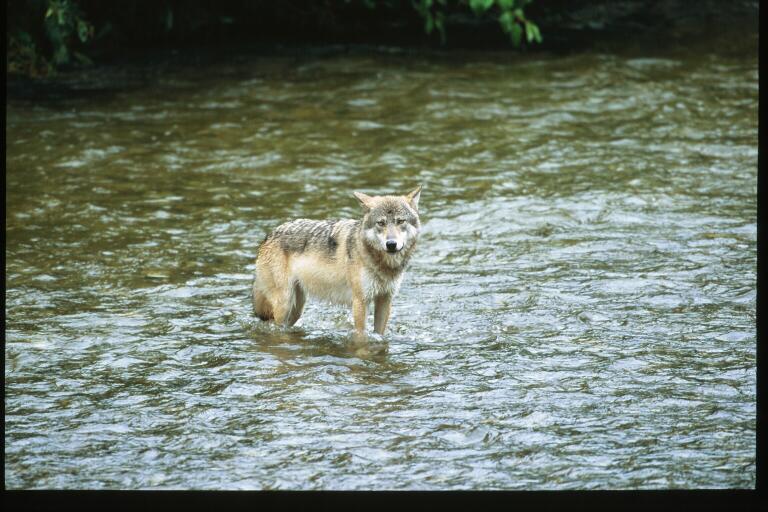
copyrighted wolf in water

From another list:

January 14, 2015 12:01 a.m.

The date was Jan. 14, 1995, when Moon Star Shadow, a 90-pound, silver-tipped black male, stepped out of his cage at Corn Creek and urinated, marking his new territory in Idaho.

Moon Star Shadow and three other wolves released at the edge of the Frank Church-River of No Return Wilderness were the first of 66 wolves brought to Idaho and Yellowstone National Park from Canada in 1995 and 1996.

By 2009, the wolf population had grown to more than 1,500 in Idaho, Montana and Wyoming and today has spread to Washington, Oregon and Utah — even California and Arizona.

In 2011, Congress delisted the populations in Idaho, Montana, northern Utah, western Oregon and western Washington. That removed them from protections under the Endangered Species Act and led to wolf-hunting seasons. Today more than 600 wolves are thought to live in Idaho and the haunting howl of a pack of wolves is an almost common sound in Idaho’s back country, pleasing the people who pushed to restore them.

Idaho hunters and trappers harvest hundreds of wolves every year, but many complain that traditional elk-hunting areas no longer are as productive because wolves kill, move or stress the big game.

Ranchers have the right and means to kill wolves that attack their livestock, but they remain bitter that they aren’t compensated for losses that can’t be definitively linked to wolves. Ranchers also say elk and other big game are streaming out of the backcountry to raid their pastures and haystacks as they get away from the wolves.

But what if the federal government had decided not to reintroduce wolves to Idaho and Yellowstone in 1995?

Folks who love wolves would have fewer to see or hear. And the folks who hate wolves might have fewer options to manage wolves or kill wolves that come into contact with humans and livestock.

A mind of their own

Wolf biologists and managers who led the recovery program that began a decade before the wolves were released agree that Idaho would have wolves today, possibly hundreds, even if the reintroduction never took place. But they doubt that Yellowstone National Park — the place the public associates most closely with the new population of wolves — would have a wolf population today.

Wolves were moving on their own from Canada into Montana and Idaho, beginning in the 1960s. But a lack of safe corridors for the animals between Northwest Montana and Yellowstone would have hindered or stopped natural recolonization of wolves from Canada there. Today, 400 to 450 wolves live in the greater Yellowstone ecosystem.

“There would be wolves in northwest Montana, there would be wolves in central Idaho, but I doubt we would have more than a few (scattered) in Yellowstone,” said Ed Bangs, a retired U.S. Fish and Wildlife Service gray wolf recovery coordinator in charge of the reintroduction.

They were reintroduced under a legal provision that allowed relaxed rules for an “experimental population.” That enabled federal officials to kill wolves that repeatedly attacked livestock and exempted officials from requiring that every federal action in the habitat be shown not to hurt the wolves.

That approach was based on the premise that there was no wolf population — no breeding pairs — in the areas targeted for reintroduction.

As the wolf population in British Columbia and Alberta grew in the 1980s, several packs showed up in Northwest Montana, making that area ineligible for reintroduction. Many wolf sightings also were reported in Idaho.

An Idaho plan

The drive for reintroduction in Idaho came from Republican U.S. Sen. James McClure.

McClure believed the return of the wolf to Idaho was inevitable. He wanted to put in place rules that would protect ranchers from the powers of the Endangered Species Act that restrict the killing of depradating wolves and other management. In 1988, he proposed federal legislation that would have reintroduced a few packs and stipulated that no wolves would be allowed to live outside of Yellowstone and Idaho’s wildernesses. His bill would have restricted wolf expansion more tightly than did the final reintroduction rules.

“He wasn’t a wolf-lover,” said David Mech, an internationally known wolf biologist who was one of the early voices for reintroduction.

McClure not only feared the costs to ranchers if more wolves showed up in Idaho. He believed loggers, miners and recreationalists would end up facing stricter limits under the full powers of the federal Endangered Species Act.

Ranchers weren’t convinced.

Brad Little, who today serves as Idaho’s lieutenant governor, came from a long line of sheep ranchers. In 1988, he was active with the Idaho Woolgrowers and an opponent to McClure’s bill, which went nowhere because of strong opposition from Wyoming ranchers and lawmakers.

“He was pretty darned convinced that his bill would have been far and away superior to what we eventually got,” Little said.

The return of wolves forced Little, like most ranchers, to change the way he operates. He gave up private grazing leases in the Cascade area due to the rate of depredation on his cattle. But he said ranchers in Custer and Lemhi counties that deal with the largest wolf populations have had the hardest time maintaining their livelihoods.

“The central Idaho ranchers are in the same place that the West Coast loggers were with the spotted owl,” Little said.

‘The sweet spot’

Suzanne Stone, now with Defenders of Wildlife, was contracted by the U.S. Fish and Wildlife in the early 1990s to look for wolves in central Idaho.

Stone soon learned how difficult life would be for wolves in Idaho, both then and now. Biologist Steve Fritts was teaching her to howl in 1991 near Warm Lake east of Cascade.

“On my second howl, we literally (had) rifle bullets go over our heads so close I could hear them whistle,” Stone said.

She wanted reintroduction to be called augmentation, because she knew wolves already were living in Idaho. But she also believes that if the naturally moving wolves had been given the full protection of the Endangered Species Act, we would have wolves in Idaho, Yellowstone and at least Wyoming without reintroduction.

The wolf recovery program today would not be as divisive, Bangs said, had the delisting occurred several years earlier — before wolf populations had reached their peak and affected so much livestock and big game.

“We lost the hunting constituency because of that,” he said.

Steve Alder agrees.

Alder heads Idaho for Wildlife — the group that sponsored this month’s wolf- and coyote-hunting derby in Salmon.

“From our perspective, (the delay in delisting) really got people rallied,” he said.

So what ended up happening?

Wolves captured in northern Alberta were released Jan. 14, 1995, after a federal judge lifted a temporary restraining order.

In Idaho, the 35 wolves simply were released from cages into the wild.

At Yellowstone, packs captured together were kept in enclosures to allow the animals to acclimate to their new environs. The enclosures were opened in March and the wolves reluctantly left to take over their new home. More wolves were released in 1996.

From the beginning, Idaho’s great wolf habitat — lots of undeveloped spaces and lots of food such as elk and moose — meant that the wolf population grew faster here than anywhere else.

By 2001, the Idaho population had reached the 10 to 15 breeding pairs that federal biologists said was necessary for recovery.

After years of debate, lawsuits and failed efforts to remove Idaho wolves from protections under the Endangered Species Act, Idaho Rep. Mike Simpson added a rider to a fast-track federal budget bill in 2011. The rider inserted language to allow Idaho and Montana to manage

Bill in Congress would remove protections for Great Lakes wolves

http://www.twincities.com/localnews/ci_27312693/bill-would-remove-protections-wolves-4-states-including

By Steve Karnowski
Associated Press

01/13/2015 12:01:00 AM CST | Updated:  

A gray wolf in an April 2008 photo provided by the U.S. Fish and Wildlife Service. (AP Photo/U.S. Fish and Wildlife Service, Gary Kramer, File)

A gray wolf in an April 2008 photo provided by the U.S. Fish and Wildlife Service. (AP Photo/U.S. Fish and Wildlife Service, Gary Kramer, File)

Several members of Congress are preparing legislation to take gray wolves in Minnesota, Wisconsin, Michigan and Wyoming off the endangered list in an attempt to undo court decisions that have blocked the states from allowing wolf hunting and trapping for sport and predator control.

U.S. Rep. Reid Ribble, R-Wis., is leading the effort, his office confirmed Tuesday. Co-sponsors include U.S. Reps. Collin Peterson, D-Minn., Dan Benishek, R-Mich., and Cynthia Lummis, R-Wyo.

“I am pursuing a bipartisan legislative fix that will allow the Great Lakes states to continue the effective work they are doing in managing wolf populations without tying the hands of the Fish and Wildlife Service or undermining the Endangered Species Act,” Ribble said in a statement.

Ribble spokeswoman Katherine Mize said he hasn’t decided exactly when to introduce the bill, but the lawmakers are circulating a draft.

The legislation is in response to a ruling by a federal judge in Washington, D.C., last month that threw out an Obama administration decision to “delist” wolves in the western Great Lakes region, where the combined wolf population is estimated at around 3,700. That followed a similar decision by a different federal judge in September that stripped Wyoming of its wolf management authority and returned that state’s wolves to federal protections under the Endangered Species Act.

Ribble’s bill uses a strategy that succeeded in taking wolves in Idaho and Montana off the endangered list after court challenges by environmentalists blocked those efforts.


Congress took matters into its own hands in 2011 and lifted the federal protections for wolves in those two states, which then allowed hunting and trapping to resume.

“The language we are looking at would be narrow and would address the recent court decision. It would not seek to change the Endangered Species Act, but would be designed to meet the need in our region for responsible stewardship of the wolf population,” Benishek said in a statement.

Peterson, the most senior member of Minnesota’s congressional delegation, said he didn’t know what the prospects are for this legislation, but he said they’re probably better than they were in 2011 given that Republicans now control the Senate. He said he’s working to line up support from other lawmakers.

U.S. District Judge Beryl Howell said in her 111-page ruling that the delisting, which took effect in 2012, was no more valid than the government’s three previous attempts over more than a decade. While wildlife managers in the three western Great Lakes states say their wolf populations are no longer endangered and can sustain limited hunting and trapping, Howell criticized the states’ regulatory plans as inadequate. She also said wolves still need federal protections because they haven’t repopulated all of their historic range.

Peterson said he has asked the U.S. Fish and Wildlife Service to appeal her decision and was confident it would be overturned.

Fish and Wildlife spokesman Gavin Shire said no decision has been made on appealing Howell’s December ruling but said the agency did not appeal the Wyoming decision within the 60-day limit. He said the service wasn’t aware of any proposed legislation to delist wolves and couldn’t comment on it.

Under Howell’s ruling, wolves reverted to “threatened” status in Minnesota and “endangered” in Wisconsin and Michigan. Sport hunting and trapping is banned again in all three states, and Wisconsin and Michigan government officials can’t kill wolves for preying on livestock or pets — only to protect human life.

Doug Peterson, president of the Minnesota Farmers Union, said he believes the ruling is already affecting farms and ranches, particularly smaller family farms where the loss of a cow or calf or two puts a big dent in incomes.

“At some point people are going to do what they’re going to do to protect their livestock. That ends up being a problem,” he said.

Animals Hunted to Extinction

Read more: http://www.mnn.com/earth-matters/animals/photos/13-animals-hunted-to-extinction/caribbean-monk-seal#ixzz3OjWGvZwT

Unsworth is Unworthy for Washington Wildlife

The Governor must First approve Unsworth as the new Director of WDFW…..We can’t let this happen!! He’s an avowed wolf hater!! Here is WA Governor Inslee’s contact info…PLEASE call the Governor ASAP and Say NO to Unsworth!!!
http://www.governor.wa.gov/contact/interact/
More info from Jerry:
Idaho exported George Pauley to Montana and now Jim Unsworth to Washington….two avowed wolf haters. Look what Pauley has done in Montana and you can expect the same from Unsworth. To my knowledge Unsworth does not have a fisheries background which you’d think would be very important with the very complicated fisheries situation we have in Washington….seems that didn’t matter to the commissioners. Would like to know which commissioners voted for him…
….

Meanwhile in Illinois, Proof that Governors can occasionally do good things for wildlife, Illinois Gov. just vetoed a bill that would have allowed bobcat hunting there:

Gov. Quinn vetoes bill to allow Illinois bobcat hunting

Sunday, January 11, 2015 04:27PM

Gov. Pat Quinn on Sunday vetoed a bill to allow bobcat hunting in Illinois for the first time in more than 40 years, saying the small, nocturnal cats “continue to need protection” even though they have been removed from the threatened species list.

Quinn issued a brief statement in which he said allowing hunting would violate a responsibility to maintain Illinois wildlife.

“Bobcats are a valuable part of Illinois’ ecosystem and continue to need protection,” he said.

His decision ignores the recommendation of the state Department of Natural Resources, which supported a hunting season as a way to help in long-term management of the species…

http://abc7chicago.com/news/gov-quinn-vetoes-bill-to-allow-illinois-bobcat-hunting-/470922/

[Just how hunting them would help the bobcats was not clear, but the misguided policy falls in line with wildlife “management” actions nationwide.

10846355_862436173776474_7314160412610807927_n

U.S. sued over policy on killing endangered wildlife

Photo Copyright Jim Robertson

Photo Copyright Jim Robertson

Activists say the rule that hunters must know they are killing a protected animal allows the Justice Department to abdicate prosecution.

May 29, 2013|By Julie Cart, Los Angeles Times

Environmental groups are taking the Justice Department to court over a policy that prohibits prosecuting individuals who kill endangered wildlife unless it can be proved that they knew they were targeting a protected animal.

Critics charge that the 15-year-old McKittrick policy provides a loophole that has prevented criminal prosecution of dozens of individuals who killed grizzly bears, highly endangered California condors and whooping cranes as well as 48 federally protected Mexican wolves.

The policy stems from a Montana case in which Chad McKittrick was convicted under the Endangered Species Act for killing a wolf near Yellowstone National Park in 1995. He argued that he was not guilty because he thought he was shooting a wild dog.

McKittrick appealed the conviction and lost, but the Justice Department nonetheless adopted a policy that became the threshold for taking on similar cases: prosecutors must prove that the individual knowingly killed a protected species.

The lawsuit charges that the policy sets a higher burden of proof than previously required, arguing, “The DOJ’s McKittrick policy is a policy that is so extreme that it amounts to a conscious and express abdication of DOJ’s statutory responsibility to prosecute criminal violations of the ESA as general intent crimes.”

WildEarth Guardians and the New Mexico Wilderness Alliance said they intend to file a lawsuit Thursday in U.S. District Court in Arizona, one of the states where Mexican wolves were reintroduced. The Times received an advance copy of the lawsuit.

Federal wildlife managers who are responsible for protecting endangered animals have long criticized the policy as providing a pretext for illegal trophy hunters and activists.

A June 2000 memo from the law enforcement division of the U.S. Fish and Wildlife Service in Wyoming warned, “As soon as word about this policy gets around the West, the ability for the average person to distinguish a grizzly bear from a black bear or a wolf from a coyote will decline sharply. Under this policy a hen mallard is afforded more protection than any of the animals listed as endangered.”

Earlier this year, a man in Texas shot and killed a whooping crane, telling authorities that he thought it was a legally hunted Sandhill crane. He was not charged under the Endangered Species Act but was prosecuted under the Migratory Bird Treaty Act, which carries lesser penalties.

Wendy Keefover of WildEarth Guardians compared the policy to “district attorneys rescinding speeding tickets issued by traffic cops when then speeder claims he or she believed the legal speed limit was greater than what was posted, and that he or she had no intention to break the law.”

The unspoken attitude toward endangered species among some western ranchers is summed up by the expression: “Shoot. Shovel. And shut up,” suggesting that the most efficient way to deal with the unwanted bureaucracy associated with protected species was to quietly remove them.

Mexican wolves have been decimated by illegal shootings, causing the death of more than half of the animals released in the wild since the start of the reintroduction program in 1998.

Forty-eight Mexican wolves have been illegally killed, according to the lawsuit. It notes that the U.S. Fish and Wildlife Service anticipated that illegal shooting and trapping was likely to be a major impediment to recovery of the species, but the agency thought that strong enforcement could discourage the illegal acts.

Wolves are often killed by hunters who say they thought they were shooting at coyotes, which may be shot on sight in most states.

Mistaken identity is also frequently given in mix-ups between black bears and grizzly bears that lead to grizzly deaths.

The Wyoming U.S. Fish and Wildlife Service memo included this example:

In May 1996, a man hunting for black bear in Wyoming shot and killed a collared grizzly bear, an endangered species.

The hunter and three friends moved the bear carcass, destroyed the collar, dug a hole, dumped in the bear, poured lye over it and covered the hole.

When the animal’s remains were recovered, the man said he thought he was shooting at a common black bear.

The U.S. attorney’s office reviewed the case and declined to prosecute it, citing the McKittrick policy.