Save the Wolves, Ban Coyote Hunting!

One is protected by the ESA, the other can be shot on sight–anywhere, anytime!
10906075_10155034869550301_2511370178161460178_n

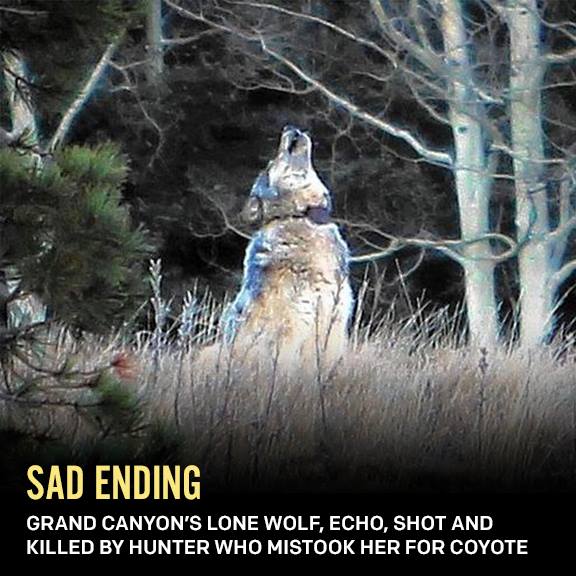
THIS NEEDS TO STOP: Echo, the beloved lone wolf who had traveled 500 miles from Wyoming to the Grand Canyon, has been shot and killed by a hunter who mistook her for a coyote. Echo’s sad ending shows why it’s critical that we keep fighting for stronger protections for wolves, grizzly bears, and other endangered wildlife [to say nothing of coyotes, who are shot on sight and hung from fences across the West].

Echo was a symbol of hope as conservationists celebrated the possible return of gray wolves to the Southwest after being wiped out for a century. Echo was probably looking for food or a mate when she was shot…

Hunting Causing Extinctions in Indonesia

Indonesia’s silent wildlife killer: hunting

Commentary by Erik Meijaard, the Borneo Futures initiative
December 26, 2014

By and large, Indonesia is a peaceful country. In fact, on the United Nations Office of Drugs and Crime’s list of homicide rates, Indonesia ranks number 10, making Indonesians one of the least murderous people on Earth. A ban on gun ownership probably helps, although obviously there are many other ways to snuff out another person. Maybe Indonesia’s general tendency to avoid conflict helps, too.

Whatever the reason why Indonesians are relatively unlikely to kill each other, such favors are not extended to Indonesia’s non-human wildlife. The relative safety of Indonesia’s people does not guarantee similar security for its animals.

Wildlife killing in Indonesia seems to be at an all-time high. In fact, a recent study published in the respected journal Conservation Biology indicates that on the island of Borneo, wildlife killing is now a bigger conservation threat than commercial logging.

Now such a statement is bound to generate a lot of derision. Many conservation organizations, scientists, as well as the government authorities will pooh-pooh the idea that hunting impacts are that disastrous. Why that is, I want to explore further.

But first, back to the study. The research, led by Jedediah Brodie of the University of British Columbia, deployed a series of camera traps across a gradient of disturbed areas to investigate direct and indirect impacts on wildlife. Although both hunting and new logging reduced the number of species in a given area, there was evidence that some wildlife eventually returned to selectively logged areas. This confirms analyses that my colleagues and I published in the Life after Logging book, several years ago.

The important finding is that the impacts of logging were relatively transient. Hunting pressure on the other hand was continual. Overall, hunting adversely impacted 87 percent of the species in the study.


Wild pig in a snare in Aceh, Sumatra. Photo by Rhett A. Butler

These findings resonate with other hunting studies that I have conducted over the years on Borneo.

First, our Borneo-wide interview surveys conducted in 2009 suggested that thousands of orangutans are killed every year. More than half of the killings resulted in the orangutan being turned into a tasty steak or orangutan stew. The killing of orangutans happens both deep inside forests and in areas that are being deforested. Especially in areas where orangutans co-occurred with nomadic hunting tribes, the orangutan went extinct ages ago. So for orangutans, the picture that hunting is a bigger threat than logging seems well supported.

To get a better idea of the number of animals that are commonly affected through hunting, I conducted another study a few years ago. Every month for one year we gave 18 households in a Dayak village in East Kalimantan a calendar on which they could mark – with stickers – the different types of animals they had caught. After one year this amounted to 3,289 animals with a combined weight of 21,125 kg. The majority were bearded pigs (81 percent of total weight), deer (8 percent) and fish (6 percent). That’s about half a kilo of wildlife or fish per head of the population per day.

Now the total amount is a pretty meaningless number. What really matters is whether or not the take-off levels are sustainable. That is, can people keep harvesting at this level without species populations going extinct?

Problematically, almost no one is studying this. We can, however, get some idea about the answer when we talk to local communities. And their answer is pretty gloomy.

Pretty much any species they mention is considered to be in decline. There are fewer pigs, fewer deer, fewer monkeys, fewer orangutans, fewer fish, fewer snakes. Everything is going down. People are concerned about this, because today their meat is a free resource, but when that is gone they will have to start shopping in markets and for that they need cash. But despite their worries, no one is doing anything to change hunting habits.

Ever since I started talking to people in Kalimantan in the early 1990s about their hunting habits, I have been rather baffled by the fact that so few conservation-minded people in Indonesia show any interest in the topic, unless it concerns big conservation icons like tiger or rhino. If hunting is indeed such a big conservation problem, why are we not doing anything about it?


Cuscus being sold as meat in the Wamena market in Indonesian New Guinea. Photo by Rhett A. Butler

Part of the explanation is a belief held by many conservation advocates that the ‘traditional’ people of Borneo and other tropical forest areas somehow understand the concept of sustainable hunting levels. Trust me, they don’t.

If we want to maintain fish, bird and mammal populations that are big enough to feed people in perpetuity, they will have to change their hunting and fishing habits.

Laws about killing and harvesting endangered and commercially valuable species need to be enforced. Zero-hunting zones have to be established where wildlife populations can grow. Similar no-fishing zones have proven to be very effective, if indeed enforced rigorously.

And importantly, as long as wildlife is considered a resource owned by everyone, the ‘tragedy of the commons’ will apply: no one will bother to manage the resource because nobody feels ownership or responsibility.

The empty forest syndrome – standing trees without wildlife – is staring Indonesia into the face in pretty much all forests. Which conservation organizations and government authorities have the guts to stand up and do something about it?

Surely, for such apparent non-violent, non-confrontational and chilled-out people like Indonesians, it shouldn’t be too much of a burden to also extend that peace and love to its wildlife, right? After all, as Mahatma Gandhi said, “the greatness of a nation and its moral progress can be judged by the way its animals are treated.”

Erik Meijaard is a Jakarta-based conservation scientist.

This op-ed originally appeared in the Jakarta Globe and has been reprinted here with the permission of the author.

Read more: http://news.mongabay.com/2014/1226-rsp-meijaard-indonesia-hunting.html#ixzz3N2b3ID6k

Federal Ruling on not hunting wolves could have national impact

Federal judge’s ruling on hunting wolves could have national impact

http://www.duluthnewstribune.com/news/politics/3640138-federal-judges-ruling-hunting-wolves-could-have-national-impact

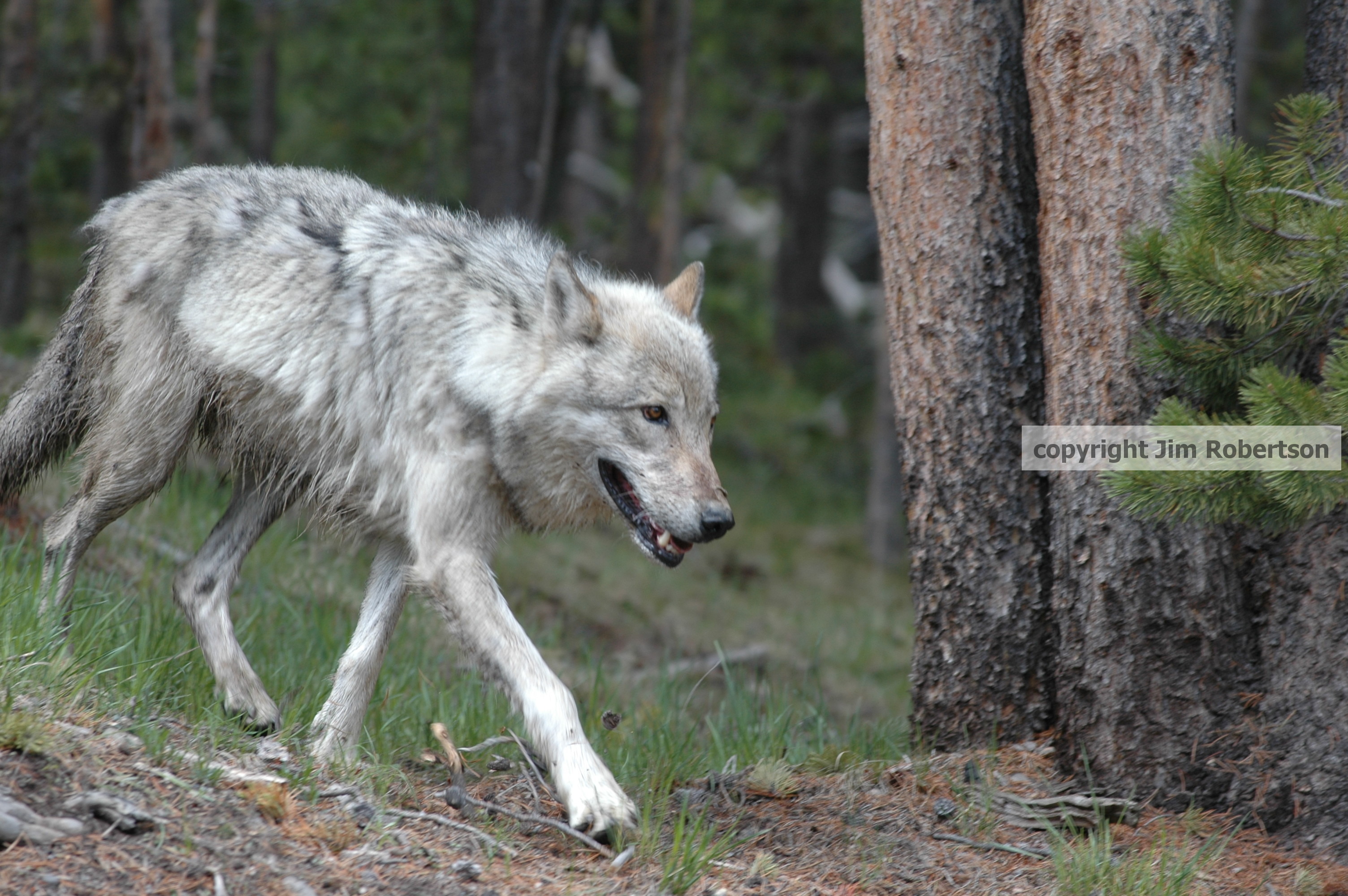
copyrighted Hayden wolf walking

Some gray wolves to be returned to endangered list

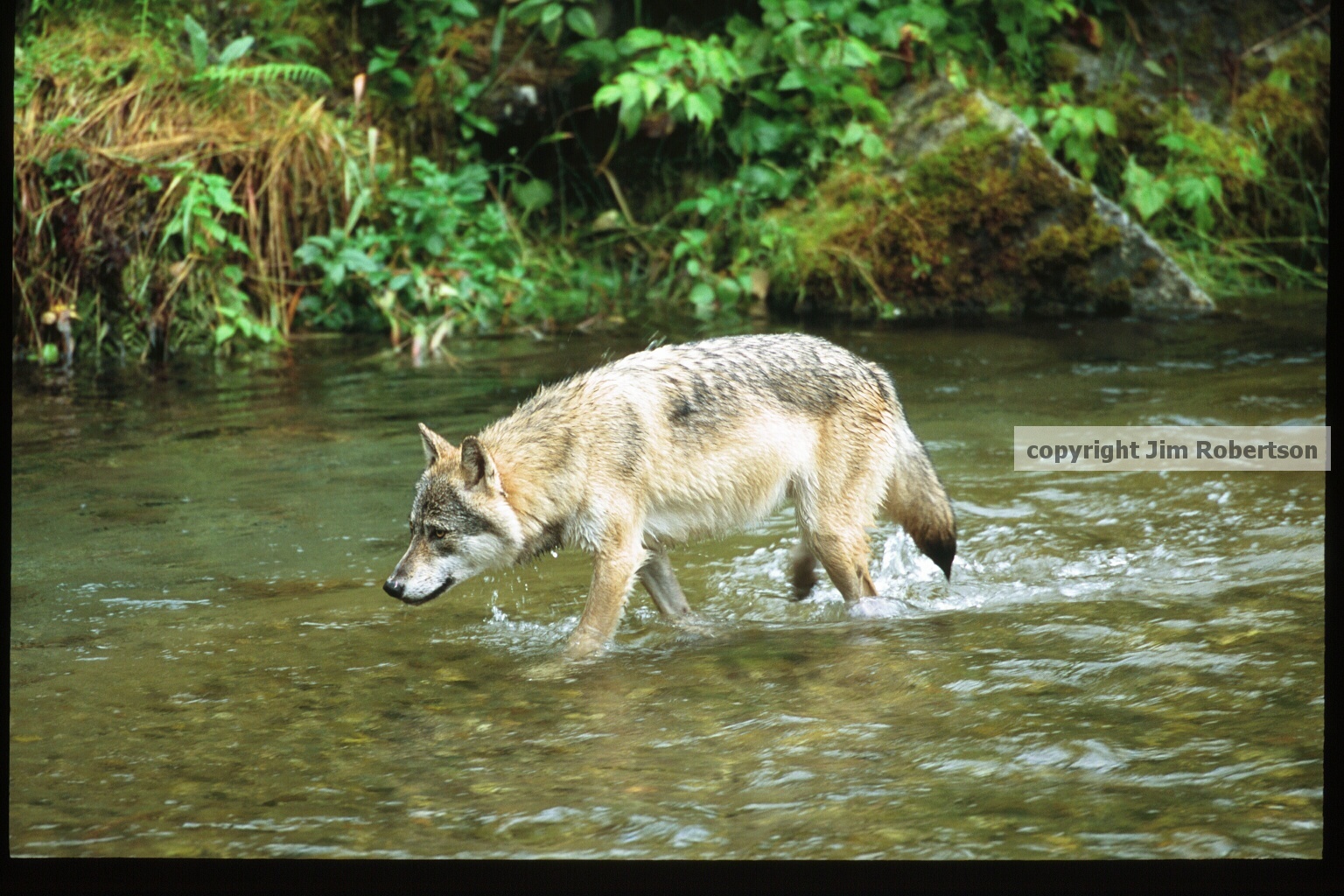
copyrighted wolf in water

TRAVERSE CITY, Mich. (AP) — A federal judge on Friday threw out an Obama administration decision to remove gray wolves in the western Great Lakes region from the endangered species list — a decision that will ban further wolf hunting and trapping in three states.

The order affects wolves in Michigan, Minnesota and Wisconsin, where the combined population is estimated at around 3,700. The U.S. Fish and Wildlife Service dropped federal protections from those wolves in 2012 and handed over management to the states.

U.S. District Judge Beryl Howell in Washington, D.C., ruled Friday the removal was “arbitrary and capricious” and violated the federal Endangered Species Act.

Unless overturned, her decision will block the states from scheduling additional hunting and trapping seasons for the predators. All three have had at least one hunting season since protections were lifted, while Minnesota and Wisconsin also have allowed trapping. More than 1,500 Great Lakes wolves have been killed, said Jonathan Lovvorn, senior vice president of the Humane Society of the United States, one of several groups whose lawsuit prompted Howell’s ruling.

“We are pleased that the court has recognized that the basis for the delisting decision was flawed, and would stop wolf recovery in its tracks,” Lovvorn said.

Fish and Wildlife Service spokesman Gavin Shire said the agency was disappointed and would confer with the U.S. Department of Justice and the states about whether to appeal.

“The science clearly shows that wolves are recovered in the Great Lakes region, and we believe the Great Lakes states have clearly demonstrated their ability to effectively manage their wolf populations,” Shire said. “This is a significant step backward.”

State officials acknowledged being caught by surprise and said they would study the judge’s 111-page opinion before deciding what to do next.

“It’s an unusual turn of events,” said Tom Landwehr, Minnesota’s natural resources commissioner.

The ruling is the latest twist in more than a decade of court battles over the gray wolf, which has made a strong recovery after being shot, poisoned and trapped into near-extermination in the lower 48 states in the last century. Only a remnant pocket in northern Minnesota remained when the species was added to the federal endangered list in 1974.

The wolf is now well-established in the western Great Lakes and in the Northern Rockies, where the minimum population is estimated at around 1,700.

Animal protection advocates repeatedly have sued over federal efforts to drop federal protections in both regions, arguing that the wolf’s situation remains precarious. Meanwhile, ranchers and farmers complain of heavy financial losses from wolf attacks on livestock.

A judge in September restored endangered status to wolves in Wyoming, although those in Montana and Idaho remain off the list. The Fish and Wildlife Service is nearing a final decision on whether to lift protections across the remainder of the lower 48 states, except for a fledgling population of Mexican gray wolves in the desert Southwest.

In her opinion, Howell acknowledged the issue inspires passions on all sides but said the administration’s “practical policy reasons” for its action in the Great Lakes region don’t trump the requirements of the federal law, which “offers the broadest possible protections for endangered species by design.”

“This law reflects the commitment by the United States to act as a responsible steward of the Earth’s wildlife, even when such stewardship is inconvenient or difficult for the localities where an endangered or threatened species resides,” Howell wrote.

The ruling came too late to halt this fall’s hunting and trapping seasons. They have concluded in Minnesota, where 272 wolves were killed, and Wisconsin, where the total was 154.

Michigan’s only hunt was in 2013, when 22 wolves were taken. During the November election, voters rejected two pro-hunting laws approved by the Legislature. But a third remains on the books, and regulators had been expected to consider scheduling another hunt next year.

Minnesota and Wisconsin officials warned residents that with wolves classified as endangered once again, it’s no longer legal to shoot those preying on livestock or pets. Wolves can be killed only if threatening human life,

More: http://news.yahoo.com/great-lakes-wolves-ordered-returned-endangered-list-212002962.html

Judge orders gray wolf back on endangered list in Wisconsin, 2 other states

TRAVERSE CITY, Mich. — A federal judge on Friday threw out an Obama administration decision to remove gray wolves in the western Great Lakes region from the endangered species list — a decision that will ban further wolf hunting and trapping in three states, including Wisconsin.

The order affects wolves in Minnesota, Michigan and Wisconsin, where the combined population is estimated at around 3,700. The U.S. Fish and Wildlife Service dropped federal protections from those wolves in 2012 and handed over management to the states.

U.S. District Judge Beryl Howell in Washington, D.C., ruled Friday the removal was “arbitrary and capricious” and violated the federal Endangered Species Act.

Unless overturned, her decision will block the states from scheduling additional hunting and trapping seasons for the predators. All three have had at least one hunting season since protections were lifted, while Minnesota and Wisconsin also have allowed trapping. More than 1,500 Great Lakes wolves have been killed, said Jonathan Lovvorn, senior vice president of the Humane Society of the United States, which filed a lawsuit that prompted Howell’s ruling.

“We are pleased that the court has recognized that the basis for the delisting decision was flawed, and would stop wolf recovery in its tracks,” Lovvorn said.

Fish and Wildlife Service spokesman Gavin Shire said the agency was disappointed and would confer with the U.S. Department of Justice and the states about whether to appeal.

“The science clearly shows that wolves are recovered in the Great Lakes region, and we believe the Great Lakes states have clearly demonstrated their ability to effectively manage their wolf populations,” Shire said. “This is a significant step backward.”

State officials acknowledged being caught by surprise and said they would study the judge’s 111-page opinion before deciding what to do next.

“It’s an unusual turn of events,” said Tom Landwehr, Minnesota’s natural resources commissioner.

The Wisconsin Department of Natural Resources said in a statement that it is disappointed by the decision, which it is reviewing along with Department of Justice legal staff to determine how it will impact the state’s wolf management program.

DNR said immediate implications of the ruling include: Permits allowing lethal removal of wolves issued to landowners experiencing wolf conflicts are no longer valid; the department is not authorized to use lethal control as part of its conflict management program; Wisconsin’s law allowing landowners or occupants of the land to shoot wolves that are in the act of depredating domestic animals on private property is no longer in force; landowners may not kill wolves in the act of attacking domestic animals.

Jodi Habush Sinykin, an attorney for Midwest Environmental Advocates, which supports science-based wildlife management, said the decision should serve as a clear signal of caution to people who would kill the nation’s wolves.

Hunters in Wisconsin killed 154 wolves in this year’s hunt that ended Dec. 5, exceeding the state limit for non-tribal hunters by four wolves. In 2013, 257 wolves were killed, six more than the limit. Hunters killed 116 wolves, one more than the limit, in 2012, the first year of the organized hunt.

The ruling is the latest twist in more than a decade of court battles over the gray wolf, which has made a strong recovery after being shot, poisoned and trapped into near-extinction in the lower 48 states in the last century. Only a remnant pocket in northern Minnesota remained when the species was added to the federal endangered list in 1974.

The wolf is now well-established in the western Great Lakes and in the Northern Rockies, where the minimum population is estimated at around 1,700.

Animal protection advocates repeatedly have sued over federal efforts to drop federal protections in both regions, arguing that the wolf’s situation remains precarious.

Meanwhile, ranchers and farmers complain of heavy financial losses from wolf attacks on livestock

Read more: http://host.madison.com/news/local/environment/judge-orders-gray-wolf-back-on-endangered-list-in-wisconsin/article_0e0cf872-e6c8-5450-b4a0-975e82e82f5e.html#ixzz3MSW2ZL9e

“Hunter-Conservationists:” the Most Ridiculous Spin of the Century

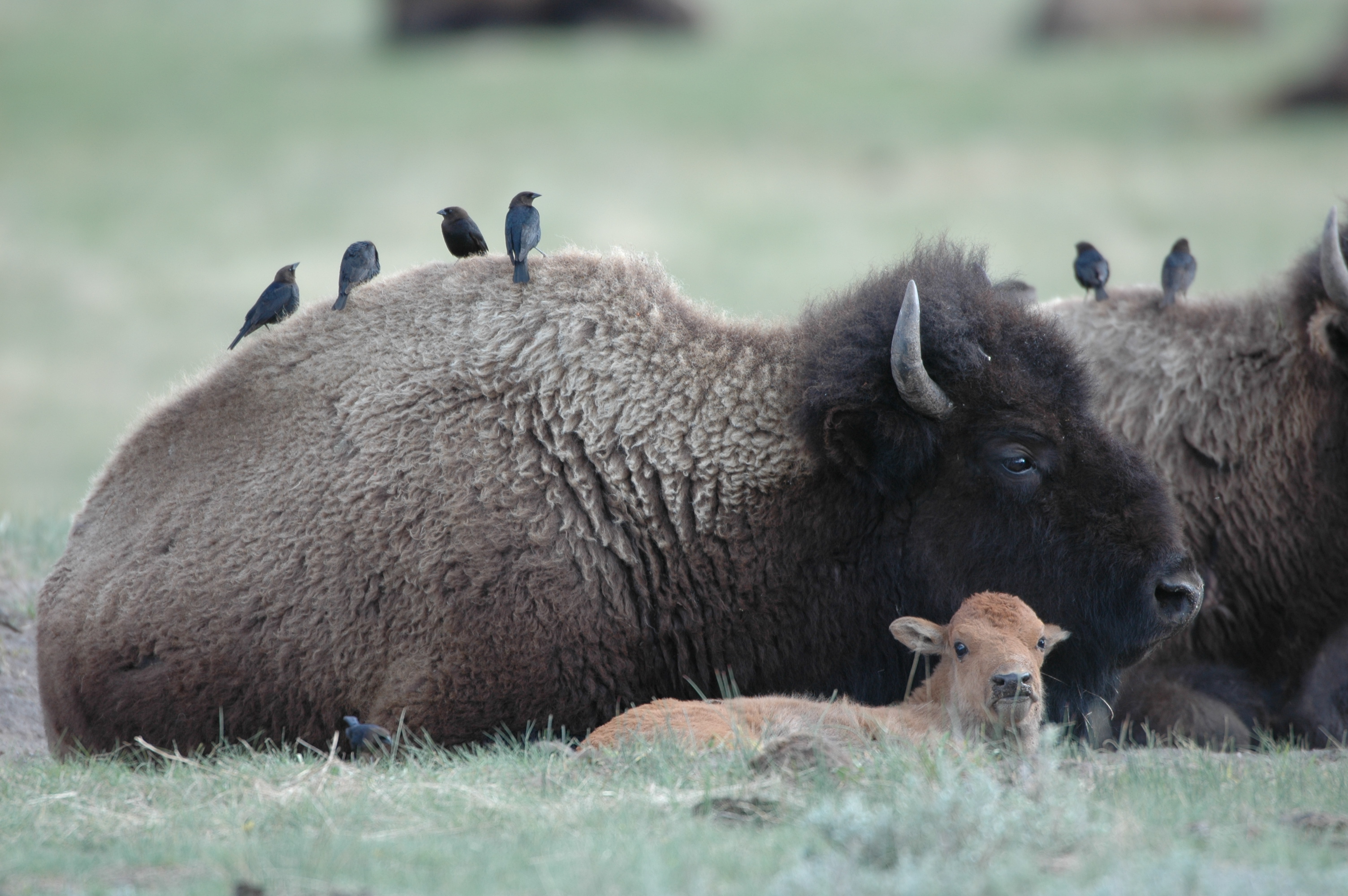
The award for Most Ridiculous Spin of the Century goes collectively to Kit Fischer, sportsmen’s outreach coordinator with the National Wildlife Federation (what the hell kind of environmental/wildlife advocacy group hires an outreach coordinator to attract sport hunters?); Dave Chadwick, executive director of the Montana Wildlife Federation; Jim Posewitz, board member of Helena Hunters and Anglers; Casey Hackathorn, president of Hellgate Hunters and Anglers; Chris Marchion, board member of Anaconda Sportsmen and Glenn Hockett, president of Gallatin Wildlife Association. These revisionists recently had the insolent audacity to try to boast that “hunter-conservationists saved bison from extinction a century ago” in their article, Enlist Montana Hunters to Manage Bison Numbers.

Let’s not forget that the vast herds that once blackened the plains for hundreds of miles on end were almost completely killed off by hide-hunters, market meat-hunters or by sport-hunters shooting from trains just for a bit of fun.

The only reason hunters stopped the insanity was that the bison were all but completely wiped out. By the time they ended their killing spree, only 18 wild bison remained, holed up like wrongfully-accused outlaws in the upper reaches of the Yellowstone caldera.

Although Yellowstone National Park is now synonymous with the shaggy bovines, bison would prefer to spend their winters much further downriver, on lands now usurped and fenced-in by cowboys to fatten-up their cattle before shipping them off to slaughter.

If today’s ranchers and hunters had their way, bison, along with wolves and grizzly bears, would be forever restricted to the confines of the park. Rancher-hunters already have such a death-grip on Montana’s wildlife that bison are essentially marooned and forced to stay within park borders, battling snow drifts no matter how harsh the winter, despite an instinctual urge to migrate out of the high country during heavy snow winters.

Instead of making amends for the historic mistreatment of these sociable, benevolent souls, twenty-first-century sport hunters want their chance to lay waste to them again–this time in the name of “tradition.”

______________________________________________

Parts of this post were excerpted from my book, Exposing the Big Game: Living Targets of a Dying Sport

Text and Photo Copyright Jim Robertson

Text and Photo Copyright Jim Robertson

Wyoming fights wolf decision, files emergency rule to allow hunting season

copyrighted Hayden wolf walking
September 25, 2014 6:00 am  • 
 

Wyoming filed an emergency rule Wednesday with the Secretary of State’s Office, hoping to still begin its wolf hunting season Oct. 1.

The move came a day after a Washington, D.C., judge placed wolves back on the endangered species list, which immediately stopped all wolf hunting in Wyoming.

The emergency regulation would place a Wyoming Game and Fish Commission wolf management plan into effect in an attempt to address the judge’s concerns.


There are no guarantees it will work, said Brian Nesvik, head of the wildlife division of the Wyoming Game and Fish Department.

A coalition of conservation groups argued three points in a lawsuit filed against the U.S. Fish and Wildlife Service in 2012. They said Wyoming’s plan did not ensure a viable population of wolves, that there was not enough genetic exchange with other populations and that the gray wolf is still endangered in some of its range.

U.S. District Judge Amy Berman Jackson wrote in her ruling that while wolves had recovered with sufficient genetic exchange, Wyoming’s plan to have a viable population was not binding.

“It’s just another page in the saga of this whole issue,” said Budd Betts, owner of Absaroka Ranch, a guest ranch and outfitting business near Dubois. “I thought this very well could have happened. This is going to be a recipe for an exploding population.”

At issue in the judge’s ruling is Wyoming’s promise to maintain more than the required 100 wolves and 10 breeding pairs outside the national parks, said Nesvik.

Wyoming put an addendum in its management plan that it would maintain a buffer of wolves above the required number. It did not specify how many or make the buffer binding by law.

The emergency rule the state filed Wednesday changes that addendum and turns it into a regulation, Nesvik said.

“This is a formality is all it is,” he said. “Two-thirds of this decision affirmed the merits of Wyoming’s wolf management plan.”

Gov. Matt Mead signed the emergency rule Wednesday, he said.

Wyoming needs to do more than add a regulation to its plan resolving the buffer to assure wolves’ continued survival in the state, said Mike Senatore, vice president of conservation law and general counsel for Defenders of Wildlife, one of the groups involved in the lawsuit.

“What we hope Wyoming does is they go back and put in place a plan that will actually ensure the long-term recovery and survival of wolves in the state,” he said. “We continue to have major problems with the two-tiered status of wolves in the state.”

Wyoming has a hunting season on wolves in the northwest corner, but outside the area they can be shot on sight in what is called the predator zone. Senatore would like to see the predator zone eliminated or greatly restricted, he said.

Nesvik believes the plan Wyoming implemented is adequate to maintain the required number of wolves. Wyoming had at least 178 wolves and 15 breeding pairs in its trophy management area at the end of hunting season in 2013.

That number does not include wolves living in Yellowstone National Park, the Wind River Indian Reservation or the predator zone.

About 85 percent of the state’s wolf population is in the trophy management area. Nesvik did not have an estimate for the number of wolves in the rest of the state.

In 2012, 42 wolves were killed in the trophy area, and 25 were hunted in the rest of the state, according to Game and Fish. In 2013, 24 wolves were killed in the trophy area and 39 in the rest of the state. Hunters did not kill the quota of wolves allowed during either hunting season.

Wyoming’s attorney general will work with attorneys from the U.S. Department of Justice to bring the case before the judge again.

In the meantime, no more wolf licenses will be sold. The department is working on a system to refund money to the hundreds of hunters who already purchased a 2014 license.

Feds to Consider Translocating Bears to North Cascades National Park

biologicaldivesity.org

August 21, 2014

Contact: Noah Greenwald,

One Month After Center Files Petition to Expand Grizzly Bear Recovery Feds Take Action

WASHINGTON— The National Park Service this week took an important step toward recovering grizzly bears in the North Cascades in Washington state. The agency says it is beginning a three-year process to analyze options for boosting grizzly bear populations in the area, including the possibility of translocating bears and developing a viable population.

“We’re happy to see the Park Service begin the long-overdue conversation about bringing grizzly bears back to the North Cascades,” said Noah Greenwald, endangered species director with the Center for Biological Diversity. “Grizzlies have lost more than 95 percent of their historic habitat in the lower 48 states so we welcome any step that brings them closer to returning to some of their ancestral homes.”

In June, the Center petitioned the U.S. Fish and Wildlife Service to begin returning grizzly bears to vast swaths of the American West. The petition identified more than 110,000 square miles of potential grizzly bear habitat, including parts of Washington, California, Colorado, New Mexico, Arizona and Colorado.

Today, there are roughly 1,500-1,800 grizzly bears in the continental United States, most of them in and around Yellowstone and Glacier national parks. The grizzly populations remain separated from each other, which impedes genetic exchange and limits their ability to expand into new areas.

The Northern Cascades ecosystem includes about 9,800 square miles in the United States and 3,800 square miles in Canada. A grizzly bear has not been spotted on the U.S. side since 2010.

“The Northern Cascades has the potential to host a viable grizzly bear population,” Greenwald said. “The same could be said for many spots scattered throughout the West. If grizzly bears are ultimately going to have a thriving, healthy population no longer threatened by extinction, they’ve got to be given a chance to return to some of the places they were driven out of years ago.”

The Park Service says it will develop its “environmental impact statement” for grizzly bears in the North Cascades in conjunction with the Fish and Wildlife Service.

Photo Copyright Jim Robertson

Photo Copyright Jim Robertson

Grizzly bear killed in Idaho livestock incident

http://www.bozemandailychronicle.com/news/wildlife/article_5162bf36-218b-11e4-b95e-001a4bcf887a.html?utm_source=sitetoprelated&utm_medium=desktop&utm_campaign=bt

LAURA LUNDQUIST, Chronicle Staff Writer The Bozeman Daily Chronicle | 2 Comments

Wardens killed a male grizzly bear Sunday in another livestock-related incident along Montana’s southwestern border.

Workers had reported the death of cattle on a ranch that is part of Idaho’s Harriman State Park west of Island Park Reservoir and Yellowstone National Park and just south of the Montana border.

The ranch is also around 30 miles from the U.S. Experimental Sheep Station Range Reserve and summer grazing pastures in the Centennial Mountains, where other grizzly bears have been killed for preying on sheep.

Idaho Fish & Game spokesman Gregg Losinski, who also works with the Interagency Grizzly Bear Committee, said the cattle depredations had been ongoing, and it appeared that a bear was responsible.

So IFG contacted U.S. Department of Agriculture Wildlife Services employees who snared and killed the bear, which turned out to be a male approximately 9 years old.

Losinski said the bear was eliminated because it had learned to prey preferentially on livestock.

This is the fourth grizzly bear that Wildlife Services has killed this year because of cattle depredation. Two others were killed in Wyoming, and one was killed in May near Tom Miner Creek north of Gardiner, according to data gathered by the Interagency Grizzly Bear Study Team.

Ten grizzly bear deaths have been recorded this year, with three being natural and four human-caused that are under investigation.

But that’s fewer deaths by this time of year than in 2013. By August of that year, 14 bears had died, eight of which were killed for preying on livestock.

“We’re happy that fewer bears have been killed due to depredation this year,” Losinski said. “Now we’re getting ready for hunting season, which is another time when bears are killed because of run-ins with hunters.”

In 2013, hunters were responsible for four of the 29 total grizzly bear deaths.

Grizzly bears are still protected by the Endangered Species Act and killing one without authorization is illegal.

Photo Copyright Jim Robertson

Photo Copyright Jim Robertson

Tackling the Tusk Trade

Michael Markarian: Animals & Politics

In a welcome break from partisan gridlock, Republicans and Democrats are joining together to protect elephants and rhinos from illegal poaching. This month, New Jersey and New York became the first two states to ban the trade in elephant ivory and rhino horns, with bills signed by Governors Chris Christie, R-N.J., and Andrew Cuomo, D-N.Y.  The new policies will help to crack down on international wildlife traffickers and dry up the demand for illegal wildlife products in the northeast, which is the largest U.S. market for ivory and a main entry point for smuggled wildlife products.

Elephants and rhinos are threatened by a global poaching crisis. Only 28,000 rhinos of five different species remain in the wild, with more than 1,000 of them poached last year for their horns. In 2012, about 35,000 African elephants were killed for their tusks, and if the current poaching rate continues, African elephants could be extinct in a few decades. In Central Africa, populations of forest elephants have declined by 65 percent during the last decade. Asian elephants are critically endangered with fewer than 50,000 left in the wild.
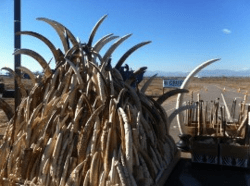
Seized Ivory Crush

Seized U.S. ivory stockpile bound for crushing. Credit: The HSUS/Iris Ho
Much of the killing is associated with criminal networks and Africa-based terrorist groups like al-Shabaab, the Lord’s Resistance Army, and others, which use the proceeds from ivory sales to fund their nefarious activities. As House Foreign Affairs Committee Chairman Ed Royce, R-Calif., noted, “While this growing problem is a grave threat to wildlife, with some animals facing extinction, it is also a threat to U.S. national security interests. As long as illegal wildlife trafficking continues, terrorists and rebel groups will have yet another way to fund their deadly objectives.”
Policymakers need to do more to address this problem. Fortunately, President Obama has announced a national strategy to crack down on elephant poaching and the ivory trade, and the U.S. Fish and Wildlife Service plans to issue new regulations that would prohibit the commercial import all African elephant ivory, including antiques, with a few exemptions for non-commercial purposes. This near-total ban on U.S. commerce in African elephant ivory, with the exception of a narrow class of antiques and certain ivory items that are exempt from regulation under the Endangered Species Act, will build on the efforts of the states to stem the tide of the poaching epidemic.
Shockingly, some members of Congress are trying to retain the status quo on the illegal slaughter of elephants, and at the request of the trophy hunting and gun lobbies and the music and antique industries, are fighting the Administration’s proposal. Sen. Lamar Alexander, R-Tenn.—whom Chattanoogan columnist Roy Exum said is “morphing into America’s newest champion of animal abuse”—and Rep. Steve Daines, R-Mont., have introduced the so-called “Lawful Ivory Protection Act,” which would handcuff the Fish and Wildlife Service and prevent the administration from taking any new action to protect elephants from the ivory trade.
These short-sighted politicians are lamenting the ability of someone to resell a gun or a guitar with a little bit of ivory on it, without regard for the fate of the largest land mammal in the world or our national security. Congress should follow the lead of New Jersey and New York, and support the global effort to stop the slaughter of elephants and rhinos—not provide aid and comfort to the organized criminal network of poachers and traffickers.