Once-extinct on Olympic Peninsula, fisher population rebounds

538458_532697610088640_841278349_nBy LYNDA V. MAPES  The Seattle Times
August 11, 2014 – 1:04 pm EDT

SEATTLE — Once locally extinct, fishers are bounding all over the Olympic Peninsula.

First released into Olympic National Park in 2008 in an effort to repopulate the native carnivore, they now range from Neah Bay to Ocean Shores, from Port Townsend to Olympia, preliminary data from remote cameras and hair snags confirm.

It’s a spectacular turnaround for an animal believed to be locally extinct for at least 80 years. Over-trapping of fishers for their luxuriant, lush brown coats and loss of the big, old-growth trees in which fishers like to lounge and den caused populations to plummet. The state closed the trapping season for fishers in the 1930s.

The National Park Service with other partners began a relocation effort in 2008, in an effort to bring the animals back. From 2008 to 2010, 90 fishers were moved from central British Columbia to the Sol Duc and Elwha Valleys.

The population today isn’t known, and the question remains as to whether births are keeping pace with losses, building a population that is self-sustaining over the long term.

But the indications from a monitoring effort by federal, state and tribal biologists so far are promising. “I’m cautiously optimistic,” said Patti Happe, chief of the wildlife branch for Olympic National Park.

Tracking in such remote, wild country is tricky. The batteries in radio collars initially fitted to the animals are all dead by now, so biologists in 2013 began utilizing remote, motion-triggered cameras pointed at survey stations, including hair snags, baited with chicken drumsticks. The hair samples allow scientists to analyze fisher DNA to track the growing family tree of the initial, founder population.

Some of the new kits have ranged as far as 43 miles from their mothers’ home territory, and cameras have found fishers using habitat where the radio-collared animals were never tracked, documenting that the fishers continue to gain ground.

Sharp toothed and clawed, fishers are related to minks, polecats and martens. They hunt the small mammals that are abundant in the Olympics.

The cameras mounted to detect fishers also documented a menagerie of teaming wildlife in the Olympics: Some 43 species of animals in 2013 were captured on camera in more than 37,000 images, from spotted skunks to coyotes, cougars, bobcats, raccoons, black-tailed deer, elk, flying squirrels, mountain beavers, snowshoe hares, mice and wood rats. Black bear were the single most frequently spotted animal.

Fishers do face perils in their new home. Cougars, bobcats and coyotes take their toll. Several fishers were apparent road kill, including one carcass recovered along Highway 101 on the outskirts of Port Angeles.

Two fishers were released from live traps by a licensed trapper seeking bobcats.

But with an abundant source of food in the forests, fishers are expected to do well. Wolves are now the only mammal still missing from the original suite of life in the Olympics, after being shot and trapped to local extinction in the early 1900s. Wolves are slowly recolonizing Washington wild lands but are not yet known to have reached the Olympic Peninsula.

Fishers once occupied coniferous forests at low to middle elevations throughout much of the Western U.S. The goal of the relocation program is to restore fishers to the Olympic National Park within 10 years.

Radio-tracking initiated in the first phase of the project documented the fishers’ far-ranging travels, including one female released in the Elwha Valley at Altair campground in January 2008. She was the first animal set loose in a public event, where school children cheered as she sprang to freedom from her carrying box.

Biologists followed her “on the air” thanks to her radio collar for 2½ years, from the Elwha Valley to the northeastern portion of the Olympic Peninsula. She settled down in the upper Dosewallips in the summer of 2008, making it home until March 2009.

After a two-month walkabout in the southeastern Olympics, she cruised back down to the lower Elwha, back where she first sprang from her box. There she stayed through June 2010.

She went off the air in 2014, when the batteries on her collar died. But she is perhaps still out there, rewilding her bit of the Olympics.


Information from: The Seattle Times, http://www.seattletimes.com

First Utah condor chick at Zion

http://www.sltrib.com/sltrib/news/58186821-78/chick-condors-park-condor.html.csp

New mama: First Utah condor chick at Zion National Park
By Brett Prettyman
| The Salt Lake Tribune

First Published Jul 15 2014 12:39 pm • Last Updated Jul 15 2014 07:37 pm

The birth announcement is official — biologists from federal and state agencies, as well as a nonprofit group, have finally confirmed that a pair of California condors nesting in Zion National Park have produced a chick.

“This is the first documented occurrence of California condors raising a chick in Utah,” Eddie Feltes, condor project manager with The Peregrine Fund, said in a release. “This is great news. This pair of condors — and their newly-hatched chick — could be a major step toward California condors re-establishing themselves in southern Utah.”

The confirmation occurred on June 25 when a chick appeared on the edge of the nest located in a rock cavity 1,000 feet high in a remote canyon.

The biologists had suspected the arrival because the pair of condors in the nesting area were displaying behaviors indicating they may have laid an egg.

The nest was found by The Peregrine Fund biologists following radio and GPS signals from transmitters mounted on each of the adult condors.

Birders and wildlife enthusiasts are excited for the opportunity to see the condor chick, but it will likely be some time before it will be seen in public.

“Our top priorities are to allow the chick to grow and develop in a natural environment without significant human influence, keep it safe, and to protect park resources in the area where the chick is located,” Fred Armstrong, chief of resource management and research with Zion National Park, said in the release.

Keith Day, regional wildlife biologist for the Utah Division of Wildlife Resources, doesn’t expect the chick to learn how to fly until November or December.

“California condors take about six months to fledge,” Day said in the release. “Their fledging period is the longest of any bird in North America.”


We’re Eating Pangolins Off the Face of the Earth

http://www.care2.com/causes/were-eating-pangolins-off-the-face-of-the-earth.html

We’re Eating Pangolins Off the Face of the Earth

While we’ve been focused on the poaching crisis that’s threatening the future for charismatic animals like elephants, rhinos and tigers, another species now faces the threat of extinction thanks to human appetites and could disappear before most people even hear of it.

The pangolin, which includes eight species who live in Africa and Asia, are unique little creatures in a number of ways. They’ve been described as walking artichokes and because they’re insectivores they’ve been dubbed “scaly anteaters.” These toothless animals are also the only mammal covered in true scales, which are made of keratin, and the the fact that they walk like a miniature T. rex only adds to their charm.

Unfortunately, these curious creatures are being hunted to the brink for both their meat, which is considered a delicacy by the affluent, and for their scales, which are believed to have medicinal properties.

Even with protection and international trade bans in place, pangolins are still widely traded illegally on the black market. Just days ago, 1.4 tons of pangolin scales were seized by officials in Vietnam and are believed by customs officials to have come from as many as 10,000 animals.

According to the International Union for Conservation of Nature (IUCN) Species Survival Commission (SSC) Pangolin Specialist Group, more than one million pangolins are estimated to have been taken from the wild over the past decade alone, which has made them the most illegally traded wild mammal in the world.

Until this week, only two species had been listed on the IUCN Red List of Threatened Species as endangered, while the remaining four were listed as threatened and species of least concern. Now they’ve all been upgraded over concerns that their populations are plummeting. Chinese and Sunda pangolins are now listed as “Critically Endangered,” while the Indian and Philippine pangolins are “Endangered” and all four species in Africa are listed as “Vulnerable.”

In an effort to get immediate conservation work going, the Pangolin Specialist Group also published a new action plan this week, ‘Scaling Up Pangolin Conservation,’ that outlines steps that need to be taken now to to stop the illegal trade and keep pangolins from disappearing forever.

Among many measures it hopes to see completed, the group has recommended stronger tracking of pangolin parts, more studies to get a better understanding of pangolins and their movements in the wild and working with local communities to ensure they don’t have to turn to poaching to survive.

What the group believes is the single most important step to conserving these species is reducing the demand for their meat and scales in China and Vietnam, which it hopes to do through awareness campaigns and by engaging the conservation community to help spread the word and change opinions.

“In the 21st Century we really should not be eating species to extinction – there is simply no excuse for allowing this illegal trade to continue,” Professor Jonathan Baillie, Co-Chair of the IUCN SSC Pangolin Specialist Group and Conservation Programmes Director at ZSL, said in a statement.

For more info on how to help pangolins, visit pangolins.org.

Read more: http://www.care2.com/causes/were-eating-pangolins-off-the-face-of-the-earth.html#ixzz39UZ0K5co

First Known Litter Of Mexican Gray Wolves Born in The Wild

http://www.myfoxphilly.com/story/26065039/mexican-grey-wolves

Jul 20, 2014t;em class=”wnDate”>Sunday, July 20, 2014 9:33 PM EDT</em>

 1507924_1384643448473483_1390811510_n

Mexico- Officials in Mexico have released video of the first known litter of Mexican gray wolves to be born in the wild.

The births are part of a three-year program to reintroduce the subspecies to a habitat from which they disappeared three decades ago.

The country’s National Commission of Natural Protected Areas says the wolf pups were spotted last month by a team of researchers in the Western Sierra Madre Mountains in northern Mexico.

The above footage shows the wolf cubs playing.

Mexico began reintroducing the wolves three years ago. The parents of this litter were released in December with hopes they would breed.

Authorities seldom reveal the exact location of breeding pairs in recovery programs in order to protect endangered species.

The Mexican gray wolf was almost wiped out in the southwestern United States by the same factors that eliminated the animal in Mexico, such as hunting, trapping and poisoning.

The Mexican gray wolf is still an endangered species in the United States and Mexico.

Hiding in the Trees

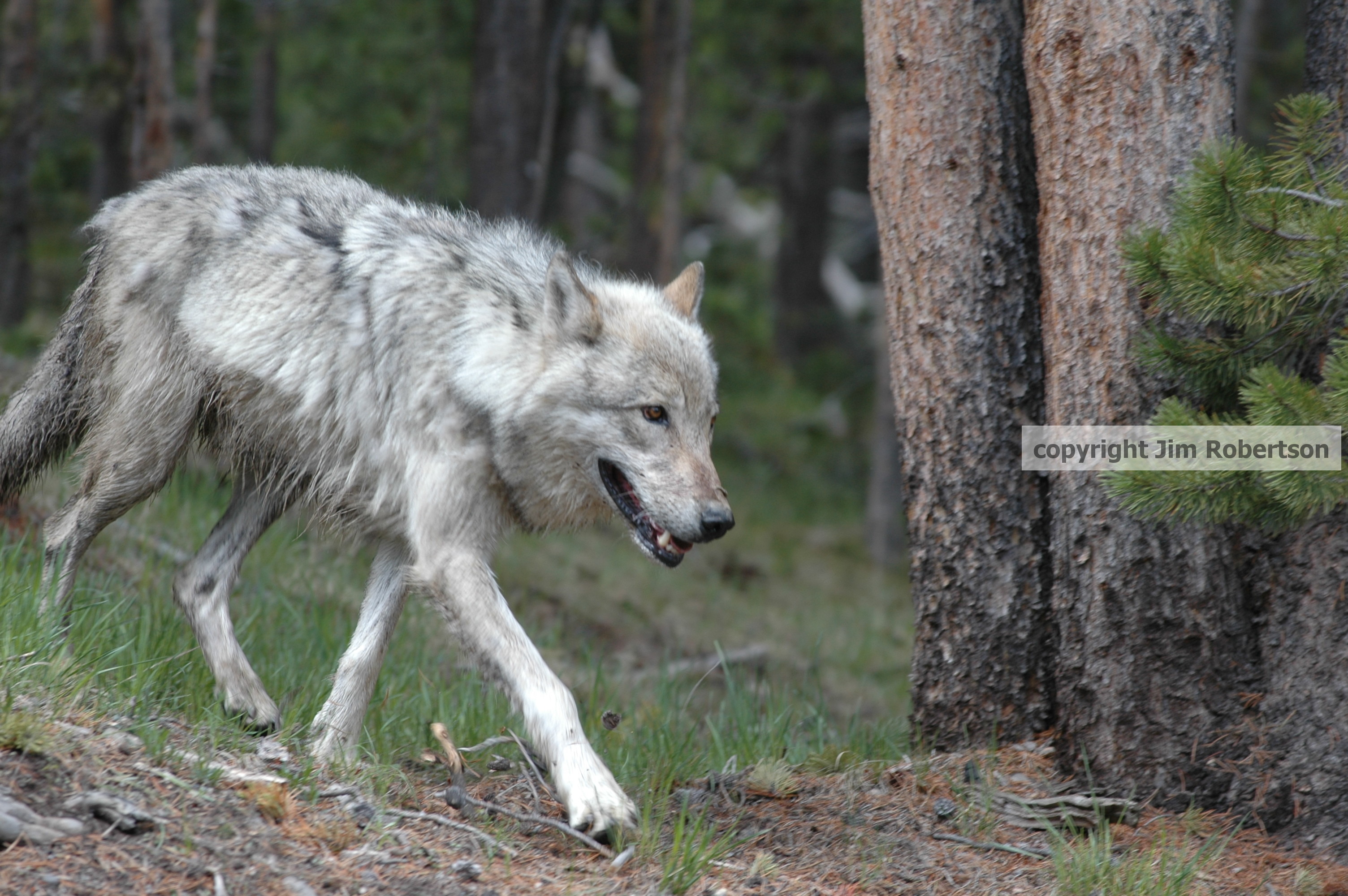
copyrighted Hayden wolf walking

by Stephen Capra

So much has been written about wolves that a person can be understandably tired of hearing any more. Yet, one is compelled to keep a voice alive in the wilderness that is everyday life. The numbers continue to pour in and wolves are losing, genetic diversity is losing, as is the environment. What exactly are we losing to remains the most important question?

For some the easy answer is the livestock industry. Let’s be clear, the livestock industry is one of the major culprits. Their continued ignorance and greed not only has destroyed wolves and their recovery, but is at the heart of so many problems that plague the West. Yet, the wolf issue is more complex and demands elucidation, if change is ever to occur.

It begins with literature. You see much of people’s view of wolves can be framed by Little Red Riding Hood. No joke. For so many that never leave the confines of civilization, that simple and misleading fairy tale helped to frame fear in their minds as it relates to wolves. Being subjected to such a story in such a young and impressionable time of life, and if like myself, you wanted that story read over and over again, can leave a powerful impression.

Culture and custom! This is perhaps one of the most damaging aspects of wolf recovery, the ignorance that comes from a perceived culture. In rural America, there is a hunting culture, a sense of being part of the land and an independence born of necessity. Somehow, this culture has had a long history of killing not only the Native Americans that stood in the way of their land grab, but of wildlife that was viewed as threatening to their livelihood. In this culture, grizzly bears left the plains, wolves were shot on sight, and bison became a symbol of our perfidy.

Game and Fish Departments- In our modern times it is this department that holds the key to wolf recovery and survival. Yet, it’s this very agency that continues to operate from Idaho to New Mexico with a 19th century mindset. It is this select group of commissioners and directors that play not to the population base of the state, but to the rural, hunting and livestock culture. The reason is simple. Hunting tags and funding from the sale of rifles and ammunition support and pay for these agencies to exist. If this does not change, then the will to enter the 21st century is not a priority for the agency and its corrupt commissions. Conservationists are going to have to be willing to pay, in the form of an annual fee for using the outdoors and a surcharge on the sales of outdoor gear, if we are to level the field with sportsmen and have a real voice in the commissions.

Many have suggested removing the commissions, but that is something that comes with being Governor in many states and politicians are not inclined to lose their power. With the ability to raise funds, we would also be in a position to dictate how it is spent. That could mean earmarking funds for retiring grazing leases, for endangered species recovery, for land acquisition and for demanding serious peer reviewed science in decision making and animal harvest quotas.

Outfitters.-If there is money to be made killing wildlife, outfitters want to make it. By not having peer reviewed science, this group can lobby the agency to demand more opportunity to kill and profit. In New Mexico that has led to the killing spree on black bears and the continued “varmint” label on species like coyotes, prairie dogs to name just a few.

US Fish and Wildlife- An agency void of a moral compass and fearful of republicans that consistently threaten their funding. This agency which is the front line for wildlife must grow the balls necessary to protect and educate the public about the value of wolves in the wild. Instead, they try to “compromise” as we watch the very ecosystems dependent on them becoming sterile. The agency needs an overhaul and leaders that put wildlife before their personal retirement pension.

More:http://www.bvconservation.org/opinion.html

Groups seek protection for North American wild horses under Endangered Species Act

 
We’re pleased to announce that after decades of torment, round-ups, and killing at the hands of the Bureau of Land Management, Friends of Animals and The Cloud Foundation have petitioned the U.S. Fish and Wildlife Service to list North American wild horses on all U.S. federal public lands endangered under the Endangered Species Act.

Read more about this groundbreaking initiative on our website and you can also read the full petition here.

Feds Planning Mass Killing of Columbia River Cormorants

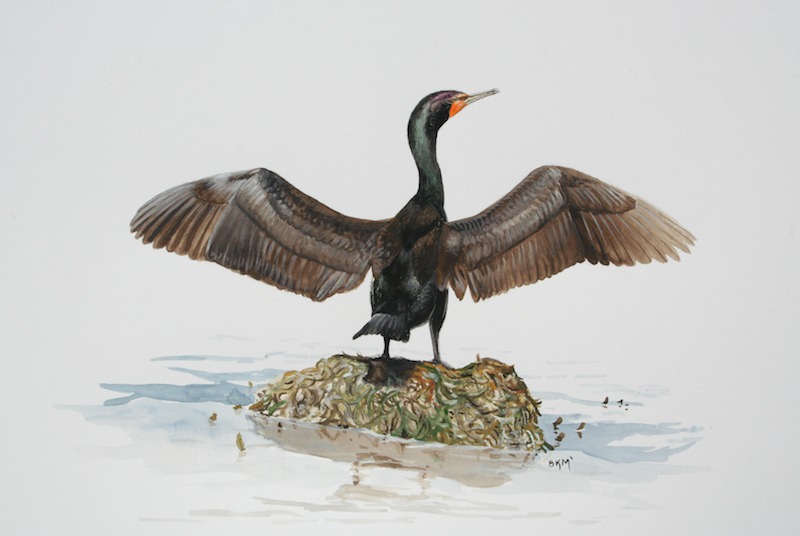
Paintings Courtesy Barry Kent MacKay

Paintings Courtesy Barry Kent MacKay

[Remember the birds next time you buy salmon or fish oil.]

Fri Jun 13, 2014.

Feds plan: Kill salmon-eating Sand Island seabirds

PORTLAND (AP) — Federal officials are proposing to kill half the large colony of cormorants in the Columbia River estuary because the large black seabirds eat too many young salmon and steelhead.

The proposal is the preferred action in a draft management plan released Thursday by the U.S. Army Corps of Engineers.

The colony of double-crested cormorants on East Sand Island near the mouth of the Columbia consumes about 11 million juvenile salmon per year as it migrates through the river to the Pacific Ocean. The fish are listed as endangered.

Officials say despite reductions in nesting habitat, the cormorant population has continued to thrive. It has increased from 100 breeding pairs in 1989 to about 15,000 breeding pairs today. That makes it the largest cormorant colony in western North America, representing over 40 percent of the region’s cormorant population.

The Corps has been studying the impact of avian predation on juvenile salmon in the Columbia since 1997. Officials also have looked into methods such as hazing with lights and using human presence to flush cormorants off potential nesting sites.

Now federal officials are proposing to reduce the colony to 5,600 breeding pairs by killing half of them, trying to scare off the others and taking their eggs.

The $1.5 million-a-year program, planned over four years, would arm federal trappers with silenced rifles and night-vision scopes to shoot the birds during their nesting season. They’d also cover eggs in oil to prevent them from hatching and inundate part of the island once the cormorant population reaches a target to limit nesting.

Once the target colony size is attained, the Corps also is proposing to modify the terrain of East Sand Island to inundate some nesting habitat.

The Corps passed over an alternative that would only use nonlethal methods, saying it would be less effective and push cormorants to nest elsewhere in the Columbia River estuary or in other coastal areas with endangered fish.

“That is a significant concern,” said Sondra Ruckwardt, the Army Corps’ project manager overseeing the plan. “We’re trying not to move the problem.”

Double-crested cormorants have orange faces and long necks, and are masters at diving to catch small fish. They are protected under the Migratory Bird Treaty Act and are native to the Columbia.

Federal officials also are trying to protect salmon by killing off sea lions — another protected species that has also proved too difficult to scare off with non-lethal methods.

The public has through Aug. 4 to comment on the cormorant plan.

Breaking News: Wolves Protected in California

Huge news out of California today: The state wildlife commission just protected wolves under the state Endangered Species Act.

Today’s decision is the culmination of years of work by the Center, sparked by the arrival of wolf OR-7 in California in December 2011.

The timing couldn’t be better. Just hours before the commission’s decision, it was confirmed that OR-7 had pups in southern Oregon — a sign that this once-lone wolf is now establishing himself as a resident of the area, including Northern California.

This exciting win wouldn’t have happened without your thousands of letters, phone calls, trips to rallies and generous donations to our Predator Defense Fund.

We knew it would be an uphill climb when we filed our petition to protect wolves in California in February 2012, but there was no other choice: If these expanding wolf populations were going to survive, they’d need protection from guns and traps.

Today’s decision opens a new chapter in the history of wolf recovery in America. It ensures that California, where there’s plentiful wolf habitat, will provide a safe haven for wolf families like the one OR-7 just started.

We know it won’t be long before the howl of wolves, silenced in California for nearly a century, will be heard there once more.

Thank you from all of us at the Center for Biological Diversity

copyrighted wolf in water

Norway store caught selling wolfskin rugs

copyrighted Hayden wolf in lodgepoles

An upmarket furniture shop in Norway has outraged animal rights activists after it was caught selling wolfskin rugs – despite the fact that the wolf is an endangered animal in the country.

The rugs were on sale for 27,800 Norwegian kroner ($4,682) each.

Ingunn Lund-Vang, from the animal rights organization Predator Alliance Norway (Bygdefolk for Rovdyr) on Sunday attacked the shop as “completely unethical and abusive” in a post on Facebook.
“There are no fur farms for wolves so either the wolf was shot somewhere, or it may be from abroad, where it is permitted to hunt wolves with a foot trap,” she told Norway’s VG newspaper.  “This is a barbaric trapping method that involves hours of pain for the animals. If so, it’s even worse.”
Ruben Amundsen, Mobelringen’s general manager, on Sunday moved rapidly to diffuse the scandal, apologizing immediately.  “We have now removed the skin, and it will never be for sale in the shop again,” he said.
He said that he had bought the wolf skins, which had been imported from Canada, at a design fair in Oslo. The skins’ importer, Erik Garthus, told VG that the trade was  “perfectly legal”, stressing that the animal had been shot, not trapped.
According to Norway’s wildlife research organization Rovdata,  the country’s wolf population is now down to less than 37 animals, leading some to fear that the animal could soon be extinct.