Proposal would shut down prairie chicken hunting in southwest Kansas

Jolley <!–
ksl.com Content Manager
–>

Related Links

SALT LAKE CITY — The Division of Wildlife Resources has proposed legalizing crow hunting in the state of Utah and adding fall turkey hunts and they want the public’s input.

The crow and turkey population has been steadily increasing throughout Utah, according to Division of Wildlife Resources spokesman, Mark Hadley. He said that the main focus for the DWR is to grow the wild turkey population throughout Utah. However, Hadley said that some areas throughout the state have such large numbers of turkeys that those regions have reached the carrying capacity that the habitat can sustain.

“In those areas, the turkeys are starting to come into conflict with people a little bit,” Hadley said. “We would like to start holding a fall turkey hunt in those areas where carrying capacity has been reached. The fall hunt is an effective way to help control turkey numbers.”

Hunters would be eligible for the spring and fall turkey hunts if they obtain permits for both.

“It’s an extra opportunity for hunters and at the same time, it gives us an extra way to try and control the turkey population in these areas,” he said.

Hadley said the DWR has also been trapping the turkeys living in overpopulated areas and transporting them to less populated regions around the state as a way to monitor the large numbers.

Legalizing the crow hunt was also proposed due to the large number of crows reported by biologists, Hadley said. The crows have contributed to the damage of fruit crops across the state, and Hadley said a hunt of the corvids would give hunters an equal opportunity that other hunters in surrounding states have.

“(A crow hunt will also) let hunters chip in and help out with some of the problems crows are causing here in the state,” Hadley said. “The Fish and Wildlife Services monitor the populations closely and they said there would be no problem with holding a crow hunt in Utah because there are plenty of crows and it would not hurt the population to do that.”

The Fish and Wildlife Services monitor the populations closely and they said there would be no problem with holding a crow hunt in Utah because there are plenty of crows and it would not hurt the population to do that.

–Mark Hadley, DWR

However, some members of the public are not supportive of the proposal. Dalyn Erickson-Marthaler, the executive director for the Wildlife Rehabilitation Center of Northern Utah, said she was appalled by the idea of crow hunting.

“They are an incredibly intelligent species,” Erickson-Marthaler said. “They have the ability to problem-solve and logic and have very close tight-knit family units. And you can’t eat them. So hunting them is kind of ridiculous in my mind. It’s very disturbing.”

Erickson-Marthaler said the Wildlife Rehabilitation Center rescues over 2,000 animal and bird species each year in Utah. She said 90 percent of the animals that are rescued were injured due to some kind human impact including bullet wounds, glue traps and being hit by vehicles. She said 80 percent of the animals rescued are bird species.

“Mother Nature has a way of regulating herself for the most part,” Erickson-Marthaler said. “You always see these waves and spikes in different animal populations. So this seems kind of normal to see a spike in crow population because we haven’t seen that in a long time. But by us interfering all the time, we create a rippling effect of other problems that arise.”

Hadley said members of the public are welcome to join the public meetings that are being held by the DWR regional advisory councils in each region of Utah. The meetings will begin on May 6 and the final decision about the proposal will be made in June.

“I really encourage people to come out to these public meetings if they would like to learn more and voice their opinions and let us know what you think about these ideas,” Hadley said.

People can also email the representative in their region if they are unable to attend the meetings.

Contributing: Dave Cawley

Read more at http://www.ksl.com/?nid=1288&sid=29693745#e0RWifiZULsoHWlJ.99

Jolley <!–
ksl.com Content Manager
–>

Related Links

SALT LAKE CITY — The Division of Wildlife Resources has proposed legalizing crow hunting in the state of Utah and adding fall turkey hunts and they want the public’s input.

The crow and turkey population has been steadily increasing throughout Utah, according to Division of Wildlife Resources spokesman, Mark Hadley. He said that the main focus for the DWR is to grow the wild turkey population throughout Utah. However, Hadley said that some areas throughout the state have such large numbers of turkeys that those regions have reached the carrying capacity that the habitat can sustain.

“In those areas, the turkeys are starting to come into conflict with people a little bit,” Hadley said. “We would like to start holding a fall turkey hunt in those areas where carrying capacity has been reached. The fall hunt is an effective way to help control turkey numbers.”

Hunters would be eligible for the spring and fall turkey hunts if they obtain permits for both.

“It’s an extra opportunity for hunters and at the same time, it gives us an extra way to try and control the turkey population in these areas,” he said.

Hadley said the DWR has also been trapping the turkeys living in overpopulated areas and transporting them to less populated regions around the state as a way to monitor the large numbers.

Legalizing the crow hunt was also proposed due to the large number of crows reported by biologists, Hadley said. The crows have contributed to the damage of fruit crops across the state, and Hadley said a hunt of the corvids would give hunters an equal opportunity that other hunters in surrounding states have.

“(A crow hunt will also) let hunters chip in and help out with some of the problems crows are causing here in the state,” Hadley said. “The Fish and Wildlife Services monitor the populations closely and they said there would be no problem with holding a crow hunt in Utah because there are plenty of crows and it would not hurt the population to do that.”

The Fish and Wildlife Services monitor the populations closely and they said there would be no problem with holding a crow hunt in Utah because there are plenty of crows and it would not hurt the population to do that.

–Mark Hadley, DWR

However, some members of the public are not supportive of the proposal. Dalyn Erickson-Marthaler, the executive director for the Wildlife Rehabilitation Center of Northern Utah, said she was appalled by the idea of crow hunting.

“They are an incredibly intelligent species,” Erickson-Marthaler said. “They have the ability to problem-solve and logic and have very close tight-knit family units. And you can’t eat them. So hunting them is kind of ridiculous in my mind. It’s very disturbing.”

Erickson-Marthaler said the Wildlife Rehabilitation Center rescues over 2,000 animal and bird species each year in Utah. She said 90 percent of the animals that are rescued were injured due to some kind human impact including bullet wounds, glue traps and being hit by vehicles. She said 80 percent of the animals rescued are bird species.

“Mother Nature has a way of regulating herself for the most part,” Erickson-Marthaler said. “You always see these waves and spikes in different animal populations. So this seems kind of normal to see a spike in crow population because we haven’t seen that in a long time. But by us interfering all the time, we create a rippling effect of other problems that arise.”

Hadley said members of the public are welcome to join the public meetings that are being held by the DWR regional advisory councils in each region of Utah. The meetings will begin on May 6 and the final decision about the proposal will be made in June.

“I really encourage people to come out to these public meetings if they would like to learn more and voice their opinions and let us know what you think about these ideas,” Hadley said.

People can also email the representative in their region if they are unable to attend the meetings.

Contributing: Dave Cawley

Read more at http://www.ksl.com/?nid=1288&sid=29693745#e0RWifiZULsoHWlJ.99

Jolley <!–
ksl.com Content Manager
–>

Related Links

SALT LAKE CITY — The Division of Wildlife Resources has proposed legalizing crow hunting in the state of Utah and adding fall turkey hunts and they want the public’s input.

The crow and turkey population has been steadily increasing throughout Utah, according to Division of Wildlife Resources spokesman, Mark Hadley. He said that the main focus for the DWR is to grow the wild turkey population throughout Utah. However, Hadley said that some areas throughout the state have such large numbers of turkeys that those regions have reached the carrying capacity that the habitat can sustain.

“In those areas, the turkeys are starting to come into conflict with people a little bit,” Hadley said. “We would like to start holding a fall turkey hunt in those areas where carrying capacity has been reached. The fall hunt is an effective way to help control turkey numbers.”

Hunters would be eligible for the spring and fall turkey hunts if they obtain permits for both.

“It’s an extra opportunity for hunters and at the same time, it gives us an extra way to try and control the turkey population in these areas,” he said.

Hadley said the DWR has also been trapping the turkeys living in overpopulated areas and transporting them to less populated regions around the state as a way to monitor the large numbers.

Legalizing the crow hunt was also proposed due to the large number of crows reported by biologists, Hadley said. The crows have contributed to the damage of fruit crops across the state, and Hadley said a hunt of the corvids would give hunters an equal opportunity that other hunters in surrounding states have.

“(A crow hunt will also) let hunters chip in and help out with some of the problems crows are causing here in the state,” Hadley said. “The Fish and Wildlife Services monitor the populations closely and they said there would be no problem with holding a crow hunt in Utah because there are plenty of crows and it would not hurt the population to do that.”

The Fish and Wildlife Services monitor the populations closely and they said there would be no problem with holding a crow hunt in Utah because there are plenty of crows and it would not hurt the population to do that.

–Mark Hadley, DWR

However, some members of the public are not supportive of the proposal. Dalyn Erickson-Marthaler, the executive director for the Wildlife Rehabilitation Center of Northern Utah, said she was appalled by the idea of crow hunting.

“They are an incredibly intelligent species,” Erickson-Marthaler said. “They have the ability to problem-solve and logic and have very close tight-knit family units. And you can’t eat them. So hunting them is kind of ridiculous in my mind. It’s very disturbing.”

Erickson-Marthaler said the Wildlife Rehabilitation Center rescues over 2,000 animal and bird species each year in Utah. She said 90 percent of the animals that are rescued were injured due to some kind human impact including bullet wounds, glue traps and being hit by vehicles. She said 80 percent of the animals rescued are bird species.

“Mother Nature has a way of regulating herself for the most part,” Erickson-Marthaler said. “You always see these waves and spikes in different animal populations. So this seems kind of normal to see a spike in crow population because we haven’t seen that in a long time. But by us interfering all the time, we create a rippling effect of other problems that arise.”

Hadley said members of the public are welcome to join the public meetings that are being held by the DWR regional advisory councils in each region of Utah. The meetings will begin on May 6 and the final decision about the proposal will be made in June.

“I really encourage people to come out to these public meetings if they would like to learn more and voice their opinions and let us know what you think about these ideas,” Hadley said.

People can also email the representative in their region if they are unable to attend the meetings.

Contributing: Dave Cawley

Read more at http://www.ksl.com/?nid=1288&sid=29693745#e0RWifiZULsoHWlJ.99

SALT LAKE CITY — The Division of Wildlife Resources has proposed legalizing crow hunting in the state of Utah and adding fall turkey hunts and they want the public’s input.

The crow and turkey population has been steadily increasing throughout Utah, according to Division of Wildlife Resources spokesman, Mark Hadley. He said that the main focus for the DWR is to grow the wild turkey population throughout Utah. However, Hadley said that some areas throughout the state have such large numbers of turkeys that those regions have reached the carrying capacity that the habitat can sustain.

“In those areas, the turkeys are starting to come into conflict with people a little bit,” Hadley said. “We would like to start holding a fall turkey hunt in those areas where carrying capacity has been reached. The fall hunt is an effective way to help control turkey numbers.”

Hunters would be eligible for the spring and fall turkey hunts if they obtain permits for both.

“It’s an extra opportunity for hunters and at the same time, it gives us an extra way to try and control the turkey population in these areas,” he said.

Hadley said the DWR has also been trapping the turkeys living in overpopulated areas and transporting them to less populated regions around the state as a way to monitor the large numbers.

Legalizing the crow hunt was also proposed due to the large number of crows reported by biologists, Hadley said. The crows have contributed to the damage of fruit crops across the state, and Hadley said a hunt of the corvids would give hunters an equal opportunity that other hunters in surrounding states have.

“(A crow hunt will also) let hunters chip in and help out with some of the problems crows are causing here in the state,” Hadley said. “The Fish and Wildlife Services monitor the populations closely and they said there would be no problem with holding a crow hunt in Utah because there are plenty of crows and it would not hurt the population to do that.”

The Fish and Wildlife Services monitor the populations closely and they said there would be no problem with holding a crow hunt in Utah because there are plenty of crows and it would not hurt the population to do that.

–Mark Hadley, DWR

However, some members of the public are not supportive of the proposal. Dalyn Erickson-Marthaler, the executive director for the Wildlife Rehabilitation Center of Northern Utah, said she was appalled by the idea of crow hunting.

“They are an incredibly intelligent species,” Erickson-Marthaler said. “They have the ability to problem-solve and logic and have very close tight-knit family units. And you can’t eat them. So hunting them is kind of ridiculous in my mind. It’s very disturbing.”

Erickson-Marthaler said the Wildlife Rehabilitation Center rescues over 2,000 animal and bird species each year in Utah. She said 90 percent of the animals that are rescued were injured due to some kind human impact including bullet wounds, glue traps and being hit by vehicles. She said 80 percent of the animals rescued are bird species.

“Mother Nature has a way of regulating herself for the most part,” Erickson-Marthaler said. “You always see these waves and spikes in different animal populations. So this seems kind of normal to see a spike in crow population because we haven’t seen that in a long time. But by us interfering all the time, we create a rippling effect of other problems that arise.”

Hadley said members of the public are welcome to join the public meetings that are being held by the DWR regional advisory councils in each region of Utah. The meetings will begin on May 6 and the final decision about the proposal will be made in June.

“I really encourage people to come out to these public meetings if they would like to learn more and voice their opinions and let us know what you think about these ideas,” Hadley said.

People can also email the representative in their region if they are unable to attend the meetings.

Contributing: Dave Cawley
Read more at http://www.ksl.com/?nid=1288&sid=29693745#e0RWifiZULsoHWlJ.99

April 29, 2014

— State wildlife officials have proposed shutting down prairie chicken hunting in southwest Kansas.

The action is being taken to comply with a recent federal listing of the lesser prairie chicken as a “threatened” species, Christopher Tymeson, chief legal counsel for the Kansas Department of Wildlife, Parks and Tourism, said Tuesday.

There is currently a prairie chicken hunting season and while the target is the more abundant greater prairie chicken, sometimes lesser prairie chickens, which are smaller than greater prairie chickens, end up being killed, Tymeson said.

Hunters kill fewer than 100 lesser prairie chickens each year, he said. But to try to ensure no lesser prairie chickens are killed in hunting, the agency is proposing closing down the prairie chicken hunting season in southwest Kansas, covering an area of all or part of 28 counties. That is where most lesser prairie chickens are found in Kansas. Currently, the season runs from the third Wednesday in November until Dec. 31.

The U.S. Fish and Wildlife Service has declared the lesser prairie chicken a threatened species because of an alarming drop off in the bird’s population.

Once abundant across Kansas, Texas, New Mexico, Oklahoma and Colorado, the lesser prairie chicken’s grassland habitat has been reduced by 84 percent, and in 2013, the population fell to a record low of fewer than 18,000 birds, which was nearly a 50 percent reduction from 2012, according to Fish and Wildlife.

But state officials, led by Gov. Sam Brownback, have filed a lawsuit against Fish and Wildlife to take the bird off the threatened list.

And legislators are working on a bill aimed at blocking federal officials from enforcing regulations associated with the threatened listing.

Tymeson said the proposed closing prairie chicken hunting in southwest Kansas will be decided by the KDWPT Commission in June.

Female wolf spayed in Washington

The wolf was impregnated after encountering a domesticated sheep dog


 By Rich Landers

The saga of wolf recovery in Washington has taken a strange twist.

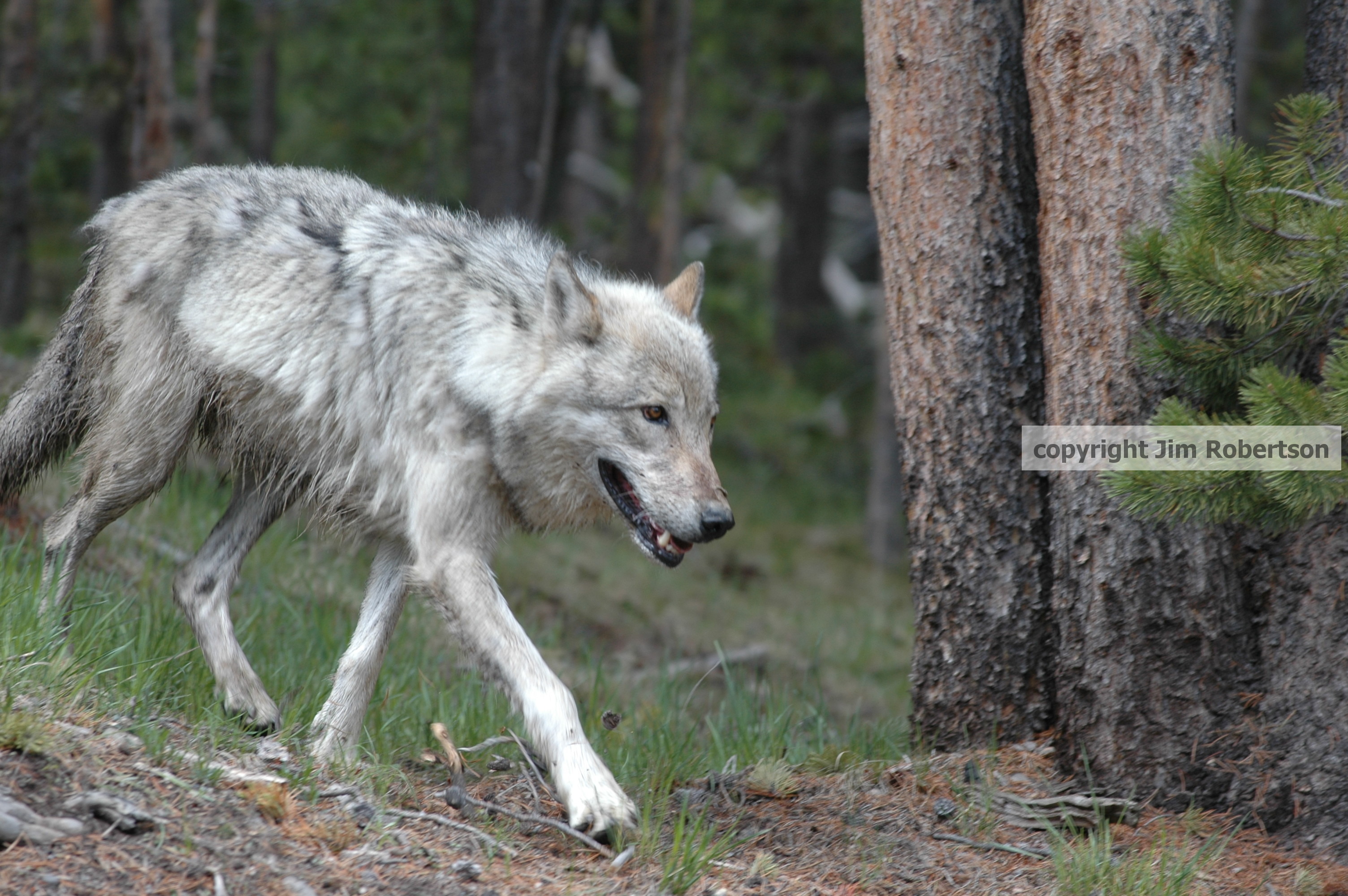
A large domestic guard dog that took a month-long romp on the wild side in Pend Oreille County forced Washington Fish and Wildlife officials to capture and spay an endangered female gray wolf Saturday.

The wolf was one of two females in the new Ruby Creek Pack that biologists have been tracking with GPS collars since July.

The unusual action came after biologists learned an Akbosh sheep dog climbed a 7-foot-tall fence from its yard near Ione and disappeared with the two female wolves for more than a month during February when wolves go into heat.

“If there had been a male wolf in the group, the dog would have been killed instantly,” Martorello said.

Biologists easily tracked the GPS signal and used a helicopter to shoot tranquilizers and capture the wolves. One female was pregnant; the other was not, he said. Both were released in the Pend Oreille River area.

“Spaying (the pregnant wolf) was a better alternative than trying to go out and kill all the pups after they’re born,” he said.

The dog had run off with the wolves for about a week in early January, but biologists were able to monitor the wolves and tell the dog’s owner when they were back near the home. The homeowner was able to call the dog in.

“We were already suspicious,” Martorello said. “Dogs and wolves usually don’t mix.”

Wildlife officials advised the dog owner to restrain the dog for the rest of the winter. While dogs can come into heat throughout the year, wolves generally come into estrus only in January and February, Martorello said.

“But when those females came back in a few days, one must have been in estrus because that big, intact dog climbed a seven-foot orchard fence and took off with them from mid-January through February,” he said.

copyrighted wolf in river

Saudi prince accused of slaying 2,000 near-extinct birds while on safari in Pakistan

by John Hall

A Saudi prince has been accused of killing 2,000 birds that are on the verge of extinction while on a safari holiday in Pakistan earlier this year.

Prince Fahd bin Sultan bin Abdul Aziz Al Saud – who is commonly known as Fahd bin Sultan – is said to have killed 1,977 near-extinct houbara bustards while on a 21-day trip to Chagai in Pakistan’s Balochistan province in January.

An additional 123 bustards – which are covered by laws to protect endangered species – were slaughtered by members of the prince’s travelling party, bringing the total killed to 2,100.

Fahd bin Sultan, 63 -the governor of Saudi Arabia’s Tabuk Province and the second eldest son of late Crown Prince Sultan – is accused of hunting illegally in protected areas, according to a report by Karachi-based Dawn News.

The website claims to have seen a document titled ‘Visit of Prince Fahd bin Sultan bin Abdul Aziz Al Saud regarding hunting of houbara bustard’ which they say was prepared by Jaffar Baloch – a divisional officer in the local forest and wildlife department.

The report allegedly says the prince and his party hunted for 21 days – from Jan 11, 2014 to Jan 31 – and had been granted special permits by the Pakistani federal government which allow important visitors to bypass laws preventing the hunting of houbaras.

These permits still require the recipient to kill no more than 100 birds over a 10-day period however, and only allow them to do so in certain areas.

It is not known if Fahd bin Sultan or any or his party will face punishments for violating the rules over how many birds they killed and for hunting with falcons outside the specified areas.

Houbaras are highly valued by Arab royals, who consider the meat to be an aphrodisiac.

For decades sheikhs have travelled to remote areas of Pakistan in time for the bird to make its winter migration from Central Asia. India banned the hunting of houbaras in early 1979.

At risk: Hunting in Pakistani sees the global houbara population shrink by between 20 and 30 per cent annually. Houbaras are highly valued by Arab royals, who consider their meat to be an aphrodisiac

The ongoing hunting in Pakistan has seen global houbara numbers fall to around 110,000 – with that figure decreasing by between 20 and 30 per cent every year.

After a particularly aggressive hunting season last year, Pakistan introduced an interim ban on killing the birds.

The move proved popular with local environmental campaigners who have grown tired of Arab sheikhs flouting hunting laws, but the Pakistani government appears to have subsequently eased the restrictions, issuing at least 33 houbara hunting permits already this year.

One reason they are likely to have done so is because Arab royals bring a huge economic boost to the poor regions in which they hunt.

They are said to travel in a convoy of private jets while on safari, with some transport planes given over purely to falcons and hunting equipment.

The sheikhs also make large donations while travelling in Pakistan’s poor rural areas – paying for new schools and mosques to be built, as well as funding the repair of rundown roads and airports.

Read more: http://www.dailymail.co.uk/news/article-2610347/Bustard-act-Saudi-prince-accused-slaying-2-000-near-extinct-birds-safari-Pakistan.html#ixzz2zkUagm3i

Quebec hunters prevented from harvesting Labrador caribou

http://www.thetelegram.com/News/Local/2014-04-22/article-3696336/Quebec-hunters-prevented-from-harvesting-Labrador-caribou/1

by Derek Montague
Published on April 22, 2014

Hunters were going after threatened Mealy Mountains herd: source

A group of Innu hunters from the Quebec North Shore were recently prevented from illegally hunting the threatened Mealy Mountains caribou herd in Labrador, according to a source.

A Labrador woodland caribou is shown. Some herds are considered threatened, such as the Mealy Mountains herd. — Photo courtesy of the provincial wildlife division

The 10 or so hunters were headed to the Birchy Lakes area, about 150 kilometres away from Happy Valley-Goose Bay, when wildlife officers stopped them.

The incident happened earlier this month.

Considered threatened

According to a 2009 publication from the Department of Environment and Conservation, the Mealy Mountains herd was estimated at just 2,500 animals and considered threatened under the provincial Endangered Species Act and the federal Species at Risk Act.

Quebec hunters crossing the Labrador border to hunt caribou illegally is a problem that stretches back several years.

Back in 2007, two Quebec men from Pakua Shipi Innu were fined $18,000 each for killing caribou from the Mealy Mountains herd.

Serious problem

Former Labrador wildlife officer Hollis Yetman recalls how serious the problem was in the early 2000s, when caribou poaching near the Quebec-Labrador border was common.

“(The hunting) was significant. In 2003, there was endangered species legislation enacted and that was the catalyst for wildlife officers to have some strength and some backbone … that they could officially charge aboriginals for hunting these threatened caribou herds,” said Yetman.

Protected by wildlife officers

“If it wasn’t for a small, core group of wildlife officers that have had continuity protecting these herds for the past 10-15 years, I would say that the population would be far less than what they are now.”

Yetman is worried a few undetected hunts will be all that’s needed to decimate the Mealy Mountains herd and other woodland caribou.

“Basically, the Department of Justice keeps its eyes over these woodland caribou herds. Right now they’re doing a good job with their limited surveillance. (But) it only takes one or two undetected hunts by anyone and you will cause serious population problems with these herds,” said Yetman.

“The numbers are that sensitive.”

Yetman also feels that conservation efforts are also held up too much by the notion of aboriginal hunting rights.

“I think that the aboriginal right overshadows the need to protect these caribou a lot of the time,” said Yetman.

“The only thing keeping some of these caribou alive is the dedication of two or three of the wildlife officers who keep an eye on them.”

TC Media requested an interview with Justice Minister Darin King, but there was no response by press time, as government offices were closed Monday.

TC media was also been unsuccessful at reaching Pakua Shipi Chief Dennis Mestenapeo.

California Delays Decision on Protecting Gray Wolf

copyrighted Hayden wolf walking

http://sacramento.cbslocal.com/2014/04/16/california-considers-protecting-rare-gray-wolf/

FRESNO (AP) – Advocates for the gray wolf in California will have to wait 90 days before learning if the animal will be listed as endangered, a state board decided Wednesday. Ranchers and state wildlife officials oppose granting the species legal protections.

The five members of the California Fish and Game Commission voted unanimously to delay a decision so they can gather more public comments on protecting the species, which is showing signs of a comeback after being killed off in the 1920s.

State wildlife officials say they don’t support the listing because wolves haven’t roamed in California for decades and there’s no scientific basis to consider them endangered.

Wolves have been absent from California, so researchers have no way of measuring threats or the viability of the animal in the state, said Eric Loft, chief of wildlife programs for the Department of Fish and Wildlife.

Yet, the animal is iconic of the western landscape and California could easily become the home to functioning wolf packs within a decade, said Chuck Bonham, director of the wildlife agency.

He said he supports wolf conservation efforts but not listing it as endangered.

“You may hear we actually hate wolves,” he said, maintaining that wasn’t true. “We’re committed to the long-term prospect of the wolf.”

Advocates’ renewed interest in protecting the species started in 2011, when a lone wolf from Oregon – called OR-7 – was tracked crossing into California. The decision to list it or not has been under review for the last year.

The commission gathered in Ventura and heard from more than 60 members of the public, most of them in support of wolves but others in opposition.

Kirk Wilbur of the California Cattlemen’s Association, which is fighting wolf protections, said the state’s endangered species act is designed to help species at risk of going extinct. The wolf is experiencing the reverse, he said.

“The species is not at risk of disappearing in the state of California,” he said. “It is, rather, reappearing.”

Mike Williams, a cattle rancher in Ventura County, said wolves cause high stress on cattle, increase illness and weight loss, and kill valuable livestock.

“Wolves are beautiful animals,” he said. “But they’re also vicious, brutal and efficient killing machines and a threat to people, livestock and pets.”

The action in California stands in sharp contrast to the approach taken by other Western states that have successfully reintroduced the wolf to the point they are allowing hunts to reduce their numbers.

Nationally, wolves were near extinction not long ago. They were reintroduced with federal protections in the 1980s and ’90s.

Wolves now occupy large parts of Montana, Idaho, Wyoming, Washington, Oregon and the Great Lakes.

Federal protections have ended in those two regions, and there is a pending proposal to lift protections across much of the remaining Lower 48 states.

Amaroq Weiss of the Center for Biological Diversity led the effort to protect California’s wolves.

She accused state wildlife officials of violating state law by attempting to keep wolves off the California endangered species list.

“The wolf should be on the list,” Weiss said. “And it should stay on the list.”


Copyright 2014 The Associated Press.

Captain Paul Watson on Welfare Ranching

Paul WATSON, Brigitte BARDOT
Welfare Ranching Show Down in Nevada

There is a silly little drama going on in Nevada and the Neo Cons, the militias and the welfare ranchers would have us believe there is another Waco about to happen.

For some strange reason I am on the Conservative Daily mailing list. I think they confused the word “conservation” with the word “conservative.”

Joe Otto who I assume speaks for the Conservative Daily sent me this message today (below) and I could not resist responding to it.

It’s all about a rancher named Cliven Bundy who has not paid his grazing fees since 1990 and is now upset that the government has come to collect over two decades in back fees.

You see, Cliven believes that he has every right to graze his cows free of charge on public land. It’s called welfare ranching and they believe their “right” to feed at the public trough trumps the right of endangered species to exist.

So I decided to inject my comments into Otto’s somewhat hysterical letter defending Cliven and his fellow welfare ranchers from the tyranny of Obama. You see when anything happens they don’t agree with, Obama is always at fault, and Obama is especially at fault when the thing the Neo Cons are upset with is something initiated by one of the two former Bush Presidents like this particular case.

Anyhow, this is Otto’s letter with my comments.

Dear Conservative, (PW: You mean dear conservationist Otto. You were addressing me I think.)

By now you have probably heard about the crisis surrounding the Bundy Ranch in Bunkerville, Nevada. In case you haven’t, here is the basic synopsis.

(PW: Yes the Fox Network has their undies in a knot over this, which means it is hardly a major story elsewhere.)

Cliven Bundy is a cattle rancher whose family has lived near Bunkerville, NV for the last 140 years. The Bundy family’s cattle have always grazed on what had always been state-owned, public land. In 1993, the Federal Government discovered that Bundy’s grazing area was also home to the endangered Desert Tortoise. As a result, the Bureau of Land Management (BLM) swooped in and took over control of the land. In order to dissuade farmers and ranchers from using the land and threatening the tortoise population, the BLM instituted a policy where ranchers would be forced to pay a grazing fee before using the land.

(PW: Let me see, the Bundy family has lived on the land for 140 years and the desert turtle has lived there for hundreds of thousands of years. The Bundy family took their land by force from Native Americans but the turtles were there even before the Native Americans. In 1993, the government did not discover that the grazing area was home to the turtle. They knew that. What they discovered was that the turtle was endangered and one probable cause was over-grazing by rancher Bundy’s cows.)

For Cliven Bundy, this was an unacceptable affront to his livelihood. His family has lived off this land for over a century, long before the creation of the BLM, and the idea that he would now have to pay a tax to protect a turtle was nothing short of absurd.

(PW: To the turtles it is an unacceptable affront to their right to survive as a species. Rancher Bundy believes the turtle’s right to survive is absurd yet he believes he has a God-given right to graze his cattle for profit at public expense. It is also not a tax but a grazing fee. In exchange for the fee, Bundy gets to graze his cattle. Bundy wants free food for his cows at public expense. In other words he wants welfare.)

So, Bundy refused to pay the tax. He allowed his cattle to graze on the land and didn’t pay the federal government a dime to do it. Why should he? The land is technically state-owned public land, yet the federal government want’s a cut because of an endangered turtle. Well, after twenty years of court battles, the Bureau of Land Management has finally swooped in and begun confiscating Bundy’s cattle at gunpoint to pay the $1.1 million that he owes in back “grazing fees” for using public land! This is absurd and should be a wake-up call to everyone! The government doesn’t care about common sense or decency… these militarized agencies and bureaus will use every law, regulation, and technicality to come after YOU with the full weight of the Federal government!

(PW: The law assessed a fee and rancher Bundy refused to pay the fee for over two decades and now he seems surprised that the government has called to collect back fees. Otto states the land is state owned and public but somehow rancher Bundy has a right to use it free of charge. Bundy owes back fees and the government is collecting those back fees by the confiscation of the cattle that Bundy has been raising at the expense of the public. It’s a classic case of welfare ranching where the rancher believes he is entitled to have his animals raised for slaughter at public expense. I hope the government does use every law, regulations and technicality to collect the back fees and to protect the right of the turtles to survive.)

Tell Congress to STOP the out-of-control militarization of agencies like the Bureau of Land Management and put an end to the Obama administration’s intimidation tactics!

(PW: I intend to tell Congress in the words “Good on you for defending the turtles and enforcing the grazing fees.”

How despicable is this… The federal government is seizing a rancher’s cattle because he didn’t pay a $1.1 Million “grazing fee” that was set up to protect a damn turtle! Anyone with half a brain can see that this is ludicrous… yet the government continues to wage its war on Cliven Bundy and proceeds to seize his cattle at gunpoint.

(PW: If anyone else does not pay their bills, they forfeit their property. Why should ranchers be exempt and above the law. Why should the public support Cliven’s damn cows? Why do his damn cows have more rights than the desert tortoise? The government is not waging war on Bundy, they are simply enforcing the law. Personally I disapproved of the fee myself. He should have been banned completely from grazing his cows on the land occupied by an endangered species.”)

I’ve said it before: It is absolutely ridiculous that we have so many militarized, non-law enforcement agencies in government. Agencies like the Department of Education, the National Oceanic and Atmospheric Administration, the IRS, and even the Bureau of Land Management have been arming themselves to the teeth for years.

(PW: I’ve never seen an armed IRS agent, That would be scary, hell they are scary enough unarmed. I have certainly never seen an armed member of the Department of Education but considering all the school shootings, that might not be a bad idea. A law has been broken and it is being enforced. Pretty damn straight forward to me.)

Now, the full weight of the government has come down on the Bundy ranch. There are snipers watching the family’s movements, armed agents rounding up cattle, and the BLM has effectively made the whole area a “constitution free zone,” or at least that’s what they want it to be. The land is public land on a public road. Yet, anyone who wants to protest the government’s tyrannical actions is limited to doing so within a preset “First Amendment Zone” set up by government officials.

(PW: Can someone tell me where in the Constitution it says that ranchers have the right to graze for free on public land? The land as Otto says is public land on a public road. It is not Clive Bundy’s land. It is however turtle land. Thank you United States government for defending our endangered turtles. As for snipers, the fact is with dozens of trigger happy militia nut bars in camo, armed to the teeth, the deployment of snipers seems like a reasonable response. I admit the First Amendment zone is unacceptable but by order of the Governor of Nevada it has been taken down.)

That is ridiculous, and the protesters have fanned out, taking their frustration directly to the federal agents. In the last two days, one protester has been tackled to the ground and another has been shot with a stun gun. Now, militias from around the country have been mobilized and are beginning to arrive in Nevada to defend the ranch from this clearly tyrannical action. One county official warned the “inbred” militiamen (his words, not mine) from neighboring Utah that if they come to Cliven Bundy’s aid, then they “better have funeral plans.”

(PW: Oh no not the Mormons!!! I hope this is not another Mountain Meadow Massacre. It is amazing to see so many ultra conservatives ready to rise up and die to defend welfare rights for ranchers. Oh the tyranny of collecting unpaid bills.)

How despicable is that? Rather than defend the local rancher against the government thugs, the local Clark County Commissioner is actually threatening people if they show up to help him!

(PW: Yes I would imagine that the Clark County Commissioner would be opposing mob rule. When a bunch of wild eyed men in camo arrive with heavy weaponry it is reasonable for the County Commissioner to condemn their invasion of his county.)

I pray to God that there isn’t bloodshed. I really hope that the Federal government realizes that they are waging this war over nothing but a damn turtle and pull back. I mean, think about it… people could actually die over a dispute over cattle grazing on a turtle sanctuary… What on earth is this world coming to?

(PW: It is a world where human greed is eradicating endangered species and diminishing biodiversity. Otto you said it yourself, it’s a turtle sanctuary. It seems to me that people would be making a decision to risk dying for some damn cow. I think the turtle is much more deserving, after all it is a sanctuary for turtles. This is not a dispute over a turtle anyhow, it is a dispute over the fact that a welfare rancher has refused to pay his grazing bill.)

The fact remains that this is just one of the latest attempts for the Federal government to use loopholes to seize property for the “common good.” There is a case in Colorado where a couple’s mountain cabin is being seized and demolished to create “open space.” The government is actually using eminent domain to seize a piece of property just to create more open space.

(PW: If you build a cabin on public land you don’t have rights to the land just because you built the cabin. People have seized too much open space for their own use and by doing so they deprive nature of open space for wildlife. Nature needs more open spaces, more turtles and fewer cows.)

Rather than using common sense and restraint, the Federal government looks for every opportunity to come down hard on average citizens! This has to stop!

(PW: If citizens are a threat to the survival of an endangered species they should be stopped. Welfare ranchers are not average citizens, they are people who have grown rich at the public expense.)

The government shouldn’t be allowed to levy $1.1 Million fines on hard working Americans because their family’s ranch’s historical grazing grounds are now occupied by an endangered turtle! Americans from across the country shouldn’t have to mobilize in order to fend off tyrannical government agents!

(PW: It is not a fine, it’s a grazing fee, a fee that rancher Bundy has refused to pay for over two decades. Bundy’s lands are not now being occupied by an endangered turtle. The turtle’s land is being occupied by Bundy’s cattle.)

What if the government came into your home or business and threatened you because of a technicality or nonsense regulation? Things like this happen every day across America because we have given the Executive branch and its numerous agencies too much power over our lives!

(PW: When the U.S. Court and the IRS came after us for defending whales they were acting on the request of the Japanese whalers, I did not see many conservatives defending our rights to defend the whales. No most of them were defending the “right” of Japanese whalers to use American courts to stop American whale defenders.)

The Obama administration wouldn’t even send in one soldier to protect our ambassador in Benghazi, but it has sent in over 200 agents to harass a rancher in Nevada! This is despicable! The time has come to rein in these out of control, militarized government agencies. Congress must put an end to the Obama administration’s intimidation tactics!

(PW) Wow, they actually managed to fit Libya into their rant. That’s a stretch. The law removing free grazing rights came under the George H. Bush administration, not Obama.)

Tell Congress to STOP the out-of-control militarization of agencies like the Bureau of Land Management and put an end to the Obama administration’s intimidation tactics!

I will tell them in the words of George W. Bush, “Go get ‘em boys.” We need to put an end to Welfare ranching.

Sincerely,
Joe Otto
Conservative Daily

Swan hunting among controversial issues before Wisconsin Conservation Congress


Wildlife Photography ©Jim Robertson. All Rights Reserved

Wildlife Photography ©Jim Robertson. All Rights Reserved

A proposal to allow the hunting of tundra swans, along with a rule to allow hunters to retrieve hound dogs on private property without landowner permission, are shaping up as two of the most controversial questions before state outdoors users Monday.

The annual meetings of the Wisconsin Conservation Congress (WCC) — held simultaneously in all 72 counties — will also ask attendees about creating a hunting season for the white deer and eliminating all trapping hours restrictions.

In total, 58 questions are on the WCC spring questionnaire and results will be used to advise the Department of Natural Resources and the Natural Resources Board on policy changes. State law mandates that WCC resolutions must be considered when new legislation is written.

Many conversation groups are already raising red flags about the tundra swan hunt. The issue there is that hunters may mistake the large birds for the once endangered trumpeter swans.

Earlier this month, the Madison Audubon Society Board voted unanimously against a swan hunt because of the “high probability that trumpeter swans will be mistaken for tundra swans and killed, after Wisconsin conservationists successfully worked for many years to re-introduce trumpeters.” They are now breeding in Wisconsin and were removed from the state endangered list in 2009.

The hunt would also disrupt the spring bird-watching season and the tourism dollars it provides, Audubon warns.

The hunting dog question is causing worries for those who say it’s a trampling of property rights in the name of a limited number of bear hunters and wolf hunters who rely on dogs to track prey. Dog owners are already compensated if their animals are killed during a hunt, a controversial issue in its own right.

“Allowing hound hunters unencumbered access to private lands just because they can’t control their dogs seems to me like it would raise the ire of the citizenry at large,” says Brook Waalen, a WCC delegate from Luck in Polk County.

Waalen is among a growing number of WCC delegates representing silent sports advocates and so-called “non-consumptive” outdoor enthusiasts.

Each county gets five delegates, who are elected at the meetings and serve two-year terms on a staggered basis.

Long dominated by the “hook and bullet” crowd, the WCC is now feeling pressure from a wider outdoors constituency that wants more of a say in DNR policy. A proposal to expand hunting and trapping in state parks, along with establishing a wolf hunting season, were flashpoint issues last year that brought many to the hearings for the first time.

Last year, more than 100 environmental advocates showed up at the Polk County meeting to help elect Waalen.

Dane County and Milwaukee County in the past have elected anti-hunting activists as delegates to the Conservation Congress. Last year, wolf defender Melissa Smith was elected as a Dane County delegate.

Jason Dorgan of Blue Mounds will be seeking election Monday night as a delegate at the meeting at Middleton High School’s Performing Arts Center at 7 p.m. Dorgan enjoys running on the trails in the state parks and was upset by the proposal to expand hunting in those public areas.

“This state has 6 million acres of land for hunters and trappers to use even before the recent expansion into the state park system,” he says. “There has always been limited hunting in state parks and that has always seemed reasonable to me. “

Dorgan says as he learned more about the WCC and its interests he became more disappointed in the direction it was leading the state.

“Whether it is some of the cruel practices they condone or the lack of true land stewardship, I would like to bring another perspective to the Congress,” he says.

The swan hunting issue is a particularly tricky one.

According to the WCC ballot question, tundra swan population numbers are rising, even with hunting in other states. Tens of thousands of them migrate through Wisconsin with population counts over 30,000 on the Mississippi River.

“Wisconsin could benefit from allowing a hunt unique to very few other states,” the WCC ballot says.

The WCC maintains there is little chance of mixing up the two birds because tundra swans tend to gather in big groups on large bodies of water whereas trumpeter swans gather in smaller groups and prefer ponds or marshes.

But the Sun Prairie-based Wisconsin Wildlife Public Trust says the push to expand hunting to more and more species runs counter to the ethic of famed conservationist Aldo Leopold.

“If Aldo were to look at the ballot questions today, our guess is that he would be greatly disappointed with the current trend of the WCC in wanting to ‘take’ from land & water resources versus ‘give’ or ‘restore’ ” the group says in a posting on its website.

Read more: http://host.madison.com/news/local/writers/mike_ivey/swan-hunting-among-controversial-issues-before-wisconsin-conservation-congress/article_f2cd95dc-c19e-11e3-bf13-001a4bcf887a.html#ixzz2yhBHD5HJ


No wolves to be added to dwindling Isle Royale wolf pack


The National Park Service has decided not to transplant any wolves to Isle Royale National Park to address the island’s declining wolf population, MPR News reports.The wolf pack living on the Lake Superior island has been dwindling over the past several years because of inbreeding, disease and a temporary decline in the moose population. There are just nine wolves compared to an average of 23 over the past couple of decades. Some researchers are concerned the wolves might die out if new animals aren’t added to the pack.

But Phyllis Green, the superintendent of Isle Royale National Park, said Wednesday the Park Service doesn’t think that step is necessary yet.

Instead, she says park officials will develop a management plan to assess the wolves’ survival longer term, as well as their interactions with the moose that live on Isle Royale, the Associated Press reports. She said it’ll take about three years to put the plan together.

Map showing the location of Isle Royale in Lake Superior.

“This is an island,” Green told MPR. “Island biogeography is a developing science, and our understanding of how islands react to change is still really being studied in a lot of ways.”

“As long as there’s a breeding population, we’re going to let these animals have a chance to live their lives without us intervening,” Green added, according to the AP.

A long-running research project has been studying the relationship between the wolves and the moose on Isle Royale for more than 50 years.  The scientists who lead that study, Rolf Peterson and John Vucetich of Michigan Technological University, are among the most vocal advocates for bringing more wolves to the island.

Vucetich declined comment about Green’s decision Wednesday but said he and Peterson would issue a statement next week, according to the Associated Press.

In a 2013 interview, Vucetich said it’s important to keep the island’s ecosystem healthy, with or without human involvement, the AP reports.

“As long as there are moose on Isle Royale there should be wolves on Isle Royale,” Vucetich said.

Majority of California’s House Democrats Want Wolves Protected

by

March 20, 2014

Unlikely to be able to register to vote any time soon | Photo: USFWS/Flickr/Creative Commons License

Political wonks have long talked about “blue dog” and “yellow dog” Democrats, but now California has a new Democratic dog political tendency: the Gray Wolf Democrat. A majority of California’s Congressional House Democrats have signed on to a strongly worded letter urging the U.S. Fish and Wildlife Service to abandon attempts to strip the gray wolf of protection under the Endangered Species Act (ESA).

The letter to Interior Secretary Sally Jewell, written by Oregon Democrat Peter De Fazio, slams USFWS for its ongoing proposal to remove the gray wolf from ESA protection, charging that the proposed delisting is “not based on the best available science.” DeFazio, the ranking Democrat on the House Committee on Natural Resources, writes that USFWS “should rescind the proposed rule immediately,” charging that the agency tried to stack the scientific deck against the wolves in its rulemaking.

And of the 73 Representatives that co-signed DeFazio’s letter to Jewell, 19 were California Democrats. That’s just over half the Democratic delegation and more than a third of the state’s total representation in the House, and yet another sign that there’s significant pro-wolf sentiment in California.

The California Representatives signing the DeFazio letter were Julia Brownley, Lois Capps, Tony Cárdenas, Judy Chu, Anna Eshoo, Sam Farr, Mike Honda, Jared Huffman, Barbara Lee, Zoe Lofgren, Alan Lowenthal, Jerry McNerney, George Miller, Grace Napolitano, Raul Ruiz, Adam Schiff, Jackie Speier, Mark Takano, and Henry Waxman.

With the exception of Huffman, Ruiz and McNerney, the California signers hail from relatively liberal coastal urban districts. Ruiz represents the Coachella Valley and Riverside County desert; McNerney took over arch-conservative Richard Pombo’s district in San Joaquin County in 2007. Huffman represents the north coast’s expansive Second District, which runs along the coast from the Golden Gate to the Oregon state line. (Alone among the letter’s California signers, Huffman actually stands a chance of seeing wolves move into his district in the next decade or two.)

None of California’s Republican Representatives signed on to the DeFazio letter.

In the letter, DeFazio pretty much rakes USFWS over the coals for its conduct during the wolf delisting proposal. “The ESA does not charge [USFWS] with restoring only as much of the endangered species as it deems politically convenient,” writes DeFazio, charging that he and his co-signers “have serious concerns regarding the initial attempts to exclude top wolf experts from this process, and the resurrection of a long-dormant government journal to ‘publish’ the study… used to justify the rule.”

The letter charges that delisting would interfere with the gray wolf’s recovery, saying that “recovery has yet to begin in California, Colorado, Utah, and the Northeast, where scientists have identified a significant amount of suitable habitat that would support wolf populations.”

Neither Interior nor USFWS have responded publicly to the letter, but the presence of so many California Representatives on the roster of co-signers should provide a bit of moral support for the state’s wolf advocates, not to mention political cover as the state’s Fish and Game Commission determines whether to protect gray wolves under the California Endangered Species Act.

Sierra Club petition: Don’t let Big Oil threaten the last Florida panthers!

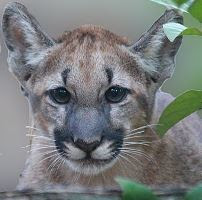
The biologists found him in the Florida Panther Wildlife Refugecougar cub — alone and shivering, weighing barely a pound.

The little panther cub never should have survived, but his will to live was strong. He made a miraculous comeback at Tampa’s zoo and is now back to his feisty self! [1, 2]

But no matter how resilient the Florida panthers are, they won’t survive without our help. Down to a population of barely 100, these majestic felines cannot take another blow from Big Oil.

A Texas oilman wants to drill next door to the very refuge where this cub was found — tell the EPA that endangered species matter more than fossil fuels! Stop this dangerous oil project now!

When the Dan A. Hughes Company asked if they could put an oil well right in the middle of critical Florida panther habitat — and only 1000 feet from the nearest house — tea party Governor Rick Scott’s administration was all too happy to oblige. [3, 4] And not only did they issue the permits, they didn’t even require an environmental study!

The good news is that amazing local activists, including Sierra Club members like Marcia Cravens, have convinced the EPA to step in and hold a hearing, scheduled for this Tuesday. We need to stand up for the panthers and get Marcia’s back — will you send your letter to the EPA today, before this week’s hearing?

Let’s send 60,000 letters to the EPA right away! Tell the Obama administration: Florida needs its panthers and clean water more than Big Oil needs more profits!

Oil spills are in the news more and more often. Just last month, a barge spilled 31,000 gallons of crude in New Orleans, closing the Mississippi River for hours. We need fewer fossil fuels, not more — but if oil developers like Hughes get their way, the panthers and local residents could be living in the next oil disaster zone.

The list of protected Florida lands and water these new oil leases threaten is staggering: the Florida Panther Wildlife Refuge, the Big Cypress National Preserve, the Audubon Corkscrew Swamp Sanctuary — it goes on and on. The panthers and the local communities deserve better.

From candlelight vigils to a protest outside the governor’s house, local residents are going all in [6, 7, 8] — and Sierra Club Florida has been with them every step of the way, making great progress by convincing the EPA to hold this week’s hearing. [9] We can ensure that the hearing counts by making sure the EPA hears from 60,000 of us first, showing them how high the stakes really are.

This could be the panther’s last stand. Raise your voice and send a quick comment to the EPA before the hearing: No oil wells in critical panther habitat!

In it together,

Nathan Empsall
SierraRise Senior Campaigner

Sign Petition Here: https://secure.sierraclub.org/site/Advocacy;jsessionid=A0C5633B6DBA8F91F0CBD612EB377ADC.app205a?=display&page=UserAction&id=13070&s_src=414CSRBOA4_NSRSR&s_subsrc=W&utm_source=sierrarise&utm_medium=email&utm_campaign=BO