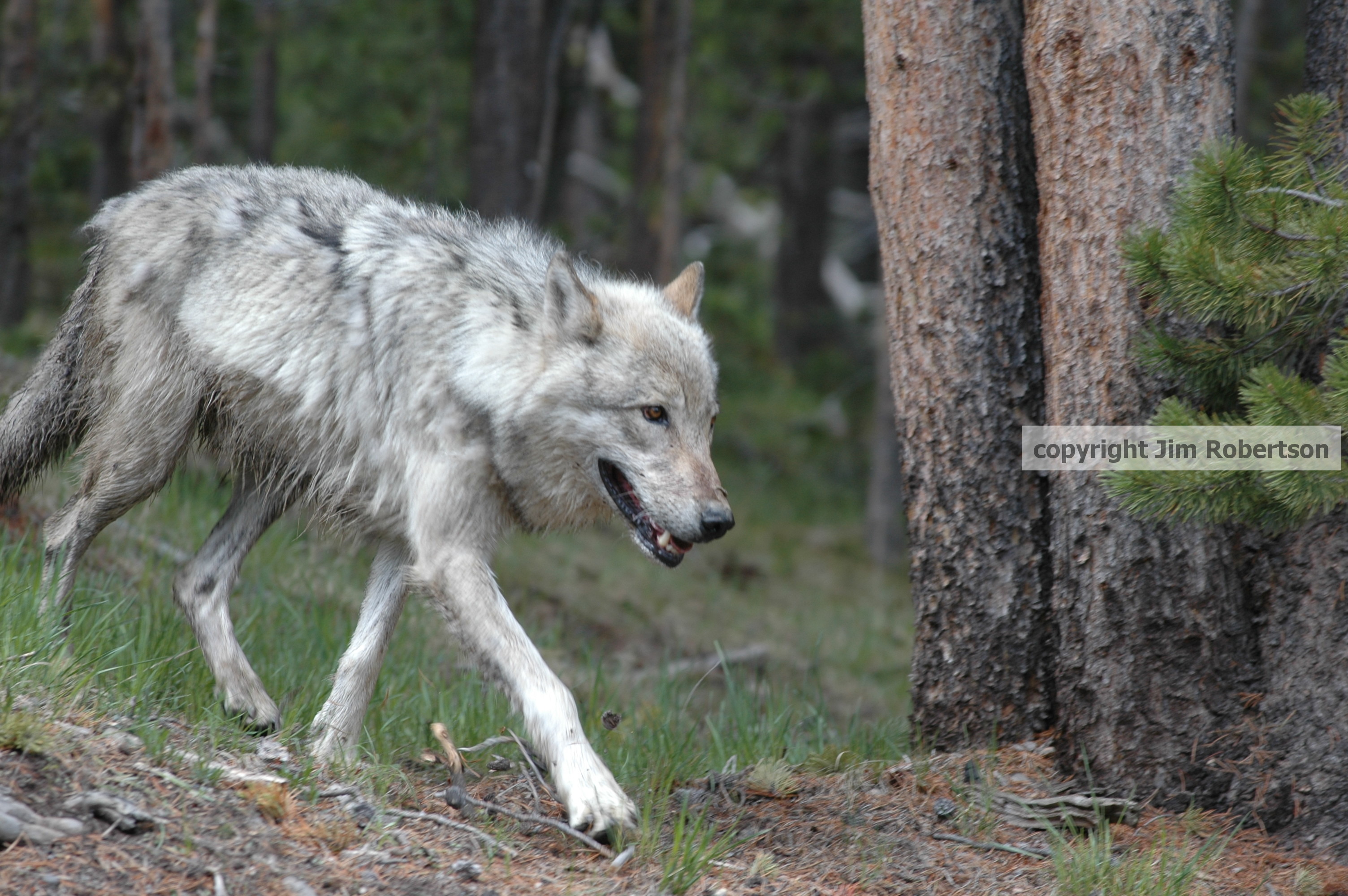
MEXICAN GRAY WOLF ALERT

Arizona senators approve bill allowing livestock owners to kill Mexican wolves
PHOENIX — The Arizona Senate has approved a bill that allows livestock owners to shoot wolves protected by federal regulations if the… wolf is attacking other animals.
Senate Bill 1211 passed by an 18-12 vote on Monday..This would be devastating for the critically endangered Mexican gray wolf population which totals just 83 in the wild
Support Lobos of the Southwest for more information on how you can help save the Mexican Gray Wolf. The bill now goes before the House of Representatives.
http://www.mexicanwolves.org/index.php/news/1185/51/Urgent-Act-Now-to-ProtectLos Lobos
If you live in AZ follow this link to contact your state legislator http://www.azleg.gov/alisStaticPages/HowToContactMember.asp
528624c939a88_preview-620

Idaho House panel backs $2 million plan to kill wolves that prey on elk, livestock

http://www.therepublic.com/view/story/b0d0c545a3e9408e8e7b7352300d4e08/ID-XGR–Wolf-Panel

THE ASSOCIATED PRESS
February 17, 2014 – 6:08 pm EST

BOISE, Idaho — Idaho’s House will get to consider a measure seeking to shift $2 million in taxpayer money toward a panel that will oversee the killing of wolves that prey on livestock and elk herds. [Wolves eat elk, get over it.]

Republicans on the House Resources Committee voted Monday 14-4 for the disputed bill.

It’s being pushed by Gov. C.L. “Butch” Otter [the man is an insult to the entire weasel family], over objections labeling this a “funding mechanism for a war on wolves.”

With this cash infusion, Otter wants to target wolf packs blamed for killing too many cattle, sheep and elk. [When did elk become a domesticated species?]

Backers including the cattle and sheep industry pledged not to reduce Idaho’s wolf population, now roughly 680 animals, to levels triggering a renewed federal Endangered Species Act listing.

But foes branded it a “thinly veiled proposal aimed at the second extirpation of wolves in Idaho.”

copyrighted Hayden wolf walking

Animal Welfare Institute plans lawsuit over red wolf deaths

By Hayley Benton on 02/08/2014

From Tara C. Zuardo
Wildlife Attorney at the Animal Welfare Institute

To Whom It May Concern:

On October 29 2012 and you did stories on the red wolves being found shot dead in North Carolina (by Jake Frankel). There is a hearing on the next step of this campaign on Tuesday, February 11, 2014 in case you are interested for Mountain Express: We are suing the North Carolina state wildlife agency for authorizing day and night hunting in the red wolf’s recovery area of an identical looking animal – coyotes – and hence violating the Endangered Species Act, which the red wolf is listed under. Again, the hearing on our injunction is this coming Tuesday, February 11, 2014. I have included below a list of facts about this red wolf population, and I am happy to send you anything else you need – a press release, mortality statistics, court documents, etc.:

-The red wolf (Canis rufus) once ranged throughout the eastern and southcentral UnitedRed-wolf-and-pups-240x300 States. Intensive predator control programs and the degradation and alteration of the species’ habitat had greatly reduced its numbers by the early 20th Century, however. Designated as an endangered species in 1967, the red wolf was declared extinct in the wild in 1980. In 1987, an experimental population of red wolves was reintroduced into eastern North Carolina. Four pairs were released into the Alligator River National Wildlife Refuge. The red wolf recovery area is approximately 1.7 million acres along North Carolina’s Albemarle Peninsula. This is the home to the only population in the wild.
-Between June 2013, when the Red Wolf Education Center opened, to December 2013, there were approximately 2,000 visitors from around the world who came to learn about red wolves. The Red Wolf Coalition gave 40 scheduled programs and about 12 special programs for various organizations. There is much local support of and interest in the wolf population.
-Total current estimated population is only 90-110 wolves, making the red wolf one of the most endangered species in the world. –
-USFWS has determined that gunshot mortality is the single biggest threat to the recovery of the wild red wolf population. Since 2008, up to ten percent of the wild population has been shot each year (confirmed death for 20 wolves, suspected cause of death for additional 18 wolves). The number of wolves killed by gunshot increased between 2012 and 2013.
-Because of the similarity of appearance between red wolves and coyotes, it is nearly impossible for individual hunters to avoid shooting red wolves, during the day or night. Larger coyotes can weigh 35 to 40 pounds, and while red wolves are typically in the 60-pound range, smaller females can weigh 45 to 50 pounds, infringing on the typical size of a large coyote. Judging 60 pounds versus 40 pounds at a distance might be incredibly difficult. U.S. Fish and -Wildlife Service (USFWS) red wolf recovery team members believe the wolves tend to be killed because they are considered to be large coyotes and thus make for larger hunting trophies.
-To combat interbreeding and lower coyote populations in the area, the USFWS captures and sterilizes coyotes. Sterilized coyotes are then outfitted with radio collars, released back into the wild and utilized by the USFWS to expand the range of red wolves. Hunting coyotes in the red wolf recovery area – and thus the shooting of sterilized “placeholder” coyotes — allows unsterilized coyotes to move into red wolf territory, increasing opportunities for inbreeding between red wolves and coyotes, decreasing the genetic integrity of the wild population, and injuring red wolves by disrupting population dynamics.
-Daytime coyote hunting has been authorized in the recovery area by the North Carolina Wildlife Resources Commission (NCWRC) since 1993, and they proposed adding night time hunting with spotlights in February of 2012. A coalition of conservation organizations (Animal Welfare Institute, Defenders of Wildlife, Red Wolf Coalition and Southern Environmental Law Center) sued and obtained a temporary injunction to block the temporary rulemaking (authorizing night time hunting with spotlights in the recovery area) in November 2012. However, the North Carolina General Assembly then allowed the permanent rulemaking (again, authorizing night time hunting with spotlights) to go into effect in July 2013. There is no language in the state regulations indicating the red wolves should be avoided when killing coyotes, and no information distributed to hunters to let them know that red wolves live in the recovery area and should be avoided when hunting or simply shooting coyotes.
-Just between Oct 28 and Nov 19, 2013, USFWS recovered the bodies of five red wolves with gunshot wounds, and a collar for a sixth. A month later, they found a bullet-ridden body of a seventh red wolf. Nearly 10 percent of the population died during this time span.
-Anyone found responsible for illegally “taking” or killing red wolves is subject to up to a year in prison and $100,000 fine, but the threat of this punishment and the $25,000+ reward offer still has not led to any leads for fall 2013 deaths.
-According to USFWS, red wolves rely heavily on the set social structure of a pack, comprised of five to eight wolves, to grow and maintain the population. One component of that pack involves breeding pairs, or “breeders” — two wolves that bond for life and mate once a year in February. All seven wolves killed during the fall 2013 span were adults, and by extension, potential breeders. These breeder deaths can damn populations in the future because they are what actually contribute to the growth of the population. In addition, the total number of red wolf pups born during whelping season has decreased each of the last three years, from 43 pups in 2010, to 34 pups in 2013.
-The 60 day notice of intent to sue for the North Carolina Wildlife Resources Commission for violations of the Endangered Species Act; causing the illegal take of endangered red wolves by authorizing day and night hunting was filed on July 30, 2013. The federal complaint was filed on October 17, 2013. The motion for a preliminary injunction was filed on December 16, 2013. The hearing on the injunction is February 11, 2014.


Yellowstone grizzlies face losing protected status

Conservationists protest after panel recommends ending bears’ endangered-species listing.

by Lauren Morello  21 January 2014

http://www.nature.com/news/yellowstone-grizzlies-face-losing-protected-status-1.14561

For the US government, the grizzly bears of Yellowstone National Park in Wyoming embody a stunning success story: a population resurgent after 40 years of protection under the Endangered Species Act. More than 700 bears now roam the region, up from 136 in 1975, when the grizzly (Ursos arctos horribilis) was listed as threatened after decades of deadly clashes with ranchers, hunters and park visitors. But the US Fish and Wildlife Service is now expected to lift the legal safeguards, after a government advisory panel of wildlife officials endorsed delisting the bear last month.

Conservation groups have pushed back, saying that the government has under­estimated the threat that climate change poses to the bears’ food supply, especially stands of whitebark pine. As the Yellowstone region has warmed, mountain pine beetles and blister rust fungus — once thwarted by the cold, dry climate — have devastated the trees, depriving grizzlies of energy-rich pine nuts. Moreover, say conservationists, invasive fish have crowded out native cutthroat trout in Yellowstone Lake at the heart of the park, reducing another important food source for the bears.

“We have an unprecedented situation with deteriorating foods, and an ecosystem that is unravelling,” says Louisa Willcox, the Northern Rockies representative at the Center for Biological Diversity in Livingston, Montana. The centre was one of several groups that sued the US government in 2007, following an earlier attempt to delist the bear. After two years, a district-court judge restored protection, citing concerns about the declining whitebark pine and its effect on the bears’ diet.

A report delivered in November by the US Geological Survey’s Interagency Grizzly Bear Study Team describes a resilient and healthy bear population that has adapted to the loss of pine nuts by eating more elk and bison, keeping fat stores at levels that allow the bears to survive and reproduce. For Christopher Servheen, a biologist who oversees grizzly-bear recovery efforts at the Fish and Wildlife Service in Missoula, Montana, that is not surprising. “Bears are flexible,” he says. “It’s easier to say what they don’t eat than what they do eat.”

But other researchers suspect that the change carries a steep price. “Eating meat is hazardous on all fronts,” says David Mattson, an ecologist at Yale University in New Haven, Connecticut. A reliance on meat heightens the risk that adult bears will come into contact with humans, including livestock owners and hunters seeking elk, he says. For young bears, it may increase the frequency of potentially deadly interactions with aggressive adult male bears and wolves.

Critics also argue that the government is basing its decisions on flawed population estimates. A study published last July suggests that the government’s figure of 741 bears is inflated (D. F. Doak and K. Cutler Conserv. Lett. http://doi.org/q3d; 2013). The number of survey flights used to count bears has tripled since the mid-1990s, but, the study argues, the model used to extrapolate population figures from the flights’ tallies does not account for increased observation time. Further distortion may arise because the model assumes that female bears will reproduce consistently throughout their 30-year lives, with no decrease in fertilityas they age.

Mattson says that population estimates have in the past jumped by more than 100 bears when the statistical method has shifted. “There is no clean and simple way to estimate the size and trend of the Yellowstone population,” he says.

But those criticisms are rejected by Frank van Manen, a wildlife biologist with the US Geological Survey in Bozeman, Montana, who led the diet study. Observation time has increased, he says, but so has the grizzly bears’ range (see ‘Home on the range’), which cancels out any observer bias from increased search hours. And although the govern­ment’s official estimate of the population did jump from 629 to 741 bears this year, van Manen says that the new number is better. That is in part because the revision takes into account a 2011 demographic study of bear survival rates based on radio-collar tracking data — the first such study since 2002 — that gives biologists more confidence in their population surveys.

Servheen says that if the government were to decide to pursue de­listing, as many expect, the decision would not be announced until late spring at the earliest. At that point, the Fish and Wildlife Service would open a 60-day public-comment period to seek reaction.

But even that is unlikely to be the last word on the grizzlies: conservation groups are already gearing up to sue. Perhaps the only point on which the US government and its opponents agree is that there will be more legal wrangling over the Yellowstone bears’ future. “It’s sad that it’s come to this,” says Servheen. “What it should be is a celebration.”
Nature 505, 465–466 (23 January 2014) doi:10.1038/505465a

photo copyright Jim Robertson

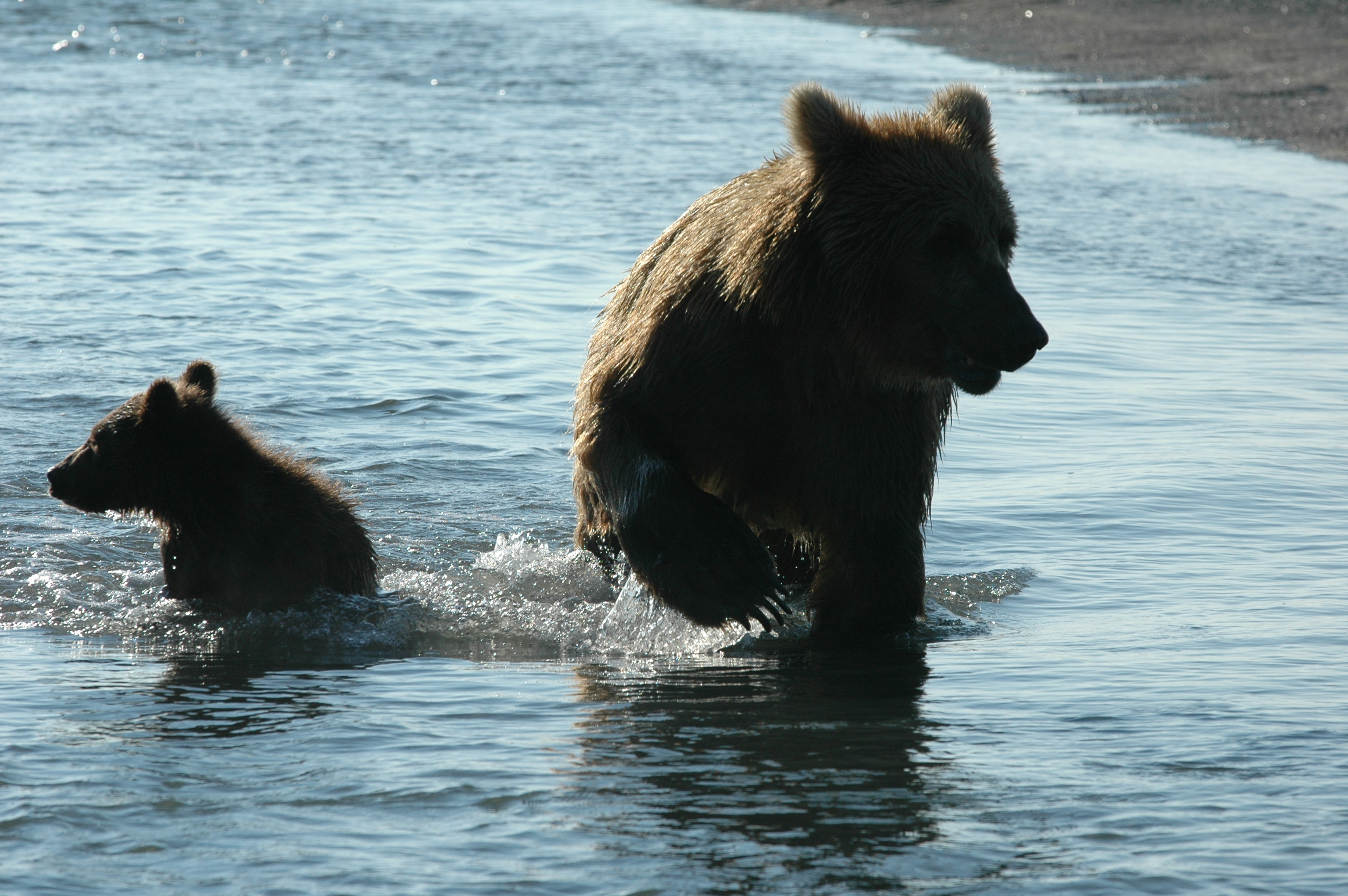
photo copyright Jim Robertson

Dallas Safari Club Lauds Obama Admin Decision on Antelope

http://www.gilmermirror.com/view/full_story/24425321/article-Three-Amigos–Becomes-Law–DSC-Lauds-Move-for-Rare-Species?instance=home_news_bullets

Three Amigos’ Becomes Law; DSC Lauds Move for Rare Species

WASHINGTON (Jan. 21, 2014)—President Obama has signed into law the 2014 Omnibus Bill, which includes a Dallas Safari Club (DSC)-backed provision to ensure the future of three antelope species nearly extinct in their native countries but flourishing on ranches in Texas.

The “Three Amigos” provision, for which DSC has lobbied over the past several years, exempts U.S. populations of scimitar horned oryx, Dama gazelle and addax from Endangered Species Act protections. The exemptions clear the way for ranchers to maintain herds of these exotic game animals and to offer hunts without federal intervention. Hunting revenue incentivizes ranchers to ensure that populations will continue to thrive.

Author of the provision, Rep. John Carter (R-TX-31), said, “This legislation gets big government out of the way so that ranchers can begin working to bring these rare antelope populations back to former levels. This has been a long time in coming, but we got it done.”

Rep. Pete Sessions (R-TX-32) and Rep. Ken Calvert (R-CA-42) also were key supporters.

“I’m pleased that the House and Senate were able to reach an agreement that allows American sportsmen to continue conserving the ‘Three Amigos,’” said Sessions. “Despite the onerous and unnecessary federal regulations that have recently threatened the ongoing work to preserve the existence of these endangered antelope, this Omnibus Bill takes important steps to protect the ‘Three Amigos’ and preserve a rich sporting heritage.”

The antelope were exempt from the Endangered Species Act from 2005 until 2012. During that time, populations experienced dramatic growth in the U.S. However, the U.S. Fish and Wildlife Service was forced to remove the exemptions due to legal action that prompted a cumbersome and lengthy permitting process, all of which led to a dramatic population decreases. For example, scimitar horned oryx numbers in Texas are now at nearly half of 2010 levels.

“We’re very grateful to Congressman Carter for offering ‘Three Amigos’ legislation, and to Congressman Pete Sessions and Senator John Cornyn for insisting that it be part of the Omnibus Bill. This conservation measure wouldn’t have happened without their dedicated leadership. Senator Cornyn also played a big role behind the scenes in securing Senate support for this specific legislative fix,” said Ben Carter, DSC executive director. “Thanks to our DSC team and the Exotic Wildlife Association (EWA) reps in Washington for helping to make this happen.”

Organizations partnering with DSC on this legislation include the EWA, Congressional Sportsmen’s Foundation, National Rifle Association, Safari Club International and North American Deer Farmer’s Association. DSC’s Washington representative Glenn LeMunyon and EWA’s Liz Williams and John Blount also played vital roles in the process.

About Dallas Safari Club (DSC)

Desert bighorns on an unbroken landscape, stalking Cape buffalo in heavy brush, students discovering conservation. DSC works to guarantee a future for all these and much more. An independent organization since 1982, DSC has become an international leader in conserving wildlife and wilderness lands, educating youth and the general public, and promoting and protecting the rights and interests of hunters worldwide.

Read more: The Gilmer Mirror – Three Amigos Becomes Law DSC Lauds Move for Rare Species

What Goes Up…

To all those of breeding age who are considering starting a family or adding yet another human child to this already dangerously over-crowded world, I politely urge you, with all due respect, to please think again. If not for the fragile planet’s sake or for the sake of every other struggling life form headed for mass extinction, then for the child’s sake, your sake and for sanity’s sake. Go ahead and adopt, whether human or non-human, but please don’t add to every environmental woe known to—and caused by—man by falling prey to the ill-advised notion that propagating is our duty or prerogative.

The world as we know it is headed for collapse. Do you really want your precious offspring to witness the unraveling of all of Earth’s systems or suffer the reckoning that’s soon to befall those unfortunate enough to be here when humankind’s self-serving environmental crimes come back on them? Can’t you see that the sheer weight of the human race is crushing everything and everyone else?

As a good friend, a young woman wise beyond her years, put it, those who consider reproducing to be a positive prospect for the twenty-first century “must be closing their eyes, plugging up their ears, and singing ‘Lalalala!’ very loudly.”

What goes up must come down, people; and for the past couple of hundred years or so, the human population has been accelerating skyward—breaking all sound barriers in a headlong quest to defy gravity, burst out of the Earth’s atmosphere and sail on to oblivion—taking all of creation with it.

graph

“Endangered” Hunter Auctioned off to Save Species

Believing the spin that “hunters are an endangered species,” trophy-hunter hunting group, the Sahara Club, a conservation group dedicated to preserving the hunter herd for future generations of trophy-hunter hunters to harvest, auctioned off asuccessful anti-hunt chance to hunt an aging, expendable hunter to raise funds for their cause. Taxidermy services will also be awarded to the winning bidder. Proceeds will be used to enhance hunter habitat for the species known taxonomically as Homo huntsman horribilis and will go towards funding more logging roads to allow access for their trucks and four-wheelers, as well as building more conveniently located gas station/mini-marts, taverns and mobile home parks.

Biologists blame a long history of inbreeding for the decline in hunter fertility and viability. When asked about the ethics of hunting down and killing this unfortunate individual, a Sahara Club spokesman stated, “Overall I think it will be a good thing. While it may bad for this individual hunter, it is in the interest of conservation of the hunter species.” If the auction idea proves to be a success, the group plans to hold similar events for loggers, ranchers, commercial fishermen and other resource extractors also said to be endangered species by industry spin doctors.

Individuals chosen to be hunted down and harvested can thank the Safari Club for recently coming up with the idea of auctioning a rhino trophy hunt on an endangered black rhinoceros.

______________________

(This has been another installment in EtBG’s “Headlines We’d Like to See.”)


As Predators Vanish, Ecosystems Thrown Off Balance: Scientists

‘Ironically, they are vanishing just as we are learning about their important ecological effects’

  – Sarah Lazare, staff writer

African Leopard in Etosha National Park, Namibia (Photo: Patrick Giraud / Wikimedia Creative Commons)A steep decline in large predators is threatening endangered species and disrupting ecosystems from the tropic to the arctic, scientists warn.

Over 75 percent of the 31 large carnivore species—including lions, dingoes, wolves, otters, and bears—face shrinking numbers, according to a Friday report in the journal Science. Of these, 17 species now live in less than half of the ranges they previously occupied.

Human extermination, as well as a reduction in habitat and prey, are creating “hotspots” of decline, found the scientists—who reviewed studies and singled out the ecological effects of 7 large predators facing steep decline. While southeast Asia, southern and eastern Africa and the Amazon face dwindling numbers, much of western Europe and the eastern United States have already exterminated the huge bulk of their large predators.

“Globally, we are losing our large carnivores,” said William Ripple, lead author of the paper and a professor in the Department of Forest Ecosystems and Society at Oregon State University. “Many of them are endangered,” he said. “Their ranges are collapsing. Many of these animals are at risk of extinction, either locally or globally. And, ironically, they are vanishing just as we are learning about their important ecological effects.”

This decline is throwing off the balance of ecosystems across the globe, say the scientists.

The decrease of cougars and wolves in national parks in North America, including Yellowstone, leads “to an increase in browsing animals such as deer and elk. More browsing disrupts vegetation, shifts birds and small mammals and changes other parts of the ecosystem in a widespread cascade of impacts,” according to a summary of the findings.

In some areas of Africa, a plummet in lion and leopard populations has led to an increase in olive baboons, which take a toll on human crops and livestock, the scientists find.

The scientists—who hail from Australia, Italy, Sweden, and the United States—document similar effects across the globe.

“Human tolerance of these species is a major issue for conservation,” Ripple said. “We say these animals have an intrinsic right to exist, but they are also providing economic and ecological services that people value.”

“Nature is highly interconnected.”

http://www.commondreams.org/headline/2014/01/10-2

Ranchers Insistence On Cheap Grazing Keeps Wolf Population In The Crosshairs

http://www.forbes.com/sites/jamesmcwilliams/2013/11/05/ranchers-insistence-on-cheap-grazing-keeps-wolf-population-in-the-crosshairs/

by James McWilliams

If the October headlines were any indication, the quickest way for a wolf to make the news is to get shot. The Jackson Hole News and Guide reported the story of a Wyoming hunter who bagged a wolf, strapped him atop his SUV, and paraded his trophy through Town Square. A Montana landowner shot what he thought was a wolf (it turned out to be a dog hybrid) amid concerns that the beast was harassing house cats. The Ecologist speculated that hunters were chasing wolves from Oregon, where hunting them is illegal, into Idaho, where it’s not, before delivering fatal doses of “lead poisoning.”

Predictably, these cases raise the hackles of animal right advocates and conservationists alike. Both groups typically view hunting wolves as a fundamental threat to a wolf population that, after a history of near extermination, is struggling to survive reintegration into the Northern Rockies. According to Michael Robinson, a conservation advocate with the Center for Biological Diversity, “Hunting is now taking a significant toll on wolf populations.”

While the anger directed toward irresponsible wolf hunters makes perfect sense, it should not obscure the essential reason for the wolf wars in the first place: livestock. Michael Wise, a history professor at the University of North Texas and the author of a forthcoming book on wolves on the Canadian border, says that “The challenge of wolf recovery is reintegrating the animals within a region that was transformed by industrial agriculture during the carnivore’s sixty-year absence.” Protecting migration corridors, expanding habitats, and fostering genetic diversity are integral to this goal. But, as Wise notes, “Opposing the wolf hunts does not address these larger issues.”

Understanding what would address these larger issues requires momentarily looking backward. Historically speaking, wolves got the shaft. When Lewis and Clark explored the American west at the dawn of the nineteenth century, thousands of wolves thrived across the Northern Rockies. Lewis admiringly called them “the shepherds of the buffalo.”

But the systemic destruction and commodification of their natural prey–including the buffalo, deer, elk, antelope, and bighorn sheep–as well as the subsequent replacement of wild animals with domesticated livestock, effectively transformed wolves–who wasted no time attacking helpless livestock–from innocent wildlife into guilty predators. Federally sponsored extermination programs–which included the U.S. Bureau of Biological Survey (later the U.S. Fish and Wildlife Service) hiring hunters to kill wolves en masse–succeeded so well that wolf numbers dropped to virtually nil by 1930. In such ways was the West won. (A similar battle continues, to an extent, in the attempt to remove wild horses today).

Six decades later, buffeted by the Endangered Species Act of 1973 and the emergence of a modern environmental movement, conservationists were working diligently to restore wolves to their former climes. But the livestock industry had, throughout the century, radically altered the old terrain, not to mention the rules governing it. Twentieth-century grazing practices denatured the wolf’s traditional habitat, reducing the landscape to ruins while securing ranchers’ presumed right to continue exploiting the wild west for tame animals. Michael Robinson, noting that the process of land degradation began in the nineteenth century, puts it this way: ”the west was picked clean of anything of value.”

Cattle had indeed wrecked havoc. They destroyed watersheds, trampled riparian vegetation, and turned grasslands to hardpan, triggering severe erosion. To top it off, the livestock industry spent the twentieth century securing cheap access to public lands through thousands of grazing permits now granted by the Bureau of Land Management and the U.S. Forest Service. Today, ranchers enjoy tax-supported access to 270 million acres of public land. Seventy-three percent of publicly-owned land in the west is currently grazed by privately owned livestock. Some of that grazing might be done responsibly. Most of it, according to the BLM itself, is definitely not.

No matter what the quality of prevailing grazing practices, one thing remains the same as it did a century ago: ranchers have a clear incentive to kill wolves. As environmental groups worked to form a united front in support of wolf reintegration in the mid-1990s, anti-wolf advocates articulated their opinions with vicious clarity. Hank Fischer, author of Wolf Wars and an advocate of wolf reintroduction, recalled the arguments he confronted as he pushed the pro-wolf agenda in Montana. “The Wolf is the Saddam Hussein of the Animal World,” read the placard of one protester. “How Would You Like to Have Your Ass Eaten by a Wolf?,” asked another.

Politically sanctioned release of pent-up vituperation against wolves came in 2012. It was then when gray wolves were completely removed from endangered species lists. Hunting season commenced with a bang in Idaho, Montana, and Wyoming. Recreational hunters and ranchers–not to mention the federal Wildlife Services–have since shot hundreds of wolves that ostensibly posed a threat to livestock. At times, such as last week, hunts have evinced grotesque, vigilante-like displays. According to James William Gibson, writing in The Earth Island Journal, “The Northern Rockies have become an unsupervised playpen for reactionaries to act out warrior fantasies against demonic wolves, coastal elites, and idiotic environmentalists.”

Fortunately, as the debate over wolf hunting rages, cooler heads are trying to prevail. Camilla Fox , Executive Director of Project Coyote, an organization dedicated to the peaceful coexistence of humans and animals, advocates policies that promote, in her words, “predator conservation and stewardship.”

Working closely with ranchers, she encourages them to have “tolerance and acceptance of wolves on the landscape.” She highlights several non-lethal methods of management, including using guard animals (such as Great Pyrenees and llamas) to deter wolves and coyotes from attacking livestock, better fencing, range-riders, fladry (flags that whip and flap in the wind), and grazing allotment buyouts, a solution that allows private parties to pay ranchers to relinquish their grazing permits. Project Coyote’s work has already had a dramatically successful impact on resolving conflicts between sheep owners and coyotes in Marin County, California.

Whatever techniques are eventually used to keep wolves off the headlines and in the wilderness, critics of wolf hunting should not lose sight of the fact that, while hunters are an easy (and perhaps legitimate) target for their ire, a lead poisoned wolf in 2013 is ultimately the victim of a century of disastrous decisions regarding land use–specifically, the use of livestock on the landscape. Eliminating grazing permits for western cattle ranchers would negatively impact no more than 10 percent of the beef industry in the United States. Ten percent! Seems a modest tonnage of flesh to sacrifice in order to save a species that symbolizes the beautiful essence of a landscape we have lost.

As Camilla Fox notes, “they do a lot better when we leave them alone.”

copyrighted Hayden wolf in lodgepoles

Plan to Delist Wolves Endangers Other Species

http://phys.org/news/2013-12-delist-gray-wolf-endangers-threatened.html

Plan to delist gray wolf endangers other threatened species, researchers find

3 hours ago by Emily Caldwell

The federal government’s proposal to discontinue protection for the gray wolf across the United States could have the unintended consequence of endangering other species, researchers say.

As written, scientists assert, the proposed rule would set a precedent allowing the U.S. Fish and Wildlife Service (FWS) to declare habitat unsuitable for an endangered animal because a threat exists on the land – the exact opposite of the service’s mandate to impose regulations that reduce threats against imperiled species.

The FWS has “conflated threats with habitat suitability” by stating that U.S. land currently unoccupied by wolves – most of the country that historically served as wolf habitat – is now unsuitable because humans living in those regions won’t tolerate the animals, the lead scientist said. This claim runs counter to existing research, which the service did not cite in its explanation of the rule.

“The Fish and Wildlife Service is supposed to detail what the threats are and if they’re substantial enough, they’re supposed to list a species and put in place policies to mitigate the threats,” said Jeremy Bruskotter, associate professor in The Ohio State University’s School of Environment and Natural Resources and lead author of the paper.

“Here, they’re saying that they recognize the threat of human intolerance and instead of mitigating the threat, they’re just going to say the land is unsuitable.”

Were this rule to stand, he said, “Anytime the U.S. Fish and Wildlife Service finds that something is in the way of a species’ recovery, they can just say the habitat is unsuitable for the species and disregard the threat altogether.”

FWS proposed removing the gray wolf (Canis lupus) from the list of threatened and endangered species in June. The rule covers most of the continental United States where wolves historically existed, before being exterminated by people in the late 19th and early 20th centuries. Public comments closed Dec. 17, and will be analyzed and considered before the service issues a final rule.

The critique is published online in the journal Conservation Letters.

Congress passed the Endangered Species Act in 1973. The act expanded on previous legislation by providing for the protection of any species in danger of or threatened with extinction throughout all or a significant portion of its range.

528624c939a88_preview-620