Exposing the Big Game

Forget Hunters' Feeble Rationalizations and Trust Your Gut Feelings: Making Sport of Killing Is Not Healthy Human Behavior

Exposing the Big Game

Federal agency hears testimony on fate of gray wolves

Minnesota DNR
Minnesota DNR

BRAINERD, Minn. – Federal officials are weighing testimony from the only public hearing in the country on the government’s latest attempt to take gray wolves off the endangered and threatened species list.

The proposal would return management of the wolves to the states, potentially subjecting them to hunting and trapping. In most states it’s illegal to kill a wolf unless it’s threatening a person.

Officials explained at the hearing Tuesday night in the east-central Minnesota city of Brainerd that they no longer consider gray wolves endangered. They’ve made a dramatic recovery since they were protected in 1974.

But supporters of the protections said removal is premature. While wolves in Minnesota, Wisconsin, Michigan and the northern Rockies have rebounded, they haven’t fully recovered across their historic range.

https://kfgo.com/news/articles/2019/jun/26/federal-agency-hears-testimony-on-fate-of-gray-wolves/

Newhouse heads bipartisan contingent in seeking to delist gray wolf as endangered

Newhouse heads bipartisan contingent in seeking to delist gray wolf as endangered

U.S. Rep. Dan Newhouse (R-WA) this week headed a bipartisan contingent in supporting the U.S. Fish and Wildlife’s proposed rule to delist the gray wolf from the Endangered Species Act (ESA) in the contiguous United States.

“The gray wolf should be considered a success story of the Endangered Species Act,” Rep. Newhouse said on Tuesday.

Because gray wolves now are found across the United States and globally, their populations should be managed in America at the local level by individual states, wrote Rep. Newhouse and 33 other bipartisan members of Congress in a May 28 letter sent to U.S. Department of the Interior Secretary David Bernhardt and Margaret Everson, principal deputy director of the U.S. Fish and Wildlife Service (USFWS).

“State and local governments, tribes, and other stakeholders are best suited to develop effective, local management plans for gray wolf populations,” the members wrote. “We should be empowering them to do so — not hindering them with unscientific, burdensome federal regulations.”

Among the 33 members joining Rep. Newhouse in signing the letter were U.S. Reps. Cathy McMorris Rodgers (R-WA), Tom Emmer (R-MN), Greg Walden (R-OR), Ken Calvert (R-CA), Sean Duffy (R-WI), Mark Amodei (R-NV), Bill Flores (R-TX) and Collin Peterson (D-MN).

Rep. Newhouse and his colleagues wrote that a USFWS 2013 review determined gray wolf recovery goals had been achieved, but the agency’s proposed rule to remove them from the ESA was stalled by objecting environmental groups.

Now, according to their letter, “We cannot let scientific findings fall victim to politically motivated attacks. As the proposed rule demonstrates, the gray wolf is a success story of the ESA.”

The lawmakers want the USFWS proposed rule finalized swiftly, they wrote.

“Federally delisting the gray wolf will allow Washington state to implement the comprehensive wolf management plan that will give relief to farmers, ranchers and communities that are affected by growing wolf populations,” Rep. Newhouse said.

Blue parrot known from the movie ‘Rio’ is now officially extinct

https://www.majesticanimals.net/blue-parrot-officially-extinct?fbclid=IwAR3qQY57vTrB4WlLf_rsXk-IOyj7_EZrDadIOg8_-JEbadcvU6SjQRVNa1U


A new study by BirdLife International revealed that at least eight bird species have disappeared in the last years. Among them also the blue parrot, so well known from the movie ‘Rio.’

View image on TwitterView image on Twitter

Dr. Wildlife 🌿@DrWildlife

Pleas from the high-spirited film, Rio, for humans to care about the Spix’s macaw may have come too late. As of a few days ago, the Spix’s macaw has been declared extinct in the wild. Human interference in their native lands proved to be too much for this little blue macaw.

1,808 people are talking about this

In the successful animation movie the parrots fought for their survival as Blu flies all the way from America to Brazil to find Jewel, the last female of its species. The two fall in love and they have a baby in the happy ending story. Unfortunately in real life Spix’s Macaw parrots did not make it.

While many of bird extinctions occurred on solitary islands, the most recent ones were in South America, the study reveals. That shows the dramatic impact of deforestation in those areas. According to the Red List of Endangered Species, about 187 bird species have disappeared worldwide since 1500. The causes of this rapid decline include the introduction of invasive species, hunting and deforestation, as reported by the organization in Cambridge, UK.

Nowadays, the huge urban areas expansion and global warming put an extremely pressure on wildlife with many animals forced to adapt or to extinct.

As about the blue parrots who have bright blue plumage are officially extinct in the wild. However, some exemplars are living in captivity.

Mega-development would threaten the Florida panther’s very survival

BY JACLYN LOPEZ
JANUARY 23, 2019 07:31 PM, UPDATED JANUARY 23, 2019 08:31 PM

https://www.miamiherald.com/opinion/op-ed/article224985985.html

With some of the most powerful back legs of all the world’s big cats, Florida panthers can cover an astonishing 45 feet in a single bound when chasing prey or avoiding danger.

But those remarkable skills are no match for the panther’s chief predator and cause of premature death: automobiles.

In 2018 alone, 26 of these beautiful animals — considered to be among the world’s most endangered mammals — were run down while trying to cross the state’s choked roads. An analysis of 175 Florida panther deaths between 2014 and 2018 indicated that 101 of the big cats were killed in Collier County, the majority by vehicles.

That’s why a proposal from large landowners in eastern Collier County to plop a mega-development right in the middle of some of the panther’s most important remaining habitat is so insane.

Unlimited Digital Access: Only $0.99 For Your First Month
Get full access to Miami Herald content across all your devices.

SAVE NOW #READLOCAL
Landowners seek to convert 45,000 acres of habitat — land that scientists have said is critical to the Florida panther’s survival — into a sprawling development that by 2050 will attract up to 300,000 new residents and generate an additional million vehicle trips a day.

The upshot: Developers behind this ill-conceived plan want permission from the U.S. Fish and Wildlife Service under the Endangered Species Act to put an estimated 90,000 new homes in the middle of the panther’s core range.

Used most widely in Florida, California and Texas, so-called “habitat conservation plans” promise to protect a portion of land as habitat in exchange for permission to develop massive tracts of land in locations where the Endangered Species Act and other conservation laws might otherwise restrict or guide development.

Unfortunately, many studies have raised concerns about how well HCPs actually protect endangered plants and animals.

For example, in a 2010 study published in the Ecology Law Quarterly, Jessica Owley, a University at Buffalo School of Law professor, assessed four HCPs in California to determine how effective they were in mitigating harm to endangered species.

She characterized her findings as “alarming.” Federal agencies often had trouble even finding the HCP conservation agreements. County offices charged with recording the HCP’s property restrictions often had inadequate records of what those restrictions actually required.

“Such uncertainty,” she wrote, “calls into question this method of environmental conservation.”

Sadly, what she found in California is hardly an isolated problem. As land development evolves, local, state and federal agencies rarely have the time, staff or money to accurately assess whether HCPs’ promises of endangered species protections are ever carried out.

In the case of the proposed Collier County HCP, the problem is made worse by the fact that the land the developers would set aside is fragmented and would continue to be used for agriculture, development and oil and gas exploration..

Given that scientists tell us the panther cannot afford to lose even a single acre, the fact that the HCP would “preserve” some of the land while developing the rest is likely to slow progress that state and federal agencies have painstakingly made toward recovering the panther and may even undermine its continued survival.

For example, the current federal recovery plan states the Service will consider delisting the panther when three populations of at least 240 individuals each have been established and sufficient habitat to support these populations is secured. This proposal makes that goal much more difficult to accomplish.

The proposed HCP assures ongoing sprawl into the Sunshine State’s ever-dwindling wild areas and offers little in return for Florida’s incredible wildlife.

The plan simply isn’t good enough for Florida’s endangered panthers or the majority of Floridians, who care deeply about preserving the state’s ever-more-endangered environmental heritage.

Jaclyn Lopez is Florida director for the Center for Biological Diversity.

ACTION ALERT ~ Urge the Trump Administration to Keep Wolves Protected!

The U.S. Fish and Wildlife Service has issued a proposed rule to strip Endangered Species Act (ESA) protections for gray wolves in the lower 48 states – a premature decision unsupported by science that will further threaten an already imperiled species. Federal protections for gray wolves brought the species back from the brink of extinction following decades of persecution. This rash decision to delist wolves from the list of endangered and threatened wildlife would allow states to open killing seasons on wolves, permitting special interest trophy hunters and trappers to senselessly kill wolves before the species has made a full recovery. As demonstrated in Idaho where wolves have already been stripped of federal ESA protections, once delisting occurs the species is open to a variety of killing activities – including predator derbies, contests and tournaments where those who kill the most or largest wolves are awarded prizes. This is after the federal government spent millions of taxpayer dollars reintroducing wolves into Yellowstone National Park after their populations were decimated from unlimited killing!

We need your help to keep federal protections in place for wolves so these iconic and vital animals are able to recover and return to their historic range.

Please submit comments TODAY in opposition to the proposed rule to delist wolves.

The U.S. Fish and Wildlife Service is accepting comments on their proposed ruleto remove wolves from the list of endangered and threatened wildlife.

You can submit your comments using two methods:

ELECTRONICALLY: 

Click here to submit your comments electronically. If your comments fit into the comment box, this method is preferred. For longer comments, please attach them in a Microsoft Word document.

HARD COPY:

Submit your comments by U.S. mail to:

Public Comments Processing, Attn: Docket No. FWS-HQ-ES-2018-0097
U.S. Fish & Wildlife Service Headquarters, MS: BPHC
5275 Leesburg Pike
Falls Church, VA 22041-3803

Talking Points

Your comments can simply state: “I am in opposition to the U.S. Fish & Wildlife Service’s proposed rule to remove Endangered Species Act protections for gray wolves in the lower 48 states. I urge you to reconsider this proposed rule and to instead develop a national wolf recovery plan for wolves that reflects their intrinsic value and the myriad ecological, aesthetic, and economic benefits the species provides to our communities and ecosystems.”

For maximum impact, however, we encourage you to personalize your comments. Here are some talking points you may consider incorporating:

●       Continuing Endangered Species Act protections for wolves is necessary for the species to fully recover. Federal protections saved gray wolves from extinction following decades of persecution – and the species is still recovering, currently occupying only a fraction of their historic range.

●       The proposed rule would transfer authority over wolves to state wildlife management agencies, which historically have shown little interest in preserving or restoring wolves. These state agencies have catered to special interest groups who seek to kill wolves for trophies or entertainment, or on the misguided belief that killing wolves protects livestock or increases deer and elk populations.

●       Wolves are vital to healthy ecosystems. Benefits wolves provide include increasing biodiversity by keeping large herbivores such as deer from overgrazing habitats and maintaining the health of prey animals such as deer by culling the sick members from the heard, including animals suffering from Chronic Wasting Disease.

●       The best available, peer-reviewed science demonstrates that killing wolves will not protect livestock or increase populations of game species like deer or elk. Wildlife management decisions should be based on ethics and sound science, not fear and misunderstandings.

●       The vast majority of Americans are wildlife watchers who prefer to view wolves in their natural habitat – preserved and treated with respect. Allowing wolves to return to their historic range and thrive will provide far more benefits to our economy than allowing a tiny minority of the population to extirpate these iconic animals from our landscape.

Learn more about wolves here.

Thank you for acting TODAY to protect wolves from extinction!

The Latest: Wolves resilient, but proposal tests expansion

BILLINGS, Mont. (AP) — The Latest on the proposed removal of federal protections for wolves (all times local):

3:15 p.m.

A proposal to strip gray wolves of federal protections could curtail their rapid expansion across vast swaths of the U.S., yet the predators already are proving to be resilient in states where hunting and trapping occur.

The Interior Department on Thursday declared gray wolves recovered across the Lower 48 states. If finalized, the proposal would allow hunting in more areas.

The species has seen a remarkable turnaround — from near-extermination to more than 6,000 gray wolves spread across nine states.

Critics say hunts could kill thousands of the animals and prevent their further spread.

But in the Northern Rockies, where legal wolf harvests began a decade ago, the animal’s numbers have held relatively steady and packs have expanded west into Oregon, Washington and California.

__

6:45 a.m.

U.S. wildlife officials want to strip gray wolves of their remaining federal protections and declare the species recovered following a decades-long restoration effort.

The U.S. Fish and Wildlife Service proposal released Thursday would put wolves under state authority and allow hunting in more areas. The Associated Press reported last week that the proposal was coming.

Critics argue the move is premature, with wolves still absent across most of their historic range.

Government officials say their goal was to protect against extinction, not restore wolves everywhere.

Trapping, poisoning and hunting exterminated wolves across most of the Lower 48 early last century. They bounced back under federal protection, and more than 6,000 now live in portions of nine states.

A final decision on lifting protections will follow a public comment period.

Michigan gray wolves could lose federal protections, be hunted

LINKEDINCOMMENTMORE

U.S. wildlife officials plan to lift protections for gray wolves across the Lower 48 states, a move that will almost certainly re-ignite Michigan’s fierce, long-running debate over wolf hunting in the Upper Peninsula.

Acting Interior Secretary David Bernhardt was expected to announce the proposal during a Wednesday speech before a wildlife conference in Denver, U.S. Fish and Wildlife Spokesman Gavin Shire said in an interview with the Associated Press.

The decision to lift protections is based on gray wolves successfully recovering from widespread extermination last century, Shire said. He said further details would be made public during a formal announcement planned in coming days.

Many sportsmen see Great Lakes gray wolves as a recovered species that must be managed — through hunting — to limit depredation of livestock, dangerous encounters with people and dogs, and undesirable reductions in the number of deer. But many other Michigan residents — including those who rejected wolf hunting in 2014 ballot measures — say it would be an unnecessary sport hunt of a species that isn’t out of the woods yet on its recovery.

“We believe decisions regarding the management of wolves, or any species, should be based on the best available science, and that science says wolves need continued protection,” said Molly Tamulevich, Michigan director for the nonprofit Humane Society of the United States, a leading opponent of wolf hunting in Michigan.

Attempts to remove protections for the wolves usually “are rooted in myths and fears, rather than science,” she said.

Michigan held its controversial first, firearm-only wolf hunt in November and December 2013, with hunters killing 23 wolves in designated areas of the U.P.

Michigan voters then rejected wolf hunting in two statewide ballot measures in November 2014. But the Legislature and Gov. Rick Snyder, at the urging of hunting groups, restored the wolf hunt that year, before a 2014 federal district court ruling again restored Endangered Species Act protections to Great Lakes wolves — the third time wolves had been removed from the endangered species list and put back on. A federal Court of Appeals affirmed the district court ruling in 2017.

Wolves were hunted to near-extinction in the Upper Midwest, including Michigan, over the early 20th Century. The Upper Peninsula had only three wolves as recently as 1989. But the wolf population rebounded significantly in subsequent years, assisted by protection under the federal Endangered Species Act. The U.P. had 662 wolves found among 139 packs in the winter of 2017-18.

The wolf population “recovered a long time ago,” and wolves no longer need federal protection, said Tony Demboski, who lives in Quinessec, near Iron Mountain in the western Upper Peninsula. Demboski is president of the Upper Peninsula Sportsmen’s Alliance, a coalition of more than 50 hunting clubs and businesses.

“Outstanding,” Demboski said of the news from U.S. Fish and Wildlife. “(Wolves) are very detrimental to our deer herd, and we already have enough problems with the snow and the cold.”

Demboski said he does not support another near-extermination of wolves in Michigan.

“Nobody wants to kill all of the wolves — that’s not the idea,” he said. “But a scientific management of what we can have. We do it for everything else – deer, elk, moose, even our fisheries. Manage it.”

If finalized, the federal proposal will allow trophy hunting and trapping of wolves in the Great Lakes states, and will slow or completely halt recovery of wolves in more of their former range, said Collette Adkins a senior attorney with the environmental nonprofit Center for Biological Diversity, in a release.

“This disgusting proposal would be a death sentence for gray wolves across the country,” she said. “The Trump administration is dead set on appeasing special interests that want to kill wolves.”

Contact Keith Matheny: 313-222-5021 or kmatheny@freepress.com. Follow on Twitter @keithmatheny. Associated Press reporters Matthew Brown and John Flesher contributed to this report.

North Idaho County, State Snowmobilers File Lawsuit Over USFWS’ ESA Listing Of Selkirk Caribou 

Friday, November 16, 2012 (PST)
North Idaho’s Bonner County and the state’s snowmobile association this week launched a lawsuit in U.S. District Court aimed at forcing a response from the federal government regarding Endangered Species Act listing of the “Southern Selkirk” population of woodland caribou.

Bonner County and the Idaho State Snowmobile Association on May 9 filed a petition under ESA regulations suggesting that the caribou population was illegally listed and asking that the U.S. Fish and Wildlife Service reconsider its 1983 listing of the Selkirk caribou population as endangered.

Under ESA rules, an initial finding as to whether or not a petition to remove a species from the list presents substantial information indicating that the requested action may be warranted is due within 90 days of the petition. The complaint that finding has yet to be issued.

The complaint filed Thursday for the county and snowmobile association by the Pacific Legal Foundation says the USFWS has “violated the ESA, and unlawfully withheld or unreasonably delayed required agency action in violation of the Administrative Procedure Act….”

“Unfortunately, the government has not responded to our petition,” said PLF attorney Daniel Himebaugh. “The agency is not serving the taxpayers, or the cause of responsible environmental regulation, by ignoring legitimate questions about its policies. Therefore, on behalf of our clients, and all taxpayers, we’re forced to tell the agency, ‘we’ll see you in court.’”

The petition claims that the caribou population in Bonner County’s Selkirk Mountains isn’t distinct in a legally relevant way that would support federal regulation.

“The delisting petition that we submitted in May was based on the government’s own science,” Himebaugh said. “As we pointed out, the federal government’s findings suggest that the caribou population should be dropped from the ESA list. The problem is the Service did not look at the Selkirk caribou population in relation to the caribou species as a whole. The government singled out a small population without determining whether it was legally discrete or significant in the manner that the ESA requires.”

A 2008 status review completed by the USFWS says “The geographic separation between the South Selkirk population and the next two closest populations (South Purcells and Nakusp), the physical movement barriers between these populations, and the limited exchange of animals between the South Selkirk and adjacent populations demonstrate that this population is markedly separated from other populations of the same taxon as a result of physical factors.

“We find that the population is significant because of its importance in helping protect the viability of the mountain caribou metapopulation, which is in danger of extirpation throughout its current range. Over the last century, mountain caribou have been extirpated from 60 percent of their historic range in BC and the US,” the status review says.

“Loss of the South Selkirk caribou population would represent an additional 8 percent reduction in the current range of mountain caribou (whose range has already declined by 60 percent) and would eliminate the southernmost population and the last remaining caribou population in the coterminous US.”

“There are hundreds of thousands of caribou on the North American continent, so there is no justification for putting Idaho caribou on the ESA list and imposing job-killing land use restrictions as a result,” said Bonner County Commissioner Mike Nielsen. “This regulatory overkill puts winter tourism and recreation on the endangered list.”

The complaint says that due to purported threats to the Southern Selkirk Mountain Caribou Population, a court-ordered injunction prevents Bonner County and its residents from using and maintaining certain trails in the Idaho Panhandle National Forests for snowmobile recreation.

“Trail grooming that interferes with the caribou or its habitat may expose the county to liability for a ‘take’ of caribou under the ESA. Moreover, implementation of the defendants’ recent critical habitat proposal for the Southern Selkirk Mountain Caribou Population would place additional restrictions on recreational activities in more than 375,000 acres in Bonner County and surrounding areas, resulting in lost income for the county and its residents,” the complaint says.

The complaint asks the court to issue a “mandatory injunction requiring Defendants to make a finding by a date certain on whether Plaintiffs’ petition ‘presents substantial scientific or commercial information indicating that’ delisting the Southern Selkirk Mountain Caribou Population may be warranted.”

For more information see CBB, May 11, 2012, “Pacific Legal Foundation Files Petition To Delist Idaho’s Selkirk Mountains Caribou” http://www.cbbulletin.com/420363.aspx

http://www.cbbulletin.com/423891.aspx

Fish and Wildlife approves killing of remaining two wolves in the old Profanity Peak pack area

UPDATED: Fri., Oct. 26, 2018, 10:31 a.m.

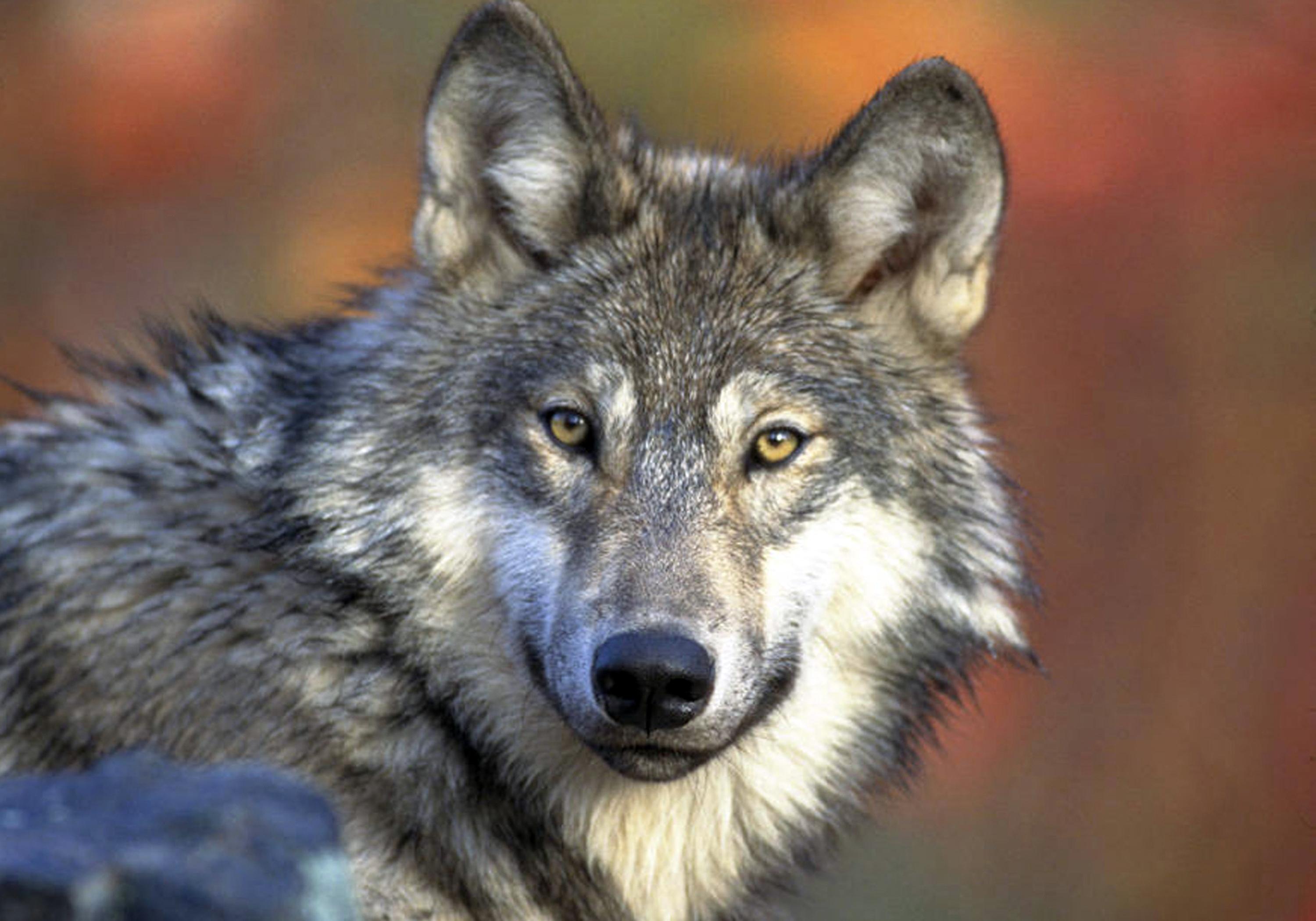
FILE - This April 18, 2008 file photo provided by the U.S. Fish and Wildlife shows a grey wolf. The final two members of a wolf pack occupying the old Profanity Peak Pack area will be killed, according to a Washington Department of Fish and Wildlife news release. (Gary Kramer / AP)
FILE – This April 18, 2008 file photo provided by the U.S. Fish and Wildlife shows a grey wolf. The final two members of a wolf pack occupying the old Profanity Peak Pack area will be killed, according to a Washington Department of Fish and Wildlife news release. (Gary Kramer / AP)

The final two members of a wolf pack occupying the old Profanity Peak Pack area will be killed, according to a Washington Department of Fish and Wildlife news release.

The kill order comes after members of the pack, which the department dubbed the Old Profanity Territory pack, killed or injured at least 16 cattle. The most recent was on Tuesday, according to the release.

WDFW killed a member of the pack on Sept. 16 following documented depredations. Per agency policy WDFW then monitored the area to see if lethal removal was effective. Despite two depredations in early October WDFW refrained from killing more wolves due to concerns about whether the range riding and other nonlethal deterrents were being implemented effectively.

The livestock in question are on a federal grazing allotment. Per allotment rules the producer was supposed to have his cattle off the land on Oct. 15. However, because of the “dense timber and rugged terrain” 10 percent of the producer’s cattle remain on the federal land.

In an interview Thursday Jay Shepherd, the wolf program lead for Conservation Northwest and one of the founders of the Northeast Washington Wolf-Cattle Collaborative, said in past years wolf-cattle conflicts had usually tapered off by now.

“It’s a weird year,” he said. “It just keeps going.”

WDFW must wait eight court hours between the announcement of a lethal action order and the execution of the order. In the past environmental groups have used that time to challenge the kill order.

Despite losses of roughly a dozen wolves a year from selective state-authorized lethal control, plus poaching, vehicle collisions and other human-related causes, Washington’s wolf population has grown each year. A minimum of 122 wolves, 22 packs and 14 successful breeding pairs was reported by the WDFW this winter.

This story will be updated throughout the day.

The full news release is copied below:

WDFW Director Kelly Susewind today reauthorized department staff to lethally remove the remaining two wolves from a pack that has repeatedly preyed on cattle while occupying the Old Profanity Territory (OPT) in the Kettle River Range of Ferry County.

On Sept. 28 the department initiated an evaluation period to determine whether removing two wolves from the OPT pack last month has changed the pack’s behavior and reduced the potential for recurrent wolf depredations on livestock.

The Wolf Conservation and Management Plan and the department’s protocol indicate that a post-removal evaluation period should consider any depredations that take place after one or more wolves are removed from a pack.

The department documented two wolf depredations to calves found in the allotment between Oct. 5-7, and determined that the depredation by the OPT on Oct. 5 likely occurred after the removal period.

That incident would have supported a decision to remove more wolves at that time, but the Director sustained the evaluation period to consider the details and complexities of the situation in the field.

The U.S. Forest Service allotment where the affected producer grazes his livestock is large and lies entirely within the territory of the OPT pack. After the Oct. 5 depredation, the department took additional steps to document the range-riding operation on the allotment to make sure it is as effective as it can be.

However, the department documented another wolf depredation to livestock on Oct. 23, bringing the total to 16 wolf depredations by the OPT pack.

The affected producer was scheduled to remove his livestock from the U.S. Forest Service allotment by Oct.15. In practice, about 90 percent of the livestock are usually removed by that date. Due to the dense timber and rugged terrain, it may take several weeks longer to round up all the cattle on the allotment.

The producer is transporting a portion of his cattle to private grazing lands west of the Kettle Crest and another portion out of state. The private grazing lands west of the Kettle Crest are within the OPT pack territory, although they are at a lower elevations and on the periphery of the pack territory, which may reduce the likelihood of wolf depredations in these areas this winter.

There are also several other allotments with cattle within the OPT that are in a similar situation in terms of removing them from Forest Service grazing allotments.

The livestock producer who owns the affected livestock has continued to employ non-lethal methods to deter wolves from preying on his herd. Strategies used include contracting range riders to monitor his herd, removing or securing livestock carcasses to avoid attracting wolves to the rest of the herd, and removing known sick and injured livestock from the grazing area until they are healed.

Wolves — keystone predators — topic of talk

181011 BMLT Gray_Wolf The Spokesman-Review.jpg

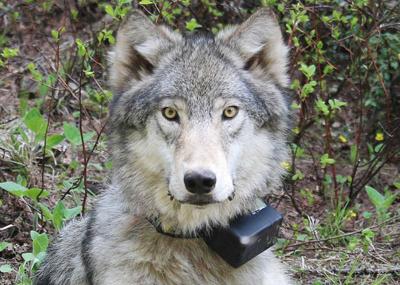
A female wolf from the Minam pack outside La Grande, Ore., after she was fitted with a tracking collar.

Wildlife biologist Mark Vekasy will discuss the dangers and benefits of reintroducing wolves in the Blues from 7-9 p.m. on Oct 18 at the Walla Walla Public Library, 238 E. Alder St.

The presentation is an opportunity to learn about the role of the wolf population in the Blue Mountains.

Wolves have been endangered across the West for decades because of various factors, including loss of habitat and extermination by livestock owners concerned for the safety of their animals.

Currently, the whole Northwest is home to only 122 gray wolves. Since these animals are keystone predators, their absence affects the entire ecosystem.

Vekasy is assistant district wildlife biologist for the Washington Department of Fish and Wildlife’s third district.

District 3 covers southeast Washington and the Blue Mountains north of the Oregon border and extends to the Snake and Columbia rivers.

Vekasy has worked in and around the District for more than 10 years, first as a biologist with the Hells Canyon Bighorn Sheep Initiative in lower Hells Canyon and currently as a District biologist based in Walla Walla.

Mark has a bachelor’s degree in biology and a master’s degree in zoology and has been working in wildlife research and management for more than 30 years on a variety of game and nongame species.

This free event is open to all ages.

For more details, contact Lauren Platman at lauren@bmlt.org or bmlt.org/.