
http://www.salon.com/2017/01/17/gop-targets-landmark-endangered-species-act-for-big-changes/
Republicans say the act hinders drilling, logging and other activities
TOPICS: CONGRESS, ENDANGERED SPECIES, ENDANGERED SPECIES ACT, FROM THE WIRES, REPUBLICANS, SUSTAINABILITY NEWS, NEWS, POLITICS NEWS
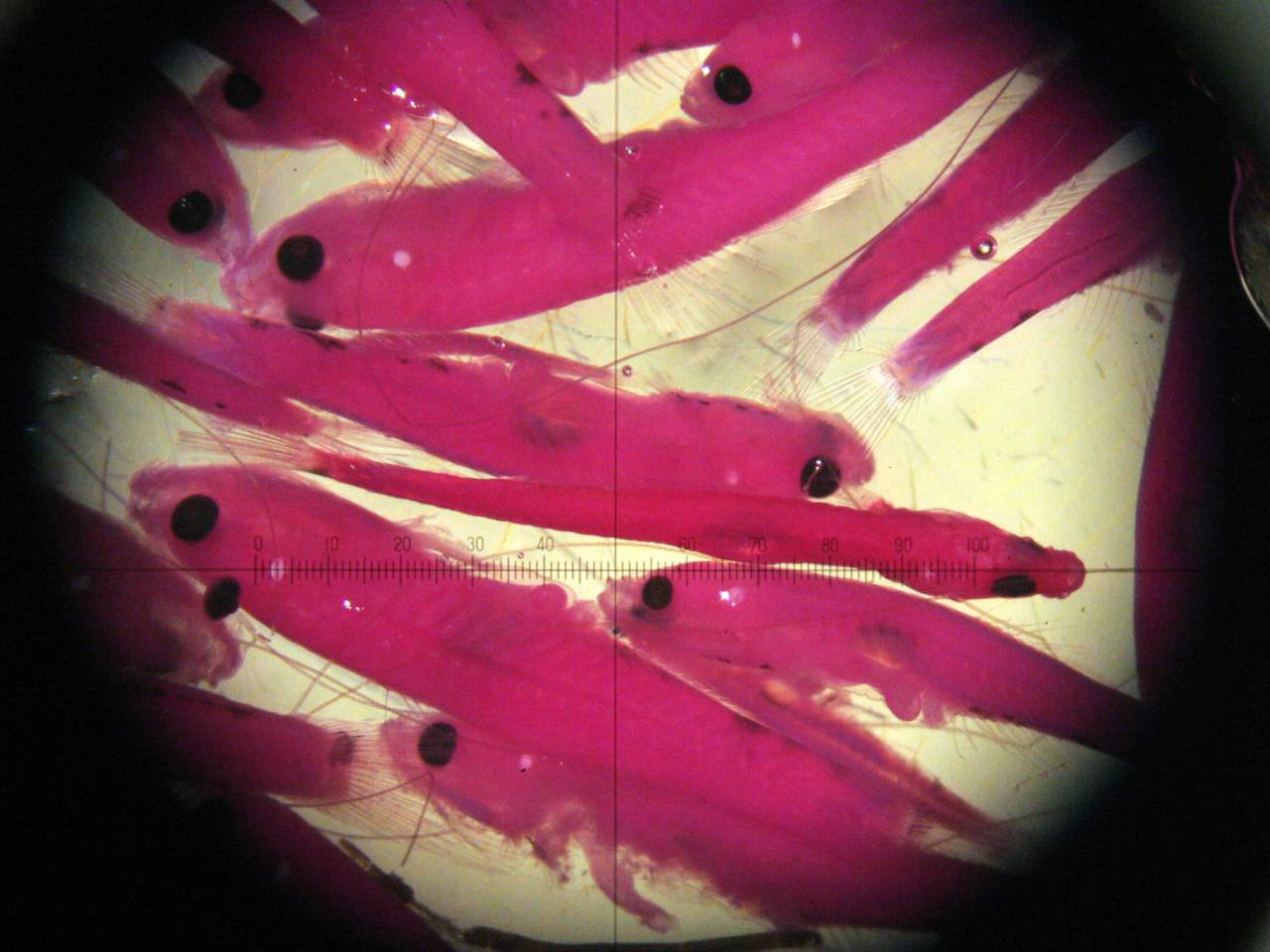 FILE – In this July 25, 2005, file photo, tiny fish, including delta smelt, caught in the Sacramento-San Joaquin River Delta, are seen through a microscope at a California Department of Fish and Game laboratory in Stockton, Calif. In control of Congress and soon the White House, Republicans are readying plans to roll back the influence of the Endangered Species Act, one of the government’s most powerful conservation tools, after decades of complaints that it hinders drilling, logging and other activities. (AP Photo/Rich Pedroncelli, File)(Credit: AP)
BILLINGS, Mont. — In control of Congress and soon the White House, Republicans are readying plans to roll back the influence of the Endangered Species Act, one of the government’s most powerful conservation tools, after decades of complaints that it hinders drilling, logging and other activities.
Over the past eight years, GOP lawmakers sponsored dozens of measures aimed at curtailing the landmark law or putting species such as gray wolves and sage grouse out of its reach. Almost all were blocked by Democrats and the White House or lawsuits from environmentalists.
Now, with the ascension of President-elect Donald Trump, Republicans see an opportunity to advance broad changes to a law they contend has been exploited by wildlife advocates to block economic development.
“It has never been used for the rehabilitation of species. It’s been used for control of the land,” said House Natural Resources Committee Chairman Rob Bishop. “We’ve missed the entire purpose of the Endangered Species Act. It has been hijacked.”
Bishop said he “would love to invalidate” the law and would need other lawmakers’ cooperation.
The 1973 act was ushered though Congress nearly unanimously, in part to stave off extinction of the national symbol, the bald eagle. Eagle populations have since rebounded, and the birds were taken off the threatened and endangered list in 2007.
In the eagles’ place, another emblematic species — the wolf — has emerged as a prime example of what critics say is wrong with the current law: seemingly endless litigation that offers federal protection for species long after government biologists conclude that they have recovered.
Wolf attacks on livestock have provoked hostility against the law, which keeps the animals off-limits to hunting in most states. Other species have attracted similar ire — Canada lynx for halting logging projects, the lesser prairie chicken for impeding oil and gas development and salmon for blocking efforts to reallocate water in California.
Reforms proposed by Republicans include placing limits on lawsuits that have been used to maintain protections for some species and force decisions on others, as well as adopting a cap on how many species can be protected and giving states a greater say in the process.
Wildlife advocates are bracing for changes that could make it harder to add species to the protected list and to usher them through to recovery. Dozens are due for decisions this year, including the Pacific walrus and the North American wolverine, two victims of potential habitat loss due to climate change.
“Any species that gets in the way of a congressional initiative or some kind of development will be clearly at risk,” said Jamie Rappaport Clark, president of Defenders of Wildlife and a former Fish and Wildlife Service director under President Bill Clinton. “The political lineup is as unfavorable to the Endangered Species Act as I can remember.”
More than 1,600 plants and animals in the U.S. are now shielded by the law. Hundreds more are under consideration for protections. Republicans complain that fewer than 70 have recovered and had protections lifted.
Continued: http://www.salon.com/2017/01/17/gop-targets-landmark-endangered-species-act-for-big-changes/

 The newest tallies from America’s secretive wildlife-killing program are in, and they’re grim. The U.S. Department of Agriculture’s Wildlife Services says it killed more than 3.2 million animals during fiscal year 2015. That’s about a half-million more animals than the program killed the previous year.
 A groundbreaking Center analysis has uncovered excellent news: 85 percent of continental U.S. birds protected under the Endangered Species Act have increased or stabilized their population size since being protected. The average population increase was 624 percent.
 Pacific bluefin tuna — majestic, warm-blooded ocean predators being dangerously overfished for the high-end sushi market — have sunk to frighteningly low population levels, so on Monday the Center and allies petitioned the National Marine Fisheries Service to protect the fish under the Endangered Species Act. Pacific bluefin have declined more than 97 percent since commercial fishing began.
 Thanks to a suit by the Center, rare, beautiful California tiger salamanders in Sonoma County won a final recovery plan Monday to aid their survival — and eventual recovery and removal from the endangered species list. The plan includes a call to purchase and permanently protect about 15,000 acres of the salamander’s breeding ponds and adjacent uplands.
 The Center is pledging a $10,000 reward for information leading to the arrest and conviction of those responsible for illegally killing wolf pups after removing them from their den in north Idaho’s Kootenai County, about 15 miles outside the city of Coeur d’Alene.
 A new analysis by the Center and For the Fishes finds that 6 million tropical marine fish imported into the United States each year for the pet trade have been exposed to cyanide poisoning. The findings coincide with the release of Disney/Pixar’s movie Finding Dory, which is likely to fuel a rapid increase in the sale of tropical reef fish in the United States, including royal blue tangs like Dory.
 The future of glyphosate, more commonly known as the herbicide Roundup, is at a critical crossroad. Last year the World Health Organization’s cancer-research arm found that the chemical is probably a human carcinogen; soon afterward California’s Environmental Protection Agency announced it would list glyphosate as being known to cause cancer.
 The Center just got a new four-star rating (the highest score possible, in case you didn’t know) from renowned nonprofit evaluator Charity Navigator. That means we’re deemed one of the most financially efficient organizations out there — probably because we funnel as much of our funding as possible, more than 83 percent, straight into saving species and lands, instead of using it up for administration, advertising and marketing gimmicks.




 Exposing the Big Game