Exposing the Big Game

Forget Hunters' Feeble Rationalizations and Trust Your Gut Feelings: Making Sport of Killing Is Not Healthy Human Behavior

Exposing the Big Game

ALERT: Stop the Senate sneak attack on wolves‏

from Defenders.org:

Anti-wildlife senators in Washington, D.C. have introduced a series of amendments to the Energy Bill that would cripple wolf conservation and set wildlife protection back by decades.

Urgent – Tell your senators to oppose anti-wildlife amendments to the Energy Bill when it comes up for a vote.

These amendments would undermine protections for individual species like wolves and tear away at the very fabric of the law by limiting citizens’ ability to enforce essential protections of the Endangered Species Act (ESA) in court.

There are three amendments in particular that must be defeated:

The “let’s throw wolves under the bus” amendment – would delist wolves in Wyoming and the Western Great Lakes. We’ve seen what delisting looks like in Wyoming, where it was open season on wolves every day of the year in 80% of the state before the courts put a stop to it;

The “leave bats in the dust” amendment – would prevent the U.S. Fish and Wildlife Service from protecting the highly imperiled northern long-eared bat as an endangered species under the Endangered Species Act; and

The “forget your day in court” amendment – tries to block citizens from going to court to hold the government accountable when it does not properly enforce the ESA. This amendment would bar recovery of legal fees otherwise available under the law and allow local governments to veto a federal court’s decision to enforce the law with regard to certain species.

In the past year alone, anti-wildlife forces have introduced over 90 legislative measures aimed at crippling America’s commitment to restoring and protecting imperiled wildlife.

Tell your senator to oppose these lethal amendments!

Thank you for all you do.

Black female wolf 831f Yellowstone National Park_2012 NPS

The wolves that survived the night

December 22, 2015, 05:00 pm

By Tim Preso

 On a December day in 2012, a collared female wolf known by wildlife biologists as 832F wandered beyond the boundaries of Yellowstone National Park into Wyoming where she was shot and killed. She would be among the first wolves shot in Wyoming since the U.S. Fish & Wildlife Service removed federal protections from the species and turned over their management to the state earlier that fall.

At the time, 832F was called the “most famous wolf in the world,” the alpha female of the Lamar Canyon pack, wildly popular among tourists to Yellowstone National Park. She was known for her agile hunting ability, able to take down an elk singlehandedly, a dangerous feat usually undertaken by a whole pack. Unusually large with a thick gray and white coat, 832F was a queen among wolves, leader of her pack, beautiful, lethal, a living expression of what it means to be wild.he move by the Fish and Wildlife Service to take away federal protections for wolves was controversial, but the shooting of this particular wolf unleashed a firestorm of criticism of the Service and shined a harsh light on the state of Wyoming’s wolf management program, which included a hostile shoot-on-sight policy across the vast majority of the state and one wolf-killing loophole after another in the remainder.

Earthjustice took the Fish and Wildlife Service to court over the decision to hand over wolf management to a state with a history of extreme anti-wolf policies and a management program that failed to include essential protections for wolves. Last year, a judge ruled in our favor and restored protections to wolves throughout Wyoming.

But just this past week, the fate of wolves in Wyoming and in three other states in the Western Great Lakes region again hung in the balance. Earlier this year, a cadre of anti-wildlife members of Congress slipped a policy rider into House and Senate versions of government spending bills that would have overridden two federal court decisions (including our 2014 victory for wolves in Wyoming). This rider would have stripped wolves of federal protections and would have prevented any further judicial review of the legality of that decision.

If enacted, that rider would have given Wyoming the green light to resume its hostile management program, including shoot-on-sight management of wolves, with no limit or regulation whatsoever, across 85 percent of that state. Just as a fragile recovery is within reach for wolves in the northern Rockies, Wyoming would have again subjected them to the same unregulated killing that nearly wiped them out in the first place.

In the end, wolves survived the night. Last week, President Obama signed into law an omnibus spending package that did not include the wolf delisting rider. That rider, along with 12 other anti-Endangered Species Act riders and dozens of other anti-environmental riders, were excluded from the final omnibus deal.  The fact that wolves and the Endangered Species Act emerged from the omnibus deliberations and deal-making relatively unscathed is in no small part due to the thousands of Americans who wrote in to their members of Congress, or called the White House, or took to social media to demand that their leaders follow through on the American promise to safeguard the natural world for the sake of our children and grandchildren.  The message of these constituents was heard loud and clear by 25 senators and 92 members of the House who wrote letters to the president urging him to reject any policy riders that undermine the Endangered Species Act, an Act that  serves as a critical safety net for the nation’s imperiled plants and animals.

Today, we celebrate that wolves in Wyoming remain protected. We thank the members of the House and Senate who stood strong for the protection of wolves and recognized that a spending bill is no place to make life-and-death policy decisions for our nation’s wildlife. We will remain steadfast in our commitment to fight for the wolves and other species under threat of extinction. And we will think of the wolf somewhere in the mountains south of Wyoming’s Teton Range that will not be shot this winter, but instead will climb through the snow to a ridge-top at night under a winter sky filled with stars and will throw back her head to send a wild howl across the forest.

Preso is an Earthjustice attorney based in Bozeman, Montana.

A record 59 grizzlies died in the Yellowstone ecosystem in 2015

By | December 22, 2015 <!–


–>

1KSHARES1K0010×1KSHARES

Conflicts with hunters and livestock were among the reasons a record 59 grizzly bears died in the Yellowstone ecosystem in 2015, the federal government’s grizzly coordinator said last week.

In addition to running into hunters and being removed for killing stock, grizzlies also faced a dry year and were seen more often in developed areas, said Chris Servheen, grizzly bear recovery coordinator for the U.S. Fish and Wildlife Service. He leads the effort to establish an enduring population in the Yellowstone region.

The number of deaths “was the highest number of grizzly mortalities in the Yellowstone Ecosystem since 1970,” Servheen said in an email. He put the number in perspective, writing that the losses are “not a big deal in terms of population-level impacts.

“Remember,” he wrote, “that there are three times as many bears in the ecosystem today as in 1970.” An estimated 717 grizzlies live in the ecosystem today, according to the Interagency Grizzly Bear Study Team, but some question the accuracy of that figure.

Grizzly deaths are recorded according to sex and age. The number of females older than two years is an important component of the population. Consequently, managers have set an annual limit for adult female mortalities at 7.6 percent of the population.

In 2015 adult female grizzly deaths exceeded that figure by 0.1 percent, Servheen wrote. Adult males died at 11.7 percent, well below their 15 percent limit.

“Bottom line is that annual mortalities fluctuate in natural systems and individual years will vary,” Servheen wrote.

Numbers are key part of Endangered Species Act delisting

The health and size of the population are critical factors as the federal government begins to remove Endangered Species Act protection from the Yellowstone-area population. Wyoming, Idaho and Montana could subsequently institute a grizzly hunting season.

Fifty-five of the deaths in 2015 were human-caused. Investigators are probing the death of 19 Yellowstone-area grizzly bears, according to the mortality table. “Investigation” is a label applied to probes of grizzlies believed killed by hunters, poachers or nefarious actors.

Fourteen bears were killed or otherwise removed from the population for conflicts with livestock and 12 for getting human food or for property damage, the 2015 mortality table shows. Five bears were euthanized through management actions, four died as a result of collisions with vehicles, two were natural deaths and three bears died of unknown causes.

The 2015 mortality figure of “known and probable” deaths exceeds the previous annual high of 55 that was set in 2012, grizzly bear advocate and watchdog Louisa Willcox wrote WyoFile in an email. There also are unrecorded bear deaths, she said, and they could bring the 2015 tally up to 90 bears.

Although the federal population estimate was set at 717, it covers a range that could be as low as 642, Willcox said. That led to her worst-case estimate.

“Bottom line: there could be as few as 552 bears in the ecosystem,” she wrote. If 90 bears out of 642 were killed, that amounts to 12 percent of the official population number and would bring the ecosystem count to “below the basement level of 600.”

Six hundred is the fewest bears that the U.S. Fish and Wildlife Service would allow — after delisting — before it would prohibit “discretionary mortality.” U.S. Fish and Wildlife director Dan Ashe referenced that limit in a letter he sent to state game directors in September.

An agency spokeswoman said the 600-bear minimum likely would never be reached after Endangered Species Act protections are removed. “The goal would be to manage for approximately 674 grizzly bears to ensure a sustainable and resilient population that utilizes the entire available habitat in the Greater Yellowstone Ecosystem,” Serena Baker wrote in an email. “We do not anticipate population numbers to dip down to 600 bears.”

Members of the Interagency Grizzly Bear Study Team also say the population survey could under-estimate bears by 40 percent. That wide range perplexes some, including Wyoming Wildlife Advocates. That nonprofit advocacy group asked Ashe in November for a “definitive GYE grizzly bear survey.”

Federal estimates spread over a range of plus or minus 472 bears, wrote Kent Nelson, director of the group. “At this point IGBST’s ‘best available science’ starts looking more like a wild-ass guess,” Nelson wrote Ashe.

“There is a far better alternative to the chaotic situation,” he wrote. That would constitute “a survey of the GYE grizzly population using DNA hair analysis.”

The current estimates are based on mathematical modeling, following observations, including those made from aerial surveys.

Clarification: The official 717 count is for the “Demographic Monitoring Area,” that covers about 20,000 square miles across most, but not all, of the Yellowstone ecosystem. The IGBC mortality chart includes bears killed throughout the ecosystem. Officials have said 10 Yellowstone ecosystem grizzlies died in 2015 outside the DMA — Ed.

DSC_0033

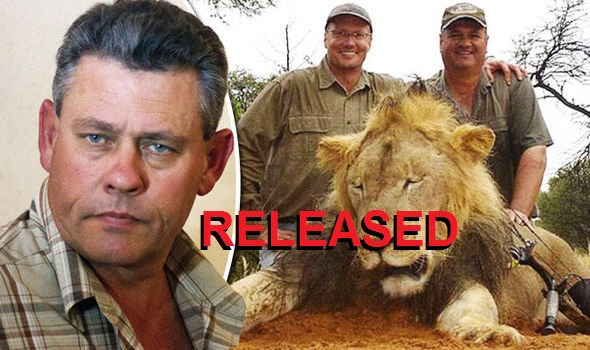
Decision to declare lions endangered comes just months after the death of ‘Cecil the Lion’

Theo-Bronkhorst-Cecil-lion-Zimbabwe2

“If hunting is part of a conservation strategy, then it’s part of a failing strategy,” said Dan Ashe, director of the U.S. Fish and Wildlife Service, on a conference call for journalists. The rule is “not reacting to Cecil specifically or any other incident specific, but rather an overwhelming body of science that says that lions are threatened.”

Hefty fees paid in the by hunters of big game like lions ostensibly help fund conservation efforts. But some wildlife experts question whether the policies have been effective as implemented. Lion populations have declined by 43% during the last 20 years, according to the FWS.

The endangered listing comes along with a number of new policies, including new permit requirements for hunters hoping to import trophies from lion hunts. The agency said it will only issue permits in accordance with science on how best to conserve lion species. The rules also give the FWS authority to deny permits to anyone previously found guilty of violating wildlife laws.

The decision drew immediate praise from animal rights activists who have been working for more than four years to list African lions as endangered. Wayne Pacelle, CEO of the U.S. Humane Society, described the new rule as “one of the most consequential” from the FWS in years. “This listing decision…is likely to dramatically change the equation for American trophy hunters who have been killing lions by the hundreds each year for their parts,” he said in a statement.

Great News! Wolves Still Considered Endangered


WOLVES WIN! Endangered gray wolves will remain protected after some members of Congress failed in their attempt to use the government spending bill to remove Endangered Species Act protections last night. http://ejus.tc/1O6PrRm

This is incredibly good news for the gray wolf, which is just now starting to make a comeback across the United States where it used to roam freely. We cannot stress enough that all of you who made phone calls, signed our petitions and tweeted at your members of congress are responsible for this major win. The endangered gray wolves thank you!

Oregon’s Delisting of Wolves was a Mistake

http://www.oregonlive.com/opinion/index.ssf/2015/11/delisting_wolves_was_a_mistake.html

By George Wuerthner

The recent decision by the Oregon Fish and Wildlife Commission to delist wolves from the state’s Endangered Species Act protection was based on faulty science and political expediency. The biggest problem is with the department’s criteria for delisting — more than four breeding pairs of wolves for three years in a row— is that it fails to ensure full restoration of the wolf across the state. Many outside scientists, including myself, feel the small population of 80 to perhaps as many as 100 wolves statewide is hardily sufficient to guarantee a robust and speedy restoration of the species.

A hundred or fewer wolves may preclude the extinction of the species, but it does not restore the ecological function of the wolf. And restoring the ecological function of the species should be the prime goal of any conservation effort. Precluding extinction is a very low bar and does not serve the people of Oregon, the wolf or our ecosystems.

I did an analysis of the potential for wolf restoration in Oregon back in the 1990s and concluded that the state could easily support 1,500 to 2,000 wolves. Others have reached similar conclusions. Restoring wolves across the state so that they are functional members of the wildlife community should be the goal of the Oregon Department of Fish and Wildlife.

If, hypothetically, elk were the species under consideration and were protected under the state’s Endangered Species Act, I can almost guarantee you ODFW would want way more than 100 individuals before they would recommend delisting. They would want to see elk restored across the state.

Wolves are in a sense a “keystone” species that influences ecosystem health. Having a token population of wolves is not the same as having a functioning ecosystem member. Wolves not only eliminate weaker prey individuals but can shift habitat use; for instance they can reduce elk and deer foraging on aspen, willows and other browse species in riparian areas. Wolves can also affect the distribution and numbers of other species. Where wolves are present, there are often fewer coyotes. Coyotes kill the smaller Sierra Nevada red fox that is just hanging on in the Cascades. Restoration of wolves could thus assist the recovery of the red fox.

The rush to delist wolves is driven by false perceptions of wolf impacts on livestock and big game populations. Out of 1.3 million cattle and 195,000 sheep in the state, only 114 domestic livestock have been confirmed killed by wolves since the first wolves appeared in the early 2000s. Comparisons between Montana and Oregon are often made by ODFW. Using Montana, in 2014, the state’s 600 or so wolves killed 35 cattle and six sheep out of a total of 2.5 million cattle and 220,000 sheep respectively, By comparison, non-wolf losses accounted for 89,000 deaths. And though six sheep were killed by wolves, some 7,800 sheep died from other causes, like weather.

Wolves are simply not a threat, or even barely a factor, in the economic viability of the livestock industry.

The idea that hunting will be negatively affected across any significant portion of the state is also unlikely. Between 2009 and 2014, all wildlife management units (WMUs) of northeastern Oregon with established wolf packs had increasing elk populations, and two of the four (Imnaha and Snake River) were above the established management objectives for elk since wolves became established (ODFW data).

A similar situation exists in Montana, where elk numbers grew from an estimated 89,000 animals in 1992 (Montana Elk Plan) to 167,000 elk today (Montana Department of Fish, Wildlife and Parks, 2015). If this is what you get with wolf predation, I think most reasonable hunters would agree we could use more wolves in Oregon!

In the end, ODFW capitulated to mythology and false fears of hunters and ranchers without providing context and did not meet its wildlife responsibilities under the public trust doctrine to work diligently for full restoration of the ecological function of the wolf.

528624c939a88_preview-620

Activists Move to Sue Operator of a Gray Wolf Fur Farm

An animal rights group argues a Minnesota woman is violating the Endangered Species Act by raising and skinning the protected predators.

(Photo: Animal Legal Defense Fund)
Dec 7, 2015
by David Kirby

The Animal Legal Defense Fund has threatened to sue a private wildlife operation in Minnesota, alleging that its owner kills and skins federally protected gray wolves and sells the pelts for profit.

On Wednesday, ALDF sent a notice of intent to file suit against Teresa Petter, owner of Fur-Ever Wild, whose website describes it as “a working agricultural farm that celebrates our traditional connections to the land and mother nature.

Fur-Ever Wild, located on 100 acres in Eureka Township, Minnesota, charges visitors to get up close not only with wolves but also cougars, bobcats, otters, beavers, lynx, fishers, martens, and badgers.

ALDF will take Fur-Ever Wild to court in 60 days unless Petter agrees not to kill and skin gray wolves, which are listed under the federal Endangered Species Act as threatened in Minnesota.

The Endangered Species Act prohibits the taking of any endangered or threatened species, defining “take” to mean “harass, harm, pursue, hunt, shoot, wound, kill, trap, capture, or collect.” The law, which applies equally to wild and captive animals, allows private parties to file suit to enforce its provisions.

(Photo: Animal Legal Defense Fund)

“Fur-Ever Wild’s wildlife exhibition and fur-harvesting business exploits wolf pups by first using them as an attraction in the company’s petting zoo, then later skinning them for their fur,” Jennifer Robbins, an attorney representing ALDF, wrote in the notice.

“There is broad public support to stop their continual taking of wolves that visitors pay to see…and for whom they donate money or materials believing they are supporting the maintenance of this threatened species,” she wrote in the notice, which was also sent to the Interior Department, which enforces the ESA.

RELATED:  Oregon Wolves Lose Endangered Species Protections

“We got involved in the summer of 2015 after activists notified us of her operations,” said ALDF staff attorney Christopher Berry. “Evidence that we submitted shows that she has skinned wolves in the past.”

Petter has denied killing wolves. In May, she told The Associated Press that the animals were not used for fur unless they “die naturally.”

Reached by phone, Petter told TakePart, “I am not commenting.” When asked why, she replied, “Because someone already burned down one of our buildings.” Asked if the alleged arson was related to the skinning of wolves, Petter said, “Have a nice day” and hung up.

Public records indicate that Fur-Ever Wild has indeed slaughtered wolves for their pelts.

Several license applications Fur-Ever Wild filed with the state “depict the calculated breeding program of protected wolves as the company aimed to acquire a wolf population that could generate consistent replacements for those animals to be killed and skinned for fur,” according to the ALDF notice.

Petition: Stop using baby elephants in bars and hotels and beaches in Thailand

Stop using baby elephants in bars and hotels and beaches in Thailand

6,824

7,000

we’ve got 6,824 supporters, help us get to 7,000

http://www.thepetitionsite.com/778/831/285/stop-using-baby-elephants-in-bars-and-hotels-and-beaches-in-thailand/?taf_id=13597515&cid=fb_na

Asian elephants are an endangered species. Experts believe there are now less than 2000 wild elephants living in Thailand. The population is declining at a rapid rate due to loss of habitat.

Illegal capture and trade for use in the tourism industry is also a big problem.

This industry thrives because foreign visitors all want to ride elephants, or watch them do tricks, paying good money for the privilege.

But the fact is that wild elephants need to be tamed before they can be ridden. Except the taming process in Southeast Asia is not the same as with a wild horse. It’s much more brutal, and is accomplished when the elephants are very young.
Wild elephants won’t let humans ride on top of them. So in order to tame a wild elephant, it is tortured as a baby to completely break its spirit. The process is called Phajaan, or “the crush”.

It involves ripping baby elephants away from their mothers and confining them in a very small space, like a cage or hole in the ground where they’re unable to move.

The baby elephants are then beaten into submission with clubs, pierced with sharp bull-hooks, and simultaneously starved and deprived of sleep for many days.

Did you know that riding elephants can actually cause serious long-term harm too? Their spines are not made to support the weight of humans. I know it’s hard to believe given their size, but Zebras are the same way.

Alaska Confirms Massive Decline in Rare Wolves, Still Plans to Hunt Them

Another harvest could do irreversible damage to the wolf population.

Alexander Archipelago wolf. (Photo: Facebook)
Jun 20, 2015
by Samantha Cowan

In 1994, southeast Alaska was home to about 300 Prince of Wales wolves, a subspecies of Alexander Archipelago wolves. By 2013, there were fewer than 250. Last year the population plummeted 60 percent to 89 wolves. New numbers confirm that the rare breed may have dropped to as few as 50.

But the diminishing numbers won’t stop hunters from trapping and killing the wolves, according to the Center for Biological Diversity. The Alaska Department of Fish and Game is moving ahead with its 2015–2016 hunting and trapping season on Prince of Wales Island.

“Another open season of trapping and hunting could push these incredibly imperiled wolves over the edge,” Shaye Wolf, a biologist with the Center for Biological Diversity, said in a statement.

A reported 29 wolves were killed during last year’s hunting season—which accounts for between 33 and 58 percent of the population. Either figure means the species is in danger of being completely wiped out, especially as females were hit particularly hard this season…

More: http://www.takepart.com/article/2015/06/20/alaska-wolves