Had a great opening day. So glad there is no limit on these guys.
Still missed a few. The really big one of course got away.
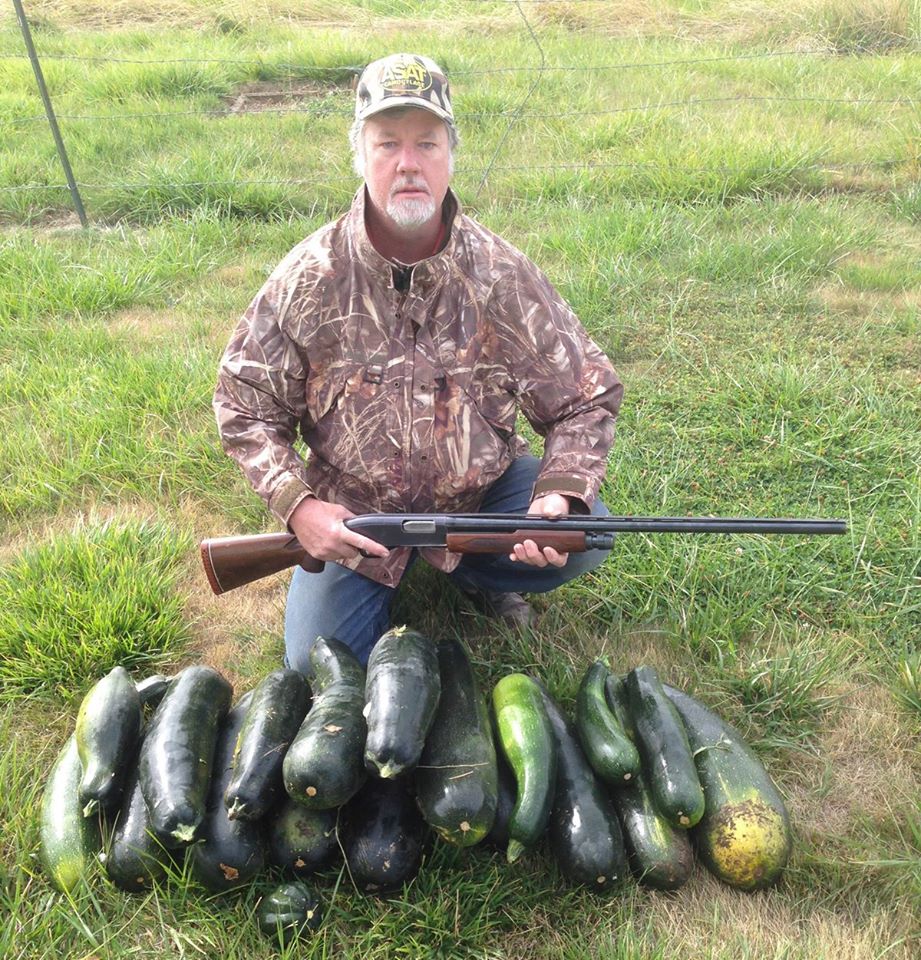

Had a great opening day. So glad there is no limit on these guys.
Still missed a few. The really big one of course got away.
Wayne Bisbee is founder of Bisbee’s Fish and Wildlife Conservation Fund, a nonprofit organization that promotes conservation programs through science, education and technology. The opinions expressed in this commentary are solely those of the author.
(CNN)The recent illegal killing of Cecil the lion in Zimbabwe has understandably generated passionate and emotional responses from around the world.
I agree with the common sentiment that the circumstances around Cecil’s death are abhorrent and those responsible should be prosecuted to the fullest extent of the law. I also think it’s unfortunate that legitimate hunters are given a public black eye by this case.
Let’s face it, we all feel strongly about this issue, whether we’re animal activists, conservationists, or hunters. Many of us have the same basic goal: to ensure that endangered species are here for generations to come.
That’s why I advocate conservation through commerce, which are controlled and high-dollar hunts whose proceeds benefit animal conservation. This is one of numerous legal, logical and effective tools to humanely manage resources, raise awareness of endangered animals, and help fund solutions.

<img alt=”Wayne Bisbee” class=”media__image” src=”http://i2.cdn.turner.com/cnnnext/dam/assets/150811151033-wayne-bisbee-headshot-large-169.jpeg”>
Yes, I am an avid hunter. I enjoy the thrill and challenge of stalking an animal and providing a more natural, healthier meat protein source to my family than what is available from the commercial food industry.
Today, most hunters see the activity as sport. But hunting has been around as long as man and it’s not likely to go away any time soon. Billions of the world’s human population eat animal meat for protein, and this is not going to change. So the reality is that somewhere, somehow, millions of animals are killed every day to sustain human life.
Does that mean I hate animals? Absolutely not. I love wildlife and I’m not alone among hunters. In a study published in the March 2015 issue of The Journal of Wildlife Management, researchers from Clemson University and Cornell University found that “wildlife recreationists — both hunters and birdwatchers — were 4 to 5 times more likely than non-recreationists to engage in conservation behaviors, which included a suite of activities such as donating to support local conservation efforts, enhancing wildlife habitat on public lands, advocating for wildlife recreation, and participating in local environmental groups.”
Hunters are more likely than non-hunters to put our money and time where our mouths are. It makes sense when you think about it. Hunters have a vested interest in keeping exotic and endangered animals from going extinct.
It’s about resource management
All animals, from wolves to rhinos to humans, are hierarchical. In the animal kingdom there are alpha males who try to eliminate competition. An older member of a herd often isn’t ready to step aside just because he can no longer perform his reproductive duties.
Older, post-breeding males are also very often aggressive and interfere with the proliferation of the rest of the herd, especially in the rhino species. That’s why a legitimate trophy hunt to benefit conservation can remove a problem animal from a herd. …
No one thinks that putting a suffering dog to sleep is inhumane. The same logic applies to hunting …
[WTF? Does that mean shooting an animal with an arrow and pursuing it for 40 long hours before killing it is considered “humane” for hunters? I’ve heard enough. If you want to read more of this bullshit article, it continues here]: http://www.cnn.com/2015/08/11/opinions/bisbee-legal-hunting/index.html
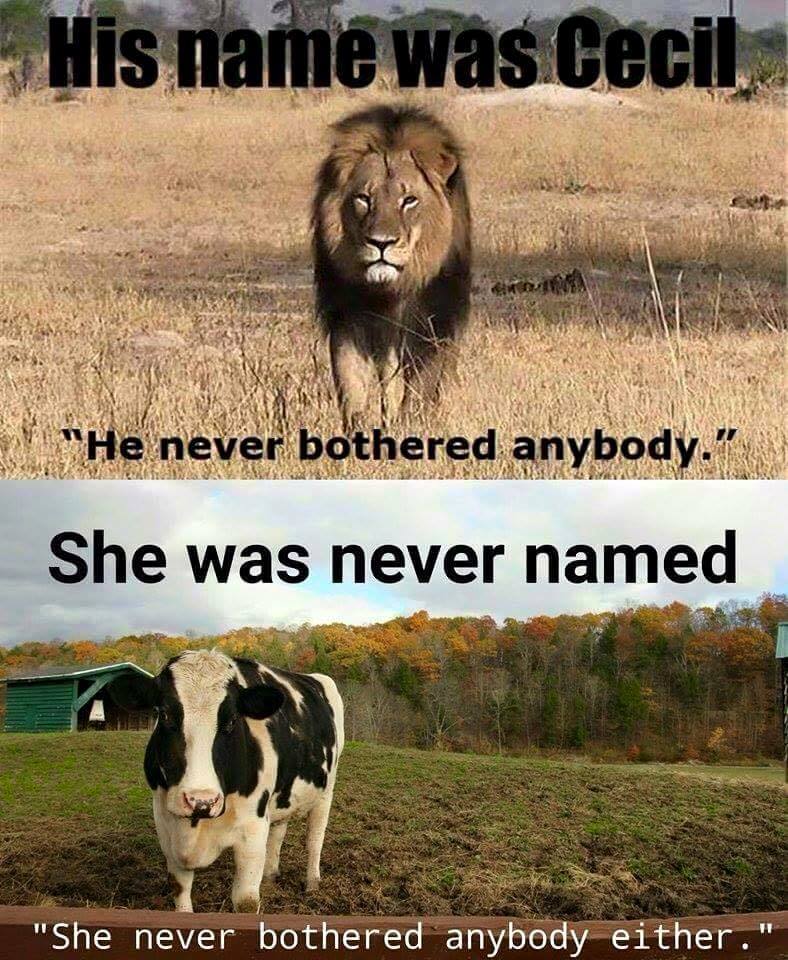
Because, as with other serial killers, Trophy Hunters want their victims to remain anonymous. They make every effort to depersonalize their living targets, so the last thing they want is someone giving them a human name and an identity.
To prove the point, consider the following excerpt from an unapproved comment by a hunter received today and printed here in full (grammatical errors intact):
Look rule of thumb.If your a hunter you don’t harvest an animal your kids have tagged with a silly human name with human attributes attached.So silly tourists who drive around in raised vehicle leaving them safe from good old Cecils claws and teeth got undercut by another silly American paying a huge fee to use his permit on a lion .
White House spokesman Josh Earnest said it is up to the Justice Department to respond to an extradition order.

The trophy-hunting apologists are coming out of the woodwork…
Vote NO here: Big game hunting: Conservation or cruelty?

Alaska serial killer/big game hunter Robert Hansen, with his trophy kill.
http://www.nbcnews.com/news/world/cecil-lion-what-could-happen-walter-james-palmer-hunters-n400461
The two Zimbabweans — professional hunter Theo Bronkhorst and farmowner Honest Ndlovu — were in court to face poaching charges. Authorities say they did not have the valid hunting permits.

Wildlife officials accuse the men of taking $50,000 from Palmer in order to coax Cecil out of the Hwange National Park and onto private land, where he was beheaded and skinned.
Johnny Rodrigues, chairman of the Zimbabwe Conservation Task Force, said Palmer is the one who fatally shot the creature.
Bronkhorst has been stripped of his license while he faces criminal charges, according to a joint statement from the Zimbabwe National Parks and Wildlife Authority and the Safari Operators Association.
Bronkhorst’s bail was set at $1,200 and he’s due back in court in one week. If found guilty, he and Ndlovu could be fined $20,000 and get a sentence of up to 10 years in jail.
Police would like to question the 55-year-old trophy hunter for his role in the killing, but have not commented on any possible charges.
He may not face any charges depending on the circumstances, according to the U.K.-based charity LionAid, which advocates for the animal’s protection. The group says it is legal to bait lions in Zimbabwe, and even to kill them using a bow and arrow outside of national parks during private hunting trips. Whether or not they’re wearing a radiocollar — Cecil was — also doesn’t matter, the group says.
But the landowner in this case allegedly never obtained a “quota” for the number of lions that could be killed on his property, making it illegal, LionAid said.
Palmer, meanwhile, was merely the “client” and entrusted his guides — a defense that could get him off the hook for any charges, the group added.
Palmer said in a statement Tuesday that he had “no idea” who the lion was and the legalities of the hunt. He added that he has not been contacted by Zimbabwean authorities.
The U.S. does have an extradition treaty with Zimbabwe that covers crimes punishable for more than a year in jail. Minnesota Congresswoman Betty McCollum has asked the U.S. Attorney’s Office and U.S. Fish and Wildlife Service to investigate whether any American laws were violated.
Palmer in 2008 pleaded guilty to making false statements to U.S. wildlife officials about a black bear he had fatally shot in western Wisconsin.
The black-maned beast was a fixture of Hwange National Park, making him a local favorite among parkgoers and wildlife researchers. He was named after Cecil Rhodes, a British businessman who was also the namesake for the former southern African territory of Rhodesia, now Zimbabwe.
Since 2008, Cecil was being studied by an Oxford University research program. “The lion, Cecil, was a remarkable individual. Remarkable particularly because we have studied him for so long,” Professor David MacDonald, founding director of the Wildlife Conservation Research Unit at Oxford University, told NBC News.
Although the exact number of cubs that 13-year-old Cecil fathered is unclear, researchers believe about eight to 10 of them could wind up dead. That’s because in a lion’s social circle, when one male dies, incoming males in a new coalition typically kill the cubs of the old incumbents, MacDonald said.
“The death of one male lion can cause a cascade of effects that leads to other lions being killed,” he said, adding, “We are working hard to follow the consequences of Cecil’s death.”
More: http://www.nbcnews.com/news/world/cecil-lion-what-could-happen-walter-james-palmer-hunters-n400461
http://www.cnn.com/2015/07/29/africa/zimbabwe-cecil-the-lion-killed/
(CNN)Two men arrested in the death of Cecil the lion — a case in which an American dentist has also been accused, unleashing a torrent of anger online — were released Wednesday by a court in Zimbabwe on $1,000 bail each.
Theo Bronchorst, a professional hunter, and Honest Trymore Ndlovu, a land owner, both Zimbabweans, said through their attorney that they were innocent of poaching charges, which officials said could bring a sentence of 10 years in prison.
Zimbabwean authorities said that Walter J. Palmer, a dentist from Minnesota, paid at least $50,000 for the hunt. Palmer has said he relied on the expertise of local guides “to ensure a legal hunt.”
But the lion that he and his local guides killed wasn’t just any lion, according to Zimbabwean officials.
He was Cecil, a major tourist draw at Zimbabwe’s Hwange National Park.
The 13-year-old lion, recognizable by the black streaks in his mane, suffered a slow death, according to the Zimbabwe Conservation Task Force.
The hunters lured him out of the sanctuary of the park with a dead animal on top of a vehicle, the conservation group said.
Palmer, officials said, then shot the lion with a crossbow, a method for which he is known. But Cecil survived another 40 hours until the hunters tracked him down and shot him with a gun.

<img alt=”Walter J. Palmer, left, a U.S. hunter wanted in the killing of Zimbabwe's Cecil the lion, poses with a dead ram.” class=”media__image” src=”http://i2.cdn.turner.com/cnnnext/dam/assets/150728212459-03-walter-james-palmer-large-169.jpg”>
Cecil was skinned and beheaded, and the hunters tried to destroy the GPS collar that Cecil was wearing as part of research backed by Oxford University, the group said.
“I had no idea that the lion I took was a known, local favorite, was collared and part of a study until the end of the hunt,” Palmer said Tuesday in a statement. “I relied on the expertise of my local professional guides to ensure a legal hunt.”
His alleged role in Cecil’s death brought a wave of online anger crashing down on him.
The Yelp page for his dental practice in Bloomington, Minnesota, was inundated with reviews posted by people irate over his lion hunting.

<img alt=”Only four northern white rhinos are left ” class=”media__image” src=”http://i2.cdn.turner.com/cnnnext/dam/assets/150728201741-northern-white-rhino-large-169.jpg”>
“Shame on you, killing a majestic creature,” wrote a user named Charmie P.
The website for Palmer’s business, River Bluff Dental, appeared to have been taken down.
A torrent of outrage flowed on social media, with celebrities such as Sharon Osbourne lambasting the dentist.
“I hope that #WalterPalmer loses his home, his practice & his money,” Osbourne tweeted. “He has already lost his soul.”
Investigations suggest the killing of Cecil was illegal because the land owner “was not allocated a lion on his hunting quota for 2015,” said a statement from the Zimbabwe Parks and Wildlife Management Authority and Safari Operators Association of Zimbabwe.
The dentist said in his statement that no authorities in Zimbabwe or the United States had contacted him but that he would assist them in any inquiries.
“I deeply regret that my pursuit of an activity I love and practice responsibly and legally resulted in the taking of this lion,” Palmer said.
#WalterPalmer: Internet seeks revenge for Cecil the lion
Investigations suggest the killing of Cecil was illegal because the land owner “was not allocated a lion on his hunting quota for 2015,” said a statement from the Zimbabwe Parks and Wildlife Management Authority and Safari Operators Association of Zimbabwe.
The dentist said in his statement that no authorities in Zimbabwe or the United States had contacted him but that he would assist them in any inquiries.
“I deeply regret that my pursuit of an activity I love and practice responsibly and legally resulted in the taking of this lion,” Palmer said.
But Cecil’s killing doesn’t appear to be the first time Palmer has got into trouble while hunting.
A man by the same name and age, and from the same town, illegally killed a black bear in Wisconsin several years ago, according to court documents.
That individual pleaded guilty to making false statements knowingly to the U.S. Fish and Wildlife Service, and was sentenced to one year on probation and ordered to pay a fine of nearly $3,000, records show.
A New York Times article in 2009 that profiled Palmer and his hunting methods said he had served a year of probation over the false statements case.

<img alt=”Palmer, right, poses with a dead black-tailed deer. The dentist said he "deeply" regrets killing Cecil the lion.” class=”media__image” src=”http://i2.cdn.turner.com/cnnnext/dam/assets/150728212457-02-walter-james-palmer-large-169.jpg”>
The Times article detailed Palmer’s skill and enthusiasm for using archery rather than firearms to slay animals.
He is “said to be capable of skewering a playing card from 100 yards with his compound bow,” it said, recounting his killing of a large elk with an arrow in Northern California.
More: http://www.cnn.com/2015/07/29/africa/zimbabwe-cecil-the-lion-killed/
http://www.bbc.com/news/world-africa-33699347
Cecil the lion was a renowned figure in Zimbabwe’s Hwange National Park.
Earlier this month, however, American dentist Walter Palmer paid roughly $50,000 (£32,000)for the chance to kill the popular animal, although he says he was unaware of Cecil’s fame and reputation.
That prompted revulsion from many on social media, with tens of thousands signing a petition calling for Cecil’s killer to be brought to justice.
But what is the difference between hunting an animal and poaching?
The crucial distinction to be made between poaching and hunting is where each sits in the eyes of the law. Put simply, poaching is hunting without legal permission from whoever controls the land.
Hunting lions is not prohibited per se in Zimbabwe, and indeed in many other countries in Africa. Hunting is regulated by the government, and hunters must obtain permits authorising them to kill certain animals.
Tourists who wish to hunt in the country may do so. Where and what they hunt, and what type of weaponry they use, is all the subject of regulation.
Foreigners hunting in Zimbabwe must be accompanied by a licensed professional hunter, and tour operators which sell hunting packages to tourists are regulated by the government.
Browsing online, it is possible to find package hunting trips in Zimbabwean game reserves for around $50,000 – about the same amount Mr Palmer says he paid for the hunt which has earned him global infamy.
The dentist who has attracted numerous unwanted headlines over the last couple of days, has insisted that he believed “everything about this trip was legal and properly handled”, prior to killing Cecil the lion.
Some animals, such as elephants and rhinos, attract poachers because selling their tusks can prove extremely lucrative.
Earlier this year, Kenya’s president set fire to a pile containing 15 tonnes of seized elephant ivory with an estimated value of more than $30 million (£19 million).
Uhuru Kenyatta lamented that the tusks had been taken from elephants which had been “wantonly slaughtered by criminals”.
Rhino and elephant tusks are routinely exported to Asia, where ivory is used to make ornaments, and in traditional medicines.
For some, like Walter Palmer, however, the act of hunting itself is the attraction. That, and the prospect of a “trophy”, such as a lion’s head, after the kill is made.
Since he acknowledged having killed Cecil, photographs of the hunter with the carcasses of other animals have been widely shared online.
He has expressed regret that “my pursuit of an activity I love” had resulted in the death of such a popular animal.
It is estimated that more than 650 lion carcass “trophies” are exported from Africa each year.
The main argument against unauthorised hunting is the effect it has on the numbers of animals living in the wild.
The level of public outcry when a case such as the slaying of Cecil the lion comes to the fore is accentuated by the fact that poachers often target some of the planet’s most impressive and treasured creatures.
The Born Free Foundation estimates that between 30% and 50% of Africa’s lion population has been wiped out over the course of the last two decades. Just 32,000 of the animals remain in the wild.
Hunting big game in its natural habitat is undoubtedly an attractive prospect for some tourists – and something many are willing to pay tens of thousands of dollars to experience.
Emmanuel Fundira, president of the Safari Operators Association of Zimbabwe, has described Cecil’s killing as a “tragedy” for tourism in Zimbabwe.

A professional hunter identified by the Zimbabwe Parks and Wildlife Management Authority as Theo Bronkhorst and his co-defendant, farm owner Honest Trymore Ndlovu, are accused of helping Walter James Palmer hunt the lion. Zimbabwean police said they are looking for Palmer, the American dentist who reportedly paid $50,000 to track and kill the animal.
Zimbabwean prosecutors’ documents accuse Bronkhorst of failing to “prevent an unlawful hunt.” Court documents say Bronkhorst was supervising while his client, Palmer, shot the animal.
During the nighttime hunt, the men tied a dead animal to their car to lure the lion out of a national park, said Johnny Rodrigues, chairman of the Zimbabwe Conservation Task Force. The American is believed to have shot it with a crossbow, injuring the animal. The wounded lion was found 40 hours later, and Palmer shot it dead with a gun, Rodrigues said.
Using bait to lure Cecil the lion is deemed unethical by the Safari Operators Association of Zimbabwe, of which Bronkhorst is a member. The association has since revoked his license.
“Ethics are certainly against baiting. Animals are supposed to be given a chance of a fair chase,” Emmanuel Fundira, the association’s president, said on Tuesday. “In fact, it was not a hunt at all. The animal was baited and that is not how we do it. It is not allowed.”
Palmer, a dentist living in the Minneapolis suburb of Eden Prairie, said in a statement that he was unaware the lion was protected, relying on local guides to ensure a legal hunt.
“I had no idea that the lion I took was a known, local favorite, was collared and part of a study until the end of the hunt. I relied on the expertise of my local professional guides to ensure a legal hunt,” Palmer said in statement through a public relations firm.
Elephants, rhinos, zebras and various species of antelope were regular sights on visits to game parks on school trips and on family outings.
I’ll never forget the day when my elementary class visited the local vet to see an injured wild dog that had been brought in for treatment — a rare event in the country’s second-largest city, Bulawayo.
So like many others…More: http://www.usatoday.com/story/news/world/2015/07/29/cecil–lion-death/30826405/
 Exposing the Big Game


