
Revisionist history may seem like harmless, feel good child’s play, but the threat it poses (to all other animals at least) is that without hearing the real story, people will never learn from the past.
It’s tempting to want to believe that all that has gone wrong with the human race is the result of being led astray by our technology, and if we could just get back to our caveman roots, everything would be happy and harmonious like it surely was back then. But contrary to contemporary popular belief, that’s a world that never was.
Even the earliest human hunters drove countless species to extinction and exhausted their carrying capacities time and again, ever since plant-eating primates first climbed down from the trees and decided to take up big-game hunting.
The notion of the peaceful savage has long since been disproven, but people want to cling to it rather than accept the truth about human nature. Just look at the dead-animal adornments any warrior or tribal chief wore, and it’s easy to see the roots of trophy hunting.
The thought that any spear-wielding species who took advantage of fire to herd animals toward a cliff or into a box canyon had an innate sense of ecological fairness goes against all that made us human—envy, lust, greed, gluttony, a lack of empathy and an over-blown ego are the kinds of things that ultimately define a hunter, whether the motive for their behavior is sport or subsistence.
Richard Wrangham and Dale Peterson summed up the chapter, “Paradise Imagined,” of their book, Demonic Males: Apes and the Origins of Human Violence, thusly, “There is no such thing as paradise, not in the South Seas, not in southern Greece, not anywhere. There never has been. To find a better world we must look not to a romanticized and dishonest dream forever receding into the primitive past, but to a future that rests on a proper understanding of ourselves.”
Humans have achieved an awful lot of success as a species over the years, but judging by our planet-crushing prowess, we may have finally breached our collective britches.


 Always known about the infamous Ted Nugent, but by reputation only? Never had the displeasure of seeing him in action? Here’s your chance.





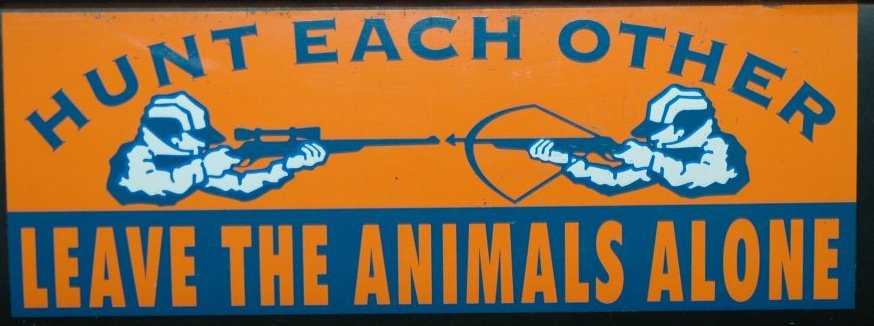




 Exposing the Big Game