(CNN)The United Kingdom has identified a new, potentially more contagious coronavirus variant linked to a recent surge in cases in England.The new variant is being called VUI-202012/01 — the first “Variant Under Investigation” in the UK in December 2020. While scientists hunt for more information about the variant, its impact is already being felt.Multiple countries have now imposed restrictions on travelers from the UK. British Health Secretary Matt Hancock said Sunday that the variant was “out of control” and Prime Minister Boris Johnson was due to chair an emergency meeting Monday as his government tried to manage the fallout.Here’s what you need to know.Content by Voltaren Arthritis Pain GelChasing the Joy of MovementThis is how world champion cyclist Kristin Armstrong manages her osteoarthritis in a life of constant movement.
What is a variant and why are officials concerned about this one?
A variant occurs when the genetic structure of a virus changes, according to the US Centers for Disease Control and Prevention. All viruses mutate over time and new variants are common, including for the novel coronavirus.As with other new variants or strains of Covid-19, this one carries a genetic fingerprint that makes it easy to track, and it happens to be one that is now common. That alone does not necessarily mean the mutation has made it spread more easily, nor does it not necessarily mean this variation is more dangerous.However, the UK government’s New and Emerging Respiratory Virus Threats Advisory Group said it had “moderate confidence” that this new variant “demonstrates a substantial increase in transmissibility compared to other variants.”Chris Whitty, England’s chief medical officer, said this particular variant “contains 23 different changes,” which he described an unusually large number. Whitty said the variant was responsible for 60% of new infections in London, which have nearly doubled in the last week alone.That finding has immediate implications for virus control. More cases could place an even greater strain on hospitals and health care staff just as they enter an already particularly difficult winter period, and ultimately lead to more deaths.
Where did the variant originate and how has it taken hold?
The new variant of Covid-19 originated in southeast England, according to the World Health Organization.PHE have said that backwards tracing, using genetic evidence, suggests the variant first emerged in England in September. It then circulated in very low levels until mid-November.”The increase in cases linked to the new variant first came to light in late November when PHE was investigating why infection rates in Kent [in southeast England] were not falling despite national restrictions. We then discovered a cluster linked to this variant spreading rapidly into London and Essex,” PHE said.Multiple experts have also suggested that this new variant could have been amplified because of a superspreader event, meaning the current spike in cases could also have been caused by human behavior.”A higher genomic growth rate in the samples sequenced, may not necessarily mean higher transmissibility, e.g. if there was a rave of several thousand people where this variant was introduced and infected many people mostly in that rave, this may seem very high compared to a lower background of non-variant virus,” Julian Tang, clinical virologist at the University of Leicester, told the Science Media Centre.
Which countries are affected?
The variant has already spread globally. As well as the UK, the variant has also been detected in Denmark, Belgium, the Netherlands and Australia, according to the WHO.Australia has identified two cases of the variant in a quarantined area in Sydney and Italy has also identified one patient infected with the variant.A similar but separate variant has also been identified in South Africa, where scientists say it is spreading quickly along coastal areas of the country.
Is the new variant more deadly?
There is no evidence to suggest that the new variant is more deadly as of now, according to Whitty, who said that “urgent work” was underway on Saturday examining the implications for mortality.”We are not seeing any increased virulence (clinical severity) or any gross changes in the [spike protein] that will reduce vaccine effectiveness — so far,” Tang told the Science Media Centre (SMC.)Multiple experts have pointed out that for some viruses increasing transmissability can accompany decreasing virulence and mortality rates. This may mean that the variant is less lethal, though it’s currently too early to tell.”New viruses will adapt to a new host over time — with decreasing mortality, and possibly increasing transmissibility,” Tang said.”As viruses are transmitted, those that allow for increased virological ‘success’ can be selected for, which changes the properties of the virus over time. This typically leads to more transmission and less virulence,” Martin Hibberd, professor of emerging infectious disease at the London School of Hygiene & Tropical Medicine, said to the SMC.
Will the developed vaccines work against this variant?
Whitty said Saturday that current vaccines should still work against the new variant.His remarks were echoed in the US by the head of Operation Warp Speed. “Up to now, I don’t think there has been a single variant that would be resistant to the vaccine,” Moncef Slaoui told CNN on Sunday. “We can’t exclude it, but it’s not there now.”The UK, the US and the EU have authorized the Pfizer/BioNTech Covid-19 vaccine and several others are in development.
What measures are being taken to contain the variant?
England’s chief medical officer has urged people in Britain to take steps to reduce the virus’ spread.”Given this latest development it is now more vital than ever that the public continue to take action in their area to reduce transmission,” Whitty said on Saturday.Large swathes of England, including London and the southeast, are now under strict Tier 4 Covid-19 restrictions, which is only the latest disruption to a Christmas holiday shadowed by the pandemic.Dozens of countries across Europe, the Middle East and the Americas have also announced travel bans for the UK.Others, such as Greece and Spain, have imposed restrictions that require travelers arriving from Britain to undergo coronavirus tests or quarantine.America’s top infectious disease expert, Dr. Anthony Fauci, told CNN on Monday that he would advise against additional restrictions on UK travel. The US must “without a doubt keep an eye on it,” Fauci said, but “we don’t want to overreact.”The US has maintained a ban on travel from the UK, Ireland, and Europe’s Schengen zone as well as number of other countries since March.
Minks are transmitting Covid-19 to humans. Don’t blame the minks.
From Denmark to the US, outbreaks on mink farms raise concerns that a virus mutation could make our vaccines ineffective.By Sigal Samuel Nov 13, 2020, 11:20am EST
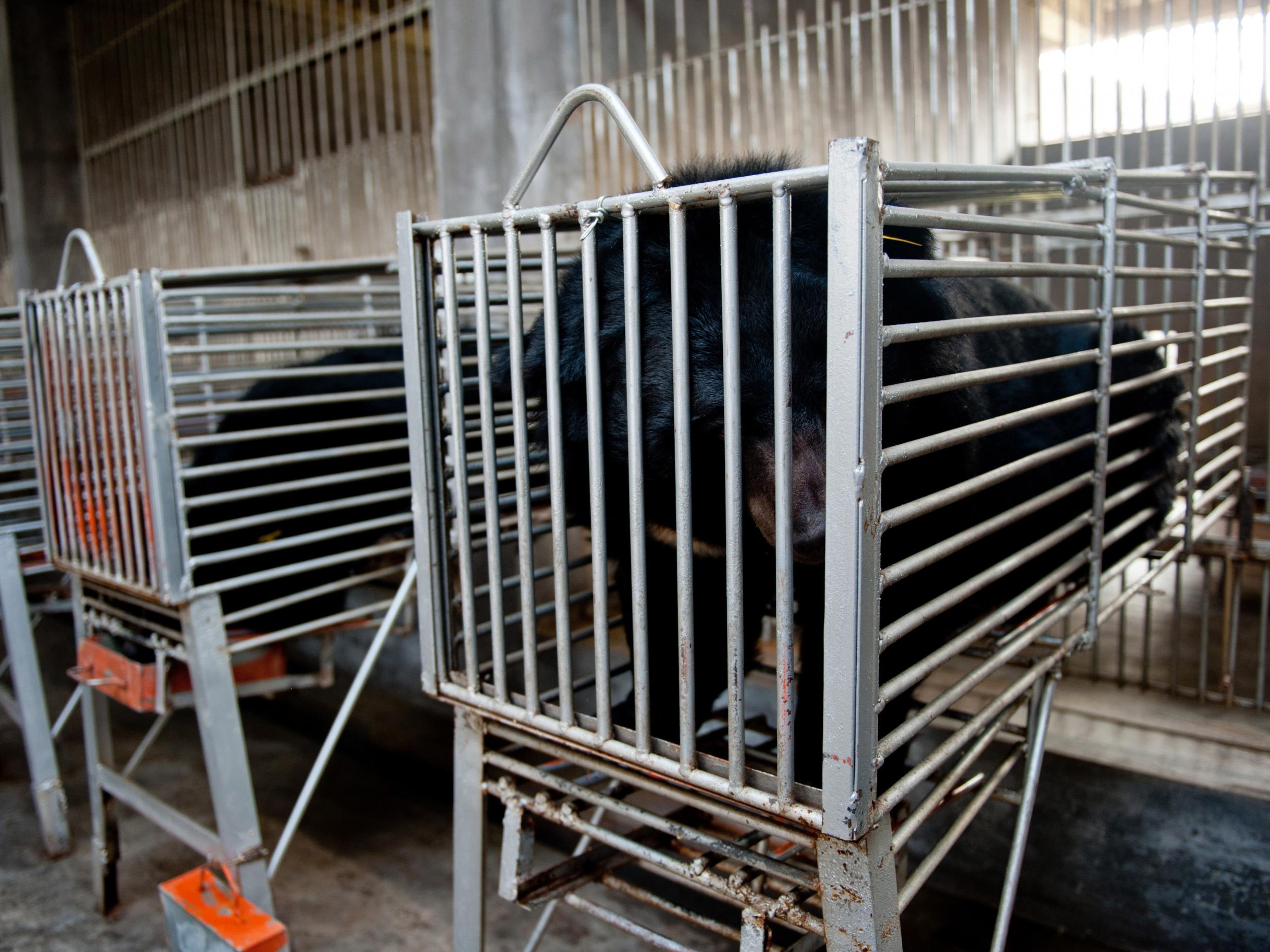
When minks are bred for their pelts — which are used to make fur coats and accessories — they are confined in small cages for their entire lives. They cannot engage in natural behaviors like roaming territories, digging, or swimming.
This story is part of a group of stories called
Finding the best ways to do good.
Denmark’s fur farms are home to 17 million minks, and last week, the government announced it would kill all of them.
This week, however, the government rolled that back a bit. Now, the government merely recommends killing all farmed minks in the country. It will only requirethe killing of minks —weasel-like animals prized for their fur —on farms where Covid-19 has been detected.
Danish Prime Minister Mette Frederiksen initially said all 17 million minks would be culled because the virus that causes Covid-19 had moved from humans to minks and back to humans. The country’s public health officials reported that while in the mink, the virus had mutated, raising the risk of a new strain circulating among us that our vaccines would be ineffective against — a finding that, to be clear, is preliminary and has not been confirmed in peer-reviewed research. In a worst-case scenario, that could set back the clock on our pandemic recovery.
This fear isn’t limited to Denmark. There have also been Covid-19 outbreaks on mink fur farms in the Netherlands, Spain, Sweden, Italy — and the US. At least a million minks have already been culled by gassing in the Netherlands and Spain, though the US has so far avoided culling. On farms in Utah, Wisconsin,and Michigan, thousands of minks have died of the disease, but mink-to-human transmission has not yet been detected.
The threat to public healthseems to raise an ethical dilemma: Should farms kill all their minks in order to prevent a mutated form of the virus from spreading among all human beings? Is causing that much animal suffering justifiable if it prevents a lot of human suffering, which could result if our future vaccines are ineffective against the new strain?
Denmark, at first, thought the answer was yes. But it was forced to backtrack after experts pointed out that the government couldn’t legally mandate a mass cull without passing new legislation, and after infectious disease experts questioned the scientific basis for the cull.
If it turns out to be true that the mink variant would jeopardize our vaccines and that there’s a strong chance that thousands or evenmillions of people will therefore die if we don’t cull the minks, you could make the case that a cull is the lesser of two evils. But we just don’t have enough data right now to know whether that’s true.
We do, however, know one thing with certainty. The fact that we are being forced to choose between two reasonable impulses — wanting to prevent animal suffering and wanting to prevent human suffering — is the result of another decision made: to farm thousands and thousands of animals in close quarters and unsanitary conditions.
Large-scale animal farming amplifies the threat of pandemics
Mink fur farms have a reputation for cruelty. The animals spend their entire lives confined in small cages, where they grow so distressed that they sometimes resort to self-mutilation and even cannibalism.
In both environments, animals live in cages under harsh conditions that compromise their immune systems. They’re tightly crowded together, often coming into contact with each other’s secretions and excrement. To make matters worse, selection for specific genes makes the animals almost genetically identical. That means that a virus can easily spread from animal to animal without encountering any genetic variants that might stop it in its tracks. As it rips through a herd, the virus can mutate and grow more virulent.
That’s why Michael Greger, an expert on zoonotic viruses, previously told me, “If you actually want to create global pandemics, then build factory farms.”
Both with fur farms (which contain thousands of animals) and with larger factory farms (which contain tens or hundreds of thousands of animals), we have created perfect-storm environments for the emergence and spread of disease. As the Humane Society Veterinary Medical Association recently wrote, “Fur farms often lack naturally mitigating factors — such as abundant sunlight, genetic variability, and healthy distance between animals. For these reasons, fur farms provide potential channels for diseases to propagate.”
The sheer number of animals we keep on these farms makes it likely for disease to spread. It’s also what makes it hard for us to think of a way to stamp out the problem other than by killing all the animals.
Jeff Sebo, a professor of environmental studies, bioethics, and philosophy at New York University, said the moral of the story is obvious: “As a general rule, if you have so many animals in your care that you are unable to care for them during crises, then that is too many, and you should not be allowed to own or keep that many animals in the first place.”
Culling animals en masse is not as rare as we might like to think. This spring, millions of animals were euthanized on American factory farms because there were no meat plants to send them to for slaughter; many plants had been shuttered after workers contracted Covid-19. And right now, hundreds of birds in the UK are being culled because an outbreak of the H5N2 avian influenza has been detected.
The way we’ve designed our animal farming system forces us to make tragic choices. “It basically makes us have to get into some contorted ethical reasoning,” Sebo said.
The mink situation has forced even some animal advocates to support a cull, for fear that leaving minks alive with untreated Covid-19 will cause them severe respiratory distress. “If mink on a farm are infected, suffering respiratory problems, and are not being culled, their welfare will also be seriously compromised,” said Joanna Swabe, a policy adviser for Humane Society International. Animal Protection Denmark CEO Britta Riis likewise said it was a “necessary decision” to cull, expressing concern about the welfare of the minks before they die.
And of course there are the potential public health risks for humans, which require more research but are not farfetched. The bottom line:“We have placed ourselves in this situation where we’re forced to make a choice that we never should have had to make,” Sebo said.
If we decide to keep raising thousands of animals on high-density farms, it’s clear we will keep finding ourselves in terrible and unnecessary moral binds where we have to choose between animal welfare and human welfare. We need to ask ourselves whether the benefit — a fur coat, a cheap cut of meat — is really worth the cost.
Sign up for the Future Perfect newsletter. Twice a week, you’ll get a roundup of ideas and solutions for tackling our biggest challenges: improving public health, decreasing human and animal suffering, easing catastrophic risks, and — to put it simply — getting better at doing good.
The EU’s new Green Deal strategy offers ‘guidance’ to African countries but does nothing to stop Europe’s own ivory market, Roseiw Awori writes
1 hour ago
Reuters
As part of its plans to be the first net zero emissions, zero pollution continent by 2050, the EU published its Biodiversity Strategy for 2030, personally championed by First Executive Vice-President Timmermans, on 20th May.
It proposes among other issues “… a further tightening of the rules on EU ivory trade” while nonetheless maintaining a thriving ivory market itself.
Double Standards
“A further tightening of the rules …” is hardly progress.
Under the Juncker Commission, which left office on 30th November 2019, significant strides were being made to close the loopholes in the EU’s ivory trade.
The Von der Leyen “Green Deal” Commission has, however, demonstrated scant political will to maintain – let alone increase – that momentum. It is this type of double standard that we can no longer stand for.
“We are tired of these lectures that constantly come from the North, telling us how to manage our spaces while they ignore the implications of their actions. Frankly, the EU has failed to read the mood across the world,” says Dr Winnie Kiiru, Senior Technical Advisor for the Elephant Protection Initiative Foundation (EPI), an organisation comprising of 21 African countries working to secure the protection of African elephants.
As an elephant biologist for the past 20 years, Kiiru has fought for the ban of ivory across the world and is not impressed by the EU’s double standards. “Countries that had thriving markets such as China and the US have gone ahead to ban ivory trade – it seems very odd that the EU won’t follow suit.”
Beginning around 2007, a wave of poaching for ivory devastated populations of savanna and forest elephants across Africa. The total numbers of savanna elephants decreased by 30% between 2007 and 2015, while forest elephants were hit even harder.
In some countries, elephant populations declined by over 50% in under 10 years. If current poaching levels continue, elephants may be extinct in the wild within the decade – and this will be thanks in no small measure to the EU’s ivory market, among the largest in the world.
Poaching of African elephants continues unabated. The fight for countries to shut down the international ivory trade has borne some fruit with key nations such as the USA, UK and China responding to global pressure and closing their domestic ivory markets.
This action has been accompanied by a decrease in poaching within some parts of Africa, primarily in East Africa. However, in other regions, notably West, Central and Southern Africa, the poaching trend has not declined.
If anything, poaching levels are increasing in new hotspots, as major global ivory markets have remained open, notably those of Japan and the European Union.
This makes the EU’s Biodiversity Strategy, as part of the highly ambitious Green Deal suite of policy initiatives all the more extraordinary.
Aiming to provide ‘guidance’ to African countries on steps to take in order to maintain and improve our biodiversity, it is supremely ironic that the EU’s ivory market is effectively a key contributor of the destruction of Africa’s natural heritage.
Laundering ‘legal’ ivory into the illegal market. It is all the more surprising to note this somewhat misguided act of charity has no roots within the EU.
The European Commission continues to maintain that the EU’s ivory market deals only with old ivory stocks and has no influence on current poaching levels.
Yet, recent studies have shown that ivory pieces can be aged and made to seem older than they actually are. Limiting the trade to small ivory pieces is also no solution, as carving operations have now been established in elephant range states.
This ongoing consumption of ivory puts the safety of the African elephants at great risk because, by giving ivory a value it prolongs demand, which maintains the push for supply.
Until the EU shuts down its domestic market, ivory will continue to be laundered into European markets under the guise of being ‘old or small stock’.
“The EU needs to appreciate the role of any African market in increasing the cost of law enforcement in African countries and destroying livelihoods. Furthermore, their strategy will be impossible to realize in Africa until they shut down their ivory markets,” Kiiru maintains.
Critically, ivory has no value within Africa; it is only countries outside that continue to clamour for it and by so doing fuel poaching across the continent.
And so, however good the intentions were in writing the EU Biodiversity Strategy, I am reminded of a song my mother would sing: “Sweep your yard before you come and sweep mine”. This is precisely what the EU needs to do.
The time for decisive action is now. Overall, the importance of healthy elephant populations is to increase and help support our African biodiversity, and they are part of our cultural heritage.
We cannot afford to lose them for the sake of demand by foreigners in Europe and elsewhere for trinkets.
Again it remains clear, the EU needs to re-examine its so-called ‘role’ in promoting global biodiversity; here in Africa, what it does in reality is continue to endanger African elephants.
Rosie Awori is the director of the Pan African Wildlife Conservation Network
It was one of the most exciting, turbulent and transformative eras in history, but the Middle Ages were also fraught with danger. Historian Dr Katharine Olson reveals 10 of the biggest risks people faced…
The plague was one of the biggest killers of the Middle Ages – it had a devastating effect on the population of Europe in the 14th and 15th centuries. Also known as the Black Death, the plague (caused by the bacterium called Yersinia pestis) was carried by fleas most often found on rats. It had arrived in Europe by 1348, and thousands died in places ranging from Italy, France and Germany to Scandinavia, England, Wales, Spain and Russia.
The deadly bubonic plague caused oozing swellings (buboes) all over the body. With the septicaemic plague, victims suffered from skin that was darkly discoloured (turning black) as a result of toxins in the bloodstream (one reason why the plague has subsequently been called the ‘Black Death’). The extremely contagious pneumonic plague could be contracted by merely sneezing or spitting, and caused victims’ lungs to fill up.
The Black Death killed between a third and half of the population of Europe. Contemporaries did not know, of course, what caused the plague or how to avoid catching it. They sought explanations for the crisis in God’s anger, human sin, and outsider/marginal groups, especially Jews. If you were infected with the bubonic plague, you had a 70–80 per cent chance of dying within the next week. In England, out of every hundred people, perhaps 35–40 could expect to die from the plague.
As a result of the plague, life expectancy in late 14th-century Florence was just under 20 years – half of what it had been in 1300. From the mid-14th-century onwards, thousands of people from all across Europe – from London and Paris to Ghent, Mainz and Siena – died. A large number of those were children, who were the most vulnerable to the disease.
People in the medieval period faced a host of potential dangers when travelling.
A safe, clean place to sleep upon demand was difficult to find. Travellers often had to sleep out in the open – when travelling during the winter, they ran the risk of freezing to death. And while travelling in groups provided some safety, one still might be robbed or killed by strangers – or even one’s fellow travellers.
Nor were food and drink provided unless the traveller had found an inn, monastery, or other lodging. Food poisoning was a risk even then, and if you ran out of food, you had to forage, steal, or go hungry.
Medieval travellers could also be caught up in local or regional disputes or warfare, and be injured or thrown into prison. Lack of knowledge of foreign tongues could also lead to problems of interpretation.
Illness and disease could also be dangerous, and even fatal. If one became unwell on the road, there was no guarantee that decent – or indeed any – medical treatment could be received.
Listen: Elma Brenner of the Wellcome Library examines the state of healthcare in the Middle Ages and reveals some unusual remedies that were offered for people with injuries or diseases:https://embed.acast.com/historyextra/medievalmedicine
Travellers might also fall victim to accident. For example, there was a risk of drowning when crossing rivers – even the Holy Roman emperor, Frederick I, drowned in 1190 when crossing the Saleph river during the Third Crusade. Accidents might also happen upon arrival: in Rome during the 1450 jubilee, disaster struck when some 200 people in the huge crowd crossing the great bridge of Sant’ Angelo tumbled over the edge and drowned.
While it was faster to travel by sea than land, stepping onto a boat presented substantial risks: a storm could spell disaster, or navigation could go awry, and the medieval wooden ships used were not always equal to the challenges of the sea. However, by the later Middle Ages, sea travel was becoming faster and safer than ever before.
An average traveller in the medieval period could expect to cover 15–25 miles a day on foot or 20–30 on a horse, while sailing ships might make 75–125 miles a day. 3
Famine
Famine was a very real danger for medieval men and women. Faced with dwindling food supplies due to bad weather and poor harvests, people starved or barely survived on meagre rations like bark, berries and inferior corn and wheat damaged by mildew.
Those eating so little suffered malnutrition, and were therefore very vulnerable to disease. If they didn’t starve to death, they often died as a result of the epidemics that followed famine. Illnesses like tuberculosis, sweating sickness, smallpox, dysentery, typhoid, influenza, mumps and gastrointestinal infections could and did kill.
The Great Famine of the early 14th century was particularly bad: climate change led to much colder than average temperatures in Europe from c1300 – the ‘Little Ice Age’. In the seven years between 1315 and 1322, western Europe witnessed incredibly heavy rainfall, for up to 150 days at a time.
Farmers struggled to plant, grow and harvest crops. What meagre crops did grow were often mildewed, and/or terribly expensive. The main food staple, bread, was in peril as a result. This also came at the same time as brutally cold winter weather.
At least 10 per cent – perhaps close to 15 per cent – of people in England died during this period. 4
Childbirth
Today, with the benefits of ultrasound scans, epidurals and fetal monitoring, the risk for mother and baby during pregnancy and childbirth is at an all-time low. However, during the medieval period, giving birth was incredibly perilous.
Breech presentations of the baby during labour often proved fatal for both mother and child. Labour could go on for several days, and some women eventually died of exhaustion. While Caesarean sections were known, they were unusual other than when the mother of the baby was already dead or dying, and they were not necessarily successful.
Midwives, rather than trained doctors, usually attended pregnant women. They helped the mother-to-be during labour and, if needed, were able to perform emergency baptisms on babies in danger of dying. Most had received no formal training, but relied on practical experience gleaned from years of delivering babies.
New mothers might survive the labour, but could die from various postnatal infections and complications. Equipment was very basic, and manual intervention was common. Status was no barrier to these problems – even Jane Seymour, the third wife of Henry VIII, died soon after giving birth to the future Edward VI in 1537. 5
Infancy and childhood
Infancy was particularly dangerous during the Middle Ages – mortality was terribly high. Based on surviving written records alone, scholars have estimated that 20–30 per cent of children under seven died, but the actual figure is almost certainly higher.
Infants and children under seven were particularly vulnerable to the effects of malnutrition, diseases, and various infections. They might die due to smallpox, whooping cough, accidents, measles, tuberculosis, influenza, bowel or stomach infections, and much more. The majority of those struck down by the plague were also children. Nor, with chronic malnutrition, did the breast milk of medieval mothers carry the same immunity and other benefits of breast milk today.
Being born into a family of wealth or status did not guarantee a long life either. We know that in ducal families in England between 1330 and 1479, for example, one third of children died before the age of five. 6
Bad weather
The vast majority of the medieval population was rural rather than urban, and the weather was of the utmost importance for those who worked or otherwise depended on the land. But as well as jeopardising livelihoods, bad weather could kill.
Consistently poor weather could lead to problems sowing and growing crops, and ultimately the failure of the harvest. If summers were wet and cold, the grain crop could be destroyed. This was a major problem, as cereal grains were the main food source for most of the population.
With less of this on hand, various problems would occur, including grain shortages, people eating inferior grain, and inflation, which resulted in hunger, starvation, disease, and higher death rates.
This was especially the case from the 14th through to the 16th centuries, when the ice pack grew. By 1550, there had been an expansion of glaciers worldwide. This meant people faced the devastating effects of weather that was both colder and wetter.
Medieval men and women were therefore eager to ensure that weather conditions stayed favourable. In Europe, there were rituals for ploughing, sowing seeds, and the harvesting of crops, as well as special prayers, charms, services, and processions to ensure good weather and the fertility of the fields. Certain saints were thought to protect against the frost (St Servais), have power over the wind (St Clement) or the rain and droughts (St Elias/Elijah) and generally the power of the saints and the Virgin Mary were believed to protect against storms and lightning.
People also believed the weather was not merely a natural occurrence. Bad weather could be caused by the behaviour of wicked people, like murder, sin, incest, or family quarrels. It could also be linked to witches and sorcerers, who were thought to control the weather and destroy crops. They could, according to one infamous treatise on witches – the Malleus Maleficarum, published in 1486 – fly in the air and conjure storms (including hailstorms and tempests), raise winds and cause lightning that could kill people and animals.7
Violence
Whether as witnesses, victims or perpetrators, people from the highest ranks of society to the lowest experienced violence as an omnipresent danger in daily life.
Medieval violence took many forms. Street violence and brawls in taverns were not uncommon. Vassals might also revolt against their lords. Likewise, urban unrest also led to uprisings – for example, the lengthy rebellion of peasants in Flanders of 1323–28, or the Peasants’ Revolt of 1381 in England.
Medieval records demonstrate the presence of other types of violence also: rape, assault and murder were not uncommon, nor was accidental homicide. One example is the case of Maud Fras, who was hit on the head and killed by a large stone accidentally dropped on her head at Montgomery Castle in Wales in 1288.
Blood feuds between families that extended over generations were very much evident. So was what we know today as domestic violence. Local or regional disputes over land, money or other issues could also lead to bloodshed, as could the exercise of justice. Innocence or guilt in trials were at times decided by combat ordeals (duels to the death). In medieval Wales, political or dynastic rivals might be blinded, killed or castrated by Welsh noblemen to consolidate their positions.
Killing and other acts of violence in warfare were also omnipresent, from smaller regional wars to larger-scale crusades from the end of the 11th century, fought by many countries at once. Death tolls in battle could be high: the deadliest clash of the Wars of the Roses, the battle of Towton (1461), claimed between 9,000 and 30,000 lives, according to contemporary reports.
It could also be dangerous to disagree. People who held theological or religious opinions that were believed to go against the teachings of the Christian church were seen as heretics in medieval Christian Europe. These groups included Jews, Muslims and medieval Christians whose beliefs were considered to be unorthodox, like the Cathars.
Kings, missionaries, crusaders, merchants and others – especially from the late 11th century – sought to ensure the victory of Christendom in the Mediterranean world. The First Crusade (1096–99) aimed to capture Jerusalem – and finally did so in 1099. Yet the city was soon lost, and further crusades had to be launched in a bid to regain it.
Jews and Muslims also suffered persecution, expulsion and death in Christian Europe. In England, anti-Semitism resulted in massacres of Jews in York and London in the late 12th century, and Edward I banished all Jews from England in 1290 – they were only permitted to return in the mid-1600s.
From the eighth century, efforts were also made to retake Iberia from Muslim rule, but it was not until 1492 that the entire peninsula was recaptured. This was part of an attempt in Spain to establish a united, single Christian faith and suppress heresy, which involved setting up the Spanish Inquisition in 1478. As a result, the Jews were expelled from Spain in 1492, and Muslims were only allowed to stay if they converted to Christianity.
Holy wars were also waged on Christians who were widely considered to be heretics. The Albigensian Crusade was directed at the Cathars (based chiefly in southern France) from 1209–29 – and massacres and more inquisitions and executions followed in the later 13th and 14th centuries.9
Hunting
Hunting was an important pastime for medieval royalty and the aristocracy, and skill in the sport was greatly admired. The emperor Charlemagne was recorded as greatly enjoying hunting in the early ninth century, and in England William the Conqueror sought to establish royal forests where he could indulge in his love of the hunt. But hunting was not without risks.
Hunters could easily be injured or killed by accidents. They might fall from their horse, be pierced by an arrow, be mauled by the horns of stags or tusks of boars, or attacked by bears.
Status certainly did not guarantee safety. Many examples exist of kings and nobles who met tragic ends as a result of hunting. The Byzantine emperor Basil I died in 886 after apparently having his belt impaled on the horns of a stag and being dragged more than 15 miles before being freed.
In 1100, King William II (William Rufus) was famously killed by an arrow in a supposed hunting accident in the New Forest. Likewise, in 1143, King Fulk of Jerusalem died in a hunting accident at Acre, when his horse stumbled and his head was crushed by his saddle.
Sudden or premature death was common in the medieval period. Most people died young, but death rates could vary based on factors like status, wealth, location (higher death rates are seen in urban settlements), and possibly gender. Adults died from various causes, including plague, tuberculosis, malnutrition, famine, warfare, sweating sickness and infections.
Wealth did not guarantee a long life. Surprisingly, well-fed monks did not necessarily live as long as some peasants. Peasants in the English manor of Halesowen might hope to reach the age of 50, but by contrast poor tenants in same manor could hope to live only about 40 years. Those of even lower status (cottagers) could live a mere 30 years.
By the second half of the 14th century, peasants there were living five to seven years longer than in the previous 50 years. However, the average life expectancy for ducal families in England between 1330 and 1479 generally was only 24 years for men and 33 for women. In Florence, laypeople in the late 1420s could expect to live only 28.5 years (men) and 29.5 years (women).
Dying a ‘good’ death was very important to medieval people, and was the subject of many books. People often worried about ‘sudden death’ (whether in battle, from natural causes, by execution, or an accident) and what would happen to those who died without time to prepare and receive the last rites. Written charms, for example, were thought to provide protection against sudden death – whether against death in battle, poison, lightning, fire, water, fever or other dangers.
Stop the Wildlife Trade exclusive: Bears, monkeys, wolves and birds of prey sold for hundreds of euros on popular Albanian websites, investigation finds
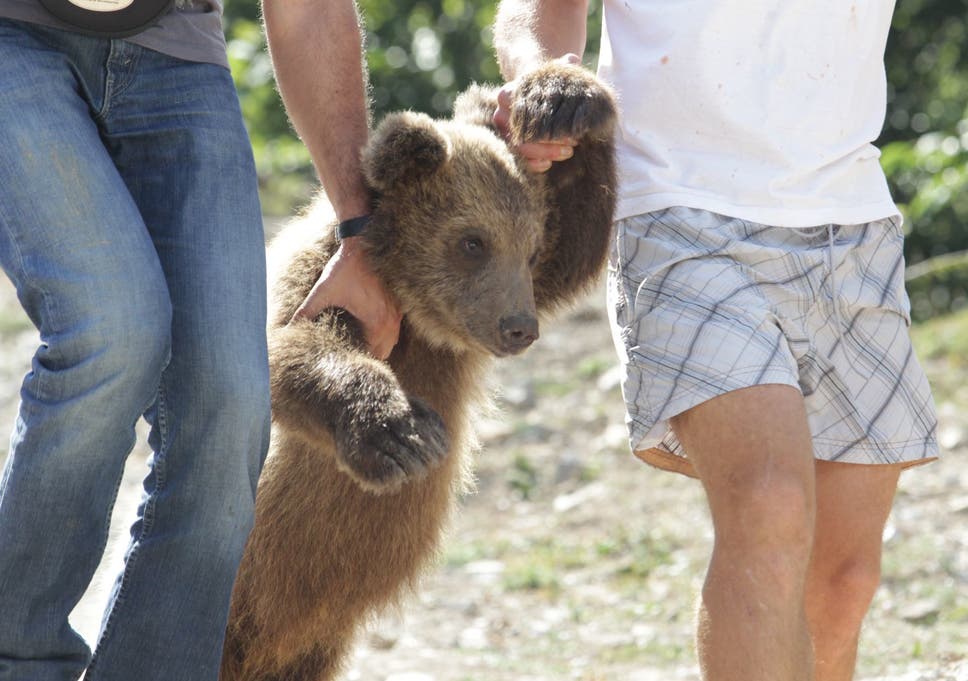
A cub kept by a hotel owner to attract tourists – a common practice in Albania ( Four Paws )
A restaurant in Albania is offering diners meat from illegally hunted bears – part of an illicit trade in wildlife that is “out of control” in the country, investigators claim.
Researchers said it was the first time they had seen bear meat cooked in Europe, and experts warned that the crude butchering of animals may lead to outbreaks of zoonotic diseases such as coronavirus.
Bears, monkeys and birds of prey are among live animals being sold on popular Albanian online marketplaces, the investigation found, raising fears for the survival of some species in the country.
Animal-protection charity Four Paws discovered that two of Albania’s leading online sites were carrying dozens of adverts selling brown bears and other species that are legally protected.
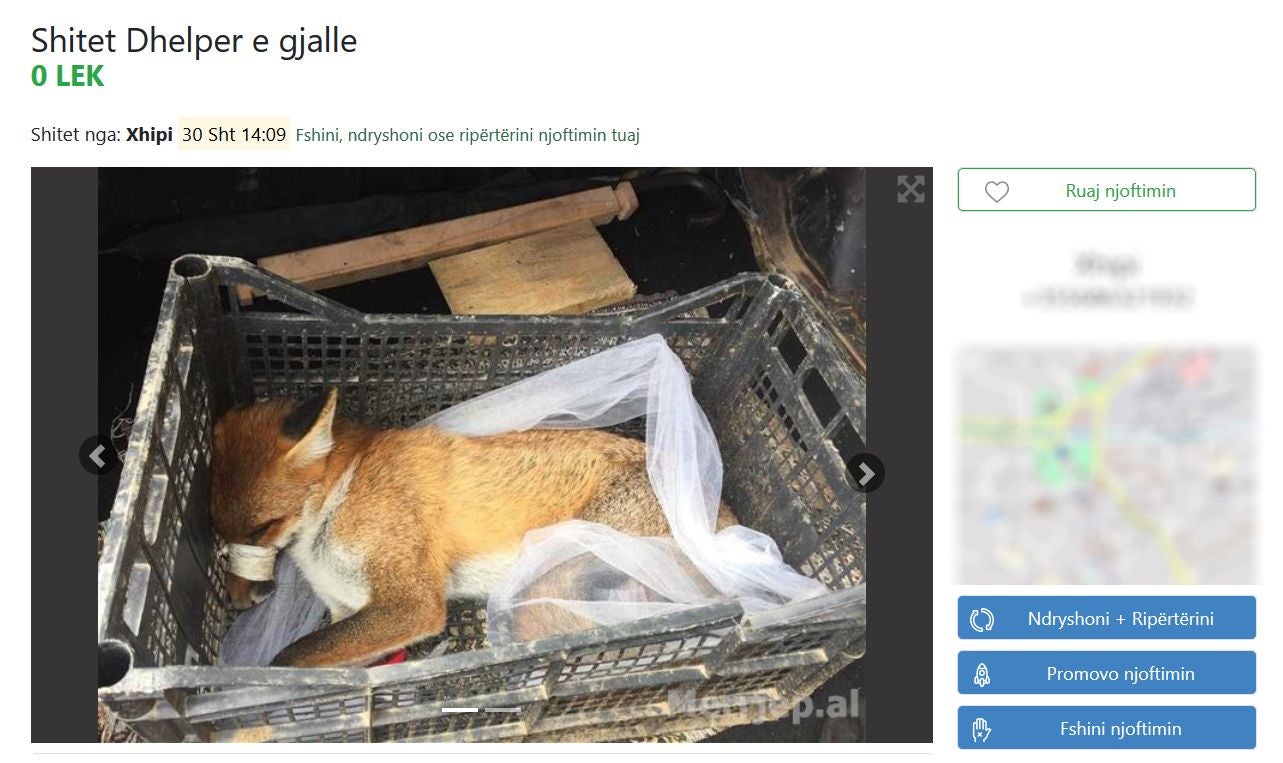
Many photographs of the animals – along with foxes, barn owls and wolves – showed them with their mouths taped up or their claws chained.
Stop the Wildlife Trade: Live animals for sale
Show all 10
It’s a profitable business: a tiny capuchin monkey was offered for €750 (£675), and a barn owl, a bear cub and a wolf for €500 each.
The buyers are mostly restaurant and hotel owners who keep the animals to attract tourists, or individuals who want the animals as pets and status symbols, charity workers said.
Eagles, the national symbol of Albania, are especially popular with buyers and are often found stuffed as trophies in public places.
The menu featuring mish ariu – bear meat (PPNEA)
But hunting protected species, keeping them captive and selling them is banned in Albania, following a huge decline of native wildlife in the country.
Offenders may be jailed under the law, which was tightened in October, but enforcement of it is lax.
Four Paws said that after its team reported some of the illegal adverts, they were deleted but new ones reappeared.
“A large majority of the photographs displayed severe animal cruelty, such as foxes with sealed muzzles in plastic boxes, bear cubs in chains and birds with their feet tied,” said Barbara van Genne, of the chaity.
A tiny capuchin monkey on sale for €750 (Four Paws)
Monkeys and birds of prey are often kept in bars and restaurants in Albania as a tourist attraction, while foxes are sold for their fur, according to the investigators.
Wolves are bought to be cross-bred with dogs for the puppies to be sold as guard dogs, commonly used in the mountains against wolves. But other animals are killed, stuffed and put on display.
Animals’ mouths are often taped to prevent them biting and their feet chained to stop them running away.
A restaurant in the town of Drilon has also been found advertising bear meat on its menu on Facebook. The listing, for “mish ariu” – Albanian for bear meat – added “ne sezone”, meaning “according to season”.
A live fox with its mouth taped up advertised for sale (Four Paws)
An online restaurant portal, updated earlier this month, confirms the restaurant offering.
A spokesperson for Protection and Preservation of Natural Environment in Albania (PPNEA) said: “What is especially alarming about this is not only the fact that bear meat is being sold, it is also the addition in brackets of “ne sezone”, which gives the impression that there’s a hunting season for bears.
“In fact there’s no hunting season for any wild animals in Albania, there’s a hunting moratorium and hunting ban for years throughout the whole country – passed in 2014 and extended in 2016 until March 2021.
“The massive decline of wildlife in Albania triggered this.”
Bear meat dishes have previously been seen in Asian countries. The meat can trigger disease caused by parasites, with symptoms including diarrhoea, cramps, fever and hallucinations.
Prof James Wood, head of department of veterinary medicine and an infection expert at the University of Cambridge, said Covid-19 and other zoonotic viruses can be carried by contaminated meat from any species.
“However, the risks are far greater from butchering and hunting than they are from simple consumption,” he said.
“Bears are no more likely to act as a source of a zoonotic virus than any other species group.” He added that cooking was a highly effective means of destroying the Covid-19 virus and other infections, but that “eating bears is, of course, highly undesirable for many reasons, including conservation and animal welfare, if they have been kept in captivity before being killed”.
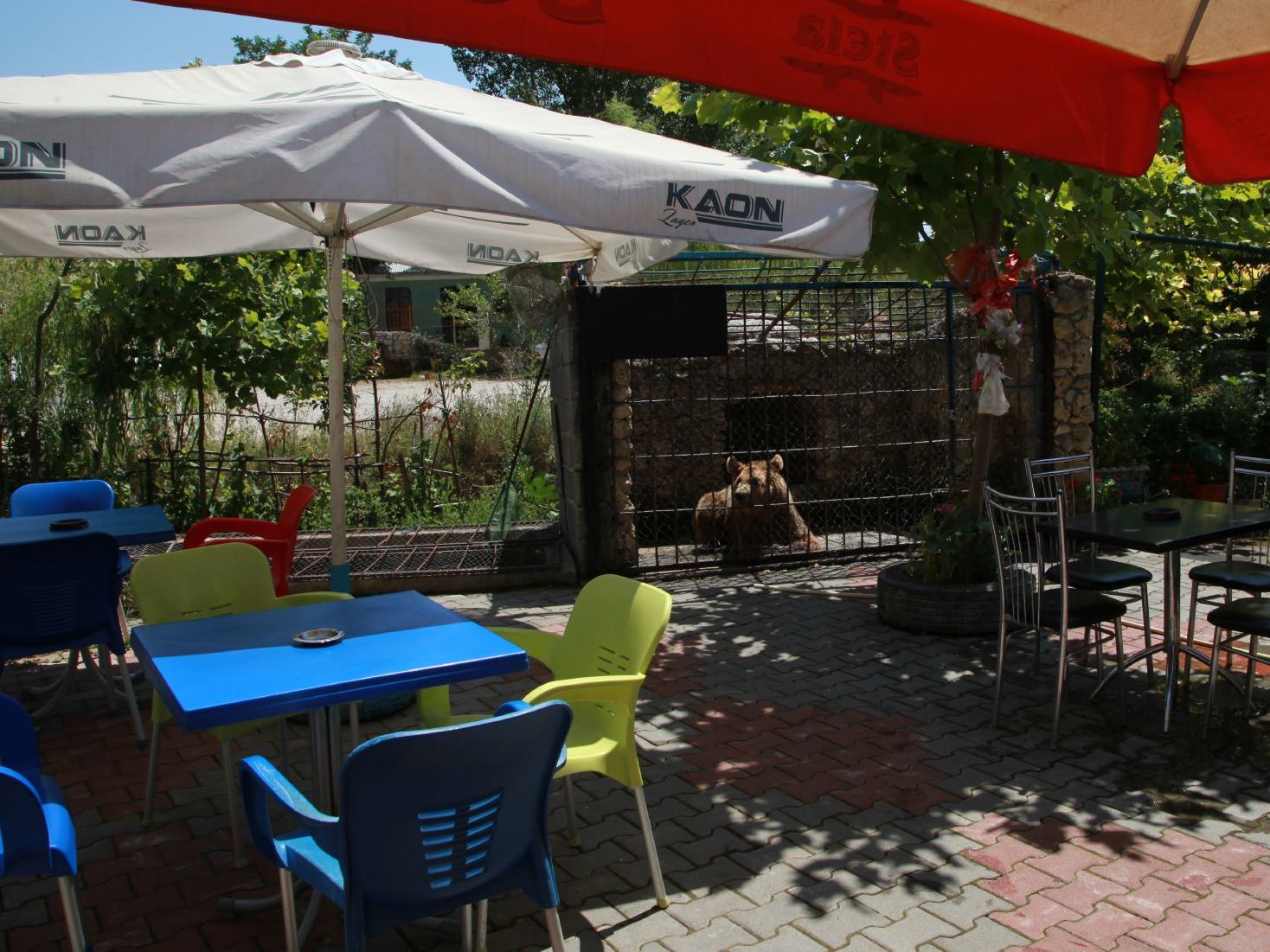
A bear kept in a cage at a restaurant (Four Paws)
Ms van Genne said: “Four Paws has been active in Albania since 2015 but we have never seen such atrocities before. Until now we have mainly focused on restaurants that keep bears in small cages for entertainment of guests.
“This bizarre new discovery is a further indication that the commercial wildlife trade in Albania is out of control.”
She warned that if the government did not intervene soon, “the few native wild animals left will be history”.
“The platforms need to introduce preventive measures such as seller identification to stop these ads. However, the main problem for the illegal trade remains – the lack of control and enforcement by the authorities,” she claimed.
In the 1990s, there were still about 200 pairs of eagles in Albania, but today the number has halved.
A wildlife sanctuary that can carry out criminal prosecutions, take in rescues and educate people in species protection was urgently needed in Albania, Ms van Genne said.
CHAMPERY, Switzerland (Reuters) – Alpine ski resorts emptied on Sunday as governments ordered new measures to limit the spread of coronavirus in Europe, including the closure of ski lifts and restaurants.
Skiers walk past a closed chair-lift after the closure of all ski resorts, including Les Portes du Soleil, since March 14 because of the outbreak of the coronavirus disease (COVID-19) in Les Crosets, Switzerland, March 15, 2020. REUTERS/Denis Balibouse
Switzerland, which has more than 1,500 confirmed cases and is wedged between badly affected European neighbors, on Friday ordered a ban on gatherings of more than 100 people, saying it applied also to ski resorts.
France adopted even stricter measures on Saturday closing cafes, shops and restaurants. Austria’s western region of Tyrol, home to popular ski resorts where the country’s first cases were reported, announced a total lockdown on Sunday.
In the Swiss village of Champery, part of the vast Portes du Soleil resort that spans the border with France, tourists were checking out of hotels and removing skis from rental lockers. Large slope maps showed red crosses over the lifts.
“It’s sad as the snow is magnificent,” said Damien Gavillet, a 39-year-old ski instructor, at the bottom of the lift. “It’s true we are nearly at the end of the season but there are still great opportunities.”
Some determined skiers, lured by the good conditions and sunshine, didn’t let the lack of working lifts deter them and hiked up to the top on back-country skis and enjoyed empty slopes.
Others donned snowshoes and walked to the top of the slopes in bright sunshine to enjoy picnics there. Lower down, a few families with small children were sledding on the nursery slopes.
Around 5,000 people earn a living, either directly or indirectly, from tourism on the Swiss side of Portes du Soleil resort. Normally, the ski season here would last until late April, after the Easter holidays.
“It’s a catastrophe,” said a shop owner in the village, dotted with wooden chalets. “People have been leaving the village for the last 48 hours.”
Switzerland has made 10 billion Swiss francs ($10.52 billion) available in immediate assistance to mitigate the economic impact of the coronavirus outbreak, the government said on Friday.
ADVERTISEMENT
Perhaps aware of the blow to tourism, some Swiss resorts kept lifts running on Saturday, witnesses said, but all appeared to be conforming on Sunday after Berne sent a reminder.
Some saw the bright side, noting the fact that it was a great location to avoid the crowds.
“This is an ideal place for isolation,” said a German woman.
Germany and France are teaming up to push for the end of male chick shredding in the European Union by the end of 2021.
Agriculture ministers Julia Klöckner of Germany and Didier Guillaume of France announced their plans to help press this issue further during a Monday meeting in Germany.
“It’s time to end the shredding of chicks. France and Germany should be the European motor to advance on this issue,” Guillaume said, according to France24.
Shredding refers to the act of killing male chicks shortly after they hatch. This practice occurs in many poultry businesses because male chicks don’t produce eggs and generate less meat than their female counterparts.
The two European countries hope to bring together industry groups, companies, researchers and campaign groups to “share scientific knowledge” and “implement alternative methods,” France24 reports.
STORY CONTINUES BELOW ADVERTISEMENT
“We welcome this scheme and the fact that non-governmental organizations are involved, but we expect clear regulatory commitments,” Agathe Gignoux of CIWF, a French NGO, said.
In 2009, the Associated Press reported U.S. egg producers euthanize 200 million male chicks per year. According to AP, Chicago-based animal rights organization Mercy for Animals videotaped male chicks being ground up alive while undercover in Iowa hatchery Hy-Line North America that same year.
The same practice appears to occur in Canada, too, though the Canadian government has announced recent changes in an effort to minimize this waste.
Jean-Michel Laurin, president and CEO of the Canadian Poultry and Egg Processors Council, told Global News that the industry has been working towards eliminating the euthanizing of male chicks.
“This requires a great deal of research, which has been occurring worldwide and includes Canadian-based research which has been active for about 10 years,” he said. “Currently, stakeholders in Canadian industry have made significant investments to bring us beyond the research trial phase.”
“Our industry is committed to continually improving practices. Farmers, hatcheries and others in the supply chain have demonstrated, over generations, their desire to improve and to respond to change.”
STORY CONTINUES BELOW ADVERTISEMENT
He added that the National Farm Animal Care Council’s (NFACC) Code of Practice for the Care and Handling of Chickens, Turkeys and Breeders lists several methods to euthanize day-old chicks and emphasizes that in all circumstances, the termination of life must be instantaneous.
2:36
Toronto Chick-fil-A launch draws customers and demonstrators
Toronto Chick-fil-A launch draws customers and demonstrators
In 2018, then-Agriculture and Agri-Food Minister Lawrence MacAulay announced an $844,000 investment would go towards developing an electronic scan to determine a bird’s sex and fertility of eggs prior to hatching, Poultry World reported.
This would mean male eggs could be sold before hatching, which would increase capacity and efficiency of Canadian hatcheries and ultimately end male chick culling.
“The Canadian egg industry is driving our economy and creating good jobs,” he said in a statement. “The government of Canada is produce [sic] to support the Egg Farmers of Ontario for this first-of-its-kind study that will make Canada a world leader in animal welfare.
“This investment will help pilot a solution that will be welcomed in Canada and around the world and will keep the egg industry strong and growing.”
Water is sprayed on a taxiway at Schiphol airport in Amsterdam during extreme heat. Photograph: Robin van Lonkhuijsen/AFP/Getty Images
The Netherlands and Belgium have recorded their highest ever temperatures as the second extreme heatwave in consecutive months to be linked by scientists to the climate emergency advances across the continent.
The Dutch meteorological service, KNMI, said the temperature reached 39.1C(102F) at Gilze-Rijen airbase near the southern city of Tilburg on Wednesday afternoon, exceeding the previous high of 38.6C set in August 1944.
In Belgium, the temperature in Kleine-Brogel hit 38.9C, fractionally higher than the previous record of 38.8C set in June 1947. Forecasters said temperatures could climb further on Wednesday and again on Thursday.
“The most extreme heat will build from central and northern France into Belgium, the Netherlands and far-western Germany into Thursday,” said Eric Leister of the forecasting group AccuWeather, with new all-time highs also possible in Germany and Luxembourg.
After several cities in France broke previous temperature records on Tuesday, including Bordeaux, which hit 41.2C, the national weather service, Météo France, said Paris was likely to beat its all-time high of 40.4C, set in July 1947, with 42C on Thursday.
City records in Amsterdam and Brussels are also expected to fall. Cities are particularly vulnerable in heatwaves because of a phenomenon known as the urban heat island effect, in which concrete buildings and asphalt roads absorb heat during the day and emit it again at night, preventing the city from cooling.
The latest heatwave, caused by an “omega block” – a high-pressure pattern that blocks and diverts the jet stream, allowing a mass of hot air to flow up from northern Africa and the Iberian peninsula – follows a similar extreme weather event last month that made it the hottest June on record.
Quick guide
What is causing Europe’s heatwaves?
Show
The highest ever June temperatures were recorded in the Czech Republic, Slovakia, Austria, Andorra, Luxembourg, Poland and Germany, while France registered an all-time record high of 45.9C in the southern commune of Gallargues-le-Montueux.
Clare Nullis, a World Meteorological Organization spokeswoman, said the heatwaves bore the “hallmark of climate change”. The extreme events were “becoming more frequent, they’re starting earlier and they’re becoming more intense”, she said. “It’s not a problem that’s going to go away.”
The 26-28 June heatwave in France was 4C hotter than a June heatwave would have been in 1900, according to World Weather Attribution, a new international programme helping the scientific community to analyse the possible influence of climate change on extreme weather events.
A study published earlier this year by the Swiss Federal Institute of Technology in Zürich said the summer heatwave across northern Europe last year would have been “statistically impossible” without climate change driven by human activity.
Rail passengers in Paris are given bottled water as temperatures on the city’s transport network soar. Photograph: Dominique Faget/AFP/Getty Images
KNMI has issued a code orange extreme temperature warning for everywhere except the offshore Wadden Islands and implemented its “national heat emergency” plan, while Belgium has taken the unprecedented step of placing the entire country on a code red warning.
Spain has also declared a red alert in the Zaragoza region, where the worst wildfires in 20 years took place last month. The EU’s Copernicus Emergency Management Service warned of an “extreme danger” of further forest fires in France and Spain on Thursday, with a high or very high threat level in Portugal, Italy, Belgium and Germany.
Twenty French départements were also placed on red alert. Agnès Buzyn, the health minister, said: “Nobody is immune in the face of such extreme temperatures. There are risks even if you are not particularly vulnerable.” Britain’s Met Office issued similar advice and said the UK all-time high of 38.5C, recorded in Faversham, Kent, in August 2003, could also be exceeded on Thursday.
Local authorities in France have placed restrictions on water usage in 73 of the country’s 96 départements following dramatic falls in ground and river water levels. “It’s tricky but under control, but we need to be very vigilant,” said the junior environment minister, Emmanuelle Wargon.
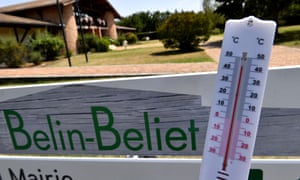
A thermometer shows the temperature outside the town hall of Belin-Béliet in south-western France. Photograph: Georges Gobet/AFP/Getty Images
The French energy company EDF said it was shutting down two reactors at its Golfech nuclear power plant in the southern Tarn-et-Garonne region in order to limit the heating of water used to keep the reactors cool.
Scientists have said such heatwaves are closely linked to the climate emergency and will be many times more likely over the coming decades.
Last month, the Potsdam Institute for Climate Impact Research said Europe’s five hottest summers since 1500 had all occurred in the 21st century – in 2018, 2010, 2003, 2016 and 2002.
Monthly records were now falling five times as often as they would in a stable climate, the institute said, adding that this was “a consequence of global warming caused by the increasing greenhouse gases from burning coal, oil and gas”.
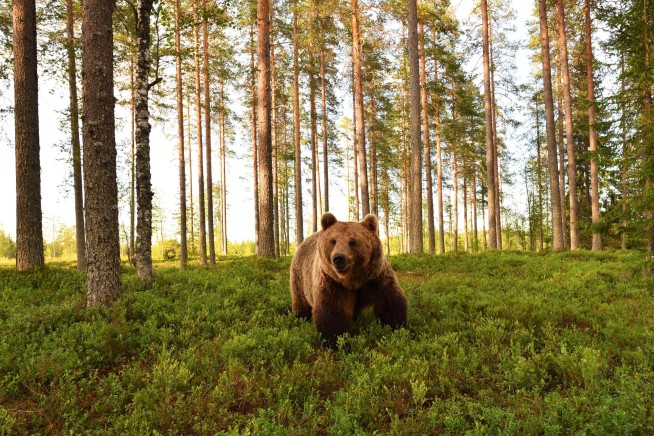
A European brown bear roams a forest. (Getty/ErikMandre)
(NEWSER) – Forest rangers are searching the woods for a bear that climbed over three electric fences and a 13-foot barrier to escape a wildlife enclosure in Northern Italy. The bear had been captured only hours before, the Guardian reports. “Run and save yourself,” the president of an animal rights group implored. “We are on the side of the bear and of freedom.” The president of the province of Trentino had ordered the capture of the European brown bear after it was spotted near residential areas. After the escape, he authorized rangers to shoot the bear, labeled M49, if it went near people, per MSN. Italy’s environment minister overruled that order, saying, “M49’s escape from the enclosure cannot justify an action that would cause its death.” He sent a team to Trentino to help catch the bear without harming it, and to investigate the escape.
Animal rights advocates mocked the bear’s captors. One cheered the bear on, and another said: “A solid electrified fence with adequate power is an insurmountable barrier even for the most astute bears. Obviously the structure was not working properly, since bears do not fly.” An anti-hunting organization said that “evidently, M49 is an escape genius … gifted with superpowers akin to a hero of Marvel Comics.” The group suggested the bear was allowed to escape Sunday so it could be decreed dangerous and killed. Italy’s constitution court, per ANSA, on Tuesday upheld provincial laws allowing the capture and killing of bears and wolves that pose a threat. The bear was spotted by a camera on Tuesday. Rangers think it’s somewhere in the Marzoil woods near Trento. (Read more escaped animal stories.)
Lead author Valerio Donfrancesco from the Centre for Ecology and Conservation at the University of Exeter warns that wild populations of wolves will soon give way to wolf-dogs if nothing is done to manage the interactions of the two species.
Wolf-dogs are a hybrid species that results from the mating of wolf and dog. The study states that wolf-dog offspring are most commonly found in areas where human territory borders wolf territory and where domestic dogs are allowed to roam free.
Habitat destruction is also cited as a cause of wolves edging ever closer to urban areas.
The interbreeding ‘threatens the genetic identity’ of wolves, writes Harry Cockburn for the Independent.
Study reveals disagreements between scientists
In the journal Frontiers in Ecology and Evolution Donfrancesco writes: ‘We need to address this issue before wolf-dog hybrids backcross with wolves to the extent that wolf populations will be lost to hybrid swarms, and the conservation of wild populations will become unfeasible.’
The study scrutinised the approach of numerous scientists and concluded that disparate opinions endangered any forthright restorative action. The lack of agreement among those ‘best placed to tackle the problem‘ was cited as a hindrance to proper manangement of the growing numbers of wolf-dogs.
A rescue bid is also hampered by a lack of research of wolf-dog hybrids. ‘The fact that we know so little about the ecology, behaviour and social acceptance of the wolf-dog hybrids adds a layer of concern to the issue,’ Mr Donfrancesco told the Independent.
Should the number of wolf-dog hybrids continue to rise, the long-term survival and evolution of the lupine species are threatened.
Despite the research it seems inevitable that in some parts of northern Europe wolf populations will cease to be, due to the steady encroachment of humans into wilderness and the vast numbers of domestic dogs that accompany human habitations.
Co-author Dr Nibedita Mukherjee, from the University of Exeter, said: ‘We hope that by highlighting areas of disagreement and why they occur, we will be able to build a more unified scientific opinion, and aid an effective management of this urgent issue.’



/cdn.vox-cdn.com/uploads/chorus_image/image/67785080/mink_GettyImages_144813756.0.jpg)






 Exposing the Big Game