Exposing the Big Game

Forget Hunters' Feeble Rationalizations and Trust Your Gut Feelings: Making Sport of Killing Is Not Healthy Human Behavior

Exposing the Big Game

Is our most distant animal relative a sponge or a comb jelly? Our study provides an answer

DECEMBER 14, 2020

by Max Telford, The Conversation

https://phys.org/news/2020-12-distant-animal-relative-sponge-jelly.html

The theory of evolution shows that all of life stems from a single root and that we are related, more or less distantly, to every other living thing on Earth. Our closest ancestors, as Charles Darwin recognized, are to be found among the great apes. But beyond this, confusion over the branching pattern of the tree of life means that things become less clear.

We know that life evolved from a common universal ancestor that gave rise to bacteria, archaea (other types of single-celled microorganisms) and eukaryotes (including multi-cellular creatures such as plants and animals). But what did the first animals look like? The past ten years have seen a particularly heated debate over this question. Now our new study, published in Science Advances, has come up with an answer.

Sponge vs comb jelly

From the 19th century to about ten years ago, there was general agreement that our most distant relatives are sponges. Sponges are so different from most animals that they were originally classified as members of the algae. However, genes and other features of modern sponges, such as the fact that they produce sperm cells, show that they certainly are animals. Their distinctness and simplicity certainly fit with the idea that the sponges came first.

But over the past decade, this model has been challenged by a number of studies comparing DNA from different animals. The alternative candidates for our most distant animal relatives are the comb jellies: beautiful, transparent, globe-shaped animals named after the shimmering comb-rows of cilia they beat to propel themselves through the water.

Comb jellies are superficially similar to jellyfish and, like them, are to be found floating in the sea. Comb jellies are undoubtedly pretty distant from humans, but, unlike the sponges, they share with us advanced features such as nerve cells, muscles and a gut. If comb jellies really are our most distant relatives, it implies that the ancestor of all animals also possessed these common features. More extraordinarily, if the first animals had these important characters then we have to assume that sponges once had them but eventually lost them.

Tracing the evolutionary treehttps://googleads.g.doubleclick.net/pagead/ads?guci=2.2.0.0.2.2.0.0&client=ca-pub-0536483524803400&output=html&h=280&slotname=5350699939&adk=3784993980&adf=1857921027&pi=t.ma~as.5350699939&w=753&fwrn=4&fwrnh=100&lmt=1607976000&rafmt=1&psa=1&format=753×280&url=https%3A%2F%2Fphys.org%2Fnews%2F2020-12-distant-animal-relative-sponge-jelly.html&flash=0&fwr=0&rpe=1&resp_fmts=3&wgl=1&adsid=ChEIgLfc_gUQ17atyMLI5oycARJMAOmZ4VFS9FL0yL2-5YpouilpGyW0gBryAK_J2PMyYDQ13aHc8cLYvLK_4QijpUTgyP6vWBKsOkwMsdcvhK_JcpIJj4ZhCdU6IOy9-Q&tt_state=W3siaXNzdWVyT3JpZ2luIjoiaHR0cHM6Ly9hZHNlcnZpY2UuZ29vZ2xlLmNvbSIsInN0YXRlIjowfSx7Imlzc3Vlck9yaWdpbiI6Imh0dHBzOi8vYXR0ZXN0YXRpb24uYW5kcm9pZC5jb20iLCJzdGF0ZSI6MH1d&dt=1607975993916&bpp=31&bdt=340&idt=738&shv=r20201203&cbv=r20190131&ptt=9&saldr=aa&abxe=1&cookie=ID%3D5d55f89f953c9743-226937f255c500eb%3AT%3D1607975994%3ART%3D1607975994%3AS%3DALNI_MbpNYCRwOcBkY2jqaYGvoErrRXnuQ&prev_fmts=0x0&nras=1&correlator=8200622149384&frm=20&pv=1&ga_vid=185394846.1565457508&ga_sid=1607975995&ga_hid=1008334346&ga_fc=0&u_tz=-480&u_his=1&u_java=0&u_h=640&u_w=1139&u_ah=607&u_aw=1139&u_cd=24&u_nplug=3&u_nmime=4&adx=263&ady=2397&biw=1123&bih=538&scr_x=0&scr_y=250&eid=42530671%2C21066435&oid=3&pvsid=1434179952040310&pem=466&rx=0&eae=0&fc=896&brdim=0%2C0%2C0%2C0%2C1139%2C0%2C1139%2C607%2C1139%2C537&vis=1&rsz=%7C%7CpEebr%7C&abl=CS&pfx=0&fu=8320&bc=31&jar=2020-12-14-19&ifi=1&uci=a!1&btvi=1&fsb=1&xpc=CAFvASMeBz&p=https%3A//phys.org&dtd=6692

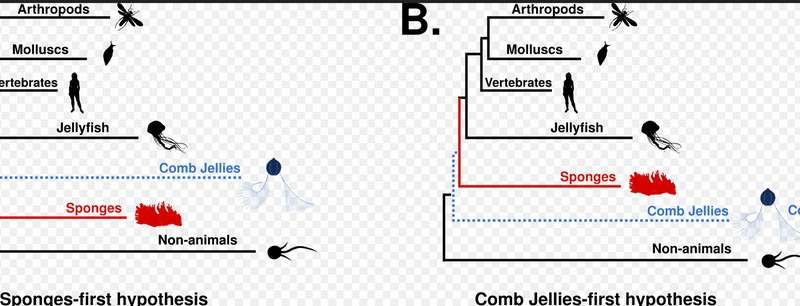
To understand how species evolved, scientists often use phylogenetic trees, in which the tips of the branches represent species. The points where branches split represent a common ancestor. The below image shows an example of a phylogenetic tree in which the sponge splits off first, and one in which the comb jelly splits off first.

Both the sponges-first and comb jellies-first evolutionary trees have been supported by different studies of genes, and the dispute seems to have resulted in a transatlantic stalemate, with most Europeans preferring the traditional sponges-first and the North Americans generally preferring the novel comb jellies-first.

The argument boils down to a question of how best to analyze the copious genetic data we now have available. One possibility put forward by the sponges-first supporters is that the animal tree that put comb jellies first is the result of an error. The problem occurs when one of the groups being studied has evolved much faster than the others. Fast evolving groups often look like they have been around for a long time. The comb jellies are one such group. Could the fast evolution of the comb jellies be misleading us into thinking they arose from an earlier split than they really did?

Are we being fooled by jellies?

We have approached this problem in a new way—directly investigating the possibility that the fast-evolving comb jellies are fooling us. We wanted to ask whether the unequal rates of evolution we see in these animals are likely to result in a wrong answer.
Is our most distant animal relative a sponge or a comb jelly? Our study provides an answer
Two different evolutionary trees. Author provided

Our new way of working was to dissect the problem by simulating how DNA evolution happens using a computer. We started with a random synthetic DNA sequence representing an ancestral animal. In the computer, we let this sequence evolve, by accumulating mutations, under two different conditions—either in accordance with the sponge-first model or the comb jelly-first model. The sequences evolve according to the branching patterns of each tree.

We ended up with a set of species with DNA sequences that are related to one another in a way that reflects the trees they were evolved on. We then used each of these synthetic data sets to reconstruct an evolutionary tree.

We found that when we built trees using data simulated according to the comb jellies-first model, we could always easily correctly reconstruct the tree. That’s because the bias coming from their fast rate of change actually reinforced the information from the tree—in this case also showing they are the oldest branch. The fact that the tree information and the bias both point in the same direction guarantees we would get the right result. In short, if the comb jellies really were the first branch, then there would be no doubt about it.

When we simulated data with the sponges as the first branch, however, we very often reconstructed the wrong tree, with the comb jellies ending up as the first branch. This is clearly a more difficult tree to get right and the reason is that the tree information—in this case showing that the sponges are the oldest branch—is contradicted by the bias coming from the fast evolving comb jellies (which supports comb jellies-first).

The long branch leading to the comb jellies can indeed cause them to appear older than they really are and this difficulty reconstructing the tree is exactly what we encounter with real data.

So, who came first? The chances are that the genetic analyzes suggesting that comb jellies came first may in fact suffer from not accounting for the bias that makes these animals look older than they really are. In the end, our work suggests that the sponges really are our most distant animal relatives.


Explore furtherComb jellies make their own glowing compounds instead of getting them from food

Madagascan fossil ‘turns bird evolutionary anatomy on its head’

  1.  Madagascan fossil ‘turns bird evolutionary anatomy on its head’
Ancient Madagascan bird fossil had a dinosaur bone structure but a modern face © Mark Witton

Save 52% when you subscribe to BBC Science Focus Magazine

The bird, named Falcatakely, had a dinosaur-like facial bone structure, but a modern-looking face.

By Sara Rigby

30th November, 2020 at 09:56

A new species of bird from around 68 million years ago has been discovered on the island of Madagascar, and its unusual beak could give new insights into how modern birds evolved.

Discovered from a single, nearly complete skull that was fossilised after it was buried in muddy debris, Falcatakely is a crow-sized bird with a scythe-shaped beak. This is not at all unusual in modern birds, and is similar to hornbills and toucans. However, there’s a gap of tens of millions of years between these species evolving.

“What is so amazing is that these lineages converged on this same basic anatomy despite being very distantly related,” said Dr Ryan Felice, lecturer in human anatomy at University College London and one of the study’s authors. In fact, this is the first time such a beak shape has ever been found on a bird from the Mesozoic era – the era that contains the Cretaceous, Jurassic and Triassic periods.

Looking underneath Falcatakely’s skin reveals another unusual feature. Though its face may have the appearance of a modern bird, its underlying bone structure is much more like a dinosaur’s. Modern birds have a beak made mostly of one large bone, called the premaxilla. Ancient birds, like the dinosaur Archaeopteryx, instead had two, with a small premaxilla and a large maxilla.

Read more about the evolution of birds:

So, Falcatakely developed a modern face shape without a modern facial structure. “Falcatakely might generally resemble any number of modern birds with the skin and beak in place, however, it is the underlying skeletal structure of the face that turns what we know about bird evolutionary anatomy on its head,” said Prof Patrick O’Connor, an anatomist at Ohio University.

The team haven’t been able to study the skull directly. Bird fossils are rare, because their skeletons are so fragile that they are usually destroyed rather than fossilised. The specimen is so fragile that they couldn’t even remove it from the rock. Instead, the team used high-resolution micro-computed tomography to scan the fossil, which they then used to digitally reconstruct it.

Artist reconstruction of Falcatakely © Mark Witton

Artist reconstruction of Falcatakely © Mark Witton

“The discovery of Falcatekely underscores that much of the deep history of the Earth is still shrouded in mystery,” added O’Connor, “particularly from those parts of the planet that have been relatively less explored.

“The more we learn about Cretaceous-age animals, plants, and ecosystems in what is now Madagascar, the more we see its unique biotic signature extends far back into the past and is not merely reflective of the island ecosystem in recent times.”

Plant evolves to become less visible to humans

NOVEMBER 20, 2020

https://phys.org/news/2020-11-evolves-visible-humans.html

by University of Exeter

Plant evolves to become less visible to humans
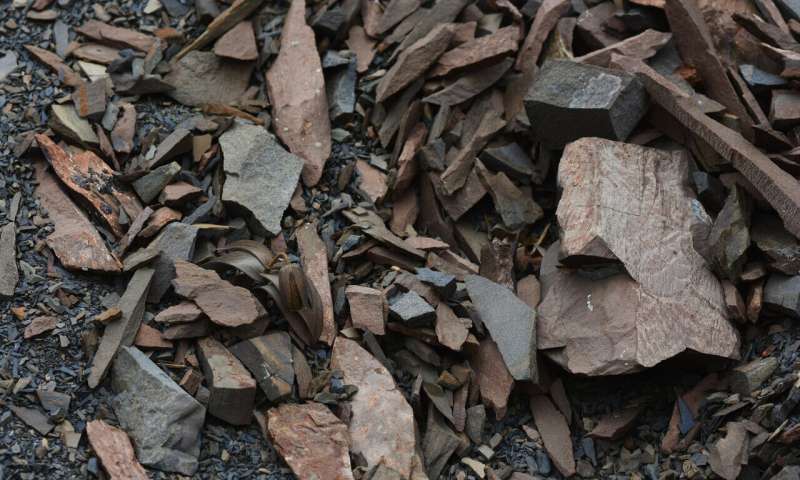
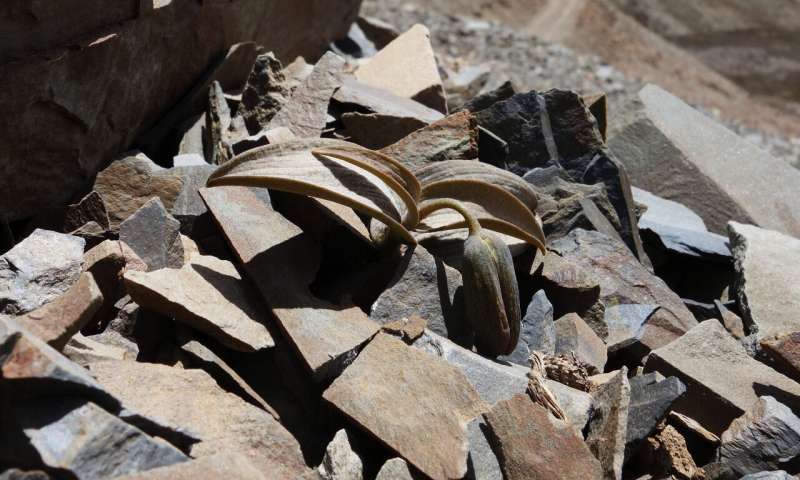
Fritillaria delavayi in a population with high harvest pressure. Credit: Yang Niu

A plant used in traditional Chinese medicine has evolved to become less visible to humans, new research shows.

Scientists found that Fritillaria delavayi plants, which live on rocky slopes of China’s Hengduan mountains, match their backgrounds most closely in areas where they are heavily harvested.

This suggests humans are “driving” evolution of this species into new colour forms because better-camouflaged plants have a higher chance of survival.

The study was carried out by the Kunming Institute of Botany (Chinese Academy of Sciences) and the University of Exeter.

“It’s remarkable to see how humans can have such a direct and dramatic impact on the colouration of wild organisms, not just on their survival but on their evolution itself,” said Professor Martin Stevens, of the Centre for Ecology and Conservation on Exeter’s Penryn Campus in Cornwall.

“Many plants seem to use camouflage to hide from herbivores that may eat them—but here we see camouflage evolving in response to human collectors.

“It’s possible that humans have driven evolution of defensive strategies in other plant species, but surprisingly little research has examined this.”

Plant evolves to become less visible to humans
Fritillaria delavayi in a population with high harvest pressure. Credit: Yang Niu

In the new study, the researchers measured how closely plants from different populations matched their mountain environment and how easy they were to collect, and spoke to local people to estimate how much harvesting took place in each location.

They found that the level of camouflage in the plants was correlated with harvesting levels.

In a computer experiment, more-camouflaged plants also took longer to be detected by people.

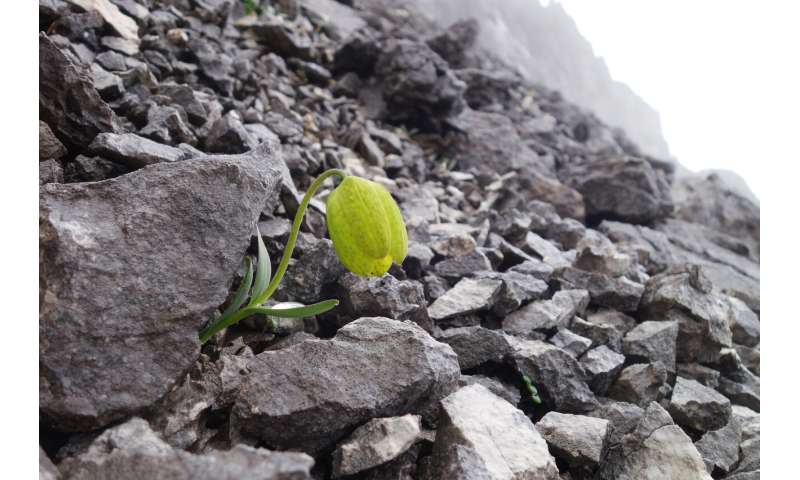
Fritillaria delavayi is a perennial herb that has leaves—varying in colour from grey to brown to green—at a young age, and produces a single flower per year after the fifth year.

Plant evolves to become less visible to humans
Fritillaria delavayi in a population with low harvest pressure. Credit: Yang Niu

The bulb of the fritillary species has been used in Chinese medicine for more than 2,000 years, and high prices in recent years have led to increased harvesting.

“Like other camouflaged plants we have studied, we thought the evolution of camouflage of this fritillary had been driven by herbivores, but we didn’t find such animals,” said Dr. Yang Niu, of the Kunming Institute of Botany. “Then we realised humans could be the reason.”

Professor Hang Sun, of the Kunming Institute of Botany, added: “Commercial harvesting is a much stronger selection pressure than many pressures in nature. “The current biodiversity status on the earth is shaped by both nature and by ourselves.”

The paper, published in the journal Current Biology, is entitled: “Commercial harvesting has driven the evolution of camouflage in an alpine plant.”

Humans and Neanderthals: Less different than polar and brown bears

https://phys.org/news/2020-06-humans-neanderthals-polar-brown.html

Humans and Neanderthals: less different than polar and brown bears
Credit: Kennis & Kennis Reconstructions

Ancient humans, Neanderthals and Denisovans were genetically closer than polar bears and brown bears, and so, like the bears, were able to easily produce healthy, fertile hybrids according to a study, led by the University of Oxford’s School of Archaeology.

The study, published 3 June in the journal Proceedings of the Royal Society B, shows that the genetic distance values between humans and our ancient relatives were smaller than the distance between pairs of species which are known to easily hybridize and have fertile young.

Professor Greger Larson, Director of the Palaeogenomics & Bio-Archaeology Research Network (PalaeoBARN) at Oxford and senior author of the study says, “Our desire to categorize the world into discrete boxes has led us to think of species as completely separate units. Biology does not care about these rigid definitions, and lots of species, even those that are far apart evolutionarily, swap genes all the time. Our predictive metric allows for a quick and easy determination of how likely it is for any two species to produce fertile  offspring. This comparative measure suggests that humans and Neanderthals and Denisovans were able to produce live fertile young with ease.”

The long history of matings between Neanderthals, humans, and Denisovans has only recently been demonstrated through the analysis of ancient genomes. The ability of mammalian species, including , to produce fertile hybrid offspring has been hard to predict, and the relative fertility of the hybrids remains an open question. Some geneticists have even said that Neanderthals and humans were at the “edge of biological compatibility.”

So the team developed a metric using genetic distances to predict the relative fertility of the first generation of hybrids between any two mammalian species. They did this by analyzing genetic sequence data from different species that had previously been shown to produce hybrid offspring. By correlating the genetic distance with the relative fertility of the hybrid offspring, it was possible to show that the greater the evolutionary distance between any two species, the less likely it is that the  between them would be fertile. In addition, the team used the distance values to determine a threshold of fertility.

When the distance values between humans, Neanderthals and Denisovans were calculated, they were even smaller than the values between several pairs of species which are known readily and easily to hybridize—including  and , and coyotes and wolves. This suggests we could have predicted the existence of Neanderthals and Denisovans in our genomes as soon as the first genetic sequences were generated.

This proxy can also be used to predict the likelihood that any two mammal species can give birth to live hybrids, a useful tool that can be used in decisions about whether to place animals together in zoos.

Richard Benjamin Allen, joint first author of the study says, “Many decisions in  have been made on the basis that related organisms that produce hybrids in captivity should be prevented from doing so. Such an approach has not considered the significant role that hybridisation has played in evolution in the wild, especially in populations under the threat of extinction. Our study can be used to inform future conservation efforts of related  where hybridization or surrogacy programs could be viable alternatives.”


The Largest Parrot That Ever Lived Has Been Discovered in New Zealand

MORGAN KRAKOW, THE WASHINGTON POST
8 AUG 2019

A collection of bird bones sat in lab storage for more than a decade, believed to be the remains of an ancient eagle. Little did scientists know what was hiding in the fossils: “Squawkzilla.”

Heracles inexpectatus was discovered by scientists in New Zealand, according to a study published Wednesday. At about 3 feet (1 meter) tall, the bird would probably have stood nearly as tall as the average American 4-year-old.

Scientists have been finding enormous prehistoric birds for years, but this one still shocked them. It’s the largest parrot ever known to have walked the Earth. It might have even preyed on other birds.

At an estimated 15 pounds (7 kilograms), the now-extinct bird beats out all the other parrot competitors, at nearly double the weight of the endangered kakapo, New Zealand’s reigning giant parrot.

The scientists approximated its size based on two leg bones, called tibiotarsi, under the assumption that they both came from the same bird. The researchers compared the drumstick-like bones to bird skeletons in the South Australian Museum collection and the Smithsonian National Museum of Natural History’s electronic collection.

The fossils were dug up in 2008 in St Bathans, New Zealand, where many thousands of bird bones have been found.

The large bones, believed to be the bones of an ancient eagle, flew under the radar for a decade. It was during a research project in the lab of Flinders University paleontologist Trevor Worthy that graduate student Ellen Mather rediscovered the bones.

After that, a team of researchers began reanalyzing the findings earlier this year, according to the BBC.

“It was completely unexpected and quite novel,” Worthy, the study’s lead author, told National Geographic. “Once I had convinced myself it was a parrot, then I obviously had to convince the world.”

The bird probably lived during the Early Miocene, which spanned from about 23 million to 16 million years ago.

Researchers concluded that the bird probably couldn’t fly and consumed what was along the ground and easy to reach, according to National Geographic. But that might not have been enough to satiate the giant parrot.

It’s possible the bird had more carnivorous ways, like another New Zealand parrot, the kea, which has been known to attack and subsequently munch upon living sheep, the magazine reported.

Michael Archer, a co-author of the research and paleontologist at the University of New South Wales, told National Geographic that Heracles might have even been eating other parrots, giving way to a nickname: “Squawkzilla.”

Archer told Agence France-Presse the bird had “a massive parrot beak that could crack wide open anything it fancied.”

Heracles probably won’t be the final unforeseen fossil from the St Bathans area, Worthy told AFP. The researchers have turned up many surprising birds and animals over the years.

“No doubt there are many more unexpected species yet to be discovered in this most interesting deposit,” Worthy said.

2019 © The Washington Post

This article was originally published by The Washington Post.

Wildlife Changing Too Slowly to Survive Climate Change


BERLIN, Germany, July 23, 2019 (ENS) – Climate change can threaten species and extinctions can impact ecosystem health, so it is of vital importance to assess how animals respond to changing environmental conditions, and whether these shifts enable the persistence of populations in the long run.

To answer these questions an international team of 64 researchers led by Viktoriia Radchuk, Alexandre Courtiol and Stephanie Kramer-Schadt from the Leibniz Institute for Zoo and Wildlife Research (Leibniz-IZW) evaluated more than 10,000 published scientific studies.

flycatcher

European Pied Flycatcher in Switzerland. This species usually adapts well to environmental changes, Aug. 9, 2018, (Photo by Aaron Maizlish)

They concluded that although animals do commonly respond to climate change, for example by shifting the timing of breeding, such responses are in general insufficient to cope with the rapid pace of rising temperatures and sometimes go in wrong directions.

Their findings are published in the scientific journal “Nature Communications.”

Co-author Thomas Reed, a senior lecturer at University College Cork, Ireland, explains, “These results were obtained by comparing the observed response to climate change with the one expected if a population would be able to adjust their traits so to track the climate change perfectly.”

In wildlife, the most commonly observed response to climate change is an alteration in the timing of biological events such as hibernation, reproduction or migration.

Changes in body size, body mass or other morphological traits have also been associated with climate change, but, as confirmed by this study, show no systematic pattern.

The researchers extracted relevant information from the scientific literature to relate changes in climate over the years to possible changes in both types of traits.

Next, they evaluated whether observed trait changes were associated with higher survival or an increased number of offspring.

Radchuk

Lead author Victoriia Radchuk of the Leibniz Institute for Zoo and Wildlife Research (Photo courtesy Victoriia Radchuk via LinkedIn)

“Our research focused on birds because complete data on other groups were scarce,” says lead author Radchuk. “We demonstrate that in temperate regions, the rising temperatures are associated with the shift of the timing of biological events to earlier dates.”

Co-author Steven Beissinger, a professor at the University of California, Berkeley, said, “This suggests that species could stay in their warming habitat, as long as they change fast enough to cope with climate change.”

Senior author Alexandre Courtiol said, “This is unlikely to be the case because even populations undergoing adaptive change do so at a pace that does not guarantee their persistence.”

Even more worrisome is the fact that the data analyzed included predominantly common and abundant species such as the great tit, Parus major, the European pied flycatcher, Ficedula hypoleuca,or the common magpie, Pica pica, which are known to cope with climate change relatively well.

“Adaptive responses among rare or endangered species remain to be analyzed. We fear that the forecasts of population persistence for such species of conservation concern will be even more pessimistic,” concludes Stephanie Kramer-Schadt, who heads the Department of Ecological Dynamics at Leibniz-IZW.

The scientists hope that their analysis and the assembled datasets will stimulate research on the resilience of animal populations in the face of global change and contribute to a better predictive framework to assist future conservation management actions.

Copyright Environment News Service (ENS) 2019

Global Warming Pushes Microbes into Damaging Climate Feedback Loops

Research is raising serious concerns about climate change’s impact on the world’s tiniest organisms, and scientists say much more attention is needed.

Diatoms under a microscope. Credit: NOAA Corps Collection

Microbiologists issued a statement warning about the climate feedback loops they’re already seeing and called for more research to understand the potential impact. Credit: NOAA Corps Collection

https://insideclimatenews.org/news/18062019/climate-change-tipping-points-microbes-health-soil-oceans-viruses-bacteria


All life on Earth evolved from microorganisms in the primordial slime, and billions of years later, the planet’s smallest life forms—including bacteria, plankton and viruses—are still fundamental to the biosphere. They cycle minerals and nutrients through soil, water and the atmosphere. They help grow and digest the food we eat. Without microbes, life as we know it wouldn’t exist.

Now, global warming is supercharging some microbial cycles on a scale big enough to trigger damaging climate feedback loops, research is showing. Bacteria are feasting on more organic material and produce extra carbon dioxide as the planet warms. In the Arctic, a spreading carpet of algae is soaking up more of the sun’s summer rays, speeding melting of the ice.

Deadly pathogenic microbes are also spreading poleward and upward in elevation, killing people, cattle and crops.

So many documented changes, along with other alarming microbial red flags, have drawn a warning from a group of 30 microbiologists, published Tuesday as a “consensus statement” in the journal Nature Reviews Microbiology.

The microbiologists, in their statement, warned about changes they’re already seeing and called for more research to understand the potential impact. The statement “puts humanity on notice that the impact of climate change will depend heavily on responses of microorganisms, which are essential for achieving an environmentally sustainable future,” they wrote.

“Microbes literally support all life on Earth,” said Tom Crowther, an environmental scientist with ETH Zürich, who was among the signers of the statement. “Maintaining and preserving these incredible communities has to be our highest priority if we intend to maintain the existence that we want on this planet.”

What’s known is that global warming increases microbial activity, driving global warming feedback loops, Crowther said.

His research has showed that accelerated microbial activity in soils will significantly increase carbon emissions by 2050. In another study, he showed how global warming favors fungi that quickly break down dead wood and leaves and release CO2 to the atmosphere.

Other warning signs from the microbial world include spreading crop diseases that threaten food security, microbial parasites that threaten freshwater fish, as well as the fungal epidemic wiping out amphibians world wide.

In the Arctic, a spreading carpet of algae is soaking up more of the sun's summer rays, speeding melting of the ice.

On mountain glaciers and in Greenland, algae is soaking up more of the sun’s summer rays, speeding melting of the ice. Scientists here collect samples of dark microbes for the Black Ice project. Courtesy of Birgit Sattler/University of Innsbruck

A better understanding of the dynamics would not only help make better global warming projections, but that knowledge also is integral to efforts to reduce CO2 levels in the atmosphere with climate-friendly soils, forest and agriculture, said University of Vermont climate researcher Aimée Classen.

“We know microbes are important for the way the way plants grow,” she said. “Can we harness some of that to help plants be more resistant to changing climate and to sequester more carbon in the soil?”

It’s a Health Issue, Too

There are beneficial microbes, and there are pathogens that are deadly to plants and animals. Global warming is making it easier for some of those killers to spread, reproduce and persist in the environment, said MatthewBaylis, a health researcher at the University of Liverpool who joined the consensus statement.

“We’re seeing a remarkable rate of emergence with new and spreading diseases that are affecting our food production, plants and animals, and our own health,” he said.

It’s not all due to climate change. Some of the spread of disease is simply due to people moving around more and moving plants from place to place in commerce and agriculture.

But there is compelling scientific evidence that global warming has brought malaria to higher elevations in Africa even as its being eradicated in other places, and that it has enabled the spread of bluetongue, a livestock disease that affects sheep, Baylis said.

Millions more people will face the risks of these diseases as the climate warms, he said.

“As the environment warms, pathogens can proliferate in new habitats that were previously too cold, and thereby infect humans in these new habitats,” said Kenneth Timmis, an environmental microbiologist at the Technical University Braunschweig, Germany.

Warming oceans are also changing currents and extreme events like El Niño, which disperses pathogens to new habitats where they cause disease, Timmis said. “This is the case for Vibrio, the cause of cholera and related diseases, of which there has been a series of outbreaks in recent years. In general, water-borne infections increase with increasing temperature,” he said.

Microbes Changes Affect Ocean Food Chain

Charges are also being documented in the Southern Ocean around Antarctica, where marine microplankton take in some 40 percent of all the carbon sequestered by all the oceans and sink it to the seafloor, partly mitigating the buildup of greenhouse gases.

About 90 percent of the world’s ocean biomass is microbial, making it a thick, living soup at a microscopic scale, and global warming brewing up some biological storms with as-yet unknown consequences, said Antje Boetius, a marine microbiologist at the Max Planck Institute in Germany.

Various tiny plankton under a microscope. Credit: NOAA Fisheries Collection

Various tiny ocean plankton are studied under a microscope. Credit: NOAA Fisheries Collection

The widely reported extreme low Arctic sea ice extent in the summer of 2012 rippled through the ocean’s ecosystems. Huge amounts of microbial life, in the form of diatoms floating in sea ice east of Greenland drifted to the bottom. Boetius said she measured a noticeable change in ocean chemistry as the dead diatoms and associated bacteria piled up at the bottom of the ocean. The research didn’t trace a direct link to harm to marine animals, but it showed how sudden and dramatic extreme climate events can be.

“In the very deep sea, which everyone thinks is protected, we see the velocity of climate change,” she said.

The breeding and feeding cycles of many other Arctic species are closely linked to the timing and location of plankton blooms, so a disruption of the ocean microbe cycles can fundamentally affect the whole food chain, from birds to whales.

Boetius also warned of other tipping points that haven’t been studied yet, including the erosion of organic permafrost soil to the ocean, where aquatic bacteria could digest the material and release huge amounts of methane and CO2 to the air, as well as a potential increase in toxic algae blooms in the Arctic, where they are now still uncommon.

“For everyone that studies ocean microbiology,” she said, “it’s really scary.”

How Accurate Is Alpha’s Theory of Dog Domestication?

The ‘boy and his dog’ tale is a piece of prehistoric fiction, but scientists are uncovering the true origins of our incredible relationship with dogs

Read more: https://www.smithsonianmag.com/science-nature/how-wolves-really-became-dogs-180970014/#v4MLrVTsL0zXWeuq.99
Give the gift of Smithsonian magazine for only $12! http://bit.ly/1cGUiGv
Follow us: @SmithsonianMag on Twitter

image: https://thumbs-prod.si-cdn.com/3XL356XKI9Ay5sy7tIW1FCG6g4s=/800×600/filters:no_upscale()/https://public-media.smithsonianmag.com/filer/85/78/8578258b-78dc-449c-ad11-991e20f92a3b/wolfdog.jpg

wolfdog.jpg

(Flickr/Sonja Pauen)
SMITHSONIAN.COM

Long ago, before your four-legged best friend learned to fetch tennis balls or watch football from the couch, his ancestors were purely wild animals in competition—sometimes violent—with our own. So how did this relationship change? How did dogs go from being our bitter rivals to our snuggly, fluffy pooch pals?

The new drama Alpha answers that question with a Hollywood “tail” of the very first human/dog partnership.

Europe is a cold and dangerous place 20,000 years ago when the film’s hero, a young hunter named Keda, is injured and left for dead. Fighting to survive, he forgoes killing an injured wolf and instead befriends the animal, forging an unlikely partnership that—according to the film—launches our long and intimate bond with dogs.

Just how many nuggets of fact might be sprinkled throughout this prehistoric fiction?

We’ll never know the gritty details of how humans and dogs first began to come together. But beyond the theater the true story is slowly taking shape, as scientists explore the real origins of our oldest domestic relationship and learn how both species have changed along canines’ evolutionary journey from wolves to dogs.

When and where were dogs domesticated?

Pugs and poodles may not look the part, but if you trace their lineages far enough back in time all dogs are descended from wolves. Gray wolves and dogs diverged from an extinct wolf species some 15,000 to 40,000 years ago. There’s general scientific agreement on that point, and also with evolutionary anthropologist Brian Hare’s characterization of what happened next. ’The domestication of dogs was one of the most extraordinary events in human history,” Hare says.

But controversies abound concerning where a long-feared animal first became our closest domestic partner. Genetic studies have pinpointed everywhere from southern China to Mongolia to Europe.

Scientists cannot agree on the timing, either. Last summer, research reported in Nature Communications pushed likely dates for domestication further back into the past, suggesting that dogs were domesticated just once at least 20,000 but likely closer to 40,000 years ago. Evolutionary ecologist Krishna R. Veeramah, of Stony Brook University, and colleagues sampled DNA from two Neolithic German dog fossils, 7,000 and 4,700 years old respectively. Tracing genetic mutation rates in these genomes yielded the new date estimates.

“We found that our ancient dogs from the same time period were very similar to modern European dogs, including the majority of breed dogs people keep as pets,” explained Dr. Veeramah in a release accompanying the study. This suggests, he adds, “that there was likely only a single domestication event for the dogs observed in the fossil record from the Stone Age and that we also see and live with today.”

End of story? Not even close.

In fact, at least one study has suggested that dogs could have been domesticated more than once. Researchers analyzed mitochondrial DNA sequences from remains of 59 European dogs (aged 3,000 to 14,000 years), and the full genome of a 4,800-year-old dog that was buried beneath the prehistoric mound monument at Newgrange, Ireland.

Comparing these genomes with many wolves and modern dog breeds suggested that dogs were domesticated in Asia, at least 14,000 years ago, and their lineages split some 14,000 to 6,400 years ago into East Asian and Western Eurasian dogs ,

But because dog fossils apparently older than these dates have been found in Europe, the authors theorize that wolves may have been domesticated twice, though the European branch didn’t survive to contribute much to today’s dogs. Greger Larson, director of the Wellcome Trust Palaeogenomics & Bio-Archaeology Research Network at Oxford University, suggests that the presence of older fossils in both Europe and Asia, and the lack of dogs older than 8,000 years in between those regions, supports such a scenario.

“Our ancient DNA evidence, combined with the archaeological record of early dogs, suggests that we need to reconsider the number of times dogs were domesticated independently. Maybe the reason there hasn’t yet been a consensus about where dogs were domesticated is because everyone has been a little bit right,′ Larson said in a statement accompanying the study.

The many interbreedings of dogs and wolves also muddy the genetic waters, of course. Such events happen to the present day—even when the dogs in question are supposed to be stopping the wolves from eating livestock.

How did dogs become man’s best friend?

Perhaps more intriguing then exactly when or where dogs became domesticated is the question of how. Was it really the result of a solitary hunter befriending an injured wolf? That theory hasn’t enjoyed much scientific support.

One similar theory argues that early humans somehow captured wolf pups, kept them as pets, and gradually domesticated them. This could have happened around the same time as the rise of agriculture, about 10,000 years ago. The oldest fossils generally agreed to be domestic dogs date to about 14,000 years, but several disputed fossils more than twice that age may also be dogs or at least their no longer entirely wolf ancestors.

Since more recent genetic studies suggest that the date of domestication occurred far earlier, a different theory has gained the support of many scientists. “Survival of the friendliest” suggests that wolves largely domesticated themselves among hunter-gatherer people.

“That the first domesticated animal was a large carnivore, who would have been a competitor for food—anyone who has spent time with wild wolves would see how unlikely it was that we somehow tamed them in a way that led to domestication,” says Brian Hare, director of the Duke University Canine Cognition Center.

But, Hare notes, the physical changes that appeared in dogs over time, including splotchy coats, curly tails, and floppy ears, follow a pattern of a process known as self-domestication. It’s what happens when the friendliest animals of a species somehow gain an advantage. Friendliness somehow drives these physical changes, which can begin to appear as visible byproducts of this selection in only a few generations.

“Evidence for this comes from another process of domestication, one involving the famous case of domesticated foxes in Russia. This experiment bred foxes who were comfortable getting close to humans, but researchers learned that these comfortable foxes were also good at picking up on human social cues,” explains Laurie Santos, director of the Canine Cognition Center at Yale University. The selection of social foxes also had the unintended consequence of making them look increasingly adorable—like dogs.

Hare adds that most wolves would have been fearful and aggressive towards humans—because that’s the way most wolves behave. But some would have been friendlier, which may have given them access to human hunter-gatherer foodstuffs..

“These wolves would have had an advantage over other wolves, and the strong selection pressure on friendliness had a whole lot of byproducts, like the physical differences we see in dogs,” he says. “This is self-domestication. We did not domesticate dogs. Dogs domesticated themselves.”

A study last year provided some possible genetic support for this theory. Evolutionary biologist Bridgette von Holdt, of Princeton University, and colleagues suggest that hypersocial behavior may have linked our two species and zero in on a few genes that may drive that behavior.

“Generally speaking, dogs display a higher level of motivation than wolves to seek out prolonged interactions with humans. This is the behavior I’m interested in,” she says.

Von Holdt’s research shows that the social dogs she tested have disruption to a genomic region that remains intact in more aloof wolves. Interestingly, in humans genetic variation in the same stretch of DNA causes Williams-Beuren syndrome, a condition characterized by exceptionally trusting and friendly behaviors. Mice also become more social if changes occur to these genes, previous studies have discovered.

The results suggest that random variations to these genes, with others yet unknown, may have played a role in causing some dogs to first cozy up with humans.

“We were able to identify one of the many molecular features that likely shape behavior,” she adds.

How have dogs changed since becoming our best friends?

Though the origins of the dog/human partnership remain unknown, it’s becoming increasingly clear that each species has changed during our long years together. The physical differences between a basset hound and wolf are obvious, but dogs have also changed in ways that are more than skin (or fur) deep.

One recent study shows how by bonding with us and learning to work together with humans, dogs may have actually become worse at working together as a species. Their pack lifestyle and mentality appear to be reduced and is far less prevalent even in wild dogs than it is in wolves.

But, Yale’s Laurie Santos says, dogs may have compensated in other interesting ways. They’ve learned to use humans to solve problems.

“Several researchers have presented dogs and wolves with an impossible problem (e.g., a puzzle box that can’t be opened or a pulling tool that stops working) and have asked how these different species react,” Santos explains. “Researchers have found that wolves try lots of different trial and error tactics to solve the problem— they get at it physically. But at the first sign of trouble, dogs do something different. They look back to their human companion for help. This work hints that dogs may have lost some of their physical problem-solving abilities in favor of more social strategies, ones that rely on the unique sort of cooperation domesticated dogs have with humans. This also matches the work showing that dogs are especially good at using human social cues.”

The relationship has become so close that even our brains are in sync. Witness a study showing that dogs hijack the human brain’s maternal bonding system. When humans and dogs gaze lovingly into one another’s eyes, each of their brains secretes oxytocin, a hormone linked to maternal bonding and trust. Other mammal relationships, including those between mom and child, or between mates, feature oxytocin,bonding, but the human/dog example is the only case in which it has been observed at work between two different species.

The intimacy of this relationship means that, by studying dogs, we may also learn much about human cognition.

“Overall. the story of dog cognitive evolution seems to be one about cognitive capacities shaped for a close cooperative relationship with humans, Santos says. “Because dogs were shaped to pick up on human cues, our lab uses dogs as a comparison group to test what’s unique about human social learning.” For example, a recent Yale study found that while dogs and children react to the same social cues, dogs were actually better at determining which actions were strictly necessary to solve a problem, like retrieving food from a container, and ignoring extraneous “bad advice.” Human kids tended to mimic all of their elders’ actions, suggesting that their learning had a different goal than their canine companions’.

We may never know the exact story of how the first dogs and humans joined forces, but dogs have undoubtedly helped us in countless ways over the years. Still, only now may we be realizing that by studying them, they can help us to better understand ourselves.

Read more: https://www.smithsonianmag.com/science-nature/how-wolves-really-became-dogs-180970014/#v4MLrVTsL0zXWeuq.99
Give the gift of Smithsonian magazine for only $12! http://bit.ly/1cGUiGv
Follow us: @SmithsonianMag on Twitter