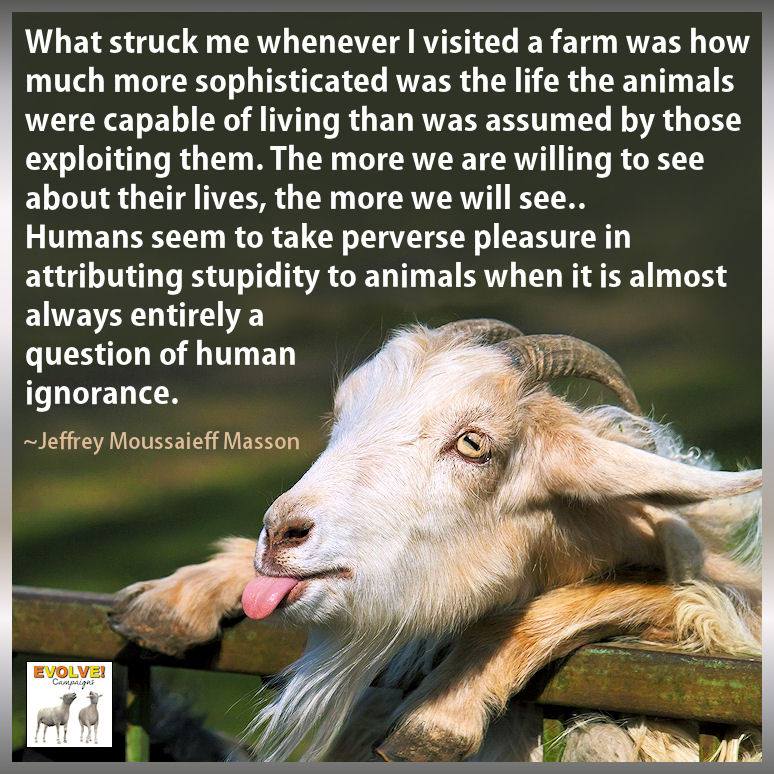
A Question of Human Ignorance
19

 Thomson ReutersAn egg-producing chicken farm run by Sunrise Farm is seen in Harris
NEW YORK (Reuters) – Food distributor Sysco said on Friday that a record U.S. outbreak of avian flu would limit its supply of eggs and chickens that lay them for nine to 18 months, based on information provided to the company by its suppliers.
Sysco is the biggest U.S. food distributor, whose clients include restaurants, hotels and hospitals.
The company is discussing options with its customers, including creating alternative menu items during the period, a Sysco spokesman said in an email.

by Michael Greger, M.D
In Iowa, poultry producers are losing birds due to the latest avian influenza (H5N2) outbreaks on factory farms. The poultry industry nationally has already lost tens of millions of dollars. Since the government compensates producers for birds who are killed to prevent the flu from spreading, taxpayer dollars, as well as animal lives, are being squandered.
The largest outbreak of bird flu in American history was an H5N2 virus, which led to the deaths of 17 million domestic birds and cost the nation more than $400 million during an outbreak in Pennsylvania that started in 1983. In 2002, the first case of human infection with an avian influenza virus was reported. The emergence and spread of virulent strains of avian influenza has been attributed by experts to the intensely overcrowded, unsanitary, and stressful conditions that often characterize large-scale factory farming in industrialized agriculture.
In nature, disease-causing strains of avian influenza rarely spread far because the birds sicken and die before they can fly to spread it to others. However, in unnatural, intensive agricultural systems, pathogens are more easily able to evolve from mild strains to dangerous, highly pathogenic forms. Nine out of 10 chickens used for egg production in the U.S. are confined in barren wire cages. These cages are stacked in often windowless sheds that typically confine more than 100,000 animals each.
Due to the extreme confinement, hens — who are highly intelligent and social animals — cannot engage in natural behaviors like nesting, perching, or even spreading their wings. High levels of stress can lead to weakened immunity, rendering animals much more susceptible to disease. This makes the average poultry factory farm a hotbed for outbreaks of avian flu.
Overcrowding vast numbers of animals beak-to-beak in their own waste presents threats to human and animal health. The poultry industry looks for easy scapegoats such as wild ducks and geese, even though these animals have flown over North America for millennia. Until our society demands hygienic and animal welfare reforms, dangerous pathogens will continue to multiply and spread. The best-case scenario is that these outbreaks will continue to squander taxpayer money on endless games of Whack-a-Mole. The worst-case scenario — the jump of a highly contagious strain to humans — is unfathomable.
MICHAEL GREGER, M.D., is the author of “Bird Flu: A Virus of Our Own Hatching” and the director of public health and animal agriculture at The Humane Society of the United States. Contact: mgreger@humanesociety.org

“In the alchemist’s dungeon that is almost any well-appointed shopping center in the “developed” world, you can buy cosmetics, transmission fluid, and pet food made from whales; you can buy the hide of lynx in the form of a hat, or gloves made from the skin of an unborn lamb; you can buy a coat made from seal whelps; you can buy a tropical finch in a metal cage and a Siamese fighting fish in a plastic bag; you can buy firearms and whammo ammunition and multiple hooks with barbs on them; you can buy sharkskin shoes and the unspawned eggs of a sturgeon; you can buy the pulverized enlarged liver of a force-fed goose and the testicles of a bull and the brain of a calf . . . . You can buy the sterile eggs of an untrod chicken and the tongue of a feed-lot steer that spent its last weeks hock-deep in its own manure; you can buy medicines made from the blood and viscera of living laboratory animals . . . . You can also buy the Holy Bible and the Declaration of Human Rights.” The John Livingston Reader (2007), p. 149.
Last Chance for Animals (LCA)
February 2015
The first interactive, 360-degree video of animal life on factory farms. Brought to you by LCA’s Sam Simon Special Investigations Unit.
WATCH THE TRUTH about Pig Farms
CLICK AND DRAG ON THE VIDEO TO LOOK AROUND
WATCH THE TRUTH about Free-Range Egg Farms
CLICK AND DRAG ON THE VIDEO TO LOOK AROUND
WATCH THE TRUTH about “Broiler” Chicken Farms
CLICK AND DRAG ON THE VIDEO TO LOOK AROUND
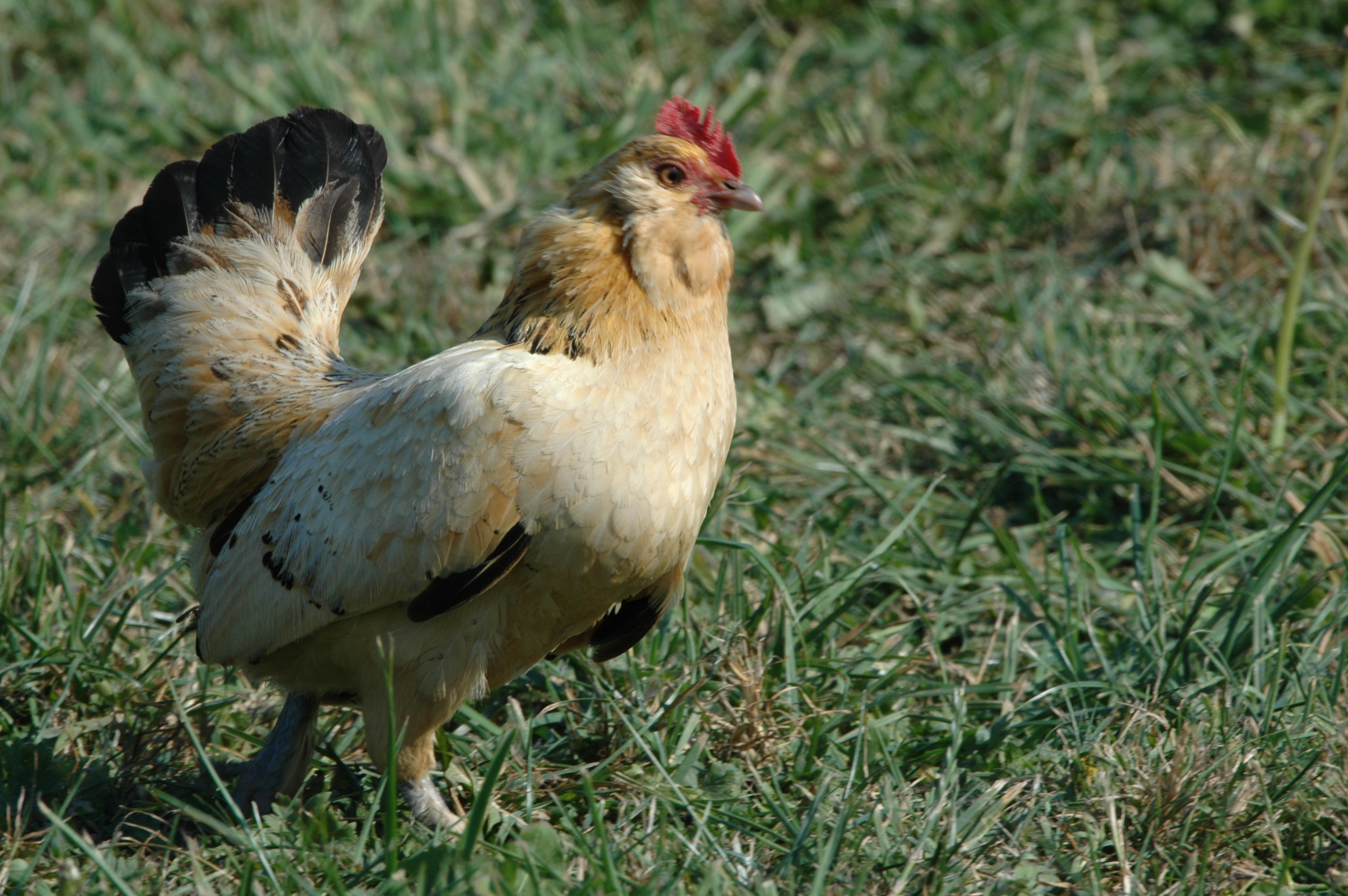
Rescued Chicken–Pigs’ Pease Sanctuary


The egg industry forces birds on factory farms to spend their entire lives cramped in cruel, filthy, and unsustainable battery cages. There are better ways to raise birds, and that’s why California passed two groundbreaking animal protection laws, Prop 2 and AB1437, that together require all shell eggs sold in the state to be produced by farm animals that have adequate space for natural behaviors by January 2015. The problem is Costco refuses to work with The Humane League to assure they will follow this law that gave retailers years to phase in. Please sign our petition asking Costco to stop selling factory farmed eggs.
Unfortunately, a few retailers are ignoring the intention of these animal cruelty laws by planning to sell eggs from hens trapped in modified cages. They have had six years to make adjustments to follow the law, but they feel there is a loophole that allows birds to remain confined in warehouses of tiny, filthy cages stacked upon each other. We can show Costco that consumers demand trustworthy, ethical business practices from this retail giant.
Costco, the large chain of warehouse stores founded in California, is now presented with the opportunity to stand with the voters of California and pledge to be 100% cage-free in the state or turn its back on the efforts of voters who do not want to contribute to inhumane animal agriculture practices.
Please, sign our petition and ask Costco to take a stand against animal cruelty in California and make plans to extend this policy nationally. It’s time for Costco to do the right thing and end its support of farms that still use cage systems.
Sign the Petition: https://mail.google.com/mail/#inbox/14a6db80fdd5788c
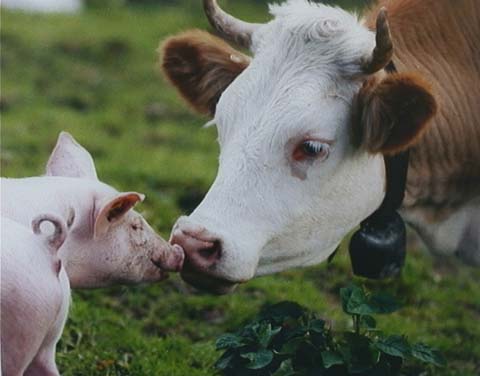
There are 59 billion animals alive at any one time, farmed for their meat. The world’s domestic cattle weigh 16 times as much as all the wild animals on the planet put together. 60% of the globe’s agricultural land is used for beef production, from growing grain to raising cows. Since the early-20th century, industrial farming and global capitalism have worked hand-in-hand to provide meat at an ever cheaper price. And our appetites, so tempted, have led us to consume more and more animals. In the US, each citizen eats on average 120kg of meat per year. And that’s not even the number one spot. Our insatiable desire for meat has defined how we use our planet. But cheap meat comes at a price. Planet Carnivore gets under the skin of the health problems that over-consumption brings; of modern farming’s destructive use of resources; and of the stretched and strained farms and abattoirs that lead to horsemeat in beef burgers and challenging moral questions about our relationship with our food. Alex Renton’s brilliantly researched, utterly compelling Guardian Short serves up the grisly stories, and also looks at how we are beginning to try and pay the cheap meat bill, from innovative twists on current techniques to cutting edge scientific breakthroughs. – See more at: http://guardianshorts.co.uk/planetcarnivore/#sthash.oURzZciG.dpuf
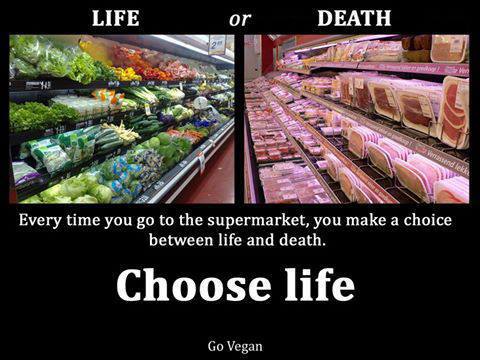
Practically everywhere you look lately are signs of a growing backlash against the progressive vegan movement. It seems people, many who’ve never tried going a day without eating animal products, are tired of being told vegetarian is healthier than flesh-eating and veganism is better still—its carbon footprint being only a fraction of the gargantuan impact of the standard American diet. Plus, vegans have the benefit of a clearer conscience than a person who contributes to animal suffering on a daily basis (assuming said person cares at all about animals). But many are comfortable with their meat addiction and don’t see any reason to ever change. And though they’re still the vast majority and therefore have nothing to fear from the efforts of outnumbered do-gooders, they see it as an attack on their right to be as hedonistic as they so desire and have begun a collective counterattack, just to show ‘em.
A prime example is the subject of a December 4, 2014, article in UT-San Diego. The piece by Michele Parente, cleverly entitled, “Meat trend has some seeing red,”
As in other major cities across the country, San Diego’s current mania for all things meat defies that other growing trend of eating only plant-based food. “I ordered double sausage out of spite,” one diner posted on Facebook, along with a photo of people eating at sidewalk tables, inches away from picketers. “For every animal you don’t eat, I’m going to eat three,” posted another.
Parente started the article out (glibly),
Meat is all the rage in San Diego right now and that’s got some people broiling.
A proliferation of pork-centric places has sprung up all over the county, along with eateries serving up all manner of beef, game, organ and exotic meats. Hungry for a meatier experience? How about a pre-dinner demonstration on how to butcher a whole animal or even the opportunity to slaughter your entrée yourself? And while the current carnivore craze is sating foodies…
What?! Wait a minute. Slow down there and let us un-hipsters catch up; just what the hell is a “foodie,” anyway? It sounds like some kind of baby talk to me. Well, I looked it up and as it turns out that’s not far off. According the Urban Dictionary’s first two definitions, a “foodie” is,
Foodie: A douchebag who likes food.
Douchebag – “I’m a big foodie.”
Non-doucher – “Really? I like food too, but I’m not a tool.”
- Foodie: A dumbed-down term used by corporate marketing forces to infantilize and increase consumerism in an increasingly simple-minded American magazine reading audience. The addition of the long “e” sound on the end of a common word is used to create the sensation of being part of a group in isolationist urban society, while also feminizing the term to subconsciously foster submission to ever-present market sources.
Though the terms “gastronome” and “epicure” define the same thing, i.e. a person who enjoys food for pleasure, these words are perceived by the modern American consumer as elitist due to their Latin root forms and polysyllabic pronunciation
If you’ve ever heard the postpartum cries of a newborn unwillingly evicted from the warmth of a watery womb, or witnessed the incessant tantrum of a terrible two-year old, you know that babies can be a bit self-centered. They don’t really seem to care about others around them; they just want whatever they don’t have, and you’d better figure out what that is—and fast. Meanwhile, in a similarly self-absorbed manner, “foodies” believe they are entitled to make the art of stuffing their gullet an “adventure,” eating whatever they want—or whomever they want—the rights or interests of the victims of their carnivorous quests be damned.
Popular pulp among narcissistic “locavores” is new book touting the alleged virtues of “adult onset hunting.” At the height of hedonism, these nouveau-savage self-actualizers not only find fulfillment in consuming wild animals but also in all forms of related carnage, including (but not limited to) stalking, shooting, snuffing out, dismembering and butchering them first.
Parente’s article continues,
…a small group of animal-rights activists holding “Meat is Murder” signs has been picketing S&M Sausage & Meat each week since it opened in Hillcrest about a month ago.
A recent DIY butchery event, provocatively called Death For Food, was canceled after an online campaign launched by lawyer and seal defender Bryan Pease attracted about 2,500 protesters and threats of a potential boycott against Suzie’s Farm, where the farm-to-guillotine-to-table dinner was scheduled to be held.
The restaurant, whose logo is a hog on its back, feet in the air and apple in the mouth, is an unabashed haven for adventurous meat eaters, offering everything from kangaroo hotlinks to alligator-antelope Andouille sausage and fried pig ears. “Anything we can find that used to be breathing… Its customers are equally unapologetic.
“The audience is quite frankly demanding and wants to be part of the experience,” Freeman said. “They want the thrill and adventure of dining they get with whole-animal (butchery).” “…it gives you an experience.”
The otherwise nauseating article does include a good quote from Stephanie Shaw, a PETA spokeswoman, that sums up the vegan message in a nutshell.
“Any restaurant that serves meat, whether it’s farm to table, whole-animal butchers or McDonald’s … is supporting the violent and untimely or unnecessary death of an animal that wanted to live,” Shaw said. “With every meal, we have the opportunity to choose cruelty or kindness.”


 Exposing the Big Game