The year of our lord, 2013, could be known as the year of the big backslide, at least in terms of attitudes toward animals and the environment, as well as the general acceptance of scientific fact.
For example, CBS News reports that the number of Republicans who believe in evolution today has plummeted compared to what it was in 2009, according to new analysis from the Pew Research Center. A poll out Monday shows that less than half – 43 percent – of those who identify with the Republican Party say they believe humans have evolved over time, plunging from 54 percent four years ago. Forty-eight percent say they believe “humans and other living things have existed in their present form since the beginning of time,” up from 39 percent in 2009.
I can’t help but think this is because many people still aren’t comfortable admitting they’re animals. And this supremacist attitude is reflected in everything they do in regard to our fellow species.
Anyone who has been following the wolf issue since gray wolves were removed from the Endangered Species List in a handful of backward states has certainly noticed a rapid backslide pertaining to how wolves are perceived, treated and “managed” by those bent on dragging us back to the dark ages for animals—the Nineteenth Century—when concepts like bounties, culls and contest hunts were commonplace. Hunters and ranchers in the tri-state area surrounding Yellowstone National Park, as well as in the Great Lakes region, are doing everything they can to resurrect the gory glory days of the 1800s, and wolves are paying the ultimate price.
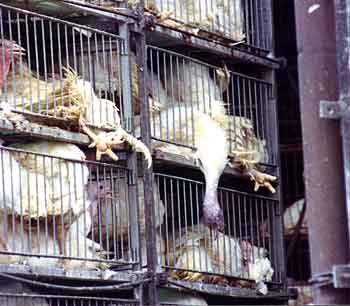
Meanwhile, in spite of great efforts to educate people about the myriad of problems associated with factory farming and the dependence on meat consumption in an ever more crowded human world, the number of ruminants raised for food on the planet today is at an all-time high of 3.6 billion, double what is was 50 years ago. Regardless of or our burgeoning human population, not only do we have a chicken in every pot in this country, we now have cow and sheep parts in every freezer and pig parts in practically every poke. This, of course, is all thanks to ever-worsening living conditions for farmed animals.
Professor William Ripple and co-authors of a research paper, “Ruminants, Climate Change, and Climate Policy,” prepared in Scotland, Austria, Australia and the United States, noted that about 25 percent of the earth’s land area is dedicated to grazing, and a third of all arable land is used to grow food for livestock, according to the report. Reducing the number of cattle and sheep on the planet, and thereby reducing the methane gas emissions they produce, is a faster way to impact climate change than reducing carbon dioxide alone, the report concluded. The researchers concluded that greenhouse gas emissions from cattle and sheep are 19 to 48 times higher per pounds of food produced than the gas emitted in the production of plant protein foods such as beans, grains or soy.
To get an idea of how unnatural and unsustainable 3.6 billion large ruminants is, think back to when vast bison herds blackened the plains. At that time there were only 50 million bison in all of North America. There are over 300 million human beef-eaters in the United States, every one of them expecting to see a fully stocked steak house, Subway or McDonald’s on every street corner.
Meanwhile, the media’s busily cooking up a spin to answer to meat’s culpability in this planet’s climate crisis. Articles on how methane from grass-eaters is a primary greenhouse gas are often accompanied by the suggestion that pigs and chickens don’t produce as much. In other words, don’t worry your little meat-addicted heads if this beef-cow-causing-global-warming thing becomes a recognized issue, you can just switch over to other non-ruminants’ carcasses—no one really expects you to become a vegetarian, after all.
One of the most outrageous spins ever concocted aired on a “Ted Talk” just last March. Allan Savory, a former Rhodesian provincial Game Officer, has been spreading the counterintuitive notion that to control desertification and stop global warming we need to turn even more cattle out onto arid land. This notion comes from a man who, as late as 1969 advocated for the culling of large populations of elephants and hippos because he felt they were destroying their habitat. Savory participated in the culling of 40,000 elephants in the 1950s, but he later concluded it did not reverse the degradation of the land and called the culling project “the saddest and greatest blunder of my life.” Now he’s trying to sell us on another blunder with even more destructive consequences. What will this guy do for an encore? Never mind, I don’t want to know.
Speaking of Africa, 2013 saw the fastest growing and second most populous continent on its way to adding another billion people to the planet. By the end of this century, 3/4 of the world’s growth is expected to come from Africa, and projections put its population at four billion—one billion in Nigeria alone. Most African countries will at least triple in population, as there are very high fertility rates and very little family planning in most regions. No one is quite sure how the continent will provide for that many hungry humans; only time will tell.
And even though China’s overwhelming population is already well past a billion, in 2013 they abandoned their one child policy and affectively doubled it by implementing a two child policy at the stroke of a pen.
Sorry, but this shit is scary, at least if you care about the plight of non-human species on this planet. Sure, cultural diversity is important—to people. But it sure as hell doesn’t trump biological diversity in the scheme of things. Regardless of what you may or may not believe about whether we were created in the image of a god, life on Earth as we know it will not go on if we humans are one of the only species left around.
The coming decades are going to test just what Homo sapiens are made of. Are we progressive and adaptable enough to learn to share the planet with others and become plant eaters, as some people have? Or is our incessant breeding and meat consumption going to put us into an all new classification—planet eater?
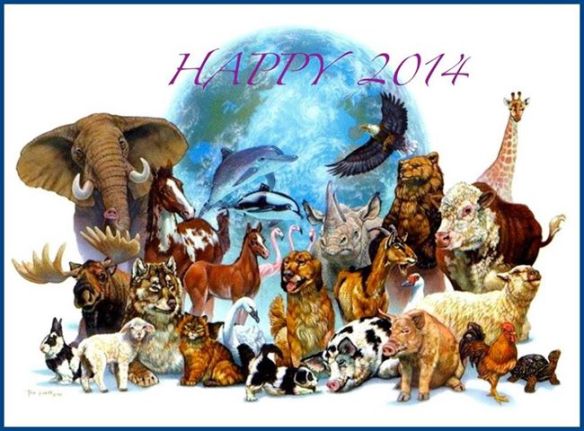

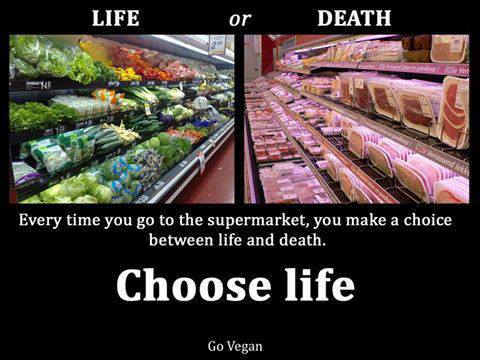
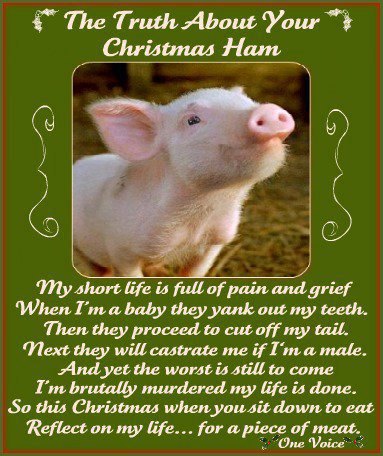
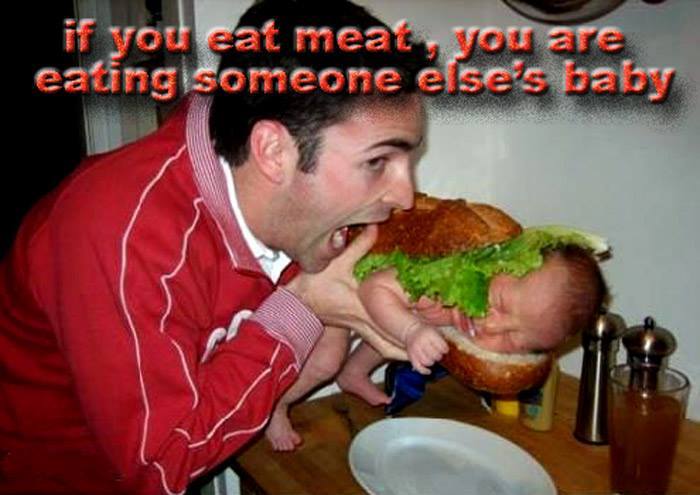
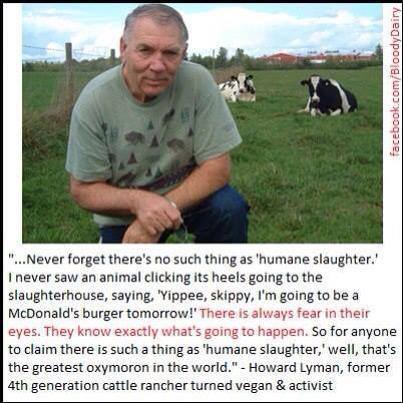
 That’s a depressing thought, especially if you’re aware of the current holocaust happening all around us. Humans are slaughtering 6 million animals per hour. 20,000 more will die in the time it takes you to read these sentences! That’s a holocaust of farmed animals every 60 minutes. And that’s not counting fish, lobsters, shrimp, oysters, clams, krill or other sea life. But I’m not fooling myself, I know it would take a concerted, allied effort to stop these atrocities.




 Exposing the Big Game