More than 36 million Americans have filed for unemployment benefits since coronavirus lockdown began; insight from Labor Secretary Eugene Scalia.
The coronavirus pandemic has dealt a new blow to the American meat industry, as farmers will have to euthanize as many as 10 million pigs by the middle of September to avoid overcrowding in their facilities, the National Pork Producers Council (NPPC) has warned.
Though President Trump invoked the Defense Production Act in late April to keep meat processing plants open through the COVID-19 crisis, outbreaks of the viral disease have shuttered some plants and slowed operations at others. Consequently, pork farmers have not been able to send or sell tremendous numbers of market-ready hogs in recent weeks, creating a bottleneck in the supply chain.
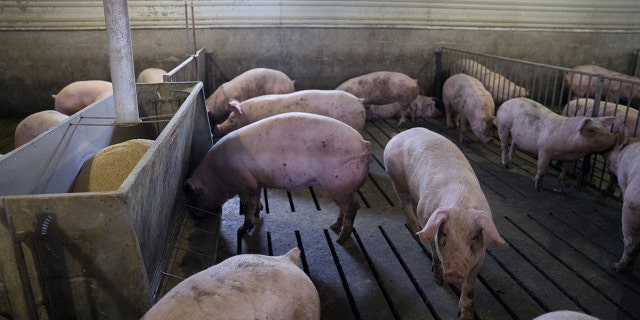
Young female pigs stand in pen at a hog farm in Smithville, Ohio, in this April photo. (Dane Rhys/Bloomberg via Getty Images)
Now, there are few viable accommodations for an estimated 170,000 pigs to be sent to the operative plants each day for processing into the food supply, the NPPC says. According to the council, these hogs will eventually grow “too large” for admission to harvest facilities, creating a “tragic reality” for farmers in the U.S., who have raised “10 million hogs with nowhere to go.”
Producers cannot continue to house the market-ready hogs, the council said, as they need make room for younger hogs entering the supply chain. Farmers plan about 10 months in advance for how many hogs to prepare for market through the spring and summer, with the pandemic greatly upending their 2020 projections.
“Producers face a wrenching and tragic choice; watch their mature animals suffer because they can’t care for them or euthanize them. The only humane option is to euthanize them, a tragedy for farmers who work to produce food for people,” the NPCC said in a statement last week. “Destroying these animals and the food they represent goes against every farmer instinct.”
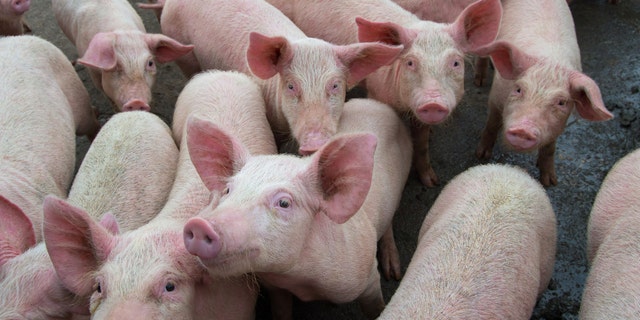
There are few viable accommodations for an estimated 170,000 pigs to be sent to the operative plants each day for processing into the food supply, the NPPC said. (iStock)
Overcrowding on hog farms can result in aggression and injuries, impacting the pigs’ ability to eat, drink and rest. It is also a challenge to maintain a comfortable air quality and environment for the animals.
As of May 6, pork harvest capacity is down almost 40 percent due to coronavirus-related slowdowns and shutdowns, the NPPC said.
Now, the pork council is asking for federal assistance to address the unprecedented crisis. The NPPC seeks congressional authorization to fund $1.173 billion for the USDA Farm Service Agency Emergency Assistance for Livestock, Honeybees and Farm-Raised Fish (ELAP) for pork producers who cannot market their pigs due to coronavirus-related plant shutdowns and slowdowns.
The group also hopes to receive an additional $505 million for euthanasia and depopulation expenses as well as the facilitation of environmentally responsible disposal, in partnership with the USDA Animal and Plant Health Inspection Service, National Resource Conservation Service and FEMA.
Without this assistance, the NPPC argues, thousands of farmers will have to liquidate their assets, ultimately driving up pork prices for the American people.
In response, the USDA established a National Incident Coordination Center last month to help farmers euthanize and dispose of these animals because of the processing plant closures, National Hog Farmer reports.
“None of us want to euthanize hogs, but our producers are facing a terrible, unprecedented situation,” said Bob Krebs, president of meatpacking company JBS USA Pork.
Last month, JBS announced that it would be reopening a temporarily closed pork production plant in Minnesota as a humane euthanasia facility, which capacity to euthanize about 13,000 hogs per day.
Covid-19 is a zoonotic virus, meaning it spread to humans from animals. Scientists aren’t sure which animal spread it to us, though they think snakes or bats might have via pangolins. But it’s not just exotic, wild animals that spread diseases. New research shows the next global public health crisis could come to us through industrial animal agriculture.
The study, published in Proceedings of the National Academy of Sciences on Monday, shows that contemporary farming methods—including the overuse of antibiotics, high numbers of animals crammed into small spaces, and a lack of genetic diversity—make it more likely that pathogens will spread to people from farm animals and create an epidemic for humans.
“Our work shows that environmental change and increased contact with farm animals has caused bacterial infections to cross over to humans, too,” Sam Sheppard, a professor at the Milner Center for Evolution at the University of Bath and author of the study, said in a statement.
In particular, the scientists analyzed the evolution of the bacteria Campylobacter jejuni, which is commonly found in farm animals’ crap and according to the World Health Organization is the leading bacterial cause of human gastroenteritis, aka the stomach flu. The researchers studied the genetic evolution of the bacteria and found that strains specific to cattle emerged in the 20th century—around the same time that humans started farming cattle in huge numbers.
“Campylobacter are excreted by cattle into the environment every day,” the authors wrote. “The sheer magnitude of shedding is clearly important in terms of direct environmental contamination and potential spillover into the human food chain.”
The scientists argue that the changes in cattle diet, anatomy, and physiology which resulted from industrial agriculture enabled the bacteria to mutate and become able to infect humans. That includes common practices today like feeding cows vitamin supplements to keep them healthy and make them bulkier.
Chickens, pigs, and wild animals can all spread the Campylobacter jejuni, but the biggest issue is cattle. Researchers found the bacteria in their feces a fifth of the time (gross, I know, sorry).
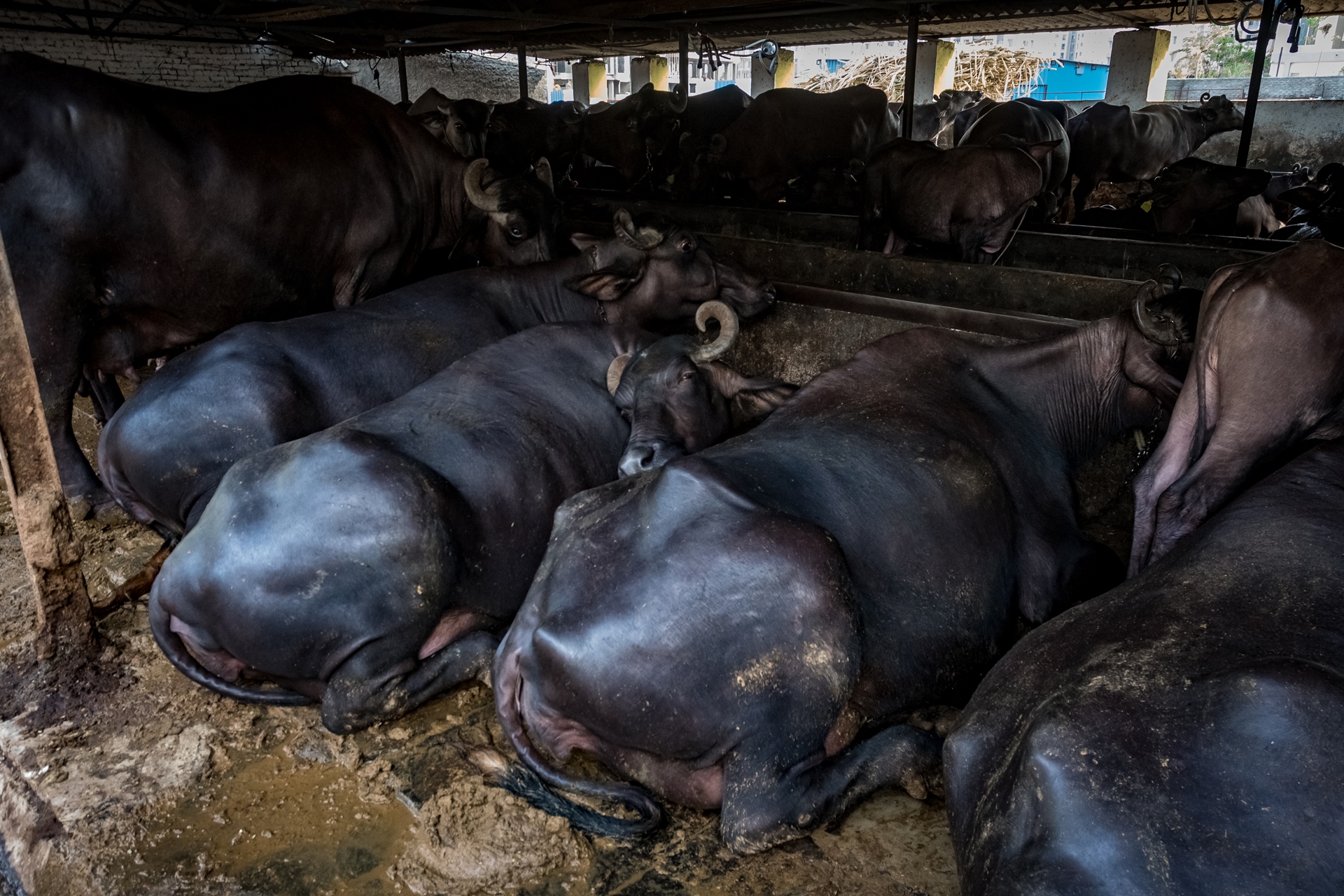
“There are an estimated 1.5 billion cattle on Earth, each producing around 30 kilograms (66 pounds) of manure each day,” said Sheppard. “If roughly 20 percent of these are carrying Campylobacter, that amounts to a huge potential public health risk.”
If the bug does get transmitted to people, it’s hard to treat. Since so many antibiotics are used in animal agriculture, the bacteria is resistant to those medicines. The researchers hope the world will examine its relationship with agriculture and make changes to prevent the spread of the bug.
“I think this is a wake-up call to be more responsible about farming methods, so we can reduce the risk of outbreaks of problematic pathogens in the future,” Sheppard said.
The changes this research demands are clear: We should stop rearing so many damn animals for meat. Since animal agriculture is responsible for 14.5 percent of all greenhouse gas pollution globally, we should probably be doing that anyway.
DES MOINES, Iowa (AP) — After spending two decades raising pigs to send to slaughterhouses, Dean Meyer now faces the mentally draining, physically difficult task of killing them even before they leave his northwest Iowa farm.
Meyer said he and other farmers across the Midwest have been devastated by the prospect of euthanizing hundreds of thousands of hogs after the temporary closure of giant pork production plants due to the coronavirus.
The unprecedented dilemma for the U.S. pork industry has forced farmers to figure out how to kill healthy hogs and dispose of carcasses weighing up to 300 pounds (136 kilograms) in landfills, or by composting them on farms for fertilizer.
Meyer, who has already killed baby pigs to reduce his herd size, said it’s awful but necessary.
“Believe me, we’re double-stocking barns. We’re putting pigs in pens that we never had pigs in before just trying to hold them. We’re feeding them diets that have low energy just to try to stall their growth and just to maintain,” said Meyer, who also grows corn and soybeans on his family’s farm near Rock Rapids.
It’s all a result of colliding forces as plants that normally process up to 20,000 hogs a day are closing because of ill workers, leaving few options for farmers raising millions of hogs. Experts describe the pork industry as similar to an escalator that efficiently supplies the nation with food only as long as it never stops.
More than 60,000 farmers normally send about 115 million pigs a year to slaughter in the U.S. A little less than a quarter of those hogs are raised in Iowa, by far the biggest pork-producing state.
Officials estimate that about 700,000 pigs across the nation can’t be processed each week and must be euthanized. Most of the hogs are being killed at farms, but up to 13,000 a day also may be euthanized at the JBS pork plant in Worthington, Minnesota.
U.S. Rep. Collin Peterson, a Minnesota Democrat who chairs the House Agriculture Committee, went to the plant Wednesday, in part to thank JBS officials for agreeing to kill the hogs at his request.
“The only thing they wanted out of me was for me to come down here and say I’m the one who asked for this, not them. … Blame me if you don’t like it,” he said.
It all means that meat can’t be delivered to grocery stores, restaurants that now are beginning to reopen or food banks that are seeing record demand from people suddenly out of work. Some of that demand is being met by high levels of meat in cold storage, but analysts say that supply will quickly dwindle, likely causing people to soon see higher prices and less selection.
To help farmers, the USDA already has set up a center that can supply the tools needed to euthanize hogs. That includes captive bolt guns and cartridges that can be shot into the heads of larger animals as well as chutes, trailers and personal protective equipment.
Iowa officials have asked that federal aid include funding for mental health services available to farmers and the veterinarians who help them.
Meyer said euthanizing healthy animals is a difficult decision for a farmer.
“It is a tough one,” he said. “We got keep our heads up and try to be resourceful and if we can make it through this cloud, I think there will be good opportunities if we’re left standing yet.”
The USDA has a program designed to connect farmers with local meat lockers and small processors that can slaughter some hogs and donate the meat to food banks. However, that effort has been hindered by the fact that small processors already were overwhelmed with customers who have turned away from mass-produced meat and instead bought a hog or cow to be processed locally.
Chuck Ryherd, owner of State Center Locker in State Center, Iowa, said he’s almost completely booked through the end of the year and has been turning away customers.
Chris Young, the executive director for the American Association of Meat Processors, a trade group for about 1,500 smaller meat lockers, said that while some local processors in Indiana, Illinois and Wisconsin have been able to take a few extra hogs, the shortage is being felt nationwide.
“When the pandemic started, all across the country, a lot of these small processing plants with a retail store in the front were just overrun,” he said. “They’re still crazy busy. It hasn’t really backed off.”
On Wednesday, President Donald Trump used the Defense Production Act to order that large meat processors remain open, giving hog farmers hope the situation could improve.
However, Howard Roth, a Wisconsin farmer and president of the National Pork Producers Council, said farmers will need to keep euthanizing pigs as the slaughterhouses struggle to resume their full production. Farmers will definitely need federal help to keep them afloat.
“We are going to need indemnity money for these farmers,” he said. “This situation is unprecedented.”
Peterson also said he’ll seek a change in the law so that the USDA can retroactively compensate farmers for euthanizing healthy animals in such emergencies. He said the USDA told him it doesn’t have the authority at the moment to do that for healthy animals, just diseased animals, as it did during for chickens and turkeys in the bird flu outbreak.
“It’s going to be in there, I’ll guarantee you,” he said.
___
Associated Press Writer Steve Karnowski contributed to this report from Minneapolis.
Share this with EmailShare this with FacebookShare this with Twitter
Image copyrightEPA
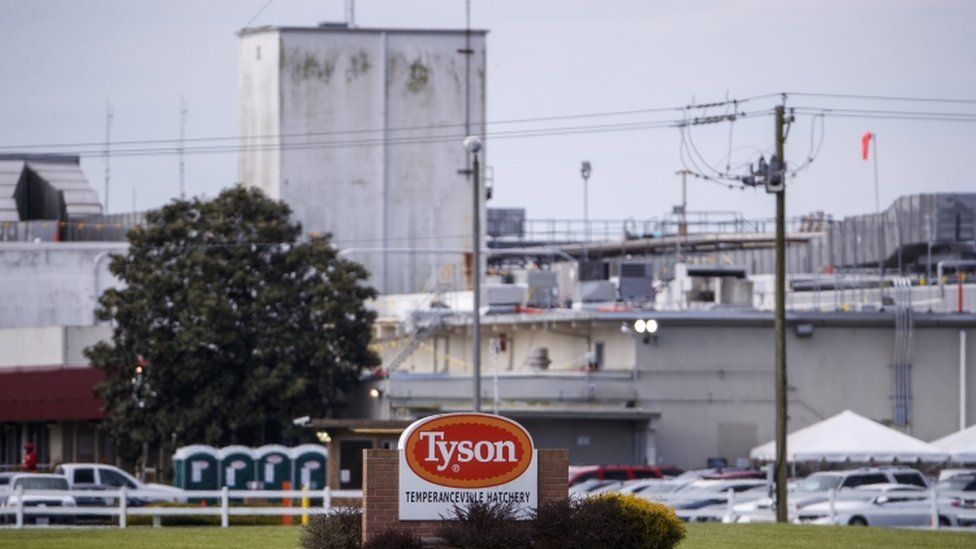
Image captionClosures of meat processing plants quickly affect the food supply chain
US President Donald Trump has ordered meat processing plants to stay open to protect the nation’s food supply amid the coronavirus pandemic.
He invoked a Korean War-era law from the 1950s to mandate that the plants continue to function, amid industry warnings of strain on the supply chain.
An estimated 3,300 US meatpacking workers have been diagnosed with coronavirus and 20 have died.
The UN last month warned the emergency threatened global food supply chains.
Twenty-two US meatpacking plants across the American Midwest have closed during the outbreak.
They include slaughterhouses owned by the nation’s biggest poultry, pork and beef producers, such as Smithfield Foods, Tyson Foods, Cargill and JBS USA.
“Such closures threaten the continued functioning of the national meat and poultry supply chain, undermining critical infrastructure during the national emergency,” says Tuesday evening’s executive order, invoking the 1950 Defense Production Act.
“Given the high volume of meat and poultry processed by many facilities, any unnecessary closures can quickly have a large effect on the food supply chain.”
The order designates the meatpacking plants as part of critical infrastructure in the US.
A White House official told US media it will work with the Department of Labor to issue guidance for vulnerable workers, such as over-65s and those with chronic health conditions, to stay at home.
Like lambs to the slaughter?
Analysis by Jessica Lussenhop, BBC News
The leadership of large meatpacking companies have faced tough questions over whether they did enough to prepare for the pandemic and protect workers.
On top of the fact that production lines necessitate that workers stand very close together, most are low-income, hourly workers.
Many are immigrants living paycheque to paycheque, like the ones at a Sioux Falls, South Dakota, pork plant who told the BBC that despite the risk, they have no choice but to go to work if plants are open.
Without strict adherence to safety guidelines – which are not currently being deemed “mandatory” by the Occupational Safety and Health Administration – it’s not hard to picture new outbreaks at factories, or resurgences of the virus in factories that shuttered but reopen prematurely.
All of this could leave these employees trapped in the same impossible choice they were in when the virus first began spreading in factories in late March: risk my health or lose my job.
What does the meat industry say?
John Tyson, chairman of Tyson Foods took out full-page ads on Sunday in the Washington Post and New York Times to warn “the nation’s food supply is breaking”.
“As pork, beef and chicken plants are being forced to close, even for short periods of time, millions of pounds of meat will disappear from the supply chain,” he wrote.
“As a result, there will be limited supply of our products available in grocery stores until we are able to reopen our facilities that are currently closed.”
He said millions of cattle, pigs and chickens will be euthanised because of slaughterhouse closures, limiting supplies at supermarkets.
Pork production has borne the brunt, with daily output slashed by at least a quarter.
Tyson – which employs some 100,000 workers nationwide – has suspended operations at its pork plant in Waterloo, Iowa.
Smithfield Foods shut down production at its plant in Sioux Falls, South Dakota, after an outbreak infected hundreds of employees.
What do the unions say?
The United Food and Commercial Workers International Union (UFCW), the largest US meatpacking union, demanded the Trump administration compel meat companies to provide proper protective equipment and ensure daily coronavirus testing for slaughterhouse workers.
“While we share the concern over the food supply, today’s executive order to force meatpacking plants to stay open must put the safety of our country’s meatpacking workers first,” said the union.
The UFCW said the White House order would provide legal cover to companies in case employees catch coronavirus at work.
“We’re working with Tyson,” Mr Trump told reporters in the Oval Office earlier on Tuesday. “We’re going to sign an executive order today, I believe, and that will solve any liability problems.”
Richard Trumka, the president of the AFL-CIO union, said: “Using executive power to force people back on the job without proper protections is wrong and dangerous.”
Tyson Foods executives said in a full-page ad published Sunday that the closure of food-processing plants due to the coronavirus is “breaking” the supply chain.
In a full-page ad published in The New York Times, The Washington Post and the Arkansas Democrat-Gazette, board chairman John Tyson wrote that “the food supply chain is breaking,” saying farmers will be left without anywhere to sell livestock and “millions of animals — chickens, pigs and cattle — will be depopulated because of the closure of our processing facilities.”
“There will be limited supply of our products available in grocery stores until we are able to reopen our facilities that are currently closed,” he added.
In the ad, Tyson said it will waive the waiting period for short-term disability to allow workers who get sick to immediately be paid as well as waiving the co-pay, co-insurance and deductible for doctor visits for coronavirus testing, along with donating more than $11 million in food and meals since March 11.
The company has already closed facilities in Logansport, Ind., and Waterloo, Iowa, while Smithfield has closed a facility in Sioux Falls, S.D., where at least one worker has died from the virus, as well as a JBS facility in Worthington, Minn. The Waterloo, Worthington and Sioux Falls facilities comprise about 15 percent of pork production in the U.S.
At least 182 cases of the virus were linked to the Waterloo plant closure, and three employees told CNN the plant has taken insufficient steps to protect them from the virus, including conditions that made it all but impossible to properly practice social distancing inside the facility.
The company told CNN plants are sanitized daily and Tyson himself wrote in the advertisement that the company performs daily temperature checks and requires the wearing of face masks in all facilities.
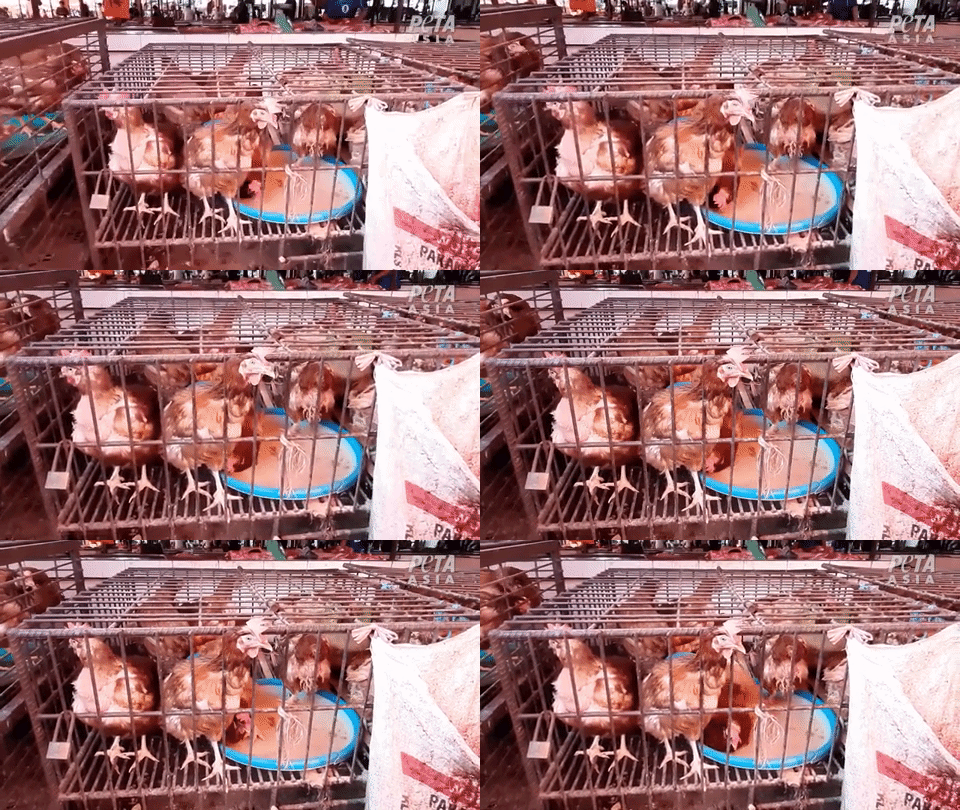
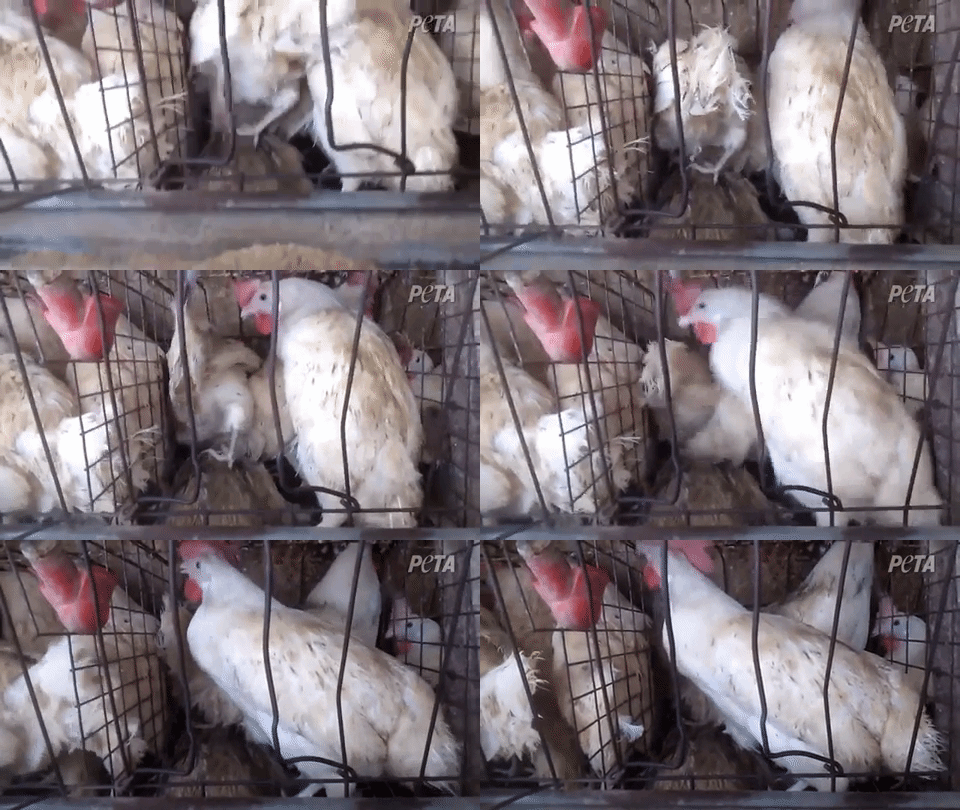
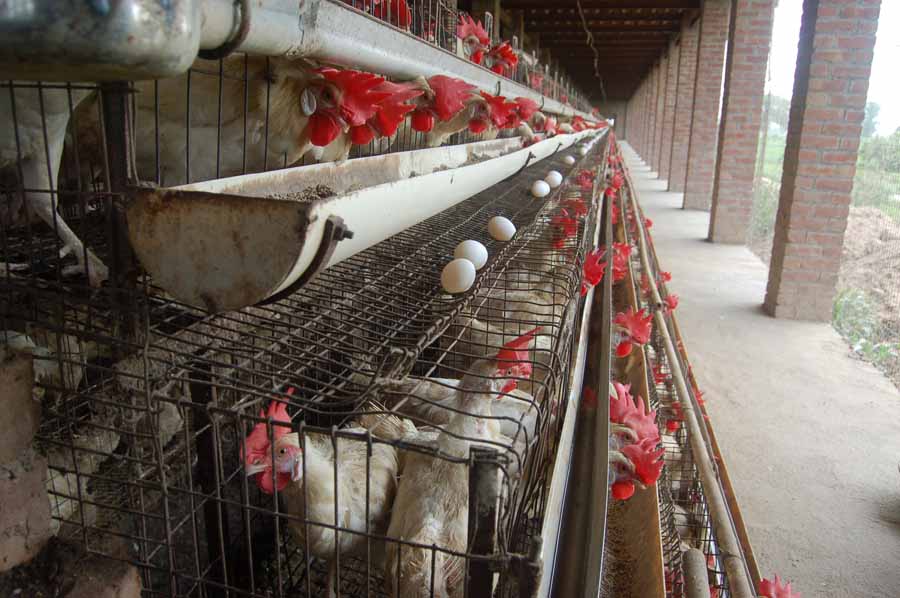
Can you tell the difference between these scared chickens in cramped, filthy cages …
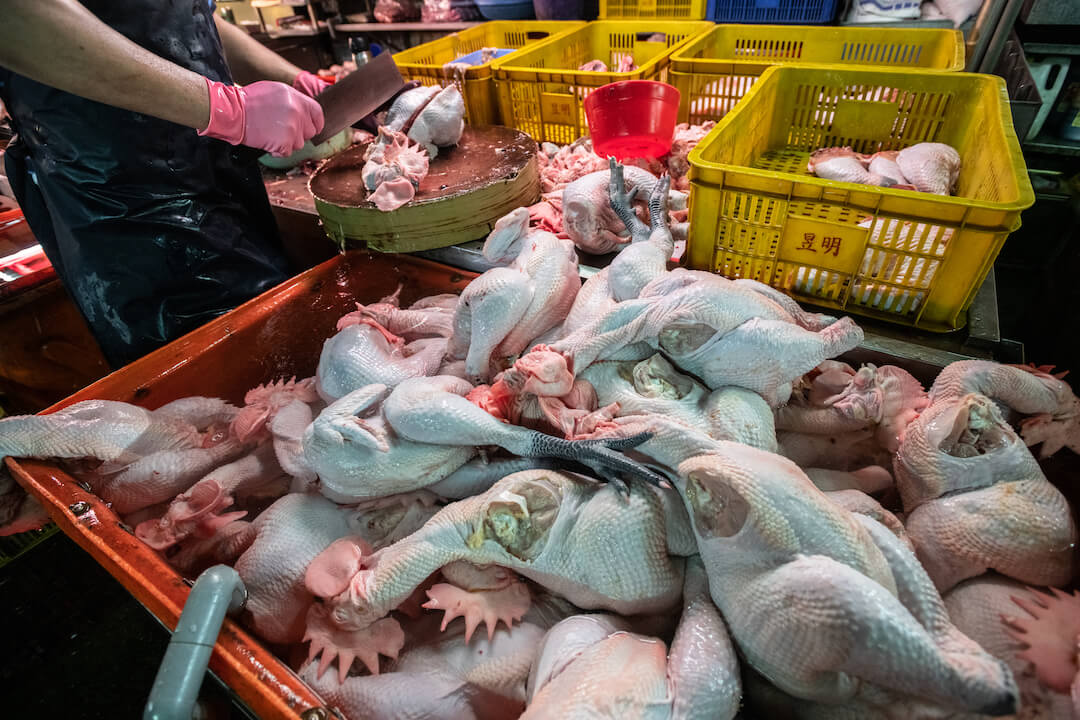
… and these forced to live alongside dead and dying cagemates?
The chickens directly above were kept at a filthy egg factory farm in Oklahoma, while the ones above them were being sold at a blood-soaked “wet market” in Thailand—not that there’s much difference. And all these birds suffered immensely—slaughtered chickens at a wet market in the Philippines …
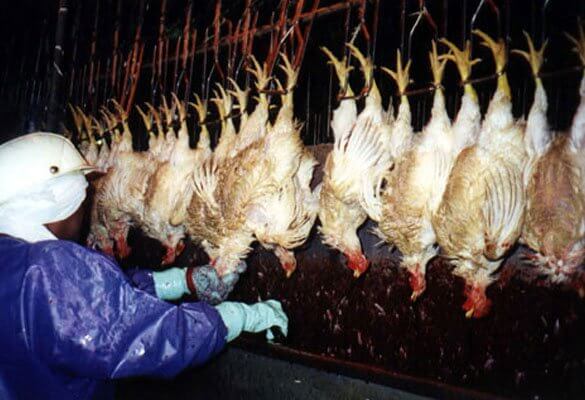
… and birds at a Tyson Foods slaughterhouse, whose throats were manually cut by a worker because the mechanical blade missed them:
It doesn’t matter if we’re talking about a wet market, a traditional factory farm, a “free-range” farm, an “organic” farm, or any other animal agriculture operation—humans’ appetite for flesh and other animal-derived foods is killing more than the meat industry’s intended victims.
Wet Markets vs. Factory Farms: Which Are Worse?
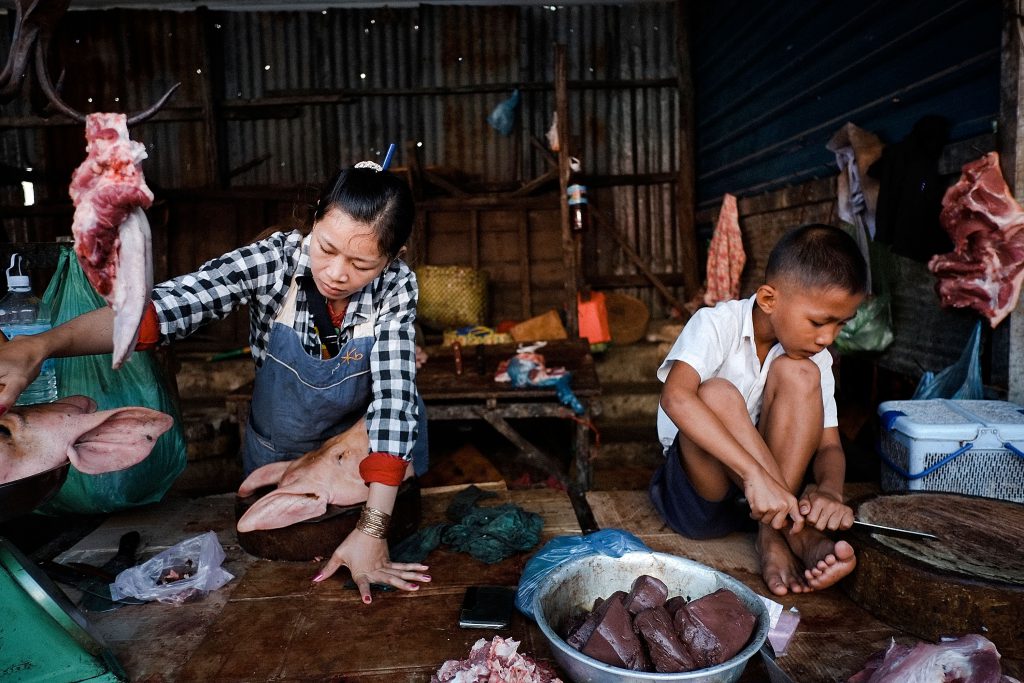
Most people are now familiar with wet markets (also sometimes referred to as “live-animal markets”)—one where live and dead animals are sold for human consumption—and their connection to the dry cough heard ’round the world. Experts believe that the novel coronavirus originated at a wet market in Wuhan, China. But while bats and pangolins (who hitch rides on their mothers’ tails as pups in nature) are the suspected reservoir species for COVID-19, deadly outbreaks like mad cow disease, avian flu, swine flu, and other zoonotic diseases have stemmed from farming domesticated (not wild or exotic) animals for food. Even more recent than the COVID-19 outbreak in the U.S. is an avian flu (aka “bird flu”) outbreak in South Carolina—a week ago, the U.S. Department of Agriculture (USDA) confirmed that highly pathogenic H7N3 avian influenza was identified among turkeys being raised for food. This strain reportedly mutated from a low pathogenic strain that had been previously identified in poultry in the same area.
JUST BECAUSE YOU DON’T SHOP AT A WET MARKET DOESN’T MEAN THAT YOU’RE SAFE FROM ZOONOTIC VIRUSES … OR ANTIBIOTIC-RESISTANT BACTERIA.
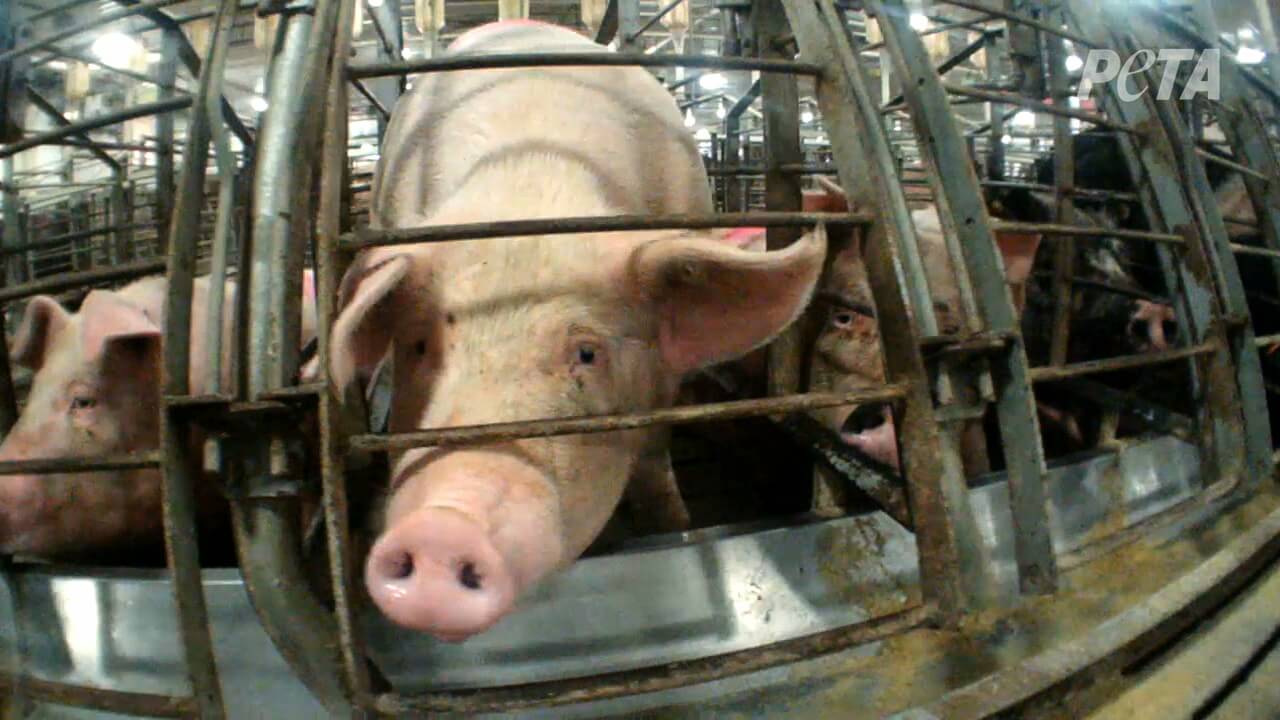
Farms crammed full of stressed animals are breeding grounds for deadly pathogens, including influenza viruses, which have originated in chickens and pigs. It’s these crowded, filthy conditions that breed antibiotic-resistant bacteria, too, also known as “superbugs.”
Why should you care about antibiotic-resistant bacteria?
When you get sick, the antibiotics prescribed by your doctor may not work because of the emergence of superbugs. On farms across the U.S., the antibiotics that we depend on to treat human infections are now used to keep cows, pigs, chickens, and others alive in horrific conditions that would otherwise kill them and to fatten them before slaughter.
COUNTLESS NEW STRAINS OF ANTIBIOTIC-RESISTANT BACTERIA HAVE DEVELOPED AS A RESULT OF THIS ABUSIVE PRACTICE.
Antibiotic use is now more common on farm prisons than in human medicine. Roughly 80% of all antibiotics sold in the U.S. are given to animals on farms, who are likely now the largest source of drug-resistant bacteria. Nearly 80% of all meat found in U.S. grocery stores contains antibiotic-resistant bacteria, according to the Environmental Working Group.
Findings indicate that these drug-resistant genes spread more extensively and quickly on farms than scientists previously thought. Researchers sounded the alarm on the meat industry, which has tried to downplay the concerns raised by experts, apparently deliberately putting the public at risk in order to protect its own interests. One infectious disease physician who studies antibiotic-resistant pathogens, James Johnson, likened the animal agriculture industry and its practice of “subverting public health” to the tobacco industry.
What about “antibiotic-free” labels?
Just like “organic,” “free-range,” and “cage-free” labels, “antibiotic-free” labels mean nothing to animals and are misleading to consumers. The U.S. Centers for Disease Control and Prevention (CDC) admits that the “antibiotic-free” label is not approved by the USDA and that it “has no clear meaning.” Furthermore, “antibiotic-free” meat is not necessarily free of antibiotic-resistant bacteria: “All animals carry bacteria in their gut, and some of these can be resistant germs,” the CDC website warns.
THINGS FOR ANIMALS ON FARMS—AND FOR THE HUMANS WHO EAT THEM—ARE ONLY EXPECTED TO GET WORSE.
The United Nations has called the emergence of drug-resistant superbugs “the biggest threat to modern medicine.” It’s anticipated that by 2050, antibiotic-resistant bacteria will kill one person every three seconds. In fact, some studies claim that by this time, more people will be dying of antibiotic-resistant diseases than of heart disease—which is the number one killer of humans in the world and kills one person every 37 seconds in the U.S. alone.
We’ve already seen these superbugs manifest in the form of global health pandemics. The 2009 H1N1 flu pandemic, for example, only saw humans infected, but the virus included genes from humans, birds, and pigs—it was a “quadruple-reassortant virus,” meaning that it contained genes from four different influenza virus sources. To put it simply, if there were no animal agriculture, it’s likely that neither “classical swine H1N1” viruses nor the 2009 H1N1 flu virus (which reportedly infected roughly 1.4 billion people and killed between 151,700 and 575,400 worldwide) would have existed.
THE ONLY WAY TO AVOID FARM-TO-TABLE PANDEMICS IS FOR EVERYONE TO GO VEGAN AND SHUT DOWN ANIMAL-FARMING OPERATIONS.
So while we should certainly call for a global ban on wet markets …
… we should also crack down on all other industries that abuse, neglect, and slaughter animals. We can’t afford to wait for the next H1N1 flu or coronavirus. Please, ban meat, eggs, and dairy from your plate—before the next deadly zoonotic disease hits:
Factory farming conditions and antibiotic-resistant pathogens emerging as a result of them pose an existential threat to humans in the form of zoonotic diseases. Why it’s time to produce and consume food more thoughtfully.
Much has been written about the coronavirus and how people can prevent being exposed to it, including through social distancing and good hygiene. It’s now vital to get to the root cause of this pandemic and focus on primary prevention so as to avoid another, perhaps even harsher, outbreak. While the illegal wild animal trade and wet markets have been singled out, factory farming of animals in general is much less discussed. More attention needs to be paid to its public health risks – before it’s too late.
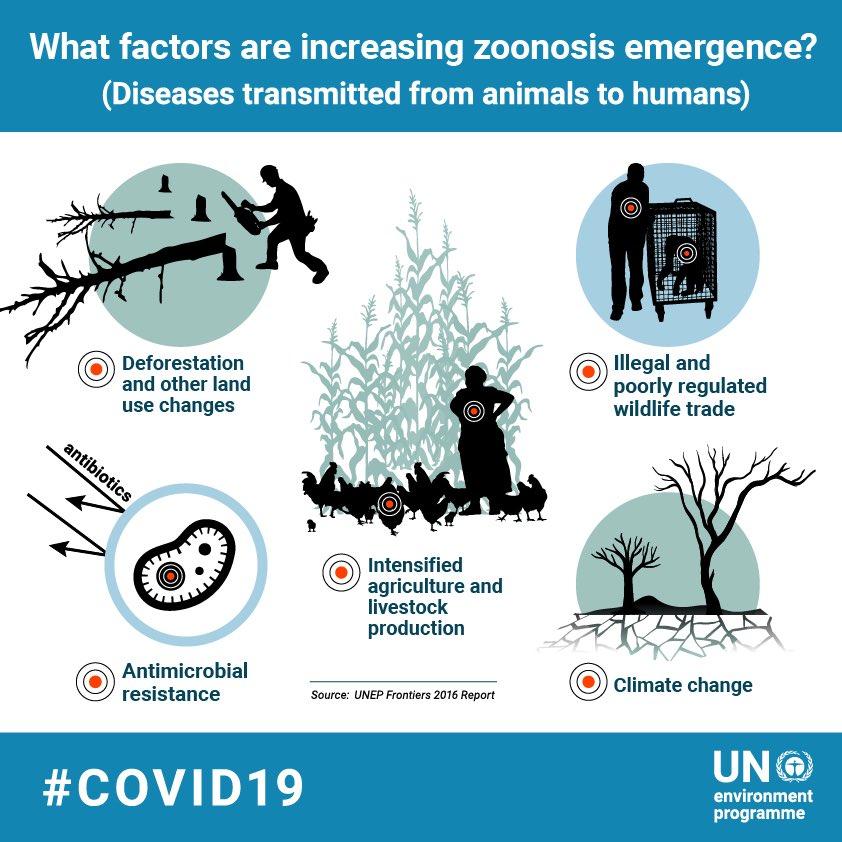
Animals can sometimes carry harmful germs like viruses, bacteria, parasites and fungi that spread to people and cause illnesses which are known as zoonotic diseases or zoonoses. Around 60 per cent of all known infectious diseases in humans are of this type, as are 75 per cent of emerging ones according to a 2016 UN report.
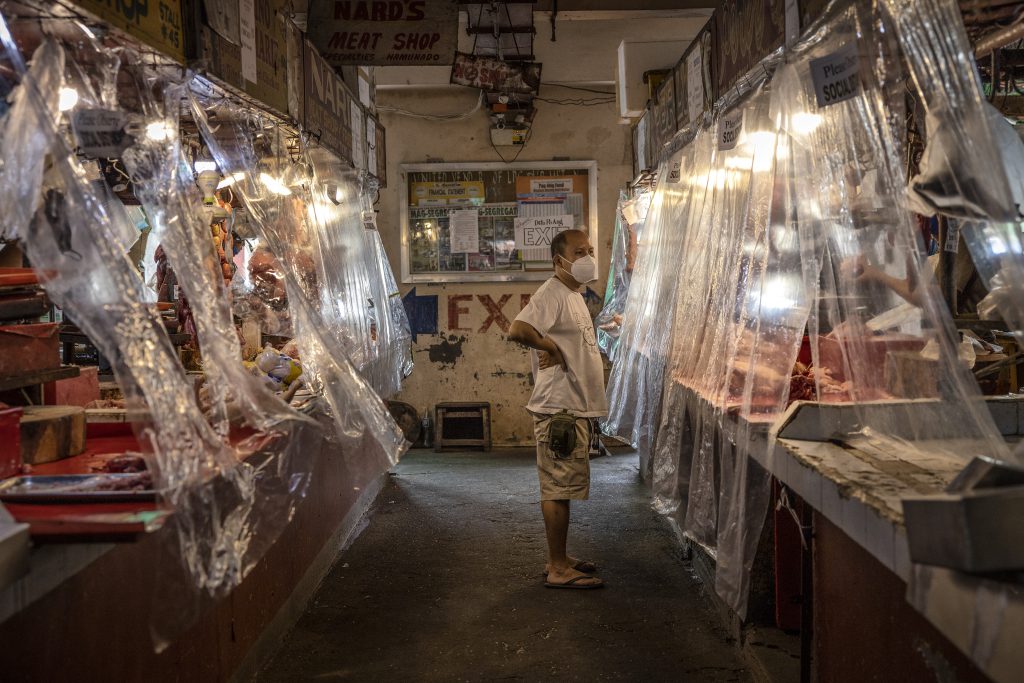
For example, wet markets are commonplace in many countries including China, India, Vietnam and in other parts of Southeast Asia; they sell fresh meat or fish, often (though not always) killed on demand at roadside slaughterhouses, and many, though not all, sell wild animals. This way, domesticated animals not only get viruses from the wild animals that are also sometimes sold in these markets (this is thought to have happened with the novel coronavirus) but can also become carriers and spreaders of diseases originating due to the filthy conditions they’re kept in, as in the cases of bird and swine flu.
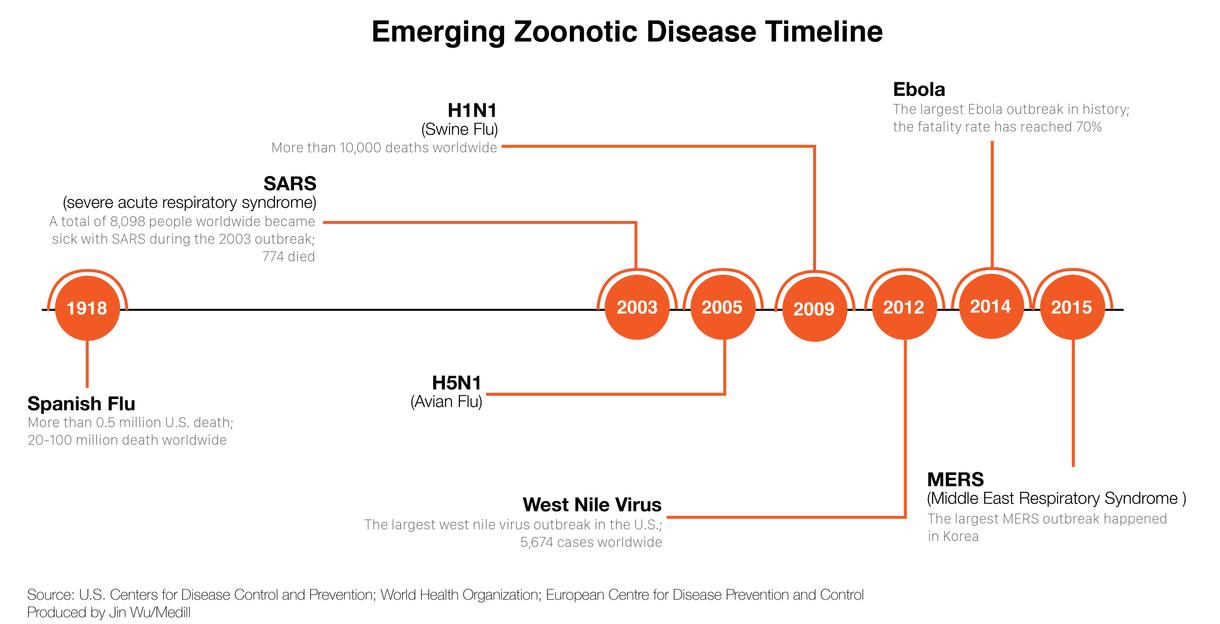
As Covid-19 joins the list of zoonotic diseases, the world has already seen millions of deaths in the past due to the consumption of and contact with animals. Starting with three pandemics that have emerged since 2000, Severe Acute Respiratory Syndrome (SARS) in 2003, swine flu (H1N1) in 2009 and now the disease Covid-19 caused by the virus Sars-CoV-2: evidence suggests the latter has come from animals, as did SARS which spread from civet cats and bats in China, whilst animal to human transmission of swine flu first took place in an intensive pig farm in Mexico.
Other than these, there have also been outbreaks of bird flu (avian influenza) from poultry, the Middle East Respiratory Syndrome (MERS) first transmitted from camels, Ebola from monkeys and pigs, Rift Valley fever from livestock, West Nile fever from birds, Zika from monkeys and Nipah from bats and pigs. The human immunodeficiency virus, or HIV, is widely thought to have originated from the consumption of bush meat. Incidentally, avian influenza continues to mutate and wreak havoc in poultry farms around the world including in Germany, China, India and the UK, and an outbreak of African swine fever (ASF) was reported in Poland recently.
As the human population surges towards eight billion, demand for food is growing, alongside the need for space to produce it, which means encroaching on wild animals’ natural habitats– it’s no secret that animal agriculture is one of leading causes of deforestation and environmental degradation in the world. This has brought humans closer to wild animal species and increased the risk of disease transmission. Additionally, the conditions in which animals are often kept accelerate the emergence of pandemics.
Although some zoonoses are probably unavoidable as these viruses have always been present in wildlife, much human suffering resulting from them could be avoided by changing the way people come into contact with animals. In particular, by establishing a more balanced and respectful relationship with other living beings.
There’s clearly a link between the emergence of highly pathogenic avian influenza viruses and intensified poultry production systems.Marius Gilbert, spatial epidemiologist at the Université Libre de Bruxelles, Belgium
Our demand for meat and other animal products means that huge numbers of animals such as cows, chickens and pigs are crammed together in crowded, faeces-ridden farms, transported in filthy lorries, and slaughtered on killing floors soaked with blood, urine, and other bodily fluids – the perfect breeding grounds for pathogens. Public health experts have been ringing the alarm about zoonotic diseases for years. Among these is Doctor Michael Greger, author of the book Bird Flu: A Virus of Our Own Hatching, who says factory farming is a “perfect storm environment” for infectious diseases.
In a video (above) that first appeared more than a decade ago, Greger states that there have been three eras of human disease: first, that of domestication, when we brought wild animals to barnyards who in turn brought diseases with them; the second started in the 18th and 19th centuries with the Industrial Revolution, leading to epidemics of the so-called diseases of civilisation – diabetes, obesity, heart disease, cancer, etc; and finally, the third era of human diseases started about 30 years ago due to land use and agricultural intensification.
“About half of the egg-laying hens on this planet are now confined in what are called battery cages,” he points out. “In these small barren wire enclosures extending down long rows and windowless sheds there can be up to a million birds on a single farm. About half of the pigs on the planet are crowded into these intensive confinement operations. These intensive systems represent the most profound alteration of the human-animal relationship in 10,000 years”. In words that seem prophetic now, he concludes by saying: “The next pandemic may be more of an unnatural disaster of our own making. A pandemic of even moderate impact may result in the single biggest human disaster ever [and] has the potential to redirect world history”.
A 2004 joint consultation of the World Health Organisation (WHO), Food and Agriculture Organisation of the United Nations (FAO) and World Organisation for Animal Health (OIE, the world’s leading veterinary authority), concluded that “anthropogenic factors such as agricultural expansion and intensification to meet the increasing demand for animal protein” are one of the major drivers of zoonotic disease emergence.
Given such warnings, it may come as a surprise that policymakers haven’t taken them seriously enough to enforce sufficient preventive measures. In fact, as an editorial in the American Public Health Association journal observes: “It’s curious, therefore, that changing the way humans treat animals – most basically, ceasing to eat them or, at the very least, radically limiting the quantity of them that are eaten – is largely off the radar as a significant preventive measure … Failure to think ahead can’t repeatedly be excused”.
In addition, animals on factory farms are routinely fed vast amounts of antibiotics in order to keep them alive in conditions that would otherwise kill them. Because of this, even the most powerful antibiotics aren’t effective against certain bacteria, contributing to the emergence of “superbugs” – new, aggressive, antibiotic-resistant pathogens. According to the US Food and Drug Administration (FDA), an estimated 80 per cent of all antibiotics produced is sold to livestock farms, and a 2019 study documents how the growing demand for animal protein resulted in a tripling of the occurrence of antibiotic resistance in disease-causing bacteria in livestock between 2000 and 2018.
In the US, a person dies every 15 minutes because of an infection that antibiotics can no longer treat effectively, a total of 35,000 deaths per year. According to the Centers for Disease Control and Prevention (CDC), antibiotic resistance is “one of the world’s most pressing public health problems,” and other experts predict that at the current rate, more people will die of diseases caused by antibiotic-resistant bacteria than of cancer by 2050.
Just as humans are more likely to succumb to disease when we’re stressed, weakened or wounded, these same factors also suppress the immune systems in animals, leaving them extremely vulnerable to catching new infections. As a result, the worldwide animal trade creates very sick animals and ideal conditions for pathogens to multiply and jump from animal to animal, and ultimately to humans. To prevent the next pandemic, we need to look beyond the wet markets or illegal trade in China.Aysha Akhtar, neurologist, public health specialist and author, US Public Health Service Commander and Oxford Centre for Animal Ethics Fellow
The ultimate culprit are our patterns of animal consumption. Yet the re-opening of Chinese wet markets and bizarre promotion of bear bile as a coronavirus antidote beg the question about how serious the world really is about taking this crisis head-on. However, there are some positive signs.
The consumption of vegan products has increased exponentially and according to a report by Allied Analytics LLP, the global vegan food market, valued at 14.2 billion US dollars in 2018 will reach 31.4 billion in the next five years. China is already beginning to demand safe, reliable and healthy food and companies like US-based Just, which makes plant-based egg products, are fielding a wave of inquiries from Chinese food companies. An online petition urging the WHO to shut down live-animal meat markets has surpassed 100,000 signatures.
Also, given the economic fallout of the coronavirus pandemic, through collaborative networks like the FAIRR initiative investors are increasingly assessing their investee companies’ readiness to operational risks through the animal welfare standards set by the Business Benchmark on Farm Animal Welfare.
As David Benatar writes in the editorial Chickens Come Home to Roost, “it’s time for humans to remove their heads from the sand and recognise the risk to themselves that can arise from their maltreatment of other species”. If all stakeholders in society – be it investors, consumers, governments or food manufacturers – fail to rethink their business-as-usual practices and work towards a new normal, Covid-19 will likely not be the last pandemic that humankind witnesses, and perhaps not even the deadliest. And just like the effects of climate change, the poor and vulnerable will be the worst affected.
We have the power to decelerate the emergence of new zoonoses. Or even reduce the harshness of the next outbreak. If we have the will to shut down entire societies for weeks on end, something that would previously have been considered extreme and “not an option”, surely we have the will to change our diets and global food system. Until we don’t go all the way in preventing the spread of these viruses by outlawing unsanitary live-animal markets, questioning the factory farming model at its core and creating awareness around food choices – therefore, until all animals aren’t treated better – zoonotic diseases will likely continue to resurface. Ultimately, it’s time to stop wilfully spinning this pandemic roulette.
*By Karen Davis, PhD, President of United Poultry Concerns*
INSIDE THE EGG
If the egg has been fertilized, a tiny being is growing inside, whether
nestled
beneath the mother hen or crammed in an incubator among thousands of other
embryos. During the first 24 hours after the egg is laid, the tiny heart
starts
beating and blood vessels begin to form, joining the embryo and the yoke sac
that will nourish the embryo as it grows.
The nervous system originates during the 21st hour of incubation, followed
by
origination of the head and eyes. Other body parts begin to develop during
this
time, including the alimentary tract and the spinal column. On the third
day,
the embryo begins to rotate to lie on its left side. By the fourth day, all
body
organs are present, with the nose, legs, wings, and tongue taking shape and
the
vascular system in place.
On the fifth day, the reproductive organs differentiate and the face begins
to
assume a lifelike appearance. On the sixth day, the beak and the egg tooth
(a
kind of rough edge that disappears after hatching, which protects the beak
and
also helps crack the shell) can be seen, along with some voluntary
movements of
the embryo.
During the next seven days, the body develops rapidly, including the
formation
of the abdomen and intestines. Feather germs, the origin of feather tracts,
appear, the beak begins to harden, toes and leg scales start to show, the
skeleton begins to calcify, and chick down appears.
On the fourteenth day, the embryo, now covered with down, rotates to arrange
itself parallel to the long axis of the egg, normally with its head toward
the
large end of the egg near the air cell. On the seventeenth day, the chick
turns
its head, placing its beak under its right wing toward the lower part of the
enlarged air cell to prepare for hatching and breathing outside the shell.
HATCHING
On the nineteenth day, the yoke sac begins to enter the chick’s body
through the
umbilicus, and the chick positions itself for pipping the shell, that is,
for
making a hole in the shell to breathe through while struggling to get out.
On
the twentieth day, the yolk sac completes it absorption into the body
cavity and
the umbilicus begins to close. By now, the chick occupies the entire area
within
the shell except the air cell, which it now begins to penetrate with its
beak,
inhaling outside air through its lungs for the first time.
After pipping the shell to reach the air cell, the chick rests for several
hours. It then cuts a circular line counterclockwise around the shell by
striking the shell with its egg tooth near the large end of the egg, aided
by a
special pipping muscle in its neck which helps it to force its beak through
the
membranes lining the shell.
With the egg tooth, the chick saws its way out of the shell, aided by the
mother
hen if she is there and help is needed. Between 10 and 20 hours after the
shell
is first broken, the chick emerges, wet and exhausted, to face the life
ahead.
Nearly two days may pass between the hatching of the first chick and the
appearance of the last member of the brood. Thus, some chicks may be almost
two
days old by the time all of their sisters and brothers have struggled from
their
shells, as many as 16 others. However, hatching is not a haphazard process.
About 24 hours before the chick is ready to hatch, it starts peeping in its
shell to notify its mother and siblings that it is ready to emerge. A
communication network is established among the chicks, and between the
chicks
and their mother, who must stay composed while all the peeping, sawing, and
egg-breaking goes on underneath her. Since some eggs may be infertile or
aborted, the peeps tell the hen how long she needs to continue sitting on
the
nest.
MOTHER HEN AND HER CHICKS
As soon as all the eggs are hatched, the hungry mother and her brood go
forth
eagerly to eat, drink, scratch the soil, and explore. Baby chicks are
precocial,
meaning they are genetically equipped to find food and follow their own
kind, or
whoever is in charge, in the process known as imprinting. By imprinting,
chicks
learn the features of their mother hen and siblings, to insure their
survival.
They practice hygiene by preening their feathers and dustbathing almost
immediately.
The chicks venture fairly far away from their mother, communicating back and
forth all the while with clucks and peeps. The hen keeps track of her little
ones on the basis of color, possibly also by smell, and by counting the
peeps of
each chick and noting the emotional tones of their voices. Periodically she
squats down, and the chicks dash under her outspread feathers where they
stay
until they are thoroughly warmed before dashing out again.
Should a peep be missing or sound frightened, she runs to find the chick and
deliver it – not always successfully – from the hole in the ground, tangled
foliage, or threatening predator.
During the first four to eight weeks or so, the chicks stay close to their
mother, gathering beneath her wings every night at dusk. Eventually, she
flies
up to her perch, indicating her sense that they, and she, are ready for
independence.
Young chicks without their mother huddle together at night for the first
month
or two. Then one evening, you see them practicing sitting in a row, before
huddling. Then comes an evening when they are lined up on their perch,
arranging
and rearranging themselves as before, only this time they stay lined up all
night, henceforth roosting like the adults.
KAREN DAVIS, PhD is the President and Founder of United Poultry Concerns, a
nonprofit organization that promotes the compassionate and respectful
treatment
of domestic fowl including a sanctuary for chickens in Virginia. Inducted
into
the National Animal Rights Hall of Fame for Outstanding Contributions to
Animal
Liberation, Karen is the author of numerous books, essays, articles and
campaigns. Her latest book is *For the Birds: From Exploitation to
Liberation:*
*Essays on Chickens, Turkeys, and Other Domesticated Fowl* (Lantern Books,
2019).
Don’t worry, I’m not going to get all it’s “karma” or “Divine justice” on you here, but this whole Coronavirus pandemic is just what humans deserve for the sick, domineering, heartless ways they’ve treated animals over the centuries. Somehow they’ve convinced themselves (or worse yet, maybe they’ve never really thought about it) that they’re entitled to acts of extreme abuse on their fellow sentient beings. How else did they justify digging pits for mammoths or running herds of bison off cliffs only to be butchered en masse later? Oh yeah, they were hungry. Well, so were the animals they destroyed but they never stooped to making humans their slaves for flesh.
Even given humans’ long history of animal abuse, it’s hard to fathom them coming up with intrinsically evil, karma-defying traditions like factory farming and “wet” markets, both of which involve intensive warehousing of animals as though their rights or well-being were of no consequence. And like a bunch of spoiled, self-centered serial killers, their wants and desires are all that matters.
Over time, after the hairless, fleshy mutant hominid serial-killers-of-other-animals had driven the largest herbivores off the planet or at least to the most extreme rugged corners, they decided to give “animal husbandry” a go. Nowadays, they’ve gone so postal with that misadventure, they must have convinced themselves (or never really thought about it) that animals somehow enjoy being their servants and meat and secretion providers: that cows enjoy giving up their babies’ milk to demonic little primates who rush them through the mechanical milking process like the spear-wielding jabber-walkies who herded their ancestors over cliffs; that birds enjoy being crammed into cages so small they can’t even raise their wings so their precious eggs can be squirreled away by some self-important deity-wanna-bes; that pigs enjoy living their lives out as nothing more than bacon-on the hoof or that pangolins like being dragged from the wild and stuffed into tiny cages and displayed in a crowded, noisy, open-slaughter market next to fruit bats, secretive snakes, fish or untold other beings forced to serve their self-appointed masters.
As much as we might feel sorry for the people who are subjected to this pandemic like victims of some undeserved plague wrought by a punishing divinity, perhaps when this is all over they should stop and think seriously about changing their hedonistic, carnivoristic ways. And I’m sure it’s a challenge to keep one’s social distance for a species that’s let their population surge to almost EIGHT BILLION (and forces their “food animals” into tiny, over-crowded cells for life), but if humans want to continue their reign over this wonderfully vibrant planet, it’s time to back off a bit—and don’t go crying “Where’s the justice?” to anyone out there who might be keeping score.
For me, the modern chicken industry is an expression of humankind at its worst. My visit last night to Ciales slaughterhouse in Bucktown to document the delivery of birds showed me nothing new, except for new victims whose expressions communicate a fresh pain, horror and despair that words fail to articulate. I know the expressions and behavior of happy chickens which makes the contrast even more disturbing. As we shine a light through the darkness on these birds’ faces and bodies, “I can’t imagine” thoughts flood my mind.
I can’t imagine how we could make someone more miserable or inflict more suffering.
I can’t imagine how we could engineer a domestic species from its wild counterpart in a way that so grotesquely robs them of all of the richness and complexity of their tropical rainforest lives and at the same time renders their bodies lethally obese in just weeks of being born.
I can’t imagine how we can raise birds only to be slaughtered at six weeks old, how we can grab them by their legs and stuff them into crates packed so tight, they are forced to squat in their own waste for hours and even days.
I can’t imagine how we can handle them so roughly during transport that they suffer from fractured wings and legs, bruises, and open wounds.
I can’t imagine that we can haul them around in trucks that offer zero protection from the extremes of of cold, heat, wind, rain and ice, that we can deny them any food or water or any comfort an infant animal might yearn for, that we allow many of them to arrive dead from heart failure, hypothermia, dehydration, starvation and heat stroke due to this grueling journey from one hell to another hell.
I can’t imagine how we can slam these crates of birds around causing further injury and terror at their destination. And I can’t imagine how we then allow them to languish in these filthy, feces-caked crates for many more hours, perhaps even days, awaiting their violent end.
I can’t imagine how we can try to deceive ourselves by calling the “kill cone” method of slaughter “humane:” stuffing a bird head-first down a metal cone, pulling their necks through the bottom opening, and slashing their throats while fully conscious, while their bodies thrash and they suffocate in their own blood.
I can’t imagine how we can watch this footage and continue to support this industry. And I can’t imagine how we can shower some animals in our lives with such affection and adoration and yet support an industry that treats other animals with such contempt and utter disregard for their suffering.
I can’t imagine how we can allow this atrocity to even exist in the 21st century. Shut them down!








 Exposing the Big Game