Exposing the Big Game

Forget Hunters' Feeble Rationalizations and Trust Your Gut Feelings: Making Sport of Killing Is Not Healthy Human Behavior

Exposing the Big Game

USDA Unveils Feral Swine Eradication and Control Pilot Program

( USDA Wildlife Services )

USDA is offering $75 million in funding for the eradication and control of feral swine through the Feral Swine Eradication and Control Pilot Program (FSCP) in a joint effort between USDA’s Natural Resources Conservation Service (NRCS) and Animal and Plant Health Inspection Service (APHIS).

In the 2018 Farm Bill, $75 million was designated to establish a “feral swine eradication and control pilot program” over the next five years to help landowners with trapping and to use modern technology to control feral hogs. The $75 million will be a 50-50 split between NRCS (for on-farm trapping and technology related to capturing and confining feral swine) and APHIS (for operational removal of feral swine).

NRCS plans to direct up to $33.75 million of the allocated FSCP funds toward partnership efforts to work with landowners in identified pilot projects in targeted areas. Applications are being accepted now through Aug. 19 for partners to carry out activities as part of these pilot projects in select areas of Alabama, Arkansas, Florida, Georgia, Louisiana, Mississippi, North Carolina, Oklahoma, South Carolina and Texas that have been determined to have the highest feral swine population densities and associated damages in the country.

Pilot projects will consist broadly of three coordinated components: 1) feral swine removal by APHIS; 2) restoration efforts supported by NRCS; and 3) assistance to producers for feral swine control provided through partnership agreements with non-federal partners. Projects will last from one to three years.

“The projects selected for funding will allow APHIS and NRCS to collectively reduce the damage and disease caused by one of the most destructive and formidable invasive species in the United States,” said APHIS Administrator Kevin Shea. “Overall, this pilot program builds upon and expands work already underway by APHIS’ National Feral Swine Damage Management Program to both manage feral swine and eliminate populations in partnership with local government, the private sector, industry and academia.”

NRCS is accepting proposals from non-federal partners to provide landowner assistance for on-farm trapping and related services as part of the pilot projects described above. NRCS will provide funding for these services through partnership agreements. The funding limit for a single award is $1.5 million. Awardees will be required to provide at least 25% of the partnership agreement budget as a match to NRCS funding.

David Herring, president of the National Pork Producers Council and a pork producer from Lillington, N.C., issued a statement thanking USDA for implementing this important Farm Bill program to reduce feral swine populations.

“Wild pigs are difficult to control and when in close proximity to domestic production, they are almost impossible to control. Most seriously, we are concerned about the spread of feral swine carrying diseases, including African swine fever (ASF), an animal disease affecting only pigs and with no human health or food safety risks,” Herring said. “While outbreaks of ASF continue throughout China and other parts of Asia, there are no reported cases in the United States. With no vaccination available, prevention is our only defense and that’s why this program is so vitally important.

Additional information on the complete funding announcement and about specific pilot projects, including target areas and the roles for which partner assistance is being requested, can be found on the FSCP webpage. Applications must be submitted through Grants.gov by 5 p.m. Eastern Time on Aug. 19.

More from Farm Journal’s PORK:

Feral Swine: USDA Monitors World’s Worst Invasive Alien Species

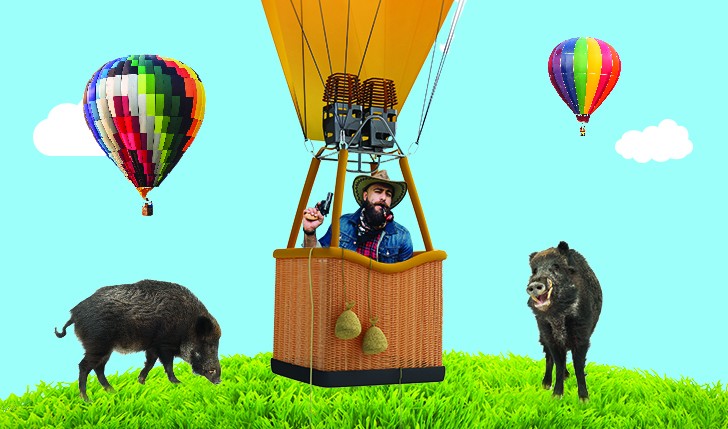
New law allows hunting hogs from hot air balloons, but few balloonists will offer it

(iStock)

AA

by Shannon Najmabadi The Texas Tribune

Though a new Texas law allows hunters to shoot feral hogs and coyotes from hot air balloons, it’s not easy to find a balloonist offering the activity.

“I have never had a phone call from anybody asking to do this,” said Pat Cannon of Lewisville, spokesman for the Balloon Federation of America. “I think that people have not stopped laughing yet.”

The law went into effect Sept. 1, but state permitters, insurers and balloonists say they haven’t heard of anyone planning to hunt hogs from hot air balloons. They point to factors like visibility and difficulty steering that make the activity hard.

The Texas Parks and Wildlife Department has not granted any of the permits needed for hot air balloon hunting, said Steve Lightfoot, a department spokesman. Rob Schantz of Jacksonville, Florida, who heads one of the country’s few balloon insurance agencies, said no balloonists had asked if the activity could be covered under their policies. His agency will not offer coverage for aerial hunting.

Among other logistical challenges, the balloon’s burners make a “horrendous roaring noise,” Schantz said. “It would scare anything away, and if they had a chance to take a shot, you could shoot somebody’s dog or shoot a person.”

The new law, authored by state Rep. Mark Keough, R-The Woodlands, is just one of Texas legislators’ attempts to curb the feral hog population in the state. Called a menace, the estimated 2 million feral hogs in Texas are responsible for about $400 million in damage each year, and their population would grow rapidly if left unchecked. A “pork-chopper” bill – allowing hogs to be hunted from helicopters – has been on the books since 2011, and state officials haveconsidered poisoning the animals with a lethal pesticide.

Lightfoot said department rules that govern hunting from a helicopter are similar to those for gunning from a hot air balloon. Among them is a requirement that there be an agreement with a landowner permitting aerial hunting on his or her property. Lightfoot said Tuesday the department had received one phone call inquiring about the needed permits, but that none had been issued.

Keough said in a statement the new law “will open a whole new industry towards eliminating the growing population of feral hogs in the State of Texas.” After the measure passed both legislative chambers in May, state Rep. John Cyrier, R-Lockhart, wrote a letter to Gov. Greg Abbott saying it could lead to “future catastrophes” without increased oversight of commercial ballooning.

Judith McGeary, executive director of the Farm and Ranch Freedom Alliance, said feral hogs pose a very significant problem to farmers and rural communities, as they destroy land and can carry diseases.

“There hasn’t been a good way to control them,” she said. Hunting from a hot air balloon isn’t expected to be a magic bullet, she said, but it seems like a “reasonable additional tool to add.”

But balloonists and pilots point to numerous challenges that make hunting from a hot air balloon difficult, if not impossible.

First, hot air balloons only fly under certain conditions. Wind, clouds, thermals and time of day are taken into account by the balloonist, and aren’t always conducive to hunting. For example, because balloons float on the wind, they couldn’t circle a pack of feral hogs while the hunters tried to shoot them.

“Let’s just assume you have a herd of feral hogs running one way and … they turn left. The balloon can’t turn left,” said Schantz, the insurance underwriter. “The balloon just keeps going and the feral hogs are off on their merry way the other way.”

For similar reasons, balloons would likely be unable to stop to retrieve the carcasses of shot hogs, said Joe Reynolds, a private pilot in Austin. Because the animals can weigh hundreds of pounds, it would also be difficult to hoist them into the balloon’s basket, and they might exceed the balloon’s load limit, said Reynolds.

Ideally, Cannon said, hot air balloon hunting would take place over land that has a large feral hog population, is owned by one person, and is in a fairly rural area – as balloons must fly at higher altitudes over houses and populated zones. A GPS tracker could help balloonists navigate boundaries that demarcate one property from the next, and make notes of where shot feral hogs fall. The landowner or someone else on the ground could pick up the carcasses.

Still, spotting those property limits from the air can be difficult, Cannon said. If the balloon is accidentally flown over a neighbor’s property, and “somebody points a gun down and shoots and discharges a weapon over that guy’s land,” Cannon said, “he could be prosecuted for that.” Dogs, donkeys or other animals could be mistaken for feral hogs and coyotes from the vantage point of a balloon.

Reynolds, the private pilot, said he’s fielded calls about the activity. But it often becomes immediately apparent “that the reality of it is not going to work.”

“I can’t speak for every balloon pilot in the world,” he added, “but nobody that I’ve talked to is going to try to take any of this on.”

Disclosure: The Texas Parks and Wildlife Department has been a financial supporter of The Texas Tribune. A complete list of Tribune donors and sponsors can be viewed here.

The Texas Tribune is a nonprofit, nonpartisan media organization that informs Texans — and engages with them — about public policy, politics, government and statewide issues.

Man shot dead during wild boar hunt in the Var

https://www.connexionfrance.com/French-news/Man-shot-dead-during-wild-boar-hunt-in-the-Var

The two men were out hunting with rifles when the incident happened (photo for illustration only)

A man in his late 60s has been shot dead during a wild boar hunt gone wrong near Toulon in the Var.

The man, who lived in the Toulouse area and was reportedly taking part in the hunt at Solliès-Ville, received a bullet to the chest the morning of Saturday February 17, according to the prosecutor of the République, Bernard Marchal, speaking to local newspaper Var-Matin.

Another man who was also taking part in the hunt has been taken into custody for investigation after the incident, but no-one has yet been charged, and the sequence of events is yet to be confirmed.

According to early reports from the gendarmerie de La-Valette-du-Var, one of the hunters fired three shots at a boar, apparently without hitting it, from his position in a watchtower to one side of the hunting area.

Wanting to warn his hunting mate, who was reportedly stationed in another watchtower a few hundred metres away, the man called out but heard no reply, and so went to look for him.

He then reportedly found the man lying on the ground, with his rifle at his side.

The shooter, another man in his 60s, was taken into custody but released a day later, and claims that he only ever shot at the “defined angles” allowed in the hunting area.

Investigators are this morning (Sunday February 18) set to use lasers to research the angles of the shots made, alongside research on the ground next to the dead man’s watchtower, in an attempt to judge how he fell, as well as find the bullet that killed him.

An autopsy on the dead man is expected early next week.

The man’s death is only the latest in a number of tragedies seen during animal hunts in recent months; in September 2017, a 13-year-old boy was accidentally shot dead by his grandfather on a hunting trip, and a 57-year-old man was killed on a hunt in the Alpes-Maritimes, while in November, a man who acted as a hunt beater – helping to flush out stag for others to hunt – was gored by a young stag.

Shot that killed hog hunter recorded by woman’s firearm, investigators say

The gunshot that killed an Upstate hog hunter Wednesday night was recorded by a night-vision scope on the firearm, investigators said Thursday.

Kenneth Jason Young, 40, of Starr, was hog hunting on private property by himself when he was mistaken for one of the animals by a female hunter, Anderson County chief deputy coroner Charlie Boseman said.

The accident was reported just after 8:30 p.m. on Gentry Road between Highway 181 and Highway 81 near Brooks McGee Road just south of Starr, dispatchers said.

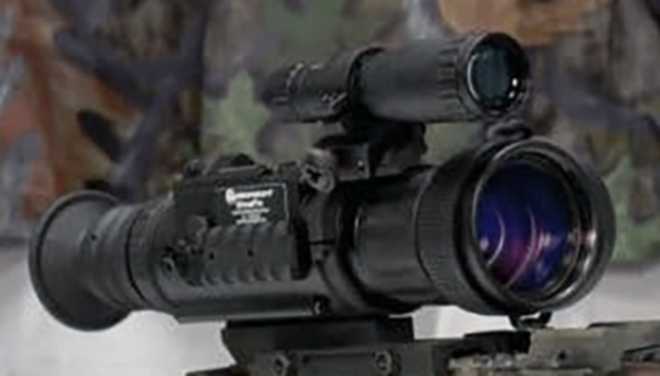
The hunter was using an ATN thermal night vision scope when she saw an outline of something “on all fours in the grass,” Boseman said.

She took a single shot, thinking it was a hog, Boseman said.

Investigators said the scope on the woman’s firearm has recording capabilities. They said the fatal shot was recorded on an SD card.

WYFF-TV
File photo of an ATN scope

Investigators said they have seen the recording. They said an outline of something on all fours is seen in the recording.

Investigators said Young was shot in the face.

All the hunters had permission to be on the private hunting grounds, according to Boseman.

The incident is being investigated by the South Carolina Department of Natural Resources, as well as the Anderson County Sheriff’s Office.

Investigators have not released the name of the woman, or filed any charges in the case.

Texas Lawmakers Legalize Hunting Hogs From Hot Air Balloons

http://www.sacurrent.com/the-daily/archives/2017/05/26/texas-lawmakers-legalize-hunting-hogs-from-hot-air-balloons

By on Fri, May 26, 2017 at 7:15 am

The future of Texas hog hunting is oddly adorable. - SARAH FLOOD-BAUMANN, SHUTTERSTOCK

  • Sarah Flood-Baumann, Shutterstock
  • The future of Texas hog hunting is oddly adorable.

As state lawmakers gut major bills in the last days of the 85th legislative session, it’s become clear where many of their priorities lie. Child welfare. Religious freedom. Women’s health.

Oh, and hunting feral hogs from hot air balloons.

That last one, oddly enough, is one of the few issues that have managed to float through both chambers unscathed. Thanks to a Wednesday vote by the Texas Senate, a bill allowing landowners to shoot wild hogs and coyotes from the safety of a hot air balloon basket has now landed on Gov. Greg Abbott’s desk.

The state’s estimated 2 million feral hogs have long-tormented Texas farmers, leaving destroyed crops and pastures in their wake. This bill is only the latest strategy in a growing list of legal ways to kill these invasive hogs under Texas Agriculture Commissioner Sid Miller’s watch. Balloon-hunting, actually, is a fix to a bill then-Representative Miller passed in 2011, which allowed property owners to shoot hogs from helicopters (he called it the “pork chopper” bill). But according to aerial hog hunters, their prey have become familiar with the buzzing helicopter motor and often scatter when they hear a chopper approaching. Plus, they complain, it’s near impossible to keep a steady aim on a bumpy helicopter ride.

Enter, the hot air balloon.

“We’ve got a problem here, and we are willing to fix it ourself. We have that Western, swashbuckling, cowboying type of way to deal with things,” Representative Mark Keough, a Woodlands Republican, told the Texas Observer in April. “It’s part of the culture, it’s different than any other state.”

Keough has never tried the kind of “swashbuckling” hunting his bill allows. That’s probably because it’s illegal — but also because absolutely no one hunts hogs from hot air balloons. It seems to be an idea Keough basically invented himself. The bill provides no information on how a person can rent a hot air balloon for a hunting excursion (unless you’re throwing down some $22,000 on a personal huntin’ balloon), or if they need to take a certain certification class before taking flight.

Either way, the majority of Texas legislators apparently think it’s a good idea.

Commissioner Miller’s office didn’t return calls for comment Thursday and his wildly active social media accounts lack any acknowledgement of Keough’s bill. This silence, coming from a man who once called for a Texas-sized “hog apocalypse,” is a bit surprising.

It could be Miller’s still sulking after his own hog eradication scheme fell flat in April. Miller was met with quick opposition after legalizing the use of posion-laced hog kibble in February. An unusual coalition of hog hunters, meat processing plant owners, and environmentalists filed a joint lawsuit against the state, claiming too little was known about the toxic chemical’s affects of humans and the environment to approve. The law has been put on hold, and the one toxic hog kibble provider decided to stop selling to Texas after being slammed with a barrage of lawsuits.

If signed by Gov Abbott, Keough’s bill will go into effect in September.

Oklahoma May Legalize Hog Hunting From Helicopters

https://www.usnews.com/news/offbeat/articles/2017-03-28/oklahoma-may-legalize-hog-hunting-from-helicopters

Oklahoma could soon join Louisiana and Texas in allowing hunters to shoot feral hogs from helicopters.

| March 28, 2017, at 1:06 p.m.

Oklahoma May Legalize Hog Hunting From Helicopters
The Associated Press

FILE – In this Feb. 18, 2009, file photo, the shadow of a helicopter hovers over feral pigs near Mertzon, Texas. Oklahoma lawmakers are considering a bill to allow hunters to shoot feral hogs from helicopters. Aerial gunners are already used to help control feral swine in Oklahoma, but the work can only be done by trained, licensed contractors with support from the Oklahoma Department of Agriculture Food and Forestry. (AP Photo/Eric Gay, File) THE ASSOCIATED PRESS

TULSA, Okla. (AP) — Oklahoma could soon join Louisiana and Texas in allowing hunters to shoot feral hogs from helicopters.

The Tulsa World (http://bit.ly/2neDl3i ) reports that aerial gunners are already used to help control feral swine in Oklahoma. But that work can only be done by trained, licensed contractors with support from the Oklahoma Department of Agriculture Food and Forestry.

Lawmakers are considering a bill to expand the law to private operations.

Under the proposal, private landowners, companies and pilots would have to apply for a state license and be responsible for the activity. But hunters on board the aircraft wouldn’t need a license, nor would they have to provide their names to the state.

The agriculture department says its agents killed more than 11,200 feral hogs, mostly by air, last year.

___

Information from: Tulsa World, http://www.tulsaworld.com

Copyright 2017 The Associated Press

Tags: Oklahoma, Louisiana, Texas

‘Hog Apocalypse’: Texas has a new weapon in its war on feral pigs. It’s not pretty.

https://www.washingtonpost.com/news/animalia/wp/2017/02/23/hog-apocalypse-texas-has-a-new-weapon-in-its-war-on-feral-pigs-its-not-pretty/?utm_term=.01fdacb6c80b
                                                       _____________________
Best lines: Stephanie Bell, an animal-cruelty director for People for the Ethical Treatment of Animals, said in a statement that feral hogs “should not be sentenced to death simply for trying to forage and feed their own families.” She noted correctly that feral boars were brought to the United States to be hunted for sport before they proliferated across Texas and other states.
                                                       _________________________
February 23 at 8:44 AM

Securing a Texan’s right to shoot wild pigs from a helicopter may have been Sid Miller’s best-known accomplishment before this week.

The state’s agricultural commissioner hangs a boar’s head and toy chopperoutside his office to remind people of the law he got passed, the Austin American-Statesman reports.

But Miller has never stopped searching for better ways to kill some 2 million feral hogs in Texas that the commissioner accuses of eating newborn lambs, uprooting crops and “entire city parks,” trampling across highways and causing more than $50 million in damage a year.

The search is over, Miller announced Tuesday: “The ‘Hog Apocalypse’ may finally be on the horizon.”

Miller said he would return his entire research budget to the state. He doesn’t need it anymore, he says, after finding “a new weapon in the long-standing war on the destructive feral hog population.”

It’s called warfarin: the pesticide with war in its name. Pigs eat it. It kills them slowly, often painfully, and turns their innards blue. It’s already wiped out swine herds in Australia, which later banned the product as inhumane.

The Environmental Protection Agency just approved it.

Hunters and wildlife experts, not so much.

More than 3,000 have signed the Texas Hog Hunters Association’s petition against Miller’s chemical war.

“If this hog is poisoned, do I want to feed it to my family?” the group’s vice president, Eydin Hansen, asked the Dallas CBS affiliate. “I can tell you, I don’t.”

Stephanie Bell, an animal-cruelty director for People for the Ethical Treatment of Animals, said in a statement that feral hogs “should not be sentenced to death simply for trying to forage and feed their own families.” She noted correctly that feral boars were brought to the United States to be hunted for sport before they proliferated across Texas and other states.

Tyler Campbell, a former researcher with the U.S. Agriculture Department, led the agency’s feral-hog studies in Kingsville, Tex., for several years, when warfarin was first tested on pigs in the United States.

“It was fast-tracked,” he said.

The test results weren’t pretty, he said. Marketed as Kaput Feral Hog Bait, the product is comparable to rat poison — with similar effects.

“They bleed,” Campbell said. Internally and externally, usually for a week or more before they die.

Just as concerning, he said, were difficulties in preventing other species from eating the poison — which is known to paralyze chickens, make rats vomit and kill all manner of animals.

The EPA regulations — which Texas plans to strengthen by licensing warfarin’s use — requires hogs to be fed the poison out of bins with 10-pound lids.

The lid tactic won’t work, Campbell said. Before retiring from government research a few years ago, he saw a study in which raccoons lifted much heavier lids in search of food.

“The wildlife community at large has reasons to have concerns,” he said.

“We do have very serious concerns about non-target species,” state wildlife veterinarian Jim LaCour told the Times-Picayune.

Even if only hogs can get to the bait, LaCour said, “they’re going to drop crumbs on the outside.” Those crumbs might then be eaten by rodents, which might be eaten by birds, and thus warfarin could spread throughout the ecosystem.

People should be concerned too, LaCour said: Millions take low doses of warfarin, like Coumadin, to prevent blood clots. Ingesting more from poisoned game could be “very problematic,” he said.

Miller isn’t worried.

The commissioner’s office didn’t reply to requests for comment. But in a statement to the CBS station DFW, he said years of testing prove that other wildlife, or pets, “would have to ingest extremely large quantities over the course of several days” to get sick.

As for the hunters’ objections, Miller said a blue dye will make poisoned hogs obvious long before they reach the oven.

“If you want them gone, this will get them gone,” the commissioner told the Statesman.

As precedent, he pointed to Australia, where he said warfarin “was used for many years” on feral hogs.

It was — in experiments that concerned government officials so much they later banned its use on grounds of “extreme suffering.”

The poison was effective, granted. It proved as apocalyptic as Miller promises, taking just a few months to wipe out an estimated 99 percent of wild pigs in Sunny Corner State Forest during an experiment in 1987.

Other studies described poisoned hogs’ last days in explicit detail: Some were lucky; massive internal bleeding killed them quickly after they ate warfarin. Most suffered for a week or more — one pig for a full month before it died.

“Animals moved only if approached closely and spent most time lying in shelter,” researchers wrote in Australian Wildlife Research in 1990.

Some leaked blood from their eyes or anuses. Many bled internally — sometimes into their joints, causing severe pain. An autopsy revealed one pig’s liver had fused to its stomach.

Being shot from a helicopter, the Australian government concluded, was objectively less cruel.