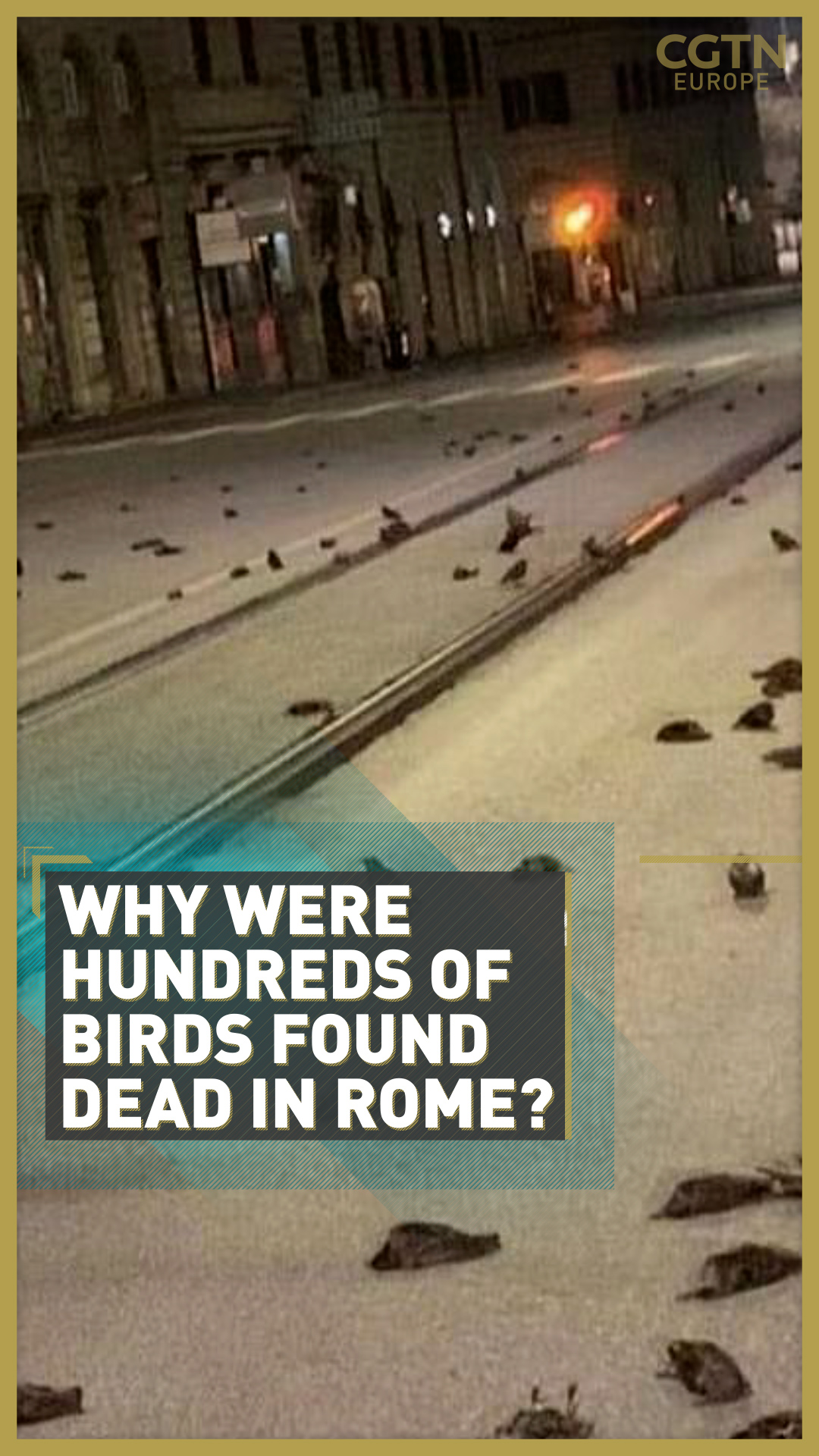
Hundreds of dead birds have appeared on the streets of Rome, Italy on New Year’s Day, with an animal rights group blaming the deaths on fireworks the previous night.
Footage recorded by Diego Fenicchia showed the lifeless birds scattered across the roads near Rome’s main train station. In the video, Fenicchia called the situation “embarrassing” and “sad.”
Although it remains unclear exactly how the birds died, animal rights group the International Animal Protection Organization (OIPA) attributed the fatalities to fireworks.CLICK: REMEMBER THESE? OUR TOP STORIES OF 2020
OIPA spokeswoman Loredana Diglio said the birds could have died several different ways in reaction to the fireworks.
“It could be that they died from fear. They can fly up together and knock against each other, or hit windows or electric power lines. Let’s not forget they can also die of heart attacks,” she said.
Rome’s mayor had banned all fireworks from December 31 to January 6 in a bid to prevent gatherings amid the COVID-19 pandemic, but thousands were still set off on New Year’s Eve.
The Italian branch of the OIPA has called for a nationwide ban on selling fireworks and firecrackers for personal use, saying they threaten the lives of animals.
Although many think the fireworks were the cause, the birds’ deaths remain a mystery.
Fireworks and other explosive materials, whose reactions can produce sparks, flames, and fumes, cause various harms to nonhuman animals. These often affect animals who are human companions, and whose reactions we can easily see. They also harm the other animals who are around us, both in urban environments and outside them, as well as those who are on farms or confined in other spaces.
Physical damage to the hearing organs of animals
The hearing of many animals is much more sensitive than it is in humans, so the explosions of fireworks are not only more disturbing to them, but they can damage their hearing more severely. Fireworks can emit sounds of up to 190 decibels (110 to 115 decibels above the range of 75 to 80 decibels where the damage to the human ear begins). Fireworks generate a higher noise level than firecrackers, gunshots (140 decibels), and some jet planes (100 decibels).
Noises caused by fireworks and firecrackers can lead to loss of hearing and tinnitus. Dogs are known to suffer irreversible hearing loss caused by proximity to the noise of gunfire.
Fear and stress
In addition to these harms, the noises caused by fireworks harm animals by causing fear. In fact, repeated exposure to unexpected, unpredictable loud noises can cause phobias in many animals, increasing panic reactions to loud noises in the future.1
It is estimated that one-fifth of disappearances of animals who are companions to humans are due to very loud sounds, mainly fireworks and storms.2
The effects of fireworks on animals can be observed very clearly in zoos.3 It has been shown that the noise of fireworks makes animals such as rhinos and cheetahs very nervous, also visibly affecting others such as elephants, while rodents continue running minutes after the noises cease.4
Harmful effects by chemical particles
In addition, firecrackers are poisonous, and their explosion releases harmful particles such as fine dust (PM10) that is toxic to inhale. It can worsen existing diseases and cause others. Therefore, fireworks represent a danger both to animals who live in areas where they explode, or in relatively distant locations when the wind transports the particles.5 There is also a risk of ingestion of the residue of fireworks and firecrackers.6 The proximity of the animals to the areas where the firecrackers are made often causes burns and damage to the eyes.
The chemicals are also dangerous for cats and dogs, just as they are for humans with respiratory diseases such as asthma. Careless use of fireworks can also cause mutilations and fatal accidents in animals near the event, as well as causing fires that harm animals. When accidents of this type occur that affect humans, it is common for us to talk about it, but we must remember such things often affect animals of other species even when humans aren’t badly affected.
Ways different animals are affected by fireworks
Dogs
Dogs are able to hear up to 60,000hz, while humans can’t hear anything above 20,000hz, which is only a third of the capacity of dogs. This auditory acuity of dogs is one of the reasons the sound of fireworks can be so harmful to them. They show signs of overwhelming anxiety as they are unable to escape from the sound.7
Dogs, like many other animals, also suffer from other phenomena that produce loud sounds, such as storms. However, in the case of storms, the noises are accompanied by previous warning signs, so that animals can perceive them in advance. This can cause them anguish in anticipation, but it does not cause them the unexpected fright caused by fireworks, which are sudden and not identifiable.8 The fear of noise among older dogs is more common.9
Many urban dogs suffer negative symptoms from the explosions of firecrackers. Common reactions are freezing or paralysis, uncontrolled attempts to escape and hide, and tremors. Other more intense signs may also be present, such as salivation, tachycardia, intense vocalizations, urination or defecation, increased activity, hyper alertness and gastrointestinal disorders. All these signs are indicative of great discomfort.
It has been pointed out that the reaction of dogs to the sound of fireworks is similar to post-traumatic stress in human animals. However, this effect could be much more harmful in dogs, because they do not have the ability to rationalize their anxiety, or the possibility of an immediate cognitive response that allows them to respond to their fear. It is likely they experience a deeper and more intense form of terror. This is in addition to the noise phobia which can be greater in some dogs due to personality differences. It is important to keep in mind that in the first years of their lives, dogs are especially vulnerable to the development of phobias, and exposing them to sounds like fireworks contributes to future fear responses that they might not otherwise have had. It has been estimated that one in two dogs has significant fear reactions to fireworks.10
Cats
The effects of fireworks on cats are less obvious, but their responses are similar to those of dogs, such as trying to hide or escape.11 However, regardless of the fear they have, they have a higher risk of being poisoned. Many cats who are near areas where firecrackers are made ingest them or their parts. In addition, they can go blind or be seriously injured by the explosions of firecrackers.12
Horses
Horses can easily feel threatened by fireworks due to their hypervigilance since they are constantly on high alert due to possible predators.13 Horses also act quite similarly to dogs and cats, showing signs of stress and fear, and trying to flee or escape. It is estimated that 79% of horses experience anxiety because of firecrackers, and 26% suffer injuries from them. Sometimes they react to fireworks by trying to jump fences and flee to dangerous areas where they can be run over by cars.14
Birds
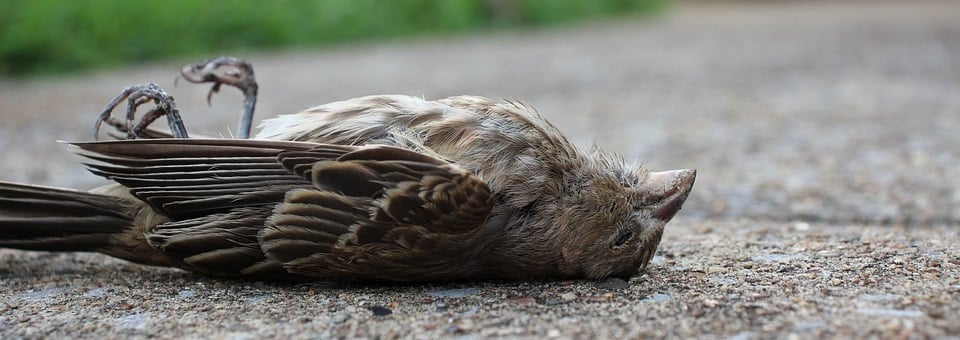
The noise of firecrackers can cause birds tachycardia and even death by fright. The high degree of stress birds experience is indicated by the fact that birds may temporarily or permanently abandon the places where they are.15
In areas that are aircraft flyover zones, Creole ducks grow more slowly and have a lower body weight than Creole ducks who live in areas with little noise. Snow geese affected by these noises spend less time eating during the day and try to compensate during the night, which entails shortening their period of rest and sleep, gradually reducing their survival rate.16
Disorientation and panic from fireworks can cause birds to crash into buildings or fly towards the sea. The colonial species of birds who nest in high densities, such as silver gulls, are at greater risk of this during explosions of firecrackers. Many birds who flee from their nests due to the sounds do not know how to return to their nests once the noise ends, which leaves many of their young helpless.
Invertebrates and small vertebrates
The harms caused to invertebrates and small vertebrates have been evaluated much less than those caused to the animals discussed above. Presumably, these animals can do little to avoid harm if the explosions occur in areas near where they live. Keep in mind that for these animals fireworks are very large explosions, so the harms to them can be much greater than in other animals.17
Alternatives to the use of fireworks
There is a growing acceptance of alternatives to fireworks, such as laser light shows. One notable case is in the city of Collechio (Italy), one of the first to program silent fireworks, with the message that it is possible to enjoy fireworks without causing panic among the nonhuman inhabitants of the municipality.18 However, there is the possibility that this type of show may affect birds negatively.
Some might think that administering a soothing drug to animals could be the solution, but this proposal isn’t satisfactory for two reasons. First, the use of drugs to calm animals could cause harmful side effects. Second, we wouldn’t be able to reach almost all of the animals affected by fireworks. The animals who live with human beings are not the only ones harmed. Even if we only consider domesticated animals in urban areas, there are animals who live in the street or are alone. In addition, domesticated animals are the minority of animals affected. We must take into account all animals who live outside the reach of humans, whether in the wild or in urban environments, as well as those on farms and other places where they are exploited. For this reason, the only really satisfactory solution is to reject the use of fireworks.
Gahagan, P. & Wismer, T. (2012) “Toxicology of explosives and fireworks in small animals”, Veterinary Clinics of North America: Small animal practice, 42, pp. 361-373.
Overall, K. L.; Dunham, A. E. & Frank, D. (2001) “Frequency of nonspecific clinical signs in dogs with separation anxiety, thunderstorm phobia, and noise phobia, alone or in combination”, Journal of the American Veterinary Medical Association, 219, pp. 467-473.
Shamoun-Baranes, J.; Dokter, A. M.; van Gasteren, H.; van Loon, E. E.; Leijnse, H. & Bouten, W. (2011) “Birds flee en mass from New Year’s Eve fireworks”, Behavioral Ecology, 22, pp. 1173-1177 [accessed on 30 March 2019].
Shannon, G.; McKenna, M. F.; Angeloni, L. M.; Crooks, K. R.; Fristrup, K. M.; Brown, E.; Warner, K. A.; Nelson, M. D.; White, C.; Briggs, J.; McFarland, S. & Wittemyer, G. (2016) “A synthesis of two decades of research documenting the effects of noise on wildlife”, Biological Reviews, 91, pp. 982-1005.
Simpson, S. D.; Radford, A. N.; Nedelec, S. L.; Ferrari, M. C.; Chivers, D. P.; McCormick, M. I. & Meekan, M. G. (2016) “Anthropogenic noise increases fish mortality by predation”, Nature Communications, 7 [accessed on 12 May 2019].
Notes
1 British Small Animal Veterinary Association (2019) “Fireworks”, BSAVA [accessed on 18 June 2019].
3 In one case, the noise caused by nearby works were a cause of stress for snow leopards kept in zoos. They withdrew to the most remote parts of their exhibition area, and spent more time sleeping than on the days when there was no noise. We can imagine the harm caused by much more thunderous sounds, such as those caused by fireworks. Sulser, E.; Steck, B. L. & Baur, B. (2008) “Effects of construction noise on behaviour of and exhibit use by snow leopards Uncia uncia at Basel zoo”, International Zoo Yearbook, 42, pp. 199-205.
4 Rodewald, A.; Gansloßer, U. & Kölpin, T. (2014) “Influence of fireworks on zoo animals: Studying different species at the zoopark erfurt during the classic nights”, International Zoo News, 61, pp. 264-271.
6 Stanley, M. K.; Kelers, K.; Boller, E. & Boller, M. (2019) “Acute barium poisoning in a dog after ingestion of handheld fireworks (party sparklers)”, Journal of Veterinary Emergency and Critical Care, 29, pp. 201-207.
7 Blackwell, E. J.; Bradshaw, J. W. & Casey, R. A. (2013) “Fear responses to noises in domestic dogs: Prevalence, risk factors and co-occurrence with other fear related behaviour”, Applied Animal Behaviour Science, 145, pp. 15-25.
8 Franzini de Souza, C. C.; Martins Maccariello, C. E.; Martins Dias, D. P.; dos Santos Almeida, N. A.; Alves de Medeiros, M. (2017) “Autonomic, endocrine and behavioural responses to thunder in laboratory and companion dogs”, Physiology & Behavior, 169, pp. 208-215.
9 Storengen, L. M. & Lingaas, F. (2015) “Noise sensitivity in 17 dog breeds: Prevalence, breed risk and correlation with fear in other situations”, Applied Animal Behaviour Science, 171, pp. 152-160.
10 Hargrave, C. (2018) “Firework fears and phobias in companion animals – why do we let owners take the one in two chance?”, The Veterinary Nurse, 9, pp. 392-392.
16 Conomy, J. T.; Dubovsky, J. A.; Collazo, J. A. & Fleming, W. J. (1998) “Do black ducks and wood ducks habituate to aircraft disturbance?”, Journal of Wildlife Management, 62, pp. 1135-1142.
17 Morley, E. L.; Jones, G. & Radford, A. N. (2014) “The importance of invertebrates when considering the impacts of anthropogenic noise”, Proceedings of the Royal Society B: Biological Sciences, 281, 20132683. Studies have also been conducted on the effects of noise on marine invertebrates, due to their economic interest. Hawkins, A. D.; Pembroke, A. E. & Popper, A. N. (2015) “Information gaps in understanding the effects of noise on fishes and invertebrates”, Reviews in Fish Biology and Fisheries, 25, 39-64; Nedelec, S. L.; Radford, A. N.; Simpson, S. D.; Nedelec, B.; Lecchini, D. & Mills, S. C. (2014) “Anthropogenic noise playback impairs embryonic development and increases mortality in a marine invertebrate”, Scientific Reports, 4, p. 5891.
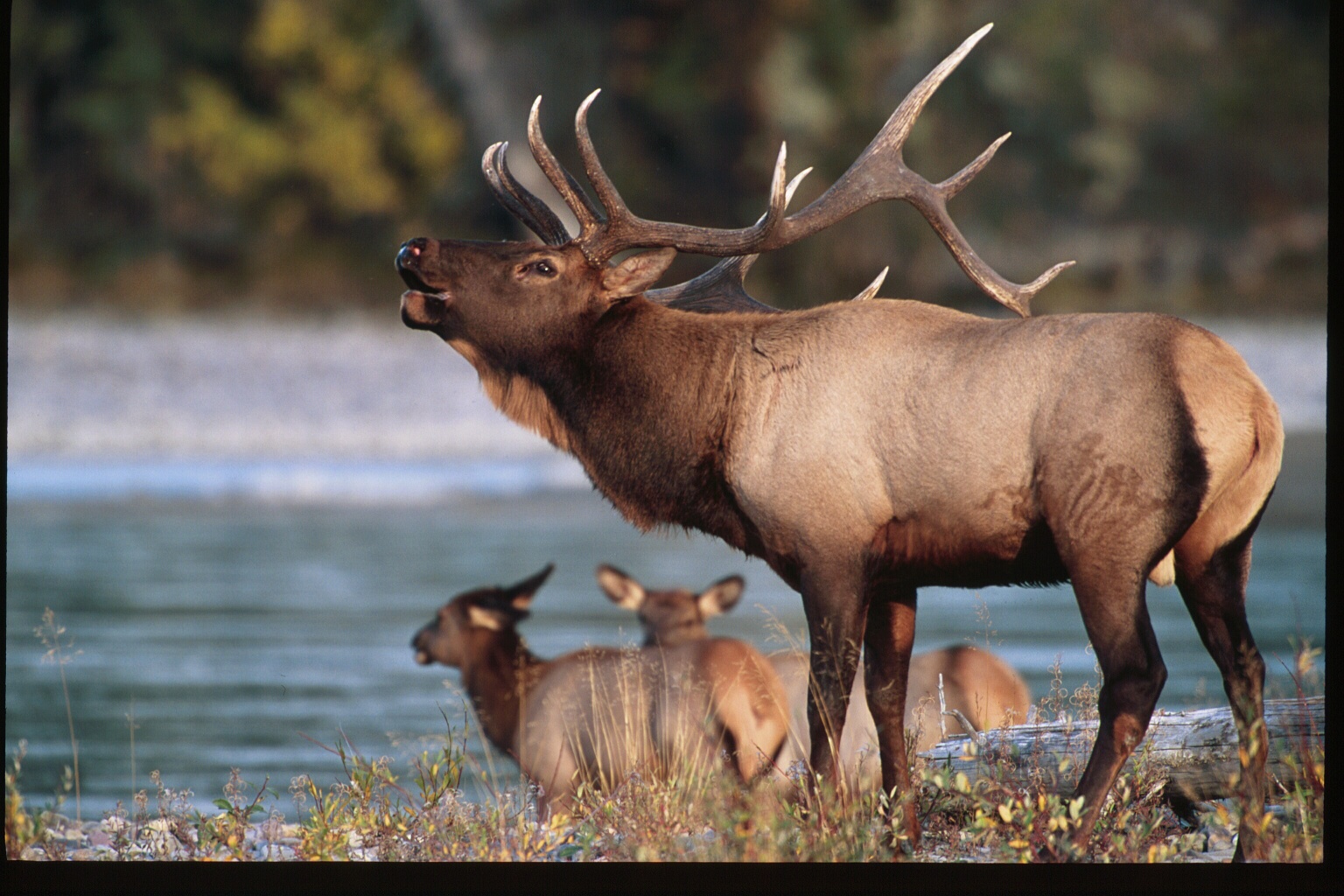
On the way home from the ocean, just before sundown yesterday evening, I passed a field where a local elk herd can often be seen peacefully grazing or lounging at the edge of the forest. This time the elk were running away from some unseen threat. Being as it was July 3rd and considering the number of fireworks stands around, there was no sense second-guessing what was frightening them—fireworks!
Despite the increasing fire danger this time of year and regardless of who or what they might annoy, celebratory Americans can’t seem to resist launching their little rockets and lighting off their pocket-sized explosives. Those without their own box of bombs compensate by shooting their semi-automatics ‘till the cows flee home.
What a thrill—but not for everyone. While people play their war games, the wildlife head for the hills. To them, the sound of fireworks and gunfire are synonymous: they both spell human-up-to-no-good. As the raucous revelers express their right to be obnoxious assholes, the non-human animals—much more in tune with the senses—have to live in terror. Don’t believe it? Just look at your family pet.
And all so we can relive a war over and over. But the one good thing about war: while humans are busy fighting with each other each other, they don’t have as much time to torment the wildlife. Also, from the scavengers’ perspective, there’s sometimes a lot of fresh carrion left on the battlefield.

 Exposing the Big Game