Anew study out this week provides more evidence of harm caused by a class of pesticides known as neonicotinoids, with researchers linking use of the chemicals on a Japanese lake with impacts to an entire food web that resulted in the collapse of two fisheries.
“No surprise,” tweeted former UK Green Party leader leader Natalie Bennett, “soaking our planet in pesticides has broad systemic effects on biodiversity and bioabundance.”
For the study, published in the November 1 issue of the journal Science, the researchers looked at Lake Shinji and analyzed over two decades of data. They found cascading impacts that appeared to stem from the first use of neonicotinoids on nearby rice paddies.
Fishery collapse ‘confirms Silent Spring pesticide prophecy’ –
Common pesticides found to starve #fish ‘astoundingly fast’ by killing aquatic #insects via @guardianecohttps://www.theguardian.com/environment/2019/oct/31/fishery-collapse-confirms-silent-spring-pesticide-prophecy?CMP=share_btn_tw …
Neonicotinoids disrupt aquatic food webs and decrease fishery yields
It is now well known that neonicotinoids negatively affect pollinators. As research has expanded, it has become clear that these globally used insecticides directly affect other ecosystem components,…
“Since the application of neonicotinoids to agricultural fields began in the 1990s, zooplankton biomass has plummeted in a Japanese lake surrounded by these fields,” the researchers wrote. “This decline has led to shifts in food web structure and a collapse of two commercially harvested freshwater fish species.”
“Using data on zooplankton, water quality, and annual fishery yields of eel and smelt,” the paper says, “we show that neonicotinoid application to watersheds since 1993 coincided with an 83% decrease in average zooplankton biomass in spring, causing the smelt harvest to collapse from 240 to 22 tons in Lake Shinji, Shimane Prefecture, Japan.”
As for the strength of the link between the pesticides and the collapse, Phys.orgadded:
The researchers note that they also studied other factors that might have led to fishery collapse, such as nutrient depletion or changes in oxygen or salt concentrations. They report that they were not able to find any evidence showing that there might have been something other than pesticides killing the food fish ate leaving them to starve. They conclude that the evidence strongly suggests it was the introduction of neonicotinoid pesticides into the lake environment that led to the die-offs.
The Guardian, in its reporting on the study, noted that the researchers pointed to the haunting warning from Rachelel Carson’s seminal work, Silent Spring:
In their report, the Japanese researchers said: “She wrote: ‘These sprays, dusts and aerosols are now applied almost universally to farms, gardens, forests and homes—nonselective chemicals that have the power to kill every insect, the ‘good’ and the ‘bad,’ to still the song of birds and the leaping of fish in the streams.’ The ecological and economic impact of neonicotinoids on the inland waters of Japan confirms Carson’s prophecy.”
Similar impacts, the researchers added, are likely felt in other locations.
“Just awful, what gruesome harm we are inflicting on the environment,” Matt Shardlow, CEO of the invertebrate conservation group Buglife, wrote on Twitter in response to the new study.
According to Nathan Donley, senior scientist at the Center for Biological Diversity and who was not involved in the study, the findings should spur action by the Environmental Protection Agency.
“This study highlights cascading harms to aquatic life from neonicotinoids that our EPA has known about but shrugged off,” said Donley. “The evidence is now overwhelming that these pesticides are turning our rivers, lakes, and streams into inhospitable environments for fish, frogs, and other aquatic life.”
“This landmark new research should make it impossible for even the Trump administration to ignore the immense damage caused by these dangerous chemicals,” Donley added.
Neonicotinoids, or neonics as they’re often called, have also been linked to harm to bees, other insects, birds, and other animals.
Jessica Scott-Reid | Special to The Globe and Mail
Published 6 hours ago
Updated October 20, 2019
From October 19-21, The Globe and Mail is offering complimentary access to
all our election, news and business coverage. Learn more | Open this photo
in gallery
[At Newfoundland’s Northern Harvest Sea Farms, as many as 1.8 million salmon
suffocated to death in early September owing to lack of oxygen in the water.
A ship is seen in Fortune Bay, off the Newfoundland coast, on Oct. 2
disposing the decomposing remains of salmon into the water after the mass
die-off. The layer of rotten fish sludge sitting on the bottom of bay is
said to be more than 15 metres thick in some areas.]
Atlantic Salmon Federation/Bill Bryden/The Globe and Mail
Jessica Scott-Reid is a Montreal-based freelance writer and animal advocate.
It’s a notion that has made headlines several times over the past few years:
Fish feel pain, and the way we catch and kill them for food may actually be
cruel. This evolution in understanding of the sentience of an animal
long-considered too simple has caused some controversy and discomfort. And
as Newfoundland copes with a massive fish-farm die-off, concerns about the
well-being of the fish in crowded farms are being added to this mounting
conversation.
At Newfoundland’s Northern Harvest Sea Farms, as many as 1.8 million salmon
suffocated to death in early September, due to lack of oxygen in the water.
As The Globe and Mail reported two weeks ago, concerned marine biologists
noted the fish would have been stressed and fighting for oxygen in the
cramped, warm waters. Workers have also been struggling to deal with the
decomposing remains, which are being vacuumed out of the cages, processed on
land and dumped back into the sea. The layer of rotten fish sludge sitting
on the bottom of bay is said to be more than 15 metres thick in some areas,
and marine biologists worry this sludge could create algae blooms that steal
oxygen from the water and choke out other wild marine life.
Fish farming is a rapidly growing sector within Canada’s fishing industry,
with salmon being the most commonly farmed fish, and worth about $1-billion.
There are concerns, however, about a lack of government oversight of these
farms and about the damage they can cause to surrounding environments.
Deterioration of water quality owing to waste production and the spread of
disease to wild fish populations (and of drugs used to treat those
diseases), are included in these concerns. Last year, member of Parliament
Fin Donnelly told CBC News that open-net fish farms are essentially “using
the ocean as a toilet.”
For a food source typically touted as environmentally sustainable, and
perhaps less ethically fraught than their land-bound counterparts, fish may
actually be more complicated than we once thought.
Growing research now points to the fact that fish have the ability to
experience sensations, including pain and suffering. In a 2018 article in
Smithsonian Magazine, It’s Official: Fish Feel Pain, author Ferris Jabr
explains that at the anatomical level, fish have neurons known as
nociceptors, “which detect potential harm, such as high temperatures,
intense pressure, and caustic chemicals.” Fish bodies also produce the same
innate painkillers (that is, opioids) that mammals do.
Mr. Jabr details several studies, which show fish demonstrating atypical
behaviours when inflicted with pain and returning to typical behaviours when
given painkillers.
In more recent research, biologist Lynne Sneddon of the University of
Liverpool told The Independent, “When the fish’s lips are given a painful
stimulus they rub the mouth against the side of the tank much like we rub
our toe when we stub it.” She added: “If we accept fish experience pain,
then this has important implications for how we treat them.”
Although evidence is growing about the sentience of fish, they still lack
legal protection in Canada regarding their welfare or humane handling, and
are legally considered property when caught or farmed. Fishing is exempt
from most provincial animal-care acts as an accepted activity in which an
animal may be permitted to suffer (much like the farming and slaughtering of
other animals for food).
And though there are no statistics on the number of fish killed for food in
Canada each year, we know the industry is worth several billion dollars,
with exports of $6.6-billion worth of fish and seafood in 2015 putting
estimates in the hundreds of millions of fish permitted to suffocate to
death each year. The potential suffering associated with that number of
animals is hard to comprehend.
Ethical and environmental concerns surrounding the way we farm, catch and
kill fish for food are increasing. Allowing sentient animals capable of
suffering to be crammed into cages where they are unable to escape harmful
conditions, or to be pulled out of their environments, allowed to suffocate
to death, no longer aligns with the values of many Canadians who care about
the humane treatment of animals.
Compounding environmental stress upon already vulnerable ecosystems and
biodiversity only exacerbates this very obvious problem.
It’s time to care about fish, and perhaps that means leaving them alone.
Animals are defined as “property” under U.S. law, which complicates efforts to advocate for them through the legal system. Property classification is not the only aspect of animals’ legal status that presents challenges. Also problematic is when animals are expressly excluded from the definition of “animal” under state cruelty laws, as this case illustrates.
In April 2019, a North Carolina man was arrested and charged with four animal cruelty misdemeanors — one count of animal abandonment and three counts of cruelty to animals — for failing to provide his oscar fish with food and fresh water and abandoning the animal in his home when he was evicted. The fish was malnourished, swimming in a dirty tank, and suffering from a parasitic disease when discovered by authorities in the abandoned residence.
While animal cruelty prosecutions involving fish are rare, Lt. Jerry Brewer, a spokesman for the New Hanover County Sheriff’s Office, said: “This is a life just like any dog or cat. If you harm or neglect an animal in New Hanover County, we are coming for you.” Authorities believe it was the first time a suspect had been charged in the county with cruelty over a pet fish.
The following week, however, all of the charges were dropped because according to North Carolina’s animal cruelty law fish are not “animals.” The state’s animal cruelty statute defines animals as “every living vertebrate in the classes Amphibia, Reptilia, Aves,[1] and Mammalia except human beings.”[2] Fish are not represented in these categories and are the only vertebrate class not included.
In a statement, New Hanover County District Attorney Ben David said:
We take a very dim view of anyone who would abuse any creature great or small and appreciate [the Animal Services Division’s] enforcement of the laws to protect vulnerable animals. Fish are not included in this statute, however, so my office is dismissing these charges.
What is an “Animal”?
Despite the fact that they are living beings, animals are defined under U.S. law as property, which has been an obstacle to gaining recognition that they have basic legal rights. Animal cruelty laws are one of the few legal protections animals have that distinguish them from other types of property. However, some animals are not even granted the basic status of “animal” under the law, meaning they are generally excluded from even the elementary protections provided by animal cruelty statutes.
Animal cruelty laws are powerful tools to protect animals. But these protections are watered down in important ways, such as by exempting otherwise lawful practices that harm animals (e.g., farming, research, and hunting and fishing) and excluding entire classes of animals from the legal definition of “animal,” which leaves them with essentially no statutory protection from abuse and neglect.[3]
The statutory definition of “animal” under cruelty laws varies by state, and does not always adhere to commonly accepted biological and cultural understandings of what an animal is. There are a total of ten states that exclude fish from their statutory definitions of animals.[4] In addition to fish and other aquatic animals, farmed animals (or “standard,” “customary,” or “accepted” farming practices),[5] cold-blooded animals,[6] and wild animals[7] are sometimes excluded by definition from state cruelty laws. Other statutes are more vaguely worded and neither specifically exclude nor include fish and other animals;[8] other states provide no definition whatsoever.[9]
While there is no uniform definition of “animal” under state animal cruelty laws, the situation is not much better when it comes to federal animal protection laws (of which there are few). In addition, as with other animals, if fish are defined as animals at all, the cultural category into which they are placed matters: Being classified as a “pet” (versus “food” or “research subject”) will yield different levels of legal protection. As we have written in “Fins or Fur — How the Law Differs:”
It is now more or less indisputable that aquatic animals like fish feel pain and suffer as other animals do but have fewer legal protections. The federal Animal Welfare Act does not protect fish (or birds, farm animals, rats and mice bred for labs, and reptiles, among others). Fish are also not included in the Humane Slaughter Act or federal laws governing the treatment of animals used in research; not only that, but fish are not counted in the United States Department of Agriculture’s yearly report on animal usage in labs despite the fact that they make up an estimated seven percent of animals used in labs.
Fish Are Living, Feeling Beings
The fish rescued in this case was taken by authorities to a retail pet store called the Fish Room, where employees have been nursing him back to health with a proper diet and medication. One of these employees, according to the Washington Post, characterized oscar fish as “very trainable” with “huge personalities.” Oscar fish can live up to 20 years. The recently rescued fish is estimated to be about a year old.
It was a positive step that the sheriff’s office in this case brought cruelty charges involving a fish, but unfortunate that the district attorney’s hands were tied by North Carolina’s statutory definition of animal, which essentially erases fish and sends the message that their suffering isn’t relevant.
Indeed, fish are living, feeling beings — not essentially different from the animals who are protected by cruelty laws. Animal cruelty laws should be extended to apply to fish where they currently do not. There is no longer any doubt that fish are sentient. Substantial empirical research shows that they feel pain.[10]Therefore, at the very minimum fish should be recognized as “animals” under the law.
According to a study published in the journal Animal Cognition, “fish are seldom afforded the same compassion as warm-blooded vertebrates, in part due to the large gap between people’s perception of fish intelligence and the scientific reality.” This matters because public perception guides government policy. In reviewing the scientific literature, the author concluded that:
Fish perception and cognitive abilities often match or exceed other vertebrates. A review of the evidence for pain perception strongly suggests that fish experience pain in a manner similar to the rest of the vertebrates… The extensive evidence of fish behavioural and cognitive sophistication and pain perception suggests that best practice would be to lend fish the same level of protection as any other vertebrate.[11]
Learn More!
To learn more about the emerging field of aquatic animal law, tune into the Animal Legal Defense Fund’s free webinar, “Aquatic Animal Law: Overview, Aquaculture, and Alternatives,” on Friday June 14, 2019, from 12-2pm PT. It’s free to register but space is limited, so reserve your spot today! Lewis & Clark Law School is also offering Aquatic Animal Law as an online summer class for the first time this year. Class begins June 18 and is open to visiting and auditing students.
Legal Action Challenges Shooting, Trapping by ‘Wildlife Services’ Program
SACRAMENTO, Calif.— The Center for Biological Diversity today launched a lawsuit against the U.S. Department of Agriculture’s Wildlife Services program for killing California beavers and harming native salmon, southwestern willow flycatchers and other endangered wildlife that uses habitats created by beavers.
In California last year, Wildlife Services killed nearly 1,000 beavers using firearms, traps and snares.
“California’s beavers need to be protected, not persecuted,” said Collette Adkins, a Center attorney and biologist. “Beavers are nature’s engineers, building dams and ponds that help endangered fish and frogs. Our federal government needs to stop shooting and trapping native beavers whose ponds are safe havens for other wildlife.”
Last year, in response to a similar litigation threat, Wildlife Services agreed to stop killing beavers, river otter, muskrat and mink in Oregon.
Numerous studies show beavers benefit endangered salmon and steelhead by building ponds with natural cover and food for the fish. Endangered frogs and birds, including Oregon spotted frogs and southwestern willow flycatchers, rely on wetland habitats formed by beaver dams.
But Wildlife Services kills beavers without considering the impacts to other animals that rely on their dams and ponds to survive.
For example, over a 10-year period in Sacramento County, Wildlife Services killed more than 1,000 beavers, even though federally protected Chinook salmon and steelhead live there and use habitats created by beavers.
“Not only are beavers ecologically important, they’re smart, hardworking and adorable,” said Adkins. “My heart breaks for the thousands of beavers needlessly shot and trapped by Wildlife Services.”
Wildlife Services has never analyzed how its killing of beavers affects California’s endangered wildlife, even though the Endangered Species Act requires such study.
Today’s notice letter starts a 60-day clock until the Center can file its lawsuit to compel Wildlife Services to comply with the Endangered Species Act.
With the help of Home Partners of America, which permitted access to a vacant rental property in Cumming, 11 neglected koi were removed from a dangerous situation. Thank you to everyone who took the time to speak out about this urgent issue and to Atlanta Koi Rescue for coordinating the rescue effort and ensuring a happy ending for these animals.
Please be sure to check out our other urgent alerts and help animals who still need your voice!
PETA has been alerted to an evidently abandoned koi pond reportedly located on a vacant rental property in Cumming, Georgia. We’re told that the pond once contained as many as 30 fish but that up to a month has elapsed without anyone feeding them. Water levels are running perilously low, and a nonworking pump has resulted in inadequate oxygenation. One witness claims that dozens of fish have perished since April and that approximately 10 koi remain in the murky water struggling to survive. Local entities stand ready and willing to rescue these survivors but can’t do so unless the property management company that oversees the location gives them access. Despite numerous calls from PETA and local officials to the company, access has still not been given.
They passed around a bottle of Malibu rum as gunshots bellowed into the desert night. A trio of young men had set up camp near the unincorporated town of Crystal, 80 miles outside of Las Vegas, Nevada. As recently as 2005, the tiny town hosted two brothels, but by April 2016, it was pretty much empty, ideal for carefree camping on a moon-like stretch of desert, the perfect place to pass around a bottle and a shotgun for some bunny blasting.
As often happens on a night like that, things went downhill. Drunk on rum and the roar of the gun, the three men fired up an off-road vehicle and drove away from camp. Riding in back was Trent, a chestnut-haired, bearded 27-year-old, who carried the shotgun and blasted away at road signs as they tore across the Amargosa Valley and Ash Meadows National Wildlife Refuge. They headed toward a remote unit of Death Valley National Park: Devils Hole, a deep pool inside a sunken limestone cavern. The area’s surrounded by 10-foot-tall fencing, a fortress erected to protect an endangered species of pupfish found there.
Trent shot at the gate to the pedestrian walkway area and then shot the surveillance camera and yanked it from its mount. Then he and one of his companions, Steven, stumbled into the enclosure. Steven was so intoxicated that it took him multiple tries to clear the fence. Inside the enclosure, he paused to empty his bladder.
Filled with mischief, Trent lunged toward his partner and punched him in the crotch with a left hook. Then, as Steven stumbled over to a large boulder to vomit, Trent dropped the shotgun, stripped off his clothes, and slipped into the deep warm water of Devils Hole. He didn’t know it yet, but that would prove to be his worst mistake of the night.
Devils Hole pupfish — some of the rarest fish in the world — are found only in a deep geologic fissure fed by water from the aquifer that lies below the Mojave Desert.
Brett Seymour/NPS Submerged Resources Center
SIXTY THOUSAND YEARS AGO, a narrow fissure opened up in the Amargosa Valley, releasing water pooled deep in the earth and creating Devils Hole, the opening to an underwater cavern. Scientists disagree over just how it happened — whether by way of underground tunnels, ancient floods or receding waters — but several desert fish were separated from the larger population and trapped in Devils Hole. There, a tiny sub-population — the Devils Hole pupfish (Cyprinodon diabolis) — evolved in extreme isolation for tens of thousands of years, eventually, according to scientific consensus, becoming an entirely new species.
Today, visitors to Devils Hole get a rare window into one of the Mojave Desert’s vast aquifers. Steep limestone walls surround a tiny opening into turquoise water. Divers have descended over 400 feet into the cave without reaching the bottom. The water is so deep that earthquakes on the other side of the world cause it to slosh, shocking the fish into spawning.
The environment in Devils Hole is so remote and extreme that scientists have long puzzled over how the pupfish can live there at all. Still, a modest population has managed to survive on a shallow, sloping rock shelf that gets just enough sunlight — only four hours per day at its peak — to allow algae to grow for the fish to eat.
The environment in Devils Hole is so remote and extreme that scientists have long puzzled over how the pupfish can live there at all.
The Devils Hole pupfish are truly unique. The males are a bright blue, the females a subdued teal, and they’re only about an inch long. They are more docile and produce fewer offspring than their cousins, which are found in pockets ranging from the Southwest toward the Gulf of Mexico. The Devils Hole pupfish lacks the pelvic fin that enables its kin to be vigorous swimmers. But it is able to thrive in temperatures far warmer than similar species can tolerate. Trapped by geology in a consistent 93-degree womb, Devils Hole pupfish have nowhere to go. In fact, they have the smallest geographic range of any known vertebrate species on earth.
The pupfish were among the first species to be protected under the Endangered Species Preservation Act of 1967 — along with the American alligator, the California condor and the blunt-nosed leopard lizard — and that protection was carried over to the Endangered Species Act of 1973. At the time, around 220 survived in Devils Hole, but since the 1990s, the species has been in significant decline, sinking to just 35 fish in 2013. Today, there are modest signs that the population is growing; the last population count was 136.
The tiny fish has become an icon for those looking to protect endangered species and their habitat, but it’s a target of deep resentment in Nevada, and particularly in Nye County, where, according to critics, the interests of an obscure fish are pitted against the livelihood of local agricultural families. The issue has tested water rights in this arid part of the American West and raised questions about how far officials should go to save a handful of imperiled fish. The drunken invasion of its habitat in 2016 was not unprecedented: Dozens of trespasses have been documented throughout the decades. But such crimes are difficult to investigate and rarely prosecuted.
This time, however, would be different.
Video from security cameras in the Ash Meadows National Wildlife Refuge shows three men entering the Devils Hole enclosure. Then, a few minutes later, the pool is disturbed by a foot splashing into the water and a man walking around. Then you can see a Devils Hole pupfish swimming away from a foot. National Park Service
ON MONDAY, MAY 2, 2016, Kevin Wilson, an aquatic ecologist and manager of the Devils Hole research program, arrived at the National Park Service outpost in Pahrump, Nevada, a beige, low-key building in the middle of anti-fed country.
“We have some news you won’t like,” one of his research associates told him, gesturing toward a surveillance video playing on her computer screen. Wilson peered at the images just as one of the three trespassers tried — and failed — to clear the fencing before barging his way in on the other side of the enclosure.
“As I watched the surveillance footage, I could tell they had definitely been drinking,” Wilson told me when I visited in February. “But it was really just the one guy that had actually gotten in the pool that concerned me the most.”
Wilson, who is 51 with dark gray hair and bright blue eyes, wears his green uniform comfortably, a slight potbelly protruding above his belt. He jokes often, but the deep wrinkles in his face, tanned from years in the unforgiving Nevada sun, give him a stern appearance.
Normally, the nocturnal visitors would have been caught by a motion sensor that triggered a loud alarm. But a barn owl roosting in the area had caused too many false alarms, and rather than spook the bird, officials had disabled the device. So once the men broke in, they felt no real urgency to leave. Little did they know that multiple cameras captured their every move.
A small earth tremor that occurred over the weekend had prompted Wilson’s staff to review the footage. “Obviously, we saw much more than we had been expecting,” Wilson said, raising an eyebrow.
The video continued to play in Wilson’s office. As one man swam, another remained at the edge of the water, while the drunkest one leaned against a rock. The swimmer climbed out of the water, dragged himself over the algae-covered shelf and got dressed. Then the party fled on their off-road vehicle.
Wilson paused the video and backed it up. The man who fired the shotgun and plunged into the pool had left a few things behind — his wallet and cellphone. The next morning, in the fog of a hangover, he broke in to Devils Hole to retrieve them, ignoring the empty beer cans and his underwear, which was still floating in the water.
Wilson reviewed one particular piece of footage, a view from an underwater camera, over and over: A foot plunged through the placid, algae-filled water onto a shallow shelf — the only breeding area in the world for the Devils Hole pupfish. The man had waded in at the most inopportune time possible, in late April, the peak breeding period for the pupfish. “I couldn’t immediately tell if any fish were harmed,” Wilson told me. “But I decided to do a site visit to find out for sure.”
That morning, Wilson, his research team and a bevy of law enforcement officials assessed the damage. The area reeked of vomit; beer cans were scattered around and Trent’s underwear still floated in the water. The group huddled around for a closer look. In the pool, a single bright blue pupfish was also floating on the surface — dead.
In the pool, a single bright blue pupfish was also floating on the surface — dead.
Kevin Wilson ascends from the Devils Hole pool, reachable through the gate of a locked enclosure. In April 2016, three men climbed the fence and scrambled down the rocks to reach the pool, which is closed to the public.
Luna Anna Archey/High Country News
IN FEBRUARY, WILSON TOOK ME TO THE SCENE OF THE CRIME. Wilson has dedicated a good portion of his life to pupfish. He first visited Devils Hole in the 1970s, when he was just 8 years old, tagging along with his geologist mother. Those early visits to national parks and camping trips with his family helped inspire his post-graduate work: the first-ever holistic study of the Devils Hole pupfish. And then the perfect job opened up at the perfect time. “As soon as I defended, this permanent position to study the Devils Hole environment and the pupfish opened up. I’ve been here ever since,” Wilson told me as we stood near the edge of the pond, as cold raindrops began to fall. Just paces away, pupfish flitted through the water.
The 2016 trespass swiftly activated an intricate legal enforcement network designed to protect the fish. After reviewing the footage and finding that a pupfish had indeed died as a result of the incident, Wilson notified the National Park Service at Death Valley and in Washington, D.C., as well as the U.S. Fish and Wildlife Service, Nevada Department of Wildlife and the Nye County Sheriff’s Office.
A team called the Scorpion Task Force was assembled. Its leader was the Park Service Investigative Services’ Paul Crawford, a seasoned Brooklyn-born detective with a constellation of freckles across his face. In 2012, he was the lead detective investigating the murder of ranger Margaret Anderson in Washington’s Mount Rainier National Park.
Based in Boulder City, Nevada, and nearing retirement in 2016, Crawford decided to make the trip to Devils Hole. He would supervise two other men: Morgan Dillon and Josh Vann. Dillon, a detective for the Nye County Sheriff’s Office, jumped at the chance to work on the case. “I was excited that I might have an opportunity to go all the way down to the pupfish pool and see the fish,” Dillon told me. “I originally went to college to be a wildlife biologist. I’ve always been passionate about that and still like to read scientific articles on the pupfish. Me, personally, though — I wasn’t smart enough to be a scientist, so I became a detective instead.”
“I originally went to college to be a wildlife biologist. I’ve always been passionate about that and still like to read scientific articles on the pupfish. Me, personally, though — I wasn’t smart enough to be a scientist, so I became a detective instead.”
Vann, a ranger at Death Valley National Park, worked alongside Dillon. At Devils Hole, they gathered three empty beer cans as well as two empty boxes that had held shotgun ammunition, two live rounds and multiple spent shotgun shells. Dillon attempted to fingerprint the beer cans and swabbed them for DNA evidence. He even collected the underwear and entered it into the case file.
Abundant surveillance footage gave the detectives clear images of the three suspects’ faces. “We see you, and now we’re going to find out who you guys are,” Crawford remembers thinking. The four-wheeler stood out most: a blue Yamaha Rhino, with flamboyant stripes along its doors. “It was altered with a second seat, extended roof, skid plates up front. It wasn’t something these guys bought and just drove off the lot,” Crawford said. “Those are a dime a dozen. We would have never found them.”
On May 6, Crawford put out a crime-stoppers tip form. Meanwhile, back at the Nye County Sheriff’s Office, Dillon showed his colleague, Sgt. Thomas Klenczar, an off-road aficionado, video stills of the customized vehicle. “We were really just BS-ing about it,” Dillon said. “But he’s into OHVs and is always on Craigslist, so he decided to take a look.” Minutes later, Klenczar and Dillon found the vehicle on Craigslist. It had been listed for sale just one day prior to the drunken break-in. “The fact that the vehicle was so unique and that we were able to quickly find it on Craigslist was the one and only piece of this that allowed the case to move forward,” Dillon said.
Dillon used the phone number from the Craigslist ad and a house number in one of the photos of the Yamaha to come up with the owner’s name. A photo of the man — Steven Schwinkendorf of Pahrump — matched one of those on the Devils Hole footage.
Scorpion Task Force leader Paul Crawford. A custom four-wheeler, driven by the suspects — spotted on Craigslist by one of the investigators — helped crack the case.
Luna Anna Archey/High Country News
THE EARLY 20TH CENTURY WAS AN ANXIOUS ERA for the National Park Service. The fledgling agency hemmed and hawed over its identity and whether or not it included a responsibility to protect wildlife and wild spaces.
From the 1920s through the 1940s, the Park Service managed land mostly for tourists to enjoy. In one of the agency’s founding documents, Interior Secretary Franklin Lane described developing the parks as a “national playground system.” The prevailing attitude at the time was that protecting a rarely viewed species like the Devils Hole pupfish was a project “better left to another agency,” according to Kevin Brown, an environmental historian who authored a 2017 Park Service book on the history of Devils Hole.
With no entity charged to oversee Devils Hole and the pupfish, the deep cavernous pool gained fame among locals. The area, with the pupfish swimming serenely within it, was subject to constant trespass. To this day, locals often refer to Devils Hole as the “Miner’s Bathtub.”
In 1950, an ichthyologist named Carl Hubbs excoriated the Park Service for its refusal to protect Devils Hole. Early the following year, Lowell Sumner, a Park Service biologist, visited Devils Hole and did a pictorial study of it. He argued that it was in the national interest to include this geological wonder in Death Valley National Monument. In 1952, President Harry Truman added the Devils Hole unit to Death Valley National Monument under the Antiquities Act, specifically mentioning the “peculiar race of desert fish,” and declaring that all of the species and ecosystems of Death Valley would be protected. “It was incredibly forward-looking at that time,” said Patrick Donnelly, the Nevada state director for the Center for Biological Diversity. “That was really what began this saga of the role that pupfishes ended up playing in battles down the road.”
A car streaks down the Bob Ruud Memorial Highway west of Pahrump, Nevada.
Luna Anna Archey/High Country News
ON MAY 9, 2016, THE SCORPION TASK FORCE — Dillon, Klenczar and Vann — drove through Pahrump, Nevada, to meet their first suspect in person. The harsh beauty of the desert around Pahrump clashes with the severity of the city’s neon glow. Under the surrounding Black Mountains, the desert’s sage seems greener, the needles of its barrel cactus redder and the flash of the nearby casinos, motels and fast-food chains even brighter. One street is named “Unicorn,” another “Tough Girl.” “Don’t Tread on Me” flags wave above many front doors. The locals elected brothel owner Dennis Hof to the State Assembly, a month after the self-proclaimed pimp and so-called “Trump of Pahrump” died of a heart attack on his 72nd birthday, at a bash attended by notorious Arizona Sheriff Joe Arpaio and the porn star Ron Jeremy.
The detectives located the suspect’s home and walked to the door. Steven Schwinkendorf, dark-haired, 6 feet tall and topping 200 pounds, answered it, facing Dillon, his arms crossed. A small boy, Schwinkendorf’s son, peeked around his legs. Dillon showed the photos from the surveillance video and asked him if the vehicle was his. Schwinkendorf admitted that it was and explained that he had already traded it in as part of a deal for a new four-wheeler.
“Is this you?” Dillon asked, pointing to one of the men on the video, according to investigation transcripts. Schwinkendorf said it was. The other two suspects had come to his house for a barbecue before they went camping, he said. “We had been drinking quite a bit,” Schwinkendorf admitted. He told the detectives that the trio then went to Ash Meadows to shoot rabbits. Schwinkendorf said he had only vague recollections of being at Devils Hole, though he remembered vomiting; his friends had teased him about it.
Schwinkendorf identified his companions — Edgar Reyes, a Las Vegas local, and Trenton Sargent, the skinny-dipper — and gave Dillon their phone numbers.
The next day, Dillon called the other suspects. He first dialed Reyes, who didn’t answer, though he quickly phoned back. Dillon remembers Reyes saying he was scared. “I woke up, and my face is plastered all over everywhere on the internet,” Reyes said. He admitted to the trespass and confirmed that the shotgun belonged to him, but he said that all three of them had been shooting it. “Not long after speaking to him, I got a call from his attorney,” Dillon told me.
But Dillon had yet to reach Sargent. “I was afraid that Schwinkendorf and Reyes would get to Sargent and spook him. I felt like I was running out of time.”
That afternoon, Dillon called Sargent. “He told me that he heard I was looking for him,” Dillon said. “He was very cooperative and forthcoming.” The crime-stoppers tip had gone viral, and in the days since it went public, Sargent told Dillon he had received “hundreds of messages” and even a few death threats. He admitted that he had taken off his clothes and gone swimming in the pool. “I was showing off for my friends,” Sargent said, “and I wanted to see how deep it was.” His demeanor was extremely polite, Dillon remembers, and they spoke on the phone for several minutes.
“Sargent asked me, unprompted, if I had run his criminal history,” Dillon told me.
“I have so much to tell you,” Sargent said to Dillon. “I’m a convicted felon. I know that I can’t have a gun, that I can’t be around guns. I wasn’t intending to shoot that night and was just going to hold the spotlight while the others shot.” There was a pause — a long-enough silence that Dillon thought the phone might have been disconnected. “But because of the drinking, I shot as well,” Sargent told him.
Sargent had been convicted of grand theft of money and property three years earlier in San Bernardino, California. He had struggled with addiction for most of his teenage and early adult years, but since then, he had cleaned up his life and returned to his hometown, Indian Springs, Nevada. He lived in a trailer and often saw his son Logan, who was then only 1 month old and lived with his in-laws in town.
Sargent later admitted to knowing about the pupfish and their endangered status, but insisted he didn’t mean to harm them. His drunken break-in was a slip, he said, a momentary lapse of judgment.
Underwater researchers surface in Brown’s Room, one of the rooms of Devils Hole, deep within the earth in Death Valley National Park.
TRENT SARGENT’S SWIM was just the most recent threat to the existence of the Devils Hole pupfish. Back in the late 1960s, after the National Park Service began its first studies and population counts, the Cappaerts, a ranching family in Pahrump, decided to dig a number of wells on their 12,000-acre ranch just a few miles from Devils Hole.
When the Cappaerts began pumping, the water level in Devils Hole dropped, exposing large parts of the algae shelf. That exposure, the Park Service argued, decreased algae production and limited the pupfish’s spawning area, which in turn reduced its chance to survive. The aquifer level lowered so drastically that it alarmed not only Park Service staff, but also the U.S. Fish and Wildlife Service and Nevada Department of Wildlife. The park’s staff ordered the Cappaerts to stop pumping.
The Cappaerts said they had spent a lot of money drilling the wells and changing their farming operation, and that they intended to go right on pumping without limitation under “Absolute Dominion,” also known as the “English Rule,” a 19th century common-law doctrine adopted by some U.S. states that allowed landowners to use as much groundwater as they pleased. (Nevada had actually abandoned Absolute Dominion in favor of prior appropriation for both surface and groundwater decades earlier.) The Park Service argued that the special status of Devils Hole pupfish under the Endangered Species Act and its habitat’s status as a national monument trumped the Cappaerts’ rights to the water.
The Cappaert case went all the way to the U.S. Supreme Court, testing the power of the Antiquities Act and the weight of the new Endangered Species Act. In 1976, the High Court affirmed the federal government’s right to maintain water levels sufficient to support the pupfish, even at the expense of water rights held by nearby ranchers.
“There are two endangered species here: the pupfish and the American rancher.”
The decision enraged the residents of Nye County. The attorney representing the Cappaerts argued, “There are two endangered species here: the pupfish and the American rancher,” and said the federal government had chosen a fish over the people. A Pahrump newspaper editor even threatened to throw the pesticide Rotenone into the sunken cave to “make the pupfish a moot point.” The community split into factions, and anger pervaded the air. Warring bumper stickers — “KILL THE PUPFISH” and “SAVE THE PUPFISH” — were plastered on cars, street signs and office buildings across the Southwest.
A 1960s bumper sticker against the preservation of pupfish and their habitat.
But the decision has stood the test of time. In the late 1970s, the Cappaert family sold their ranch. The land has since changed hands a number of times, eventually becoming the Ash Meadows National Wildlife Refuge. Had that case gone any differently, had the Park Service not decided that part of its mandate was to protect the species and stop the Cappaerts from pumping — had Truman not designated Devils Hole a national monument in the first place — the Devils Hole pupfish might now be extinct, though Pahrump would probably be a little greener. “If it weren’t for that decision, the Amargosa Valley would have been pumped dry a long time ago,” Wilson, the biologist, told me recently. “There would be no Death Valley, no Devils Hole, no Devils Hole pupfish — but there would be a whole lot more golf courses, I bet.”
The Devils Hole pupfish, a tiny species that has survived such obstacles, represents a paradox for Wilson, who would not live in Pahrump were it not for Devils Hole. He told me that adjusting to a life in the gravel-covered, billboard-lined city was difficult for him and his wife, a Canadian, who, after a few years in Nevada, finally found her niche in, of all things, golf. “I do wish I could just pick up and move Devils Hole and put it somewhere with a higher standard of living,” Wilson told me. “But it’s worth protecting — and worth punishing people who threaten this little species.
“The most important advances in science have come from the edges of what’s possible — from the most extreme environments,” Wilson said. “We have a lot to learn about how the Devils Hole pupfish has even been able to survive.”
Josh Sargent holds a photograph of his children, Bella and Trent. Trent has his own son, Logan, on his lap.
Luna Anna Archey/High Country News
TRENT SARGENT TURNED HIMSELF IN just after Memorial Day and pleaded guilty to violating the Endangered Species Act, destruction of federal property, and possessing a firearm while a felon. A few days before his October sentencing, he submitted a letter to U.S. District Judge Andrew Gordon, who would decide his fate.
“I’m not one to make excuses for what I have done wrong and I’m not going to start now,” he wrote, in all capitalized, slanted script. “I made a stupid mistake. … I’m not a bad person, your honor, and I take full responsibility for my actions and the crimes I committed. … I would like to ask you to accept this letter to you as my verbal ‘handshake’ that upon my release I will complete all stipulations given to me by the courts and you will not see me again in your courtroom.”
On the afternoon of Oct. 25, 2018, Sargent stood quietly beside his lawyer in a Las Vegas courtroom as Judge Gordon handed down his sentence: A total of 12 months and one day — nine months specifically for his violation of the Endangered Species Act — in the custody of the Federal Bureau of Prisons. Once he is released from the Los Angeles Metropolitan Detention Center, Sargent must pay nearly $14,000 in restitution to the National Park Service, along with a $1,000 fine. He’s also forbidden to enter federal public lands for the rest of his life.
Four months later, I journeyed to Indian Springs, Nevada, an unincorporated community of fewer than 1,000, where Sargent has lived for most of his life. It’s home to Creech Air Force Base and the Desert Warfare Training Center. I met Sargent’s family at their spacious and warmly lit doublewide manufactured home. There was a chill in the air and a blustery wind, but his mother, Norine, sat outside, watching her grandchildren jump on a trampoline in the yard. Trent’s father, Josh, joined us a few minutes later, home from work at the Nevada National Nuclear Security Site, where he’s been employed as an ironworker for 30 years.
I had assumed that the Sargent family would consider what happened to their son unfair. But I was wrong. In fact, they defended the Endangered Species Act with a conviction that surprised me, and they knew a lot about Devils Hole and the pupfish that swam there. Norine recalled the family taking trips to Devils Hole when Trent was a boy, teaching him about the pupfish. “Trent would just as soon give first aid and mouth-to-mouth resuscitation to that little pupfish than have this thing go on and on,” Josh Sargent said. He acknowledged that his son was paying the necessary price for his actions. “He knows about endangered species, and he takes responsibility for what he did.”
“He knows about endangered species, and he takes responsibility for what he did.”
The Sargents’ home was filled with pictures of family, including several of Trent throughout the years. In one, the beaming 12-year-old holds up the first fish he ever caught, a minuscule rainbow trout. But now Trent can’t visit public lands or use a firearm. “Trent grew up hunting and fishing,” Norine said. “And now he’ll never get to go hunting with his dad ever again.”
Had that fateful evening unfolded just slightly differently — had that single pupfish not died — Trent would very likely be sitting in the living room with his family. Sometimes it is a bitter pill for the Sargents to swallow. “I understand the way people feel about the fish,” Josh Sargent said. “But what if someone runs over a cat? Are they going to stop and make sure the cat is alive? No, I don’t think so. They’re just going to keep on truckin’. But Trent kills a fish — and certainly not intentionally, and he’s in prison. … We’re not trying to defend him; the Sargent family is deeply sorry for what happened.”
Josh and Norine Sargent, right, pose in their Indian Springs, Nevada, home, filled with Southwestern memorabilia, hunting trophies and family portraits. “Trent grew up hunting and fishing,” Norine said. “And now he’ll never get to go hunting with his dad ever again.”
Luna Anna Archey/High Country News
BECAUSE THERE ARE SO MANY ENDANGERED SPECIES, society is forced to make difficult choices about which ones to protect, and to what lengths we should go to save them. Climate change has quickened the pace of extinction, and already the number of critically endangered species exceeds our ability to save them all.
The Devils Hole pupfish, serene, obscure and tiny, has survived a very long time in an unkind place, just one drunken night or one jug of poison away from oblivion. It is a wonder, to be sure. But how far do you go to save a species like this? For Wilson and the others at Death Valley National Park, it means surrounding this biological wonder with an impenetrable cage. Biologists occasionally feed the fish and clean out Devils Hole as if it were a giant aquarium. They even have a backup population held in a huge climate-controlled tank nearby, insurance against outright extinction. Protecting the species means harsh punishment for anyone who kills even just one fish, according to Patrick Donnelly of the Center for Biological Diversity, which offered a $10,000 reward for help in identifying the drunken skinny-dipper and his friends. “We desperately wanted justice for this. If they didn’t get the book thrown at them, what’s stopping others from doing whatever they want and eliminating an entire species?”
“Why does this place look like a prison?”
Since the incident, Devils Hole has become an even more formidable fortress. The Park Service capped its towering fences with additional barbed wire. The public can only view the sunken cave from a distance now, more than 20 feet above it. And inside the fenced viewing area are even more cameras, motion sensors and “No Trespassing” signs.
“I hate it,” Wilson told me this winter. “I hear from the public all of the time — ‘Why does this place look like a prison?’ People get really upset that they can’t get a closer look. But it’s just what we have to do — to stop people from doing stupid things.”
The enclosure that protects the extremely rare Devils Hole pupfish. Barbed wire was added after a 2016 incident in which three drunken men broke in, one entering the pool, leading to the death of a fish.
Fish are gentle, sensitive, intelligent, and complex creatures – yet we massacre them in their billions. It’s time to speak out about the hell these creatures endure.
A rainbow trout is manipulated for stripping – squeezing of eggs for artificial spawning – Photo: Compassion In World Farming
“But you can eat fish, right?” Lots of vegans and vegetarians have been asked this well-meant question and it reveals an important truth: when it comes to speciesism, the more a creature looks and acts like a human, the easier it is for most humans to appreciate it.
Small creatures that live in the water somehow seem less important than big creatures that live on the land, like us.
So fish get a particularly hard time – not breathing like us or moving like us, they are harder for us to relate to.
Hypocrisy
I’ve noticed this in myself over the years. As a kid, I raged about slaughterhouses, fly-posted about vivisection and spoke out against fox-hunting. My visceral horror was stirred up by thoughts of cows in abattoirs and cats in labs, and foxes in pieces. I’m sure I cared about fish and sea mammals, but I don’t remember feeling it the same way.
I do remember finding other people’s hypocrisy odd though. School friends were proud when the tuna in their sandwiches was ‘dolphin-friendly’ – meaning it was caught using methods that didn’t also kill dolphins. That’s great, I’d say, but what about the tunas?
One guy wore a ‘Save the Whale’ badge but ate fish and chips every Friday night. The double-standard seemed so glaring to me. Another friend who adored his pet dogs nevertheless bragged about ‘catching’ – ie killing – fish at the weekend.
I couldn’t get my head round it. I’d never heard of speciesism at the time. I just assumed I was a weirdo. Being a vegan in 2019 – especially with access to the internet – is a walk in the park compared to those days, trust me.
Even now I notice some fishy double-standards. There are people who campaign against fish abuse at SeaWorld yet eat fish fingers from intensive farms. These dreadful places kill fish in far worse conditions than SeaWorld.
Then there are the people who say we must stop using so much plastic because it hurts the fish…even though they chomp on the flesh of these fish.
A voice for the fish
Looking back, I do remember one time I spoke up for the water creatures. I was 12, and my aunt had taken me to a marine park. After a worker had proudly got dolphins to perform a whole series of tricks, he asked if anyone had any questions. I raised my hand and tore him, his work and the whole marine park to pieces. I still remember my aunt’s face.
Vegan advocacy as a whole is very focused on land animals: we concentrate on the animals killed for their meat, their milk, their eggs or their fur. Rarely the fishes. I’m as guilty as anyone because I’ve written dozens of articles about animal abuse for The Guardian and other papers, yet only one about fish.
The suffering of fish
Their experiences are horrific. Fish that get caught in trawl nets are often crushed to death under the weight of other fish. Their eyes balloon out. If they survive that, they are either left to slowly suffocate or they are disemboweled with a gutting knife while still conscious.
Fish from factory farms are usually cut across the gills and left to bleed to death, electrocuted in a water bath, or smashed over the head with a blunt instrument.
Fishermen say the fish don’t feel pain but this has been disproved. Professor Donald Broom, a scientific advisor to the government, said: “The scientific literature is quite clear. Anatomically, physiologically and biologically, the pain system in fish is virtually the same as in birds and mammals.”
Experts have found that lobsters may actually feel more pain than humans would. They say that lobsters, who can live up to 100 years in the wild, are ‘quite amazingly smart animals’. Yet restaurant diners often think nothing of picking one from a tank and asking for him to be boiled alive.
Fish aren’t stupid
The idea fish are stupid is stupid in itself. Researchers have shown that, contrary to legend, goldfish have longer ‘sustained attention’ spans than humans. Some fish woo potential partners by singing to them or creating art. Scuba divers tell beautiful stories of individual fish they have made friends with.
Dr. Sylvia Earle, a leading marine biologist, said: “They’re so good-natured, so curious. You know, fish are sensitive, they have personalities, they hurt when they’re wounded.”
These are the creatures we kill on an unimaginable scale. The fishing industry measures the losses in tonnes rather than individual lives. The global wild fish catch stands at about 90 million tonnes, with a further 42 million tonnes coming from fish farms. Trillions of lives.
We might not mourn the cods and haddocks in the same way we do the cows, sheep, and pigs. We may feel it differently. But we can each speak out in our own way.
That’s why my New Year’s Resolution is to put fish in the spotlight. It’s time to do more than wear a Sea Shepherd hoody – though, like so, so many vegans, I’ve got one of those.
After Franz Kafka went vegetarian, he saw some fish and thought: “Now at last I can look at you in peace, I don’t eat you anymore.”
This is beautiful. Every vegan can relate. But wouldn’t that peace be all the more blissful if, as well as not eating them, we lent them our voice too?
This article appears in the Fall 2018 issue of The American Prospect magazine. Subscribe here.
Audrey Holstead watched a puffin rocket in from the ocean with a beak dripping with fish. It zoomed over boulders in front of her bird blind and dropped with pinpoint accuracy into a narrow, dark crevice.
Holstead’s skin crawled with electricity. Puffins come ashore with fish for only one reason: to feed a chick. This was the first feeding of the season observed at this particular hole. It belonged to the 173rd breeding pair of Atlantic puffins on Eastern Egg Rock, an island six miles off Pemaquid Point on Maine’s midcoast. That set a new record for the National Audubon Society’s Project Puffin, one of the world’s most famous bird restoration efforts. The season finished with 178 breeding pairs.
“I just wanted to jump up and down and scream to the world,” Holstead says. “I did a little wiggly dance.”
Holstead’s victory jig was one of several in the 45th summer of the project founded by Steve Kress, National Audubon Society’s executive director of seabird restoration and vice president for bird conservation. I was his co-author and photographer on the 2015 book Project Puffin: The Improbable Quest to Bring a Beloved Seabird Back to Egg Rock.
For nearly a century, the island went without puffins, eliminated by the 1880s by coastal dwellers hungry for the birds’ meat and eggs. Kress dreamed of bringing them back while teaching about birds at Audubon’s Hog Island summer camp up the Muscongus Bay coast from Pemaquid Point.
The only problem was that no seabird had ever been restored to an island where people killed it off.
In 1973, Kress convinced the Canadian government to let him translocate puffin chicks from 800 miles away in Newfoundland. Kress and colleagues fed fish to chicks in handmade sod burrows on Egg Rock until they fledged. The team then set up decoys and mirrors to make the birds perceive abundance when they returned as adults to breed.
Kress hoped the chicks would return to Egg Rock rather than Newfoundland. He guessed right. The first puffins returned in 1977 and began breeding in 1981. Today, 1,300 pairs of puffins breed on five islands in the state, most of the birds being managed in a partnership between Project Puffin and the Maine Coastal Islands National Wildlife Refuge. The bird now fuels the local economy with boat tours all along the coast.
Derrick Z. Jackson
As warming waters move their ranges northward, butterfish (above) have begun to replace herring and other more appropriate fish as food sources. Unfortunately, the butterfish’s oval shape makes it difficult for puffin chicks to swallow, causing many to starve.
The techniques used to bring back puffins have been used to re-establish or relocate 65 species of seabirds in 17 countries. A spectacular example is the 1996 return of the common murre, an auk cousin of the puffin, to Devil’s Slide rock, a 900-feet-high coastal sea stack south of San Francisco. The rock’s colony of 3,000 murre was wiped out by a massive oil spill in 1986.
After a barren decade, a team of climbers advised by Kress and now-longtime Project Puffin colleague Sue “Seabird Sue” Schubel, scaled the rock to install decoys, mirrors, and solar-powered soundtracks. A murre landed the very next day. Breeding occurred that year and the colony today is again 3,000 birds.
The murre success came back full circle this year to Maine. That bird was also wiped out in the state in the late 19th century. Inspired by Devil’s Slide, Project Puffin started trying to bring murres back to the island of Matinicus Rock. This summer, researchers discovered four healthy murre chicks under boulders.
For Kress, 72, seeing this bird was as close as he could come to welcoming back the similar-looking, twice-as-tall great auk, which was driven to extinction in the mid-1800s.
“When the murres came back to Devil’s Slide, the lead person of that project, Harry Carter, gave me a cigar and said, ‘Keep this until murres return to Maine,’” Kress says. “I still have that cigar. Now I’ll have to light it up with Seabird Sue.”
Kress says the murre chicks are proof that his project is still “reaping rewards of work done over long decades. We can bring back whole communities. It’s wild and exciting to be on the forefront of restoration. The murres show us that momentum is still rolling in the right direction.”
EVEN AS MAINE’S PUFFINS and murres make history, a malicious momentum is rolling in from the wrong direction to fog the future. Project Puffin is in the giant Gulf of Maine, which extends up from Cape Cod to Nova Scotia. The gulf is unique for its swirl of the cold Labrador Current and the warm Gulf Stream. The diversity of water has allowed for a wide range both of birds at the southern end of their North American breeding limits, like puffins and Arctic terns, and birds at the northern end of their nesting range, such as species of herons, ibises, and oystercatchers.
But climate change is making those currents go haywire, warming the Gulf of Maine faster than 99 percent of the world’s oceans. The Labrador Current is being disrupted by freshwater runoff from warming and melting Greenland ice sheets, the Gulf Stream is pushing northward, and warmer air in the jet stream is transferring more heat into the ocean as it flows off the East Coast.
To understand how fast that change is occurring, Andrew Thomas, professor of oceanography at the University of Maine, puts it like this: The duration of summer-like sea surface temperatures in the Gulf of Maine is extending by about two days every year.
Today, the duration of summer temperatures is two months longer than it was 35 years ago.
“It is a head-scratching number,” Thomas says. “It’s a perfect storm of perfect impacts. When I first saw the numbers, I couldn’t believe it. I did the calculation three more times. I got the same numbers no matter how I plotted it. This is something I never expected.”
Nor did Kress when he started his project. His puffins are now sentinels warning us of what we are doing to our oceans. They tell us via the fish they bring to their chicks.
Take herring, a workhorse forage fish. Whales, sharks, seals, and porpoises eat them underwater. Humans eat them out of cans, grind them into nutritional supplements and pet food, and throw them back in the water for lobster bait.
Young herring are an ideal fish for many seabird species because of their high fat content and streamlined bodies that are easy for chicks to eat. When the first breeding puffin was spotted flying into an Eastern Egg Rock burrow in 1981, the project’s newsletter proudly proclaimed that its beak was “packed full of glistening herring!” A 1985 newsletter said, “This is the puffin’s principal and most nutritious food.”
No more. Herring have virtually disappeared from the puffin diet. Overfishing crashed their commercial population in the late 1970s. Despite federally managed rebuilding of stocks to “robust” status in 2015, the fisheries division of the National Oceanic and Atmospheric Administration still cut the allowable 2018 catch in half over fears of record low numbers of young herring.
The herring that do exist are being driven farther out and deeper into the ocean by warmer water. According to Rutgers University marine biologist Malin Pinsky, the “center of abundance” for Atlantic herring has slipped from 200 feet of ocean depth in the late 1960s to 250 feet today.
“We have to start facing the fact that some fish may not be coming back in range of the birds.”
That begins to fall out of range of a bird whose record diving depth is 200 feet. A 2012 study on Petit Manan Island found that most puffin dives were above 50 feet. “The fish might still be there, but it’s not going to help the birds if the fish go down too deep,” says Linda Welch, who has worked as a biologist for two decades at the Maine Coastal Islands National Wildlife Refuge, which manages Petit Manan. “We have to start facing the fact that some fish may not be coming back in range of the birds.”
Other iconic New England species show similar trends. Pinsky says the core abundance of lobster has moved north 155 miles since the early 1970s and yellowtail flounder have moved north 145 miles since the 1960s.
Fish more associated with mid-Atlantic waters, such as black sea bass, are showing up in bigger numbers in the Gulf of Maine as their core population has moved up from the latitude of Virginia Beach to that of Trenton, New Jersey. Red hake have moved up from the latitude of Trenton to that of Boston.
“It’s like shaking a snow globe and waiting to see how things settle down,” says Pinsky. “And it may not settle down unless we get our greenhouse gases down.”
To view these shifts in another way with another animal, it’s as if in just one human lifetime, the northern range of the American alligator had moved up from the swamps of northernmost North Carolina to hailing distance of the Washington, D.C., suburbs (this might be a particularly appropriate analogy, given how America is mired in the swamp of political inaction on climate change).
“We’ve flipped into a new, disturbing phase, an alarming new normal,” says Janet Nye, a professor of marine and atmospheric sciences at Stony Brook University. She was a member of a groundbreaking 2015 study that determined that the continued collapse of New England’s iconic cod fishery was significantly due to overfishing and the failure of commercial catch limits to account for the effect of ocean warming on cod.
“What’s really interesting is that no one yet has taken a hard look at the interactions between different species,” she adds. “We’ve typically taken a look at one species at a time to see how temperature change alters their range and distribution. The next step is trying to understand how that affects how species interact with each other.”
SEABIRDS AND FISH ARE rapidly helping us to understand that interaction, and sometimes tell us stories of government success. In recent years, puffins on some islands have brought to their chicks large numbers of small haddock and Acadian redfish, species that rebounded with federal regulation. A 2017 NOAA report said haddock, a cousin of cod, “is currently at an all-time high.”
Derrick Z. Jackson
Solar-powered soundtracks, mirrors, and decoys (shown above) have been used over the years by Steve Kress and his team to lure puffins to nest on Eastern Egg Rock.
But with water temperatures soaring to all-time highs, redfish and haddock are two of the fish projected to decline in the Gulf of Maine, according to a study last year led by Kristin Kleisner, a former NOAA researcher who is now a senior ocean scientist at the Environmental Defense Fund. That study also found that white hake, the top replacement of herring for Maine puffins, will also decline in abundance as the gulf’s surface waters may warm by another six or seven degrees this century.
“A huge question is which species can co-exist with each other in a new area,” Kleisner says. “There are definitely fish that will leave the Gulf of Maine or not recover. It may not be all doom and gloom if there are other fish that move in that are still nutritious. But puffins are in a hot spot. They may or may not adapt.”
How hot is this spot for puffins? In 2012, the Gulf of Maine had its warmest waters on record. The 2012 summer temperature was 3.7 degrees Fahrenheit above historical averages. Less than a four-degree difference means little to humans who can shed clothes. For fish, four degrees is like being forced to wear a parka on Miami Beach.
As the puffins’ familiar fish “shed clothes” by fleeing for colder water, fish are showing up in their diet that are “shedding” the waters to the south. One is the butterfish, whose core population has moved just since 2004 from the latitude of central Virginia to the latitude of central New Jersey.
Large butterfish are a plague to puffins, especially if they arrive early in the season when their oval shape makes it difficult for newly hatched chicks to eat, causing many to starve. The upward push of butterfish coincided with the 2012 heat and was a major challenge for puffins. Petit Manan saw its breeding puffin count crash from 104 pairs in 2009 to 47 pairs by 2013. Seal Island National Wildlife Refuge and Matinicus Rock, each of which is home to more than 500 pairs of puffins, fledged only one out of every ten chicks in 2013, a record low.
Since then, there have been years of slightly cooler water and breeding success for puffins. Last year, Egg Rock hit 172 pairs of puffins. Seal and Matinicus fledged four out of every five chicks.
But the summer of 2018 was a maddening rollercoaster of the best and the worst things that could happen for puffins. The season started fine with ample haddock and white hake. Puffins began breeding in their record numbers.
Then, a July ocean heat wave sent the water to near-2012 levels. Haddock and hake largely disappeared at Eastern Egg Rock. Butterfish started showing up. On Matinicus Rock, supervisor Frank Mayer said he saw 25 to 30 chicks dead of starvation in an 85-nest study area. On Seal Island, supervisor Keenan Yakola found seven dead chicks in 60 study burrows, surrounded by rotting whole butterfish. Surviving chicks were dramatically underweight.
“What scares me is what we don’t know,” said Yakola, a graduate fellow at the Interior Department’s Northeast Climate Adaptation Science Center, housed at the University of Massachusetts Amherst. This was his fourth year as Seal supervisor. “Are water temperatures causing mismatches in spawning and [in] when the fish are available to seabirds?
If herring are gone and hake decline, what comes next?
“If herring are gone and hake decline, what comes next? We’ve had big butterfish years in the past but now the frequency of butterfish years when little else is present is concerning. In 2016 and 2018, we saw the number of feedings declining, some days we saw no feeding, possibly because the adults have to spend hours looking for food.”
Yakola’s graduate adviser and climate coordinator at the climate center, Michelle Staudinger, says she saw on Seal Island the surreal sight of puffins and terns bringing in goosefish. Otherwise known as monkfish, the fish is often considered one of the ugliest in the sea, with a body that is almost all head and mouth. “That was shocking,” Staudinger says. “What is a bird doing eating that? Why is a bird bringing that in? Seabirds like fish they can slurp down like spaghetti. This is like trying to eat a hamburger in one bite.”
Puffin chicks were in such poor condition by late July that Eastern Egg Rock intern Kay Garlick-Ott, a 22-year-old graduate of Pomona College, said, “You can actually feel the lack of food in the bird. You expect your fingers to hit something like bones, but it was just a puffball. When I pulled it out of its burrow, I knew it wasn’t right. It was so sad.”
But in yet one more twist, there was a last-minute reprieve for puffin chicks that clung to life in Maine. By the second week in August, a time when most chicks normally would have fledged, parents found a surprise final wave of hake and haddock to feed offspring, bringing home as many as 18 feedings a day. The chicks, sensing they needed the food to survive their first winter, stayed in their burrows an unprecedented full month longer than normal to fatten up. Just before Labor Day, there were at least 20 chicks still in burrows on Seal Island. On Eastern Egg Rock, Kress observed a puffin feeding on September 6, a date by which the birds have usually vacated for the winter.
“I’ve never seen a year that started out promising, then turned troubling with butterfish and very few feedings per day, and then reversed with many feedings per day,” Kress says. “It’s kind of symbolic for the last several years. It adds to the idea that it’s a roll of the dice as to how this unfolds. I was very impressed with the puffins’ ability to come up with the strategy of slow development. But we’ve never seen such slow development that then reversed itself to faster development.”
Andrew Pershing, chief scientific officer at the Gulf of Maine Research Institute, which found that the 2018 waters reached their second-highest recorded temperature of nearly 69 degrees Fahrenheit on August 8, says Americans are further gambling with the future with the deterioration of data. He says prior and proposed federal research cutbacks are curtailing or ending studies of plankton abundance, the foundation of marine life, and letting aging weather buoys fall into disrepair.
“Thank goodness we can observe what’s happening to seabirds,” Pershing says. “But it’s getting harder and harder to study what drives those changes. Without hard data, it’s hard to get ahead of what the gulf will look like.”
Tony Diamond, emeritus professor of wildlife ecology at the University of New Brunswick and one of Kress’s longtime colleagues, is not sure how much stress the puffins can take before they take some sort of leave. When Kress first asked the Canadian government for chicks, top wildlife officials at first refused, postulating that at the first sign of ecosystem stress, the birds would retreat back over the border and make the experiment a waste of time.
Nearly a half-century later, the fear of retreat or worse is not just in Maine but also in the Atlantic puffin’s strongholds of Iceland, Norway, and the United Kingdom. Similar environmental scenarios are so worrisome that the International Union for Conservation of Nature’s Red List changed the bird’s status from one of “least concern” to “vulnerable” in 2015.
Canada’s top home for puffins in the Gulf of Maine, Machias Seal Island, has 5,500 pairs, and Diamond fears for them as well. Its own roulette of fish crashes has resulted in puffins going from fledging two out of every three chicks from 1995 to 2005 to only every other one ever since.
“The puffins are a hardy bird [capable of living into their 30s], and they can handle a few bad years,” Diamond says. “But now things are hitting us at a time scale we’ve never known. We used to kill birds for feathers and meat. We stopped that a century ago with management, and the birds came back. Now we’re causing them to die again to support our lifestyles in a new way. They’ve become collateral damage for our consumption.
“Unless we do something drastic for the fish, I fear there won’t be much work for a puffin researcher in the Gulf of Maine 50 years from now.”
That’s not what today’s puffin researchers want to hear. Kress has long entrusted his islands to members of the next generation, for them to spend hours observing in the blinds, to contort themselves upside down to reach down into boulders to band chicks, and occasionally rush outside to get rid of puffin and tern predators such as gulls, eagles, and falcons overhead or mink and otter that swim from island to island.
Besides Holstead and Garlick-Ott, the Egg Rock crew when I visited in July included Laura Brazier, a 27-year-old graduate of Loyola University in Maryland with a wildlife conservation master’s degree from University College Dublin; Nicole Faber, 24, a graduate of Bowdoin College; and Blanca Gonzalez, 29, a graduate of the Autonomous University of Madrid with a master’s in animal behavior from Cordoba University.
They contrasted the struggle for the puffins and terns to find the right fish with all the concern people show for pandas, whales, the 2015 killing of Cecil the lion, and even conservation efforts for lobsters. The Gulf of Maine Research Institute, the University of Maine, and NOAA found that conservation efforts established by the lobster industry can maintain a stable industry in the face of climate change, averting the collapse that hit southeastern New England.
Derrick Z. Jackson
Steve Kress and his team on the coast of Maine
“It was devastating when the switch to butterfish occurred,” Faber says. “The worst is watching a tern chick trying to stretch its mouth, get the fish halfway down. You see this great lump in their neck. Then when they realize they can’t get it down, they hack it out on the ground. Then they try it over and over and the fish just gets covered in sticks and dirt. It’s horrible. It’s something I didn’t expect when I was told I’d be studying fish.”
Holstead recalled another tern chick that kept rejecting a butterfish and its parent picking it up over and over again to keep trying to feed it. “I’m sitting in the blind mentally screaming to myself, ‘Drop the stupid thing! Go find something else! You want your chick to die!?’ I wince every time I see it.”
Brazier was spending her fourth summer on Project Puffin and her second as Egg Rock supervisor. She has traveled the world to assist the conservation of penguins in South Africa, turtles in Greece, hares in the Yukon, and albatrosses on Midway Atoll. This winter, she is headed to Antarctica for penguin research.
For all that travel for creatures that inspire movies like March of the Penguins or books like Carl Safina’s Voyage of the Turtle and Eye of the Albatross, Brazier has spent the last four summers realizing that a puffin is only as beautiful as the oily fish it eats.
“When I see puffins fly into the burrow with butterfish, I think, ‘Puffin, stop!’” Brazier says. “But we can’t make them stop and they don’t seem to have the ability to realize what they’re catching. Last year was so insanely good. This year, as the summer deteriorated, puffins were loafing less, probably because they had less time to hang around and needed more time to find fish. You just wonder sometimes when their energy is going to run out.”
ONE THING THAT WILL NOT run out is the energy of the interns. Just as Kress returned the puffin to Maine against many odds to heal an environmental wound of the 19th century, the interns say this summer’s difficulties make them that much more dedicated not to let 21st-century problems reopen those wounds. They are quite clear that Project Puffin’s efforts are being hurt by President Trump’s and the Republican Congress’s attempted gutting of environmental protections. Many of those protections, including the Clean Air Act, the Clean Water Act, and the Magnuson-Stevens Fishery Conservation and Management Act, were enacted in the 1970s, just as Kress began bringing puffins back.
The administration is also trying to allow commercial fishing in the Northeast Canyons and Seamounts Marine National Monument, 130 miles off Cape Cod. President Obama gave this region permanent protection because it has canyons deeper than the Grand Canyon and many previously unknown species of deep-sea corals. It also is a prime feeding area for whales, turtles, and late-winter puffins that fatten up here before migrating to Maine to breed.
From this seven-acre rock, the interns are fighting back by giving people a more vivid picture of what the puffin faces.
“We can transfer anger against Trump into something positive,” Gonzalez says. “We know conservation science is not a field to get rich and famous. But we have passion.”
The question, of course, is when society will feel and honor this passion with a movement to prevent rollbacks of existing environmental laws and reverse the long-term threat to puffins, fish, and humans—climate change.
“The political environment makes me really appreciate everyone who is working out here,” Faber says. “It’s so easy to feel totally devastated and crushed by a government that wants to pollute everything again. We have to keep the resolve to not let it happen.”
Brazier, the veteran of the group, says: “Sometimes I wonder what we’re doing out here in the grand scheme of things. What is the part that five people on this tiny island do to save the planet? So many people out there are complacent and I know not everybody is going to care about the fish.
“But I have to remember that none of what we’re seeing out here was here when the project started. That’s how I stay hopeful.”
As longtime readers of this blog may remember, I’ve quoted from Richard Leakey and Roger Lewin’s 1996 book, The Sixth Extinction; Patterns of Life and the Future of Mankind. Now there’s another book titled The Sixth Extinction (subtitled An Unnatural Order) by Elizabeth Kolbert (sorry, no relation to Steven Colbert…).
Are humans the reason that this wonderful Earth and her inhabitants are all here? Are Homo sapiens the pinnacle of evolution? That and other questions of our evolution are discussed in the chapter “Human Impacts of the Past” in Leakey’s book. Here is a series of excerpts from that original book:
…“For instance, Alfred Russel Wallace, the co-inventor of the theory of natural selection, believed that evolution had been working ‘for untold millions of years…slowly developing forms of life and beauty to culminate in man.’
“Until about a decade ago, most biologists did not feel uncomfortable with speaking of an increase in complexity as an outcome of evolution and using the term progress interchangeably with complexity. Recently, however, a certain nervousness has crept in, so it is now acceptable to talk about complexity, but not about progress. Progress, is it’s argued, implies some kind of mysterious innate tendency for improvement, and that is considered too mystical. …
“Gould was one of the most outspoken in denying progress, asserting that it is ‘a noxious, culturally imbedded, untestable, nonoperational idea that must be replaced if we wish to understand the patterns of history.’
“The ability of the human species to inflict devastation on the natural world at the level of significant extinctions was for a long time thought to be a relatively recent phenomenon in human history. In Wallace’s time, biologists recognized that the swaths of European colonizations of the globe from the seventeenth century onward had left a trail of havoc in nature’s perceived harmony. Many held earlier colonizers, such as the Polynesians throughout the Pacific, to be blameless in this respect, and to have been part of that harmony. (Western sentiments toward technologically primitive societies had in fact swung dramatically, from their being crude and barbaric beasts to being Rousseauean noble savages.) But as Jared Diamond, a biologist at the University of California at Los Angeles, had pointed out, many pre-European societies felt the same about their own forbearers.
“Homo sapiens has become the most dominant species on Earth. Unfortunately, our impact is devastating, and if we continue to destroy the environment as we do today, half the world’s species will become extinct early in the next century.
[Again, this was written at the end of the twentieth century.]
“Even though Homo sapiens is destined for extinction, just like other species in history, we have an ethical imperative to protect nature’s diversity, not destroy it.
“Many people find it impossible to contemplate a time when Home sapiens would no longer exist, so they like to assume that we will break the biological rule and continue forever, or at least until our planet ceases to exist, billions of years from now, when its atmosphere is burned off by an expanding sun.
“The sixth extinction is similar to previous biological catastrophes in many ways. For instance, the most vulnerable species are those whose geographical distribution is limited, those in and near the tropics, and those with large body size. It is unusual in several ways, too, most particularly in that large numbers of plant species are being wiped out, which is unprecedented compared with past crises. But in the end, with passage of five, ten, or twenty million years, despite this and other distortions of the biota that will remain, rebound will occur. ‘On geologic scales, our planet will take care of itself and let time clear the impact of any human malfeasance,’ as Gould has put it. Why, then, if it matters not at all in the long run what we do while we are here, should we concern ourselves with the survival of species that, like us, will eventually be no more?
“We should be concerned because, special though we are in many ways, we are merely an accident of history. We did not arrive on Earth as if from outer space, set down amid a wondrous diversity of life, blessed with a right to do with it what we please. We, like every species with which we share the world, are products of many chance events, leading back to that amazing explosion of life forms half a billion years ago, and beyond that to the origin of life itself. When we understand this intimate connection with the rest of nature in terms of our origins, an ethical imperative follows: it is our duty to protect, not harm them. It is our duty, not because we are the one sentient creature on Earth, which bestows some kind of benevolent superiority on us, but because in a fundamental sense Homo sapiens is on an equal footing with each and every other species here on Earth. And when we understand the Earth’s biota in holistic terms—that is, operating in an interactive whole that produces a healthy and stable living world—we come to see ourselves as part of that whole, not as a privileged species that can exploit with impunity. The recognition that we are rooted in life itself and its well-being demands that we respect other species, not trample them in a blind pursuit of our own ends. And, by the same ethical principle, the fact that one day Homo sapiens will have disappeared from the face of the Earth does not give us license to do whatever we choose while we are here.”
And in Elizabeth Kolbert’s Sixth Extinction, from the prologue:
[Human expansion] “…continues, in fits and starts, for thousands of years, until the species, no longer new, has spread to practically every corner of the globe. At this point, several things happen more or less at once that allow Homo sapiens, as it has come to call itself, to reproduce at an unprecedented rate. In a single century the population doubles; then it doubles again, and then again. Vast forests are razed. Humans do this deliberately, in order to feed themselves. Less deliberately, they shift organisms from one continent to another, reassembling the biosphere.
“Meanwhile, an even stranger and more radical transformation is underway. Having discovered subterranean reserves of energy, humans begin to change the composition of the atmosphere. This in turn, alters the climate and chemistry of the oceans… Some plants and animals adjust by moving. They climb mountains and migrate toward the poles. But a great many—at first hundreds, then thousands, and finally perhaps millions—find themselves marooned. Extinction rates soar, and the texture of life changes.
“No creature has ever altered the life on the planet in this way before, and yet other, comparable events have occurred. Very, very occasionally in the distant past, the planet has undergone change so wrenching that the diversity of life has plummeted. Five of these ancient events were catastrophic enough that they’re put in their own category: the so-called Big Five. In what seems like a fantastic coincidence, but is probably no coincidence at all, the history of these events is recovered just as people come to realize that they are causing another one…”
Atlantic bluefin tuna are corralled by fishing nets during the opening of the season in 2011 for tuna fishing off the coast of Barbate, Cadiz province, southern Spain. (AP Photo/Emilio Morenatti)
Tropical rain forests, long believed to represent the primary driver of atmospheric carbon dioxide, are on the verge of giving up that role. According to a 21 May 2014 paper published in Nature, “the higher turnover rates of carbon pools in semi-arid biomes are an increasingly important driver of global carbon cycle inter-annual variability,” indicating the emerging role of drylands in controlling environmental conditions. “Because of the deforestation of tropical rainforests in Brazil, significantly more carbon has been lost than was previously assumed.” In fact, “forest fragmentation results in up to a fifth more carbon dioxide being emitted by the vegetation.” These results come from the 7 October 2014 issue of Nature Communications. A paper in the 28 December 2015 online issue of the Proceedings of the National Academy of Sciences indicates Amazon forest could transition to savanna-like states in response to climate change. Savannas are simply described as grasslands with scattered trees or shrubs. The abstract of the paper suggests that, “in contrast to existing predictions of either stability or catastrophic biomass loss, the Amazon forest’s response to a drying regional climate is likely to be an immediate, graded, heterogeneous transition from high-biomass moist forests to transitional dry forests and woody savannah-like states.”
Increasing drought threatens almost all forests in the United States, according to a paper in the 21 February 2016 online issue of Global Change Biology. According to the paper’s abstract, “diebacks, changes in composition and structure, and shifting range limits are widely observed.”
For the first time scientists have investigated the net balance of the three major greenhouse gases — carbon dioxide, methane, and nitrous oxide — for every region of Earth’s land masses. The results were published in the 10 March 2016 issue of Nature. The surprising result: Human-induced emissions of methane and nitrous oxide from ecosystems overwhelmingly surpass the ability of the land to soak up carbon dioxide emissions, which makes the terrestrial biosphere a contributor to climate change.
An abstract of a paper to be published in the April 2016 issue of Biogeochemistry includes these sentences: “Rising temperatures and nitrogen (N) deposition, both aspects of global environmental change, are proposed to alter soil organic matter (SOM) biogeochemistry. … Overall, this study shows that the decomposition and accumulation of molecularly distinct SOM components occurs with soil warming and N amendment and may subsequently alter soil biogeochemical cycling.” In other words, as global temperatures rise, the organic matter in forests appears to break down more quickly, thereby accelerating the release of carbon into the atmosphere.
A paper in the 26 November 2015 issue of Science Express indicates millennial-scale shifts in plankton in the subtropical North Pacific Ocean that are “unprecedented in the last millennium.” The ongoing shift “began in the industrial era and is supported by increasing N2-fixing cyanobacterial production. This picoplankton community shift may provide a negative feedback to rising atmospheric CO2.” One of the authors of the papers is quoted during an interview: “This picoplankton community shift may have provided a negative feedback to rising atmospheric carbon dioxide, during the last 100 years. However, we cannot expect this to be the case in the future.”
For the first time, researchers have documented algae-related toxins in Arctic sea mammals. Specifically, toxins produced by harmful algal blooms are showing up in Alaska marine mammals as far north as the Arctic Ocean — much farther north than ever reported previously, according to apaper in the 11 February 2016 issue of Harmful Algae. The abstract indicates, “In this study, 905 marine mammals from 13 species were sampled including; humpback whales, bowhead whales, beluga whales, harbor porpoises, northern fur seals, Steller sea lions, harbor seals, ringed seals, bearded seals, spotted seals, ribbon seals, Pacific walruses, and northern sea otters. Domoic acid was detected in all 13 species examined and had the greatest prevalence in bowhead whales (68%) and harbor seals (67%). Saxitoxin was detected in 10 of the 13 species … These results provide evidence that … toxins are present throughout Alaska waters at levels high enough to be detected in marine mammals and have the potential to impact marine mammal health in the Arctic marine environment.”
24. Jellyfish have assumed a primary role in the oceans of the world (26 September 2013 issue of the New York Times Review of Books, in a review of Lisa-ann Gershwin’s book, Stung! On Jellyfish Blooms and the Future of the Ocean): “We are creating a world more like the late Precambrian than the late 1800s — a world where jellyfish ruled the seas and organisms with shells didn’t exist. We are creating a world where we humans may soon be unable to survive, or want to.” Jellyfish contribute to climate change via (1) release of carbon-rich feces and mucus used by bacteria for respiration, thereby converting bacteria into carbon dioxide factories and (2) consumption of vast numbers of copepods and other plankton.
Another indication of a warming ocean is coral bleaching. The third global coral bleaching event since 1998, and also the third in evidence, ever, is underway on Australia’s Great Barrier Reef. According to Australia National News on 28 March 2016, a survey of the Great Barrier Reef reports 95% of the northern reefs were rated as severely bleached, and only 4 of 520 reefs surveyed were found to be unaffected by bleaching.
27. Earthquakes trigger methane release, and consequent warming of the planet triggers earthquakes, as reported by Sam Carana at the Arctic Methane Emergency Group (October 2013)…

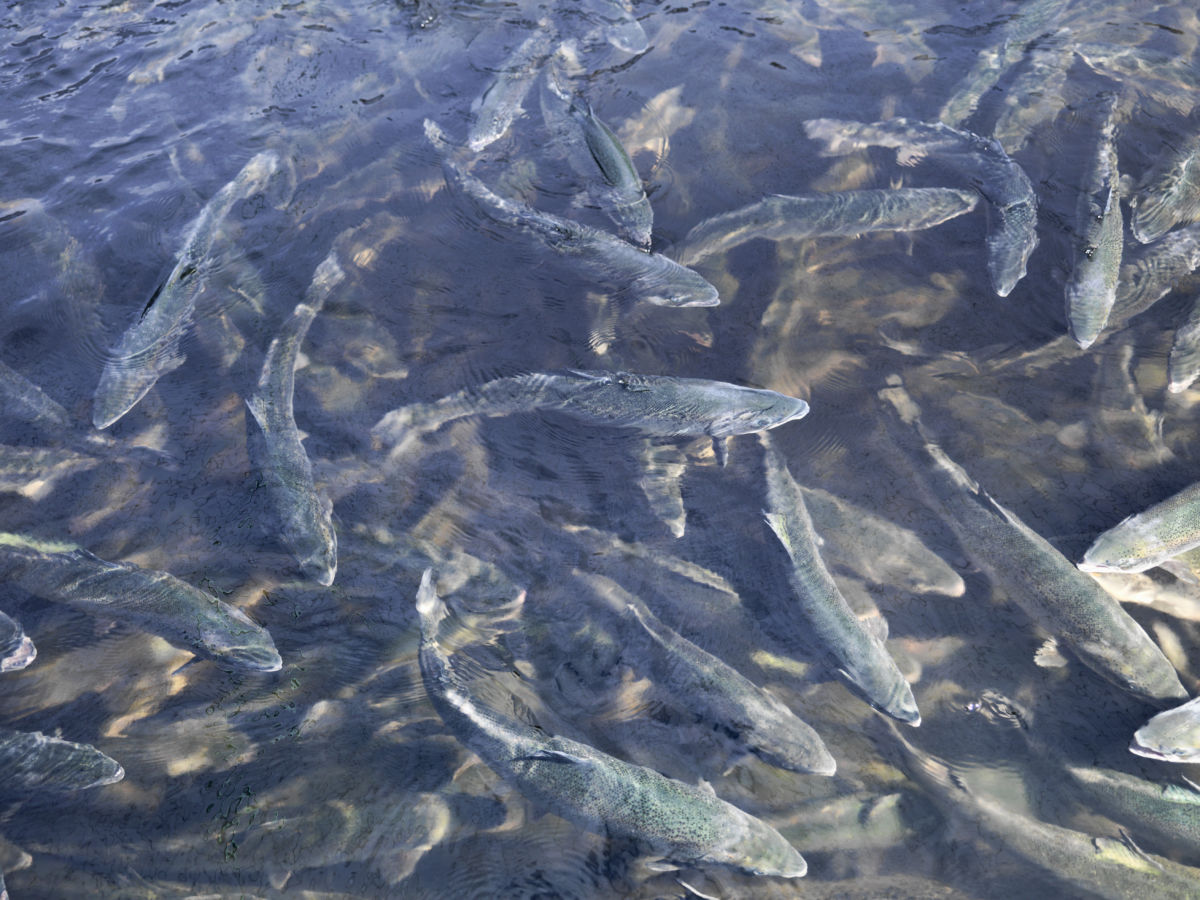
 André Müller@andreairplane9
around lakes –> less dragonflies, mayflies
–> less fish
(perhaps birds and others). https://twitter.com/AFL_org/status/1190021637443325955 …
Alliance for Freshwater Life@AFL_org Masumi Yamamuro@MasumiYamamuro
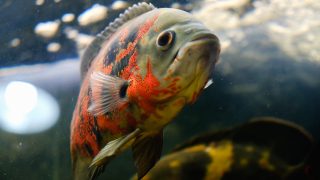

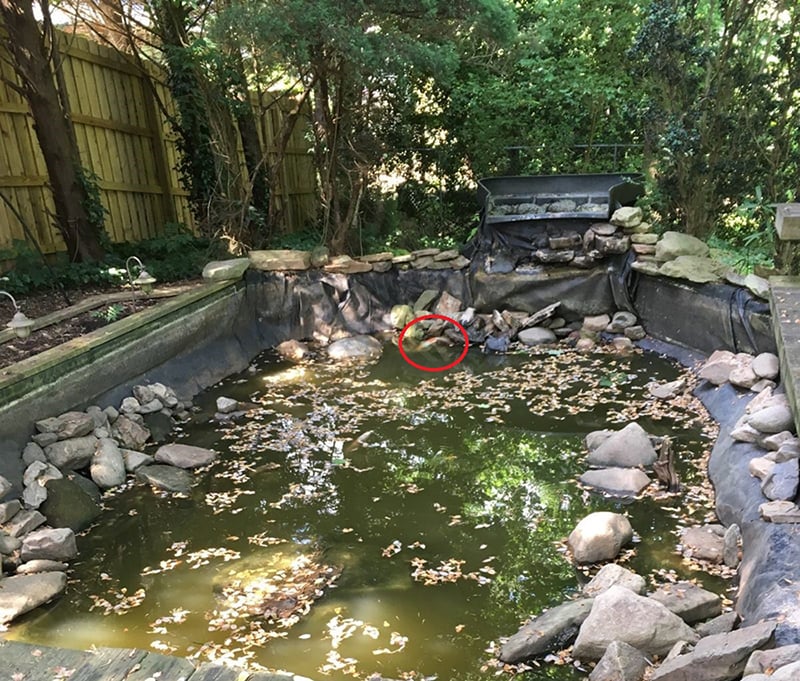

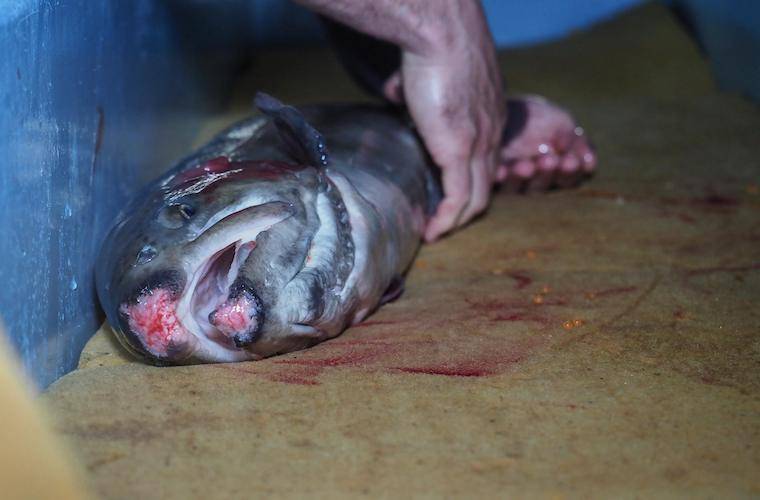


 Exposing the Big Game