Exposing the Big Game

Forget Hunters' Feeble Rationalizations and Trust Your Gut Feelings: Making Sport of Killing Is Not Healthy Human Behavior

Exposing the Big Game

After a human shooting, Florida tempers its advice on hunting invasive iguanas

The Florida Fish and Wildlife Commission (FWC) wishes to inform state residents that they can kill green iguanas, which are not a native species, but they can’t go around shooting the creatures willy-nilly.

In a statement on July 25, the organization clarified confusion about its earlier guidance on hunting the invasive species, stating, “Unfortunately, the message has been conveyed that we are asking the public to just go out there and shoot them up. This is not what we are about; this is not the ‘wild west.’”

In early July, media reports noted that the FWC had declared “open season” on green iguanas. Some people interpreted the guidance as clearance to kill the creatures by any means necessary, although the agency’s website specifically states that they must be hunted humanely and are, like all nonnative, invasive species, protected by state anti-cruelty laws.

Now that a human has been shot in one resident’s quest to get rid of iguanas, the FWC is being more explicit, however. “If you are not capable of safely removing iguanas from your property, please seek assistance from professionals who do this for a living,” said FWC commissioner Rodney Barreto in the most recent statement.

On July 5, an iguana hunter armed with a pellet gun accidentally shot a swimming pool maintenance worker in a residential neighborhood of Boca Raton. E-Lyn Bryan heard a shout and saw blood squirting from a wound sustained by her “pool guy.” She told NBC 6 in south Florida, “We have iguanas everywhere. If neighbors are gonna be like the Wild West and shoot at everything, someone’s gonna get killed.” Bryan said her neighbors were “horrified” by the incident, which drew police and paramedics. “You need to protect your children. The kids fish back here all the time,” she warned.

While the latest FWC statement doesn’t specifically refer to the Boca Raton shooting, it is notable that it used the same “wild west” formulation as Bryan employed with the local press. The accident may not be the only reason for the agency’s course correction, however.

In a blog post on July 10, the Humane Society of the United States accused the agency of failing to provide sufficient guidance on what precisely “humane killing” entails. It predicted that the state’s efforts to curb the invasive species’ population growth would lead to the deaths of native iguanas as well. “Last year we reported that the commission had hired contractors from the University of Florida to trap and kill iguanas either with bolt guns or by smashing their heads against hard objects. Conscripting Florida residents to kill the animals amplifies that archaic approach and reinforces a troubling message—that animals seen as ‘pests’ or as a nuisance should be summarily killed,” the humane society wrote.

Green iguana populations are problematic because they “can cause considerable damage to infrastructure, including seawalls and sidewalks,” according to the FWC. The agency is now urging local homeowners to contact professionals who specialize in getting rid of the creatures rather than acting independently.

The company Iguana Busters, for example, which offers commercial and residential services in South Florida and the Florida Keys, promises that it “incorporates safe and humane techniques while removing the iguanas.” But its website offers no details on these methods.

Florida man found with live alligator during traffic stop, deputies say

https://www.abc15.com/news/national/florida-man-found-with-live-alligator-during-traffic-stop-deputies-say

Posted: 2:11 PM, Jul 05, 2019
Updated: 2:17 PM, Jul 05, 2019

HARDEE COUNTY, Fla. — Deputies arrested a man Thursday after he was pulled over with drugs and a live alligator in his car during a traffic stop.

According to the Hardee County Sheriff’s Office, deputies searched Anthony Richardson’s car after they pulled over Thursday and found a live alligator in a bag in the front seat.

Richardson told deputies he had the gator in his front seat before they searched the vehicle.

Richardson told deputies he didn’t have an alligator trapping/hunting license but said he came into possession of the gator through a friend. According to deputies, he said he planned to release it into a river.

Deputies called the Florida Fish and Wildlife Conservation Commission and released the gator into the Peace River after speaking with a wildlife officer.

Richardson was booked into the Hardee County Jail for multiple drug charges and illegally possessing or capturing an alligator.

This story was originally published by WFTS in Tampa, Florida.

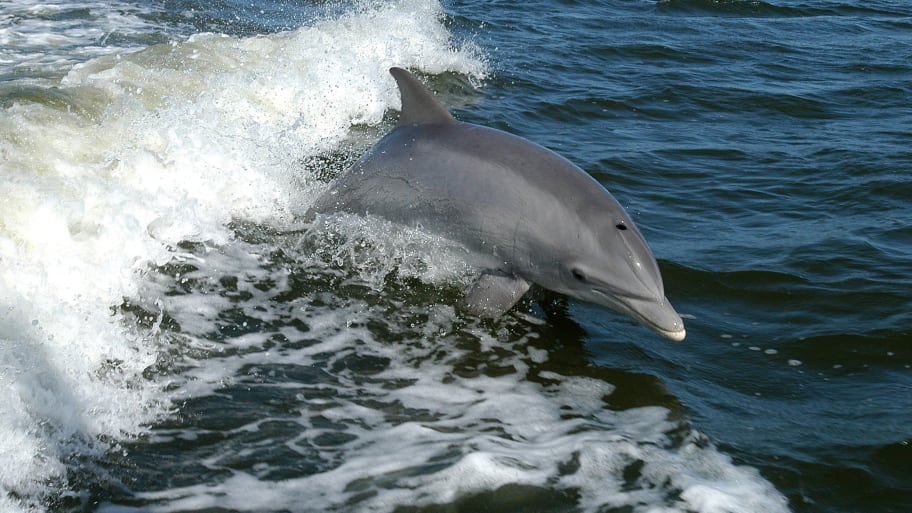
Dolphins Dying at Triple Normal Rate Along Gulf Coast

USFW Handout/Reuters

Scientists along the U.S. gulf coast say that the dolphin death rate is now three times the normal rate. Most of the 279 bottlenose dolphins stranded along the gulf in Florida, Alabama, Mississippi and Louisiana since Feb. 1 have died, officials with the National Oceanic and Atmospheric Administration said, according to NBC News. Scientists studying the carcasses say lesions consistent with freshwater exposure point to recent Midwest flooding. They also suspect the 2010 Deepwater Horizon oil spill, which has had devastating long-term effects on marine life. “[Dolphin] reproduction in some of the heaviest oiled areas continues to be abnormal,” Teri Rowles, coordinator for NOAA Fisheries’ Marine Mammal Health and Stranding Response Program told NBC News.

NOAA announces bottlenose dolphin unusual mortality event


PANAMA CITY BEACH, Fla. (WJHG/WECP) – NOAA says on average there are 87 elevated bottlenose dolphin strandings around this time of year, but this year the number shot up to 261.

Friday, the National Oceanic and Atmospheric Administration reported an increase in strandings in the Gulf for one species. (WJHG/WECP)

NOAA says these dolphin strandings occurred from Franklin County through Louisiana and are three times the historical average. As of June 12, there have been 279 strandings.

Most of these dolphins were found in a moderate to advanced states of decomposition, making it difficult to determine an exact cause of death, but experts say they are noticing a trend of lesions on the dolphins indicative of freshwater exposure.

Dr. Erin Fougères, NOAA Fisheries Southeast Region Marine Mammal Stranding Program Administrator, said, “So there are some animals with visible signs of skin lesions consistent with fresh water exposure but it’s too early at this point to say whether that is the cause of the mortalities. And then there are animals that don’t have skin lesions and we’re still investigating, you know, what the potential causes or contributing factors are for those mortalities.”

11-foot gator breaks into Florida home by crashing through window

Imagine waking up in the middle of the night, walking into the kitchen to get a midnight snack — and then almost becoming a snack yourself. That’s what happened to one family in Clearwater, Florida, when they woke up in the middle of the night to find an alligator in their kitchen.

The 11-foot gator broke into the family’s home through a low window in the kitchen, the Clearwater Police Department said on Facebook. The homeowner immediately called the police and a trapper responded to the scene to remove the gator.

untitled-collage-5.jpg
An 11-foot alligator broke through a window, at left, into a Florida family’s kitchen.CLEARWATER POLICE DEPARTMENT

The beastly reptile was captured and there were no injuries, the police said. The department shared several photos of the unwanted visitor on Facebook. One shows the gator sticking its head through the broken glass window. Another photo shows the mess he made in the kitchen, knocking over a table and chairs.

It’s unclear what drew the gator inside the family’s kitchen. It seems he wanted in so badly, he was willing to smash through glass.

In 2017, a Florida golf course made headlines after a massive 800-pound alligator moseyed across the green. Last year, a gator was spotted walking across the tarmac at Orlando International Airport. Luckily, passengers who spotted the creature were safely inside the plane, although they were briefly delayed, as the gator prevented the plane from taxiing to its gate.

While burglars are usually not gators, Florida has seen more than its fair share of gators in odd places. Last month in Sarasota, Florida, another family had a middle-of-the-night encounter with an 11-foot gator. It didn’t break into their kitchen, but it did take a dip in their pool. 

If you happen to encounter a gator in the wild — or in your kitchen — your safest option is to keep your distance. Jack Hanna, director emeritus of Columbus Zoo and Aquarium, advises staying at least 40 to 50 feet away from any potential alligator hazard. At 20 feet, Hanna says an alligator could “outrun any human.”

But if you can’t get away, wildlife experts recommend you fight back. If an alligator bites you, make a commotion by hitting or kicking it or poking it in the eyes. Gators will retreat from prey they can’t easily overwhelm.

Mega-development would threaten the Florida panther’s very survival

BY JACLYN LOPEZ
JANUARY 23, 2019 07:31 PM, UPDATED JANUARY 23, 2019 08:31 PM

https://www.miamiherald.com/opinion/op-ed/article224985985.html

With some of the most powerful back legs of all the world’s big cats, Florida panthers can cover an astonishing 45 feet in a single bound when chasing prey or avoiding danger.

But those remarkable skills are no match for the panther’s chief predator and cause of premature death: automobiles.

In 2018 alone, 26 of these beautiful animals — considered to be among the world’s most endangered mammals — were run down while trying to cross the state’s choked roads. An analysis of 175 Florida panther deaths between 2014 and 2018 indicated that 101 of the big cats were killed in Collier County, the majority by vehicles.

That’s why a proposal from large landowners in eastern Collier County to plop a mega-development right in the middle of some of the panther’s most important remaining habitat is so insane.

Unlimited Digital Access: Only $0.99 For Your First Month
Get full access to Miami Herald content across all your devices.

SAVE NOW #READLOCAL
Landowners seek to convert 45,000 acres of habitat — land that scientists have said is critical to the Florida panther’s survival — into a sprawling development that by 2050 will attract up to 300,000 new residents and generate an additional million vehicle trips a day.

The upshot: Developers behind this ill-conceived plan want permission from the U.S. Fish and Wildlife Service under the Endangered Species Act to put an estimated 90,000 new homes in the middle of the panther’s core range.

Used most widely in Florida, California and Texas, so-called “habitat conservation plans” promise to protect a portion of land as habitat in exchange for permission to develop massive tracts of land in locations where the Endangered Species Act and other conservation laws might otherwise restrict or guide development.

Unfortunately, many studies have raised concerns about how well HCPs actually protect endangered plants and animals.

For example, in a 2010 study published in the Ecology Law Quarterly, Jessica Owley, a University at Buffalo School of Law professor, assessed four HCPs in California to determine how effective they were in mitigating harm to endangered species.

She characterized her findings as “alarming.” Federal agencies often had trouble even finding the HCP conservation agreements. County offices charged with recording the HCP’s property restrictions often had inadequate records of what those restrictions actually required.

“Such uncertainty,” she wrote, “calls into question this method of environmental conservation.”

Sadly, what she found in California is hardly an isolated problem. As land development evolves, local, state and federal agencies rarely have the time, staff or money to accurately assess whether HCPs’ promises of endangered species protections are ever carried out.

In the case of the proposed Collier County HCP, the problem is made worse by the fact that the land the developers would set aside is fragmented and would continue to be used for agriculture, development and oil and gas exploration..

Given that scientists tell us the panther cannot afford to lose even a single acre, the fact that the HCP would “preserve” some of the land while developing the rest is likely to slow progress that state and federal agencies have painstakingly made toward recovering the panther and may even undermine its continued survival.

For example, the current federal recovery plan states the Service will consider delisting the panther when three populations of at least 240 individuals each have been established and sufficient habitat to support these populations is secured. This proposal makes that goal much more difficult to accomplish.

The proposed HCP assures ongoing sprawl into the Sunshine State’s ever-dwindling wild areas and offers little in return for Florida’s incredible wildlife.

The plan simply isn’t good enough for Florida’s endangered panthers or the majority of Floridians, who care deeply about preserving the state’s ever-more-endangered environmental heritage.

Jaclyn Lopez is Florida director for the Center for Biological Diversity.

Brevard Florida Fish and Wildlife Officers Bust Perps For Illegal Hunting and Fishing

Brevard Florida Fish and Wildlife Officers Bust Perps For Illegal Hunting and Fishing

  //  January 17, 2019

OFFICERS BUST COMMERCIAL KING FISHING VESSEL OUT OF PORT CANAVERAL

FWC-LAW-ENFORCEMENT-580-13

The following report highlights some cases the Florida Fish and Wildlife Conservation Commission handled in Brevard County over the past week but does not include all actions taken by the Division of Law Enforcement.

EDITOR’S NOTE: The following report highlights some cases the Florida Fish and Wildlife Conservation Commission handled in Brevard County over the past week but does not include all actions taken by the Division of Law Enforcement.

BREVARD COUNTY, FLORIDA – While patrolling Port Canaveral, Officer Hallsten contacted a vessel for a resource inspection.

As he approached, one of the subjects ran back to the boat that was at the dock and started throwing fish back into the water. Officer Hallsten announced his presence but the subject continued to throw fish overboard.

A fisheries inspection was completed, and it was found that the subjects were over their vessel limit of mullet. Citations were issued for interference with an FWC officer and over the vessel limit on mullet.

While conducting resource inspections on duck hunters on Merritt Island National Wildlife Refuge at Shiloh 3, Officer Eller spoke with several subjects who stated that a group of subjects was hunting the previous morning on a closed hunting day.

Further information was gathered that a group matching their description was also hunting on this day. Officer Eller located the group of subjects and conducted a resource inspection.

It was revealed that the subjects were actively hunting a limited entry quota hunting zone without a quota. Further inspection revealed that one of the subjects had never purchased a Federal Duck Stamp. The subjects were cited accordingly with both state and federal citations.

Officer Eller was at Merritt Island National Wildlife Refuge conducting resource inspections on waterfowl hunters.

He saw a green Gheenoe returning to the Shiloh 3 boat ramp and recognized the operator as an individual who had been cited for bag limit violations on the refuge previously. Officer Eller asked to see the ducks harvested by the subject.

The subject began to dig to the bottom of the large pile of decoys he had on the bow of his boat and pulled out two canvasbacks and two redheads. Officer Eller noticed that the subject was digging through the decoys as if he was trying to conceal something.

While pulling out the two redheads Officer Eller noticed what appeared to be a third redhead protruding from the bottom of the decoy pile. Officer Eller began to dig through the decoy pile himself and found at the bottom of the pile wrapped in camo burlap two more drake redheads.

This put the subject over his bag limit in redhead ducks. Further inspection revealed that the subject also was illegally hunting the area without a quota permit.

The subject was cited accordingly with both state and federal citations.

Officers Hallsten, Humphrey and Balgo received intelligence about a commercial king fishing vessel making a second trip after catching the daily commercial limit for the day out of Port Canaveral.

The officers located the fishing vessel returning from a second trip and conducted a resource inspection. The inspection revealed that the subject was in possession of 24 kingfish that were caught on the second trip.

The investigation revealed that the trip ticket from the first trip showed 50 kingfish were landed at the wholesaler. A recorded statement was taken, evidence documented, and the fish were sold.

A federal citation was filed with NOAA Fisheries about over the commercial daily bag limit of 50 kingfish. Appropriate citations were issued.

Brevard Florida Fish and Wildlife Officers Bust Perps For Illegal Hunting and FishingRELATED STORY:
Brevard Florida Fish and Wildlife Officers Bust Perps For Illegal Hunting and Fishing

Pensacola man shot twice by hunting buddy (and they’re planning another trip soon)

LINKEDINCOMMENTMORE

On the opening day of turkey season earlier this month, longtime hunting buddies Hilton Hutto and Fred Wilson were staked out in blinds on Wilson’s property in Ponce de Leon.

The 80-acre lot is surrounded by a timber mill, with planted pines lining the property line. The area is isolated, making it a prime spot for hunting.

The two men were about 75 yards apart, according to the Florida Fish and Wildlife Conservation Commission report that would follow, when Hutto saw a turkey walk in front of his friend.

Wilson recalls seeing Hutto line up the shot with his barrel facing directly at the turkey —and in turn, at him. He thought his friend was just getting his target ready so he could get the bird when it took a few steps away from Wilson.

Archive: Everything you need to know for duck hunting in the Pensacola area

He was wrong. Hutto shot twice.

“I guess he got all excited and didn’t realize he was shooting at me, too,” said Wilson, 65.

More than 20 pellets from the two shotgun shells drove into Wilson’s face, torso, arms and hands.

“The turkey got in the way, I didn’t think it was between us and I guess it was, and I shot, then he came out of his blind and said, ‘Hey, you shot me,'” said Hutto, 86.

Wilson said he and Hutto immediately packed up and drove the roughly 80 minutes from Ponce de Leon to Sacred Heart Hospital in Pensacola, where both men live. Wilson said he could have gone to a hospital in Crestview but wanted to be treated at home.

There was blood running down Wilson’s face and pellets lodged in his hands, but Wilson said he gripped the wheel and sped down Interstate 10.

“The adrenaline was there, I knew I was shot and there was blood all down my face but the adrenaline was just going,” Wilson said, adding that he didn’t yet feel the pain of the shooting.

Hutto said he felt terrible about the accident, and sat in the passenger seat with Wilson as the two sped toward the hospital.

More: Deers, duck and doves all on menu as hunting season starts in Florida

“I felt real bad about it, I’d just shot a good friend of mine, someone I’d been hunting with for years. It’s a no good feeling,” he said.

The incident happened March 17, and as of Thursday, Wilson was still meeting with doctors and scheduling surgeries to remove the pellets. Some can never be removed, he said.

“A couple of them they found had gone in and right out, and I’ve got two in my face that are going to be removed, the one in my right hand and index finger,” Wilson said. He said the pellets that need to stay are around his lungs.

FWC is still actively investigating the shooting, according to spokeswoman Rebekah Nelson. She said no further information about the incident could be released, but, she said, there were no turkey hunting accidents reported last season.

Wilson said there’s no animosity between him and Hutto, but he is now dealing with flashbacks of seeing the shells explode toward him.

“The only bad thing is I have nightmares about it, and sometimes I’ll be sitting down and I’ll see it all over again,” Wilson said. “The first time he shot I was looking right at him.”

The pair has plans to hunt together again soon, although Wilson laughs, saying he won’t be setting up anywhere close to Hutto. He’s in good spirits, despite the multiple surgeries and time consulting doctors, chalking it up to a mistake between friends.

“He didn’t kill me and he didn’t blind me, the big guy was watching out for me,” Wilson said.

A man walks on the snow covered boardwalk during a snow storm on January 4, 2018 in Atlantic City, New Jersey. A 'bomb cyclone' winter storm has caused every East Coast state, from Maine to Florida, to declare at least one weather advisory, winter storm watch, winter storm warning or blizzard warning. (Photo: Mark Makela / Getty Images)A man walks on the snow-covered boardwalk during a snowstorm on January 4, 2018, in Atlantic City, New Jersey. A “bomb cyclone” winter storm has caused every East Coast state from Maine to Florida to declare at least one weather advisory, winter storm watch, winter storm warning or blizzard warning. (Photo: Mark Makela / Getty Images)

On January 2, it was colder in Jacksonville, Florida (38 degrees) than it was in Anchorage, Alaska (44 degrees, which tied a record high for that city).

What is wrong with this picture, in addition to the obvious?

Since December 27, at least a dozen people have died from Arctic-cold temperatures that have covered much of the United States, as wind-chill and freezing advisories were issued by the National Weather Service from the border of Canada down to southern Texas, and from Montana all the way across to Maine.

What’s causing the chaotic temperatures? To understand them, we need to look at the globe’s northernmost regions. The Arctic’s extremely cold air is usually trapped within a circular weather pattern known as the Polar Vortex. Prior to anthropogenic climate disruption (ACD), that weather pattern was intact and strong, which kept the Arctic’s freezing cold air trapped in the Arctic.

But now, thanks to ACD along with natural variability, that weather pattern is changing, and possibly for good.

What It Means

As global weather patterns are becoming increasingly disrupted by ACD, the polar vortex is being weakened, which is allowing the freezing air to flow out of that region and head south across Canada — and as far down as southern Texas this week.

The total area of global tree cover lost last year was equivalent to the area of the country of New Zealand (approximately 73.4 million acres). This was a staggering 51 percent increase over the previous year’s loss. The University of Maryland study that provided this data cited ACD-driven forest fires and deforestation as the two leading causes, and noted that the wildfires were responsible for the massive spike in coverage loss compared to the previous year.

That phenomenon used to be extremely rare, but is becoming increasingly common as ACD impacts intensify. What is also rare is how long this intense cold snap across the US is lasting — 10 days now and counting.

On Tuesday, for example, Boston tied its seven-day record for the most consecutive days at or below 20 degrees. Meanwhile, during the last week of December more than 1,600 cold temperature records were either tied or broken across the US, making it the second coldest week on record for the country.

As cold as it has been throughout many of the 48 contiguous states, Alaska and other parts of the Arctic are seeing record-warm temperatures.

In addition to the January 2 record in Anchorage, temperatures across the Arctic on that same day were more than 6 degrees warmer than normal.

study published by the American Meteorological Society in September 2017 found that, since 1990, the polar vortex has weakened and meandered more than it had before. The study also reported that the weakening of the vortex was most likely being set in motion by a rapidly warming and melting Arctic region, which was resulting in colder winters across Europe — and occasionally the US.

Danger Compounded by Trump’s Denialism

On December 28, President Donald Trump tweeted:

In the East, it could be the COLDEST New Year’s Eve on record. Perhaps we could use a little bit of that good old Global Warming that our Country, but not other countries, was going to pay TRILLIONS OF DOLLARS to protect against. Bundle up!

Jason Furtado, a University of Oklahoma meteorology professor, told the Associated Press that it is important not to confuse weather with climate. Weather is something that occurs over a period of a few weeks or less in one region, whereas climate occurs over a period of years or decades and is global.

“A few cold days doesn’t disprove climate change,” Furtado said. “That’s just silly. Just like a couple down days on the stock market doesn’t mean the economy is going into the trash.”

Over the last year, there have been approximately three record high temperatures set across the US for every record low temperature.

Furthermore, the last for years have been the four hottest years ever recorded for the planet.

More than 97 percent of climate scientists agree that ACD is real, and that the prime driver of it is CO2 and other greenhouse gas emissions stemming from human activity. Of the less than 3 percent of climate scientists who doubt or dispute that fact, the vast majority have been shown to be funded by the fossil fuel industry.

Copyright, Truthout. May not be reprinted without permission.

DAHR JAMAIL

Dahr Jamail, a Truthout staff reporter, is the author of The Will to Resist: Soldiers Who Refuse to Fight in Iraq and Afghanistan (Haymarket Books, 2009), and Beyond the Green Zone: Dispatches From an Unembedded Journalist in Occupied Iraq (Haymarket Books, 2007). Jamail reported from Iraq for more than a year, as well as from Lebanon, Syria, Jordan and Turkey over the last 10 years, and has won the Martha Gellhorn Award for Investigative Journalism, among other awards.

His third book, The Mass Destruction of Iraq: Why It Is Happening, and Who Is Responsible, co-written with William Rivers Pitt, is available now on Amazon.

Dahr Jamail is also the author of the book, The End of Ice, forthcoming from The New Press.

Florida wildlife commission postpones bear hunting in 2016

http://www.treehugger.com/conservation/florida-wildlife-commission-postpones-bear-hunting-2016.html

Max Carol
Science / Conservation
June 24, 2916

Black bear sow with cub

Public Domain Neal Herbert

After a controversial hunt last year, Florida officials spare the bears.

In 2015, Florida held its first bear hunt in over 20 years. The Florida Fish and Wildlife Conservation Commission (FWC) considered the hunt to be a necessary tool for curbing Florida’s growing black bear population, but the hunt did not go exactly as planned. FWC sold 3,776 hunting permits, and its 2015 Summary Report shows that 304 bears were killed in just two days. Although hunters did not exceed the overall statewide harvest objective of 320 bears, bears were over-hunted in two of the four designated hunting regions, referred to as Bear Management Units. In the East Panhandle, 114 bears were killed despite a harvest objective of only 40 bears, and in Central Florida, 143 bears were killed instead of the expected harvest of 100 bears.

Furthermore, despite regulations that bears with cubs could not be targeted, FWC allowed both male and female bears to be hunted. Controversy arose when the commission discovered that a majority of the bears killed were females and that of those females, 21% were lactating. FWC justified these statistics, stating that most bear cubs would be at least 8 months old at the time of the hunt and that orphaned cubs are generally able to survive on their own at that age.

After a controversial hunt last year, the commission has spent the past several weeks debating whether or not to hold another hunt in 2016. Many animal-rights activists and conservationists oppose bear hunting, arguing that it puts black bear populations in danger. The Florida black bear was considered an endangered species until 2012, and opponents of the hunt worry that progress might be reversed if hunting is promoted.

Those in favor of the hunt argue that bear populations need to be controlled as there are 4,350 black bears in Florida today, compared to several hundred in the 1970s when the species was first declared endangered. With this rise in population also comes a rise in bear-human conflict. According to The Palm Beach Post, the number of bears killed by vehicles has increased sevenfold from 1990 to 2015. In addition, only 99 phone calls concerning bears were made to FWC in 2000 as compared to a staggering 6,094 phone calls in 2015.

On Wednesday, FWC heard addresses from over 80 people concerning the hunt. After several hours of deliberation, the commission voted to postpone black bear hunting for the rest of the year by a slim margin of 4-3. In a news release on the agency’s website, Nick Wiley, the executive director of FWC, explained the decision.

Although hunting has been demonstrated to be a valuable tool to control bear populations across the country, it is just one part of FWC’s comprehensive bear management program. I am proud of our staff who used the latest, cutting-edge, peer-reviewed science to develop a recommendation for our Commissioners to consider. Our agency will continue to work with Floridians, the scientific community and local governments as our focus remains balancing the needs of Florida’s growing bear population with what’s best for families in our state.

With the anti-hunt vote now finalized, FWC has promised to employ purely nonlethal methods of reducing bear-human conflict this year. Using its budget of $825,000, the commission hopes to promote bear safety programs in communities statewide, including the addition of bear-proof trashcans in areas that are particularly affected by the animal. The agency recently hired additional staff members who focus on bear management and has also funded scientific studies on Floridian bear populations. The commission will hold another vote in 2017 to determine if bear hunting should be reintroduced next year.