
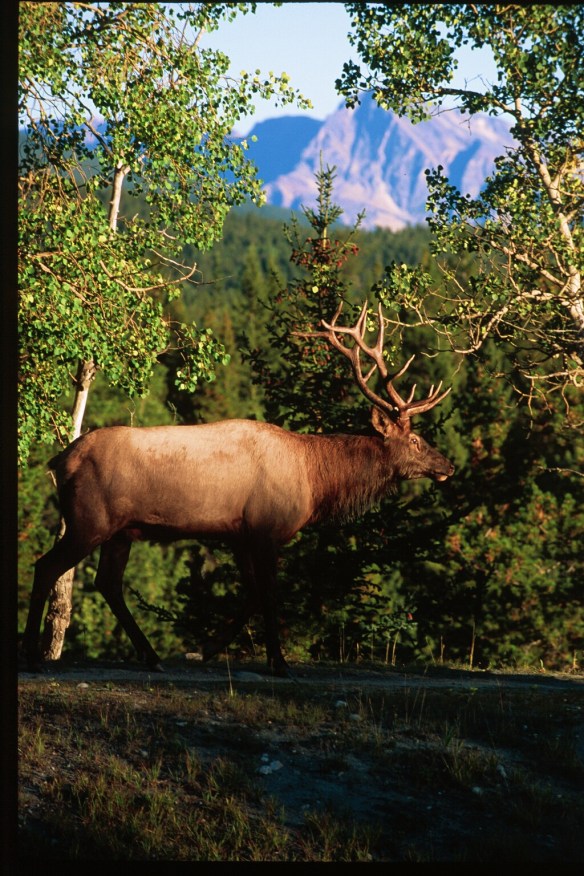
I’ve said it before and I’ll probably say it again, you can’t really be a wolf advocate or an elk advocate, or any kind of advocate for the environment, and continue to eat beef. That message was driven home by a new Montana Fish, Wildlife and Parks Department elk “management” proposal which includes reducing the numbers of not only elk, but also of wolves (who, logically, could have done some of the “management” for them) near Yellowstone National Park, all in the name of safeguarding cattle from the negligible threat of brucellosis—a disease which, in the past hundred years, has come full circle from livestock to wildlife and now back to livestock.
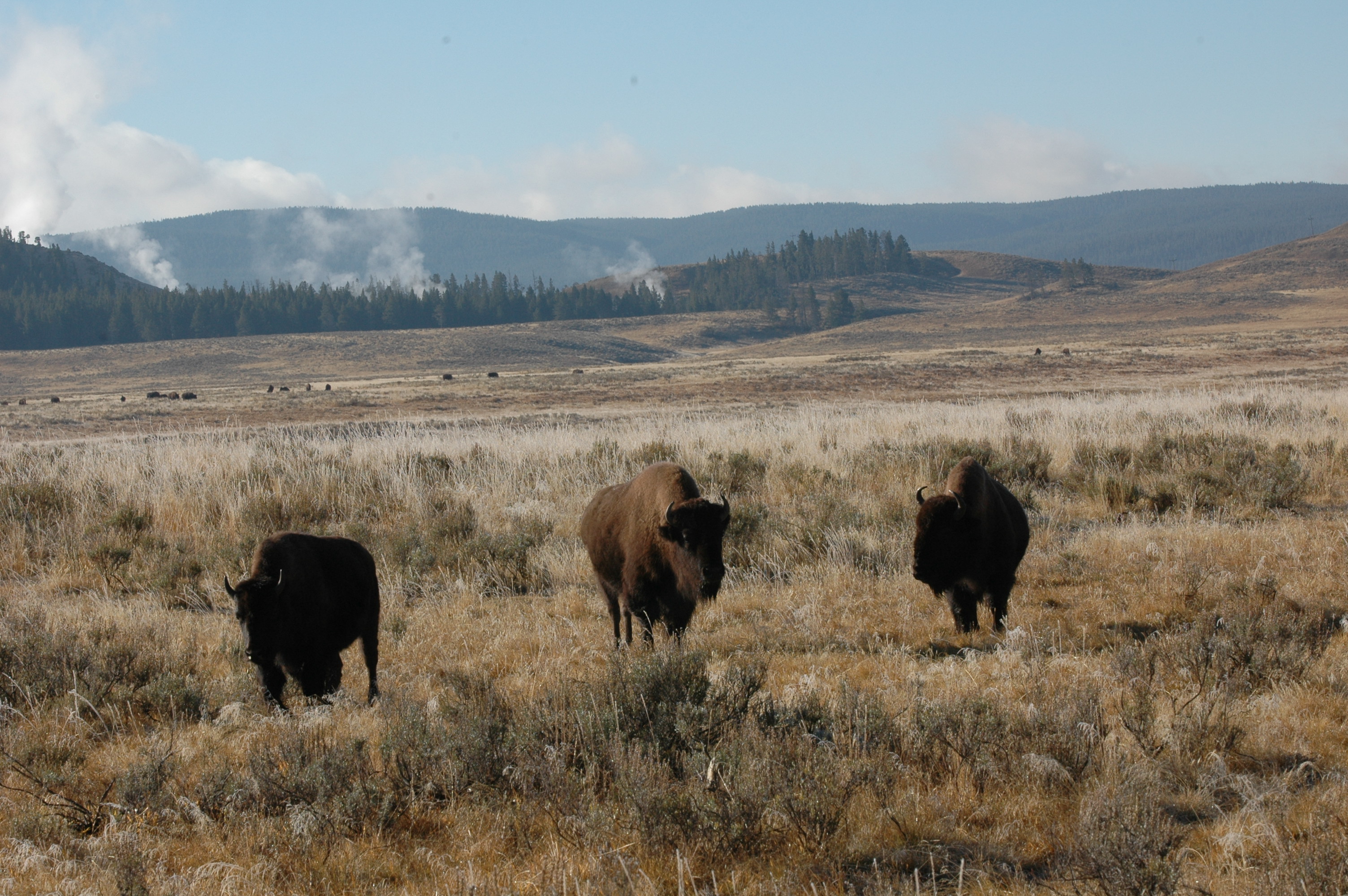
So far, it’s been the bison migrating out of Yellowstone during hard winters who have suffered the brunt of the rancher’s brucellosis paranoia. “Solutions” have included “hazing” bison back into the park and creating holding areas outside the park to warehouse bison before shipping them off to slaughterhouses—those nightmarish death camps where so many of their forcibly domesticated bovine cousins meet their ends. (In a country where some 60 million bison once roamed free, 97 million beef cattle are sent to slaughter each year.) Still other Yellowstone bison are murdered during newly imposed state “hunting” seasons—right outside the park.
Speaking of hunting, it’s interesting (to put it nicely) that hunters in Montana and Wyoming have claimed that elk populations in those states have declined as a result of the wolf reintroduction programs, yet the latest report suggests that elk numbers and density are “too high” (at least for rancher’s sensitivities) in parts of Montana.
Typical of state “game” department bureaucrats and their ideas of a “solution” to any perceived wildlife/livestock “conflict,” their preferred proposal is to reduce the number of wild animals—in this case, both elk and wolves!
It’s the kind of mentality that’s destroying the planet’s biodiversity at every turn: mile after mile of monoculture cornfields in Iowa (grown primarily to fatten cattle crammed onto feedlots)—places where, a century ago, 300 species of plants, 60 mammals, 300 birds and hundreds of insects would have lived—are now devoid of all other life forms other than cornstalks and an occasional tiny ant or a mushroom the size of an apple seed; cows grazing on pastures in Pennsylvania and Louisiana are dying from toxic fracking wastes that have made their way to the surface and meanwhile, arctic ice is melting faster than previously predicted, disrupting ocean currents and weather patterns life on Earth has come to depend on.
Call it “growth” or “progress” or just “our way of life,” but this locomotive is speeding towards a brick wall—yet we keep shoveling fuel into it like there’s no tomorrow…
Not that Montana FWP are likely to listen to anyone except fellow hunters and/or their cattle baron buddies, but the public comment period is now open, so feel free to let them know what you think about their elk “management” proposal here: http://fwp.mt.gov/hunting/publicComments/2012elkMgmtGuidelinesBrucellosisWG.html
You can view the working group’s recommendations by clicking on the “Interested Persons Letter” link on this webpage. That site also includes the opportunity to submit online comments about the recommendations. Written comments can be mailed to “FWP – Wildlife Bureau, Attn: Public Comment, P. O. Box 200701, Helena, MT 59620-0701. All comments must be received by 5:00 p.m. Mountain Standard Time on December 20, 2012
Text and Wildlife Photography ©Jim Robertson
 Exposing the Big Game