Exposing the Big Game

Forget Hunters' Feeble Rationalizations and Trust Your Gut Feelings: Making Sport of Killing Is Not Healthy Human Behavior

Exposing the Big Game

Fur farming should be history

https://df30c3524ea046c3114b45e5b5e71f84.safeframe.googlesyndication.com/safeframe/1-0-38/html/container.html

Factory farming of animals for their fur is cruel, outdated and should be banned

By Victoria ShroffOPINION 10 Sep 2021Share

It’s time to make fur farming history. Tens of thousands of mink and other fur-bearing animals are purpose-bred, raised and then killed for the use of their fur.

The issue of fur farming is more than an “animal rights” issue as it concerns the inextricable linking of human, animal and environmental health. The viral storm caused by Covid-19 exposed these overlapping interspecies vulnerabilities. Minks are vulnerable to SARS-CoV-2, the virus that causes COVID-19, and the virus can jump the species barrier to transmit to humans. Repeated outbreaks of Covid-19 at commercial mink farms in B.C., Europe, the U.S.A., and other parts of the world have spotlighted this cruel and unnecessary industry. Millions of minks have been killed attempting to stop the viral spread, and breed bans have now been put in place in many countries in the E.U. and beyond.

 Several voices, including The Suzuki Foundation, The Union of British Columbia Indian Chiefs (UBCIC), Humane Societies, infectious disease physicians, and the Fur-Bearers, have been calling for the closure of the commercial fur farming industry. A recent article by Humane Society International outlined some of the main reasons. Canadian infectious diseases specialist Dr. Hajek was quoted: “Given the very real threat of viral mutations and the transmission of virus between animals and people in these facilities, the B.C. Government should now act decisively, prohibit and end industrial fur farming in the interest of public health and animal welfare.”

Kelly Butler, of H.S.I./Canada, stated, “The world community is taking urgent action to end fur farming because it is inherently inhumane, environmentally destructive, and poses a grave public health risk. More than 20 countries have already stopped fur farming within their jurisdictions. The B.C. government must follow the lead of these nations and end this cruel, high risk, outdated and needless industry.” Dr. Dubois, BC SPCA Chief Scientific Officer, stated, “fur farming exists in direct opposition to the values of British Columbians. The continuation of this industry would present unacceptable outcomes for both animals and people.” Grand Chief Phillip, president of the UBCIC, stated, “We are renewing our call for an end to fur farming in B.C. This industry not only goes against Indigenous values of wildlife stewardship and conservation but also has proven to be an unmanageable threat to public health.”

Are there some checks and balances under Canadian law? There are some laws and codes of practice, but many argue they do not go far enough. In BC, for example, the statute to regulate the fur farm industry is the Animal Health Act and Fur Farm Regulations.
The act defines:

  • “fur bearing animal” means a chinchilla, fisher, fox, marten, mink or nutria;
  • “fur farm” means a place where two or more fur bearing animals are kept in captivity with the intention of breeding the animals, or producing pelts, for commercial purposes

Part 3 — Health of Fur Bearing Animals — Health management plan states:

  • 7(1) A licensed fur farmer must

(a) establish a health management plan in accordance with subsection (2) for the fur bearing animals kept on the fur farm, and (b) ensure that all operators on the fur farm implement all protocols and procedures contained in the plan.

On July 6, 2021, a novel type of lawsuit concerning fur farming was filed in B.C. Supreme Court on behalf of the Fur Bearer’s. David Wu, of Arvay Finlay, one of the lawyers for the case (I am co-counsel), outlined the case in a nutshell: “The Fur-Bearer’s have launched a judicial review challenging the renewal of a fur farm licence to B.C.’s only chinchilla fur farm. The basis of the judicial review is that the licence was renewed with no animal health management plan in place. A health management plan is a requirement under the applicable regulation. The government does not dispute that there was no fur farm licence in place. Rather, it appears that the main arguments the government will advance are that the petitioners lack public interest standing and the issue is moot because the government is now working to address the lack of a health management plan. As such, whether the government can be held accountable over how it follows and enforces the regulatory scheme will likely become front and center in this case.” We expect this animal law case will go to a hearing later this year. (For further details, please see B.C. taken to court over chinchilla fur farm licence in Vancouver Is Awesome).

On July 21, 2021, under the Public Health Act, S.B.C. 2008, a moratorium was ordered on new B.C. mink farms and capped existing fur farms due to Covid-19. All provinces should follow suit, and funding programs that support the commercial fur farming industry, proven to be a threat to health, should be stopped.

A 2020 public opinion poll showed that 81 per cent of Canadians are opposed to killing animals for their fur. The overarching question is, why do we continue to allow fur farming now that the facts are in and the science is clear? The law needs to catch up by rapidly phasing out the industry and provide retraining to fur farmers. Big-name fashion houses have taken fur off their designer menus, including Prada, Gucci, Coach, and others, demonstrating an understanding of consumer demand for fur-free fashion.

Consumer appetite for using the fur coats of animals for human vanity has shrunk in the face of humane education. The killing of animals for their fur, for fashion is not socially or morally acceptable and needs to be banned. We are overdue in Canada to bring the anachronistic commercial fur farming industry to a swift close.

Related stories

Free newsletter

The Canadian Legal Newswire is a FREE newsletter that keeps you up to date on news and analysis about the Canadian legal scene. A separate InHouse Edition is delivered on a regular basis, providing targeted news and information of interest to in-house counsel.

‘Fur is a horribly cruel industry’

https://www.recorder.com/ltr-becker-OpEdConnelly-39437867

Published: 3/21/2021 8:06:18 AM

I am writing in response to a recent guest columnist piece by Patrick Connelly entitled “Wrong for people, wrong for animals, wrong for science.” Unfortunately it is full of wrong statements.

First off, wildlife management trapping businesses will not be affected by SD1029 /HD 1592: An Act Prohibiting the Sale of Fur Products in Massachusetts. This bill does not interfere at all with trapping or hunting in the commonwealth.

Second, images of fur farms are not inaccurate and disingenuous. I have yet to hear of or see pictures of a “humane” large-scale fur farm.

Fur is a horribly cruel industry and a potential source of future pandemics. SD1029 /HD 1592 would merely prevent the sale of real fur, 90% of which comes from factory fur farms where thousands of animals are kept in cramped, unsanitary conditions for the duration of their lives, unable to ever participate in behaviors natural to their species.

Self-mutilation and cannibalism are common outcomes of the emotional distress caused by this confinement. But their deaths are even crueler since the cheapest methods are used, including anal electrocution, gassing, and clubbing. There are even numerous documented instances of animals being skinned alive while incapacitated on fur farms in China, from where the majority of fur sold in the U.S. is imported.

Further, mink have tested positive for COVID on fur farms across Europe and several states in the U.S. The mink, in turn, have transmitted new COVID variants back to humans, which have now spread across the world, resulting in mass cullings of tens of millions of mink and potentially undermining vaccine effectiveness. Multiple fur farming bans have already been passed in Europe, and now Massachusetts can aid in this fight by banning new fur sales.

It is time to put an end to these reservoirs of disease and cruelty. Please urge your state legislators to support this bill.

Sheryl Gail Becker

Agawam

Student Activists Raise Awareness About Cruel Canada Goose Practices

The Cornell Vegan Society demonstrated on Ho Plaza to bring awareness to the animal cruelty involved in producing Canada Goose products.

Courtesy of Isabel Lu

The Cornell Vegan Society demonstrated on Ho Plaza to bring awareness to the animal cruelty involved in producing Canada Goose products.

18 hours ago

PRINTMORE
On Ho Plaza, Lucy Contreras ’21 defiantly faced the Thursday afternoon passersby with the words “Fur Kills” painted across her abdomen and an apparently blood-drenched Canada Goose jacket wrapped around her body.

The blood was fake, as was the jacket — an imitation with a “Canada Douche” sticker where one would normally find the coat’s iconic sleeve patch.

Contreras, who is a Sun opinion columnist, and her fellow demonstrators aimed to raise awareness about the animal cruelty involved in making the products of the ubiquitous winter-time brand. The coats use goose feathers, most commonly obtained by plucking live geese without any painkillers, and leaving open wounds before they are killed, according to Contreras, president of Cornell Vegan Society and Sun opinion columnist.

The detachable fur trim around the hood of the coat is made of coyote fur, Contreras said. This fur is obtained by capturing wild coyotes in steel traps, where they are often left to agonize for days — suffering from gangrene, dehydration, or attacked by other predators before the trapper returns, according to PETA. If still alive at this point, they are bludgeoned, stomped, or strangled to death, said Contreras.

The demonstrators hoped that those who currently own Canada Goose products never buy from them again and donate the detachable coyote-fur trim of their coats. Several organizations, including PETA and the Wildlife Rescue League, accept donations of furs and redistribute them to rehabilitating animals in shelters or homeless people.

And for those who don’t own Canada Goose products, the demonstrators want them to consider animal cruelty when they buy products such as coats, pillows and comforters.

Chloe Cabrera grad, a participant in the demonstration, called for people to make more responsible consumer choices.

“Each Canada Goose jacket requires seven birds and two coyotes. That’s nine animals dying for virtually no reason, for an overpriced coat that works just as well as any vegan coat,” Cabrera said.

Ultimately, Contreras said, geese and coyotes suffer and die on behalf of the market demand for Canada Goose.

The demonstration was “eye-opening,” Paul Agbaje ’22 said after speaking with a protester.

“No matter how you feel about it, people seem to just mindlessly buy these Canada Goose jackets, without ever considering the ethical implications,” he said.

Other onlookers were less keen, making hostile comments about the demonstration as they walked by.

Contreras is understanding of negative responses like these. “I feel like this shame and this frustration is the beginning of a process of acceptance and of actually taking action against Canada Goose,” she said.

“We’re not blaming them,” Contreras said. “We just want them to know, in the future, to buy jackets that don’t have down or fur.”

Contreras declared the demonstration a success, describing it as one step towards a better public understanding of the relationship between everyday expenditures and animal exploitation.

She encourages friends and peers of Canada Goose wearers to engage them in dialogue. On campus, conversations about ethical consumption are on the rise — Cornell Vegan Society has risen from just a handful of members twoyears ago to about twenty five today, according to Contreras.

She wants them to know that, “with that social status, you are hurting a lot of beings in the process. And it’s not worth it.”

https://cornellsun.com/2019/10/28/student-activists-raise-awareness-about-cruel-canada-goose-practices/

[Meanwhile] Fur real? The City Council aims to ban fur in the name of animal rights; what’s next?

Fur real? The City Council aims to ban fur in the name of animal rights; what’s next?
How about leather shoes? (OPREA FLORIN/Getty Images/iStockphoto)

City Council Speaker Corey Johnson wants to ban fur clothes for sale in the five boroughs of New York City, excepting used apparel and that “sourced exclusively from used fur” (how will Department of Consumer Affairs sleuths ever tell?) and, of course, fur worn for religious reasons (rest easy, Hasidim).

We don’t mind private citizens making a stink over mink, pounding the table over sable or putting a pox on fox. We get those who are revolted by wearing dead animal products. Hell, it’s respectable to live life as a vegan.

But it is rich indeed for city government in the name of animal rights to outright ban the sale of fur, an important piece of an important New York industry, while allowing sale, on a scale that dwarfs the fur industry, of cow leather and sheepskin (and no, the leather on your Chinese-made shoe is not produced under conditions regulated by federal authorities).

And while allowing sale by the tons, in supermarkets and restaurants, of meat and eggs and dairy from animals that, we suspect — though no animals were interviewed in the making of this editorial — would rather not be exploited. Including veal, which comes from calves.

The slope is slippery because, let’s be honest, lots of animals bleed on it.

Johnson and the Council enjoy the symbolism of a fur ban, but they wouldn’t dare go after the many other ways humans benefit from inexpensive and plentiful protein and, well, just plain tasty food. Would they?

PETA’s Secret Weapon In Fur Ban Fight: A Coyote Trap

The animal-rights group is showing lawmakers how brutal the traps are as the City Council considers a ban on fur sales.

By Noah Manskar, Patch Staff |  | 
NEW YORK — Hooded faces ringed with fur seem to cross every New York City block in the winter months as Canada Goose parkas have grown popular. But the high-end outerwear’s trim comes from coyotes, which often find themselves caught in small but powerful metal traps, animal rights activists say.

As the City Council considers banning fur sales, Dan Mathews, a senior vice president at People for the Ethical Treatment of Animals, has been snapping pencils with one of those traps to show lawmakers just how brutal the fur trade is.

“Some of the shards of the pencil fly eight feet across the room and they imagine that being an animal’s bone — it puts a visceral face on a talking point,” said Mathews, who has met over the last several weeks with half a dozen Council members, including Speaker Corey Johnson.

The trap is a powerful visual aid in PETA’s quest to make New York the nation’s largest city to ban fur sales, according to Mathews, who is also demonstrating it for fashion designers and model agencies ahead of a May 15 hearing on the Council bill.

PETA is training its activists to show the traps off more widely and producing a video featuring the designer Stella McCartney to educate consumers about them, Mathews said.

Subscribe

“People have commented that it looks like something out of a medieval torture museum,” Mathews said. “And I think when people realize that there are thousands of these in use today capturing animals — not just coyotes but all sorts of wildlife and family dogs — it becomes a very simple issue.”

The so-called leghold trap Mathews demonstrated for Patch on Thursday snapped in the blink of an eye. Food is used to lure coyotes to the devices, which go for as little as $10 online. But they inadvertently capture other creatures such as dogs, cats, songbirds and owls — which trappers call “trash animals,” Mathews said.

New York State is home to about 10,000 trappers. Leghold traps are used throughout the state, including just north of the city in Westchester County, Mathews said.

State law bans leg-gripping traps with teeth and requires trappers in most parts of the state to visit their traps every 24 hours. But such rules are hard to enforce, as only the trappers generally know where the traps are set, Mathews said.

Mathews expects a tough fight over the proposed fur ban despite Johnson’s support for it. The bill would bar retailers from selling fur apparel and fine those who get caught.

Johnson has argued the measure would help protect animals. But longtime Manhattan furrier Jerry Sorbara, whose store is on West 32nd Street, says it could put him out of business.

“It’s gonna escalate to that you cannot even walk in the street and they come and see what kind of shoes you (are) wearing, and they will kill you if you wear something that is not right,” said Sorbara, 80, who opened his custom fur business in 1975. “I think it’s really insane what they’re doing.”

While Johnson’s bill would let merchants sell used fur items, Sorbara said only “a handful” of people sell used fur coats. The ban could also hurt parts of the fashion industry that make other components of fur garments such as buttons and linings, he said.

Sorbara said he uses furs from farm-raised minks, chinchillas and sables — not trapped animals. He’s even made a miniature mink coat for a customer’s dog.

“You mean to say … that we don’t love animals? Are you kidding me?” Sorbara said.

Cork Green Party joins calls for ban on fur farming

Irish Council Against Blood Sports ICABS

Ireland, Ireland

JUL 17, 2018 — “It’s shameful that the practice of fur farming takes place in Ireland”: Cork Green Party calls on Minister for Agriculture to ban fur farming. Read more in the Cork.ie report –https://www.thecork.ie/2018/07/15/cork-green-party-want-to-stop-fur-farming-in-ireland/

ACTION ALERT

Please contact your TDs now and urge them to support Solidarity’s forthcoming “Ban Fur Farming” bill. Contact details for TDs can be found at https://www.oireachtas.ie/en/members/tds/?term=/ie/oireachtas/house/dail/32

Watch ICABS video footage showing the cruelty of fur farming
https://www.youtube.com/watch?v=BvX1O9GvsQ4

Email “Ban fur farming NOW” to Taoiseach Leo Varadkar and Agriculture Minister Michael Creed – Leo.Varadkar@oir.iemichael.creed@oir.ietaoiseach@taoiseach.gov.ieAnimalHealthAndWelfareAct@agriculture.gov.ie

Tel: +353 (0)1 6194000 (Leo Varadkar)
Tel: 01-607 2000 or LoCall 1890-200510 (Michael Creed)
Tweet: @campaignforleo @creedcnw Ban fur farming NOW
Comment on Facebook:
https://www.facebook.com/campaignforleo/
https://www.facebook.com/michaelcreedtd

SAMPLE LETTER

Dear Taoiseach Leo Varadkar and Minister Michael Creed,

I support a total ban on fur farming and an immediate closure of Ireland’s fur farms.

In these hellholes, animals suffer a horrendous life of misery before being cruelly gassed to death. There is absolutely no justification for allowing this cruelty to continue.

Please ban fur farming now.

Yours sincerely,

[Name/Location]

Renewed calls on Irish Govt to end fur farming as Norway announces ban

Irish Council Against Blood Sports ICABS

Ireland, Ireland

JAN 17, 2018 — There are renewed calls on the Irish Government to end fur farming as Norway this week announces that a total ban will come into affect.

Norway’s government has pledged to shut down all of the country’s 250+ fur farms by 2025, becoming the 14th European nation to phase out fur farming.

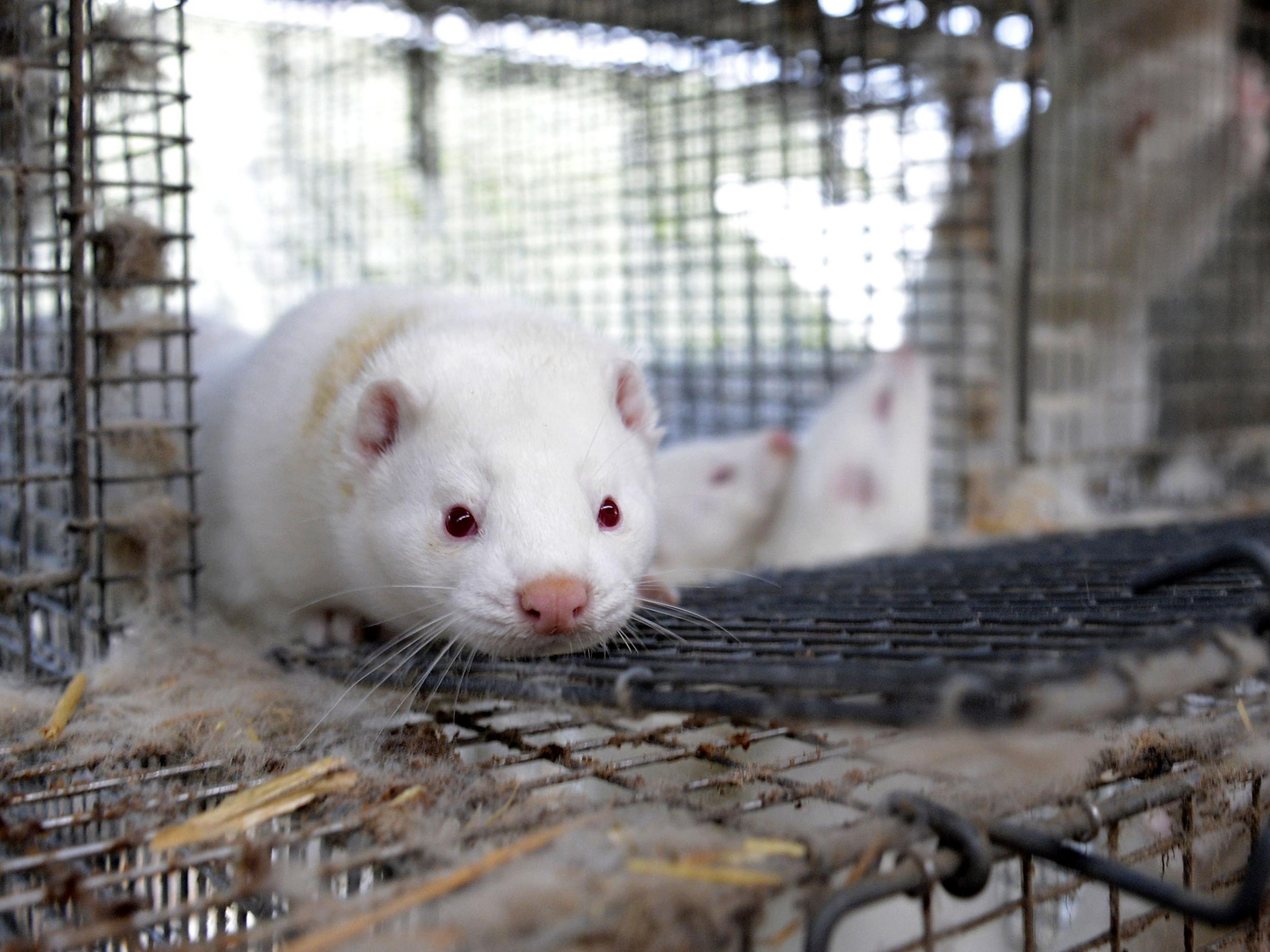
Meanwhile in Ireland, where just three fur farms remain, the government has so far refused to take action to stop this vile industry. Please join us in renewing an appeal to Agriculture Minister Michael Creed and the Irish Government to put in place a fur farming ban.

Watch our video footage of mink caged on Ireland’s largest fur farm in Laois
https://www.youtube.com/watch?v=BvX1O9GvsQ4

ACTION ALERT

Demand a ban on fur farming in Ireland. Contact Prime Minister Taoiseach Leo Varadkar and Agriculture Minister Michael Creed now.

Email “Ban fur farming NOW” to Leo.Varadkar@oir.iemichael.creed@oir.ietaoiseach@taoiseach.gov.ieAnimalHealthAndWelfareAct@agriculture.gov.ie

Tel: +353 (0)1 6194000 (Leo Varadkar)
Tel: 01-607 2000 or LoCall 1890-200510 (Michael Creed)
Tweet: @campaignforleo @creedcnw Ban fur farming NOW
Comment on Facebook:
https://www.facebook.com/campaignforleo/
https://www.facebook.com/michaelcreedtd

“Norway pledges to shut down all fox and mink fur farms by 2025” – Read the Independent UK report
http://www.independent.co.uk/news/world/europe/norway-fur-farm-ban-close-deadline-20225-mink-fox-animal-rights-erna-solberg-a8162196.html

Norway is banning all fur farms
Norway’s government has pledged to shut all fur farms by 2025, a move welcomed by animal rights charities. The country is the 14th…

Circus wins, anti-fur policies lead list of top gains for animals in 2017

by Wayne Pacelle,
December 21, 2017

This was a year of extraordinary gains on a wide set of issues, showing the power and reach of The HSUS, Humane Society International, and our affiliates. But along with it came some terrible setbacks at the federal level – with Congress unwinding federal rulesadopted in 2016 and in January 2017 to protect grizzly bears and wolves on national wildlife refuges in Alaska, loss of federal protections for Yellowstone-area grizzly bears, and with the U.S. Department of Agriculture delaying or dissembling rules on horse soring and farm animal protection (the Organic Livestock and Poultry Practices rule).

This was also a year that saw The HSUS announce a major, multi-million-dollar agreement with the New York Blood Center (NYBC) concerning more than 60 chimpanzees formerly used by the NYBC in medical experiments in Liberia. And hundreds of thousands of Americans donated to help animals and people in a series of intensely powerful disasters. Our emergency responders moved more than 2,000 animals from affected areas, and brought lifesaving animal services to animals and the people who care about them in low-income areas. We made short-term and long-term investments in Puerto Rico, with spay and neuter clinics, transporting animals, and rebuilding the animal welfare capacity in the Commonwealth, and delivered tens of thousands of pounds of supplies and food to people and animals in devastated areas.

Ending the era of wild animals in traveling circus acts

In the wake of Ringling Bros. first ending its elephant acts and then shuttering its entire operation in 2017, we’ve helped push the cause of ending wild animal acts in circuses throughout the United States and across the world. Just this week, the Pittsburgh city council banned wild animal acts, just the latest in a long list of communities, including New York City and Los Angeles. In August, Illinois became the first state to ban the use of elephants in circuses, and New York state followed in October. Italy, Scotland, and other nations banned wild animal acts in circuses. The outgoing interior secretary for France’s presidential administration announced a phase-out of the use of cetaceans in marine parks and facilities in that country. While Ringling Bros. is gone, a number of small circuses cart animals around and subject them to inhumane training techniques and grueling travel. In May, The HSUS released an undercover investigation of Ryan Easley’s ShowMe Tigers Act, that revealed the mistreatment of eight tigers. The Oklahoma-based act is contracted out to branded circuses, including Shrine Circuses.

This was a remarkable year for fur-free fashion, with more high-fashion houses and retailers committing to a fur-free future. Photo by iStockphoto

The fur-free movement surges, with Gucci, Michael Kors and others going fur-free in banner year

This was a remarkable year for fur-free fashion, with more high-fashion houses and retailers committing to a fur-free future. This summer, Stein Mart, the U.S.-based department store chain found mostly in the South, VF Corporation, the parent company of more than two dozen popular clothing brands, including The North Face, Vans, Timberland, and Nautica, and Yoox Net-A-Porter, one of the world’s leading online luxury fashion retailers for brands like Burberry, Prada, Gucci, and Michael Kors, announced they will stop selling all items and accessories made with real animal fur. In October, Gucci announced it will go fur-free, followed by an announcement from Burlington Stores that it would remove fur from all of its nearly 600 stores. In mid-December, Michael Kors announced it will phase out all fur products by the end of 2018.

Farm animals gain in the U.S. and globally

After we launched our Nine Billion Lives campaign – calling for a set of minimum standards for the care of broiler chickens that dramatically improve their welfare – more than 70 companies have agreed to phase in purchasing practices consistent with the terms set forth, including Burger King, Sonic, Jack in the Box, and Subway. The HSUS partnered with Compass Group and Aramark—two of the world’s largest food service companies—on the most extensive plant-based work in the industry to date, including chef training and menu development. An HSUS undercover investigation exposed mistreatment at industrial chicken production and slaughtering facilities in Georgia and Texas connected to the factory farm giant Pilgrim’s Pride, the second largest chicken producer in the United States, producing more than a billion chickens a year. In September, the Ninth Circuit Court of Appeals issued a unanimous ruling reinstating California’s law banning the sale of foie gras. In May, the U.S. Supreme Court declined to hear an appeal by several state attorneys general and governors, including former Oklahoma Attorney General Scott Pruitt, seeking to overturn California’s landmark egg sales law, AB 1437, which requires eggs sold in the state come from hens not subjected to cruel confinement practices.

Our Humane Society International team worked with corporations around the world to improve conditions for egg-laying hens, from Brazil to Mexico to Colombia and Singapore. After working with HSI, Taco Holding, Mexico’s second largest restaurant operator with more than 550 restaurants across the country, announced that it will go 100 percent cage-free. Seventeen major Brazilian food companies, including JBS, Bunge, Casa do Pão de Queijo, and Sapore also announced cage-free egg policies. HSI also worked with major multinational companies, including Nestlé and Kraft Heinz, two of the world’s largest food manufacturers, to announce global cage-free egg policies, and garnered the first-ever cage-free egg commitments from Colombian, Chilean, and Asian companies. In Brazil, the fourth largest pig processor, Frimesa, committed to eliminating gestation crates, joining the country’s top three producers that have made similar commitments.

In Brazil, the fourth largest pig processor, Frimesa, committed to eliminating gestation crates, joining the country’s top three producers that have made similar commitments. Photo by iStockphoto

Major gains to stop cruelty to dogs, other domesticated animals throughout the world

Our HSI/Mexico team won a major victory this year when Mexico banned dogfighting nationwide and adopted felony-level penalties for dogfighting. Mexico City updated its constitution to recognize animals as sentient beings whose welfare must be protected. In Guatemala, the Congress passed sweeping anti-cruelty legislation, including a dogfighting ban, a prohibition on tail and ear docking of farm animals, and a ban on cosmetic testing on animals. The law creates the first-ever government entity in Central America that will deal specifically with animal cruelty. The Indian government announced sweeping new regulations that are expected to end the suffering of dogs bred indiscriminately and without basic needs like food, water, and shelter; improve conditions for animals sold in livestock markets; and ensure that fish sold in aquariums and fish stores are not caught using destructive fishing practices, or taken from protected areas. Our HSI/India team also succeeded in persuading authorities to ban the import of the skins of exotic animals and furs into the country. Earlier this month, the Nepalese Supreme Court banned all public cullsof street dogs using poisons, beating, and shooting, and directed the Nepalese government to introduce a nationwide humane management plan for homeless animals.

The world starts to show a tilt against trophy hunting

British Columbia’s newly-formed government announced a provincial ban on trophy hunting of grizzly bears, even if the hunters involved claim they eat the meat of the animal. President Trump in a tweet called trophy hunting “a horror show” and stated that decisions by his Fish and Wildlife Service to allow imports of elephant and lion trophies from Zambia and Zimbabwe would be placed on hold. The incoming governor of New Jersey said that there would be no more black bear hunting in New Jersey under his watch, the Connecticut legislature rejected attempts to open a black bear hunting season, and Florida Fish and Game Commissioners blocked bear hunting there for the second year in a row. A federal appeals court upheld California’s right to bar mountain lion trophies coming into the state.

In August, the Court of Appeals for the D.C. Circuit rejected the U.S. Fish and Wildlife Service’s decision to remove Endangered Species Act protection for wolves in the Great Lakes region.

Wildlife trafficking progress

China is in the final stage of shutting down its ivory carving and ivory trade operations throughout the nation, in one of the most extraordinary acts of disassembling a major industry. In the wake of our ballot initiative win in Oregon in 2016 and following the lead of numerous states, Nevada adopted strict new measures against the trade in shark fins, ivory, rhino horns, and other imperiled species. President Trump issued an executive orderstating that it shall be the policy of the executive branch to strengthen enforcement of laws against transnational crime and international trafficking, including wildlife trafficking.

HSUS, federal courts stave off mass wolf killing in northern Great Lakes region

In August, the Court of Appeals for the D.C. Circuit rejected the U.S. Fish and Wildlife Service’s decision to remove Endangered Species Act protection for wolves in the Great Lakes region, affirming the outcome by a U.S. District Court. We estimate that state agencies in Michigan, Minnesota, and Wisconsin would have shot and trapped approximately 1,000 wolves this fall if we hadn’t blocked the delisting of the wolves. We are now in a furious fight to prevent Congress from reversing that decision. The Sportsmen’s Heritage and Recreational Enhancement (SHARE) Act, which amounts to a grab bag of anti-wildlife provisions, including wolf delisting, may see action in Congress. We need every animal advocate to contact their lawmakers and urge them to oppose any effort by Congress to cherry-pick wolves from the endangered species list in order to placate trophy hunters, trappers, and ranchers who want to kill the forebears of our domesticated dogs.

The Indian government announced sweeping new regulations that are expected to end the suffering of dogs bred indiscriminately and without basic needs like food, water, and shelter. Photo by iStockphoto

Puppy mill victories

An HSUS undercover investigation revealed that puppies were being mistreated at Chelsea Kennel Club, a boutique pet store in Manhattan, generating investigations by the New York attorney general’s office and the mayor’s office. Under pressure, the store closed down within two months. California became the first state to ban the sale of puppies in pet stores, unless they come from rescues or shelters. We drove the number of local jurisdictions that ban the sale of puppy mill dogs at pet stores to almost 250. We helped close down a commercial breeding operation in a New Hampshire mansion, saving 84 Great Danes living there in deplorable conditions, and spurring the state to consider a new law to better regulate commercial breeders. The breeder was convicted on 10 counts of animal cruelty in December and was just sentenced and ordered to pay more than $790,000 in restitution to The HSUS and other groups. Through our Puppy Friendly Pet Stores Conversion Program – where we work to change the business models of pet stores to forgo puppy mill sales and instead work with shelters and rescues on in-store adoptions – we’ve converted a total of 21 stores and helped adopt out more than 12,000 dogs. Earlier this year, the Courts of Appeals for the Second and Seventh Circuits upheld laws restricting retail sales of companion animals from puppy mills and other unscrupulous breeders where animals are often raised in overcrowded and unsanitary conditions, leading to health and behavioral problems for the animals, and emotional and financial burdens on consumers.

After 30-year fight, international panel embraces dolphin protection standards for U.S.

Commercial tuna fleets won’t be able to flood the U.S. market with tuna caught by chasing dolphins and setting nets on the air-breathing mammals, after the World Trade Organization (WTO) ruled in October that the United States has not engaged in unfair trade practices with Mexico by placing restrictions on tuna imports. This has been a 30-year fight, and the WTO’s ruling may end an extraordinarily complex and multi-channel battle that has seen the debate move from the marketplace to Congress to the federal courts to the WTO.

Commercial tuna fleets won’t be able to flood the U.S. market with tuna caught by chasing dolphins and setting nets on the air-breathing mammals anymore, following a World Trade Organization ruling in October. Photo by iStockphoto

Progress on the End Dog Meat campaign

HSI continued its End Dog Meat campaign in Asia, particularly in China and Korea. The Yulin dog meat festival in China was conducted with much less fanfare this year than in past years, as HSI continued to keep the world’s eyes on this cruel spectacle, and work with local authorities to end it. Working on a tip from activists just two days before the “official” start of the festival, authorities seized a truck transporting more than 1,300 dogs and 100 cats to a dog meat market and turned them over to activists. In 2017, HSI China helped more than 3,000 dogs rescued from the meat trade and other abusive situations. In South Korea, HSI continued to close down dog meat farms, with 10 such farms closed so far. To date, 1,222 dogs have been rescued with many brought to the United States, the United Kingdom, and Canada for a chance at a better life. HSI and its partners launched a campaign in Indonesia to end the dog meat trade there. Taiwan banned the sale of dog and cat meat.

ACTION ALERT: GOVERNMENT ACCEPTING COMMENTS ON GRIZZLY HUNT POLICIES

http://thefurbearers.com/blog/action-alert-government-accepting-comments-grizzly-hunt-policies

10/04/2017 – 12:48

ACTION ALERT: Government accepting comments on grizzly hunt policies

The province is changing the way grizzly bears are hunted in British Columbia, and it’s your opportunity to let them know what you think about their policy papers, and what the future of grizzly killing will look like.

In August the government announced that all hunting of grizzlies in the Great Bear Rainforest would end (not including First Nations), as would taking traditional trophies from grizzlies hunted throughout the province (but still allowing a hunt for “meat”). This now means that policies surrounding the hunting of grizzly bears need to change, and the Ministry of Forests, Lands, and Natural Resource Operations is asking for public input.

Specifically, they are seeking feedback on:

  • Changes to manage the ban in hunting areas that overlap the Great Bear Rainforest;
  • Changes that will prohibit the possession of “trophy” grizzly bear parts;
  • Changes that will manage prohibited grizzly bear parts;
  • Changes to prohibit the trafficking of grizzly bear parts; and,
  • New reporting requirements for taxidermists.

We encourage everyone to submit their comments via email to grizzly.bear@gov.bc.ca, and if they’re residents of British Columbia, to copy their MLA. Here are our tips for writing a letter:

  • Keep it short and specific. You want to make sure your points are straight-forward and easy to read so there’s no mistaking your opinions, and that it isn’t confused with other, unrelated comments.
  • Be polite and mindful of language. You may feel a great deal of anger, sadness, or even hate over what you need to write. But when communicating with politicians and government bureaucrats, using hateful language, veiled or indirect threats, or cursing, your points can be more easily ignored, and sometimes even result in resources being redirected as a security measure.
  • Provide citations and links. It’s a lot harder to dismiss an argument if there’s clear evidence through citations to reputable documents or media, and links to existing policy or examples. Providing these makes your letter more impactful.
  • Request follow up. If you want answers, make sure your questions are clear, and that you expect responses within a certain time period. Remember that in the case of policy input there may not be any systems in place for responses, and to follow up with bureaucrats or politicians.

Sample Letter

It is my opinion that managing the hunting of grizzly bears and the harvesting and trafficking of the various trophies, parts, or meat of their carcasses cannot be effectively accomplished within British Columbia at this time. Without significant increases to the resources of the Conservation Officer Service and their counterparts at the Ministry of Forests, Lands, and Natural Resource Operations, there is simply no manner of ensuring any policy allowing for some harvesting of grizzly bear trophies, parts or meat. Additionally, long-standing questions regarding the models and research used to make policy decisions on grizzly bear hunting have not been answered (see recommendations from the Scientific Review of Grizzly Bear Harvest and the yet-to-be delivered report from the Auditor General).

How this will interfere with the thriving grizzly bear viewing industry is also not included in your policy papers – a critical oversight.

In conjunction with these vital issues on the conservation and science side, the lack of resources to properly manage the hunt, and the overwhelming shift in societal views on hunting grizzly bears, all grizzly hunting should cease in the province.

Signed

Your name and address


Join The Fur-Bearers today and help us provide alternatives to fur and non-lethal solutions to wildlife conflict. We receive no government funding and rely entirely on donations from supporters like you. To become a monthly donor (for as little as $10/month – the cost of two lattes) please click here and help us save lives today.

Montana Furbearer Comments tallied

http://us8.campaign-archive1.com/?u=f22932e4382726211444c9d0c&id=b27e45702d&e=34cb4196ed

…In response, FWP moves to establish 4 trapping units with a quota of five and a female subquota of one in the Bitterroot Unit, one in the Cabinet, and zero in the Yaak and Continental Divide Units.

Bobcat quota increasing 180 to 200 for Region 2 (Western Montana) was nearly equally supported and opposed. Although fur prices have plummeted, bobcat remains one of the most lucrative species to trap and kill. We are NOT being overrun with bobcat. The whitetail deer population is not taking a hit from predation on fawns by bobcats. This is about selfish greed!

This is about whether Commissioners will address the fact Regions 1, 2, 3 alone killed 187 OVER quota for bobcat from a min 8330 killed in Montana in just the last 5 years!

FWP responded to all of our attacks on this mockery of “quotas” with, “It was clear that many do not understand that quotas are set as a general and conservative target rather than a precise number that will result in population decline if exceeded. It was also clear that many do not understand that closing the season and hitting the target quota exactly is virtually impossible. Trapping closures happen on a 48-hour notice and FWP tries to be conservative and often initiates closures before the actual quota number is reached.”

FWP annually attends Montana Trappers Association meeting in the spring. “If you all based wildlife management off of science instead of whining emotion and came to an actual meeting you would know that a bobcat quota is set with an expected overage”. Jason Maxwell, Montana Trappers Association vice president

Trappers take full advantage of this flawed and failed system designed to favor them not the wildlife by knowing they can trap over quota and keep the fur just as long as the liberal closing has not occurred.
What would happen if a hunter had the same mindset?

“Additional comments not specific to the proposals included several suggestions to manage beaver with quotas, and several suggestions that decisions be based on data instead of emotion”.  Montana FWP

The proposals for Grizzly bear and for changing quotas for wolves outside of Yellowstone will also be decided at the hearing. Recent changes re these wolf quotas………. your voice is needed!  bit.ly/29CBP9g

FWP made no mention of all our comments insisting on 24 hour trap checks. This is not going away, friends!

Despite all the comments opposing increasing quotas, “FWP moves to approve” the proposals. Now it will be up to the FWP Commissioners on Wed, July 13th! 

For meeting agenda:
http://fwp.mt.gov/doingBusiness/insideFwp/commission/meetings/agenda.html?meetingId=38170999

To attend: Montana WILD – 2668 Broadwater Avenue – Helena, MT or one of the district FWP offices.
To listen in to the audio recording on Wed go to: http://fwp.mt.gov/doingBusiness/insideFwp/commission/audio.html

Thank you to all that submitted comments, spoke up, and those that WILL look these commissioners in the eyes in Helena during their voting on these proposals and their future crucial decisions effecting our wildlife! Lets hope they make us proud!

We would love to hear if you are planning to attend!

Thank you Friends of Trap Free Montana Public Lands